Items Similar to Coptic textile Byzantine Period; 4th–5th Century C.E.
Want more images or videos?
Request additional images or videos from the seller
1 of 6
Coptic textile Byzantine Period; 4th–5th Century C.E.
$1,724.84
$2,156.0520% Off
£1,290.21
£1,612.7620% Off
€1,440
€1,80020% Off
CA$2,376.75
CA$2,970.9420% Off
A$2,612.63
A$3,265.7820% Off
CHF 1,371.62
CHF 1,714.5220% Off
MX$31,066.02
MX$38,832.5220% Off
NOK 17,614.68
NOK 22,018.3520% Off
SEK 16,045.07
SEK 20,056.3420% Off
DKK 10,974.29
DKK 13,717.8720% Off
About the Item
Coptic textile
Byzantine Period; 4th–5th Century C.E.
Materials: linen, Wool
23 x 16 cm
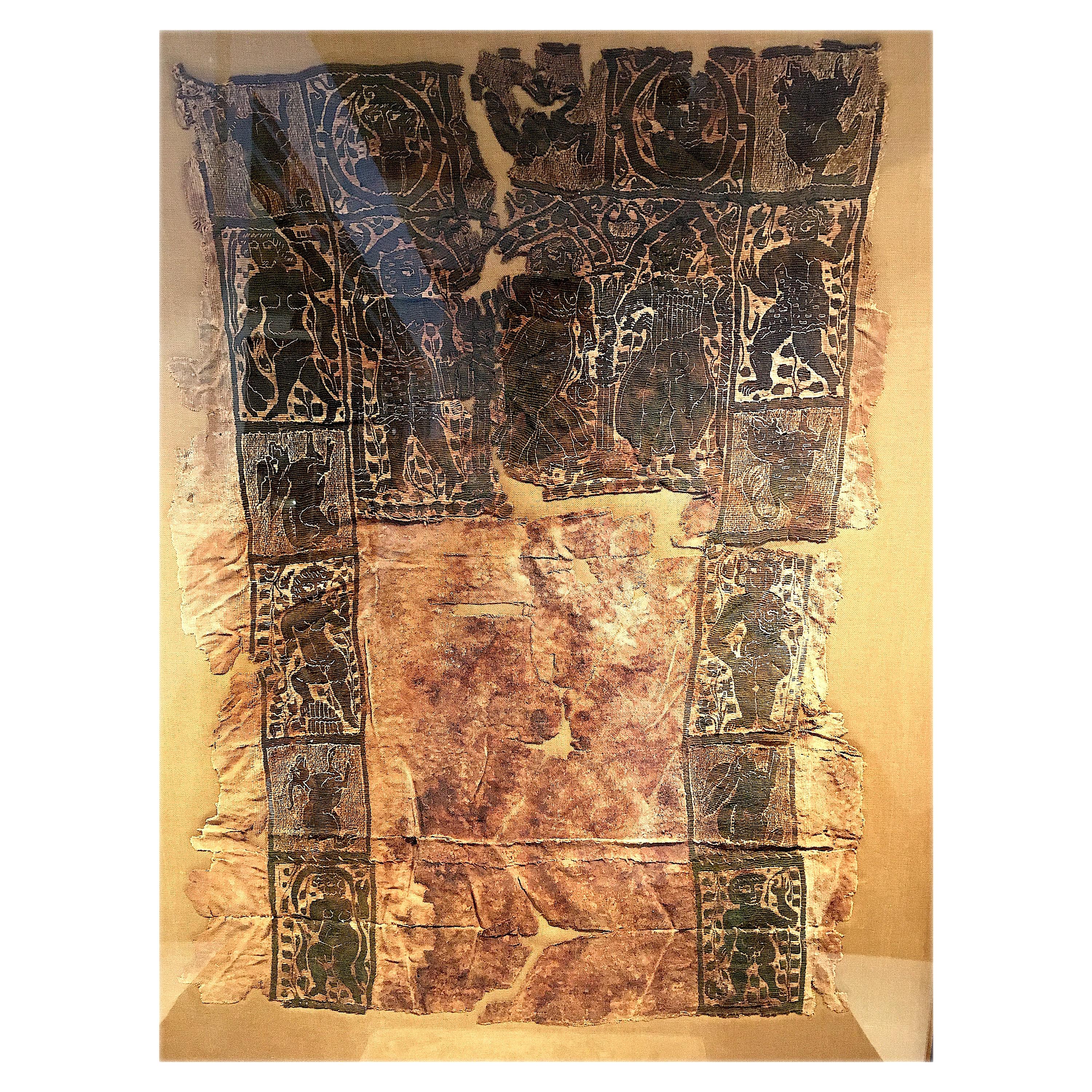
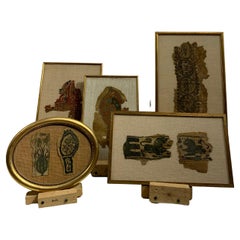
This fragment features black decorations on a beige background, depicting human figures within roundels intertwined with a kneeling angel holding a cornucopia. The border is adorned with curved acanthus leaves that encircle animals.
This woolen fabric is woven in the traditional Coptic Kapati style, characteristic of Egypt during the Christian era. The name "Kapati" refers to the Copts of Egypt and describes a weaving technique that does not use embroidery or printing. It is said that Al-Muqawqis, the governor of Egypt, offered the Prophet garments made from Kapati fabric.
At the 1900 Exposition Universelle in Paris, the French archaeologist Albert Gayet showcased the results of his excavations from the winter of 1898-1899. Around one hundred Coptic textiles and fragments were displayed at the Palais du Costume. Their aesthetic generated considerable enthusiasm, particularly among artists like Auguste Rodin and Henri Matisse. This led to a "Coptomania," which, among other things, influenced fashion designers.
Coptic textiles represent the largest collection of ancient historical textiles found in museums as the Brooklyn museum, the louvre, the Met and palazzo Madama in Turin.
- Dimensions:Height: 6.3 in (16 cm)Width: 9.06 in (23 cm)Depth: 0.04 in (1 mm)
- Style:Egyptian (Of the Period)
- Materials and Techniques:
- Place of Origin:
- Period:
- Date of Manufacture:4th - 5th century C.E.
- Condition:Wear consistent with age and use.
- Seller Location:Bruxelles, BE
- Reference Number:1stDibs: LU6666241776322
About the Seller
5.0
Vetted Professional Seller
Every seller passes strict standards for authenticity and reliability
1stDibs seller since 2022
15 sales on 1stDibs
Typical response time: 1 hour
- ShippingRetrieving quote...Shipping from: Bruxelles, Belgium
- Return Policy
More From This Seller
View AllKapati textile - Epoque Byzantine; 4th–5th Century C.E
Located in Bruxelles, BE
Kapati Textile
Byzantine Period; 4th–5th Century C.E.
Materials: Plant and Animal Fibers, Wool
9,5 x 9,5 cm
This woolen fabric is woven in the traditional Coptic Kapati style, characteristic of Egypt during the Christian era. The name "Kapati" refers to the Copts of Egypt and describes a weaving technique that does not use embroidery or printing. It is said that Al-Muqawqis, the governor of Egypt, offered the Prophet garments made from Kapati fabric.
At the 1900 Exposition Universelle in Paris, the French archaeologist Albert Gayet showcased the results of his excavations from the winter of 1898-1899. Around one hundred Coptic textiles and fragments were displayed at the Palais du Costume. Their aesthetic generated considerable enthusiasm, particularly among artists like Auguste Rodin and Henri Matisse. This led to a "Coptomania," which, among other things, influenced fashion designers.
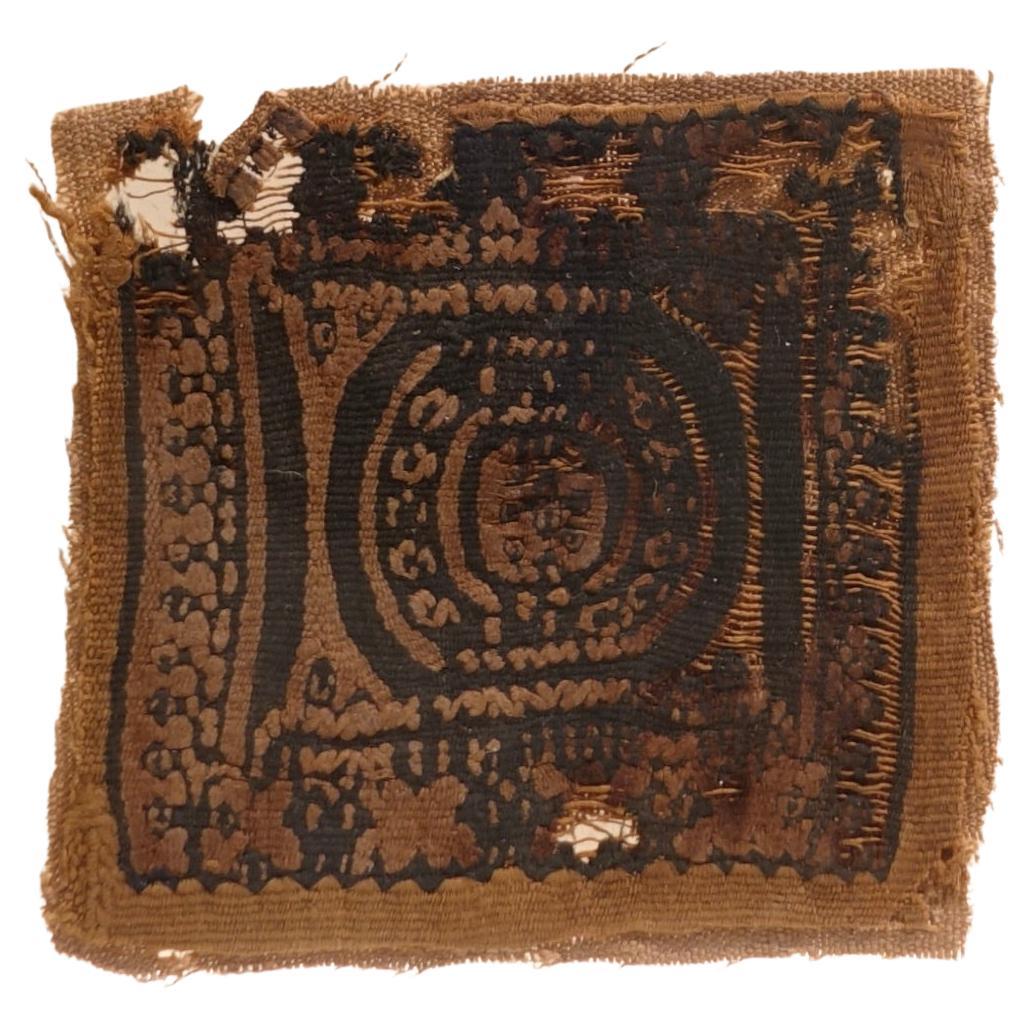
The square fragment features black decoration on a beige background; the two squares at the center are separated by scalloped edges, from which hang various ornaments or geometric motifs. At the center of the fragment is an image of a dancing figure surrounded by geometric decorations. This piece dates back to a time when ancient...
Category
Antique 15th Century and Earlier Egyptian Egyptian Antiquities
Materials
Wool, Natural Fiber
Wool Tapestry from Egypt
- 5th–7th Century C.E.
Located in Bruxelles, BE
Wool Tapestry from Egypt
Late Antique Period; 5th–7th Century C.E.
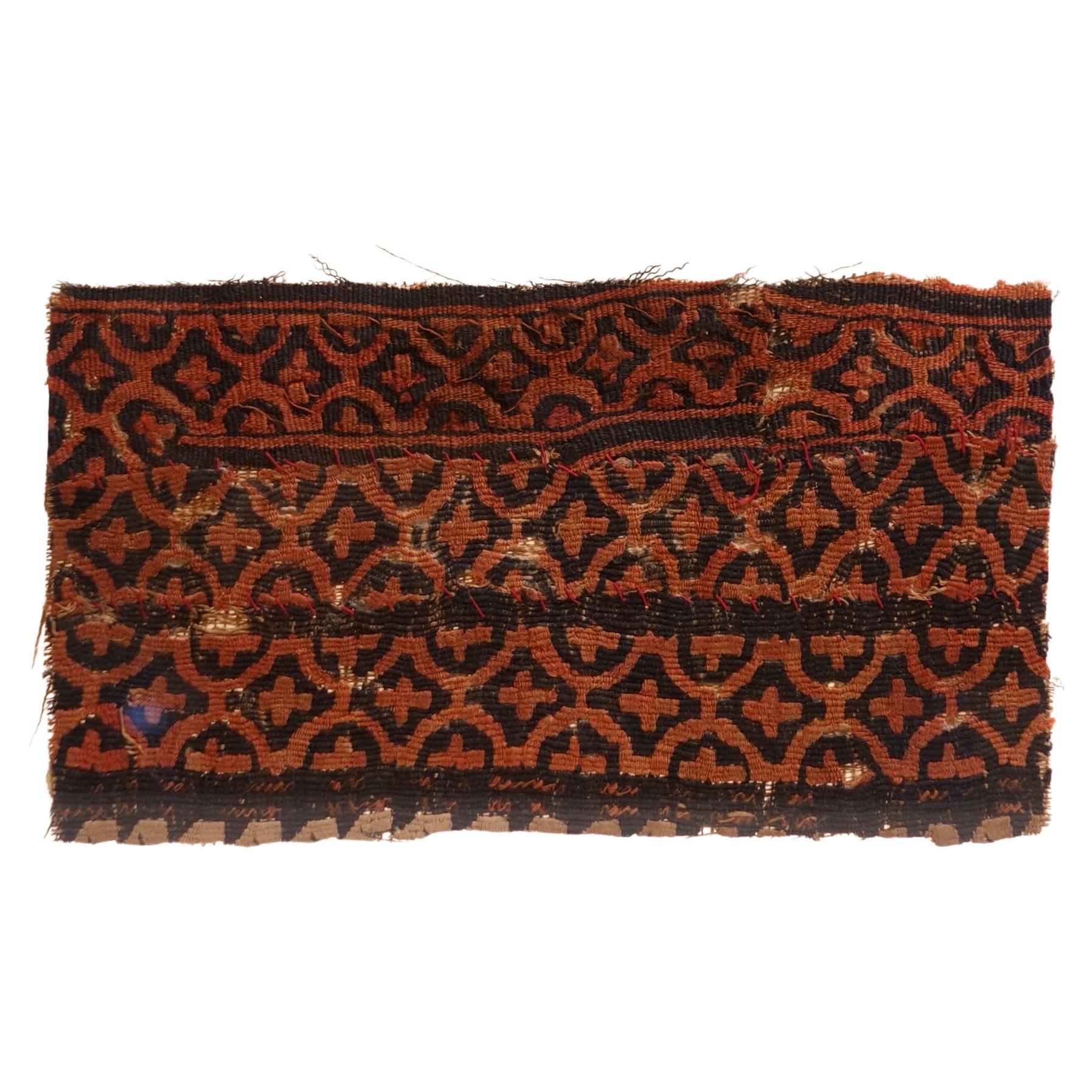
This band fragment features geometric decorations in red and black.
Textiles like this are believed to have been...
Category
Antique 15th Century and Earlier Egyptian Egyptian Tapestries
Materials
Wool

Canaanite Anthropoid Coffin Lid - 12th-10th century BC
Located in Bruxelles, BE
Rare Canaanite Anthropoid Coffin Lid
Terra Cotta
12th – 10th Century BC
Provenance:
Public Auction Paris (2022)
Private Collection F. Antonovich (Paris – 1980s)
Art Loss Register...
Category
Antique 15th Century and Earlier Israeli Archaistic Wall-mounted Sculptures
Materials
Terracotta
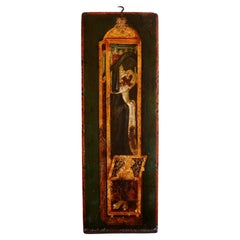
Bolognese School of the 16th Century - Mummy of Saint Catherine of Bologna
Located in Bruxelles, BE
Bolognese School of the 16th Century
Mummy of Saint Catherine of Bologna
Oil on Panel
20,5 x 7 x 0,8 cm
This rare painting depicts Saint Catherine of Bologna as a mummy, housed in a ...
Category
Antique 16th Century Italian Renaissance Paintings
Materials
Wood, Giltwood
$3,353 Sale Price
20% Off
Free Shipping
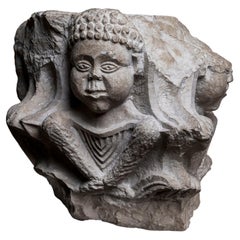
Rare Romanesque Capital Depicting Four Africans, Apulia, 13th Century
Located in Bruxelles, BE
Large stone capital carved on each side in strong relief. The basket is covered with two crowns of vertical acanthus leaves which sprout from the astragal and fill the space between ...
Category
Antique 15th Century and Earlier Italian Medieval Architectural Elements
Materials
Stone
$22,039 Sale Price
20% Off
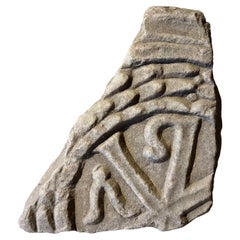
Marble Roman relief representing a Christogram
Located in Bruxelles, BE
Marble Roman relief representing a Christogram
Roman relief - 4th century
25 x 22 x 8 cm
Provenance :
Collection of the Château de B. À Nevers by Georges C.S., scholar born in 1833 and deceased in 1909
The entire castle and its collections were acquired in 1938 by the current owners of the estate
A christogram is a monogram or combination of letters that forms an abreviation for the name of Jesus Christ.
This rare fragment combines chi (X) and rho (P), the first two letters of Christ's name in Greek and it is one of the oldest and most popular early christian symbol. The monogram of Christ, or chrismon, is also a powerful symbol of imperial victory: it appeared to Emperor Constantine the Great before his battle against Maxentius in ad 312, promising victory in the name of Christ. In Plato's Timaeus, it is explained that the two bands which form the "world soul" (anima mundi...
Category
Antique 15th Century and Earlier Italian Classical Roman Figurative Scul...
Materials
Marble
$3,516 Sale Price
30% Off
You May Also Like
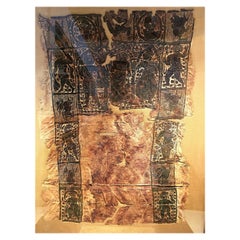
Ancient Coptic Textile with Classical Figures
Located in Spring Valley, NY
Finely woven of wool and linen, this large, ancient, museum level Coptic textile depicts figures derived from classical antiquity, some playing musical ...
Category
Antique 15th Century and Earlier Egyptian Classical Roman Antiquities
Materials
Wool, Linen
Abstract Paracas Precolumbian Textile, Peru, 1100-1400 AD, Ex Ferdinand Anton
Located in San Pedro Garza Garcia, Nuevo Leon
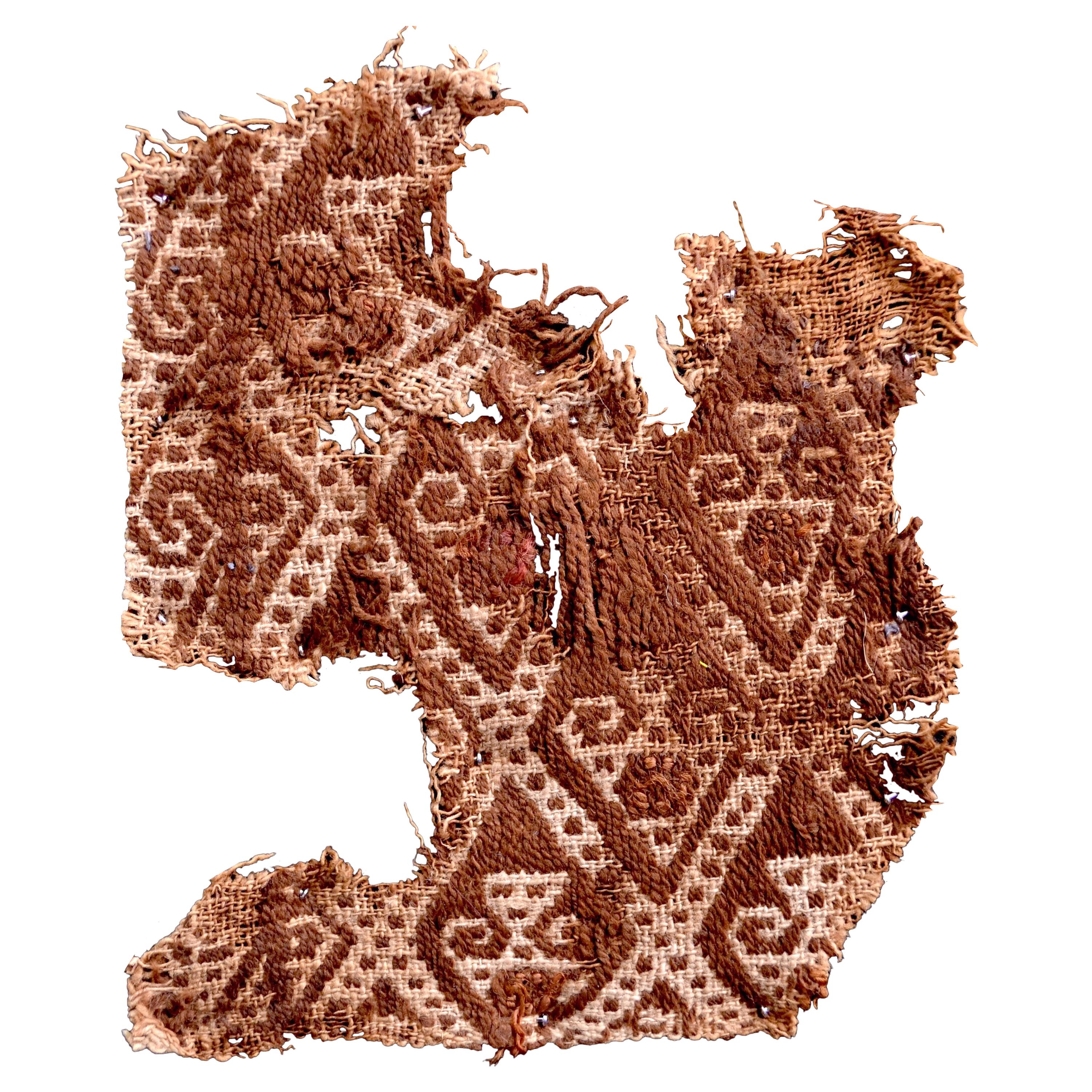
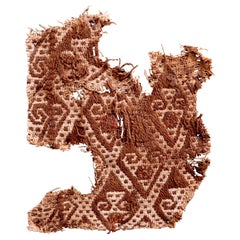
Earth tones pre-Columbian textile fragment with abstract embroidered figures. This piece is framed in a black shadowbox.
It is a wonder to behold antiquities such as a pre-Columbian textiles, an authentic piece of art that has been preserved for centuries and that survives generation after generation. Textiles are infinitely more delicate than wood, metal, or rock artifacts -- so the existence of these pieces after hundreds and thousands of years is exceptional. These textiles maintain their vibrant colors, natural threads, and their unique, historical designs.
Provenance: This textile comes from the collection Ulrich Hoffmann, Stuttgart and former collection of the archaeologist Ferdinand Anton...
Category
Antique 15th Century and Earlier Peruvian Pre-Columbian Antiquities
Materials
Textile
Outstanding Antique Ottoman Oushak Multiple Niche Rug Fragment
Located in Milan, IT
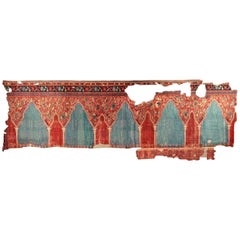
A truly majestic Ottoman carpet fragment decorated by a sequence of five niches with capitols leading into an aqua green background. Professionally mounted on a cotton backing, this monumental, architectural weaving is a prime example of antique textile art.
Category
Antique Early 18th Century Turkish Oushak Turkish Rugs
Materials
Wool
Ancient Coptic Egyptian Textile Fragment in Blue, Red, Rust, Brown, Beige, Gold
Located in Austin, TX
Fragment size: 12 x 15 in.
Frame size: 18 x 21 in.
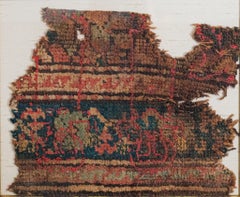
A 4th to 7th Century Coptic Egyptian antique textile fragment of hand woven wool.
In the 4th century AD, Greeks invaded Egypt a...
Category
15th Century and Earlier More Art
Materials
Fabric, Textile, Wool
3rd to 5th Century Coptic Egyptian Textile fragment beige dark blue Brocade
Located in Austin, TX
Textile size 8.5 x 10 in.
Frame size 13.5 x 15 in.
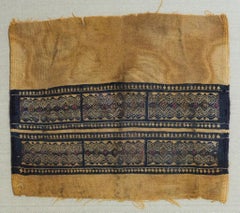
This piece is an ancient Coptic Egyptian textile fragment, dating from the 3rd to 5th century CE. It is composed of a coarse, plai...
Category
15th Century and Earlier More Art
Materials
Textile, Linen, Dye
Coptic Fabric Remains: Egyptian Cotton Woven Art, 8th-9th Century
Located in Beirut, LB
Set of Coptic fabric remains in Egyptian cotton from the 8th or 9th century A.C. That were found in an excavation work in the 19th century. They are in remarkably good condition. The...
Category
Antique 15th Century and Earlier Egyptian Picture Frames
Materials
Cotton
More Ways To Browse
Byzantine Antique
Early Byzantine
Byzantine Furniture
Egypt Textile
Coptic Art
Czech Or French Beaded Peacock Lamp
Turned Ash Bedside Or Table Lamp
Foldable Side Table Or Serving Tray
Flip Top Games Or Card Table
Cream Marble Or Travertine Coffee Tables
Tiled Teak Or Danish Coffee Tables
Iron Or Metal Garden Bench 4 Ft
Ceramic Italian Cheetah Or Leopard
Japanese Ceramics Edo Period Or Earlier
19501960 Glass Sugar Shaker Or Pourer
Marcel Breuer Cane Or Chrome Table
Oval 70s Or 60s Coffee Table
Bamboo Or Rattan Coffee Tables