Items Similar to Cycladic Idol
Want more images or videos?
Request additional images or videos from the seller
1 of 8
Cycladic Idol
$121,699.61
£89,000
€104,597.04
CA$169,387.60
A$181,722.59
CHF 97,472.26
MX$2,187,915.62
NOK 1,228,752.30
SEK 1,120,451.82
DKK 781,479.45
About the Item
A marble figure of the early Spedos type of sculpture produced during the Early Cycladic II Period. The simplified figure is depicted in the canonical posture, with incised arms folded across the stomach, true right arm below the left. The rounded legs are flexed at the knees and are divided by a deep groove, which only fully cuts through to the other side of the figure at one between the calves. The legs are broken below the knees. As is typical of such figures, the prominent nose is the only facial feature indicated on the head. The head tilts slightly backwards and is gently flattened at the top. The flat chest and straight hips marks this figure as one of the rarer, more androgynous sculptures from the period – the vast majority of Cycladic figures are distinctively female.
Much of the evidence we have for the Early Cycladic period comes from goods and objects that were found in tombs on the islands. Tombs contain a range of objects in different materials: tools and weapons of Melian obsidian and bronze; shell, stone, bone, bronze and silver jewellery; elaborately carved soapstone boxes. However, marble was clearly the preferred material for sculpting. The marble came mainly from the islands of Naxos and Keros, and some from Paros and Ios. Marble objects were made only during the first two phases of Early Cycladic culture, with the folded-arm figures appearing only in the second stage.
The meaning and use of such figures remains uncertain, and may have changed across the five centuries in which they were produced. Some archaeologists have suggested that they were produced solely for funerary use, and may have fulfilled the same role as ushabtis in Egyptian graves (to perform work for the owner in the afterlife), as substitutes for human sacrifice, or as guides for the soul of the deceased. Others have suggested that they had apotropaic qualities. Another theory is that they represent figures from Cycladic mythology, and even could have been images of the ‘Great Mother’ goddess. There is little evidence for this deity in Cycladic culture, however, and androgynous figures such as this, as well as examples with male genitalia have also been excavated. Some figures were found broken and repaired prior to their placement in the tomb – this suggests that they were used prior to their burial, perhaps within a domestic shrine.
Provenance
With Mathias Komor (1909-1984), New York, by at least 1957.
Private Collection, New York, acquired from the above on 28 September 1957, accompanied by dated purchase invoice.
Thence by descent, accompanied by signed provenance statement.
ALR: S00261827, with IADAA Certificate, this item has been checked against the Interpol database.
- Dimensions:Height: 5.12 in (13 cm)Width: 1.97 in (5 cm)Depth: 1.58 in (4 cm)
- Style:Classical Greek (In the Style Of)
- Materials and Techniques:
- Place of Origin:
- Period:
- Date of Manufacture:2500-200 B.C.
- Condition:Repaired: Torso missing both feet from mid ankle. Wear consistent with age and use. Head has been re-attached, surface in fine and stable condition with wear consistent with age.
- Seller Location:London, GB
- Reference Number:1stDibs: LU5517247354482
About the Seller
5.0
Vetted Professional Seller
Every seller passes strict standards for authenticity and reliability
Established in 1910
1stDibs seller since 2020
- ShippingRetrieving quote...Shipping from: London, United Kingdom
- Return Policy
More From This Seller
View AllFigure of Khnum
Located in London, GB
A striding figure of the Egyptian god Khnum, in bronze. The god is depicted as a man with a ram’s head, with two large horns curving inwards and forwards towards the face, in the sty...
Category
Antique 15th Century and Earlier Egyptian Egyptian Antiquities
Materials
Bronze
$28,956
Torso of a Youth
Located in London, GB
A marble statue of a youth in contrapposto position. The torso is idealised but has only softly suggested muscles, giving the impression of youth. The beginnings of the slender arms ...
Category
Antique 15th Century and Earlier European Antiquities
Materials
Marble
$449,768
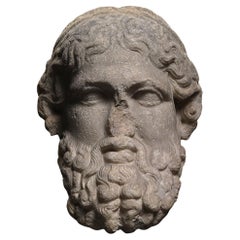
Marble Head of Hermes
Located in London, GB
Roman head of the god Hermes in an archaising style, following a Greek model from the fourth century B.C.. Hermes is depicted in manner typically found on herms, with a full beard of...
Category
Antique 15th Century and Earlier European Classical Roman Antiquities
Materials
Marble
$69,532
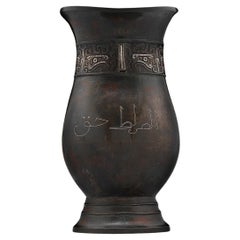
Arabic-Inscribed Archaistic Vase
Located in London, GB
An elegantly cast bronze vessel from Qing Dynasty China. The pear-shaped body sits atop a splayed foot, and rises to a waisted neck and flared rim. A broad band of gold and silver in...
Category
Antique 17th Century Chinese Antiquities
Materials
Bronze
Byzantine Mosaic Panel
Located in London, GB
A rectangular Byzantine mosaic, comprising six lines of Greek text in black and red tesserae set within a blue rectangular frame against a white background. The second line down is i...
Category
Antique 15th Century and Earlier Turkish Classical Greek Antiquities
Materials
Stone

$301,514
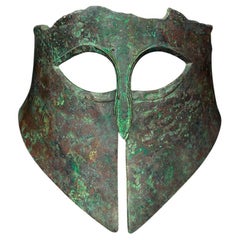
Facial Fragment of a Corinthian Helmet
Located in London, GB
Ancient Greek city-states such as Corinth were defended by the hoplites (derived from the hopla or round shield), citizen-soldiers primarily armed with swords, spears and shields. S...
Category
Antique 15th Century and Earlier Greek Classical Greek Antiquities
Materials
Bronze
You May Also Like
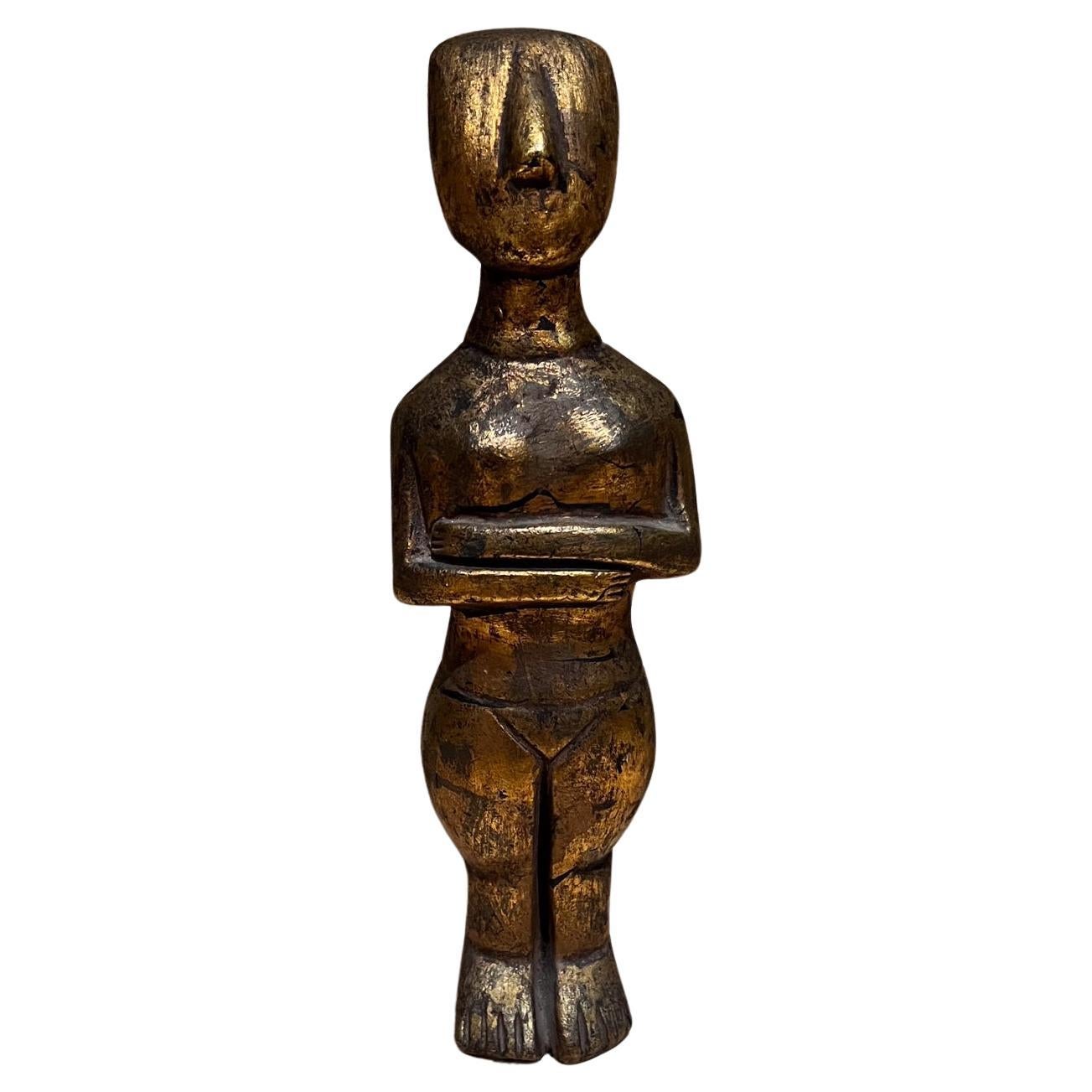
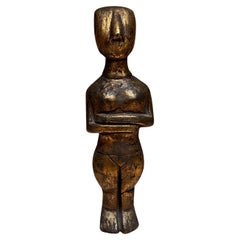
1970s Golden Oscar Art Sculpture Cycladic Figurine
Located in Chula Vista, CA
AMBIANIC presents
Art Sculpture Golden Oscar Cycladic Figurine Gold Leaf
11.88 tall x 3.5 w x 2 d
Preowned original vintage condition.
Refer to images provided.
Category
Mid-20th Century Mid-Century Modern Figurative Sculptures
Materials
Gold
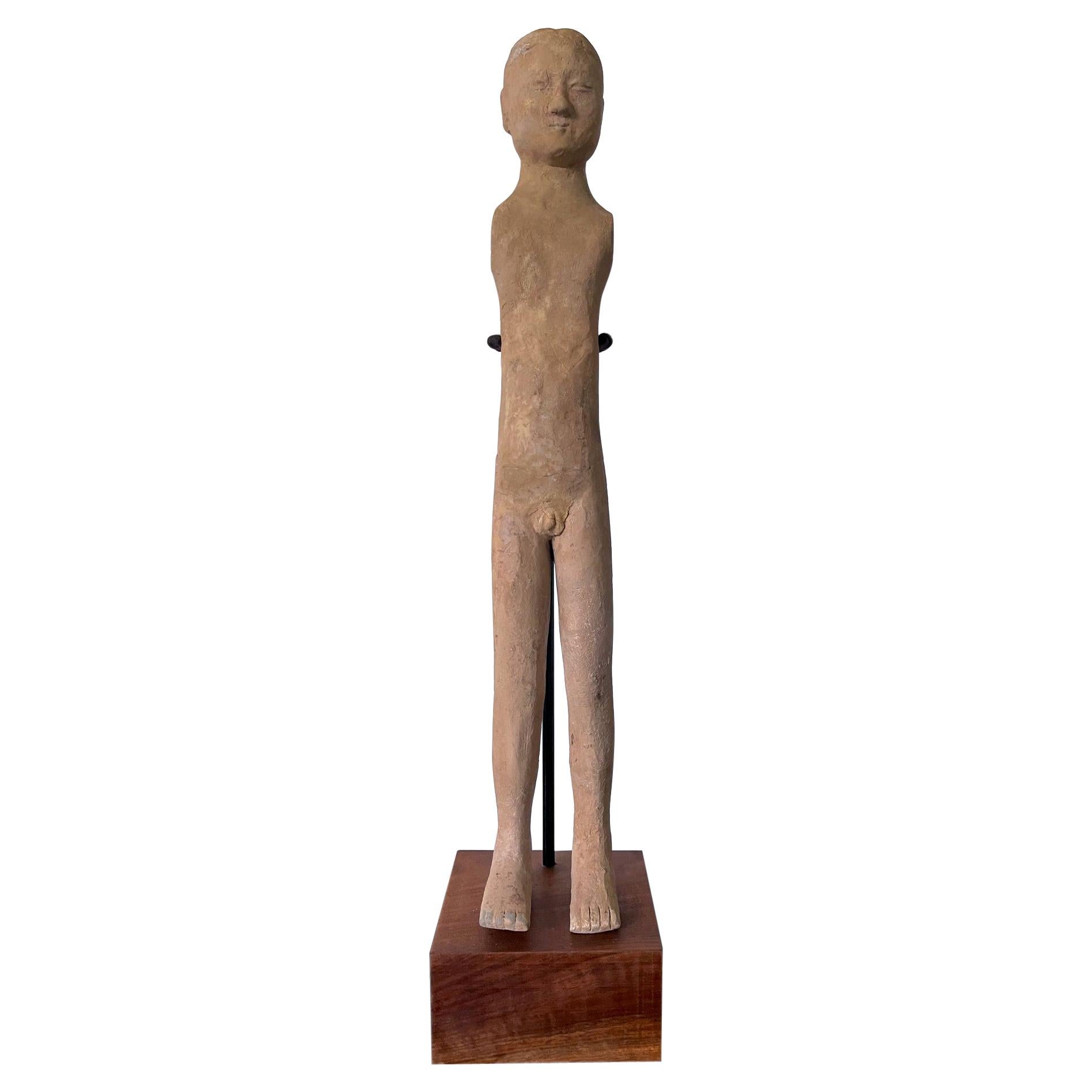
Chinese Stoneware Tomb Figure Han Dynasty
Located in Atlanta, GA
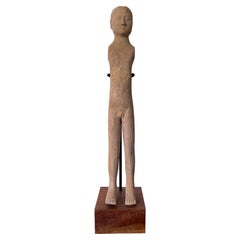
A Chinese molded stoneware figure on a custom display stand likely from Han Dynasty (202BC-220AD). These pottery figures were used as part of tomb accouterment for the burial practic...
Category
Antique 15th Century and Earlier Chinese Archaistic Ceramics
Materials
Stoneware
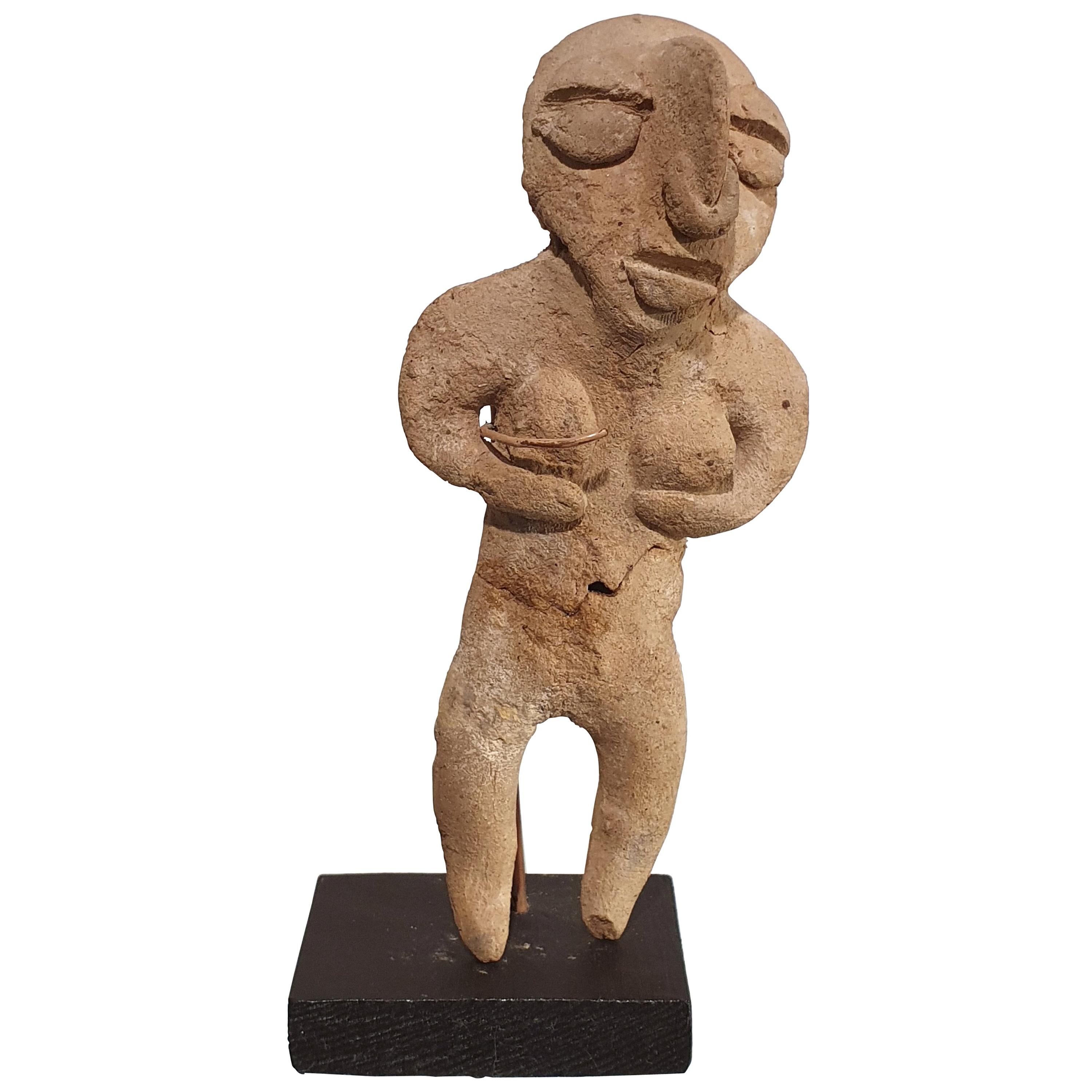
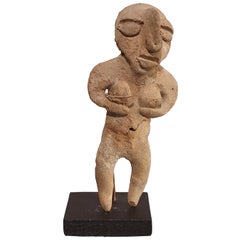
Small Ecuadorian Moulded Clay Figure on Stand
Located in London, GB
This rare and wonderful example of a formative stage figure from the woodland period is attached to a small wire and wood stand, and is in extraordinarily very good condition for its...
Category
Antique 15th Century and Earlier Ecuadorean Antiquities
Materials
Clay
$1,230 Sale Price
50% Off
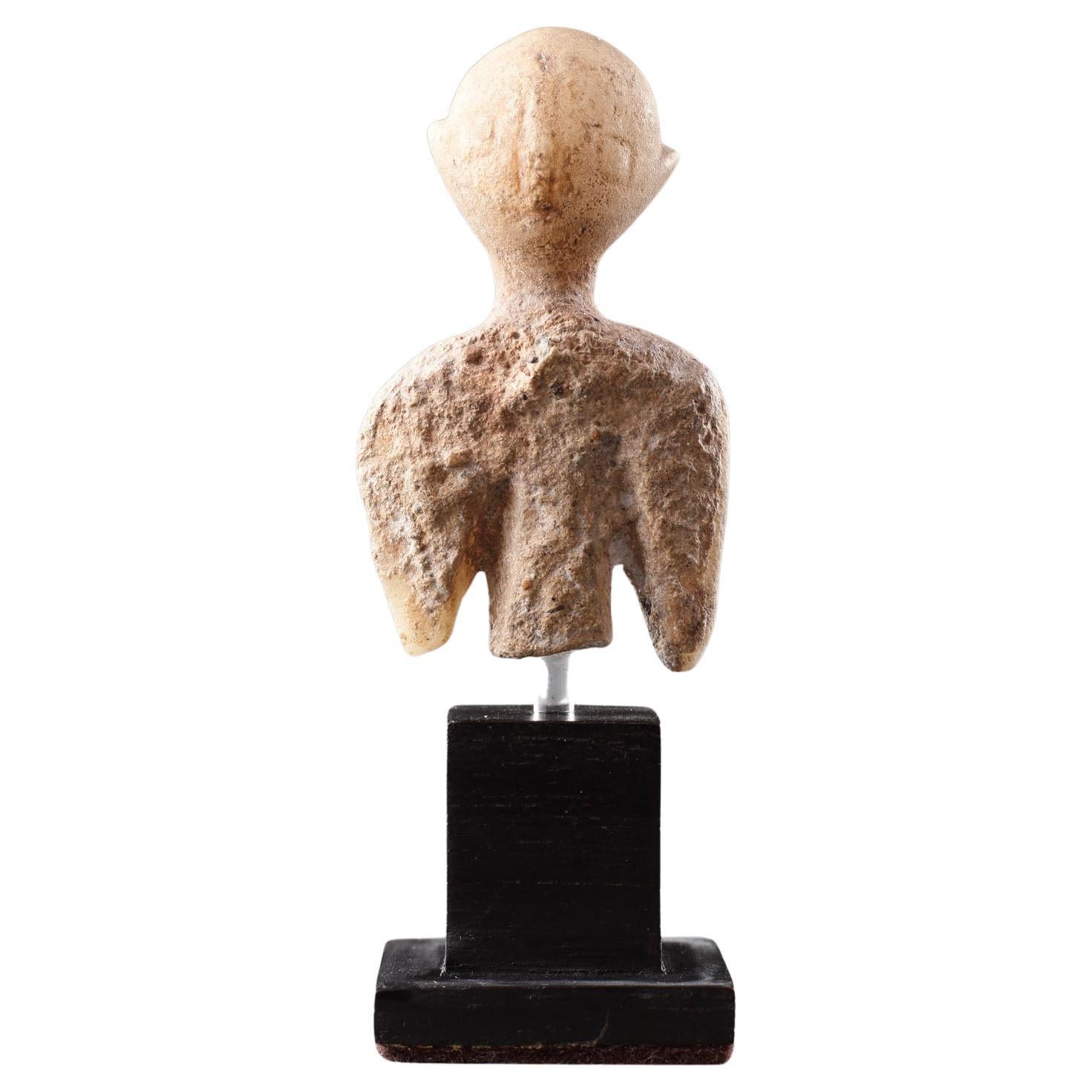
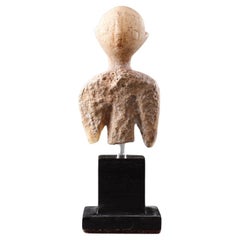
An Anatolian Marble ‘Star Gazer’ Figure
Located in London, GB
An Anatolian Marble ‘Star Gazer’ Figure
Marble
Anatolian
Early Bronze Age / Circa 2700 - 2100 BC
Size: 5cm high, 3cm wide - 2 ins high, 1¼ ins high
The highly stylised oval head wi...
Category
Antique 15th Century and Earlier Turkish Antiquities
Materials
Marble
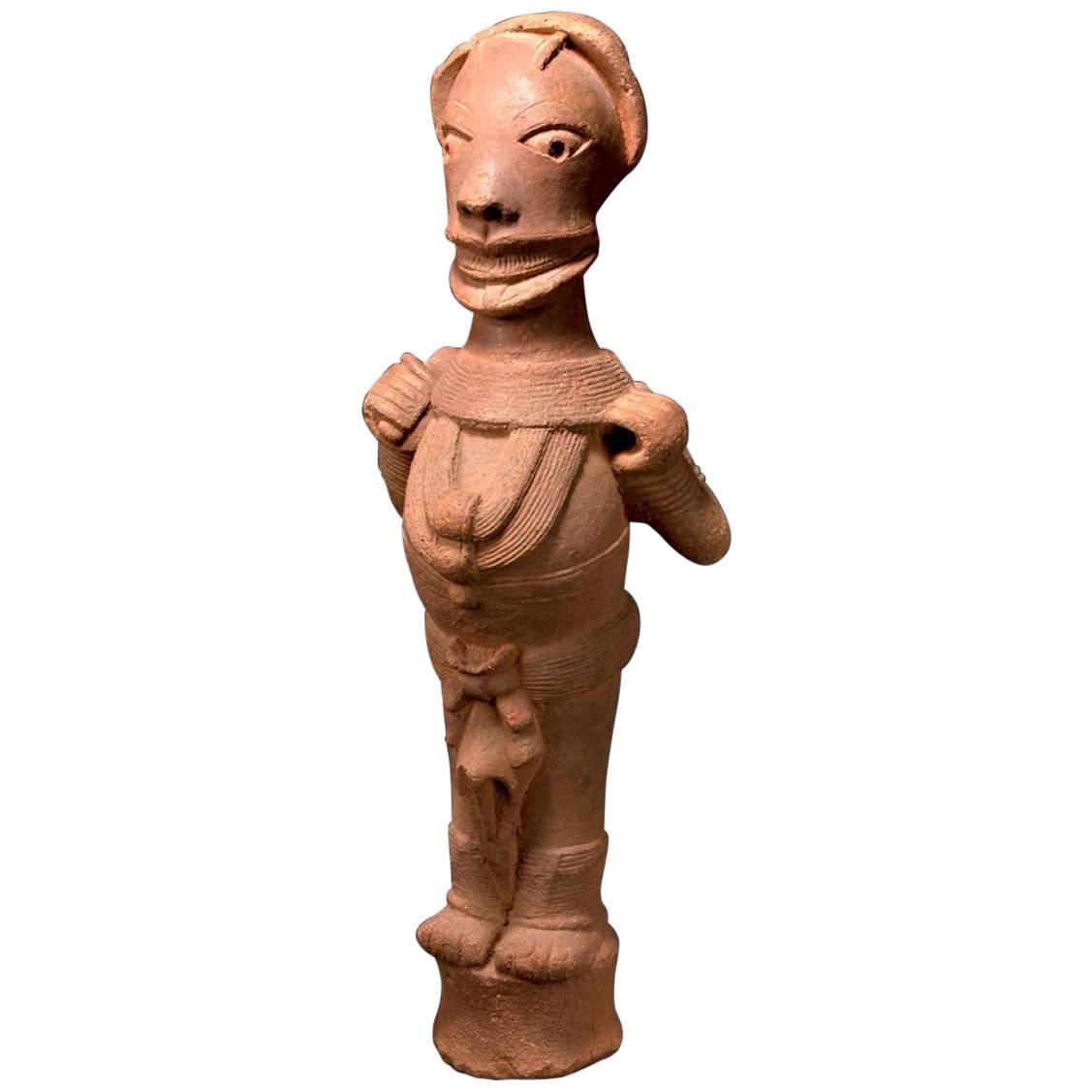
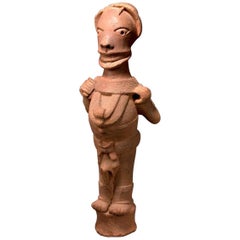
Nok Terracotta Standing Dignitary Figure, TL Tested, Nigeria Africa 500-100 BC
Located in San Pedro Garza Garcia, Nuevo Leon
Nok Terracotta Standing Dignitary Figure in Royal Pose. I-II Century AD. Certificate of Authenticity with TL Test and Passport from Europe. Museum Piece...
Category
Antique 15th Century and Earlier Nigerian Primitive Figurative Sculptures
Materials
Terracotta
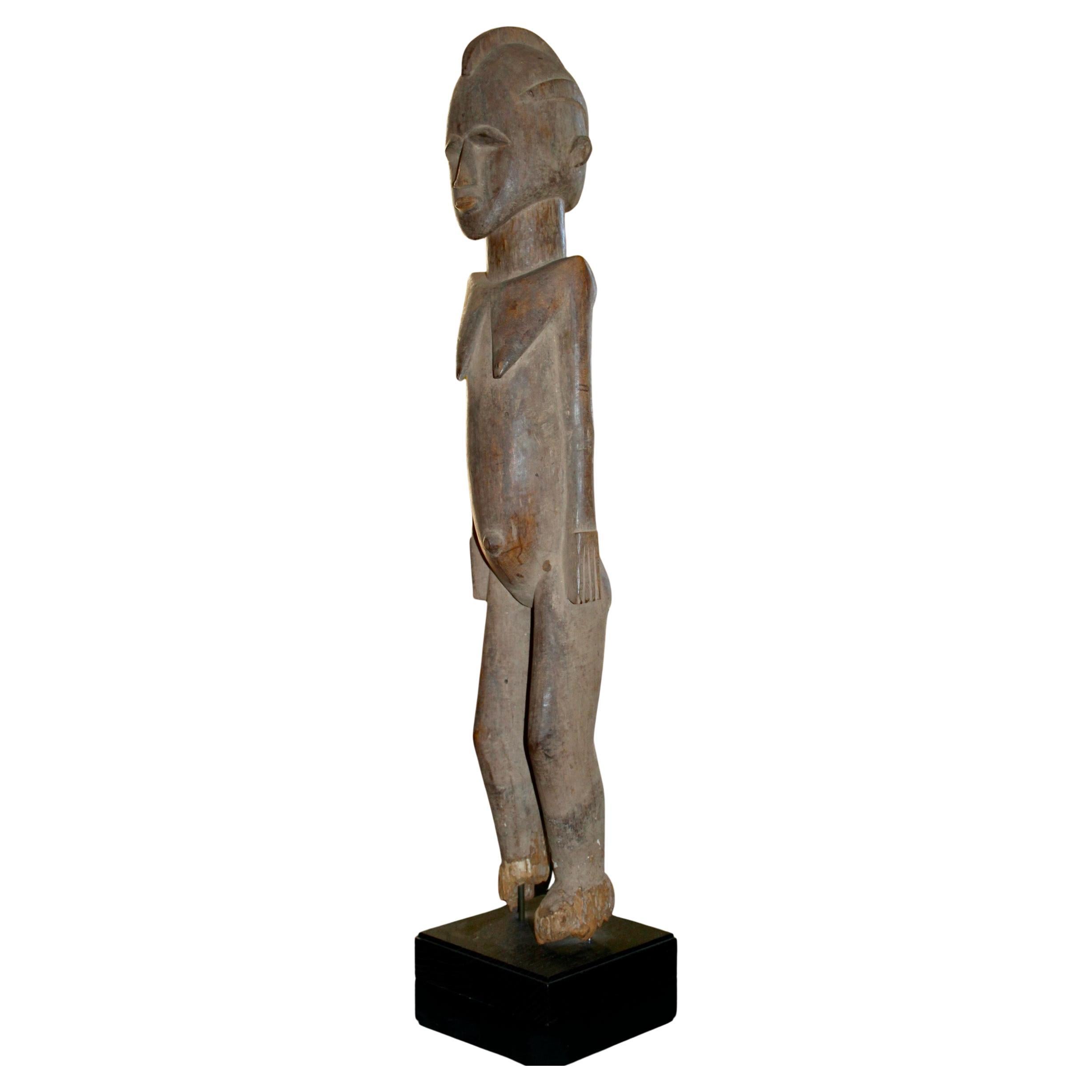
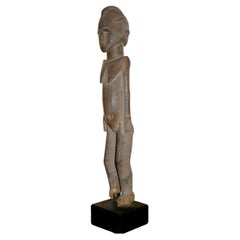
A Lobi sculpture
Located in grand Lancy, CH
A Lobi sculpture with nice patina and nice style
Category
Antique Late 19th Century Burkinabe Tribal Art
Materials
Wood
$3,800