Items Similar to Facial Fragment of a Corinthian Helmet
Want more images or videos?
Request additional images or videos from the seller
1 of 5
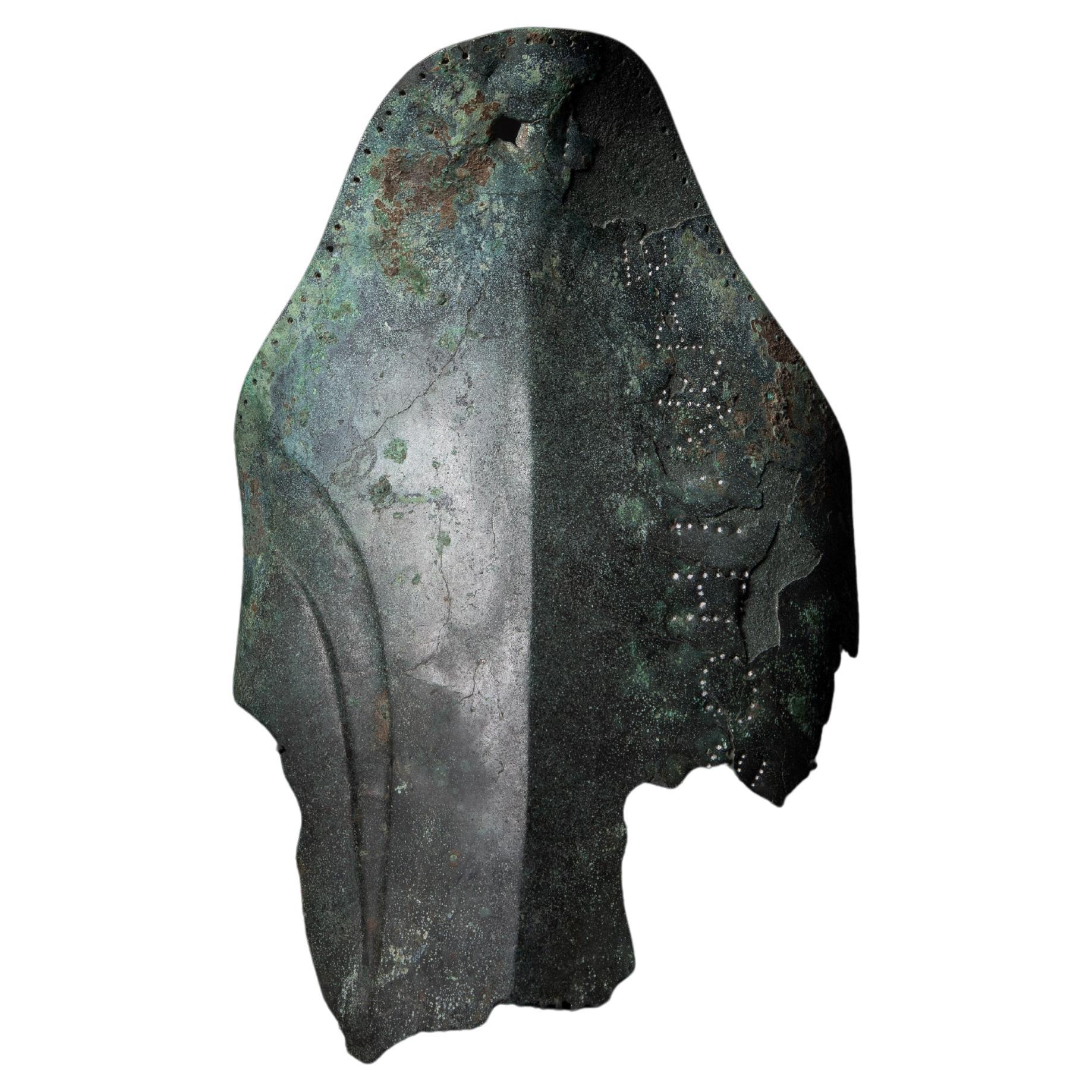
Facial Fragment of a Corinthian Helmet
$191,144.96
£140,000
€164,687.82
CA$266,159.79
A$285,973.88
CHF 153,424.41
MX$3,369,101.87
About the Item
Ancient Greek city-states such as Corinth were defended by the hoplites (derived from the hopla or round shield), citizen-soldiers primarily armed with swords, spears and shields. Soldiers had to pay for their own weapons and body armours, excluding the poorer peasants and traders from the task of war.
The distinctive shape of the Corinthian helmet, with slits for the eyes and the mouth, a narrow nasal and broad cheek plates, was designed to offer maximum protection. The curved projection at the base of the helmet protected the soldier’s neck. Beaten out entirely from one piece of bronze, it required exceptional skill on the part of the Greek artisans. It was often decorated with carvings and plumes of horsehair.
Out of combat, the helmet was worn pushed back on the forehead for comfort, as often depicted in Greek pottery, coins and sculptures. With the evolution of weaponry, more open-work helmet styles such as Thracian and Chalcidian examples became popular for combat, however the Corinthian helmet worn raised on the crown of the head became a symbol of warfare. As the Romans adopted earlier Greek styles of bronze and marble sculpture, they similarly appropriated the symbolic importance of the Corinthian helmet as an emblem of glory and conquest, and it adorned many statues of important Roman military leaders.
Athena, the Greek goddess of warfare, was herself often depicted on coins and statues wearing a plumed Corinthian helmet pushed back upon her head, strengthening the association between this helmet type and divine conquest, while also providing archaeological evidence to illustrate how the helmet was both often worn, and adorned with feathers.
Corinthian helmets can be found in the collections of many major museums across the world, including the Louvre in Paris and the British Museum in London, which holds at least twenty examples in various states of survival.
Provenance
By repute, this helmet was excavated in the 1960s from Piazza Armerina, Sicily.
Previously in a Private Collection, originally acquired while stationed in Italy with the American Foreign Service prior to 1971 (accompanied by an old photograph dated May 1972 which states findspot and that the helmet was restored in 1971 at the Smithsonian Institution, Washington D.C.).
Thence by descent to the step-son of the above, Seattle, USA.
ALR: S00224293, with IADAA certificate, this item has been searched against the Interpol database.
- Dimensions:Height: 7.49 in (19 cm)Width: 7.49 in (19 cm)Depth: 7.49 in (19 cm)
- Style:Classical Greek (Of the Period)
- Materials and Techniques:
- Place of Origin:
- Period:
- Date of Manufacture:Archaic Period, 6th-5th century B.C
- Condition:Repaired: Restored in 1971 by the head of restoration at the Smithsonian Institution in Washington D.C. Wear consistent with age and use. Minor structural damages. The helmet was shown to a conservator who removed the 1971 restorations and re-joined the original fragments together. Otherwise in good condition - x-rays available upon request.
- Seller Location:London, GB
- Reference Number:1stDibs: LU5517247353122
About the Seller
5.0
Vetted Professional Seller
Every seller passes strict standards for authenticity and reliability
Established in 1910
1stDibs seller since 2020
- ShippingRetrieving quote...Shipping from: London, United Kingdom
- Return Policy
More From This Seller
View AllMarble Head of Hermes
Located in London, GB
Roman head of the god Hermes in an archaising style, following a Greek model from the fourth century B.C.. Hermes is depicted in manner typically found on herms, with a full beard of...
Category
Antique 15th Century and Earlier European Classical Roman Antiquities
Materials
Marble
$69,426
Corsican Bronze Hoard
Located in London, GB
Dagger L: 27.8 cm,
Luniform bronze, possibly a belt buckle L: 10.8 cm,
Shield-shaped bronze with a point Diam: 6.5 cm,
Pommel Diam: 3.7 cm,
Violin-bow brooch L: 17.5 cm,
P-Shape...
Category
Antique 15th Century and Earlier European Classical Roman Antiquities
Materials
Bronze
$88,472 / set
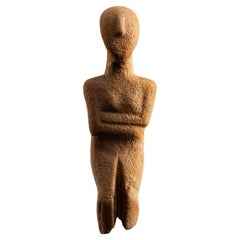
Cycladic Idol
Located in London, GB
A marble figure of the early Spedos type of sculpture produced during the Early Cycladic II Period. The simplified figure is depicted in the canonical posture, with incised arms fold...
Category
Antique 15th Century and Earlier Greek Classical Greek Antiquities
Materials
Marble
$121,481
Byzantine Mosaic Panel
Located in London, GB
A rectangular Byzantine mosaic, comprising six lines of Greek text in black and red tesserae set within a blue rectangular frame against a white background. The second line down is i...
Category
Antique 15th Century and Earlier Turkish Classical Greek Antiquities
Materials
Stone

$301,053
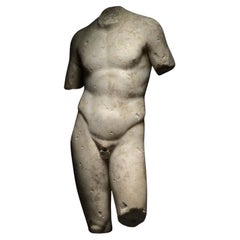
Torso of a Youth
Located in London, GB
A marble statue of a youth in contrapposto position. The torso is idealised but has only softly suggested muscles, giving the impression of youth. The beginnings of the slender arms ...
Category
Antique 15th Century and Earlier European Antiquities
Materials
Marble
$449,081
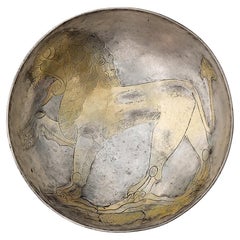
Plate with Lion Motif
Located in London, GB
A plate of silver gilt bronze, incised with a large image of a roaring lion. The lion is depicted mid-stride, with its foreleg raised in front of it. The lion’s mouth is opened wide,...
Category
Antique 15th Century and Earlier Persian Antiquities
Materials
Silver
$44,372
You May Also Like
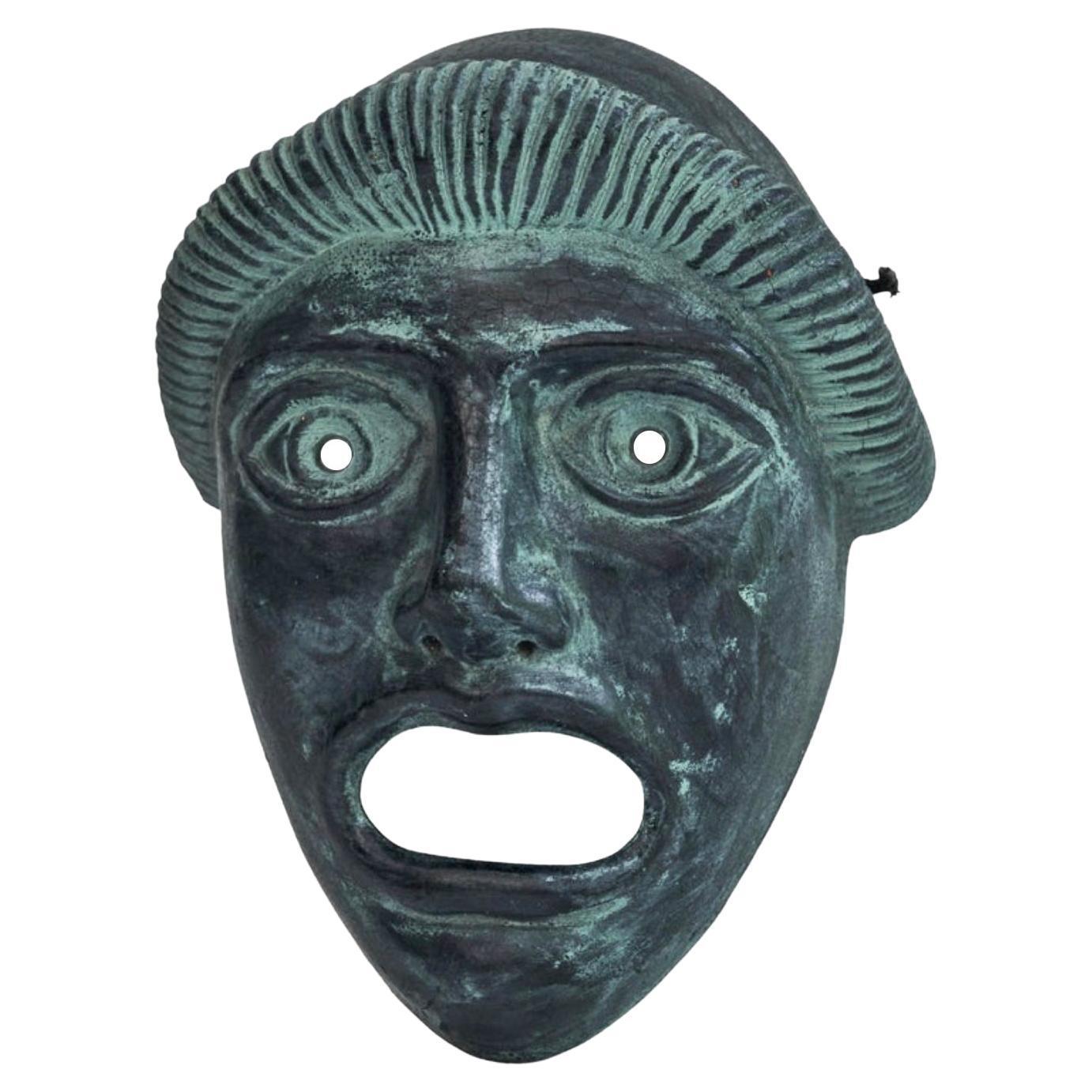
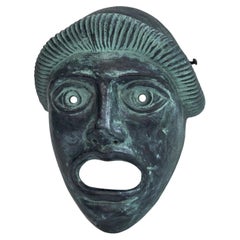
Mid-Century Greek Decorative Mask
Located in Meer, VAN
Mid-Century Decorative Mask. Greece, mid 20th century.
This is a beautiful ceramic decorative mask to display on your wall, made in Greece in the middle of the 20th century. Wonderf...
Category
20th Century Wall-mounted Sculptures
Materials
Stoneware
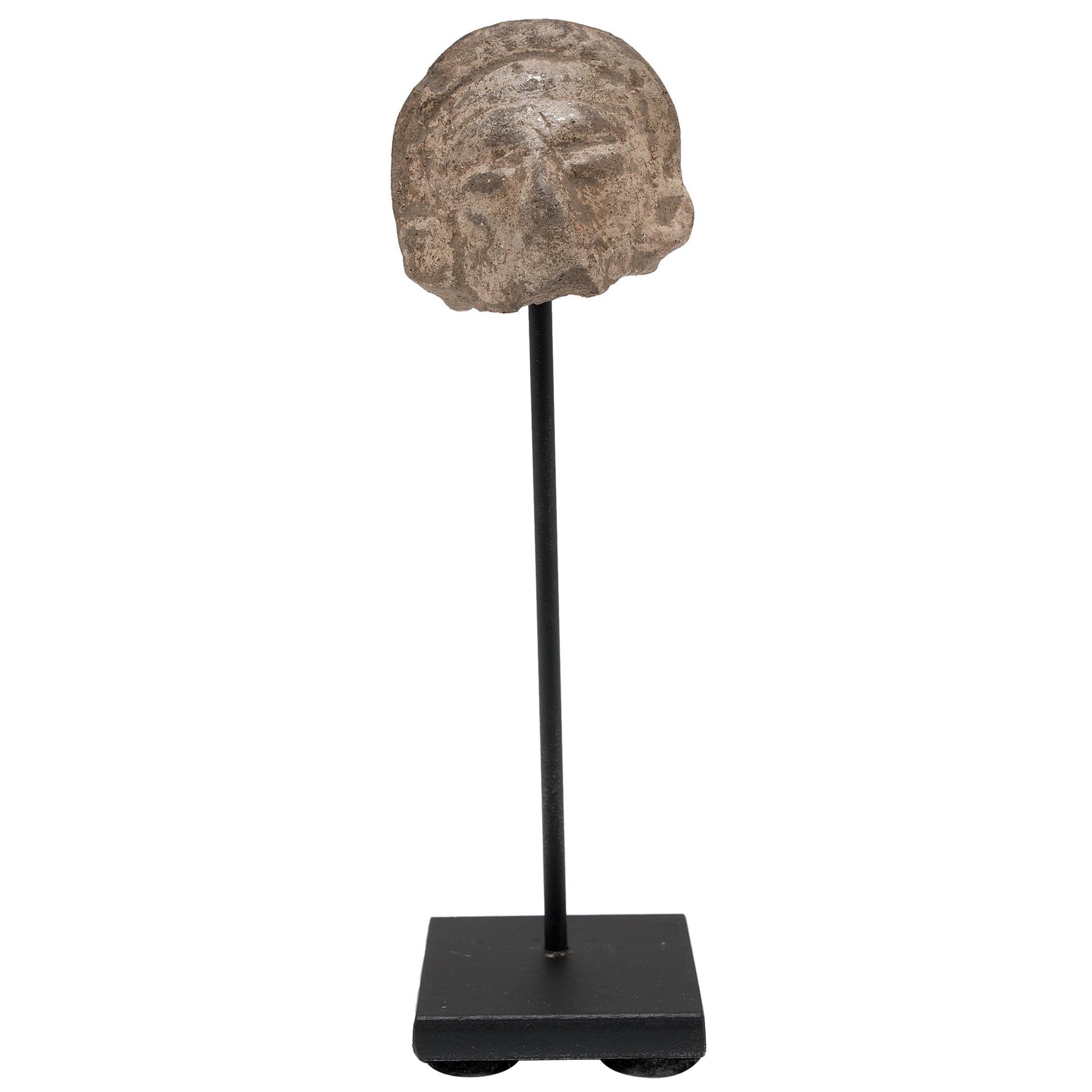
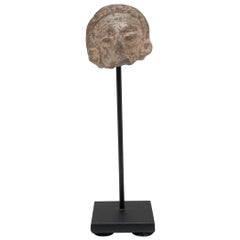
Pre-Columbian Ceramic Head Fragment
Located in Chicago, IL
This intriguing head fragment was once attached to a pre-Columbian bust or full effigy figurine. Earthenware figurines like this were made in great abundance throughout Mesoamerican history, serving a wide variety of purposes and functions from religious rituals to burial offerings.
Figurines like this commemorated important people and events across Mesoamerica, portraying individuals of different rank and status such as soldiers, merchants, bureaucrats, and occasionally divinities. This figure is adorned with an elaborate headdress, or coiffure, and ear spools...
Category
Antique 15th Century and Earlier Central American Pre-Columbian Figurati...
Materials
Ceramic
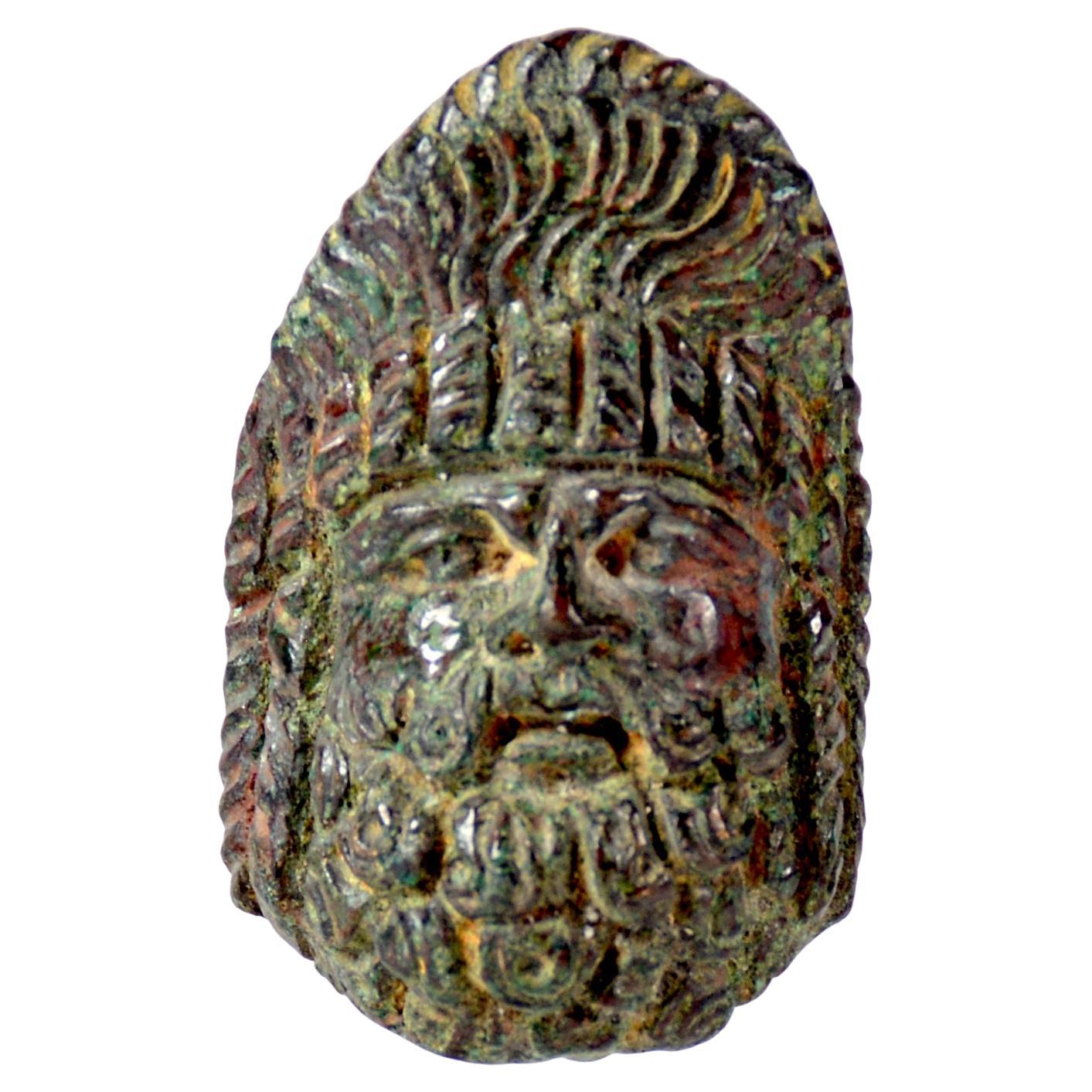
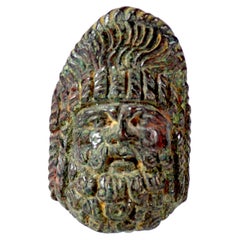
A Roman bronze applique in the shape of a theatre mask
Located in UTRECHT, UT
Mask of a bearded deity, short beard and hair braided in the characteristic high hairstyle, with layered ringlets on either side.
4 cm (h)
Green patina
...
Category
Antique 15th Century and Earlier Italian Classical Roman Antiquities
Materials
Bronze
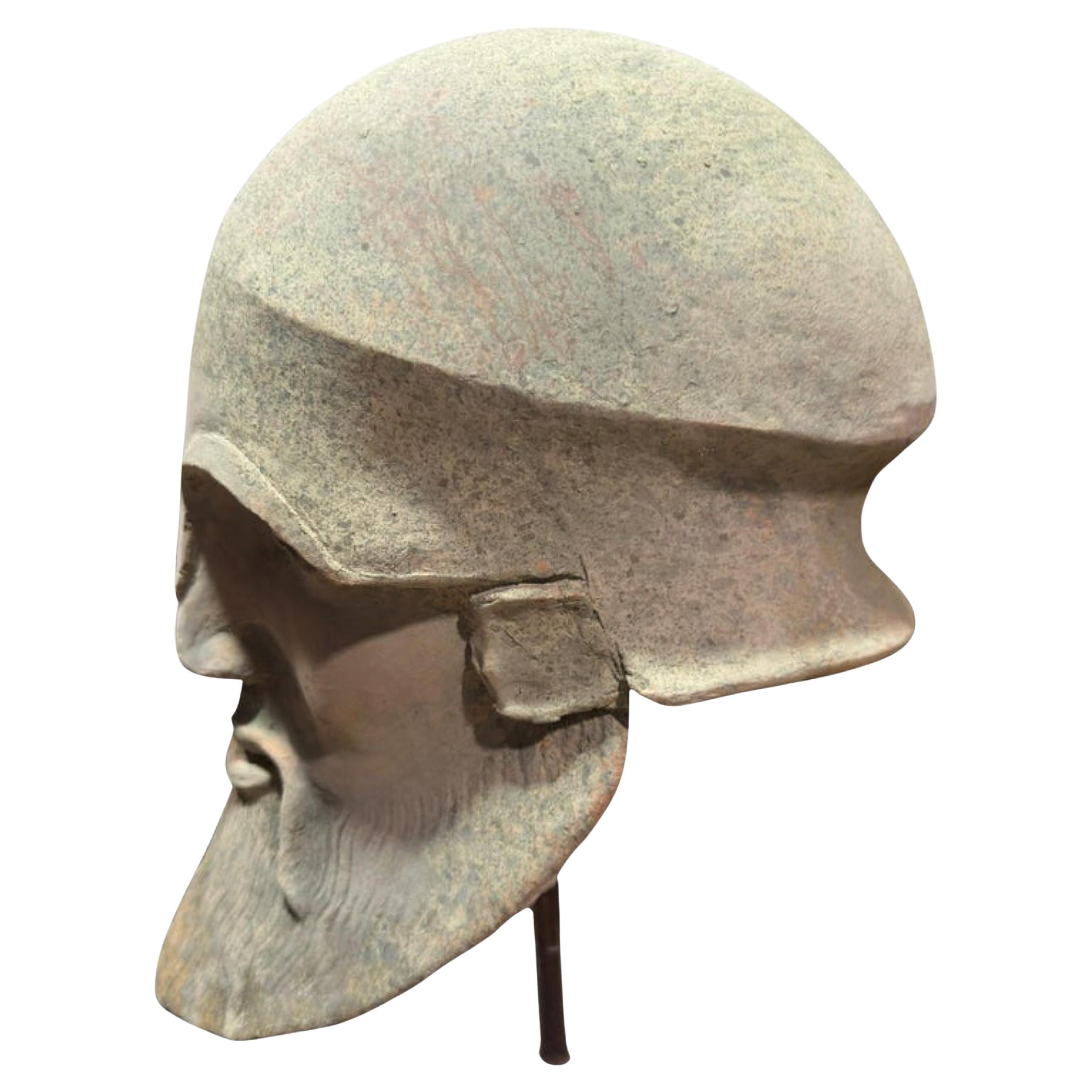
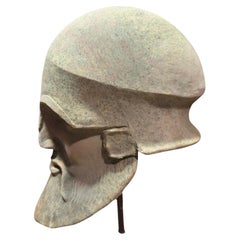
Terracotta Head of the Dying Warrior of the Frontons of Egina 20th Century
Located in Madrid, ES
Terracotta head of the dying warrior of the frontons of Egina 20th century
Italy
Measures: Height 56 cm
Width 25 cm
Length 33 cm
Weight 8 kg
Historical period between 500 and 480 BC
...
Category
20th Century Italian Modern Busts
Materials
Terracotta
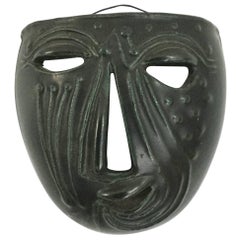
Accolay Mask
By Accolay Pottery
Located in Saint-Ouen, FR
Green ceramic mask signed accolay.
Category
Mid-20th Century French Modern Figurative Sculptures
Materials
Ceramic
$1,657
Ancient Greek Trophy Armour with Original Inscription
Located in London, GB
This ancient Greek greave - or shin pad - transformed into a trophy of war through its inscription, is an enigmatic and iconic display piece. Finely made to protect the left shin, th...
Category
Antique 15th Century and Earlier Greek Minimalist Mounted Objects
Materials
Bronze
