Olive Antiquities
to
29
29
29
29
390
581
567
239
147
29
29
29
29
29
Material: Olive
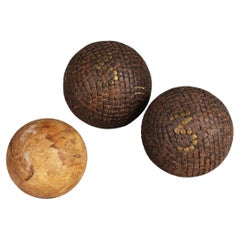
Pair Of Antique Boule Balls "3", Pétanque, 1880s, France, Craftsmanship
Located in Greven, DE
Beautiful, unique Boule ball pair and one target ball, France, late 19th Century.
Decorated with the numer "3" on each of the Boule balls.
In the 19th century, the manufacture of b...
Category
Late 19th Century French Late Victorian Antique Olive Antiquities
Materials
Olive
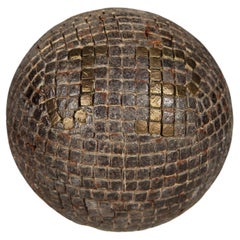
Antique Boule Ball "J P", Pétanque, 1880s, France, Craftsmanship
Located in Greven, DE
Beautiful, unique Boule ball, France, late 19th Century.
In the 19th century, the manufacture of boules balls underwent significant development in France as the game of boules, part...
Category
Late 19th Century French Late Victorian Antique Olive Antiquities
Materials
Metal, Brass
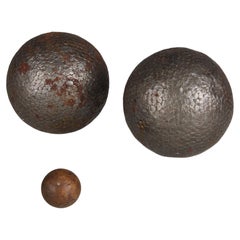
Pair Of Antique Boule Balls, Pétanque, 1880s, France, Craftsmanship
Located in Greven, DE
Beautiful, unique Boule ball pair and one target ball, France, late 19th Century.
In the 19th century, the manufacture of boules balls underwent significant development in France as...
Category
Late 19th Century French Late Victorian Antique Olive Antiquities
Materials
Metal
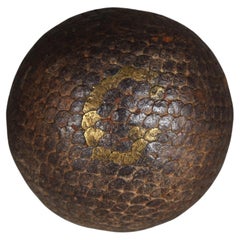
Antique Boule Ball "G", Pétanque, 1880s, France, Craftsmanship
Located in Greven, DE
Beautiful, unique Boule ball, France, late 19th Century.
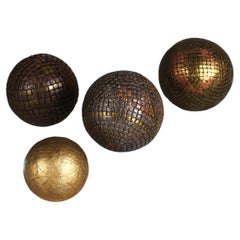
In the 19th century, the manufacture of boules balls underwent significant development in France as the game of boules, particularly the pétanque variant, gained in popularity. The manufacture of boules balls during this period was a manual process that required expertise, precision and love to detail.
In the late 19th and early 20th centuries, particularly in rural areas of France and other Mediterranean regions, olive wood was a commonly used source of material for making boules balls. This was not only due to the availability of the material, but also to the outstanding properties of olive wood, which was characterized by hardness, strength and a rich grain.
First, the olive wood was carefully selected and shaped into raw balls, which were then sanded to the desired size and shape. The nails were then hammered into the balls one by one, making sure that they were evenly distributed and firmly anchored. Finally, the spheres were polished and coated with a protective varnish to enhance their natural beauty and protect them from the elements.
The use of nails to decorate and reinforce olive wood boules was a traditional practice that not only gave the ball a rustic aesthetic, but also improved its durability and contributed to customization. Many balls were made according to the specific requirements and preferences of the players. Nails were driven at regular intervals around the ball, with each nail hole precisely placed so as not to affect the balance and weight distribution of the ball. These nails not only served as a decorative element, but also helped to strengthen the structure of the ball and make it more resistant to the hard knocks and wear and tear during play. Individual engravings or decorations were often applied to the balls to make them unique and identify the player.
Antique boules...
Category
Late 19th Century French Late Victorian Antique Olive Antiquities
Materials
Metal
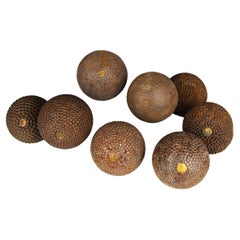
Complete Set Of Antique Boule Balls, 8 Pieces, Pétanque, 1880s, France
Located in Greven, DE
Complete Boule ball set of 8 pieces, France, late 19th Century.
In the 19th century, the manufacture of boules balls underwent significant development in France as the game of boule...
Category
Late 19th Century French Late Victorian Antique Olive Antiquities
Materials
Metal
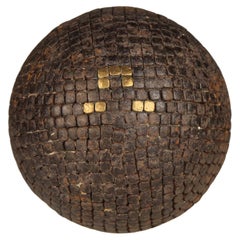
Antique Boule Ball Brass Decor, Pétanque, 1880s, France, Craftsmanship
Located in Greven, DE
Beautiful, unique Boule ball, France, late 19th Century.
In the 19th century, the manufacture of boules balls underwent significant development in France as the game of boules, part...
Category
Late 19th Century French Late Victorian Antique Olive Antiquities
Materials
Metal, Brass
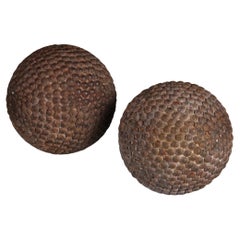
Pair Of Antique Boule Balls, Pétanque, 1880s, France, Craftsmanship
Located in Greven, DE
Beautiful, unique Boule ball pair, France, late 19th Century.
Diameter 9,5 cm.
In the 19th century, the manufacture of boules balls underwent significant development in France as the game of boules, particularly the pétanque variant, gained in popularity. The manufacture of boules balls during this period was a manual process that required expertise, precision and love to detail.
In the late 19th and early 20th centuries, particularly in rural areas of France and other Mediterranean regions, olive wood was a commonly used source of material for making boules balls. This was not only due to the availability of the material, but also to the outstanding properties of olive wood, which was characterized by hardness, strength and a rich grain.
First, the olive wood was carefully selected and shaped into raw balls, which were then sanded to the desired size and shape. The nails were then hammered into the balls one by one, making sure that they were evenly distributed and firmly anchored. Finally, the spheres were polished and coated with a protective varnish to enhance their natural beauty and protect them from the elements.
The use of nails to decorate and reinforce olive wood boules was a traditional practice that not only gave the ball a rustic aesthetic, but also improved its durability and contributed to customization. Many balls were made according to the specific requirements and preferences of the players. Nails were driven at regular intervals around the ball, with each nail hole precisely placed so as not to affect the balance and weight distribution of the ball. These nails not only served as a decorative element, but also helped to strengthen the structure of the ball and make it more resistant to the hard knocks and wear and tear during play. Individual engravings or decorations were often applied to the balls to make them unique and identify the player.
Antique boules...
Category
Late 19th Century French Late Victorian Antique Olive Antiquities
Materials
Olive
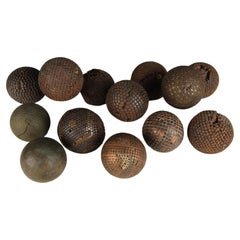
Large Set Of Antique Boule Balls, 13 Pieces, Pétanque, 1880s, France
Located in Greven, DE
Large Boule ball set of 13 pieces, France, late 19th Century.
Unrestored, original condition with signs of age and use.
In the 19th century, the manufacture of boules balls underwen...
Category
Late 19th Century French Late Victorian Antique Olive Antiquities
Materials
Metal, Copper, Steel
Antique Boule Ball, Pétanque, 1880s, France, Craftsmanship
Located in Greven, DE
Beautiful, unique Boule ball, France, late 19th Century.
In the 19th century, the manufacture of boules balls underwent significant development in France as the game of boules, part...
Category
Late 19th Century French Late Victorian Antique Olive Antiquities
Materials
Metal
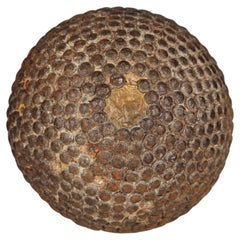
Antique Boule Ball "B", Pétanque, 1880s, France, Craftsmanship
Located in Greven, DE
Beautiful, unique Boule ball, France, late 19th Century.
In the 19th century, the manufacture of boules balls underwent significant development in France as the game of boules, part...
Category
Late 19th Century French Late Victorian Antique Olive Antiquities
Materials
Metal
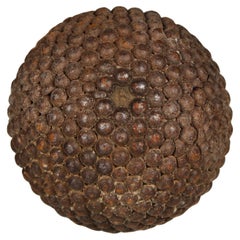
Antique Boule Balls Set "9", Pétanque, 1880s, France, Craftsmanship
Located in Greven, DE
Beautiful, unique Boule set of three Boule balls and one target ball, France, late 19th century.
In the 19th century, the manufacture of boules balls underwent significant development in France as the game of boules, particularly the pétanque variant, gained in popularity. The manufacture of boules balls during this period was a manual process that required expertise, precision and love to detail.
In the late 19th and early 20th centuries, particularly in rural areas of France and other Mediterranean regions, olive wood was a commonly used source of material for making boules balls. This was not only due to the availability of the material, but also to the outstanding properties of olive wood, which was characterized by hardness, strength and a rich grain.
First, the olive wood was carefully selected and shaped into raw balls, which were then sanded to the desired size and shape. The nails were then hammered into the balls one by one, making sure that they were evenly distributed and firmly anchored. Finally, the spheres were polished and coated with a protective varnish to enhance their natural beauty and protect them from the elements.
The use of nails to decorate and reinforce olive wood boules was a traditional practice that not only gave the ball a rustic aesthetic, but also improved its durability and contributed to customization. Many balls were made according to the specific requirements and preferences of the players. Nails were driven at regular intervals around the ball, with each nail hole precisely placed so as not to affect the balance and weight distribution of the ball. These nails not only served as a decorative element, but also helped to strengthen the structure of the ball and make it more resistant to the hard knocks and wear and tear during play. Individual engravings or decorations were often applied to the balls to make them unique and identify the player.
Antique boules...
Category
Late 19th Century French Late Victorian Antique Olive Antiquities
Materials
Olive
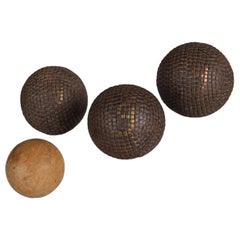
Antique Boule Balls Set "B", Pétanque, 1880s, France, Craftsmanship
Located in Greven, DE
Beautiful, unique Boule set of three Boule balls and one target ball, France, late 19th century.
In the 19th century, the manufacture of boules balls underwent significant development in France as the game of boules, particularly the pétanque variant, gained in popularity. The manufacture of boules balls during this period was a manual process that required expertise, precision and love to detail.
In the late 19th and early 20th centuries, particularly in rural areas of France and other Mediterranean regions, olive wood was a commonly used source of material for making boules balls. This was not only due to the availability of the material, but also to the outstanding properties of olive wood, which was characterized by hardness, strength and a rich grain.
First, the olive wood was carefully selected and shaped into raw balls, which were then sanded to the desired size and shape. The nails were then hammered into the balls one by one, making sure that they were evenly distributed and firmly anchored. Finally, the spheres were polished and coated with a protective varnish to enhance their natural beauty and protect them from the elements.
The use of nails to decorate and reinforce olive wood boules was a traditional practice that not only gave the ball a rustic aesthetic, but also improved its durability and contributed to customization. Many balls were made according to the specific requirements and preferences of the players. Nails were driven at regular intervals around the ball, with each nail hole precisely placed so as not to affect the balance and weight distribution of the ball. These nails not only served as a decorative element, but also helped to strengthen the structure of the ball and make it more resistant to the hard knocks and wear and tear during play. Individual engravings or decorations were often applied to the balls to make them unique and identify the player.
Antique boules...
Category
Late 19th Century French Late Victorian Antique Olive Antiquities
Materials
Olive
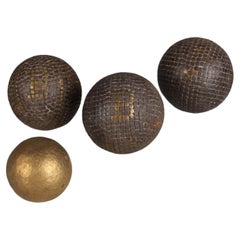
Antique Boule Ball "D F", Pétanque, 1880s, France, Craftsmanship
Located in Greven, DE
Beautiful, unique Boule ball, France, late 19th Century.
In the 19th century, the manufacture of boules balls underwent significant development in France as the game of boules, part...
Category
Late 19th Century French Late Victorian Antique Olive Antiquities
Materials
Metal, Brass
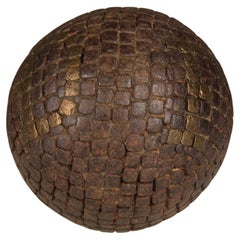
Antique Boule Set, Boule Balls, Pétanque, 1880s, France, Craftsmanship
Located in Greven, DE
Beautiful, unique Boule set of three Boule balls and one target ball, France, late 19th century.
In the 19th century, the manufacture of boule balls underwent significant developmen...
Category
Late 19th Century French Late Victorian Antique Olive Antiquities
Materials
Olive
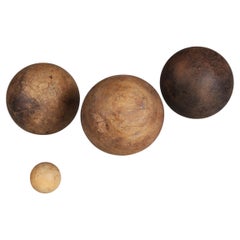
Antique Boule Ball "C" With Star Decor, Pétanque, 1880s, France, Craftsmanship
Located in Greven, DE
Beautiful, unique Boule ball, France, late 19th Century.
In the 19th century, the manufacture of boules balls underwent significant development in France as the game of boules, part...
Category
Late 19th Century French Late Victorian Antique Olive Antiquities
Materials
Metal, Brass
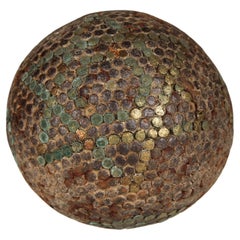
Pair Of Antique Boule Balls "G", Pétanque, 1880s, France, Craftsmanship
Located in Greven, DE
Beautiful, unique Boule ball pair, France, late 19th Century.
In the 19th century, the manufacture of boules balls underwent significant development in France as the game of boules,...
Category
Late 19th Century French Late Victorian Antique Olive Antiquities
Materials
Olive
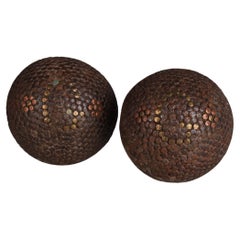
Antique Boule Ball "7", Pétanque, 1880s, France, Craftsmanship
Located in Greven, DE
Beautiful, unique Boule ball, France, late 19th Century.
In the 19th century, the manufacture of boules balls underwent significant development in France as the game of boules, particularly the pétanque variant, gained in popularity. The manufacture of boules balls during this period was a manual process that required expertise, precision and love to detail.
In the late 19th and early 20th centuries, particularly in rural areas of France and other Mediterranean regions, olive wood was a commonly used source of material for making boules balls. This was not only due to the availability of the material, but also to the outstanding properties of olive wood, which was characterized by hardness, strength and a rich grain.
First, the olive wood was carefully selected and shaped into raw balls, which were then sanded to the desired size and shape. The nails were then hammered into the balls one by one, making sure that they were evenly distributed and firmly anchored. Finally, the spheres were polished and coated with a protective varnish to enhance their natural beauty and protect them from the elements.
The use of nails to decorate and reinforce olive wood boules was a traditional practice that not only gave the ball a rustic aesthetic, but also improved its durability and contributed to customization. Many balls were made according to the specific requirements and preferences of the players. Nails were driven at regular intervals around the ball, with each nail hole precisely placed so as not to affect the balance and weight distribution of the ball. These nails not only served as a decorative element, but also helped to strengthen the structure of the ball and make it more resistant to the hard knocks and wear and tear during play. Individual engravings or decorations were often applied to the balls to make them unique and identify the player.
Antique boules...
Category
Late 19th Century French Late Victorian Antique Olive Antiquities
Materials
Metal
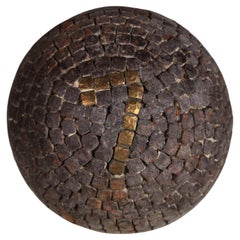
Antique Boule Ball "17", Pétanque, 1880s, France, Craftsmanship
Located in Greven, DE
Beautiful, unique Boule ball, France, late 19th Century.
In the 19th century, the manufacture of boules balls underwent significant development in France as the game of boules, part...
Category
Late 19th Century French Late Victorian Antique Olive Antiquities
Materials
Metal
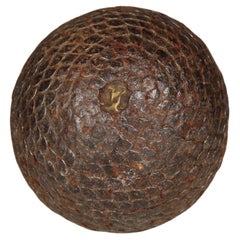
Antique Boule Ball "G", "J", Pétanque, 1880s, France, Craftsmanship
Located in Greven, DE
Beautiful, unique Boule ball, France, late 19th Century.
Decorated with the initials "G" and "J".
In the 19th century, the manufacture of boules balls underwent significant developm...
Category
Late 19th Century French Late Victorian Antique Olive Antiquities
Materials
Olive
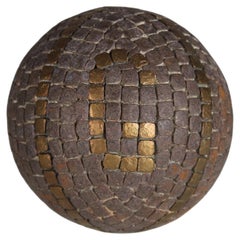
Antique Boule Ball "62", Pétanque, 1880s, France, Craftsmanship
Located in Greven, DE
Beautiful, unique Boule ball, France, late 19th Century.
In the 19th century, the manufacture of boules balls underwent significant development in France as the game of boules, part...
Category
Late 19th Century French Late Victorian Antique Olive Antiquities
Materials
Metal
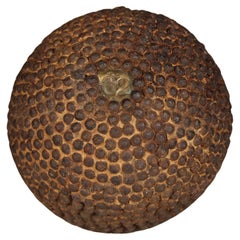
Pair Of Antique Boule Balls "4", Pétanque, 1880s, France, Craftsmanship
Located in Greven, DE
Beautiful, unique Boule ball pair, France, late 19th Century.
Diameter 9,4 cm.
In the 19th century, the manufacture of boules balls underwent significant development in France as th...
Category
Late 19th Century French Late Victorian Antique Olive Antiquities
Materials
Olive
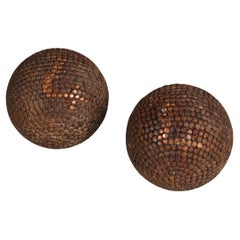
Antique Boule Ball With Star Decor And C, Pétanque, 1880s, France, Craftsmanship
Located in Greven, DE
Beautiful, unique Boule ball, France, late 19th Century.
In the 19th century, the manufacture of boules balls underwent significant development in France as the game of boules, part...
Category
Late 19th Century French Late Victorian Antique Olive Antiquities
Materials
Metal, Brass
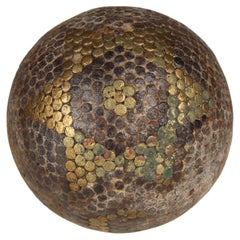
Antique Boule Balls Set "B", Pétanque, 1880s, France, Craftsmanship
Located in Greven, DE
Beautiful, unique Boule set of three Boule balls, France, late 19th Century.
In the 19th century, the manufacture of boules balls underwent significant development in France as the game of boules, particularly the pétanque variant, gained in popularity. The manufacture of boules balls during this period was a manual process that required expertise, precision and love to detail.
In the late 19th and early 20th centuries, particularly in rural areas of France and other Mediterranean regions, olive wood was a commonly used source of material for making boules balls. This was not only due to the availability of the material, but also to the outstanding properties of olive wood, which was characterized by hardness, strength and a rich grain.
First, the olive wood was carefully selected and shaped into raw balls, which were then sanded to the desired size and shape. The nails were then hammered into the balls one by one, making sure that they were evenly distributed and firmly anchored. Finally, the spheres were polished and coated with a protective varnish to enhance their natural beauty and protect them from the elements.
The use of nails to decorate and reinforce olive wood boules was a traditional practice that not only gave the ball a rustic aesthetic, but also improved its durability and contributed to customization. Many balls were made according to the specific requirements and preferences of the players. Nails were driven at regular intervals around the ball, with each nail hole precisely placed so as not to affect the balance and weight distribution of the ball. These nails not only served as a decorative element, but also helped to strengthen the structure of the ball and make it more resistant to the hard knocks and wear and tear during play. Individual engravings or decorations were often applied to the balls to make them unique and identify the player.
Antique boules...
Category
Late 19th Century French Late Victorian Antique Olive Antiquities
Materials
Olive
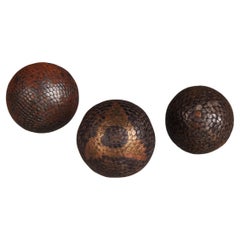
Antique Boule Ball "G", Pétanque, 1880s, France, Craftsmanship
Located in Greven, DE
Beautiful, unique Boule ball, France, late 19th Century.
In the 19th century, the manufacture of boules balls underwent significant development in France as the game of boules, particularly the pétanque variant, gained in popularity. The manufacture of boules balls during this period was a manual process that required expertise, precision and love to detail.
In the late 19th and early 20th centuries, particularly in rural areas of France and other Mediterranean regions, olive wood was a commonly used source of material for making boules balls. This was not only due to the availability of the material, but also to the outstanding properties of olive wood, which was characterized by hardness, strength and a rich grain.
First, the olive wood was carefully selected and shaped into raw balls, which were then sanded to the desired size and shape. The nails were then hammered into the balls one by one, making sure that they were evenly distributed and firmly anchored. Finally, the spheres were polished and coated with a protective varnish to enhance their natural beauty and protect them from the elements.
The use of nails to decorate and reinforce olive wood boules was a traditional practice that not only gave the ball a rustic aesthetic, but also improved its durability and contributed to customization. Many balls were made according to the specific requirements and preferences of the players. Nails were driven at regular intervals around the ball, with each nail hole precisely placed so as not to affect the balance and weight distribution of the ball. These nails not only served as a decorative element, but also helped to strengthen the structure of the ball and make it more resistant to the hard knocks and wear and tear during play. Individual engravings or decorations were often applied to the balls to make them unique and identify the player.
Antique boules...
Category
Late 19th Century French Late Victorian Antique Olive Antiquities
Materials
Metal
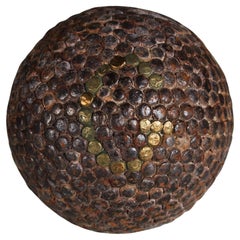
Antique Boule Ball "6", Pétanque, 1880s, France, Craftsmanship
Located in Greven, DE
Beautiful, unique Boule ball, France, late 19th Century.
In the 19th century, the manufacture of boules balls underwent significant development in France as the game of boules, part...
Category
Late 19th Century French Late Victorian Antique Olive Antiquities
Materials
Metal, Brass
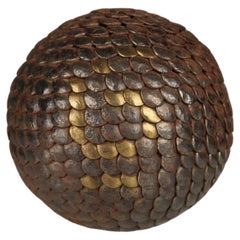
Antique Boule Ball "P A", Pétanque, 1880s, France, Craftsmanship
Located in Greven, DE
Beautiful, unique Boule ball, France, late 19th Century.
In the 19th century, the manufacture of boules balls underwent significant development in France as the game of boules, part...
Category
Late 19th Century French Late Victorian Antique Olive Antiquities
Materials
Metal
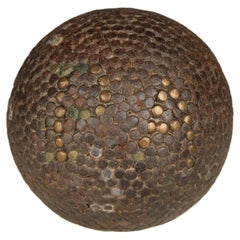
Pair Of Antique Boule Balls Circle, Pétanque, 1880s, France, Craftsmanship
Located in Greven, DE
Beautiful, unique Boule ball pair and one target ball, France, late 19th Century.
In the 19th century, the manufacture of boules balls underwent significant development in France as...
Category
Late 19th Century French Late Victorian Antique Olive Antiquities
Materials
Olive
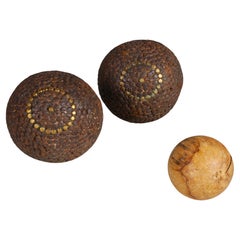
Pair Of Antique Boule Balls "3", "V", Pétanque, 1880s, France, Craftsmanship
Located in Greven, DE
Beautiful, unique Boule ball pair, France, late 19th Century.
Decorated with the numer "3" on each ball and with a "V" on one of the Boule balls.
In the 19th century, the manufactur...
Category
Late 19th Century French Late Victorian Antique Olive Antiquities
Materials
Olive
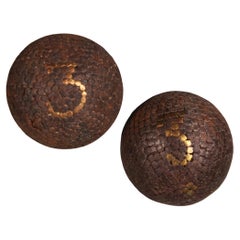
Antique Boule Ball With Flower Decor, Pétanque, 1880s, France, Craftsmanship
Located in Greven, DE
Beautiful, unique Boule ball, France, late 19th Century.
In the 19th century, the manufacture of boules balls underwent significant development in France as the game of boules, part...
Category
Late 19th Century French Late Victorian Antique Olive Antiquities
Materials
Metal, Brass
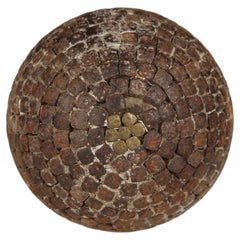
Related Items
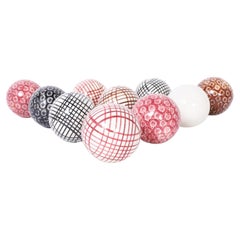
Collection of Ten Antique Carpet Balls
Located in Palm Beach, FL
Ten carpet balls crafted in stoneware, decorated and glazed in several different colors and designs including a white cue ball.
Category
Late 19th Century English Victorian Antique Olive Antiquities
Materials
Stoneware

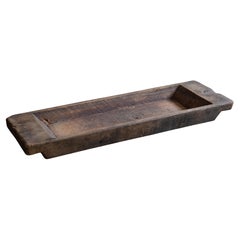
1900s-30s Large Japanese Antique hardwood wooden trough, Wabi sabi mingei decor
Located in 常陸大宮市, JP
Large Antique Japanese hand-curbed wooden trough, hand-crafted circa 1900s - 1930s estimated from the material, style
conditions.
Hollowed out from the single solid wood of Key...
Category
Early 20th Century Japanese Primitive Olive Antiquities
Materials
Wood, Hardwood
$940
H 4.57 in W 43.71 in D 13.98 in
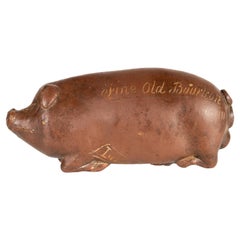
Genuine 1880s Albany Slip Glazed Anna Pottery Stoneware Pig Flask
Located in Coeur d
Alene, ID
Albany slip glazed Anna pottery stoneware pig flask by Wallace and Cornwall Kirkpatrick, Anna. Anatomically correct prone pig. In sized inscriptions "Fine Old Burmann Inn" and alongside "Lard Oil Drill". Underside flask opening under tail. Anna Pottery was s operative by the Kirkpatrick brothers between 1859 and 1896. They took part in art exhibitions such as Philadelphia Centennial in 1876 and the World's Columbian Exposition in Chicago 1893. In 1938 the first inscription of Anna pottery was published in the New York Historical Society. Pieces of Anna pottery pigs...
Category
1880s American Antique Olive Antiquities
Materials
Pottery
$6,000 Sale Price
40% Off
H 3.5 in W 6.5 in D 3.5 in
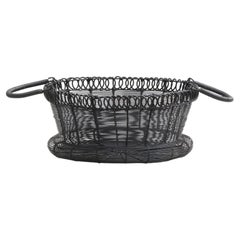
Antique French Woven Wire Basket, circa 1900
Located in Trensacq, FR
Charming handcrafted Provincial French woven wire work basket, circa 1900. A well-executed nicely shaped 'pannier' with moveable handles and decorative loop...
Category
Early 20th Century French French Provincial Olive Antiquities
Materials
Wire
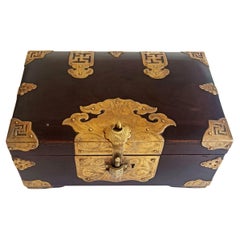
Fine Chinese Antique Rosewood Box with Brass Mounts – Qing Dynasty décor
Located in London, GB
Fine Chinese Antique Rosewood Box with Brass Mounts – Qing Dynasty Style
A beautifully crafted Chinese antique rosewood box, richly mounted with engraved brass fittings in traditional Qing dynasty style. The dark, dense rosewood contrasts elegantly with the finely detailed brass corner plates, cloud-form panels, Buddhist motives and ornate turtle central latch.
This high-quality scholar’s or jewellery box features hand-engraved decoration throughout, including geometric fret motifs and stylised foliate designs characteristic of late Qing decorative metalwork. The box retains its original lock plate with turtle (key not present).
A decorative and functional piece ideal for collectors of Chinese antiques, scholar’s objects, and classical Asian furniture.
Keywords: Chinese rosewood box...
Category
18th Century Chinese Antique Olive Antiquities
Materials
Wood
$757
H 3.94 in W 9.06 in D 6.3 in
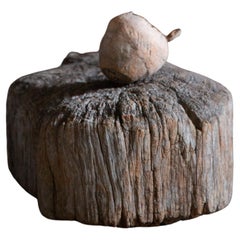
Late 19th Japanese Antique wood slab display stand, wabi sabi decor art piece
Located in 常陸大宮市, JP
Japanese Antique wooden display stand, "Dai" in Japanese, made from thick, single solid wood slab.
Product of 1860s-1900s (late Edo to early Meiji era), estimate from the material an...
Category
Late 19th Century Japanese Primitive Antique Olive Antiquities
Materials
Wood
$540
H 6.89 in W 17.52 in D 10.44 in
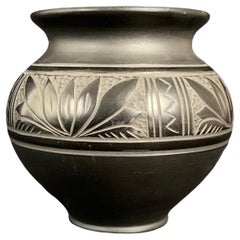
Antique Black Floral Decor Ceramic Vase Signed "Kamats" – Hungary - 2Y437
Located in Bordeaux, FR
This antique 20th-century ceramic vase, signed by Kamats, is a beautifully crafted piece from Hungary. Measuring 4.53 inches (11.5 cm) in height and 4.72 inches (12 cm) in diameter, ...
Category
20th Century Olive Antiquities
Materials
Ceramic
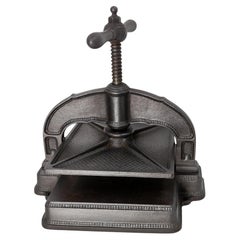
Antique Workshop Book Press Wrought Iron, France, circa 1850
Located in Labrit, Landes
This wrought iron book press was made in the late 19th century in France for a workshop
Many parts of this object are worked, which makes it a very beautiful piece, very characterful...
Category
19th Century French Industrial Antique Olive Antiquities
Materials
Wrought Iron
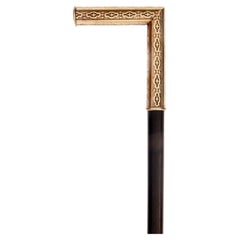
System walking stick, matches holder, Italy 1880.
Located in Milan, IT
System walking stick with deer horn tip, santos wood shaft (Cesalpina Ferrea, Brazil). L-shaped handle in slightly silvered brass with smooth band...
Category
Late 19th Century Italian Antique Olive Antiquities
Materials
Brass
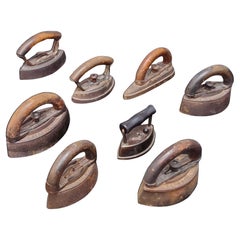
Collection of 8 Antique American Cloth Sad Irons, Rare
Collectibles, Set of 8
Located in Bochum, NRW
A beautiful collection of eight antique clothes irons / sad irons.
They are oval-shaped and feature a cast iron base with a detachable wood handle.
Ma...
Category
Early 20th Century American Industrial Olive Antiquities
Materials
Iron
$653 Sale Price / set
20% Off
H 3.94 in W 6.5 in D 3.35 in
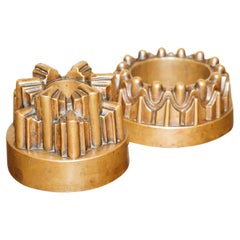
LOVELY PAIR OF ANTIQUE COLLECTABLE VICTORIAN JELLY MOULDS IN COPPEr
Located in West Sussex, Pulborough
We are delighted to offer for sale this collectable pair of Victorian copper Jelly Moulds
A very good looking and decorative pair, they can be used...
Category
19th Century British Victorian Antique Olive Antiquities
Materials
Copper
$406
H 4.53 in W 7.29 in D 7.29 in
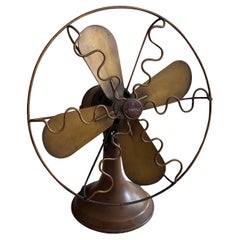
Antique Siemens Art Deco Bakelite
Brass Fan, 1920s
By Siemens
Located in Hamburg, DE
This striking antique Siemens fan from the 1920s is a fine example of early industrial design and the elegance of the Art Deco era. The beautifully curved frame is made from rich, da...
Category
Early 20th Century German Art Deco Olive Antiquities
Materials
Brass
Previously Available Items
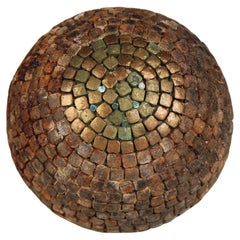
Antique Boule Ball With Circle Decor, Pétanque, 1880s, France, Craftsmanship
Located in Greven, DE
Beautiful, unique Boule ball, France, late 19th Century.
In the 19th century, the manufacture of boules balls underwent significant development in France as the game of boules, part...
Category
Late 19th Century French Late Victorian Antique Olive Antiquities
Materials
Metal, Brass
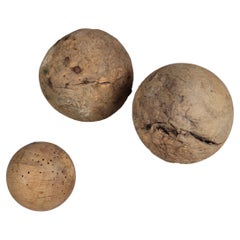
Antique Boule Set, Boule Balls, Pétanque, 1880s, France, Craftsmanship
Located in Greven, DE
Beautiful, unique Boule set of two Boule balls and one target ball, France, late 19th century.
In the 19th century, the manufacture of boule balls underwent significant development ...
Category
Late 19th Century French Late Victorian Antique Olive Antiquities
Materials
Olive
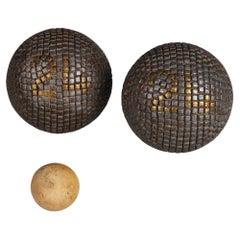
Pair Of Antique Boule Balls "24", Pétanque, 1880s, France, Craftsmanship
Located in Greven, DE
Beautiful, unique Boule ball pair and one target ball, France, late 19th Century.
In the 19th century, the manufacture of boules balls underwent significant development in France as...
Category
Late 19th Century French Late Victorian Antique Olive Antiquities
Materials
Olive
Antique Boule Set, Boule Balls, Pétanque, 1880s, France, Craftsmanship
Located in Greven, DE
Beautiful, unique Boule set of three Boule balls and one target ball, France, late 19th century.
In the 19th century, the manufacture of boules balls underwent significant developme...
Category
Late 19th Century French Late Victorian Antique Olive Antiquities
Materials
Olive
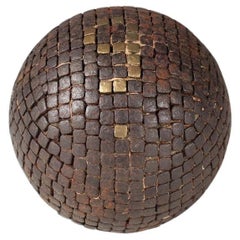
Exceptional French Boule Ball, Around 1880, Decorative Petanque Ball, Number 9
Located in Greven, DE
Exceptional craftsmanship, olive wood, brass, steel.
This type of French boules ball were originally made of olive wood, on which steel, copper or brass...
Category
1880s Antique Olive Antiquities
Materials
Brass, Copper
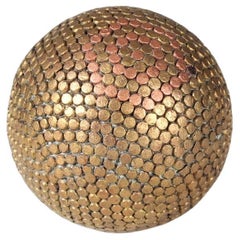
Exceptional French Boule Ball, Around 1880, Decorative Petanque Ball
Located in Greven, DE
Exceptional craftsmanship, olive wood, brass, copper.
This type of French boules ball were originally made of olive wood, on which steel, copper or bras...
Category
1880s Antique Olive Antiquities
Materials
Brass, Copper
Still Thinking About These?
All Recently ViewedMore Ways To Browse
Ribbed Cabinet
Robert Burns Antique
Robert Irwin
Rococo Burl Wood
Russian Double Headed Eagle
Sandoz Bronze
Satsuma Moriage
Scandinavian China Cabinet
Scottish Deer
Scottish Stag
Sculpture Renaissance Lion
Secretary Desk Federal
Seguso Duck
Seguso Glass Duck
Sheep Sculpture Bronze
Sligh Furniture Mid Century
Soapstone Seal
Solid Silver Animals