Central Asian Antiquities
to
1
1
1
1
14,304
843
460
242
204
1
1
1
Place of Origin: Central Asian
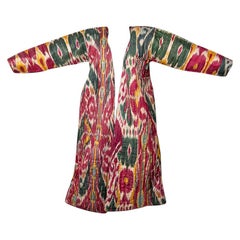
Magnificent Silk Ikat Chapan, Uzbekistan, Xix Century
Located in San Pedro Garza Garcia, Nuevo Leon
Ikat Chapan – a man’s uzbek coat – Style Robe with exceptionally rich colour and dynamic pattering. Viewers may become lost in this ikat’s intertwining mot...
Category
19th Century Antique Central Asian Antiquities
Materials
Cotton
Related Items
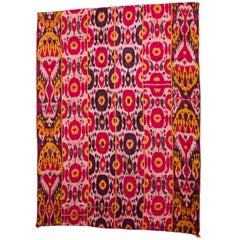
Late 19th Century Silk Ikat Uzbekistan Tribal Weaving
Located in New York, NY
Gorgeous handwoven silk Ikat weaving in rich magenta, gold and purple color, circa late 19th-early 20th century, Uzbekistan, Central Asia, on the ancient...
Category
Late 19th Century Tribal Antique Central Asian Antiquities
Materials
Silk

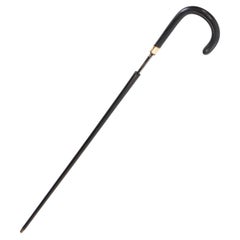
19th Century English Sword Cane
Located in Coeur d
Alene, ID
English sword cane with a fine toledo blade that measures approximately 27 1/2". Triangular blade marked "Toledo" on the ricasso and is beautifully decorated with etched and fire blued panels which also exhibit areas of gold wash. The decorations travel for about half the length of the blade. The cane measures approximately 35 1/2" and features a nice scalloped and flowered decoration with brass ferrule. Good condition. Blade remains bright and locks into scabbard properly. Nice patina to handle.
PERIOD: Late 19th Century
ORIGIN: English
SIZE: 35 1/2" x 5"
Check out our large selection of 19th and 20th Century canes including sword canes and gun canes...
Category
19th Century Antique Central Asian Antiquities
Materials
Brass
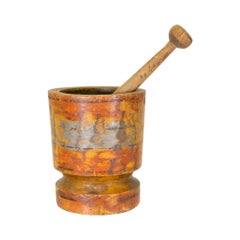
19th Century Mortar and Pestle
Located in Coeur d
Alene, ID
19th century fruitwood mortar and pestle. Remnants of oxblood red and silver blue banded paint. Original pestle included.
Origin: Eastern, United States
Period: First half of the 19...
Category
Early 19th Century Antique Central Asian Antiquities
Materials
Fruitwood
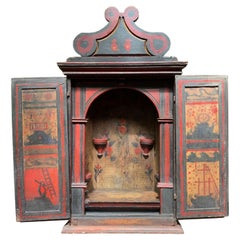
Rare 18th Century Painted Shrine
Located in Rio De Janeiro, BR
This magnificent 18th-century Brazilian shrine, originating from Minas Gerais, is a stunning example of Colonial baroque religious craftsmanship. Crafted from wood and adorned with h...
Category
Late 18th Century Baroque Antique Central Asian Antiquities
Materials
Wood
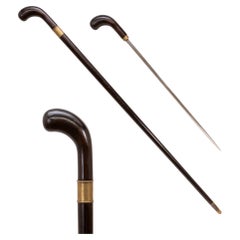
20th Century Sword Cane
Located in Coeur d
Alene, ID
Sword cane with carved mahogany curved handle, brass collar with push pull mechanism that reveals a two sided 17 1/2" blade and brass ferrule. 2 3/4" x 4", blade 17 1/2", overall 35"...
Category
20th Century Central Asian Antiquities
Materials
Mahogany
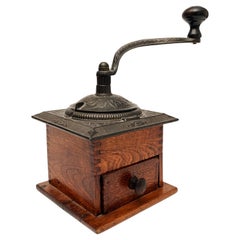
19th Century Coffee Grinder
Located in Louisville, KY
This well-preserved piece of American Coffee history is a site to behold. With it's ornately decorated iron grinder sitting atop an oak base joined with beautiful small dovetail jo...
Category
Late 19th Century Adirondack Antique Central Asian Antiquities
Materials
Wrought Iron
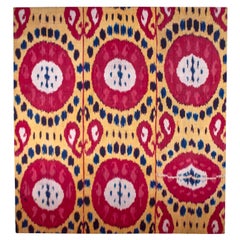
Antique Central Asian Silk Ikat Panel, Uzbekistan
Located in Point Richmond, CA
Antique Central Asian Silk Ikat Panel, Uzbekistan
A large mounted silk and cotton ‘adras’ ikat panel with a dynamic 4-color design of large red rings with white centers surrounded b...
Category
Early 20th Century Tribal Central Asian Antiquities
Materials
Cotton, Silk
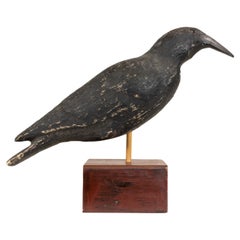
20th Century Crow Decoy
Located in Coeur d
Alene, ID
20th Century Crow decoy. Crow decoy mounted on modern base. Balsa wood, glass eyes. Life size, with base.
Period: 20th century
Origin: United States
Size: 16" x 4" x 12"H
Family O...
Category
20th Century Central Asian Antiquities
Materials
Wood
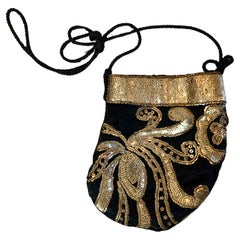
Art Deco Pouch or Evening Bag, Handbag Black Silk, Silver Sequins ca. 1920
Located in Andernach, DE
Absolutely unique, likely French – small pouch from black silk at the outside.
The embroidery appears to be from genuine silver sequins, as it weights quite heavy, but the material r...
Category
Early 20th Century Central Asian Antiquities
Materials
Metal
$311
H 6.7 in W 5.71 in D 0.79 in
20th Century
Located in Cantù, IT
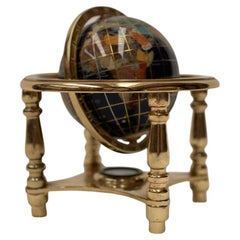
Small globe with compass. Refined and with attention to detail in the slightest detail. Created from brass, crystal and glass.
Designed by Mice Versailles.
Category
19th Century Antique Central Asian Antiquities
Materials
Crystal, Brass
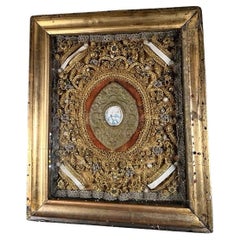
18th Century Italian Reliquary
Located in Dallas, TX
A magnificent 18th century Italian reliquary of a saint. The piece showcases intricate bright gold filigree work that glows with remarkable luminosity and detail a testament to the e...
Category
1790s Antique Central Asian Antiquities
Materials
Metallic Thread
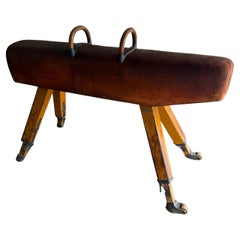
20th Century Leather Pommel Horse
Located in Nashville, TN
Leather pommel horse by Wilh. Holbeck Essen-Werden (see label). In excellent vintage condition with age-consistent patina and character. height is adjustable. Pommel can be styled in...
Category
Mid-20th Century Industrial Central Asian Antiquities
Materials
Leather, Wood
Previously Available Items
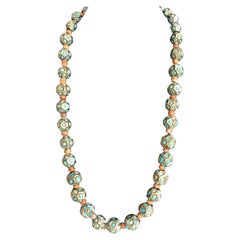
Rare Antique Central Asian Faceted Silver Gilt Turquoise Necklace Jewelry Gifts
Located in London, GB
A wonderful very rare Central Asian necklace of multi faceted silver and gold gilt beads with small turquoise pieces in each faceted section, beautiful antique beads dating from 17/1...
Category
Early 17th Century Antique Central Asian Antiquities
Materials
Gold, Silver
H 29.93 in W 0.6 in D 0.6 in
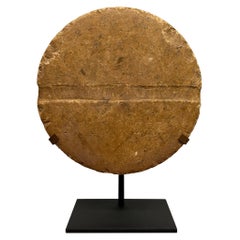
Bactrian Marble Disc Idol on Custom Mount
Located in Chicago, IL
A stunning hand-carved marble Bactrian Disc idol with linear grooves on both sides, mounted on a custom steel mount. Bactrian idols originate from North-...
Category
15th Century and Earlier Antique Central Asian Antiquities
Materials
Marble
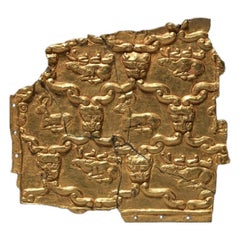
Important Gold Fragment
Located in London, GB
This fragment forms part of the famed Ziwiye hoard of treasure, reputably found in 1947 in modern day Kurdistan. As the contents of a royal tomb of a great ancient king, the pieces were quickly dispersed and only in the following years did the huge significance become understood in scholarship. These objects have become famous as the keystone in explaining underpinning socio-economic and political cultural ties across the silk route, reflected by these works of art. These objects exhibit styles and motifs associated with the four pre-eminent cultures at this juncture in history: Assyrian, Scythian, proto-Achaemenid and the provincial native pieces. The Scythians, a seminomadic people from the Eurasian steppes who moved out from Southern Russia into the territory between the Don and the Danube and then into Mesopotamia are responsible for the basis of an ‘animal style’ design found on the elaborate metalwork and jewellery produced in Central Asian ancient world. This style starts to appear in the 7th century B.C typically on pierced plaques made of gold and silver, which depict running or fighting animals (reindeer, lions, tigers, horses) alone or in pairs facing each other, embossed with powerful plasticity and free interpretation of the forms. The animal- style had a strong influence in western Asia during the 7th century B.C. Such ornaments as necklaces, bracelets, pectorals, diadems, and earrings making up the Ziwiye treasure (discovered in Iran near the border between Kurdistan and Azerbaijan) provide evidence of this Asiatic phase of Scythian gold...
Category
15th Century and Earlier Antique Central Asian Antiquities
Materials
Gold
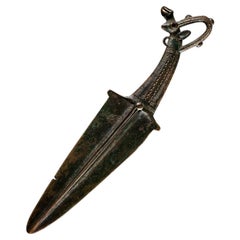
Sino-Siberian Dagger
Located in London, GB
The nomadic nature of the Eurasian steppe tribes allowed for much integration and exchange of styles and customs, as well as physical transportable objects; including personal ornamentation and weaponry. Particularly between the Scythian tribes of the Black sea region in the West, Central Asian tribes such as the Hephthalites, the Wushu, Yuezhi and Mongolians to the East and the Persians further South. The blade of this piece has strong ties to daggers of the late Chinese Shang...
Category
15th Century and Earlier Antique Central Asian Antiquities
Materials
Bronze
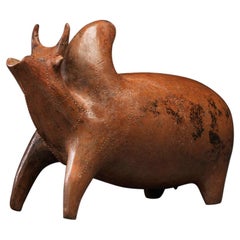
The
George Sand
Bull
Located in London, GB
The Amlash culture is known almost exclusively through the archaeological record that has come to light in recent decades. The term refers to the material culture found in the modern...
Category
15th Century and Earlier Antique Central Asian Antiquities
Materials
Terracotta
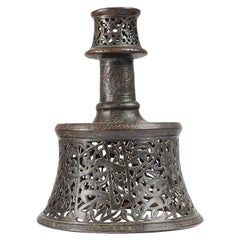
Damon
Candlestick
Located in London, GB
Resting on a wide, trumpeted foot, this wonderful candlestick rises from a band of chased keyfret motif to a body of open pierced fretwork, which consists of thuluth calligraphy agai...
Category
15th Century and Earlier Antique Central Asian Antiquities
Materials
Copper
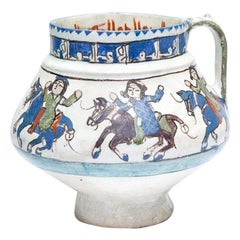
Minai Ceramic Jug
Located in London, GB
A polychrome Minai (enamel) handled cup from the latter half of the Turco-Persian Seljuq period (1040 - 1307), most probably from Kashan, a significant centre of ceramics production during this time where potters moulded, fired and painted both Minai and lusterware works. This handled cup rises from a short foot and widens to a spherical body, which tapers towards its neck at its widest point, emphasizing its curvature, and flares slightly at its rim. The artist has painted figures upon horseback, rendered in vibrant colours and outlined in black and gold, on the central frieze that encircles the body. Above the figures runs a blue band of Arabic calligraphy, written in Kufic script, while on the same spot in the interior of the cup there is a band of orange calligraphy, executed again in the Kufic style. The handle is S-shaped with a delicate, pale green scrolling pattern, which couples to underscore its function as a drinking utensil, along with its opulence; a luxurious example of the material culture of pre-Mongol Iran. Minai means enamel in Persian, and the term refers to this type of pottery’s colourful decoration, which lies both in and over the glaze, here further enriched with gold (gilding) which is visible on the horse’s reigns and the bows on their tails. Only certain colours are fixed as over glazed enamels. Some, such as turquoise, blue and purple are normally painted into the opaque white glaze after it has been applied and are fixed with it in the firing. Enamel pigments are then painted, and fixed in the second firing. These are normally restricted to red and black, but in more ambitious pieces, such as in this case, a whole range of other enamel colours are found together with gold gilding. Such Minai works had to be fired twice in order to achieve their polychromatic harmonies and were consequently the most sought-after and costly wares; we can thereby infer that the patron or owner was likely to have been a member of the Seljuq elite. The Seljuqs descended from nomads (specifically the Turkic Oghuz clan) who grazed cattle on the Central Asian land that the previous Persian dynasty...
Category
15th Century and Earlier Antique Central Asian Antiquities
Materials
Ceramic
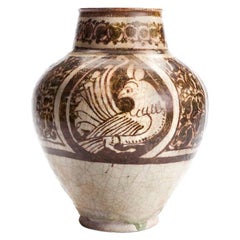
Kashan Lustre Vase
Located in London, GB
It has long been conjectured, though there is no proof, that at the end of the twelfth century a group of Egyptian potters fled the rapidly declining Fatimid caliphate and settled in...
Category
15th Century and Earlier Antique Central Asian Antiquities
Materials
Ceramic
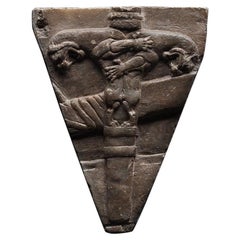
Fragment of a Scabbard Terminal
Located in London, GB
Taken from a larger gypsum wall carving, this triangular fragment displays the hilt and scabbard of a dagger or ‘akinakes’. Decorated with a pair of outward facing rampant lions, eac...
Category
15th Century and Earlier Antique Central Asian Antiquities
Materials
Stone
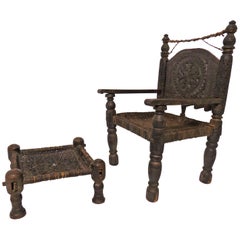
Antique 19th Century Hand Carved Afghan Chief
s Chair with Stool
Located in Peabody, MA
A mid to late 19th century Afghan armchair and stool, back panel ornamented with chip carving of tribal designs. Fashioned of Himalayan cedar and goat-hide and pegged together withou...
Category
19th Century Tribal Antique Central Asian Antiquities
Materials
Hide, Cedar
Still Thinking About These?
All Recently ViewedMore Ways To Browse
Robert Burns Antique
Rococo Burl Wood
Russian Double Headed Eagle
Sandoz Bronze
Satsuma Moriage
Scottish Deer
Scottish Stag
Sculpture Renaissance Lion
Seguso Duck
Seguso Glass Duck
Sheep Sculpture Bronze
Sligh Furniture Mid Century
Soapstone Seal
Solid Silver Animals
South India Sculpture
Spanish Coffer
Stone Buddha Head
Stoneware Lion