Items Similar to Folk Art Sussex Pottery Pig Jug and Cup from the Belle-Vue Pottery, Rye
Want more images or videos?
Request additional images or videos from the seller
1 of 11
Folk Art Sussex Pottery Pig Jug and Cup from the Belle-Vue Pottery, Rye
$5,500
£4,165.74
€4,784.21
CA$7,707.30
A$8,379.39
CHF 4,442.76
MX$100,447.61
NOK 56,465.21
SEK 51,729.81
DKK 35,755.90
About the Item
Hogshead Humor: A Victorian Folk Drinking Game
Object: Figural Drinking Vessel (Jug and Cover/Cup)
Origin: Belle-Vue Pottery, Rye, Sussex, England
Maker: Frederick Mitchell
Date: Circa 1870
Medium: Creamware Earthenware with Mottled/Splashed Glaze
Dimensions: 5 1/2 inches high x 8 1/2 inches long x 4 inches deep (13.97 cm high x 21.59 cm long x 10.16 cm deep).
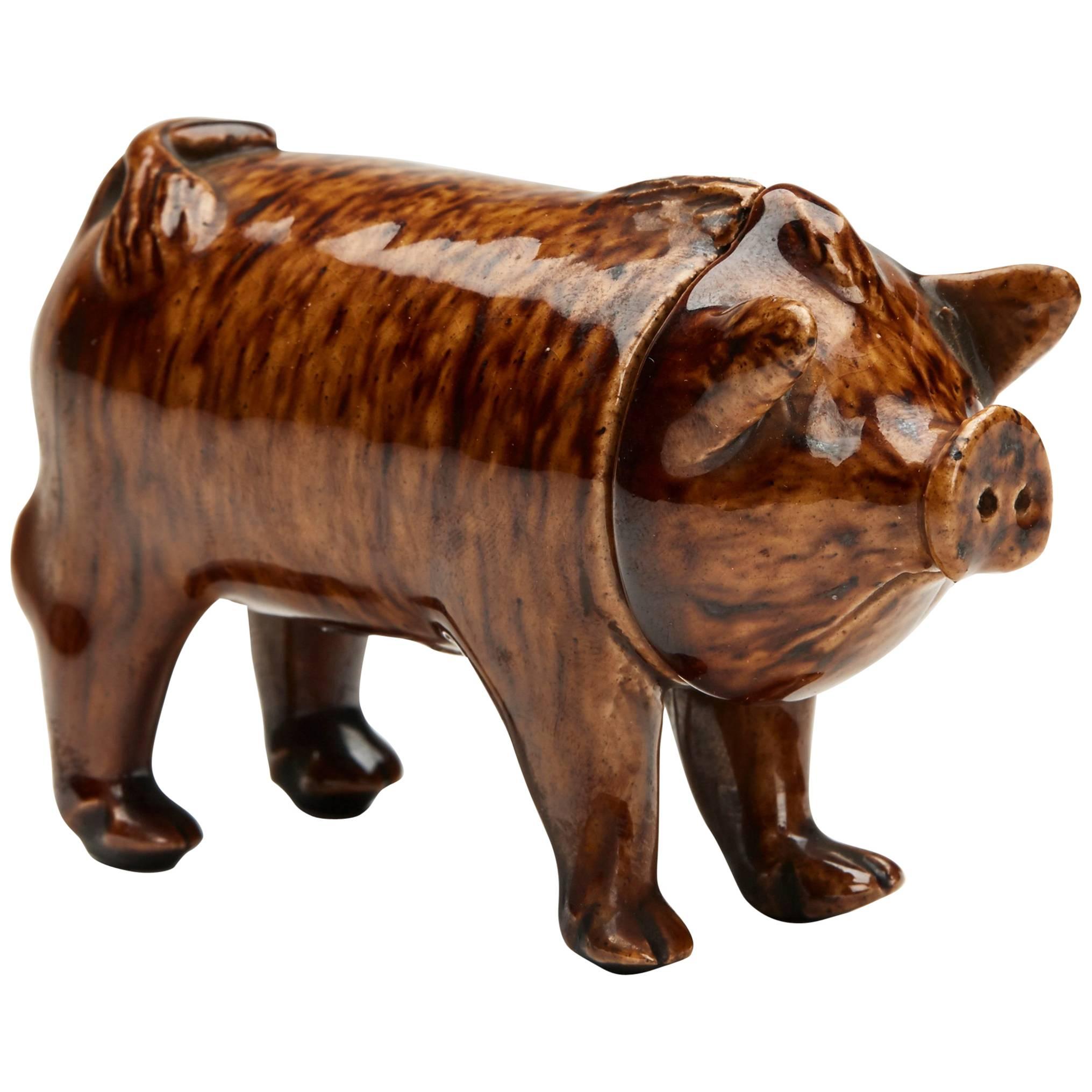
This exceptional example of Sussex Pig Pottery is not merely a jug but a functional, convivial drinking vessel, meticulously crafted at the Belle-Vue Pottery by Frederick Mitchell. Designed to stand on its tail, the pig's head lifts off to serve as a cup, while its body functions as a flask or jug. This form was traditionally used at local weddings and social gatherings, where guests were expected to drink a "hogshead" (the vessel's cup-full) to the health of the bride or the company.
Rustic Charm and Local Identity
This particular pig is notable for its excellent condition and the inscriptions that firmly tie it to its regional origins. The interior of the removable head is marked with an 'X' and the letters R.S.W. (for 'Rustic Sussex Ware') along with the town name, Rye, confirming its provenance from Mitchell's factory, established in 1869.
Perhaps most charming is the inscription carved into the pig's shoulder: 'Won't be druv' (Won't be driven). This phrase comes from a local rhyme—"You can pook / And you can shove / But a Sussex Pig / He wun't be druv"—a proud dialect saying that embodies the stubborn, independent spirit of the people of Sussex. The piece's rich, mottled brown glaze and extreme lightness were distinguishing characteristics of the Belle-Vue Pottery's wares, often known as "Rustic Ware."
Historical Context
The tradition of making animal-form drinking vessels, such as the Sussex Pig and its counterparts like the "Nottingham Bear," dates back to the 18th and 19th centuries across various British potteries. These forms underscore the close relationship between ceramics and local folk customs, providing decorative whimsy alongside practical function for communal celebrations. The Belle-Vue Pottery, founded by Mitchell after his family's involvement in the nearby Cadborough Pottery, specialized in these unique, locally inspired wares.
Reference
Jewitt, Llewellynn Frederick William. The Ceramic Art of Great Britain, pages 262-263.
(Ref: NY8532/IAMR)
- Dimensions:Height: 5.5 in (13.97 cm)Width: 8.5 in (21.59 cm)Depth: 4 in (10.16 cm)
- Style:Folk Art (Of the Period)
- Materials and Techniques:
- Place of Origin:
- Period:
- Date of Manufacture:1870
- Condition:Wear consistent with age and use.
- Seller Location:Downingtown, PA
- Reference Number:Seller: NY85321stDibs: LU86107144223
About the Seller
5.0
Recognized Seller
These prestigious sellers are industry leaders and represent the highest echelon for item quality and design.
Gold Seller
Premium sellers maintaining a 4.3+ rating and 24-hour response times
Established in 1916
1stDibs seller since 2009
437 sales on 1stDibs
Typical response time: 1 hour
Associations
The Art and Antique Dealers League of AmericaAntiques Associations Members
- ShippingRetrieving quote...Shipping from: Downingtown, PA
- Return Policy
More From This Seller
View All18th-century Whieldon Type Cow Creamer and Cover
By Thomas Whieldon Pottery
Located in Downingtown, PA
Rural Charm: Whieldon-Type Creamware Cow Creamer
Whieldon-Type Creamware Cow Creamer and Cover
Circa 1770
This delightful and historically important piece is an 18th-century cow cr...
Category
Antique 1760s Georgian Pottery
Materials
Ceramic, Creamware, Pottery
Mocha Pottery Jug with Earthworm Designs
Located in Downingtown, PA
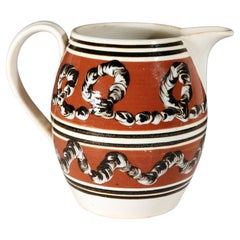
Mocha Pottery Earthworm Jug,
circa 1820
The mocha pottery jug has two wide ocher bands each with an earthworm design. The top with a looping design and the lower one with a wavy ...
Category
Antique Early 19th Century English Folk Art Pottery
Materials
Creamware, Pottery
English Mocha Pottery Pearlware Earthworm Jug
Located in Downingtown, PA
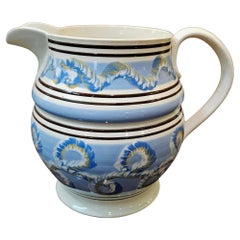
The Wiggly Wonder: Gilded Age Mocha Jug with Psychedelic Earthworm Stripes
Get ready to obsess over this rare and historically charged piece of English Mocha Pottery! This charming ...
Category
Antique Early 19th Century English Folk Art Ceramics
Materials
Pearlware, Pottery
Mocha Slip-decorated large Pottery Banded Jug, Circa 1810-20
Located in Downingtown, PA
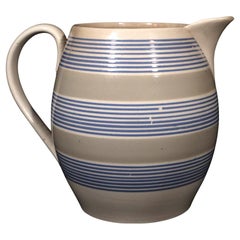
Mocha Slip-decorated large Pottery Banded Jug,
Circa 1810-20
The circular large pearlware pottery Mocha jug is decorated with two light green/gray bands interspersed with white thre...
Category
Antique Early 19th Century English Folk Art Ceramics
Materials
Pearlware, Pottery
Staffordshire Pottery Bulldog Stirrup Cup
By Staffordshire
Located in Downingtown, PA
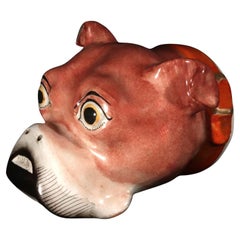
Fierce Elegance: The Staffordshire Bulldog Stirrup Cup,
A Gentleman's Companion: Staffordshire Pearlware, Circa 1820
This striking Staffordshire pearlware stirrup cup, dating from a...
Category
Antique Early 19th Century English Regency Pottery
Materials
Ceramic, Pearlware, Pottery
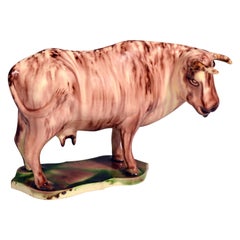
18th Century Whieldon-Type Creamware Pottery Cow
By Thomas Whieldon Pottery
Located in Downingtown, PA
Rare 18th century Whieldon-type creamware pottery cow,
circa 1765.
The rare press-moulded cow stands on a flat slab base with lobed edges. The cow is s...
Category
Antique Mid-18th Century English Georgian Ceramics
Materials
Creamware, Pottery
You May Also Like
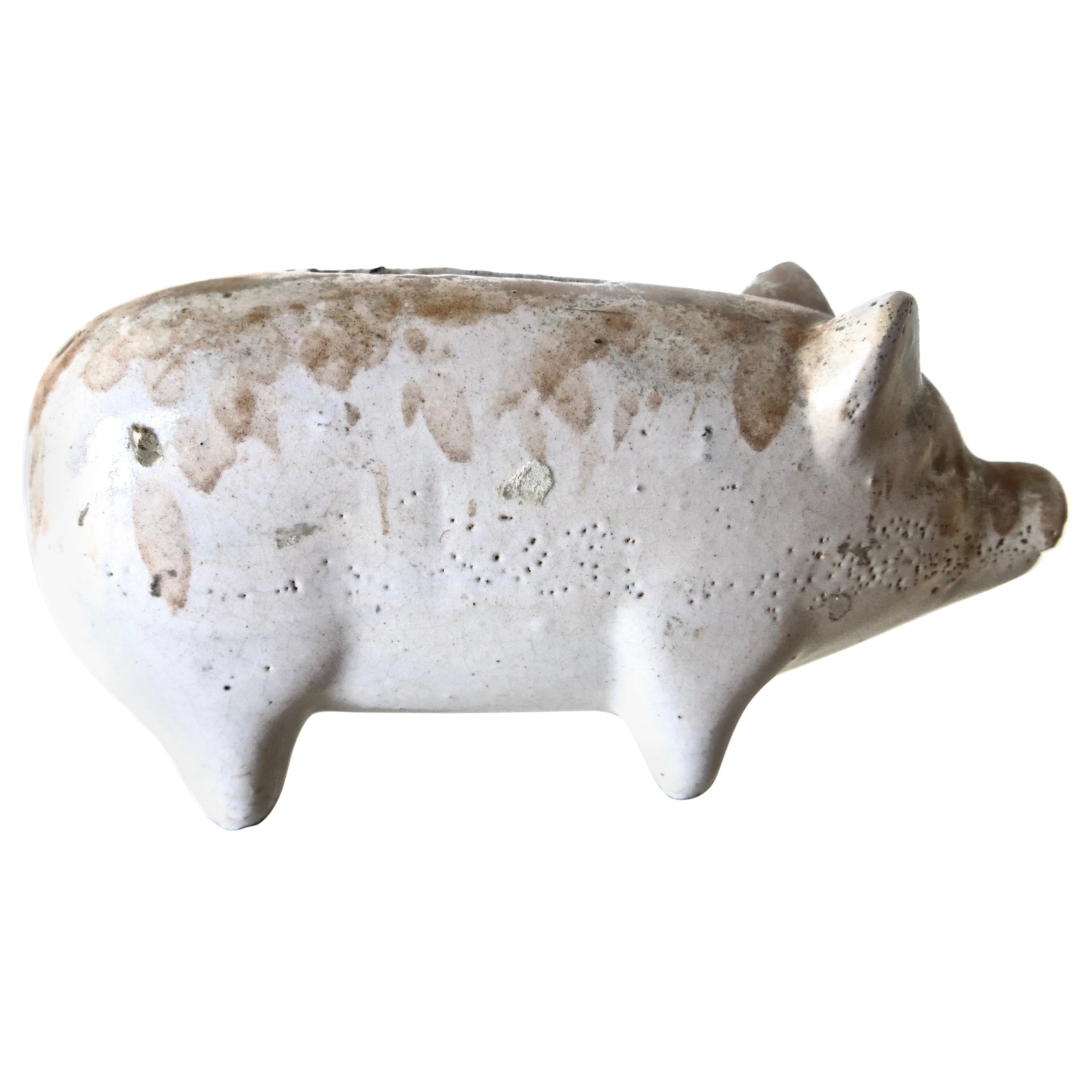
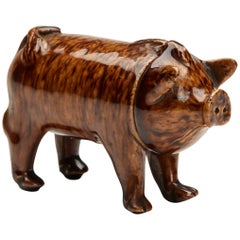
Rye Pottery Sussex Pig Drinking Vessel, circa 1870
Located in Bishop
s Stortford, Hertfordshire
A very rare and unusual antique miniature Rye pottery figure of a Sussex Pig decorated in mottled brown glazes with a removable head. The pig is in excepti...
Category
Antique 1870s British Bottles
Materials
Pottery
19th C. Stoneware Children
s Savings Pig Bank. England, Circa 1880
Located in Incline Village, NV
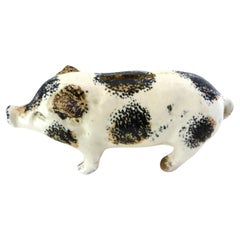
In the late 19th century the concept of thrift became a principle by which parents encouraged their children to safe money by putting their pennies into a "piggy bank", thus the proliferation of these items by pottery manufacturers, this particular example marked "SS" on the underneath indicating "A Smith Ltd.", Longton, England whose ceramic, china, and pottery business began in 1846 by Sampson Smith.
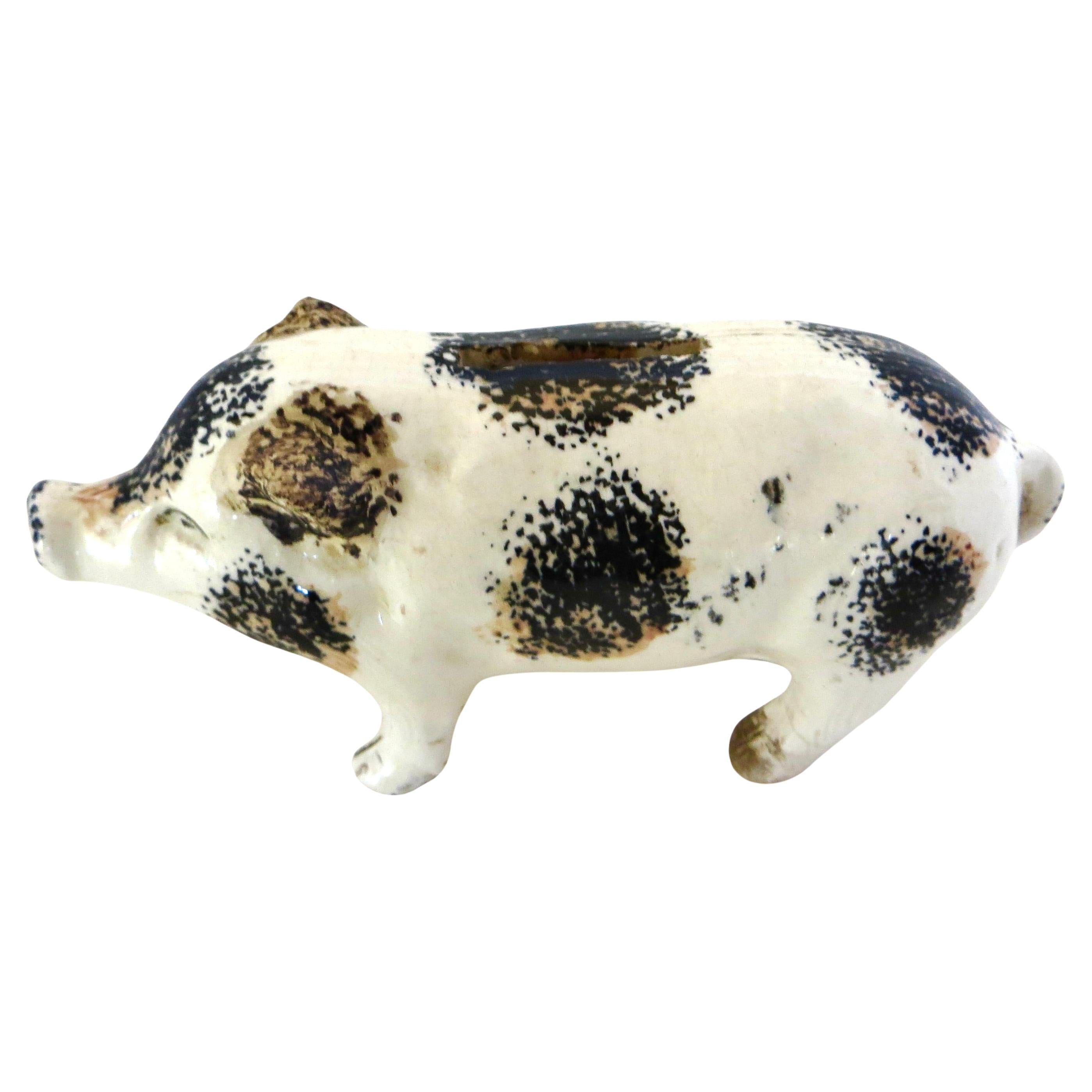
Nicely molded and in excellent condition, this proverbial pig themed penny bank is painted overall white with a multiplicity of green "spatter" spots, the pig standing on all fours has a twisted tail in back. The original finish is beautifully glazed resulting in a lovely patina to this completely original bank with no restoration or touch up paint of any kind and all of it's original hand paint intact.
Since these type of antique banks typically were made without a coin removal trap, the only way to extract the coins would have been the old "knife in the slot" method and retrieving the pennies one by one; or the more simpler method of smashing and breaking the bank, which is why locating these banks is very difficult, rendering a fine example particularly rare.
This example is a wonderful addition to a collection of authentic still banks, folk art, or for those who accumulate pig items. This recently came from an estate collection of pig still banks. A similar example is referenced as #633 "Two Toned Pig" in Andy Moore's "The Penny Bank Book" written in 1984 when collecting pottery banks...
Category
Antique 1880s English Folk Art Toys
Materials
Stoneware
Antique Wild Boar Piggy Bank Made of Clay
Located in Berghuelen, DE
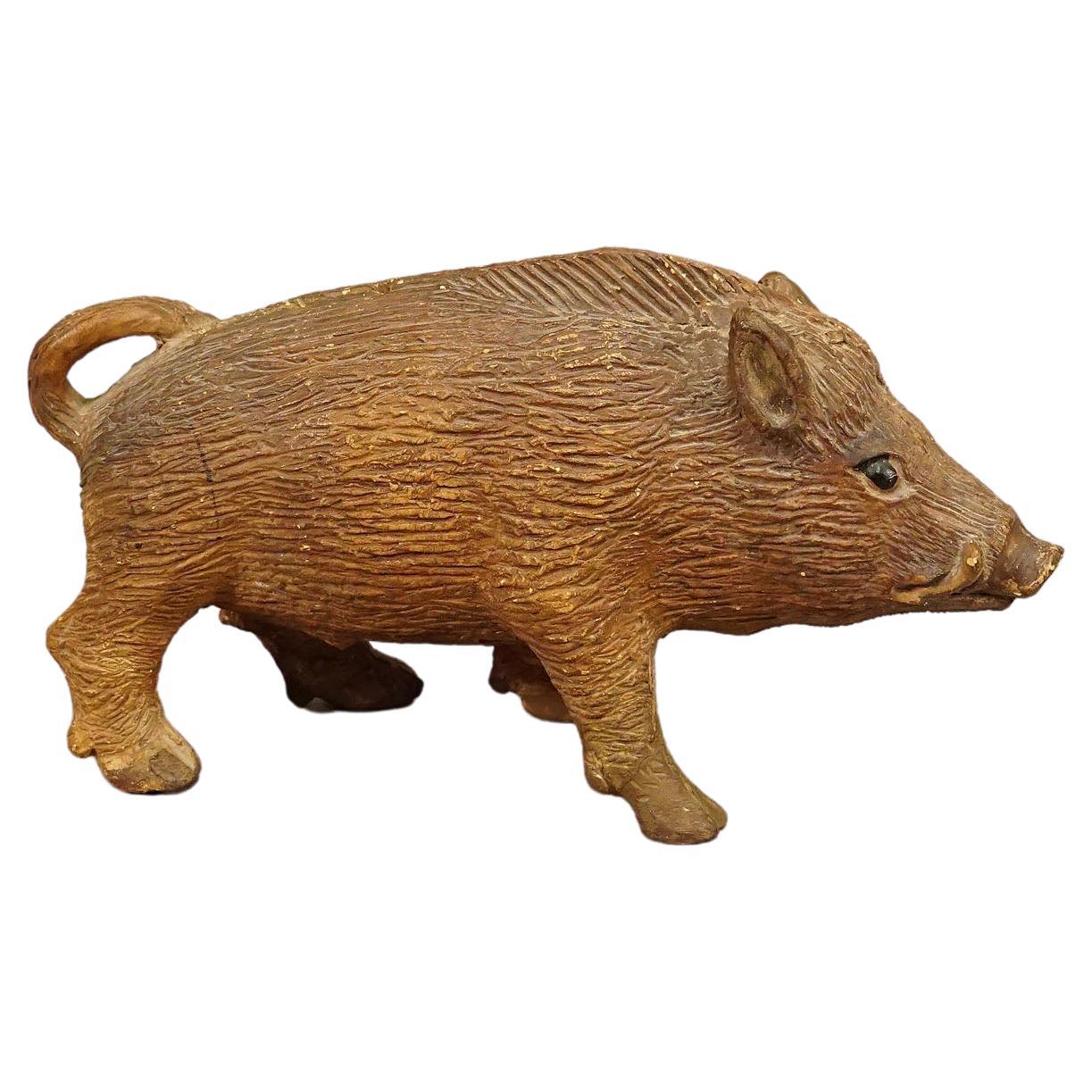
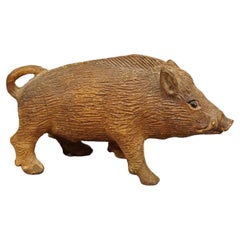
Antique Wild Boar Piggy Bank Made of Clay
An antique piggy back in the shape of a wild boar. Handmade of clay. It has no opening on the base thus ...
Category
Early 20th Century German Black Forest Ceramics
Materials
Clay
American Pottery Pig Bank, Circa 1880
s
Located in Incline Village, NV
American pottery still bank in the shape of a pig, used for saving coins (usually pennies) to encourage children the importance of thrift. Pottery still banks are somewhat scarce since the typical way to remove coins was to smash the bank open, albeit, with this particular example, perhaps a knife was used for coin removal (note the wear to the coin slot---see images) or perhaps the additional wear is also from many coins having been deposited.
The bank is in good all original condition , from an unknown potter (unmarked) circa 1880's, and probably a variant of #633 "Two Toned Pig" in Andy Moore's "The Penny Bank Book" written in 1984 when collecting pottery banks...
Category
Antique 1880s American Folk Art Toys
Materials
Pottery
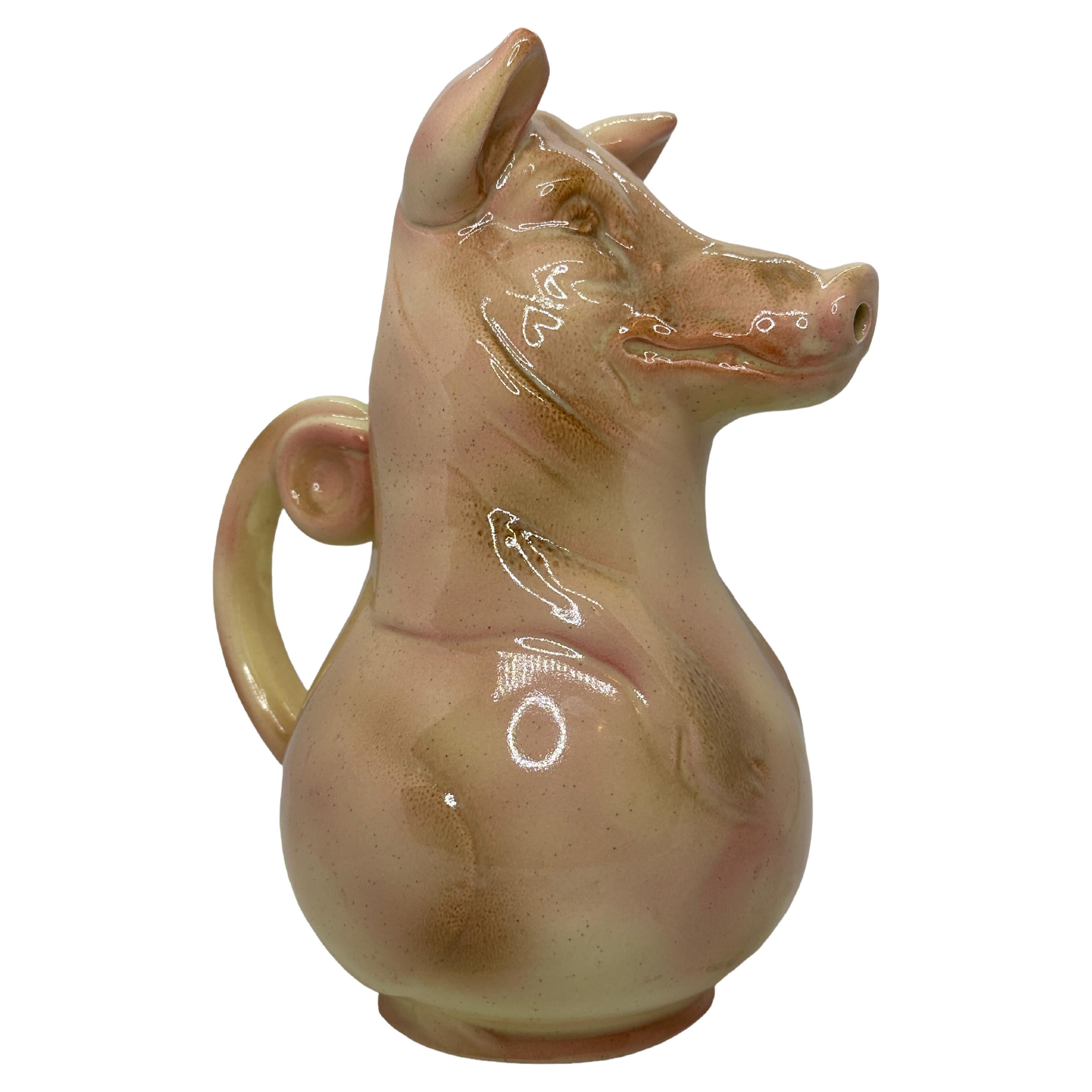
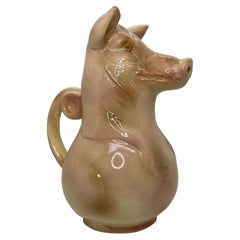
Sarreguemines French Majolica Pink Pig Pitcher, Vintage France
By Sarreguemines
Located in Nuernberg, DE
Decorate a shelf or a kitchen counter with this elegant antique barbotine pitcher. Created by Sarreguemines, France in the 1930s, the pitcher depicts...
Category
Vintage 1930s French Folk Art Ceramics
Materials
Ceramic, Majolica
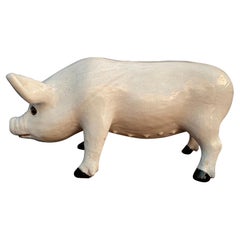
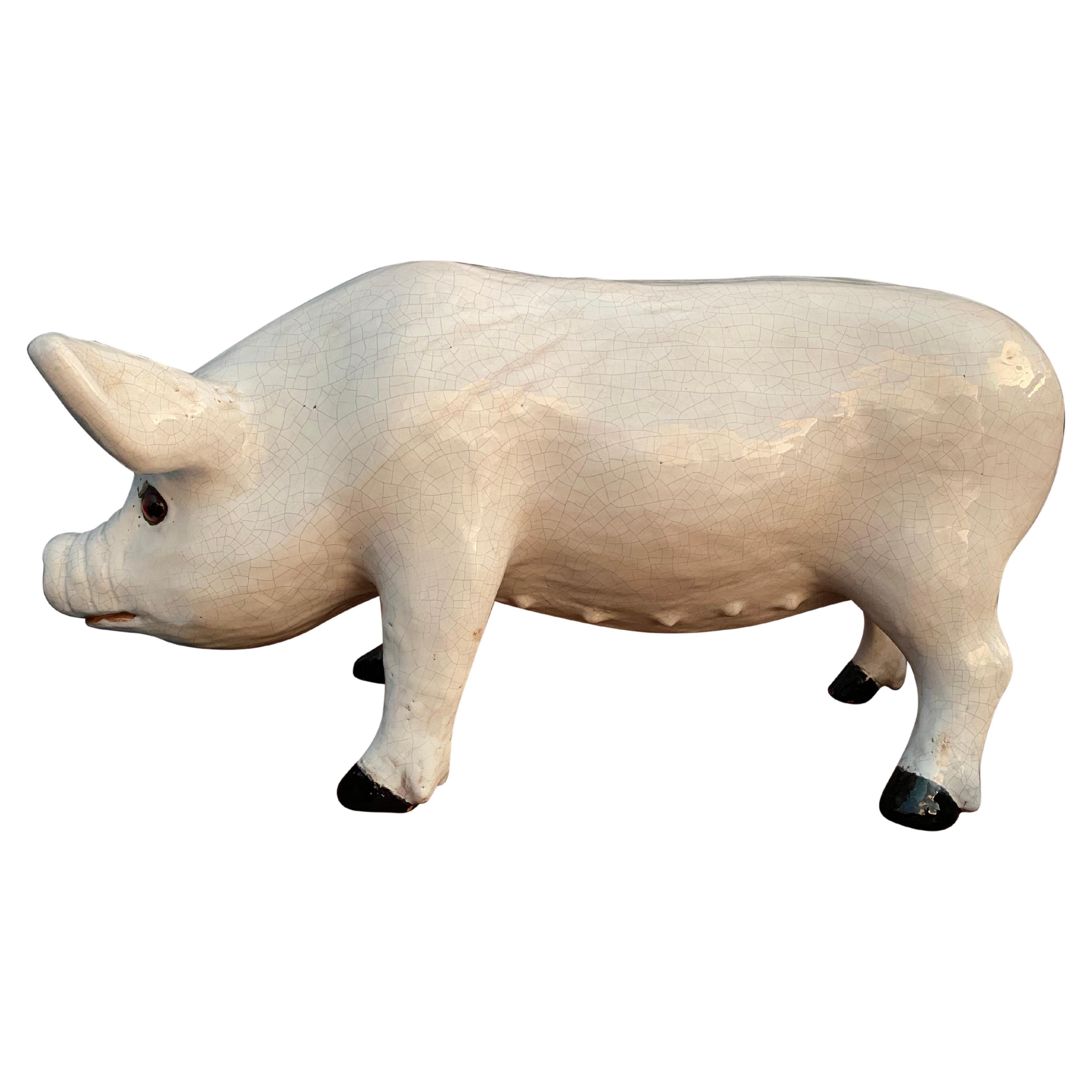
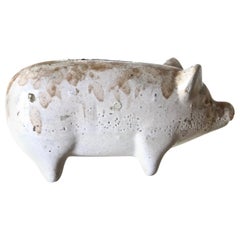
19th Century French Earthenware Pig Sculpture from Bavent in Normandy
By Bavent
Located in Petworth,West Sussex, GB
A great looking late 19th century French pig sculpture in earthenware from Bavent in Normandy. The pig of different shades of white as well as its expressive look testifies to the quality of its craftsmanship. In perfect and original condition with a great patina.
The dimensions are:
Height: 29cm (11.4in)
Width: 52cm (20.5in)
Depth: 20cm (7.9in)
In good antique condition throughout with minor signs of age. The earthenware sculpture remain in good, clean condition. The antique pig...
Category
Antique Late 19th Century French Animal Sculptures
Materials
Earthenware