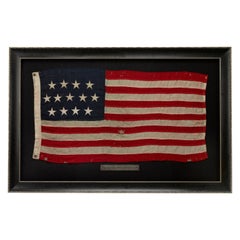
Items Similar to 38 Star Parade Flag with Whimsical 6-Pointed Stars, Colorado Statehood
Want more images or videos?
Request additional images or videos from the seller
1 of 6
38 Star Parade Flag with Whimsical 6-Pointed Stars, Colorado Statehood
Price Upon Request
Price Upon Request
Price Upon Request
Price Upon Request
Price Upon Request
Price Upon Request
Price Upon Request
Price Upon Request
Price Upon Request
Price Upon Request
About the Item
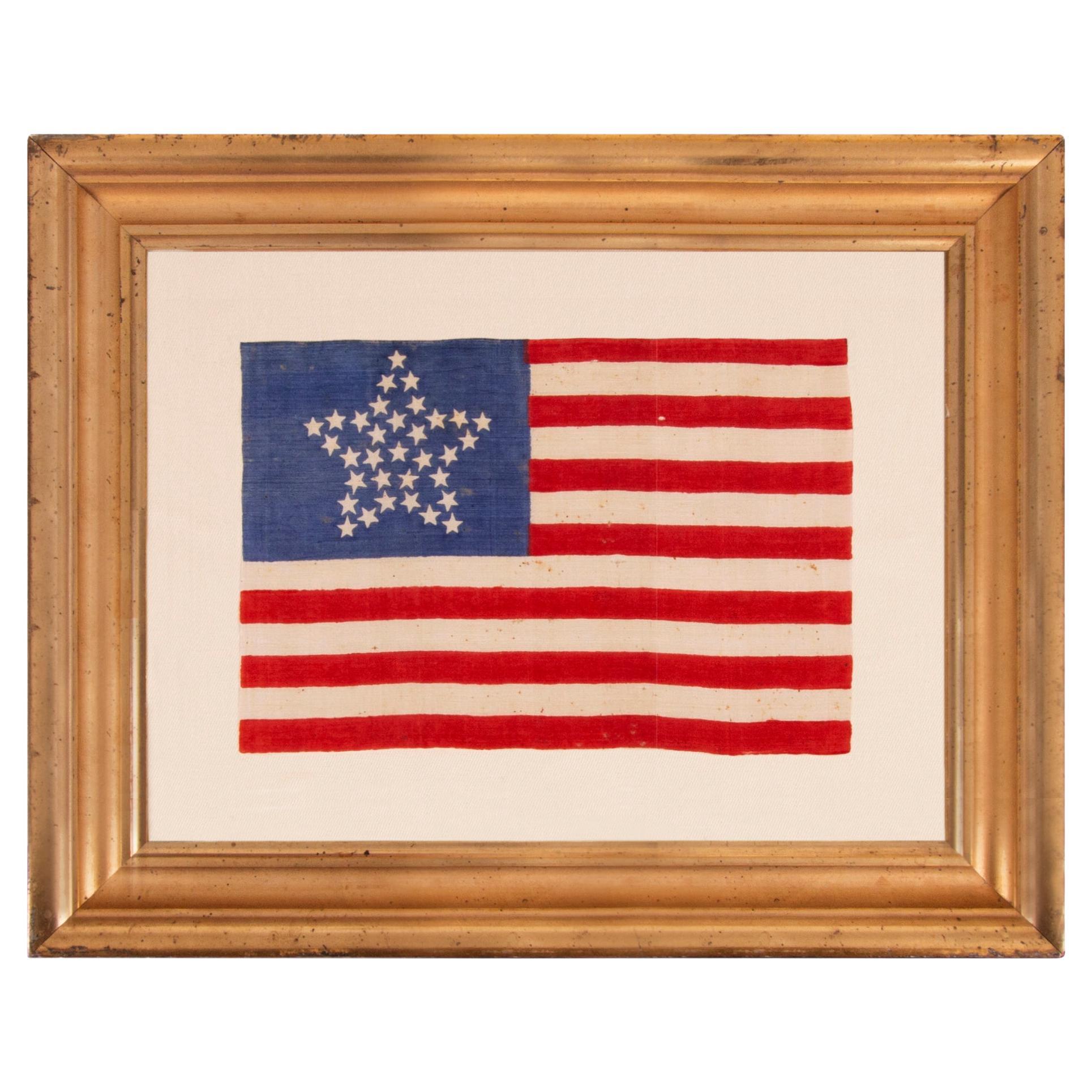
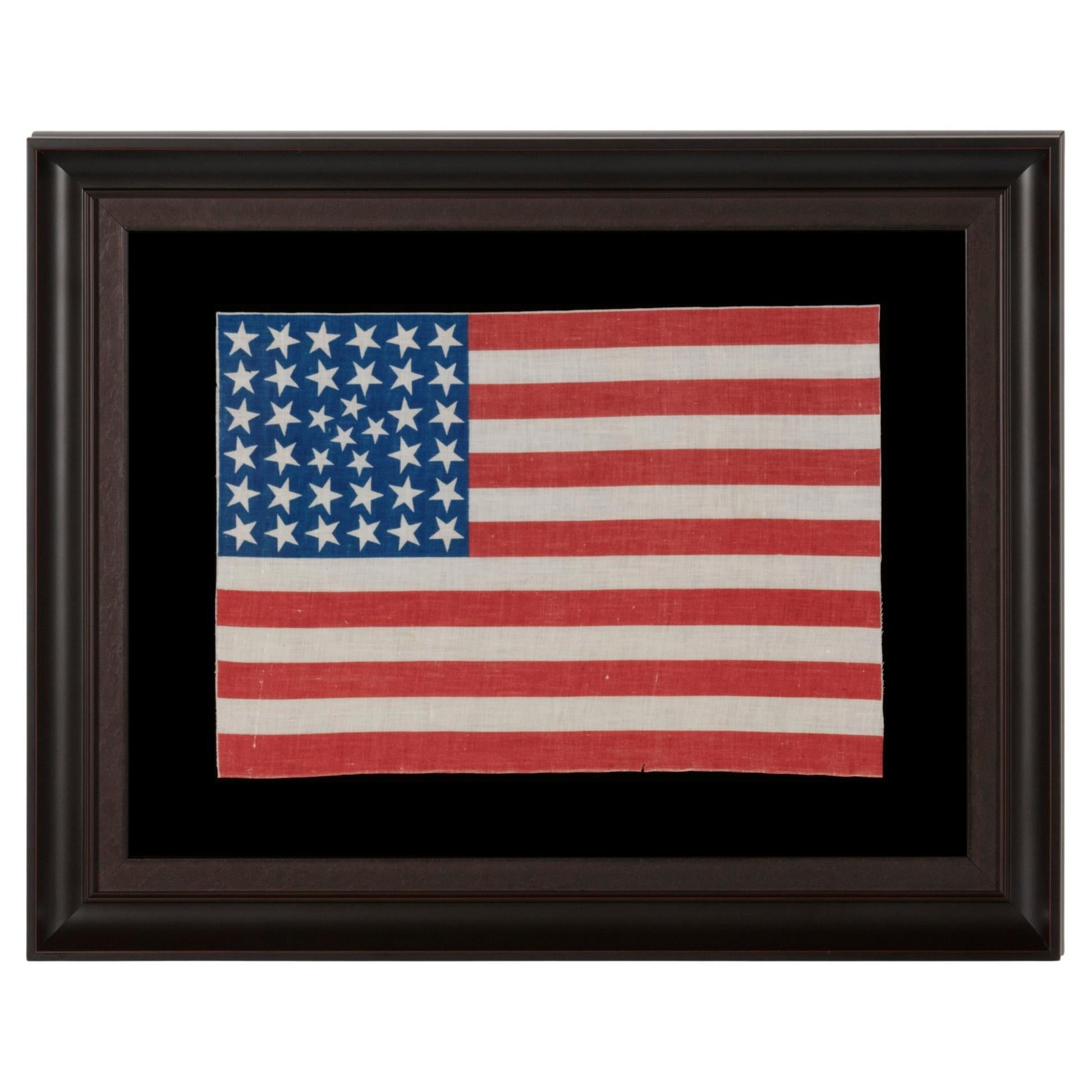
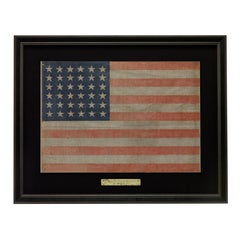
38 WHIMSICAL STARS, WITH 6-POINTED PROFILES, SIMILAR TO THE STAR OF DAVID, ON AN ANTIQUE AMERICAN FLAG OF THE CENTENNIAL ERA; A REMARKABLE SPECIMEN, ONE-OF-A-KIND AMONG KNOWN EXAMPLES, REFLECTS COLORADO STATEHOOD, 1876-1889
This remarkable 38 star American parade flag, printed on plain weave cotton, is an anomaly among its counterparts of the 19th century. Across the many hundreds of varieties of parade flags that I have identified, only two other styles display stars with a different number of points throughout. The format presented here has 6-pointed stars, not unlike the star of David, but stretched vertically in an almost cartoon-like, modernistic fashion. The result is wholly unlike any other parade flag of any period.
The stars are arranged in linear rows of 8-7-8-7-8. Both color and shape contribute significantly to the flag's strong graphic qualities. The near-to-square appearance mimics that of infantry battle flags of the time, which is both academically and visually interesting, and simply different than what one would expect of a modern flag. Even more impactful is the beautiful light blue color of the flag's canton, which is likewise square in shape and plays a role in its unique appearance. Another unusual trait is the use of white pigment on the white fabric, to print the stars and the white stripes. Though not completely unknown, and not of such great importance, it is certainly interesting to see.
When I acquired this flag from a long-time collector, the basic style was known to me from a tiny, paper parade flag-variety that was distributed on a wire staff instead of wood. I have seen perhaps 6 of these over the years, but I had never seen or heard of a cotton version, nor would I have ever guessed that such a flag might exist and in a size so much larger than the 4.5-inch long paper examples.
The discovery of flags of this magnitude--especially when one-of-a-kind among known examples--is precisely what drives true collectors of the rare and unique.
Past a single, surviving 34 star (1861-63) parade flag with 5-pointed stars surrounding a 6-pointed star, the only other type that can be confidently dated to the 19th century is a centennial style with 10-pointed stars. The stars of that type spell out the dates "1776" and "1876" and numerous examples of it survive. It is also of interest to note that a single copy of a 48 star parade flag is known with 8-pointed stars.
The reason behind the inclusion of the 6-pointed star design is not known. In present times, one might equate this profile with the Star of David. More commonly referred to as the Shield of David in the 19th century, it did not bear widespread popularity and use as a primary symbol of the Jewish faith until the 20th century.
While 6-pointed stars were more commonly seen on American flags and related heraldic devices in 18th century imagery, most notably on George Washington's own personal standard, stars with this number of points usually bore closer resemblance to the rowels of a spur than the Star of David.
Colorado became the 38th state on August 1st, 1876. This was the year of our nation’s 100-year anniversary of independence. Per the Third Flag Act of 1818, stars were not officially added until the 4th of July following a state's addition. For this reason, 37 was the official star count for the American flag in 1876. Flag-making was a competitive venture, however, and few flag-makers would have been continuing to produce 37 star flags when their competitors were making 38’s. It is for this reason that 38 and 13 stars (to represent the original 13 colonies) are more often seen at the Centennial International Exposition, the six-month long World’s Fair held in Philadelphia in honor of the event. Some flag-makers would have been adding a star for the 38th state even before it entered the Union, in the early part of 1876 or even prior. In fact, many makers of parade flags were actually producing 39 star flags, in hopeful anticipation of the addition of two more Western Territories instead of one. The 39th state would not join the Union for another 13 years, however, when the Dakota Territory entered as two states on the same day. The 38 star flag became official on July 4th, 1877 and was generally used until the addition of the Dakotas in 1889.
Mounting: The flag has been hand-stitched to a background of 100% cotton twill, black in color, that was washed to remove excess dye. An acid-free agent was added to the wash to further set the dye and the fabric was heat-treated for the same purpose. The mount was then placed in a molding with a step-down profile that is very dark brown in color, nearly black, with red highlights and overtones, to which a flat, silver molding was added as a liner. A shadowbox was created for more dramatic effect. The glazing is U.V. protective Plexiglas.
Condition: There are notches in the fabric along the hoist end, where the flag was once affixed to its original wooden staff. There some soiling and pigment loss throughout, especially in the white. Professional cleaning was undertaken with great success. Some color restoration was undertaken with a reversible medium. There are a couple of pinprick-sized holes at the fly end and there is very minor fraying around the perimeter. Many of my clients prefer early flags to show their age and history of use. Further, the great rarity and desirability of this flag warrants practically any condition.
Frame size (H x L): 23.75" x 27"
Flag size (H x L): 16" x 19".
- Dimensions:Height: 27 in (68.58 cm)Width: 23.75 in (60.33 cm)Depth: 2.5 in (6.35 cm)
- Materials and Techniques:
- Place of Origin:
- Period:
- Date of Manufacture:1876-1889
- Condition:See Item Description.
- Seller Location:York County, PA
- Reference Number:Seller: 38j-11181stDibs: LU849716802022
About the Seller
5.0
Recognized Seller
These prestigious sellers are industry leaders and represent the highest echelon for item quality and design.
Established in 1991
1stDibs seller since 2008
71 sales on 1stDibs
Typical response time: Several days
- ShippingRetrieving quote...Shipping from: York County, PA
- Return Policy
More From This Seller
View All38 Star Antique Flag, Stars in Double Wreath Pattern, Colorado Statehood 1876-89
Located in York County, PA
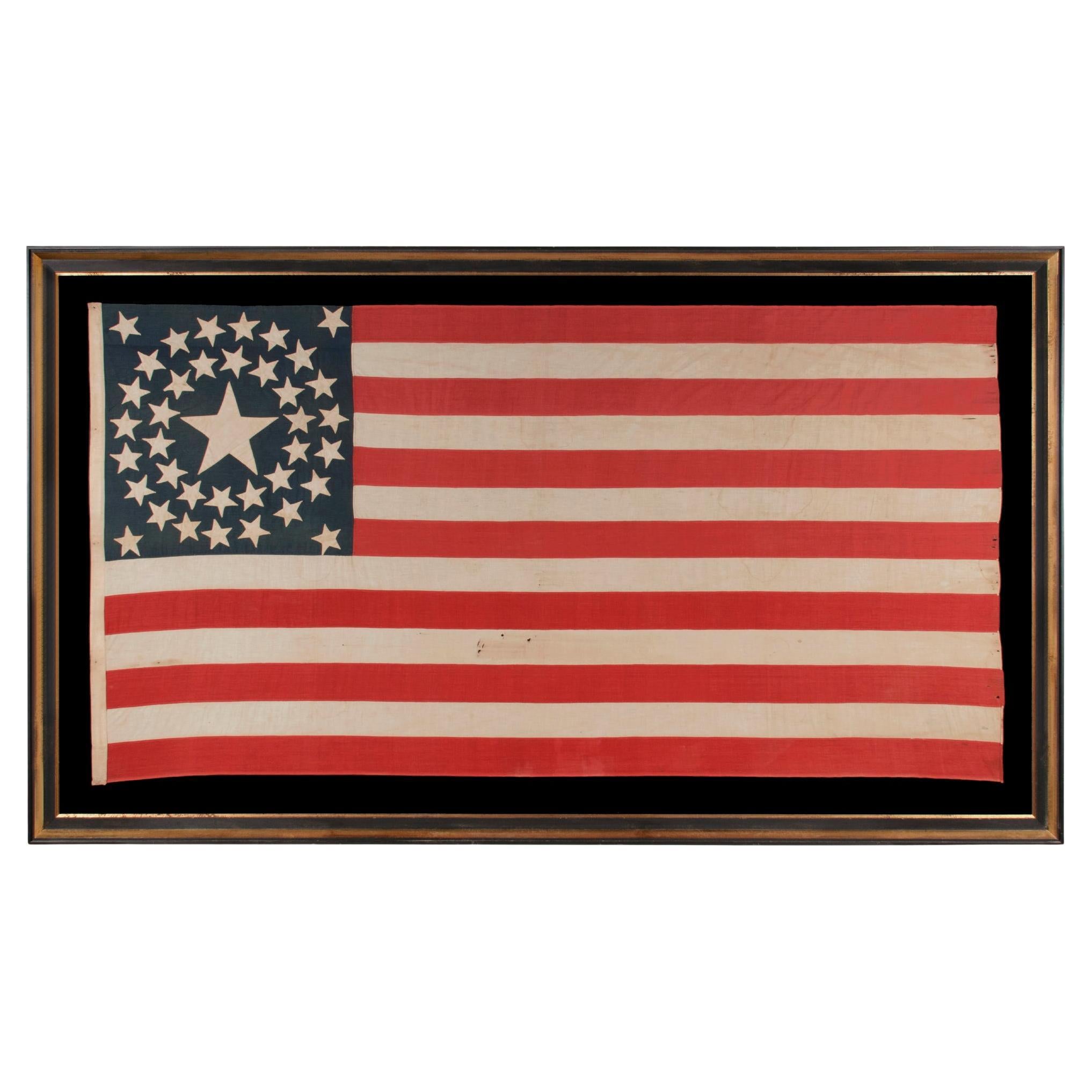
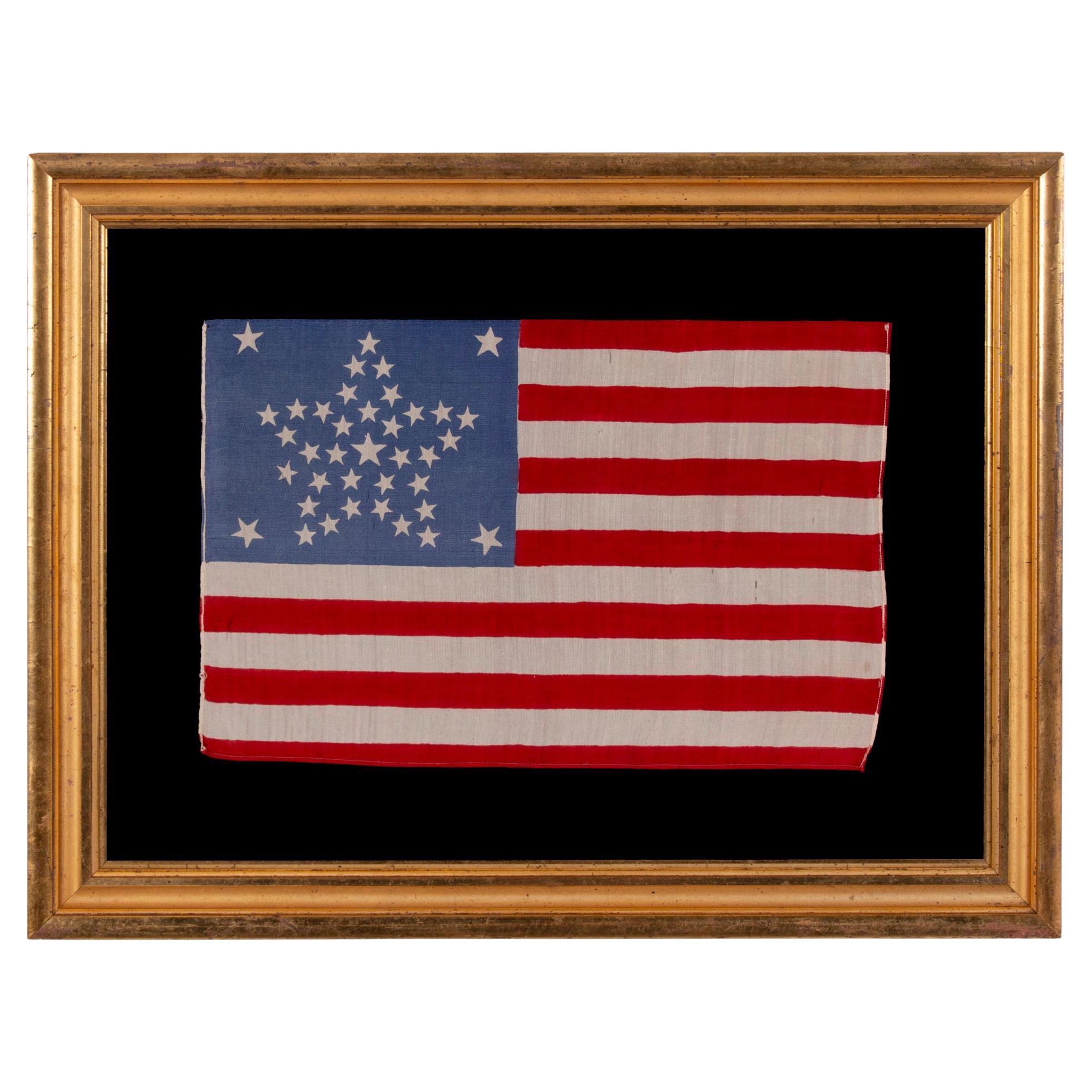
38 STAR ANTIQUE AMERICAN FLAG WITH A DOUBLE-WREATH CONFIGURATION THAT FEATURES AN ENORMOUS CENTER STAR, REFLECTS THE PERIOD OF COLORADO STATEHOOD, 1876-1889:
38 star American national flag, made entirely of plain weave cotton. The stars are arranged in a medallion configuration. This features an enormous center star, surrounded by two wreaths of much smaller stars, with a flanking star in each corner of the blue canton. The sort of disparity here, present in the scale of the large star, versus those around it, is both exceptionally unusual and graphically dynamic.
Colorado became the 38th state on August 1st, 1876. This was the year of our nation’s centennial. Per the Third Flag Act of 1818, stars were not officially added until the 4th of July following a state's addition. For this reason, 37 remained the official star count for the American flag until part way through the following year. Flag-making was a competitive venture, however, and few flag-makers would have continued to produce 37 star flags when their competitors were making 38’s. Many flag-makers added a 38th star before Colorado entered the Union, in the early part of 1876, or possibly even prior. In fact, many makers of printed flags, called parade flags or hand-wavers, were actually producing flags in the 39 star count, in hopeful anticipation of the addition of two more Western Territories instead of one.
It is for these reasons that 38, 39, and 13 stars, to representing the original 13 colonies, are most often seen on flags displayed at the Centennial International Exhibition. Hosted in Philadelphia, this enormous event was our nation’s first World’s Fair, lasted for a duration of six months, and served as the nucleus of celebrations held to honor America’s 100-year anniversary of independence. The 38 star flag became official on July 4th, 1877 and was generally used until the 39th state was added in November of 1889.
This is probably a homemade flag, though sewn by a very skilled hand, or possibly, by two different individuals. The stripes are pieced and sewn entirely by hand, with remarkable care and precision. The canton is constructed of two lengths of blue fabric, that have been joined with treadle stitching. This was joined to the striped field by hand. The stars are double-appliquéd (applied to both sides) with treadle stitching. There is a treadle-sewn, cotton binding along the hoist, with five, hand-sewn grommets.
It is extremely unusual to encounter this combination of sewing methods. Soon after the sewing machine was mass-marketed, in the mid-1850’s, flag-makers both public and private made good use of treadle machines, to join stripes, when constructing American flags. During the Civil War (1861-65), most stripes were treadle-sewn. Stars were another matter. Until the advent of electric machines...
Category
Antique Late 19th Century American Political and Patriotic Memorabilia
Materials
Cotton
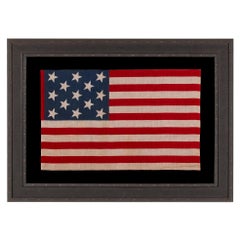
13 Star Antique American Parade Flag, ca 1876-1899
Located in York County, PA
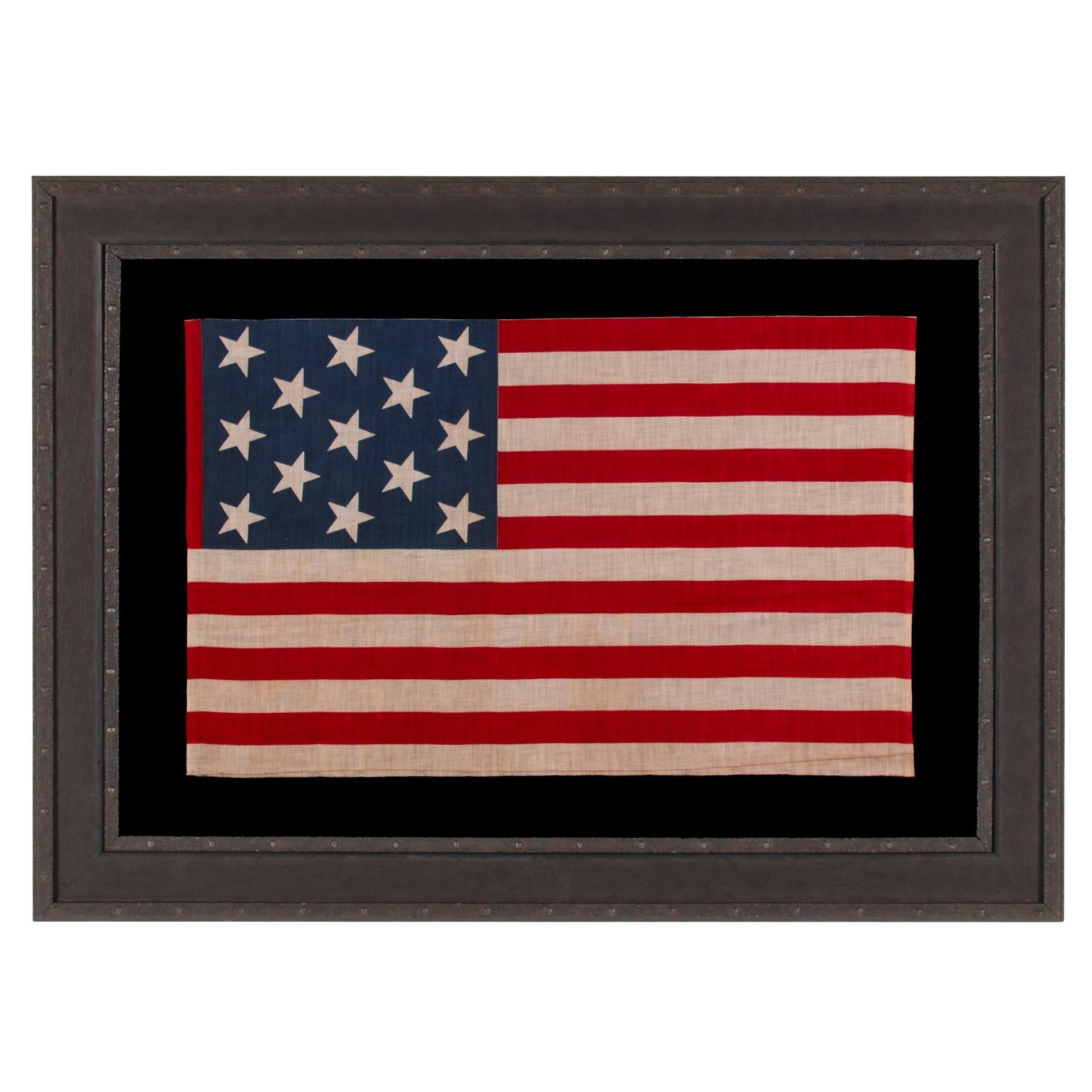
13 STAR ANTIQUE AMERICAN PARADE FLAG, WITH A 3-2-3-2-3 CONFIGURATION OF STARS, AN EXTREMELY SCARCE AND UNUSUALLY LARGE VARIETY, MADE circa 1876-1899
13 star American national parade...
Category
Antique Late 19th Century Canadian Political and Patriotic Memorabilia
Materials
Cotton
Price Upon Request
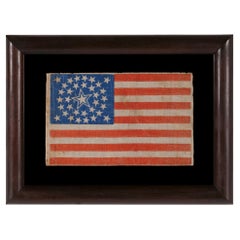
34 Star Antique American Parade Flag, Kansas Statehood, ca 1861-1863
Located in York County, PA
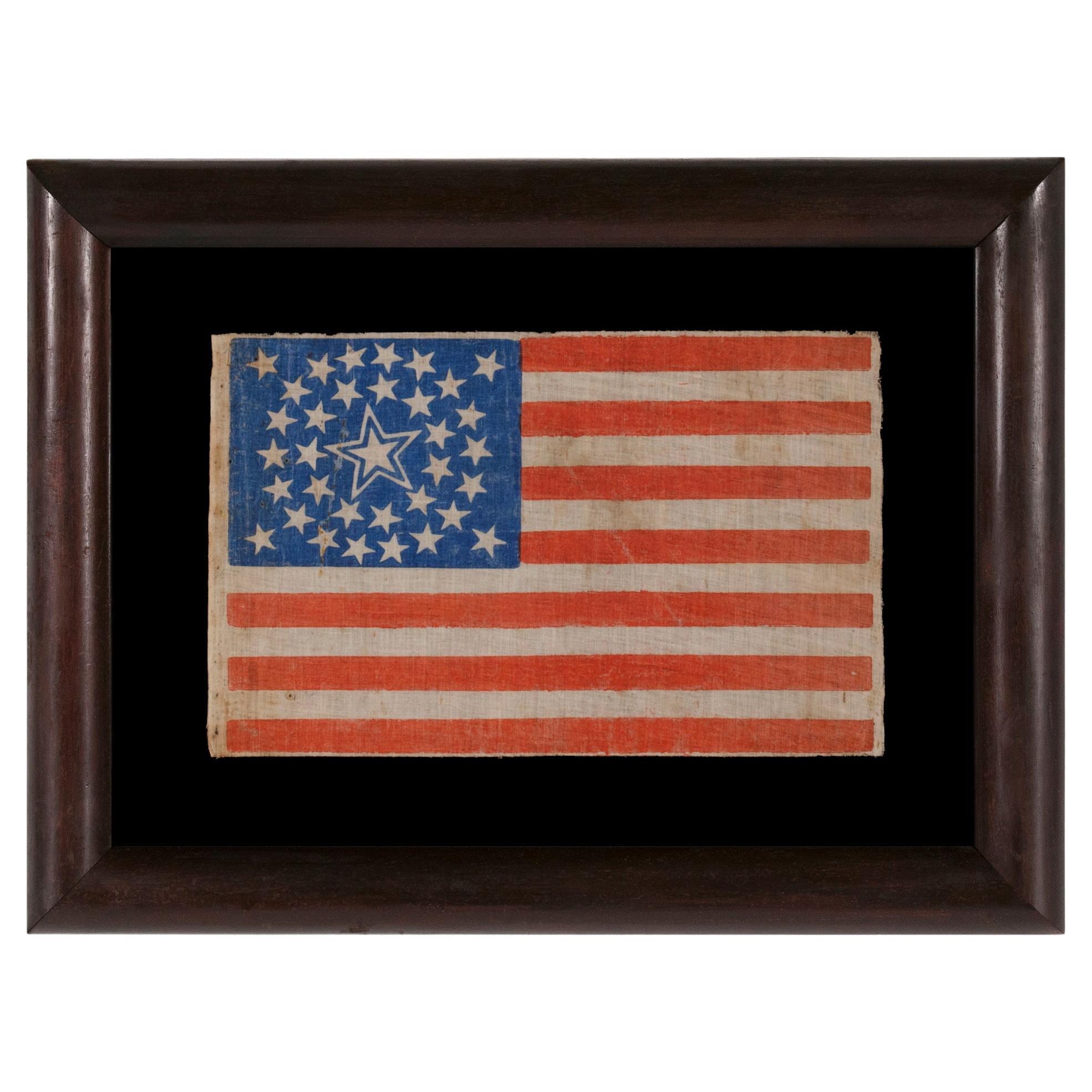
34 STARS IN A MEDALLION CONFIGURATION ON AN ANTIQUE AMERICAN PARADE FLAG WITH A LARGE, HALOED CENTER STAR; CIVIL WAR PERIOD, KANSAS STATEHOOD, 1861-1863
34 star American national pa...
Category
Antique 1860s American Political and Patriotic Memorabilia
Materials
Cotton
Price Upon Request
33 Star Antique American Flag with a Great Star Configuration, ca 1859-1861
Located in York County, PA
33 STARS ANTIQUE AMERICAN FLAG WITH A "GREAT STAR" CONFIGURATION ON A BRILLIANT, INDIGO BLUE CANTON, A RARE AND EXTRAORDINARY EXAMPLE, PRE-CIVIL WAR THROUGH THE WAR'S OPENING YEAR, 1...
Category
Antique Late 19th Century American Political and Patriotic Memorabilia
Materials
Silk
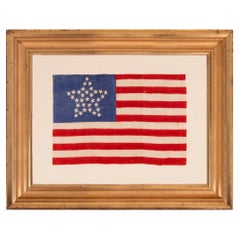
38 Star Antique American Parade Flag, Colorado Statehood, ca 1876-1889
Located in York County, PA
38 STARS IN AN EXTREMELY UNUSUAL CONFIGURATION THAT BEARS A CLUSTER OF 6 SMALL STARS WITHIN A LINEAL PATTERN OF LARGER STARS, 1876-1889, COLORADO STATEHOOD
38 star American national parade flag, printed on cotton. This is an extremely rare example of a lineal pattern flag with a wreath or cluster of smaller stars inserted in the center. A very small number of flags in this style are known to have survived, the colors of which are typically saturated and vibrant, like this example, in scarlet red and rich, royal blue.
The particular wreath in the center of the configuration is really more of a pentagon with a single, center star. The reason for the choice of the design and 6 smaller stars seems a curious one on the surface, but its purpose was probably nothing more than to simply augment a 36 star print block to one with 38 stars. One may observe how 4 stars, that would have comprised the center of a 6 x 6 pattern, could have simply been removed and 6 smaller stars inserted in their place, in an artful fashion.
At least two other similar 38-star patterns are known that incorporate 4 small stars intermingled between rows of what most certainly were two very similar 34-star flag print blocks originally. It was easier to modify these blocks rather than create brand new ones. In these particular instances, the results are rare, quirky configurations that are highly prized by collectors.
Colorado became the 38th state on August 1st, 1876. This was the year of our nation’s 100-year anniversary of independence. Per the Third Flag Act of 1818, stars were not officially added until the 4th of July following a state's addition. For this reason, 37 was the official star count for the American flag in 1876. Flag-making was a competitive venture, however, and few flag-makers would have been continuing to produce 37 star flags when their competitors were making 38’s. It is for this reason that 38 and 13 stars (to represent the original 13 colonies) are more often seen at the Centennial International Exposition, the six-month long World’s Fair held in Philadelphia in honor of the event. Some flag-makers would have been adding a star for the 38th state even before it entered the Union, in the early part of 1876 or even prior. In fact, many makers of parade flags were actually producing 39 star flags, in hopeful anticipation of the addition of two more Western Territories instead of one. But the 39th state would not join the Union for another 13 years, when the Dakota Territory entered as two states on the same day. The 38 star flag became official on July 4th, 1877 and was generally used until the addition of the Dakotas in 1889.
Provenance: Jeff R. Bridgman Antiques to the late collector Jim Ring...
Category
Antique Late 19th Century American Political and Patriotic Memorabilia
Materials
Cotton
Price Upon Request
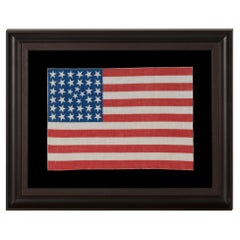
38 Star American Parade Flags with Stars in a Great Star Pattern
Located in York County, PA
38 STAR AMERICAN PARADE FLAG WITH A RARE AND BEAUTIFUL VARIATION OF THE “GREAT STAR” OR “GREAT FLOWER” PATTERN, 4 LARGE CORNER STARS, & AN ODD OUTLIER, 1876-1889, COLORADO STATEHOOD,...
Category
Antique Late 19th Century American Political and Patriotic Memorabilia
Materials
Silk
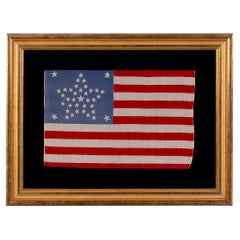
Price Upon Request
You May Also Like
34-Star American Parade Flag, Commemorating Kansas Statehood, Circa 1861-1863
Located in Colorado Springs, CO
Offered is a spectacular 34-star American flag, produced during the Civil War. This flag features 34 printed white stars, on a blue wool blend canton. The stars are arranged in whims...
Category
Antique 1860s American American Classical Political and Patriotic Memora...
Materials
Brass
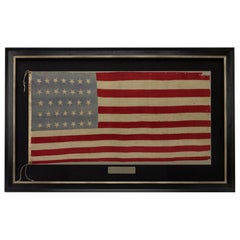
42-Star American Parade Flag, Commemorating Washington Statehood, 1889
Located in Colorado Springs, CO
This is an uncommon 42-star flag, commemorating the addition of the state of Washington to the Union. The flag dates to 1889-1890, and is printed on cotton. The canton consists of s...
Category
Antique 1880s American Political and Patriotic Memorabilia
Materials
Cotton
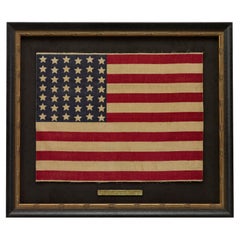
44-Star Silk American Flag, Celebrating Wyoming Statehood, Circa 1890-1896
Located in Colorado Springs, CO
Presented is a 44-star silk American flag, commemorating Wyoming statehood. The flag dates to 1890-1896. The flag has an “8-7-7-7-7-8” star configuration, with the stars whimsically ...
Category
Antique 1890s American Political and Patriotic Memorabilia
Materials
Silk
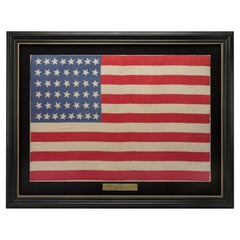
36-Star American Printed Parade Flag, Circa 1865-1867
Located in Colorado Springs, CO
This is an antique 36-star American flag, as striking as it is scarce. The flag has a glazed cotton construction, with a blue canton printed with 36 white stars. The stars are arrang...
Category
Antique 1860s American Political and Patriotic Memorabilia
Materials
Cotton
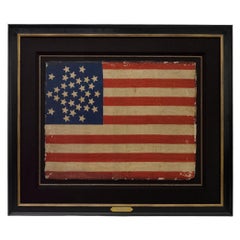
31-Star Printed American Flag, Celebrating California Statehood, Circa 1850
Located in Colorado Springs, CO
This is a rare 31-star medallion printed American flag, celebrating the addition of California to the Union. The flag is printed on silk and has a spectacular “Great Star” canton pat...
Category
Antique 1850s American Political and Patriotic Memorabilia
Materials
Silk
13-Star Wool American Flag, with Zig-Zag Stars, Circa 1900
Located in Colorado Springs, CO
This is a beautiful 13-star American flag, each star sewn with zig-zag stitching. The wool flag was sewn at the turn of the century, circa 1900. The flag features 13 white stars rest...
Category
Antique Early 1900s American American Classical Political and Patriotic ...
Materials
Brass