Items Similar to Early 20th Century British Union Flag, ca 1918-1952
Want more images or videos?
Request additional images or videos from the seller
1 of 5
Early 20th Century British Union Flag, ca 1918-1952
$4,850
£3,663.05
€4,231.39
CA$6,832.96
A$7,318.10
CHF 3,934.16
MX$88,882.63
NOK 49,710.04
SEK 45,513.24
DKK 31,616.19
About the Item
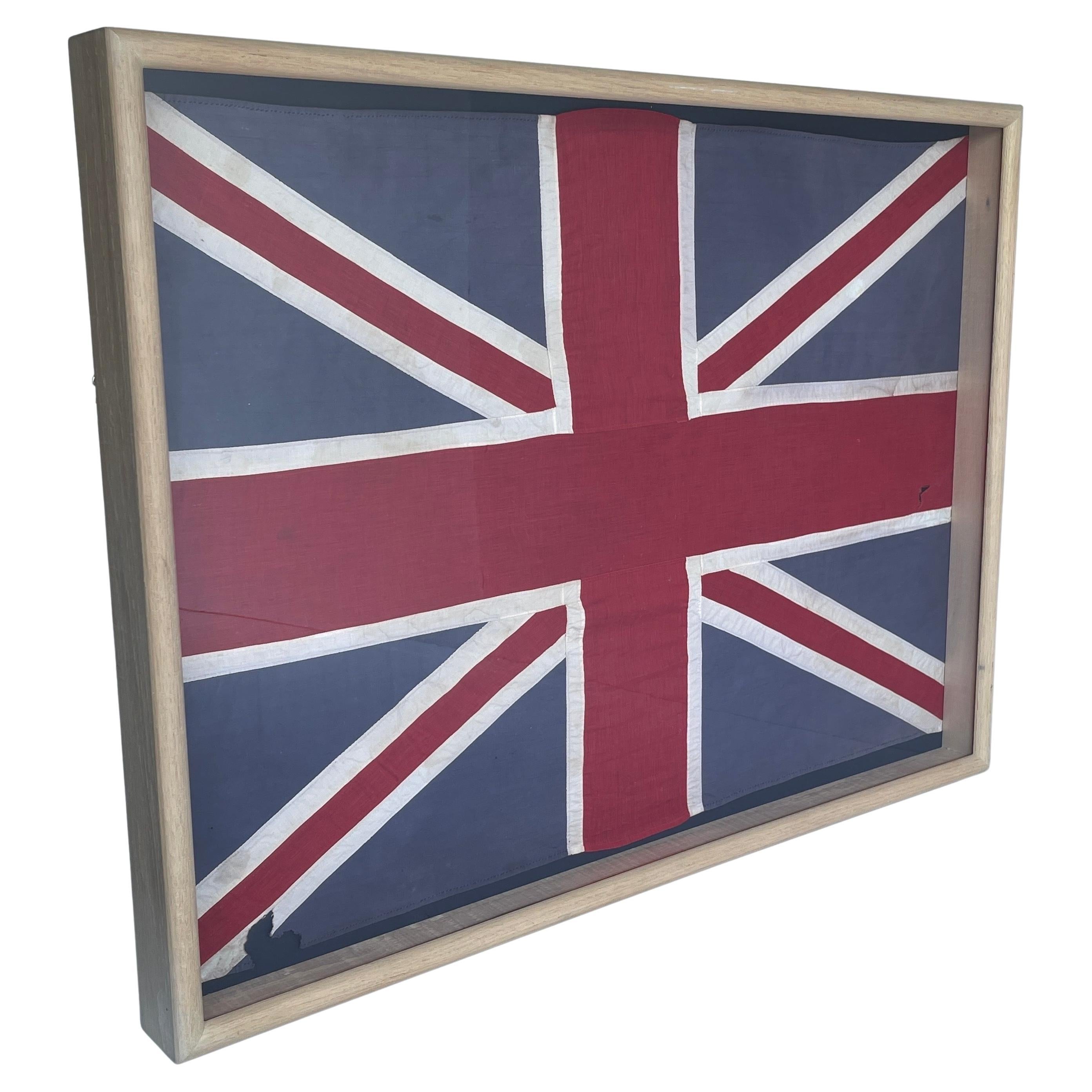
BRITISH UNION FLAG OF THE EARLY 20TH CENTURY, WITH BRILLIANT AND UNUSUAL, COBALT BLUE COLORATION, AND A SIMPLIFIED, FOLK STYLE, WITH INCORRECT PROPORTIONS IN THE CROSSES OF ST. ANDREW
SAINT PATRICK, circa 1918-1952
BRITISH UNION FLAG OF THE EARLY 20TH CENTURY, WITH BRILLIANT AND UNUSUAL, COBALT BLUE COLORATION, AND A SIMPLIFIED, FOLK STYLE, WITH INCORRECT PROPORTIONS IN THE CROSSES OF ST. ANDREW
SAINT PATRICK, circa 1918-1952
Web ID: BRITj-833
Available: In Stock
Frame Size (H x L): Approx. 32" x 38"
Flag Size (H x L): 20" x 26.75"
Description:
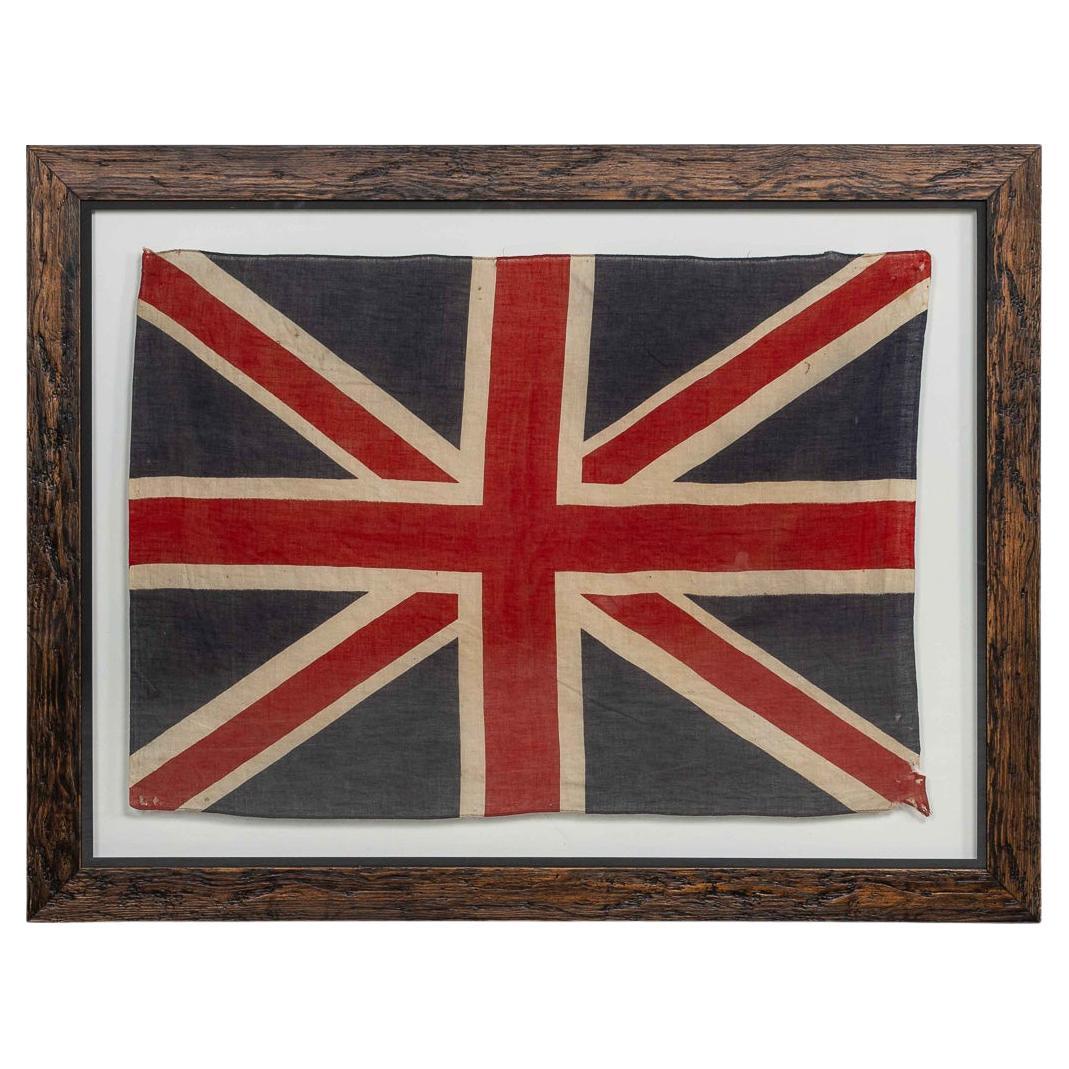
This beautiful example of a British Union flag, made sometime during the 1st or 2nd quarter of the 20th century, sports an attractive list of interesting features. Chief among these are its size, color, and lack of strict adherence to British heraldry. Note the brilliant, cobalt blue color, the striking and most unusual shade of which contrasts beautifully with the bright, scarlet red.
Also note how the profile is rather near-to-square in its appearance, being taller than usual for its length, as well as how the aspects of its crosses do not meet the required criteria, most notably the lack of properly offset positioning in the overlay of the Cross of St. Peter over that of St. Andrew. The crude format either results from its having been homemade, by someone not completely familiar with the requirements, or perhaps by someone unable to complete a flag that displayed them. Yet another reason might be from having been produced overseas.
Various reasons to have produced such a flag do not include use as a port-of-call / courtesy flag (flown out of respect by a foreign ship when entering a British port, in this case), as only the Royal Navy may fly the Union Flag at sea.
Sanctioned for use on important holidays, a far more likely reason for manufacture of a Union Flag, like this one, include display in parades that accompanied the end of WWI or WWII (1918 and 1945, respectfully), in France, Britain, the U.S., or elsewhere. Possible display in France or Belgium, to welcome U.S. troops during WWII, following liberation from the Germans, is a closely related function of significant possibility.
Coronations were the most obvious event that inspired patriotism and warranted Union flag display within Britain. Two occurred in 1936, with that of King Edward VIII in January of that year, who abdicated to marry an American, and so was followed by King George VI (Prince Albert) in December. Another occurred in 1952, when George VI died and Queen Elizabeth II, his daughter, took the throne.
At just 20” x 26.75”, the extremely small scale of this flag would be appropriate for any of the above functions.
Construction: The body of the flag is made entirely of wool bunting, of an especially heavy and durable nature, that has been joined with machine stitching. There is a plain weave cotton binding along the hoist, in the form of an open sleeve, through which either a staff or a rope could be passed. This was applied in the same manner.
Basic Facts Surrounding Use of The British Union Flag / Union Jack: The combination of the cross of St. George, to reflect England, and that of St. Andrew, to signify Scotland, and of St. Peter, to include Ireland (as of January 1st, 1801), create what is properly known as the British “Union Flag,”
The term “Union Jack” comes from the fact that this device, by itself, was not flown on British ships as its primary colors. Instead, it was flown as a “jack,” which is a smaller flag, meant to be flown off the bow, when a ship was at port or anchor.
The British Royal Navy flew the British Union Flag as a jack. The device also served as the canton/union of all British flags flown at sea, in the same way that the blue field with stars constituted the canton/union of the Stars
Stripes on the American national flag, flown by American ships. U.S. Navy ships also flew jacks when at port or anchor. For the majority of U.S. history, this has been a blue flag with white stars. In both Britain and the United States, the signal is officially called the “Union Jack”—a fact that makes the name pretty confusing. In each case, the size is to be that of the canton of the national ensign flown on the respective ship.
In Britain, there were several variations of the national flag, instead of just one, called red, blue, and white ensigns. Each consisted of either a red, white, or blue field, with the British “Union Flag” in the upper corner of the hoist end.
It is of interest to note that no law has ever been passed to make the Union flag / “Union Jack” the national flag of the United Kingdom. Instead, it has become so through precedent. Its first recorded recognition as a national flag came in 1908, when it was stated in Parliament that "the Union Jack should be regarded as the National flag". A more categorical statement was made by the Home Secretary, Sir John Gilmour, in 1933 when he stated that "the Union Jack is the National Flag". It is still officially a flag of the monarch, however, rather than of the nation.
Civilian use of the Union flag is permitted on land, but non-naval/military use at sea is prohibited. On land, the Union Jack can be flown by any individual or organization on any day they wish. Until very recently, however, government use was strictly regulated. Prior to 2007, it could only be flown on government buildings on certain specified days, such as those marking the birthdays of members of the Royal Family, the wedding anniversary of the Monarch, Commonwealth Day, Accession Day, Coronation Day, The Queen's official birthday, Remembrance Sunday and on the days of the State Opening and prorogation of Parliament.
At sea, different rules apply. Prior to 1864, the Red Ensign, White Ensign, and Blue Ensign were all flown by ships of the Royal Navy (RN). In that year, all RN ships were ordered to fly the White Ensign and it became the sole naval flag of the United Kingdom. Until the mid- to late 1960's, the White Ensign was also flown by Canadian, Australian and New Zealand warships. The Blue Ensign was reserved for merchant vessels whose masters are qualified Royal Naval Reserve [RNR] officers and which meet certain other requirements, while the Red Ensign became the British civil ensign.
At sea, the Union Jack is reserved for the RN and no other British ships are permitted to fly it.
Mounting: The flag will be mounted and framed within our own conservation department, which is led by expert staff. We take great care in the mounting and presentation of flags and have preserved thousands of examples.
The background is 100% cotton twill, black in color, that has been washed and treated for colorfastness. The black-painted, hand-gilded and distressed molding is Italian. The glazing is U.V. protective acrylic (Plexiglas). Feel free to contact us for more details.
Condition: Excellent, with but extremely minor soiling along the hoist binding.
- Dimensions:Height: 32 in (81.28 cm)Width: 38 in (96.52 cm)Depth: 2.5 in (6.35 cm)
- Materials and Techniques:
- Place of Origin:
- Period:
- Date of Manufacture:1918-1952
- Condition:See Item Description.
- Seller Location:York County, PA
- Reference Number:Seller: BRITJ-8331stDibs: LU849747654602
About the Seller
5.0
Recognized Seller
These prestigious sellers are industry leaders and represent the highest echelon for item quality and design.
Established in 1991
1stDibs seller since 2008
71 sales on 1stDibs
Typical response time: Several days
- ShippingRetrieving quote...Shipping from: York County, PA
- Return Policy
More From This Seller
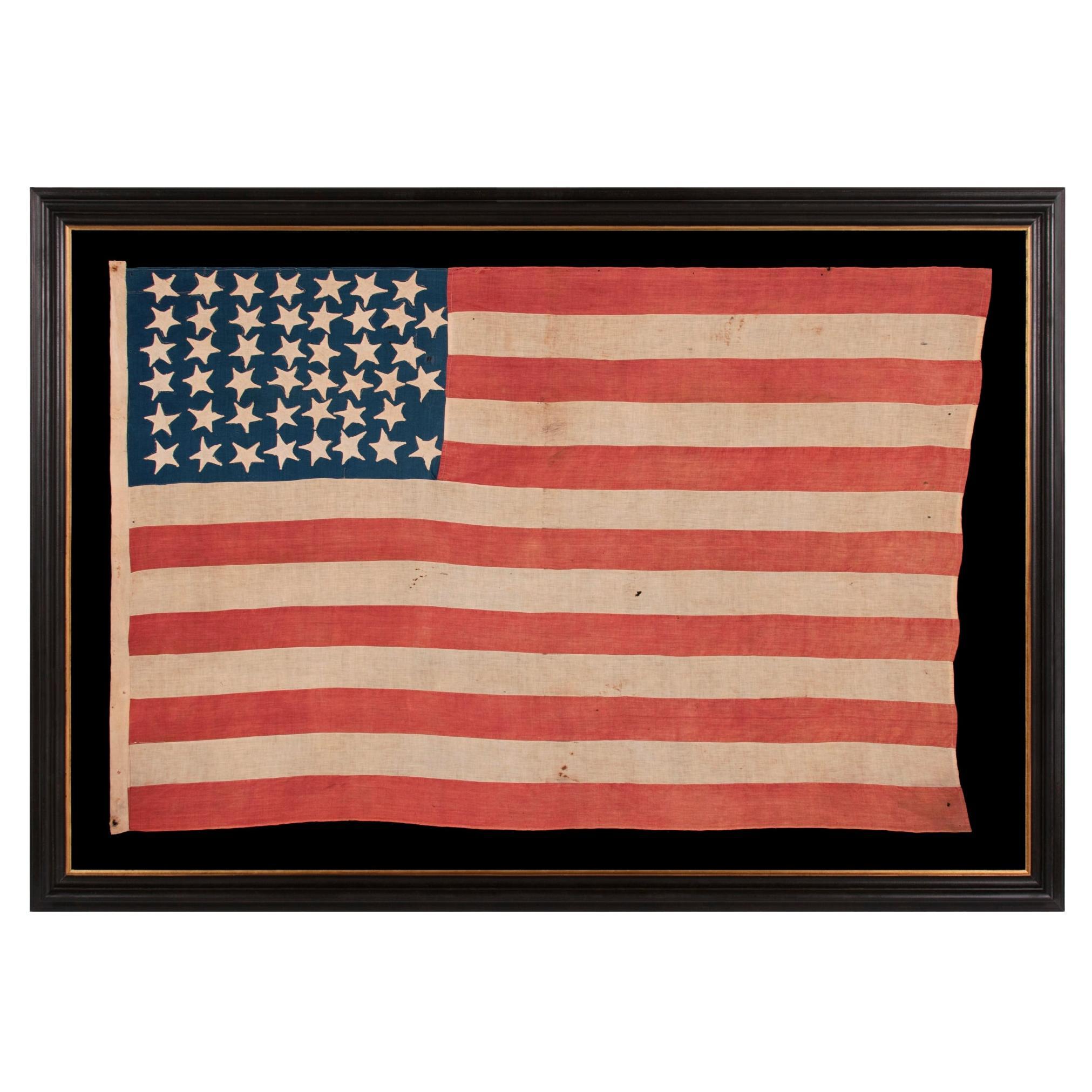
View AllHomemade, Antique American Flag with Exceptional Folk Qualities, 1896-1908
Located in York County, PA
HOMEMADE, ANTIQUE AMERICAN FLAG WITH A TINY CANTON RESTING ON THE 6TH STRIPE AND AN EXTREMELY FOLKY PRESENTATION OF 45 STARS IN A “NOTCHED” PATTERN THAT MIGHT BE UNIQUE TO THIS EXAMP...
Category
Antique 1890s American Political and Patriotic Memorabilia
Materials
Cotton
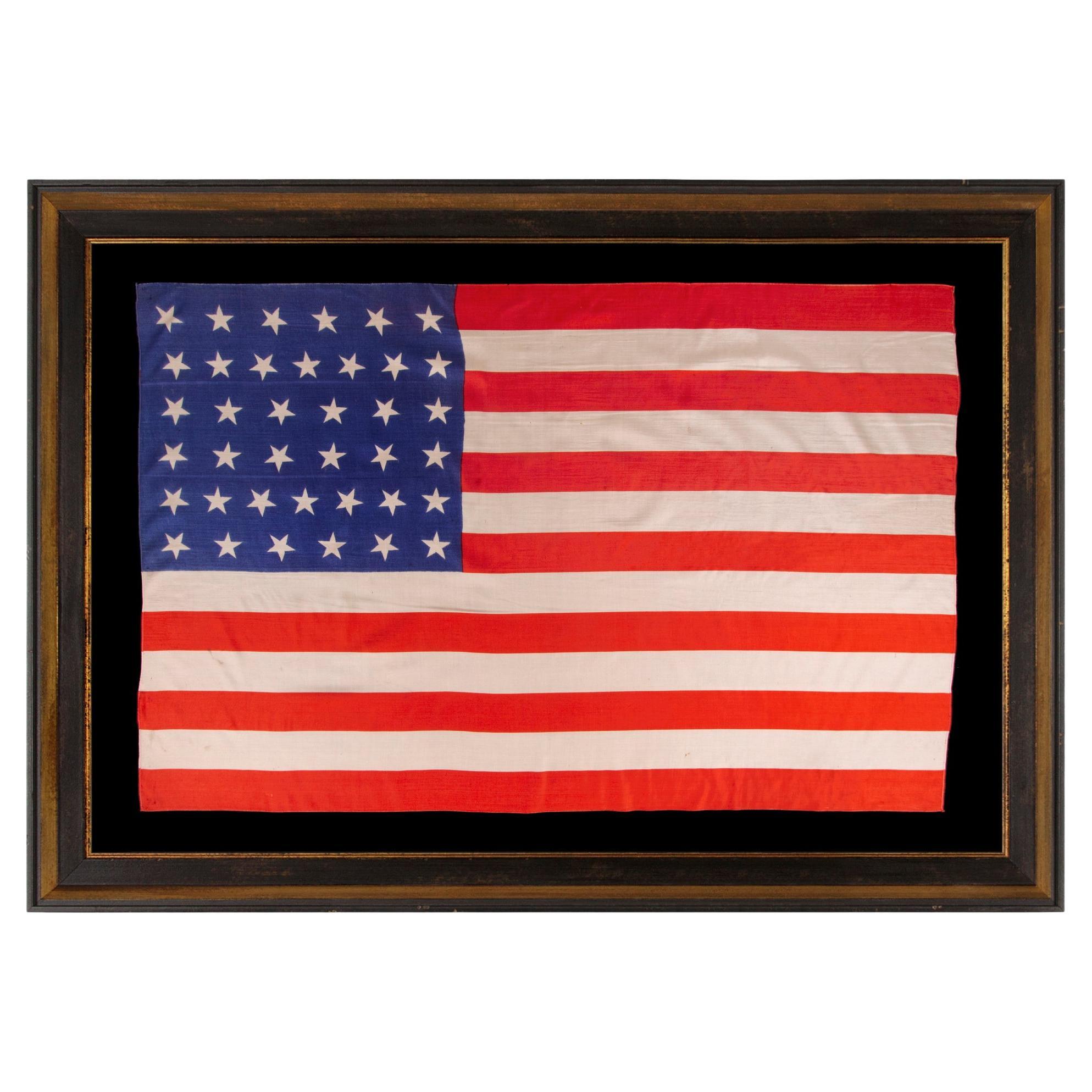
38 Star Antique American Flag, Colorado Statehood, circa 1876-1889
Located in York County, PA
38 star antique American parade flag with scattered star orientation, made of silk, with generous scale and vivid colors, Colorado Statehood, 1876-1889
38 star American national p...
Category
Antique Late 19th Century American Political and Patriotic Memorabilia
Materials
Silk
Price Upon Request
45 Stars Antique American Parade Flag, Utah Statehood, ca 1896-1908
Located in York County, PA
45 STAR ANTIQUE AMERICAN PARADE FLAG WITH ITS STARS ARRANGED IN A NOTCHED PATTERN, 1896-1908, UTAH STATEHOOD:
45 star American national flag, printed on coarse, glazed cotton. Evide...
Category
Antique 1890s American Political and Patriotic Memorabilia
Materials
Cotton
Price Upon Request
13 Star Antique American Parade Flag, ca 1876-1899
Located in York County, PA
13 STAR ANTIQUE AMERICAN PARADE FLAG, WITH A 3-2-3-2-3 CONFIGURATION OF STARS, AN EXTREMELY SCARCE AND UNUSUALLY LARGE VARIETY, MADE circa 1876-1899
13 star American national parade...
Category
Antique Late 19th Century Canadian Political and Patriotic Memorabilia
Materials
Cotton
Price Upon Request
44 Star Antique American Flag, Wyoming Statehood, ca 1890-1896
Located in York County, PA
44 STAR ANTIQUE AMERICAN FLAG WITH AN HOURGLASS ARRANGEMENT ON A DUSTY BLUE CANTON; REFLECTS THE ERA WHEN WYOMING WAS THE MOST RECENT STATE TO JOIN THE UNION, 1890-1896
Wyoming was ...
Category
Antique 1890s American Political and Patriotic Memorabilia
Materials
Wool
Price Upon Request
38 Star Antique American Parade Flag, Colorado Statehood, ca 1876-1889
Located in York County, PA
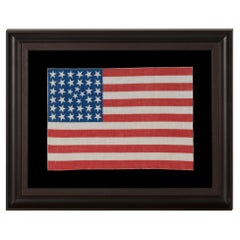
38 STARS IN AN EXTREMELY UNUSUAL CONFIGURATION THAT BEARS A CLUSTER OF 6 SMALL STARS WITHIN A LINEAL PATTERN OF LARGER STARS, 1876-1889, COLORADO STATEHOOD
38 star American national parade flag, printed on cotton. This is an extremely rare example of a lineal pattern flag with a wreath or cluster of smaller stars inserted in the center. A very small number of flags in this style are known to have survived, the colors of which are typically saturated and vibrant, like this example, in scarlet red and rich, royal blue.
The particular wreath in the center of the configuration is really more of a pentagon with a single, center star. The reason for the choice of the design and 6 smaller stars seems a curious one on the surface, but its purpose was probably nothing more than to simply augment a 36 star print block to one with 38 stars. One may observe how 4 stars, that would have comprised the center of a 6 x 6 pattern, could have simply been removed and 6 smaller stars inserted in their place, in an artful fashion.
At least two other similar 38-star patterns are known that incorporate 4 small stars intermingled between rows of what most certainly were two very similar 34-star flag print blocks originally. It was easier to modify these blocks rather than create brand new ones. In these particular instances, the results are rare, quirky configurations that are highly prized by collectors.
Colorado became the 38th state on August 1st, 1876. This was the year of our nation’s 100-year anniversary of independence. Per the Third Flag Act of 1818, stars were not officially added until the 4th of July following a state's addition. For this reason, 37 was the official star count for the American flag in 1876. Flag-making was a competitive venture, however, and few flag-makers would have been continuing to produce 37 star flags when their competitors were making 38’s. It is for this reason that 38 and 13 stars (to represent the original 13 colonies) are more often seen at the Centennial International Exposition, the six-month long World’s Fair held in Philadelphia in honor of the event. Some flag-makers would have been adding a star for the 38th state even before it entered the Union, in the early part of 1876 or even prior. In fact, many makers of parade flags were actually producing 39 star flags, in hopeful anticipation of the addition of two more Western Territories instead of one. But the 39th state would not join the Union for another 13 years, when the Dakota Territory entered as two states on the same day. The 38 star flag became official on July 4th, 1877 and was generally used until the addition of the Dakotas in 1889.
Provenance: Jeff R. Bridgman Antiques to the late collector Jim Ring...
Category
Antique Late 19th Century American Political and Patriotic Memorabilia
Materials
Cotton
Price Upon Request
You May Also Like
1950
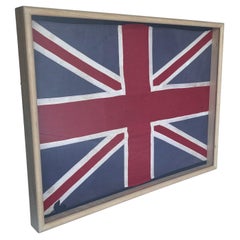
s Large British Union Jack Hand-Stitched Framed Flag
Located in Haddonfield, NJ
1950’s Union Jack Flag Framed, London England
This vintage British flag was purchased in London many years ago. This red, white and blue Union ...
Category
Mid-20th Century English Mid-Century Modern Decorative Art
Materials
Cotton, Plexiglass, Wood
Vintage 20th Century Glass To Glass Framed Union Flag c.1940
Located in Royal Tunbridge Wells, Kent
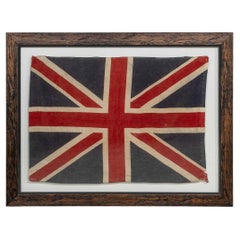
An excellent 20th Century example of the Union Flag, often referred to as the Union “Jack”, though technically, the term "Jack" applies only when flown at sea. This flag has been mou...
Category
20th Century British Other Tapestries
Materials
Fabric, Glass
Antique 20th Century Victorian Framed Royal Standard Flag c.1900
Located in Royal Tunbridge Wells, Kent
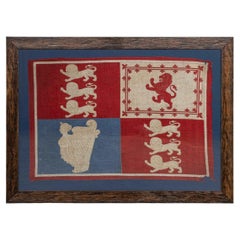
An excellent 20th Century Victorian Royal Standard presented in a reclaimed wood frame. This flag, reserved for the British monarch, features the three lions of England and Wales, th...
Category
20th Century British Other Tapestries
Materials
Fabric, Glass
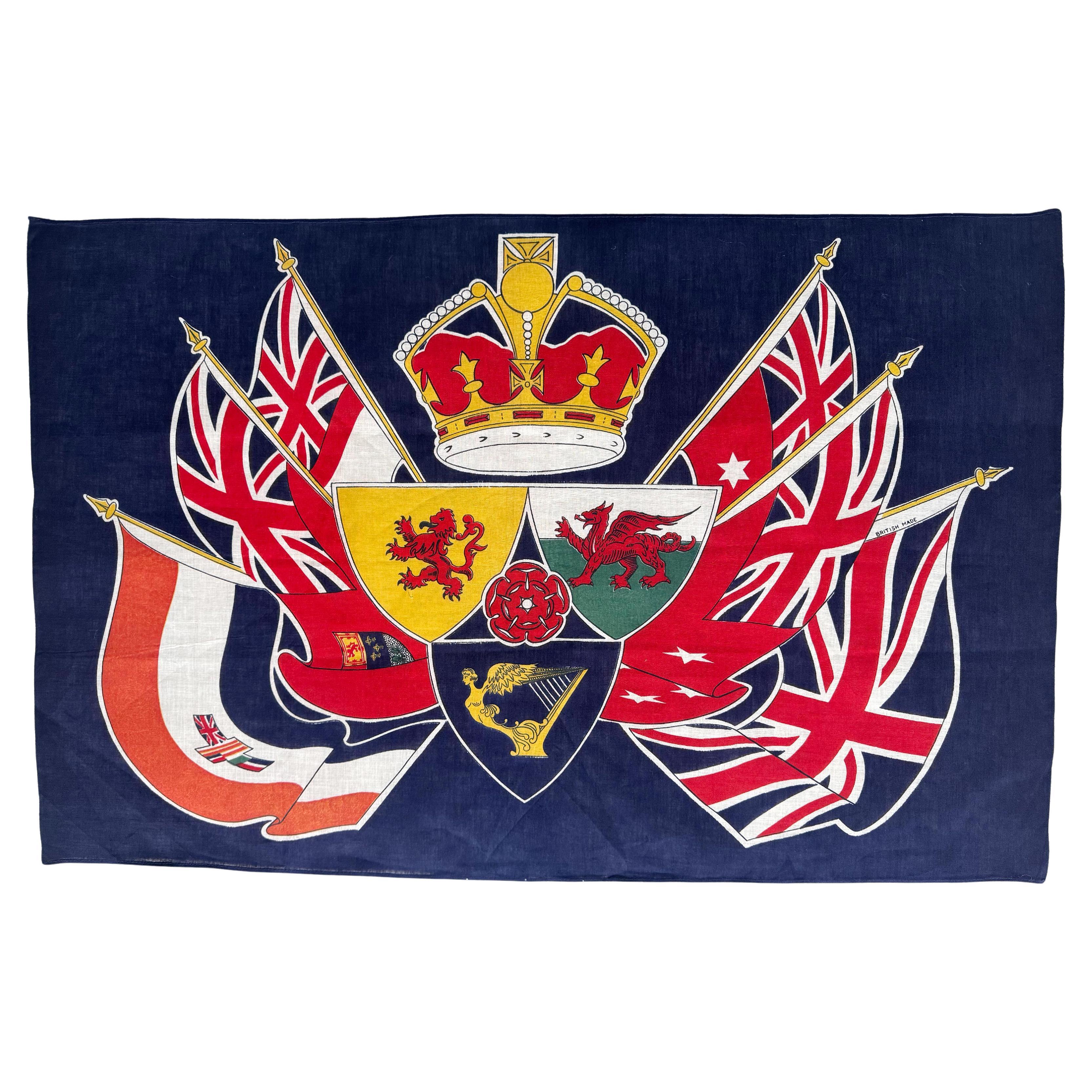
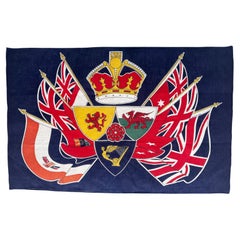
Vintage British Empire Dominion Coronation Flag
Located in Hastings, GB
Patriotic British Coronation Dominions Flag
British Royal Family
The flag represents the British Empire and the unity between the UK and its dominions during the coronation of King ...
Category
Mid-20th Century British Political and Patriotic Memorabilia
Materials
Cotton
Queen Elizabeth II Coronation Flag 1953
Located in Hastings, GB
British Royal Family
A Rare And Historical Royal Coronation Flag from The Coronation Of HRH Queen Elizabeth 2nd, June 2nd 1953.
Due To The Size This Flag Would Have Been Used Strun...
Category
Mid-20th Century British Mid-Century Modern Political and Patriotic Memo...
Materials
Cotton
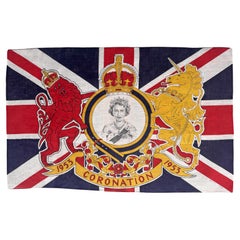
Queen Elizabeth II Coronation Flag 1953
Located in Hastings, GB
British Royal Family
A Rare And Historical Royal Coronation Flag from The Coronation Of HRH Queen Elizabeth 2nd, June 2nd 1953.
Due To The Size This Flag Would Have Been Designed t...
Category
Mid-20th Century British Mid-Century Modern Political and Patriotic Memo...
Materials
Cotton