Want more images or videos?
Request additional images or videos from the seller
1 of 7
Saltillo Serape, in the Form of the Mexican National Flag, ca 1885-1910
About the Item
- Dimensions:Height: 54 in (137.16 cm)Width: 95 in (241.3 cm)Depth: 2.5 in (6.35 cm)
- Materials and Techniques:
- Place of Origin:
- Period:
- Date of Manufacture:1885-1910
- Condition:See Item Description.
- Seller Location:York County, PA
- Reference Number:Seller: otx-0271stDibs: LU849729692632
About the Seller
5.0
Recognized Seller
These prestigious sellers are industry leaders and represent the highest echelon for item quality and design.
Established in 1991
1stDibs seller since 2008
70 sales on 1stDibs
Typical response time: Several days
Authenticity Guarantee
In the unlikely event there’s an issue with an item’s authenticity, contact us within 1 year for a full refund. DetailsMoney-Back Guarantee
If your item is not as described, is damaged in transit, or does not arrive, contact us within 7 days for a full refund. Details24-Hour Cancellation
You have a 24-hour grace period in which to reconsider your purchase, with no questions asked.Vetted Professional Sellers
Our world-class sellers must adhere to strict standards for service and quality, maintaining the integrity of our listings.Price-Match Guarantee
If you find that a seller listed the same item for a lower price elsewhere, we’ll match it.Trusted Global Delivery
Our best-in-class carrier network provides specialized shipping options worldwide, including custom delivery.You May Also Like
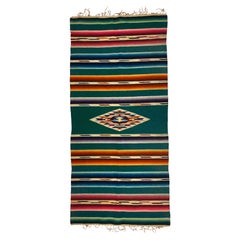
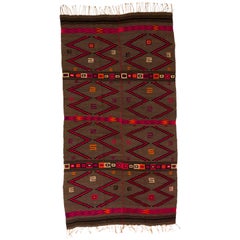
Vintage Mexican Saltillo Serape Blanket Rug
Located in Miami, FL
Vintage Mexican Saltillo Serape Blanket Rug
Bright and beautiful reds, creams, blues, greens, orange and browns with geometric patterns. Very l...
Category
20th Century Mexican Native American Objects
Materials
Wool
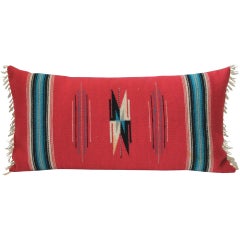
Mexican Red Serape Bolster Pillow
Located in Los Angeles, CA
This vibrant red ground Mexican or American Indian weaving has bold colors and in great condition. The backing is in a black cotton linen and down and feather fill.
Category
20th Century American Adirondack Native American Objects
Materials
Wool
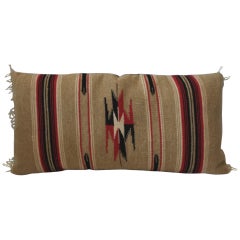
Mexican-American Serape Bolster Pillow
Located in Los Angeles, CA
This neutral tan background Indian weaving is in wonderful condition and made a great statement as a bolster pillow. The backing is in tan cotton linen backing. Insert is down and fe...
Category
Vintage 1930s American Native American Objects
Materials
Wool
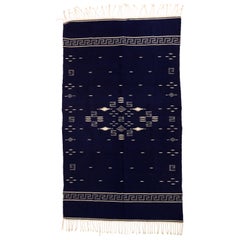
Indigo Texcoco Mexican Wool Serape Blanket
Located in New York, NY
Handwoven Texcoco natural indigo and ivory wool serape blanket with traditional designs. Measures: 83" length with fringe, 75.5" length blanket body, 44...
Category
20th Century Mexican Tribal Native American Objects
Materials
Wool
Monumental Mexican Serape Weaving Bolster Pillow
Located in Los Angeles, CA
This handwoven Mexican weaving bolster pillow has amazing colors and in fine condition. The backing is in black cotton linen. The insert is down and fe...
Category
Vintage 1930s American Adirondack Native American Objects
Materials
Wool

Hand Woven Mixtec Mexican Colourful Wool Serape Blanket
Located in New York, NY
Handwoven wool serape blanket from the highlands of Oaxaca, Mexico with traditional Mixtec symbols, circa 1950s.
Category
Mid-20th Century Mexican Tribal Native American Objects
Materials
Wool
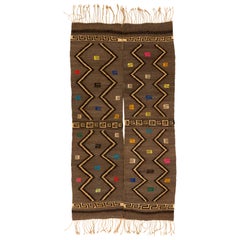
Mixtec Cloud and Thunder Symbol Serape Blanket Oaxaca Mexico
Located in New York, NY
Mixtec wool serape blanket, handwoven with traditional cloud and thunder symbols. Slit opening in middle for wearing. Hand knotted fringe.
Oaxaca, Mexi...
Category
Mid-20th Century Mexican Tribal Quilts and Blankets
Materials
Wool
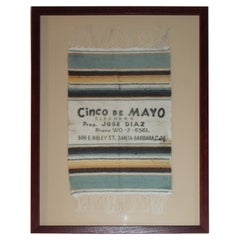
Cinco De Mayo, Framed Mexican Serape, Santa Barbara, Calif
Located in Los Angeles, CA
This most unusual framed Serape / printed advertisement is most unusual . It is stamped " Cinco DE MAYO " CLEANERS / PROP. JOSE DIAZ PHONE WO -2-6561 506...
Category
20th Century American Adirondack Native American Objects
Materials
Wool
$760 Sale Price
20% Off
H 21.25 in W 15.25 in D 0.75 in
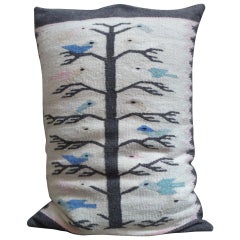
Mexican Indian Tree of Life Bolster Pillow
Located in Los Angeles, CA
This pillow was constructed from a Navajo Tree of Life weaving from the Cedar Ridge area in the northern part of the Navajo Nation and dates to the 1940s. Pictured in this weaving ar...
Category
Vintage 1940s American Navajo Native American Objects
Materials
Down, Linen, Wool
Pair of Mexican / American Indian Weaving Bolster Pillows
Located in Los Angeles, CA
Pair of Mexican/American Indian weaving bolster pillows. Custom made pillows have down and feather inserts and zippered casing.
Pillow measurements slightly differ -
One pillow m...
Category
20th Century Pillows and Throws
Materials
Wool
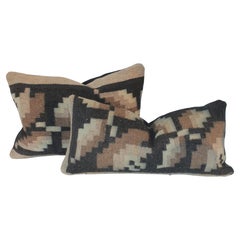
$1,036 Sale Price
20% Off
H 10 in W 21 in D 6 in
More From This Seller
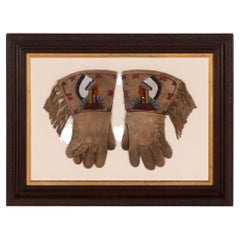
View AllNative American Beadwork Gauntlets with an Chief, ca 1880-90
Located in York County, PA
Native American beadwork gauntlets with Indian Chiefs in feathered headdresses, probably souix, Ca 1880-90
Native American beadwork gauntlet...
Category
Antique Late 19th Century American Native American Objects
Materials
Leather
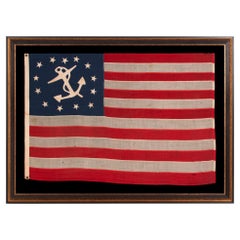
Outstanding 13 Star Hand-sewn American Private Yacht Flag, ca 1865-1885
Located in York County, PA
OUTSTANDING, 13 STAR, ANTIQUE AMERICAN PRIVATE YACHT ENSIGN WITH GREAT FOLK QUALITIES THAT INCLUDE AN UNUSUALLY WIDE ANCHOR AND A DECIDEDLY LOPSIDED RING OF 13 STARS; MADE DURING THE 2ND HALF OF THE 19TH CENTURY; ITS DEVICE HAND-SEWN AND SINGLE-APPLIQUÉD
Private yacht ensigns were approved American signals for maritime use that allowed pleasure boats to bypass customs. Though the legislation that approved them was adopted prior to 1850, almost all such flags that one will encounter were sewn by electric machine and made during the 20th century. The unusual gems among surviving examples are those that are earlier and include hand-sewn elements. Even more rare are a select few with atypical graphics. Barely any fall into both of these categories at once. Take note of the anchor on this particular flag, wide a long horizontal crossbar (stock) that contributes to uncommonly wide stance. Set within a ring of stars that is decidedly lopsided, the result is as bold as it is endearingly whimsical—two of the best qualities in American folk art, a category in which this particular example can be filed. While I have owned 13 star private yacht flags that have displayed star and canted anchor devices that were somewhat larger and/or bolder than typical, I cannot recall any that were so graphically intriguing as this one.
Brief History of Private Yacht Ensigns:
The medallion configuration, 13-star, 13-stripe flag, with a canted center anchor was entered into official use in 1848, following an act of Congress, that made it the official signal for U.S. pleasure sailing vessels. The need for such a flag arose with the popularity of boating as a pastime for well-to-do Americans, and as a competitive sport, in addition to its longstanding utilitarian role as a vehicle of trade. In early America, all boats were subject to customs searches at every port. Without modern income tax, the federal government derived its revenues mostly from tariffs, so an accounting of foreign goods on ships was a critical venture. As yachting for pleasure became more prevalent, however, more and more time was spent searching boats that had no such inventory, wasting time for both customs officials and wealthy ship owners.
John Cox Stevens, a former president of the Jockey Club and future founder of the Union League Club, became the New York Yacht Club’s Commodore upon its founding in 1845. In 1847 he approached the secretary of the treasury and suggested that something be done to streamline the customs process for non-trade vessels. In 1848, legislation passed Congress requiring registration of these boats, which could then fly the “American Yachting Signal” to bypass customs. This remained on the books until the 1980’s, when the 1848 legislation was revoked, but the use of flags in this design for decorative function continues to this day.
13 star flags have been flown throughout our nation’s history for a variety of purposes. In addition to their use on private yachts, they were hoisted at patriotic events, including Lafayette’s final visit in 1824-25, the celebration of the nation’s centennial in 1876, and the sesquicentennial in 1926. They were displayed during the Civil War, to reference past struggles for American liberty and victory over oppression, and were used by 19th century politicians while campaigning for the same reason. The U.S. Navy used the 13 star count on small boats until 1916, because it was easier to discern fewer stars at a distance on a small flag. Commercial flag-makers mirrored this practice and some private ships flew 13 star flags during the same period as the Navy.
Construction: The stars and anchor are made of cotton, hand-sewn, and single-appliquéd. This means that they were applied to one side of the canton, then the blue fabric was cut from behind each star, folded over, and under-hemmed, so that one star could be viewed on both sides of the flag. I always find single-appliquéd stars more interesting, not only because they are evidence of a more difficult level of seam-work and stitching, but also because they are more visually intriguing. The two visible rows of hand-stitching emphasize their hand-sewn construction. For these reasons, single-appliquéd stars often appeal to connoisseurs of early American textiles...
Category
Antique Mid-19th Century American Political and Patriotic Memorabilia
Materials
Wool
Price Upon Request
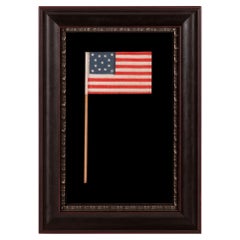
13 Star Medallion Patter Antique American Flag, ca 1910-1926
Located in York County, PA
13 STARS IN A MEDALLION PATTERN ON AN ANTIQUE AMERICAN PARADE FLAG MADE BETWEEN APPROXIMATELY 1910 AND THE 1926 SESQUICENTENNIAL OF AMERICAN INDEPENDENCE
13 star American national p...
Category
Early 20th Century American Political and Patriotic Memorabilia
Materials
Cotton
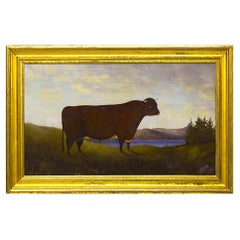
American Folk Painting of a Bull, ca 1885
Located in York County, PA
Folk portrait of a bull in oil on canvas, signed L.D.D. and dated 1885. Found at an estate in the Hudson, New York area. The painting’s great style and presence in the stylized anima...
Category
Antique 1850s American Paintings
Materials
Canvas
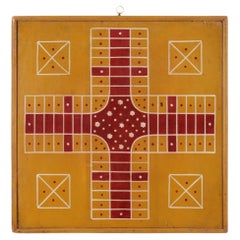
Paint-Decorated "Snowflake" Parcheesi Gameboard, ca 1885
Located in York County, PA
PAINT-DECORATED "SNOWFLAKE" PARCHEESI GAMEBOARD IN CHEDDAR YELLOW & RED, circa 1885
Parcheesi game board, painted on a wooden plank with applied, molded trim. Rendered in red, whit...
Category
Antique 1880s Game Boards
Materials
Wood
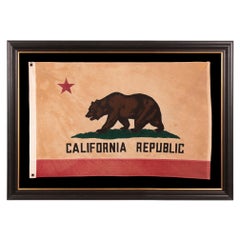
Vintage California State "Bear" Flag, ca 1940-1960
Located in York County, PA
VINTAGE CALIFORNIA STATE "BEAR" FLAG OF STOUT CONSTRUCTION, AND WITH SIGNIFICANT GOLDEN BROWN OXIDATION THAT LENDS TO BEAUTIFUL PATINA AND CONVEYS ITS AGE; LATTER 1940’s - 1960’s
Early state flags fall between very scarce and extraordinarily rare in the antiques marketplace. One primary reason for this is that most states, even if they existed during the 18th or 19th century, didn’t actually adopt flags until the early 20th century. The Maryland State Legislature, for example, didn’t find need for a state banner until 1904, in spite of the fact that Maryland was one of the original 13 colonies. Other states had crests or symbols that were tied to the state legislature in some way, or to local patriotism, but didn't accept an official design until many years following statehood.
In the case of California, the "Bear Flag," as all California state flags and variations thereof are often called, is based on a significant early example. The eldest surviving Bear Flag is thought to date to the 1846 “Bear Flag Revolt”. This occurred when Major John Frémont arrived in the state on a so-called mission to reach the Pacific and encouraged an uprising against Mexican rule in the territory. Frémont claimed himself military governor of the California Republic and was brought up on charges of treason for his actions, but was pardoned by President James Polk. Polk was an expansionist and Frémont’s actions brought California to statehood in 1850, immediately following the 1849 Gold Rush.
The original Bear Flag was designed and made by William L. Todd, a first cousin to Abraham Lincoln’s wife, Mary Todd. Painted on cotton, it had a white field with a red stripe along the bottom, just like the modern design. The star image was taken from what was known as the “California Lone Star Flag”, flown during California's previous, 1836 revolt. Like the modern California flag, the red star appeared the upper hoist-end corner, but the bear was placed next to the star. On a later version, designed by a man named Peter Storm...
Category
Mid-20th Century American Political and Patriotic Memorabilia
Materials
Cotton
Still Thinking About These?
All Recently ViewedMore Ways To Browse
Mexican Blankets
Mexican Serape
19th Century American Flag
Antique Buttons Enamel
Mexican Saltillo
Antique Mexican Blanket
Antique Mexican Textiles
General Pershing
Saltillo Serape
Mexican Saltillo Serape
Antique Saltillo Serape
Mexican Flag
Antique Mexican Flag
Native American Totem Pole
Native American Artifacts
Brain Tan
Brain Tanned
Native American Headdress