Items Similar to Small carved wooden figurehead depicting young Moretto Venice late 19th century

Want more images or videos?
Request additional images or videos from the seller
1 of 20
Small carved wooden figurehead depicting young Moretto Venice late 19th century
$7,765.38
£5,803.46
€6,500
CA$10,712.74
A$11,733.77
CHF 6,177.83
MX$140,038.62
NOK 78,730.91
SEK 71,971.91
DKK 49,543.93
About the Item
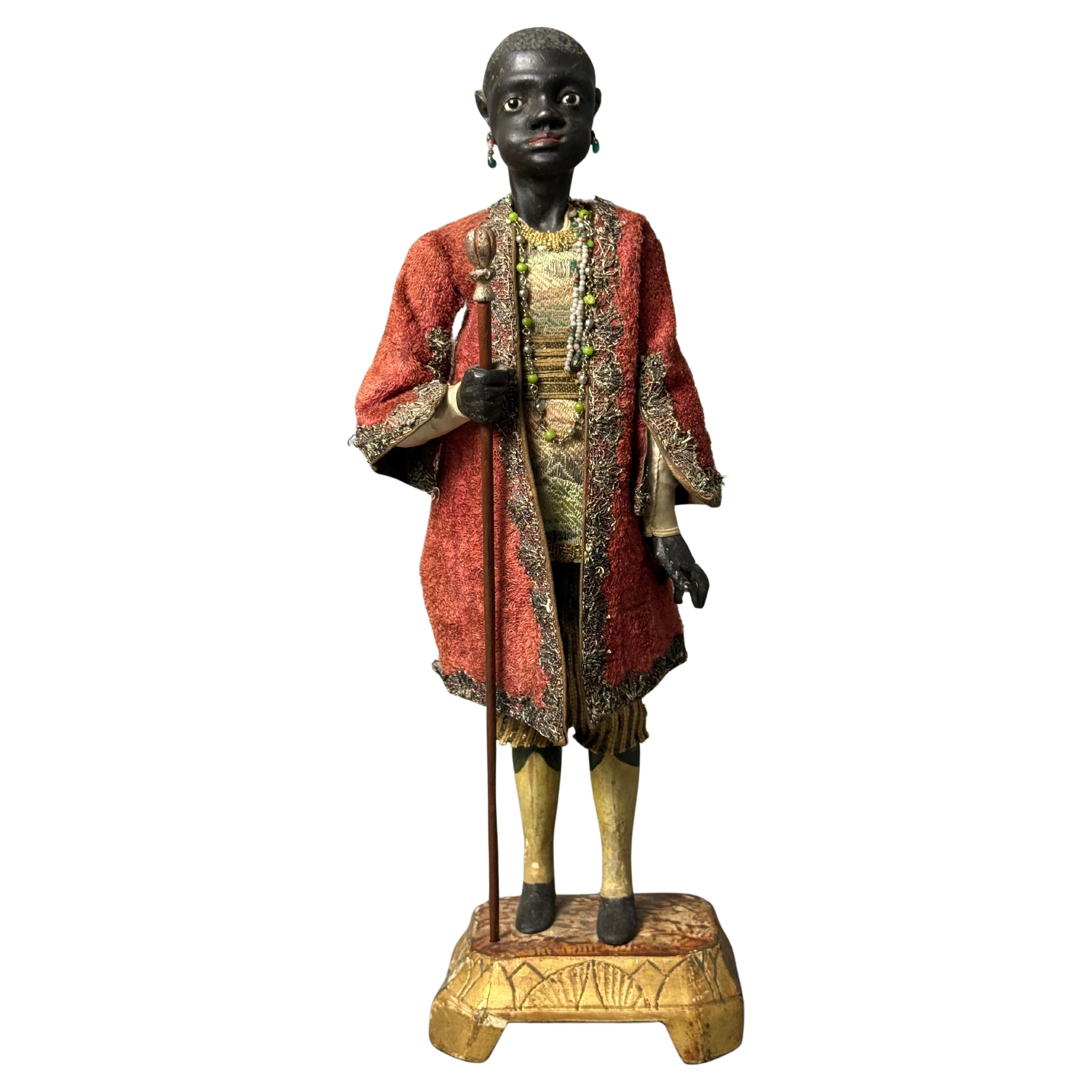
Small carved wooden figurehead depicting young Moretto, mounted on red marble base, late 19th-century Venetian manufacture.
This is a beautifully crafted sculpture made of polychrome poplar wood that shows traces of gilding, depicting a young African man dressed as a sailor wearing a red blouse with short sleeves and fastened with a button at chest level.
In her left hand she clutches a rose, her legs are tapered to simulate those of a mermaid, and her terminal hoof is covered with leaves and flowers.
This sculpture belongs to late 19th-century Venetian production, evocative of the Venetian Republic's colonial past, and almost certainly never sailed.
The history of the Moors originates in the Middle Ages, passing through the 18th century, during the height of the splendor of the power of the wealthy maritime republic, to the 19th century where the Moor figure becomes a decorative motif in many areas of art, especially in sculpture, resulting in true masterpieces of tradition.
Good state of preservation, signs of restoration to the arms at the junction with the shoulder and some lack in the fingers of both hands.
Height 79 cm- inches 31, width 23 cm- inches 9, depth 23 cm- inches 9.
A figurehead is a wooden decoration found on the bows of ships from the 16th to the 19th century. The practice was first introduced in galleons, but even older ships often had some decoration in the bow. Like many of the austere decorations of the time, figureheads were intended to indicate the name of the ship that housed them to people who could not read; they were also meant to show the wealth and strength of the shipowner.
During the Baroque period some ships boasted gigantic figureheads, weighing many tons and sometimes even carrying two, one on each side of the foremast.
The large figureheads, being carved into solid wood and being placed at the tip of the hull, adversely affected the ships' seaworthiness. This, and the high cost of making them, led to much smaller figureheads being made in the 18th century and even eliminated in the following century. After the Napoleonic Wars, a few figureheads began to be produced again, but they depicted only small half-busts and not the large figures used in the past. Clippers of the 1850s and 1860s were generally equipped with full-length figureheads, but these were relatively small and light. La polena in quanto tale morì con la fine dell'utilizzo della propulsione a vela in larga scala. I primi piroscafi avevano delle strutture che ricordavano le polene sulla loro prua. This practice lasted until World War I.
About the Seller
5.0
Vetted Professional Seller
Every seller passes strict standards for authenticity and reliability
Established in 1999
1stDibs seller since 2014
400 sales on 1stDibs
Typical response time: 4 hours
- ShippingRetrieving quote...Shipping from: Milan, Italy
- Return Policy
More From This Seller
View AllPolena Da Nave in Legno Di Castagno Raffigurante Capitan Uncino Italia XIX Sec
Located in Milan, IT
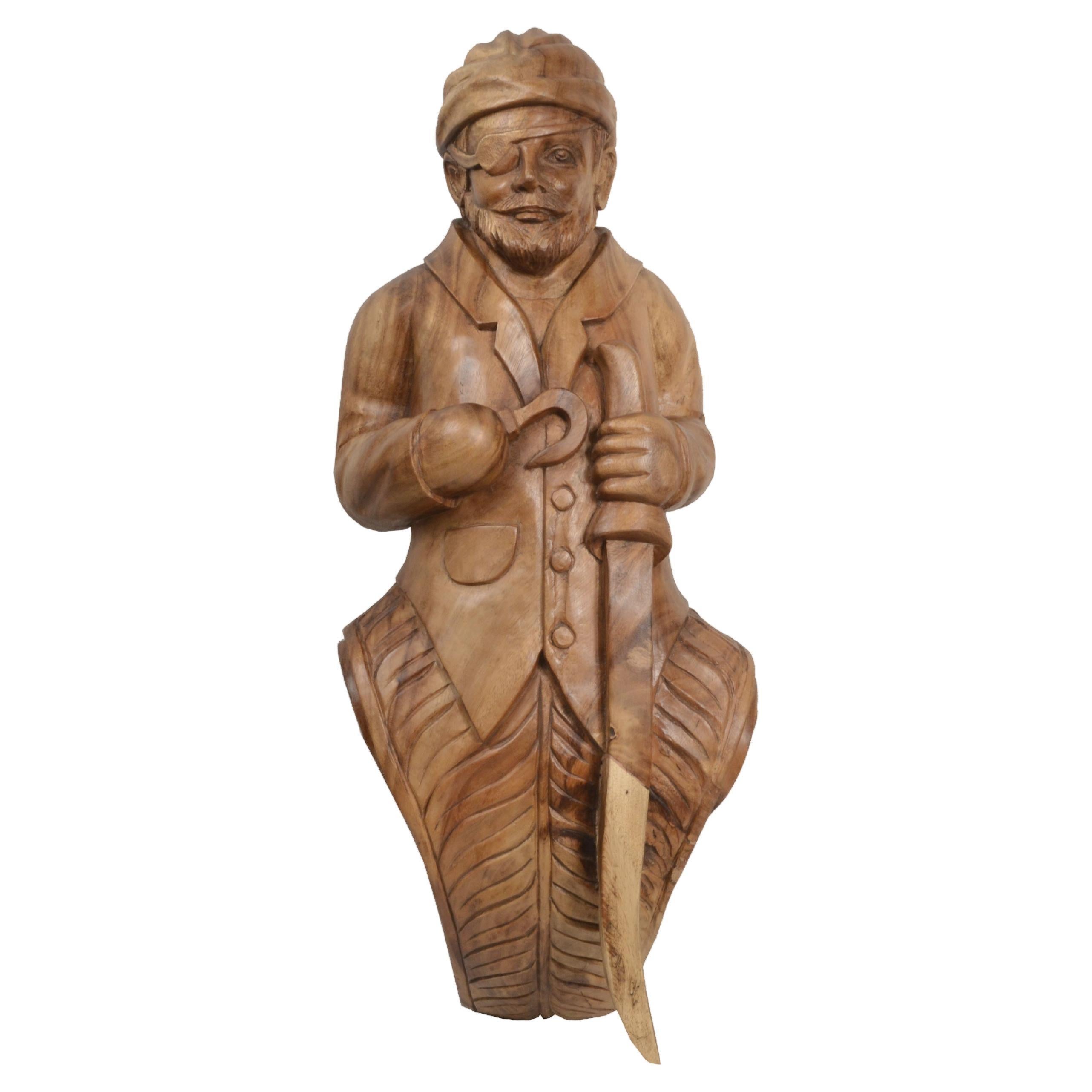
Polena in legno di castagno scolpito del XIX secolo, raffigurante Giacomo Uncino meglio conosciuto come Capitan Uncino, famoso pirata e il principale antagonista di Peter Pan.
Uncino è il capitano immaginario di una nave di pirati crudeli.
Viene chimato così perché al posto della mano destra ha un uncino di ferro, la mano gli fu mozzata da Peter Pan durante un combattimento e poi data in pasto ad un coccodrillo, il quale gradì così tanto la mano che spera di mangiarsi anche il pirata al quale continua a dare la caccia.
L’opera, in legno di castagno scolpito è stata realizzata da un bravo scultore ligure, Italia del Nord, alla fine del XIX secolo, di ottima fattura ritrare il mezzo busto di un uomo barbuto, l’occhio destro bendato e l’uncino al posto della mano destra, mentre la mano sinistra impugna una grande spada e una bandana come copriacapo.
Il castagno è un legno pregiato e molto resistente alle intemperie e al vento.
La spada spezzata è stata restaurata in epoca precedente, per il resto lo stato di conservazione è molto buono.
Una polena è una decorazione lignea, che si trovava sulla prua delle navi dal XVI al XIX secolo.
La pratica fu introdotta inizialmente nei galeoni, ma anche navi più antiche avevano spesso alcune decorazioni nella prua.
Come molte delle decorazioni del Tempo le polene...
Category
Antique Late 19th Century Nautical Objects
Materials
Chestnut
Polena raffigurante una figura femminile Indie Orientali fine del XIX secolo
Located in Milan, IT
Polena raffigurante una figura femminile con i capelli sciolti e una cintura che le stringe la vita; è stata scolpita in legno di tiglio, nome scientifico Tilia, un legno molto usato nei lavori di intaglio, cosa che farebbe pensare a una nave costruita in un cantiere delle Indie Orientali attorno alla fine del XIX secolo, fatto frequente in molte navi della Royal Navy, benché la presente scultura per le fattezze appartiene certamente a una nave mercantile.
Le sue dimensioni sono 163 cm di altezza – inches 64.20, 48 cm – inches 18.8 di larghezza massima misurata all’altezza delle spalle e cm 30 – inches 11.8, di profondità.
Sotto lo strato di vernice di colore verde chiaro, più recente, ci sono tracce di una colorazione bruno-marrone, probabilmente una pittura usata per la conservazione del legno. La scultura è stata eseguita a mano con uso di sgorbia. La mancanza di braccia è tipica delle polene...
Category
Antique Late 19th Century Nautical Objects
Materials
Wood
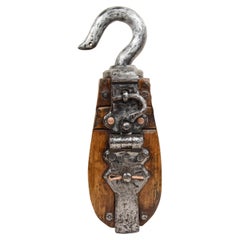
Grande bozzello in legno e acciaio con puleggia in legno duro. Inghilterra 1850
Located in Milan, IT
Grande bozzello in legno e acciaio con puleggia in legno duro cassetta, ovoidale in legno con una cavatoia apribile in parte con cerniera e gancio di chiusura, nella quale è imperni...
Category
Antique Mid-19th Century Nautical Objects
Materials
Wood
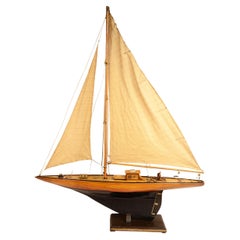
English scale model of recreational sloop with mainsail mast and jib 1930
Located in Milan, IT
Scale model of a recreational sloop equipped with a mast with mainsail and jib.
Early 20th-century English manufacture, made of wood, brass, rope, and cloth on wooden base, dark wood...
Category
Vintage 1930s Nautical Objects
Materials
Wood
Rare late 19th century cast brass "Jack Tar" umbrella and sailor stick holder.
Located in Milan, IT
Rare cast brass "Jack Tar" umbrella and sailor's staff holder, English manufacture datable to around the late from the 19th century.
The umbrella stand is depicted by a sailor Jac...
Category
Antique Late 19th Century Nautical Objects
Materials
Brass

Scale model of a three-masted pole brigantine Liguria Italy late 1800s
Located in Milan, IT
Excellently made scale model of a three-masted mast brigantine, log, mainmast and mizzenmast, plus the presence of bowsprit, oak hull. Ligurian manufacture of the late 19th century.
...
Category
Antique Late 19th Century Nautical Objects
Materials
Wood
You May Also Like
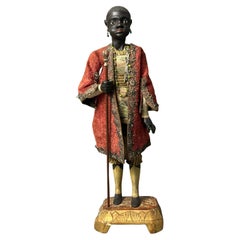
Raro manichino in legno raffigurante maggiordomo moro - XVIII secolo - Venezia
Located in Fidenza, IT
Raro manichino snodabile raffigurante maggiordomo moro veneziano del XVIII secolo in legno e occhi di vetro. Indossa abiti riccamente decorati, una giacca rossa con ricami argentati,...
Category
Antique 18th Century Italian Figurative Sculptures
Materials
Silk, Wood
Scultura lignea di dignitario, Austria - fine XV secolo
Located in Fidenza, IT
Scultura lignea austriaca raffigurante dignitario della fine del XV secolo. La figura barbuta, raffigurata con lo sguardo rivolto verso il basso e il volto serio, indossa un coprica...
Category
Antique 15th Century and Earlier Austrian Figurative Sculptures
Materials
Wood

Burmese Monk Oriental Sculpture In Carved Wood Beginning 1900s
Located in Milano, MI
Burmese Monk In Sculpted Wood Beginning 1900 Oriental sculpture made from a single piece of wood, wax restored with dark patina. The monk figure is presented sitting lotus position,...
Category
Early 20th Century Burmese Folk Art Sculptures and Carvings
Materials
Hardwood

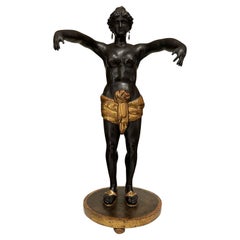
Goddess Circe Italian Neoclassical Sculpture Early 1800s Carved Ebonized Re-gilded
Located in Milano, MI
Circe Italian Neoclassical Sculpture of Early 1800s the figure is a fascinating depiction of the Goddess Circe, made in Italy in the early 19th century. The pine wood carving and ebo...
Category
Antique Early 19th Century Italian Neoclassical Figurative Sculptures
Materials
Hardwood, Pine
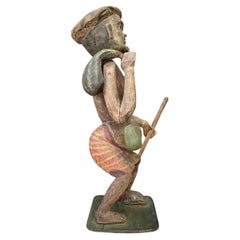
Antique Asian Shaman Figure from Myanmar Late 1800s In Polychrome Wood
Located in Milano, MI
Ancient Sculpture Of Shaman, traditional Burmese art from the late 19th century, resting on a square base is depicted standing with a staff in his left hand and a sort of gourd and c...
Category
Antique Late 19th Century Burmese Folk Art Sculptures and Carvings
Materials
Hardwood
18th Century Italian Wooden Sculpture
Located in High Point, NC
This 18th Century Italian Wooden Sculpture captivates with its rustic allure and storied past. Carved with a delicate yet masterful hand, it portrays the figure of a cherub, a timele...
Category
Antique 18th Century Italian Figurative Sculptures
Materials
Wood