Fijian Folk Art

to
1
5
2
7
2
2
3
1
1
1
1
6
3
1
1
1
11
4,620
4,100
3,562
1,628
7
7
7
Place of Origin: Fijian
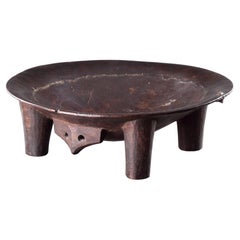
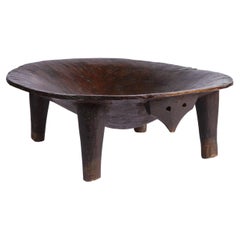
Large Fijian Bowl On Four Feet – Fiji Islands, Melanesia – 19th / Early 20th C.
Located in Bilzen, BE
"Large Fijian Bowl On Four Feet – Fiji Islands, Melanesia – 19th / Early 20th Century" Impressive traditional wooden bowl from the Fiji Islands, carved from a single block of solid h...
Category

19th Century Tribal Antique Fijian Folk Art

Materials

Wood

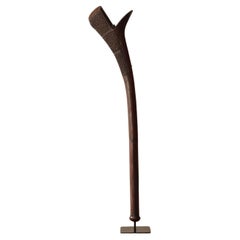
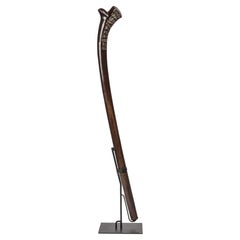
Ironwood Root Carved War Club
Located in London, GB
Gunstock shaped war club ‘Sali’. Ironwood root carved with traditional motifs. An excellent example, mounted on a custom stand in patinated bronze. Measure...
Category

1980s Vintage Fijian Folk Art

Materials

Iron

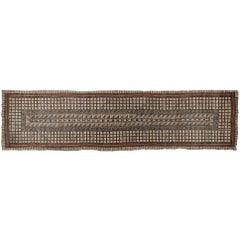
Mid-20th Century Tribal Tapa Cloth, Fiji
Located in Point Richmond, CA
Tapa cloth made from mulberry fiber with natural pigments, Fiji, mid-20th century.
Category

Mid-20th Century Tribal Fijian Folk Art

Materials

Natural Fiber

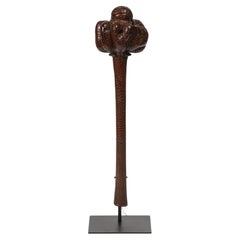
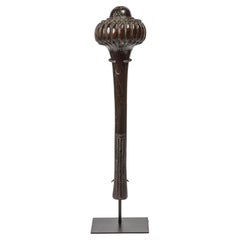
18th Century Polynesian Hardwood Ula Tavatava or Throwing War Club from Fiji
Located in Amsterdam, NL
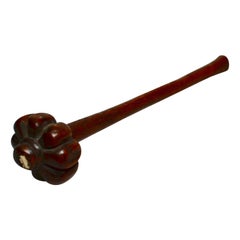
A Polynesian hardwood Ula tavatava or throwing war club Fiji, probably 18th century All-over decorated in incised pattern, the bulbous top seems to have a stone grown into it. H. 42 cm Including museum-quality powder-coated stand. Provenance: Private collection, France Polynesian culture is traditionally a culture of power and prestige, and there was a fine line between battle and ceremony. Warrior people par excellence, the Fijians had at their disposal a large panoply of weapons, each for a specific use. The elegant Gata are called gun-sticks by Europeans due to the recognizable form. However, they are designed after a snake, gata in Fijian language. The Ula throwing clubs...
Category

18th Century Antique Fijian Folk Art

Materials

Hardwood

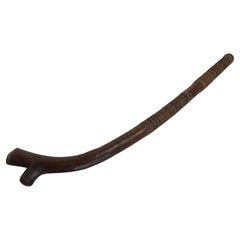
A Polynesian war-club or Gata waka
Located in Amsterdam, NL
Fiji, probably early 20th century Polynesian culture is traditionally a culture of power and prestige, and there was a fine line between battle and ceremony. Warrior people par exce...
Category

Early 20th Century Fijian Folk Art

Materials

Hardwood

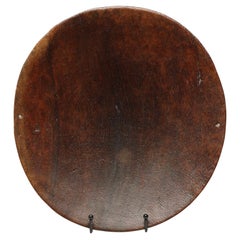
Ancient Fiji Islands Flat Serving Bowl or Platter 19th century Polynesia
Located in Point Richmond, CA
Ancient Fiji Islands Flat Serving Bowl or Platter 19th century, made of very dense hardwood with deep patina, and expected wear on bottom. Two small opposing holes for suspension. B...
Category

Late 19th Century Tribal Antique Fijian Folk Art

Materials

Wood

18th Century Polynesian Ironwood Gata Waka or War Club from Fiji
Located in Amsterdam, NL
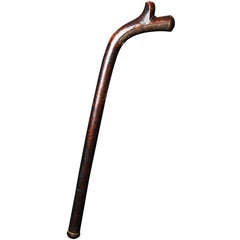
A Polynesian ironwood Gata waka or war club Fiji, probably 18th century or earlier Measures: Height. 97 cm Including museum-quality powder-coated stand. Provenance: Private collection, France Polynesian culture is traditionally a culture of power and prestige, and there was a fine line between battle and ceremony. Warrior people par excellence, the Fijians had at their disposal a large panoply of weapons, each for a specific use. The elegant Gata are called gun-sticks by Europeans due to the recognizable form. However, they are designed after a snake, gata in Fijian language. The Ula throwing clubs...
Category

18th Century Antique Fijian Folk Art

Materials

Hardwood

Related Items
Mid-20th century double sided English Fairground Sign
Located in London, GB
Mid-20th century double sided English Fairground Sign We are proud to offer a single double-sided hand painted mid-20th century English fairground sign. We currently have a rare coll...
Category

1950s Mid-Century Modern Vintage Fijian Folk Art

Materials

Wood

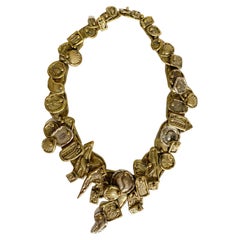
Vintage Pal Kepenyes Bronze/Brass Necklace, 20th Century
By Pal Kepenyes
Located in Point Richmond, CA
Vintage Pal Kepenyes bronze/brass necklace, 20th century. This Hungarian born artist worked in Mexico for decades, known for free-form sculptural jewelry...
Category

20th Century Modern Fijian Folk Art

Materials

Brass, Bronze

Vintage Pal Kepenyes Bronze/Brass Necklace, 20th Century
$760 Sale Price
20% Off
H 19.5 in W 3.5 in D 0.5 in
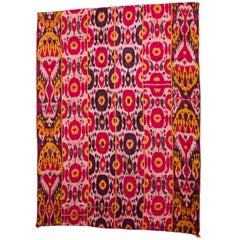
Late 19th Century Silk Ikat Uzbekistan Tribal Weaving
Located in New York, NY
Gorgeous handwoven silk Ikat weaving in rich magenta, gold and purple color, circa late 19th-early 20th century, Uzbekistan, Central Asia, on the ancient...
Category

Late 19th Century Tribal Antique Fijian Folk Art

Materials

Silk

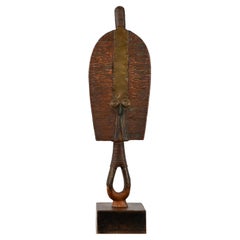
African Tribal Statue Osseyba or Reliquary Figure Kota Mohongwe Peoples Art
Located in Miami, FL
A fantastically hand-crafted piece by the Kota (or Bakota) tribe who are located in the northeastern region of Gabon. This figure, which is a Mahongwe reliquary figure as exhibited with its truncated almond-shaped face, is made of wound copper, hammered brass and wood. Reliquary figures were used as guardians to protect the revered bones of venerated family ancestors and leaders and ward off unwanted spirits. These figures are meant to embody intense powers and were also commonly used in communal rites and ritual performances. This particular piece came from an American collector who traveled the African continent and collected African artifacts for over 50 years. This piece has a beautiful, organically aged patina acquired naturally over time and use. It is mounted on a custom wooden display stand. We believe it dates back to the early to mid-1900s but could be older. We are listing as 20th century because we did not have it appraised. This African Tribal Statue Osseyba or Reliquary Figure Kota (Bakota) Mohongwe Peoples decorative art would clearly stand out as part of a collection or by itself in any setting. Truly unique, eye-catching and engaging. Dimensions on stand: 25 3/4" High, 7" Wide, 5 1/2" Deep Kota Reliquary...
Category

Early 20th Century Tribal Fijian Folk Art

Materials

Brass, Copper

20th Century Presentation Tray, Agakoko, Tutsi People, Burundi or Rwanda
Located in Point Richmond, CA
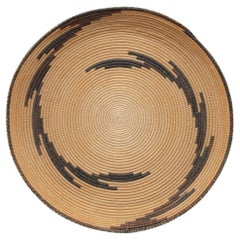
20th Century Presentation Tray, Agakoko, Tutsi People, Burundi or Rwanda A wonderfully graphic miniature presentation tray for gifts. Ex. private collection, Madison, WI; ex. Alain ...
Category

Mid-20th Century Tribal Fijian Folk Art

Materials

Natural Fiber

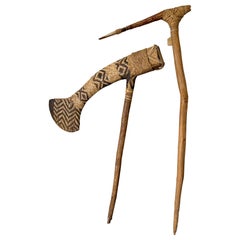
Two Ceremonial Weapon from Highlands of Papua New Guinea Provenance
Located in Atlanta, GA
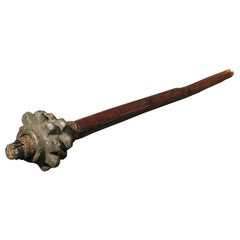
Two Oceanic ceremonial weapons from PNG highlands circa 20th century. It consists of two pieces. The first is an ax with a wood shaft and a flat elongated he...
Category

Mid-20th Century Tribal Fijian Folk Art

Materials

Rattan, Wood

Mid-20th Century Tami Islands Papua New Guinea Tribal Wooden Feast Bowl
Located in Point Richmond, CA
mid-20th century Tami Islands Papua new guinea wooden feast bowl Of classic form, each end carved with raised and incised imagery depicting stylized sea cr...
Category

Mid-20th Century Fijian Folk Art

Materials

Kaolin, Wood

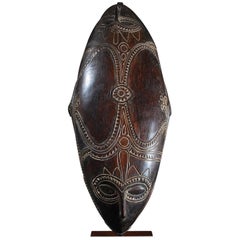
Monumental Oceanic Asmat People Carved Painted Wooden War Shield
Located in Forney, TX
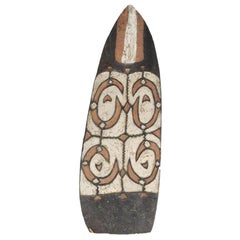
A monumental, rare and important Oceanic Papuan Asmat People tribal carved war shield from the first half of the 20th century, collected from the coast of the headhunting tribe in Papua New Guinea, a Provincial Indonesian island in the mid 20th century. Among the Asmat, war shields are the most powerful symbolic element of a warrior's equipment, and have many layers of meaning. Traditionally, they were functional items used to protect warriors in battle by deflecting an enemy's spears and arrows. The carved and painted images on the surface of the shields were also intended to frighten the enemy and symbolize the power of the ancestors. Ancestral imagery appears on multiple forms of Asmat art...
Category

Early 20th Century Tribal Fijian Folk Art

Materials

Wood

A Rare Papua New Guinea Kukukuku Pineapple Stone War Club, Eastern Highlands
Located in Ottawa, Ontario
This rare antique Kukukuku (pronounced "cookah-cookah") war club is from the remote Morobe Province located within the Eastern Highlands of Papua New Guinea. The head is carved from...
Category

Early 20th Century Tribal Fijian Folk Art

Materials

Stone

Mid Century Finely Carved North West Coast Carved Wood Mask Expressive Face
Located in Point Richmond, CA
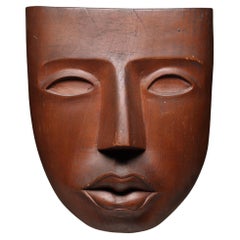
Very finely carved face mask, probably from the Northwest Coast of the US or Canada. Created mid 20th century or earlier, the artist is unfortunately unknown. Carved light wood, pr...
Category

Mid-20th Century Tribal Fijian Folk Art

Materials

Wood

Grebo Tribe Carved African Tribal Mask
Located in Bridgeport, CT
The Grebo Tribe reside in Southeast Liberia near the border of the Ivory Coast. Picasso once owned a Mask of this type and it undoubtedly figured in his emerging Modern style. In the...
Category

20th Century Tribal Fijian Folk Art

Materials

Wood

Grebo Tribe Carved African Tribal Mask
$395
H 26 in W 10.25 in D 4 in
Tulips, Arabesques and Turbans, Decorative Arts from the Ottoman Empire
Located in valatie, NY
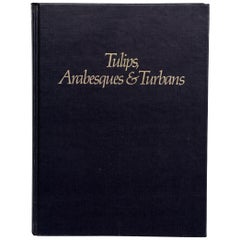
Tulips, Arabesques and Turbans: Decorative Arts from the Ottoman Empire by Yanni Petsopoulos. Abbeville Press, 1982. First Edition hardcover no dust jacket. The author analyzes the p...
Category

1980s Vintage Fijian Folk Art

Materials

Paper

Previously Available Items
A Fine Fijian Chief’s ‘Yaqona’ or Kava Bowl
Located in London, GB
A Fine Fijian Chief’s ‘Yaqona’ or Kava Bowl Carved of vesi wood with traces of old residue deposits, with old ‘fibre’ tribal repair Wood, fibre Fiji 19th Century Size: 14cm high,...
Category

19th Century Antique Fijian Folk Art

Materials

Natural Fiber, Wood

Fine and Large Polynesian Kava Bowl or Tanoa from Fiji, Early 19th Century
Located in Amsterdam, NL
A fine and large Fijian Kava bowl or tanoa Polynesia, early 19th century Overall with a very attractive dark brown patina and traces of usage. Diam....
Category

Early 19th Century Antique Fijian Folk Art

Materials

Hardwood

18th Century Polynesian Hardwood Ula Tavatava or Throwing War Club from Fiji
Located in Amsterdam, NL
A Polynesian hardwood Ula tavatava or throwing war club Fiji, probably 18th century The top of the shaft decorated with a dotted pattern all around (possibly kill marks). Measures: Height. 44 cm Including museum-quality powder-coated stand. Provenance: Private collection, France Polynesian culture is traditionally a culture of power and prestige, and there was a fine line between battle and ceremony. Warrior people par excellence, the Fijians had at their disposal a large panoply of weapons, each for a specific use. The elegant Gata are called gun-sticks by Europeans due to the recognizable form. However, they are designed after a snake, gata in Fijian language. The Ula throwing clubs...
Category

18th Century Antique Fijian Folk Art

Materials

Hardwood

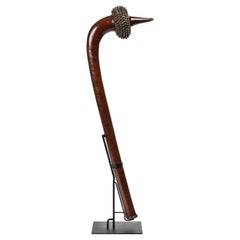
18th Century Polynesian Hardwood Totokia, War Club or Battle Hammer from Fiji
Located in Amsterdam, NL
A Polynesian hardwood Totokia, war club or battle hammer Fiji, probably 18th century or earlier Measures: Height. 83 cm Including museum-quality powder-coated stand. Provenance: Private collection, France The curve in the Totokia club, used for obvious reasons, is made by carving into a living branch and bending it, closing the gaps, which will grow together again over the years. Weapons carried by the Tusken Raiders of Tatooine in George Lucas' Star Wars were inspired by the Totokia. Polynesian culture is traditionally a culture of power and prestige, and there was a fine line between battle and ceremony. Warrior people par excellence, the Fijians had at their disposal a large panoply of weapons, each for a specific use. The elegant Gata are called gun-sticks by Europeans due to the recognizable form. However, they are designed after a snake, gata in Fijian language. The Ula throwing clubs...
Category

18th Century Antique Fijian Folk Art

Materials

Hardwood

Fijian War Club, Ula Tavatava
Located in Stockholm, SE
A Ula Fijian war club, Ula Tavatava, shell carved handle. Fiji, 19th century.
Category

19th Century Primitive Antique Fijian Folk Art

Materials

Wood

Fijian War Club, Ula Tavatava
H 16.15 in Dm 5.12 in
Tropical Watercolor Painting
Located in Palm Beach, FL
Charming tropical watercolor painting of a tropical bay complete with palm trees, a passing steamship, natives tending a fire and a light house. Al...
Category

Early 20th Century Folk Art Fijian Folk Art
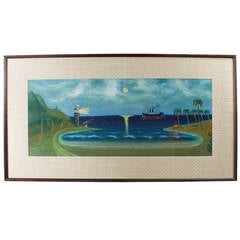
Tropical Watercolor Painting
H 22.5 in W 40.5 in D 0.5 in
Viti War Club, Fiji Islands
Located in Long Island City, NY
Members of Captain James Cook's expeditions to Fiji described the natives as fierce warriors and ferocious cannibals. Their clubs were highly valued (the value increased with the num...
Category

19th Century Tribal Antique Fijian Folk Art

Materials

Wood

Still Thinking About These?

All Recently Viewed