Items Similar to Antique Japanese Zushi, wabi sabi miniature shrine w/ Ebisu figurine mingei
Video Loading
Want more images or videos?
Request additional images or videos from the seller
1 of 20
Antique Japanese Zushi, wabi sabi miniature shrine w/ Ebisu figurine mingei
$1,050per set
£793.33per set
€908.91per set
CA$1,465.09per set
A$1,596.87per set
CHF 844.25per set
MX$19,223.33per set
NOK 10,715.68per set
SEK 9,824.08per set
DKK 6,789.60per set
About the Item
Antique wooden Zushi (miniature shrine, the "house of the Gods") with mini wooden figurine of Ebisu - from Tohoku area., Japan.
Manufactured circa 1860s - 1900s (late Edo to Meiji period) estimate from the style
conditions.
Zushi is made from Sugi cedar, stained with deep, matted black color.
It comes not only from the layers of persimmon tannin (kakishibu)
burnt pine ink, as well as deepened by smoke from the kitchen hearth
fireplace for years.
Ebisu is the deity of fortune and wealth, commonly worshipped with another deity of fortune, Daikoku. this tradition is still popular among the Japanese culture.
This hand-carved, mini wooden figuirine is worn by age, the face became almost flat but still can see the facial expression slightly, probably a big smile (watch he holds a big fish in his arm!)
I found a genuine taste of wabi sabi in it.
Tohoku's simple but bold style with sort of warmness glowing through and getting stronger when it comes to the antiques.
Dimensions
Zushi - w 5.91 in / h 8.27 in / d 4.33 in (w 150mm / h 210mm / d 110mm)
Ebisu figurine - w 1.77 in / h 2.76 in / d 1.57 in (w 45mm / h 70mm / d 40mm)
Actual item weight : 0.66 lbs (0.3 kg) on total
Dear customer - feel free to inquire me for the shipping fee quote.
The shipping fee showed in the page is automatically calculated by the system, I'm able to offer reasonable quote via Fedex.
***
We're eco-friendly, organic-oriented vintage wood furniture
fitting seller.
Avoiding the harsh chemicals as much as possible, using organic
traditional materials in the whole process, especially cleaning, repaint / refinish.
- using non-toxic, eco-friendly method when cleaning
repairing the item
- using organic
traditional materials (beeswax, linseed oil, urushi lacquer, persimmon tannin, burnt pine ink, etc) for repainted/re-finished items
- repairing the necessary parts for long-lasting use
- Dimensions:Height: 8.27 in (21 cm)Width: 5.91 in (15 cm)Depth: 4.34 in (11 cm)
- Sold As:Set of 2
- Style:Primitive (In the Style Of)
- Materials and Techniques:
- Place of Origin:
- Period:
- Date of Manufacture:Circa 1860s-1900s.
- Condition:Wear consistent with age and use.
- Seller Location:常陸大宮市, JP
- Reference Number:1stDibs: LU9981245810302
About the Seller
5.0
Platinum Seller
Premium sellers with a 4.7+ rating and 24-hour response times
Established in 2010
1stDibs seller since 2024
61 sales on 1stDibs
Typical response time: <1 hour
- ShippingRetrieving quote...Shipping from: Hitachiomiya, Japan
- Return Policy
More From This Seller
View AllAntique Japanese Zushi mini shrine, Shinto talisman holder, wabi sabi wall decor
Located in 常陸大宮市, JP
Antique wooden Zushi (miniature shrine, the "house of the Gods") with water-drop like symbol openwork.
Manufactured circa 1860s - 1900s (late Edo to Meiji period) estimate from the s...
Category
Antique Late 19th Century Japanese Primitive Religious Items
Materials
Wood, Cedar
Late 19th Japanese Antique wood slab display stand, wabi sabi decor art piece
Located in 常陸大宮市, JP
Japanese Antique wooden display stand, "Dai" in Japanese, made from thick, single solid wood slab.
Product of 1860s-1900s (late Edo to early Meiji era), estimate from the material an...
Category
Antique Late 19th Century Japanese Primitive Antiquities
Materials
Wood
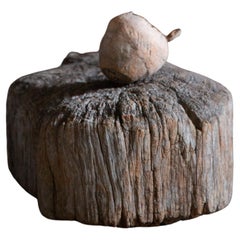
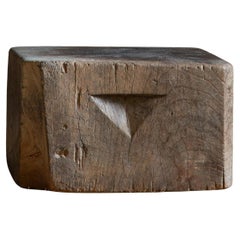
Late 19th Japanese Antique Wabi sabi wood display stand, hardwood vase stand
Located in 常陸大宮市, JP
Japanese Antique wooden cube-like shape display stand, "Dai" in Japanese, made from thick, single solid hardwood slab of Keyaki (Zelkova).
Product of 1860s-1900s (late Edo to early M...
Category
Antique Late 19th Century Japanese Organic Modern Antiquities
Materials
Hardwood, Wood
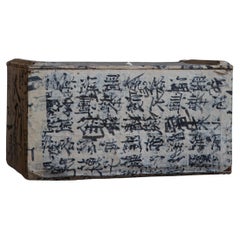
1894 Meiji Japanese Antique Washi paper covered wooden box wabi sabi primitive
Located in 常陸大宮市, JP
Paper covered wooden box with lid - made around 1894 (Meiji 27), written on the lid with brush calligraphy.
Can be displayed as a unique wabi sabi art piece, also as display stand w...
Category
Antique Late 19th Century Japanese Meiji Trunks and Luggage
Materials
Wood, Paper
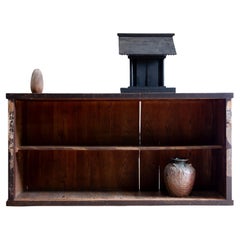
1890-1930s Japanese antique large Mizuya tansu chest, wabi sabi shelf, primitive
Located in 常陸大宮市, JP
Japanese Antique Mizuya tansu chest / side board, From Kanto area, Japan.
Made from premium quality, reddish Sugi Cedar, the product of circa 1900s to 1930 (late Meiji to early Show...
Category
Antique Late 19th Century Japanese Taisho Cabinets
Materials
Wood, Cedar
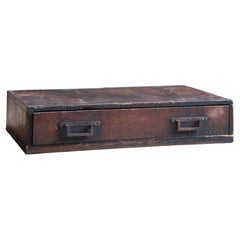
Antique Japanese low display stand w/ drawer, Okidoko tansu, wabi sabi mingei
Located in 常陸大宮市, JP
Antique "Okidoko"- wooden low display stand with drawer from Tohoku area, Japan.
Manufactured in Circa 1900s to 1920s (Taisho to early Showa period) , estimate from the style
c...
Category
Early 20th Century Japanese Taisho Commodes and Chests of Drawers
Materials
Wood, Hardwood
You May Also Like
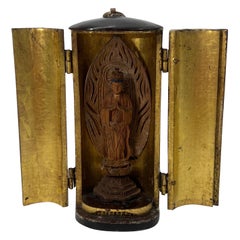
Antique Japanese Meiji Period Lacquer
Giltwood Zushi Shrine, Traveling Alter
Located in Atlanta, GA
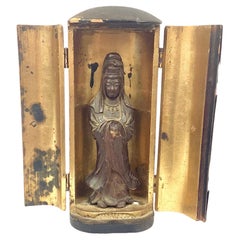
Antique Japanese Meiji Period Lacquer & Giltwood Zushi Shrine, Traveling Alter
Made of fine quality black lacquered case, internally gold leafed and ha...
Category
Early 20th Century Figurative Sculptures
Materials
Giltwood, Lacquer
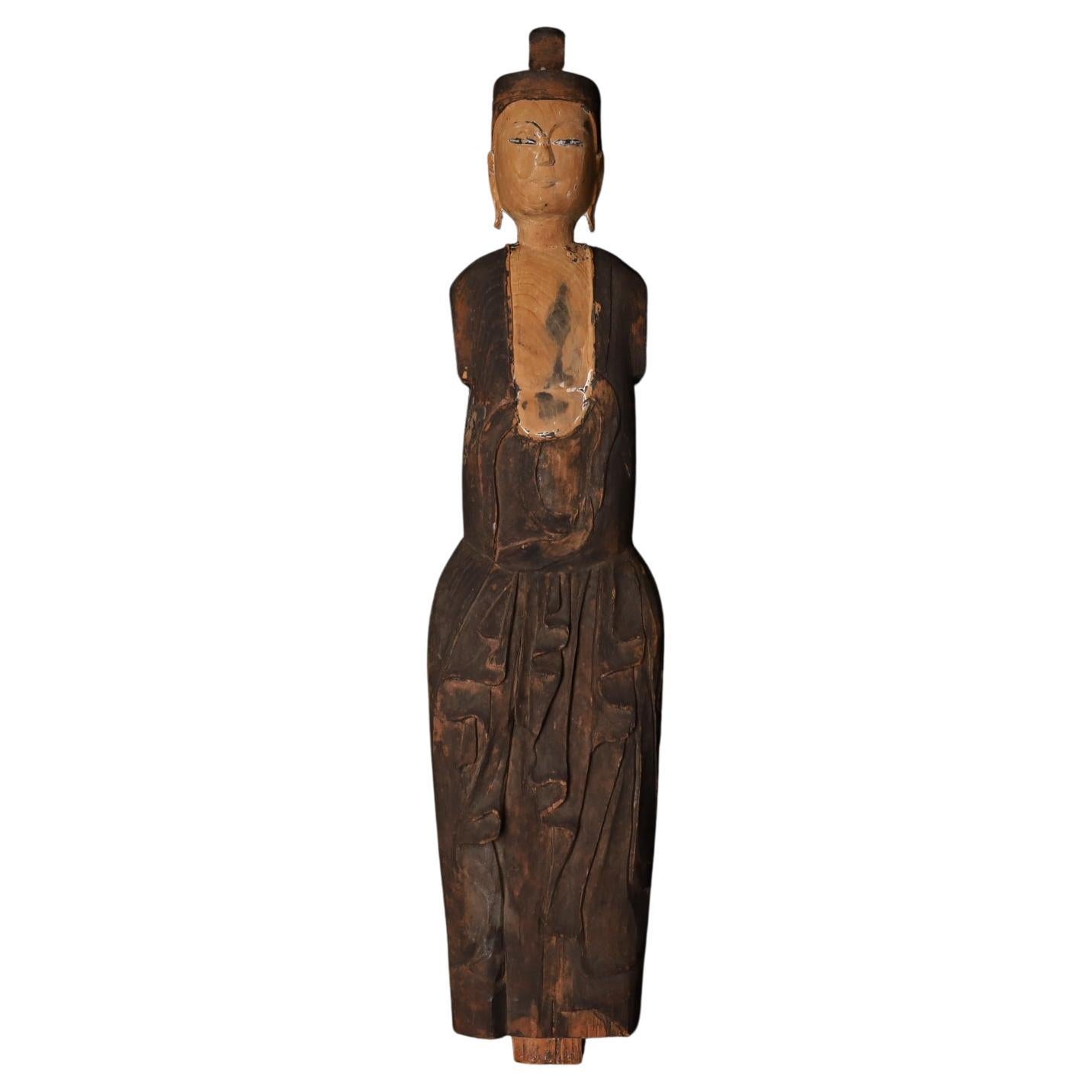
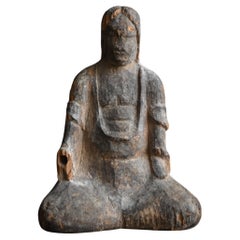
Rare Japanese antique wooden god statue /12th century/small wabi-sabi figurines
Located in Sammu-shi, Chiba
I was able to obtain a very rare item.
This is a sculpture of the god ``Shinzo''.
"Shin" = God
"zo" = statue
Since ancient times in Japan, it has been believed that gods reside in all things in the universe, and there have been many shrines.
In the 6th century, Buddhism was introduced and gradually spread throughout Japan.
Around the 8th century, the idea that gods follow the teachings of Buddha spread.
Until the Edo period, God and Buddha became one and the idea of ``Shinto and Buddhism syncretism'' was established.
This statue was created during such a history.
Originally, the image of God was invisible and could not be understood as something tangible.
However, with the introduction of Buddhism to Japan, idol worship was also introduced, and the idea that the gods follow the teachings of Buddha was also propagated at the same time in order to spread the teachings of Buddhism.
Around that time, around the 9th century, the first statues of gods...
Category
Antique 15th Century and Earlier Japanese Other Figurative Sculptures
Materials
Cypress
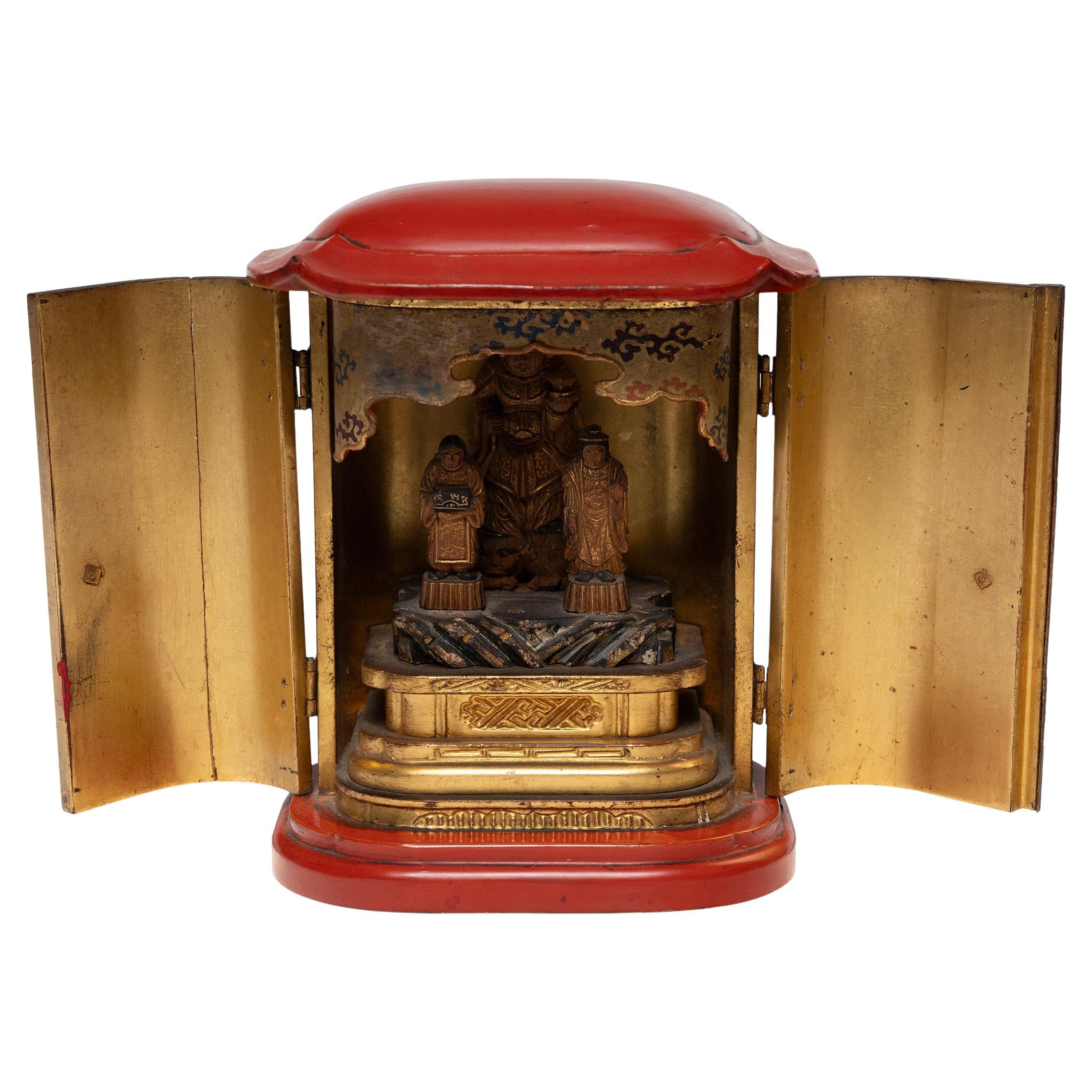
Japanese Zushi Traveling Shrine of Bishamonten, c. 1800
Located in Chicago, IL
This gorgeous Japanese red lacquer traveling shrine (zushi) protects a miniature statue of Bishamonten, the Buddhist God of Warfare here depicted as an armor-clad warrior. A fearsome protector, he is thought to defend sacred places, punish evil-doers, expel demons and bestow wealth. In this example, Bishamonten stands atop a crouching demon, dressed in finely painted armor...
Category
Antique Mid-19th Century Japanese Edo Figurative Sculptures
Materials
Wood

Mingei Japanese Folk Art — Statue of Kannon Bosatsu, 18th Century
Located in Fukuoka, JP
A serene Mingei (folk art) wooden statue of Kannon Bosatsu, dating to the 18th century.
Carved with simplicity and spiritual warmth, the figure embodies the humble, unadorned aesthet...
Category
Antique 18th Century Japanese Edo Antiquities
Materials
Wood
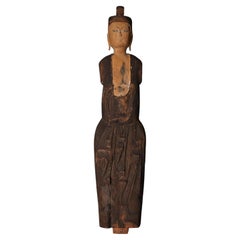
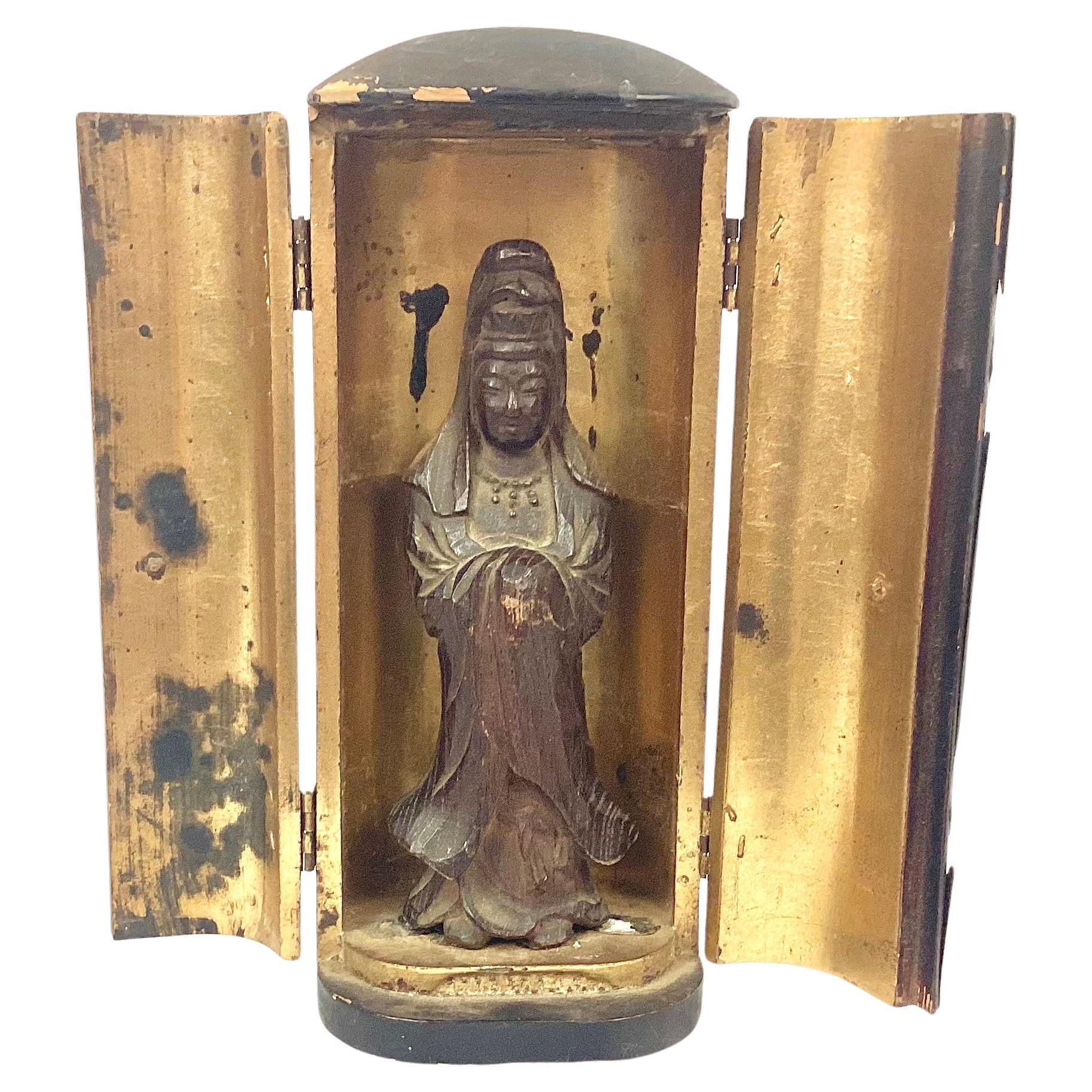
Antique Japanese Lacquer And Giltwood Zushi Shrine
Located in Bradenton, FL
Antique Japanese Lacquer And Giltwood Zushi Shrine, or traveling altar, with hand-carved wooden standing Japanese figure. Intricately bronzed...
Category
Antique 19th Century Japanese Japonisme Decorative Boxes
Materials
Giltwood, Lacquer
Japanese Edo Period Carved Seated Fasting Buddha, 18th C./Early 19th C.
Located in New York, NY
Japanese Edo Period Carved Seated Fasting Buddha, 18th C./Early 19th C.
DIMENSIONS
Height: 9.5 inches (24 cm)
Width: 7 inches (18 cm)
Depth: 5 inches (12.8 cm)
ABOUT
This early Edo...
Category
Antique Late 18th Century Japanese Japonisme Figurative Sculptures
Materials
Wood