Items Similar to Carved Wood Māori Wahaika Club New Zeland
Want more images or videos?
Request additional images or videos from the seller
1 of 21
Carved Wood Māori Wahaika Club New Zeland
$3,600
£2,745.83
€3,126.84
CA$5,059.10
A$5,517.66
CHF 2,922.88
MX$66,148.88
NOK 37,224.53
SEK 34,039.07
DKK 23,360.53
About the Item
A wood club known as Wahaika intricately carved and inlayed with small round shells from New Zealand circa 1920s. The hand-hold club was traditionally used as a close-range combat weapon before the European contact by Māori people, indigenous natives to the islands. It was used in as staff in ceremonies.
The surface of this particular wood Wahaika features deep relief carving of linear scrolling triple haehae and dog tooth pattern in between. The haehae pattern curved into homomorphic mirrored imagery on both the front and back. Strategic placement of shell inlays highlights the eyes. The small figure clinging to the side above the handle may represent the supernatural power (mana) of the weapon. The handle is in the form of another head with shell inlay, likely represents the aggression of its owner. The thin edge was carved with arrowheads alternating with inlays.
Examining the Wahaika club, it does not appear that it was a natively used piece collected from the field, due to the lack of specific patina. However, it was a fine example. The surface was superbly carved and decorated and show age. Early Wahaikas tend to be simple with mostly smooth surface, from 1880s on, the intricate carving increasingly covers the surface augmented sometimes with shell inlays. The carving bears the styl3600 of Rotorua school. It is possibly that the club was made during the depression era (1920-30s) by a member of the first Māori Arts and Crafts Institute, established by Sir Apirana Ngata, in Rotorua in 1926. It was likely sold as souvenir to the early tourists.
For a similar Wahaika, see D23.708 in the collection of Tuhura Otago Museum in Dunedin, New Zealand.
- Dimensions:Height: 14 in (35.56 cm)Width: 5.5 in (13.97 cm)Depth: 0.75 in (1.91 cm)
- Style:Tribal (Of the Period)
- Materials and Techniques:
- Place of Origin:New Zealand
- Period:
- Date of Manufacture:1920-30s
- Condition:Wear consistent with age and use. Fine condition overall, no missing shell inlays. Overall surface patina and wear with small nicks on edges. A stable old crack line on one side of the handle as shown.
- Seller Location:Atlanta, GA
- Reference Number:1stDibs: LU945037881482
About the Seller
4.9
Platinum Seller
Premium sellers with a 4.7+ rating and 24-hour response times
Established in 2006
1stDibs seller since 2010
581 sales on 1stDibs
Typical response time: <1 hour
- ShippingRetrieving quote...Shipping from: Atlanta, GA
- Return Policy
More From This Seller
View AllCarved Wood Aboriginal Shield, Western Australia
Located in Atlanta, GA
A tall and narrow parrying shield from the Aboriginal people living in the Western Australia. The piece was carved out of a single block of hard wood t...
Category
Early 20th Century Australian Tribal Tribal Art
Materials
Wood
Australian Aboriginal Carved and Painted Spear from Melville Island
By Patrick Freddy Puruntatameri
Located in Atlanta, GA
Title: A ceremonial spear with clan design paint
Artist: Patrick Freddy Puruntatameri
DOB: 19/04/1973
Medium: Ocher paint on ironwood carving
DOC:...
Category
Early 2000s Australian Folk Art Wall-mounted Sculptures
Materials
Wood
Two Ceremonial Weapon from Highlands of Papua New Guinea Provenance
Located in Atlanta, GA
Two Oceanic ceremonial weapons from PNG highlands circa 20th century. It consists of two pieces. The first is an ax with a wood shaft and a flat elongated he...
Category
Mid-20th Century Papua New Guinean Tribal Tribal Art
Materials
Rattan, Wood
Australian Aboriginal Ironwood Bima Figure Carving Tiwi Island
By Myra Ann Tipiloura
Located in Atlanta, GA
Collected in Tiwi Island off the coast of Northern Australia, this Bima Figure Carving was carved and painted by Myra Ann Tipiloura out of Iron wood. It w...
Category
20th Century Australian Tribal Figurative Sculptures
Materials
Wood
Bis Pole Sculpture by Asmat People
Located in Atlanta, GA
A ritual artifact from the tribe of the Asmat poeple, an ethnic group of New Guinea living in the Papua province of Indonesia and South-western regions of Papua New Guinea, bis or bisj pole is carved out of a wild Mangrove tree and can reach a stunning height Their carvings depict stacked human and animal figures standing and on top always phallic symbols, in the shape of a canoe prow. Bis poles...
Category
20th Century Papua New Guinean Tribal Tribal Art
Materials
Wood
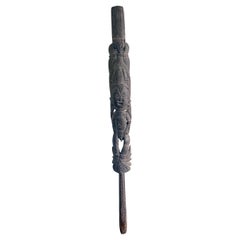
Yam Ceremonial Digging Stick with Carving Papua New Guinea
Located in Atlanta, GA
A large digging stick used for the ceremony of planting the first yams of the season circa first half of the 20th century, purportedly from the ex-collection of the Children's Museum...
Category
Early 20th Century Papua New Guinean Tribal Figurative Sculptures
Materials
Wood
You May Also Like
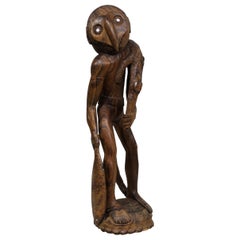
Maori Hand Carved Tribal Sculpture of Hunter
Located in Hamilton, Ontario
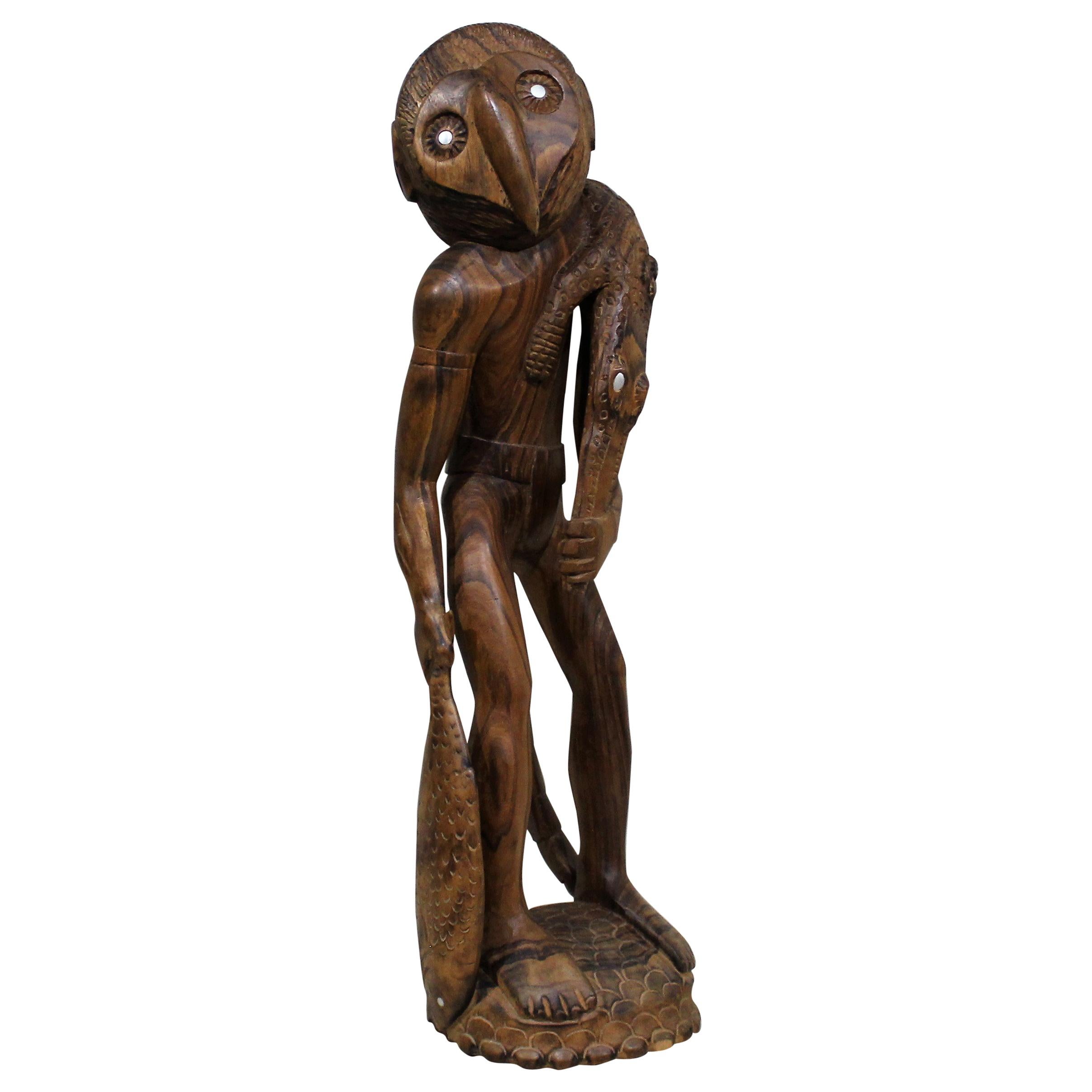
Hand carved Maori sculpture of a hunter carrying a crocodile and fish.
Category
Vintage 1940s New Zealand Tribal Tribal Art
Materials
Wood
$1,150 Sale Price
37% Off
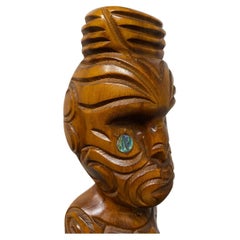
Carved Wood Tekoteko Sculpture with Paua Shell Eyes, Contemporary Figure
Located in Barueri, SP, BR
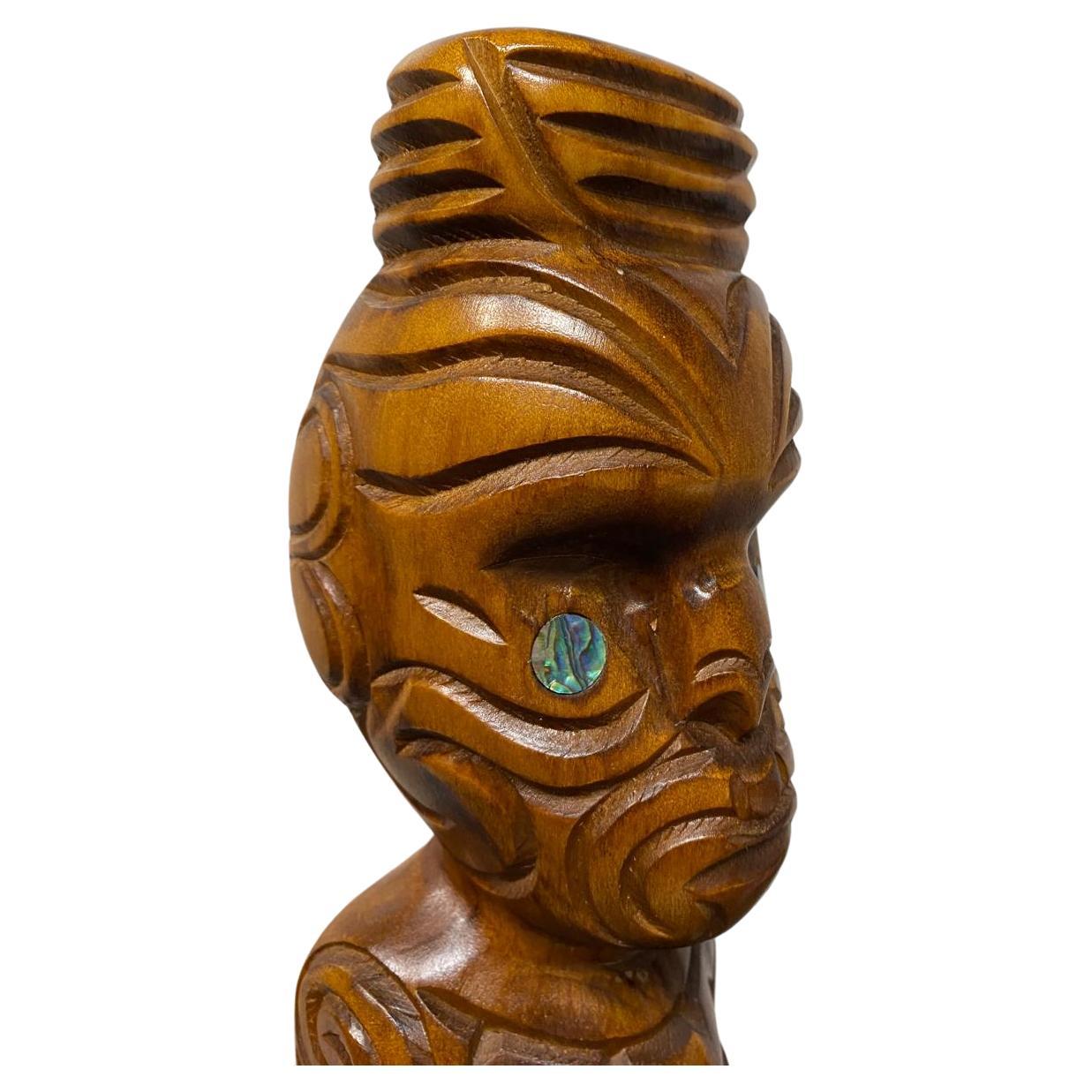
This carved Tekoteko sculpture is a striking example of traditional carving brought into a contemporary art context. The figure is rendered in warm-toned wood, its surface defined by...
Category
20th Century New Zealand Figurative Sculptures
Materials
Shell, Wood
$840 Sale Price
30% Off
Free Shipping
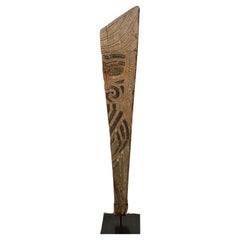
Antique Māori Carved Hardwood Architectural Panel – Tiki Oceanic Polynesian
Located in London, GB
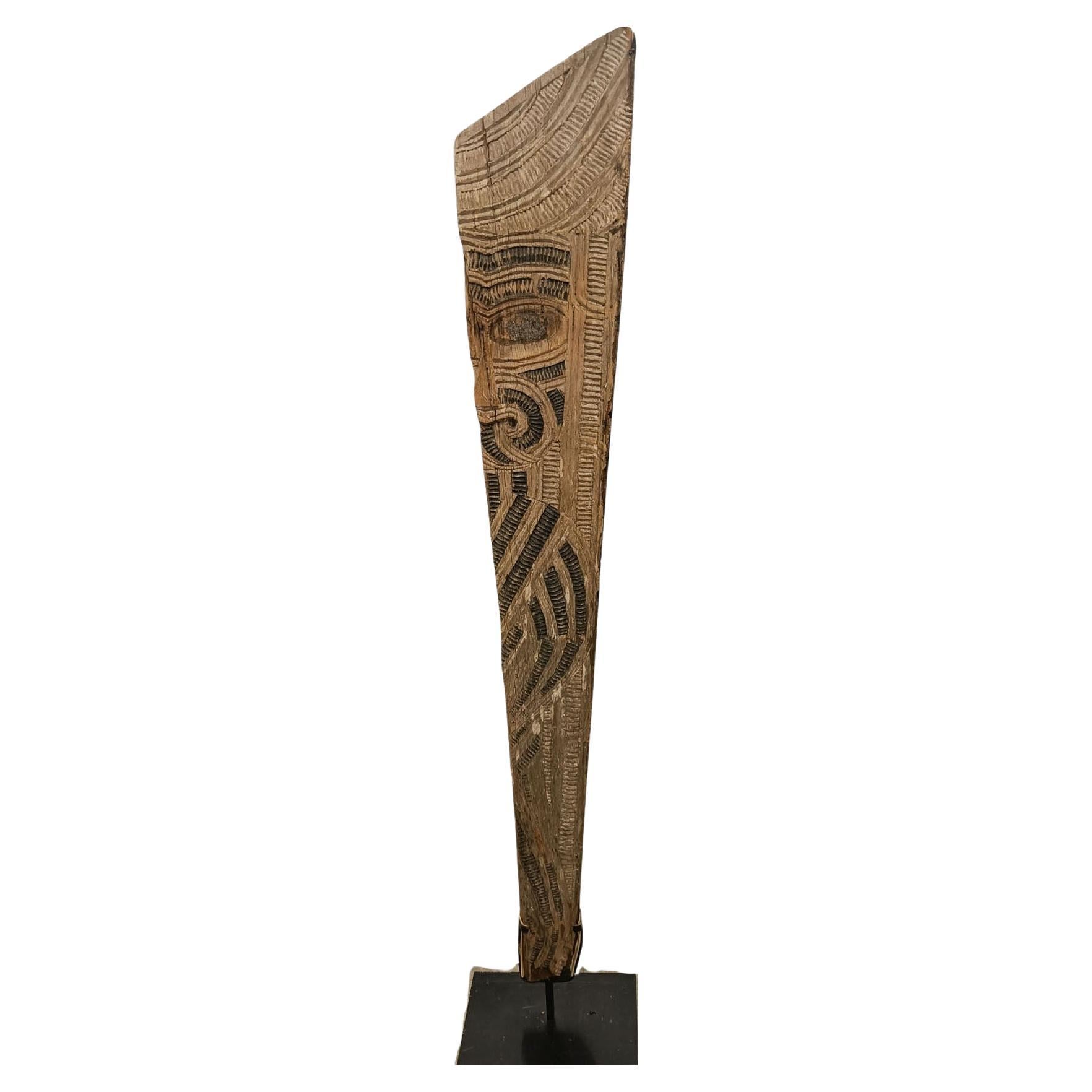
Antique Māori Carved Hardwood Architectural Panel – Tiki Design
A Rare and finely carved antique Māori hardwood architectural element, likely originati...
Category
Antique Early 19th Century New Zealand Tribal Art
Materials
Hardwood
$1,670 Sale Price
30% Off
Joseph Duroseau Tribal Carving
By Joseph Duroseau
Located in Bridgeport, CT
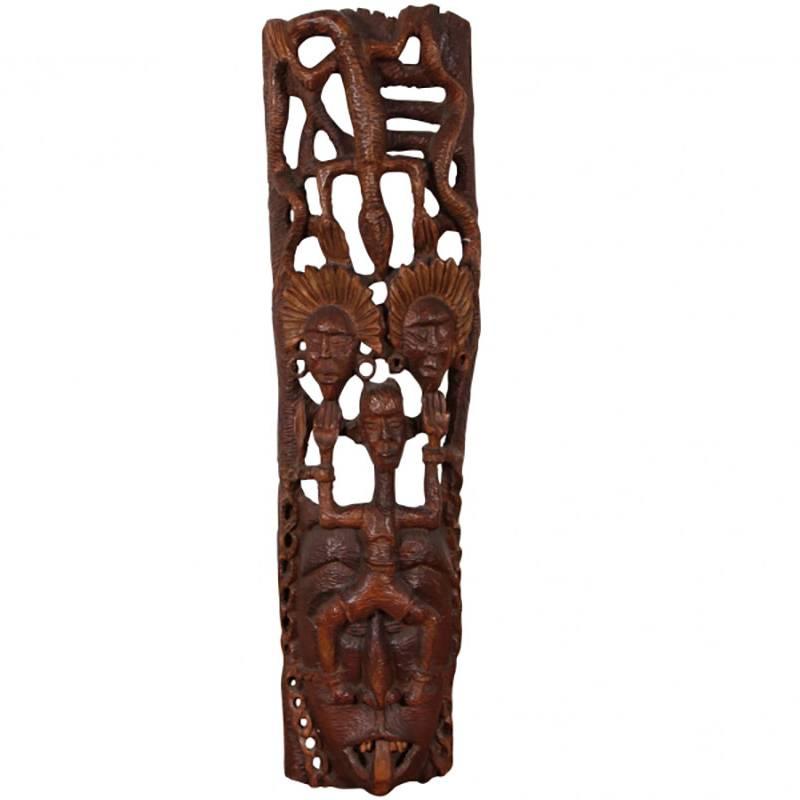
Joseph Duroseau (Haitian, b 1931) tribal wood carving that depicts a lizard above two tribal masks with feather headdresses, held up by a figure su...
Category
20th Century Haitian Tribal Wall-mounted Sculptures
Materials
Wood
Early 20th Century Sago Peg, Abelam/Wosera People, Papua New Guinea
Located in Point Richmond, CA
Sago peg, tapak, Abelam/Wosera people, East Sepik Province, Papua New Guinea
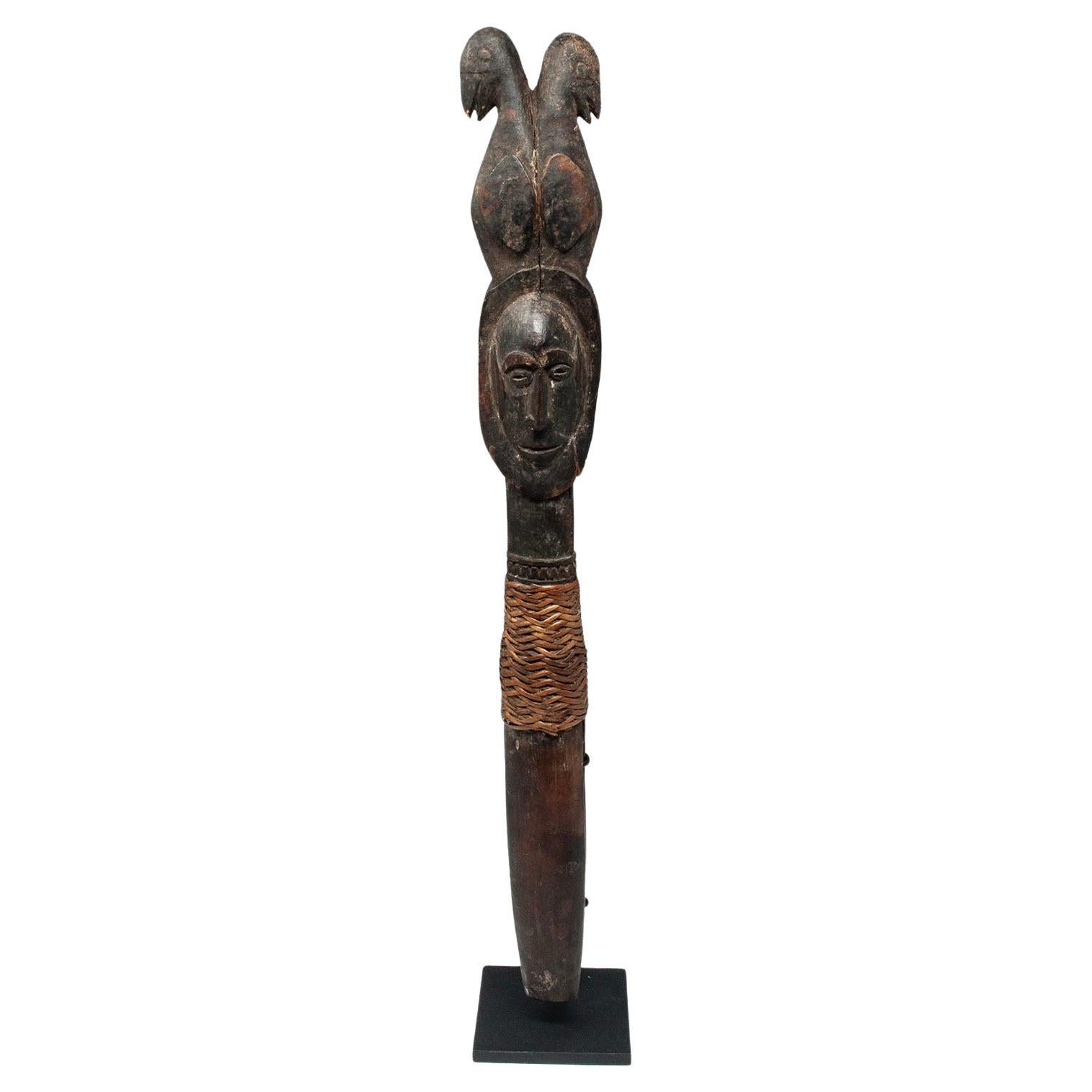
Sago pegs are used to secure a screen mesh during the preparation of sago flour. This example depicts a ...
Category
Early 20th Century Papua New Guinean Tribal Abstract Sculptures
Materials
Shell
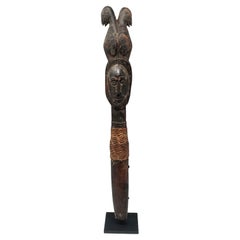
Hand-Carved Batak Singa Singa Tribal Sculpture, Sumatra, Antique Decor Accent
Located in Yonkers, NY
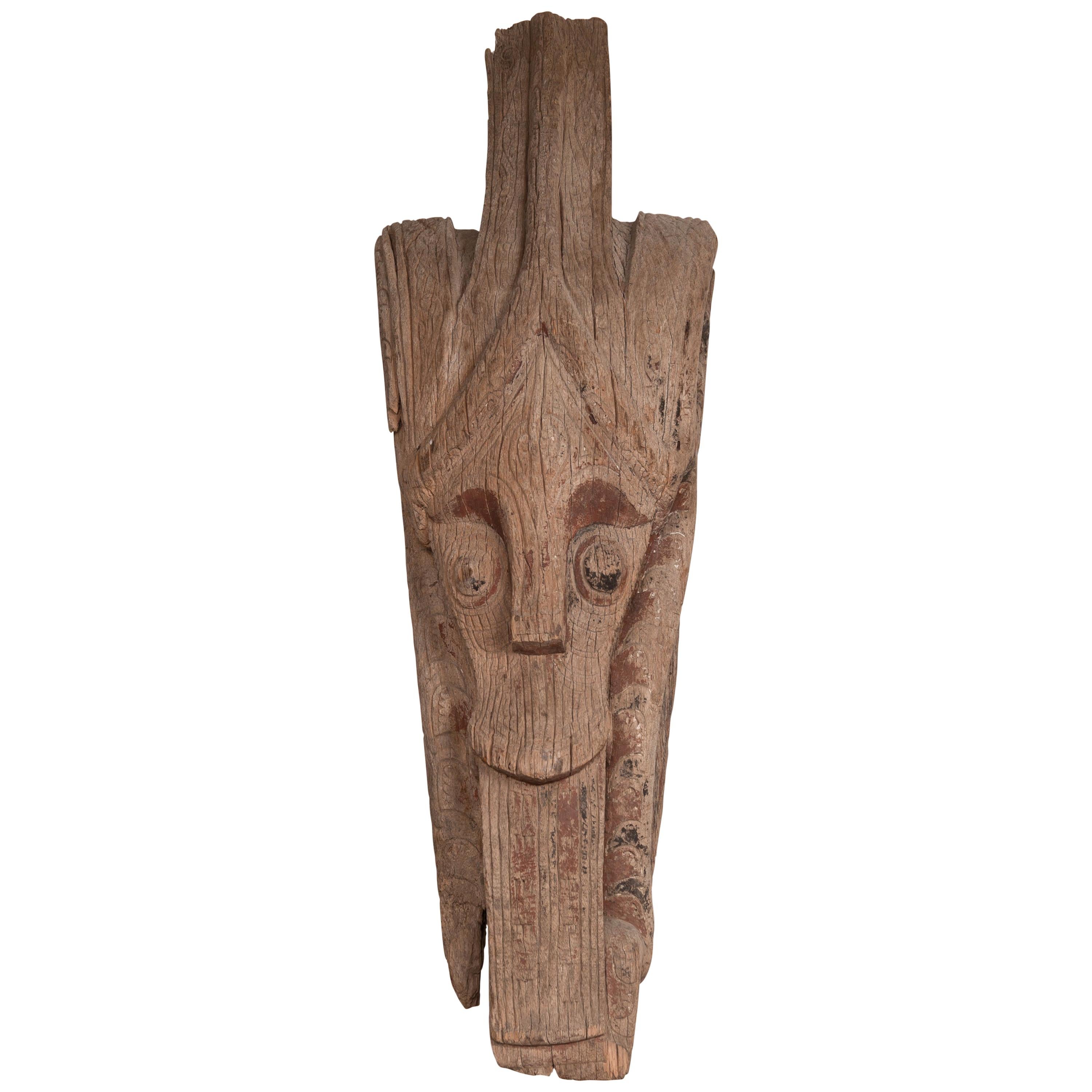
A antique hand carved tribal sculpture from the Batak People, northern Sumatra, called a Singa Singa. This antique hand-carved tribal sculpture from the Batak People of Northern Suma...
Category
Antique 19th Century Indonesian Tribal Sculptures and Carvings
Materials
Wood