Items Similar to Monumental Chinese Song Dynasty Style Carved Wood
Polychrome Guanyin. 19th C.
Want more images or videos?
Request additional images or videos from the seller
1 of 7
Monumental Chinese Song Dynasty Style Carved Wood
Polychrome Guanyin. 19th C.
$18,000
£13,733.56
€15,634.57
CA$25,299.20
A$27,809.98
CHF 14,600.11
MX$330,680.69
NOK 187,498.58
SEK 170,790.94
DKK 116,815.32
About the Item
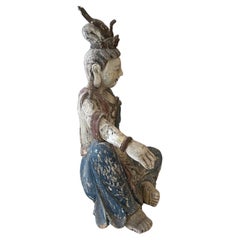
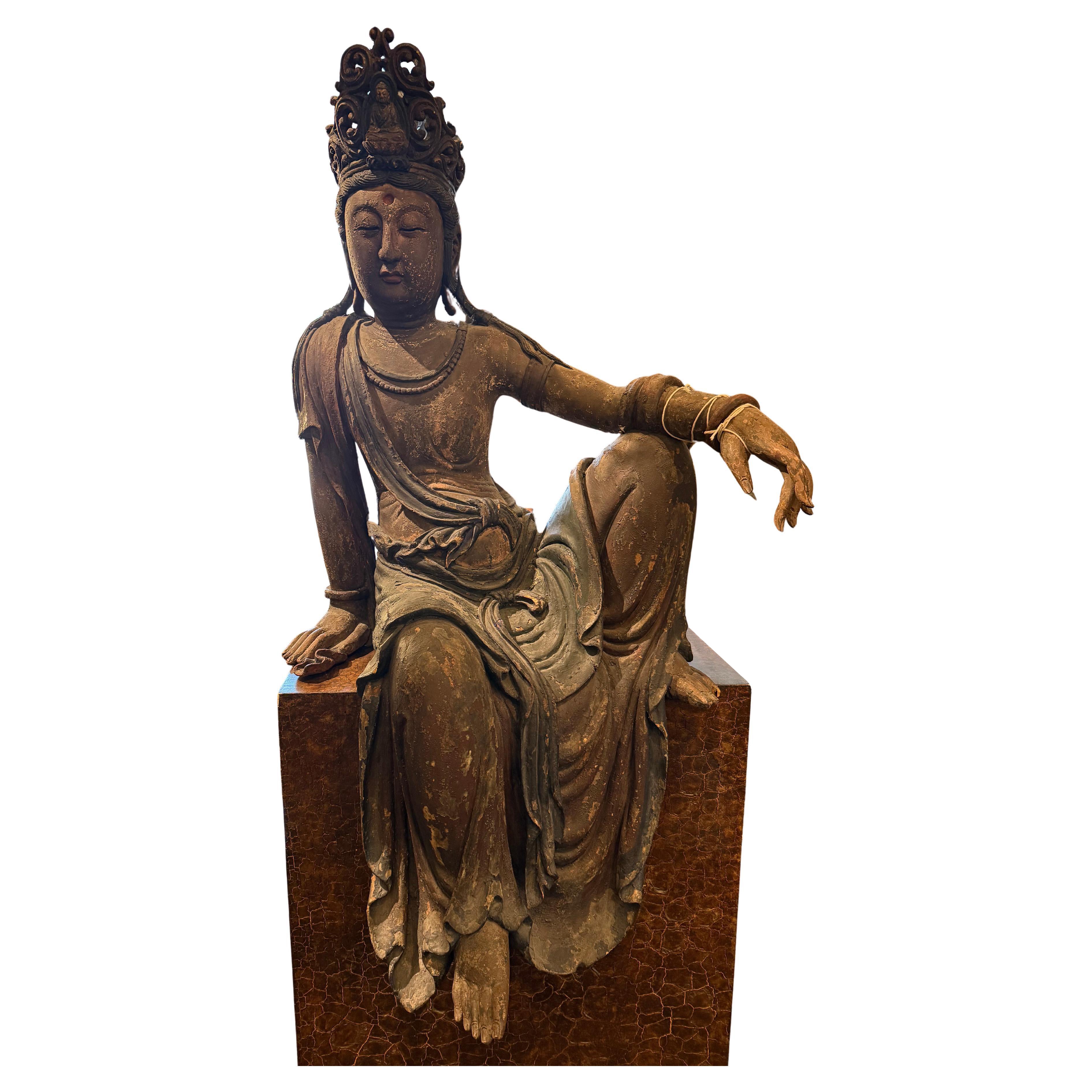
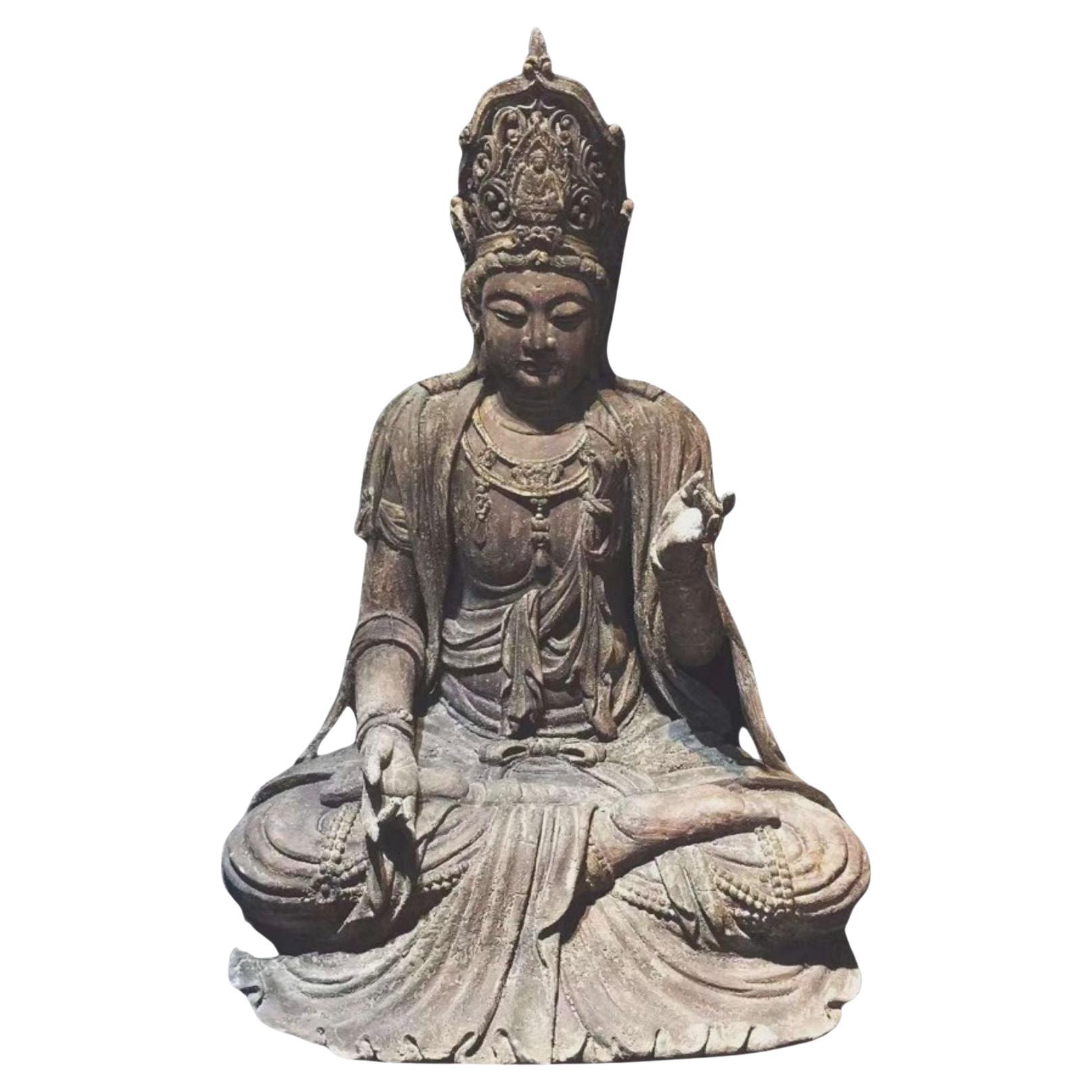
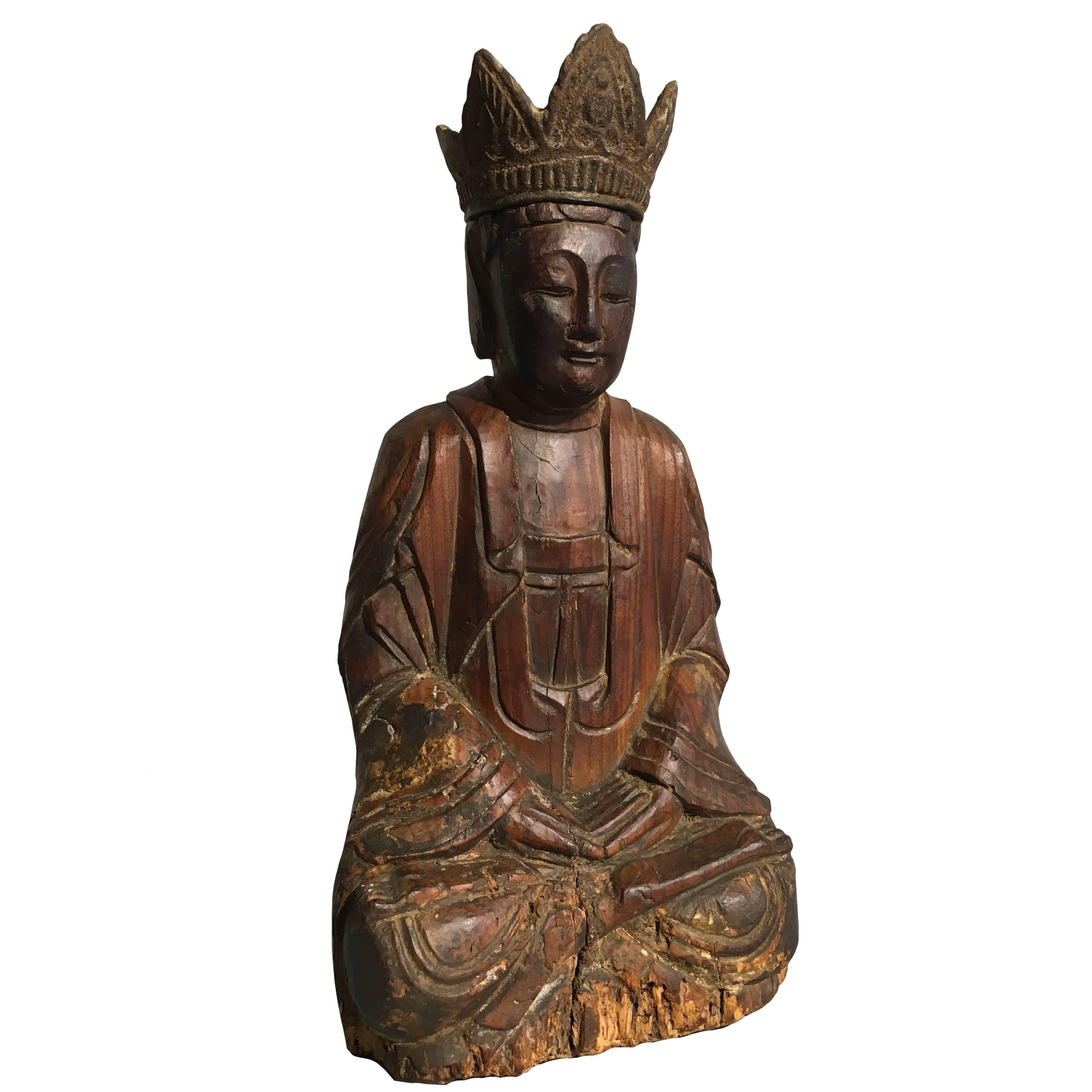
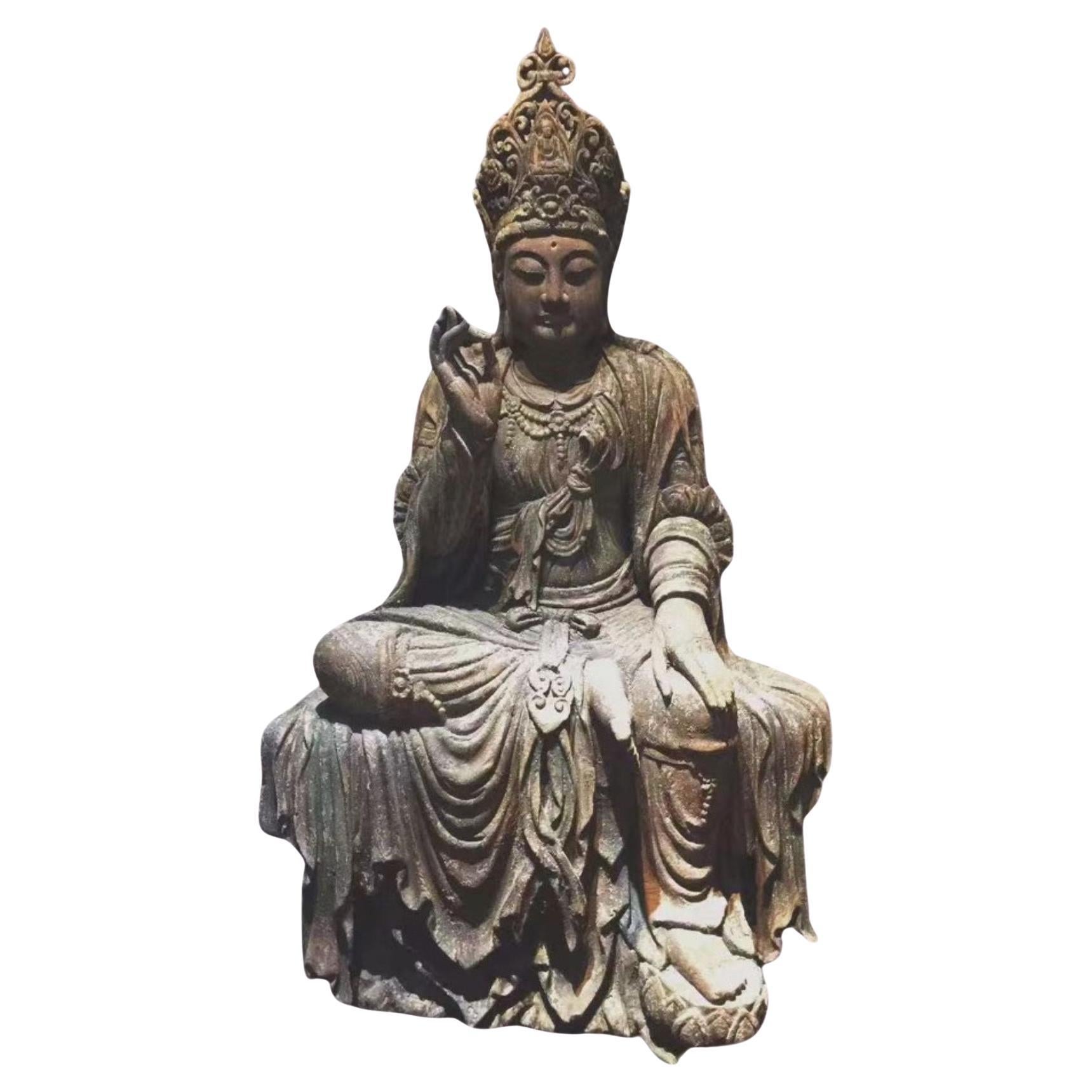
An impressive and serene carved wood sculpture of Guanyin, the Bodhisattva of Compassion, rendered in the Song Dynasty style. This monumental figure is gracefully posed in “royal ease” (lalitasana), one arm resting casually on a raised support, the other draped gently across the knee — a posture symbolizing both compassion and quiet authority.
Expertly hand-carved from solid wood, the sculpture retains traces of its original polychrome and gilt decoration, now softly worn with age, enhancing its spiritual presence and historical depth. The figure is richly detailed with flowing robes, beaded jewelry, and a serene, meditative expression that conveys profound inner stillness.
This exceptional piece exemplifies the artistic refinement and devotional sensibility of Song-inspired Buddhist sculpture, merging naturalism with spiritual grace.
Dimensions:
Height 53 in. × Width 41 in. × Depth 24 in.
- Dimensions:Height: 53 in (134.62 cm)Width: 41 in (104.14 cm)Depth: 24 in (60.96 cm)
- Materials and Techniques:
- Place of Origin:
- Period:
- Date of Manufacture:19th Century
- Condition:Wear consistent with age and use.
- Seller Location:Los Angeles, CA
- Reference Number:Seller: PGD000273991stDibs: LU818847529042
About the Seller
4.9
Gold Seller
Premium sellers maintaining a 4.3+ rating and 24-hour response times
Established in 1999
1stDibs seller since 2006
424 sales on 1stDibs
Typical response time: <1 hour
Associations
20th Century Specialists
- ShippingRetrieving quote...Shipping from: Los Angeles, CA
- Return Policy
More From This Seller
View AllPair of Late 19th Century Chinese Porcelain Foo Dogs
Located in Los Angeles, CA
Pair of Chinese porcelain male and female foo dogs. The male foo dog seems to have a ball on his foot while the female has a baby foo dog on hers. Made in...
Category
Antique Late 19th Century Chinese Sculptures and Carvings
Materials
Porcelain
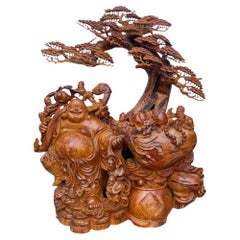
Large Hand-Carved Padauk Wood Hotei Buddha with Children and Bonsai Tree 1950
s.
Located in Los Angeles, CA
Feel the charm and positivity of this stunning hand-carved Hotei Buddha, crafted from vibrant Padauk wood and burl wood. This enchanting piece features th...
Category
Vintage 1950s Cambodian Figurative Sculptures
Materials
Wood
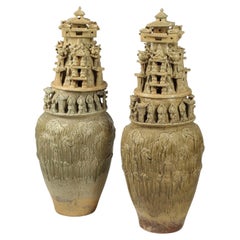
Pair of Chinese Earthenware Ceremonial Vases
Located in Los Angeles, CA
Pair of traditional earthenware ceremonial vases, designed with molded figures, animals, and architecture in a tiered arrangement comprising all around the neck of each piece. Made i...
Category
Antique Early 1900s Chinese Vases
Materials
Earthenware
$9,600 / set
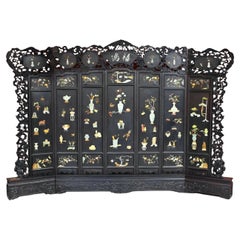
Chinese Seven-Panel Inlaid Zitan Screen, late 19th/early 20th century
Located in Los Angeles, CA
An extraordinary and monumental seven-panel zitan screen from the late Qing Dynasty, dating to the early 20th century. Masterfully crafted and richly decorated on both sides, the fro...
Category
Antique Early 1900s Chinese Paintings and Screens
Materials
Wood
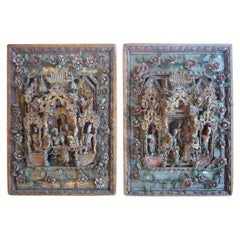
Tony Duquette Two Chinese Polychrome-Decorated Basketwork Panels
Located in Los Angeles, CA
Two Chinese polychrome-decorated basketwork panels. Depicting houses in flowering gardens with figures in doorways and balconies, mounted on mirrored panels, framed.
From the collect...
Category
Vintage 1920s Chinese Other Wall-mounted Sculptures
Materials
Metal
Large Early 20th Century Hand Carved Pure Golden Onyx Sculpture
Located in Los Angeles, CA
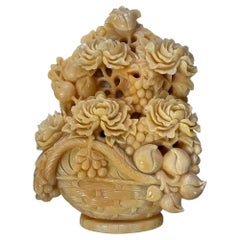
Exquisite hand-carved golden onyx sculpture, intricately designed in the shape of a basket overflowing with delicate flowers. Each piece showcases the natural beauty of the stone, wi...
Category
Early 20th Century Asian Sculptures and Carvings
Materials
Onyx
You May Also Like
An Important Chinese Carved Wood Figure of Guanyin, Ming Dynasty, 17th Century
Located in ARMADALE, VIC
An Important Chinese Carved Wood Figure of Guanyin, Ming Dynasty, 17th Century
Description:
A dignified portrayal of the bodhisattva, respl...
Category
Antique 17th Century Chinese Ming Sculptures and Carvings
Materials
Wood
A Large Chinese Carved Wood Figure of Guanyin, Late Qing Dynasty
Located in ARMADALE, VIC
Description:
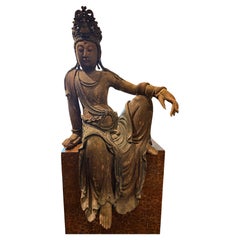
A singular example of Guanyin. Deviating from the Bodhisattva’s conventional pose of ‘royal ease’, the figure is instead seated in the meditative padmasana, or ‘lotus position’, rendering this Guanyin something of a rarity. An Apana more typically associated with depictions of Buddhas, Guanyin assuming this pose immediately signifies this figure as one of particular spiritual reverence. Both feet are revealed crossed upon one another from beneath fabric which spills before her, her left palm turned upward with her hand resting upon her left knee and her right raised in a relaxed gesture. Adorned with a diadem housing a depiction of Amitabha Buddha, her own spiritual guide, she exudes an air of tranquil regality, further characterised by her numerous strings of beads and elaborately fastened dhoti, attire traditionally reserved for Indian princes. Though the figure’s dress is Indian her face is undoubtedly exemplifying artistic Chinese beauty standards. Her face is soft and rounded, full in both the lips and cheeks, with eyes that restfully peer down, as though she is watching over the worries of mankind with compassion.
Notes on the item:
Guanyin is the Chinese interpretation of Avalokiteshvara, the Indian Bodhisattva of compassion. The term “Bodhisattva” is derived from the Sanskrit “Bodhi”, meaning ‘awakening’ or ‘enlightenment’, combined with “Sattva”, meaning ‘spirit’ or ‘being’, referring to one on the path to achieving enlightenment. Bodhisattvas in Mayahana Buddhism are recognised as figures who have effectively achieved enlightenment yet relinquish their accension to nirvana in order to remain amongst mankind in the ultimate act of compassion to aid as spiritual guides. As such, the Bodhisattva inhabit a liminal space between samsara and nirvana; enlightened beings that maintain a relationship with humanity that buddhas cannot, as attaining Buddhahood necessitates the abandonment of all worldly attachments, including mankind. Guanyin’s very name, ‘One who hears the cries of the world’ highlights this role as a compassionate figure who acknowledges the suffering and strife of man. Along with Mahāsthāmaprāpta, a fellow bodhisattva, Guanyin serves as an attendant to Buddha Amitabha, with these three deities recognised as the Three Sages of Western Pure Land Buddhism, a sect of Mayahana Buddhism popular in East Asia.
Avalokiteshvara is commonly posited to have been adopted from Indian Buddhism into China as Guanyin around 200-400 CE, however it was the Tang dynasty (618-907) which saw the popularisation of the deity. By the Ming (1358–1644) and Qing (1644–1911) dynasties, Guanyin held the position as the most popular female deity in China. The unique state of religion in China held no monolithic canon regarding Buddhism and saw the assimilation of several belief systems, primarily Daoism, Buddhism and Confucianism. Consequently, Guanyin became a deity to be revered beyond Buddhism alone, appointed as both an official imperial deity and Daoist deity in the 12th century. Guanyin may also be seen to fulfil the role of idealised femininity as prescribed by Confucianism, with the scarcity of female Chinese deities perhaps accounting for the gradual gender shift Guanyin underwent.
The Indian Avalokiteshvara is unequivocally recognised as male, whilst the supposed gender of Guanyin remains contentious. Although there is a clear shift from the masculine Avalokiteshvara towards a more feminine representation, it is unclear if Guanyin is understood to be entirely feminine, to inhabit qualities of both genders or to be elevated beyond gender entirely, embodying neither. Depictions of Guanyin are highly androgynous, which some believe lends credence towards Guanyin symbolising the unity of dualistic forces as recognised in Daoism, displaying the anthropomorphism of yin and yang.
Comparative Analysis:
Market comparisons of similar Qing Dynasty polychrome figures of Guanyin include lot 767 (no.2) From Christies ‘Important Chinese Ceramics and Works of Art,’ New York, 25 March 2022, with the price realised USD 52,920 (Estimate USD 20,000 – USD 30,000). Christies also auctioned a comparable polychrome Guanyin...
Category
Antique Late 19th Century Chinese Qing Sculptures and Carvings
Materials
Hardwood
Chinese Carved Wood Bodhisattva Guanyin, Late Ming Dynasty, 17th Century
Located in Austin, TX
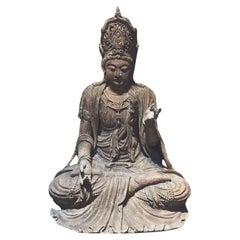
An attractive carved wood figure of the Bodhisattva Avalokiteshvara, known as Guanyin in China, late Ming Dynasty, early 17th century, China.
Guanyi...
Category
Antique Early 17th Century Chinese Ming Sculptures and Carvings
Materials
Gesso, Wood
Chinese Carved and Painted Wood Sculpture of Guanyin
Located in Stamford, CT
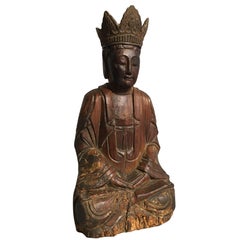
Beautiful carving of Guanyin, shown standing on a rocky outcrop, mounted on a lobed wooden base. It was once used as a lamp, and can be rewired. Nice faded painted surface.
Guany...
Category
Early 20th Century Chinese Ming Sculptures and Carvings
Materials
Wood
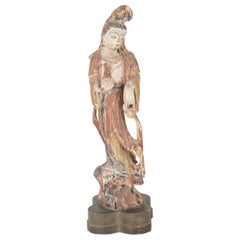
A Large Chinese Carved Wood Figure of Guanyin, Late Qing Dynasty
Located in ARMADALE, VIC
An impressive depiction of Guanyin, the Bodhisattva of compassion, whose name bears the meaning ‘One who hears the cries of the world.’ The rather androgynous figure is adorned with beaded jewellery and the princely regalia of a dhoti, draped across her body and spilling out over to partially obscure what she is resting upon. The goddess’ profile exhibits idealised features of Asian artistic convention; her face is soft and rounded, with full lips and relaxed eyes that provide a serene quality of youthfulness to the figure. Adhering to Chinese iconography of Guanyin, the figure is marked by an urna on her forehead, denoting her own enlightenment, as well as a diadem displaying Buddha Amitabha, the spiritual teacher of Guanyin. Seated in the Lalit asana pose, translated as ‘royal ease’, the figure exudes a fine example of the relaxed majesty typical in the characterisation of Guanyin. Whilst the figure’s left hand is placed restfully upon the left leg pendant, the right is raised in the gesture shuni mudra, the second finger held gently against the thumb. Otherwise known as the seal of patience, this gesture indicates the figure as one intended to bestow this virtue, along with compassion and understanding, upon the beholder.
Notes on the item:
Guanyin is the Chinese interpretation of Avalokiteshvara, the Indian Bodhisattva of compassion. The term “Bodhisattva” is derived from the Sanskrit “Bodhi”, meaning ‘awakening’ or ‘enlightenment’, combined with “Sattva”, meaning ‘spirit’ or ‘being’, referring to one on the path to achieving enlightenment. Bodhisattvas in Mayahana Buddhism are recognised as figures who have effectively achieved enlightenment yet relinquish their accension to nirvana in order to remain amongst mankind in the ultimate act of compassion to aid as spiritual guides. As such, the Bodhisattva inhabit a liminal space between samsara and nirvana; enlightened beings that maintain a relationship with humanity that buddhas cannot, as attaining Buddhahood necessitates the abandonment of all worldly attachments, including mankind. Guanyin’s very name, ‘One who hears the cries of the world’ highlights this role as a compassionate figure who acknowledges the suffering and strife of man. Along with Mahāsthāmaprāpta, a fellow bodhisattva, Guanyin serves as an attendant to Buddha Amitabha, with these three deities recognised as the Three Sages of Western Pure Land Buddhism, a sect of Mayahana Buddhism popular in East Asia.
Avalokiteshvara is commonly posited to have been adopted from Indian Buddhism into China as Guanyin around 200-400 CE, however it was the Tang dynasty (618-907) which saw the popularisation of the deity. By the Ming (1358–1644) and Qing (1644–1911) dynasties, Guanyin held the position as the most popular female deity in China. The unique state of religion in China held no monolithic canon regarding Buddhism and saw the assimilation of several belief systems, primarily Daoism, Buddhism and Confucianism. Consequently, Guanyin became a deity to be revered beyond Buddhism alone, appointed as both an official imperial deity and Daoist deity in the 12th century. Guanyin may also be seen to fulfil the role of idealised femininity as prescribed by Confucianism, with the scarcity of female Chinese deities perhaps accounting for the gradual gender shift Guanyin underwent.
The Indian Avalokiteshvara is unequivocally recognised as male, whilst the supposed gender of Guanyin remains contentious. Although there is a clear shift from the masculine Avalokiteshvara towards a more feminine representation, it is unclear if Guanyin is understood to be entirely feminine, to inhabit qualities of both genders or to be elevated beyond gender entirely, embodying neither. Depictions of Guanyin are highly androgynous, which some believe lends credence towards Guanyin symbolising the unity of dualistic forces as recognised in Daoism, displaying the anthropomorphism of yin and yang.
Comparative Analysis:
Market comparisons of similar Qing Dynasty polychrome figures of Guanyin include lot 767 (no.2) From Christies ‘Important Chinese Ceramics and Works of Art,’ New York, 25 March 2022, with the price realised USD 52,920 (Estimate USD 20,000 – USD 30,000). Christies also auctioned a comparable polychrome Guanyin...
Category
Antique Late 19th Century Chinese Qing Sculptures and Carvings
Materials
Hardwood
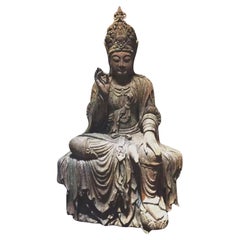
Early 20th Century Ming Dynasty-inspired Guanyin Wooden Sculpture
Located in West Palm Beach, FL
Inspired by the Ming Dynasty, this elegant statue of Guanyin, Goddess of Compassion, was hand carved in the 20th century. The artist captures the timeless and spiritual aura of Guany...
Category
Early 20th Century Chinese Ming Sculptures and Carvings
Materials
Wood, Paint