Items Similar to African Mambila Bronze Suaga Dog Head Mask - Tribal Art Sculpture
Want more images or videos?
Request additional images or videos from the seller
1 of 21
African Mambila Bronze Suaga Dog Head Mask - Tribal Art Sculpture
$1,495
£1,141.55
€1,299.70
CA$2,099.22
A$2,294.85
CHF 1,214.08
MX$27,461.62
NOK 15,447.44
SEK 14,140.57
DKK 9,707.95
About the Item
An extraordinarily rare and fine Mambila suaga dog-head mask
- Probably Mambilla Plateau, Nigeria /Cameroon, West Africa grasslands
- Bronze, natural raffia fibers
- Unknown age
Exceptional quality work by a highly skilled artist, executed in bronze and of hollow form so as to be worn, having a highly stylized dramatic appearance with deeply expressionistic features.
Features which are difficult to associate with any one specific animal. While the elongated gaping mouth lined with sharp teeth calls a dog or crocodile to mind, the head displays two long curving horns. Richly carved, sculpted and incised detailing, with protruding cylindrical eyes, large rounded ears, and rows of exposed pointed teeth. Viewed in profile, it shows a sweeping convex curve extending from the forehead to the tip of the snout. Mounted with a hand woven raffia collar, that was used in conjunction with a voluminous woven costume that concealed the masker’s body.
Includes modern black metal display stand - Makes for a fascinating sculpture / statue!
Dimensions: (approx)
Mask: 19.75" Long, 12.5" Wide, 9.75" Tall
On stand: 18" Tall
FURTHER READING:
Tribal art; ceremonial / ritualistic mask (helmet headdress crest)
Not a lot is known about Mambilla culture and art. They are a diverse group with various cultural differences between tribes and from village to village.
The term "Suaga" may refer to the specific type of mask, like "Suaga Bor" (dog), with "Due" being another identifier or variation of the mask itself.
"Suaga Due" is the Mambila term for a specific type of Mambila Dog Head Mask, a stylized animal mask originating from Nigeria and Cameroon. These masks are used in justice and supernatural cleansing rituals within the Mambila community.
"Suaga Bor" is a type of Mambila crest mask from Nigeria that is zoomorphic, meaning it depicts animal characteristics. The mask is identifiable by its wide, toothed mouth and is said to represent a combination of a hunting dog and a magpie, symbolizing the fierce aspect of nature's primal forces. These masks appear at sowing festivals to represent negative forces, which are then fought by a second, human-faced mask in a procession.
Condition:
Very good original antique / vintage condition. Attractive appearance, patinated with desirable scattered verdigris.
Wear commensurate with age, use and handling, including minor oxidation, accretions, abrasions, fissures, puncture, losses to fibers. Overall a superb museum quality example
--
African Ethnographic mask helmet headdress crest figural figure statue sculpture Nigerian Cameroonian culture cultural interest functional artwork display stand pedestal included
- Dimensions:Height: 18 in (45.72 cm)Width: 12.5 in (31.75 cm)Depth: 19.75 in (50.17 cm)
- Style:Tribal (In the Style Of)
- Materials and Techniques:
- Place of Origin:
- Period:
- Date of Manufacture:Unknown
- Condition:Wear consistent with age and use. Minor losses. Good original condition. Attractive appearance, patinated with desirable verdigris. Wear commensurate with age, use handling, including minor oxidation, accretions, abrasions, fissures, punctures, losses to fibers. Overall superb presentation.
- Seller Location:Forney, TX
- Reference Number:1stDibs: LU5977246824382
About the Seller
4.8
Platinum Seller
Premium sellers with a 4.7+ rating and 24-hour response times
Established in 2013
1stDibs seller since 2021
315 sales on 1stDibs
Typical response time: 1 hour
- ShippingRetrieving quote...Shipping from: Forney, TX
- Return Policy
More From This Seller
View AllAntique Congolese African Tribal Carved Hemba Helmet Mask, Suku Peoples
Located in Forney, TX
A scarce antique African tribal carved Hemba helmet mask, the Suku peoples, possibly Kwese culture, Democratic Republic of the Congo, Central Africa, early 20th century, surmounted by four-legged animal, over round face, with mouth ajar and incised jagged teeth exposed, protruding almond shaped eyes, scattered remnants of pigment, full raffia fiber fringe, mounted on wood stand.
A superb museum quality example, this remarkable tribal folk art sculpture is a wonderful way to add rustic warmth, rich historical depth, and fascinating cultural interest to any space!
Dimensions: (approx)
Overall: 26" High, 9" Wide, 10.25" Deep;
Mask only: 15" Tall;
7 lbs total
Provenance / Acquisition:
Acquired from the highly reputable auction house, Austin Auction Gallery, est.1983, Austin, Texas.
Excellent Condition:
Nicely aged distressed patina over the whole. Highly desirable wear consistent with age and indicative of use, including scattered losses, antique character marks and typical signs of aging throughout. Retaining scattered remnants of original pigment. Overall a superb museum quality example
Primitive Arts Of Africa:
Among the Suku of the southwestern part of the Democratic Republic of the Congo, masks plays crucial role in protecting boys during initiation, the vulnerable period between boyhood and manhood. The power contained in Hemba masks...
Category
Early 20th Century Congolese Tribal Tribal Art
Materials
Raffia, Wood
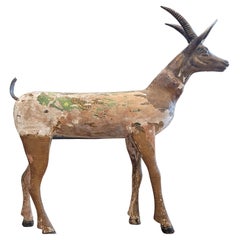
Large Antique East African Carved Wood
Bronze Antelope Deer Folk Art Sculpture
Located in Forney, TX
A large, rare, and most impressive antique hand carved and painted wood and metal stylized antelope African folk art sculpture with beautifully aged distressed patina.
Handmade in East Africa, dating to around the late 19th / early 20th century, possibly earlier, this scarce, one-of-a-kind, museum quality work, features a richly detailed patinated bronze head and tail with etched textural elements, tall ears and faux ringed...
Category
Antique Late 19th Century African Folk Art Sculptures and Carvings
Materials
Bronze
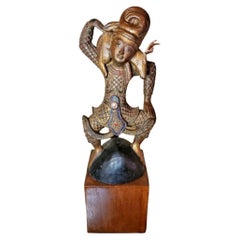
Antique Burmese Mandalay Period Buddhist Dancer Nat Spirit Deer Figure Sculpture
Located in Forney, TX
A rare and exceptional antique Southeast Asian Burmese hand carved and gilded teak wood religious figure Buddhist temple -monastery sculpture.
Exquisitely hand-crafted in Burma (present day Myanmar) in the late 19th century, finely sculpted from a single piece of teakwood, exceptionally executed in period Mandalay taste, highly detailed and decorated, showcasing the most exquisite craftsmanship throughout.
Modeled in an exceedingly rare and unusual form, depicting a tall standing Na spirit figure, adorned in fanciful Royal dancer garment, elaborately decorated and embellished with brilliant polychrome colored mirrored glass jewel inlays, red lacquered dress tail, he stands carrying a golden stag deer around shoulders and neck, the naturalistic deer having delicate four point antlers, all over an ebonized base, resting on a custom later Thai wooden pedestal stand.
Dimensions: (approx)
Overall: 27"h, 9"w, 7.75"d
Figure: 19.25"h, 9"w, 7.5"d
Base 7.75"h, 8"w, 7.75"d; 10.5"h with post
Condition:
A superb museum quality example, wonderfully preserved original antique condition with nicely aged warm rich dark patina and minimal losses.
*Additional photos available upon request
We immediately gravitated towards it upon first sight, and have not seen another piece quite like it form, quality, or scope. It would look amazing in just about any setting, with its remarkable design and visually striking eye-catching light reflection, it's sure to become a focal point of any space, while adding a thoughtful touch of rich cultural history, sophistication, elegant warmth, tranquility and serenity to any home!
Provenance / Acquisition:
Personal property of Genshiro Kawamoto (b.1932), a Japanese real estate tycoon and avid decorative arts collector.
To give an idea of both the size of the collection and the wealth Mr. Kawamoto had amassed, he purchased numerous (many 100s) of multi-million dollar homes in Hawaii, always paying cash. A string of homes he purchased for $2M-$20M each with the intent of using them as museums, (most people use storage units) just to house and display items from his extensive collection of antiques and artifacts. About 30 properties with a collective value of $200M in the Kāhala area of Honolulu he left vacant for decades, allowing them to fall into disrepair and get boarded up, attracting many complaints and media attention.
Mr. Kawamoto was in the procession of building one of the most expensive homes ever built in Hawaii at the time of his arrest and subsequent deportation to his native country, Japan, where he was found guilty of tax evasion, sentenced to four years in prison and had his assets seized and auctioned off.
We acquired this wonderful example from a prominent antiques dealer in Maui, Hawaii, who personally knew Mr. Kawamoto and procured this sculpture from the estate.
Mythological History:
The golden deer...
Category
Antique Late 19th Century Burmese Sculptures and Carvings
Materials
Wood, Art Glass, Teak, Giltwood
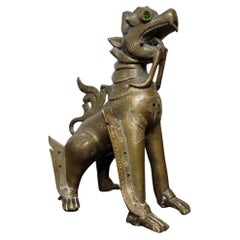
19th Century Burmese Jewel Inlaid Bronze Temple Guardian
Located in Forney, TX
A scarce, high-quality antique Burmese jewel inlaid solid bronze chinthe sculpture.
Dating to the late 19th century, likely originating in the Mandalay region of central Burma, the fearsome looking beast depicted in traditional Burmese iconography and important architecture, especially as a pair, the protective temple guardians placed flanking the entrances of Buddhist religious pagodas and monasteries.
Burma; circa 1880
PROVENANCE:
The estate of Mr. Wesley and Mrs. Suzanne LaFever, Beverly Hills, California.
ACQUISITION:
We acquired this outstanding example from the reputable auction house, Austin Auction Gallery, Austin, Texas. Fine Estates and Antiques catalog, December 2021
DESCRIPTION:
Exquisitely sculpted and cast of heavy, patinated solid bronze, finely detailed and decorated throughout, intricately engraved with scrolling ornamentation and fine detailing work, old nicely aged polished finish developing a warm, mellow patina with highly desirable scattered verdigris, minor inlay losses add to the charming antique character.
Stoic in stance, posed at attention proudly squatting back on its haunches, front legs straight, possibly roaring with head up and straight ahead, mouth ajar with teeth and long tongue exposed, ornate armor plating and horned mane, fanciful stylized tail, inset with Myanmar style brilliant colored mirrored glass jewels.
BRIEF HISTORY / BACKGROUND:
Predating the use of coins for money, brass weights cast in the shape of iconic animals like the Chinthe were commonly used to measure standard quantities of staple items.
Chinthe, the Burmese word for lion, while leograph of Chinthe is an artistic highly stylized lion; the rare Southeast Asian Burmese equivalent to Foo Dogs, Japanese Komainu, Tibetan Snow Lion...
Category
Antique Late 19th Century Asian Sculptures and Carvings
Materials
Bronze
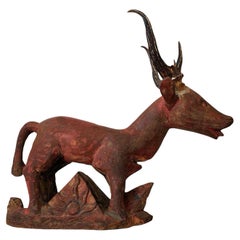
Antique Indonesian Carved Deer Architectural Temple Sculpture
Located in Forney, TX
A rare and incredible Indonesian hand carved and painted red deer architectural salvaged temple ornament.
Dating to the 19th century or earlier, hand-...
Category
Antique 19th Century Southeast Asian Folk Art Sculptures and Carvings
Materials
Wood, Paint
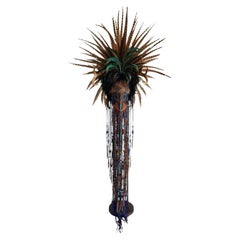
Signed Monumental Folk Art Rouge Taxidermy Headdress Mask
Located in Forney, TX
A magnificent American folk art headdress mask by P.J. Stover, signed, titled "Visions", circa 2008. Remarkably executed, the eclectic, sculptural mixed media wall hanging display is...
Category
Early 2000s American Native American Masks
Materials
Antler, Fur, Leather, Beads, Feathers
You May Also Like
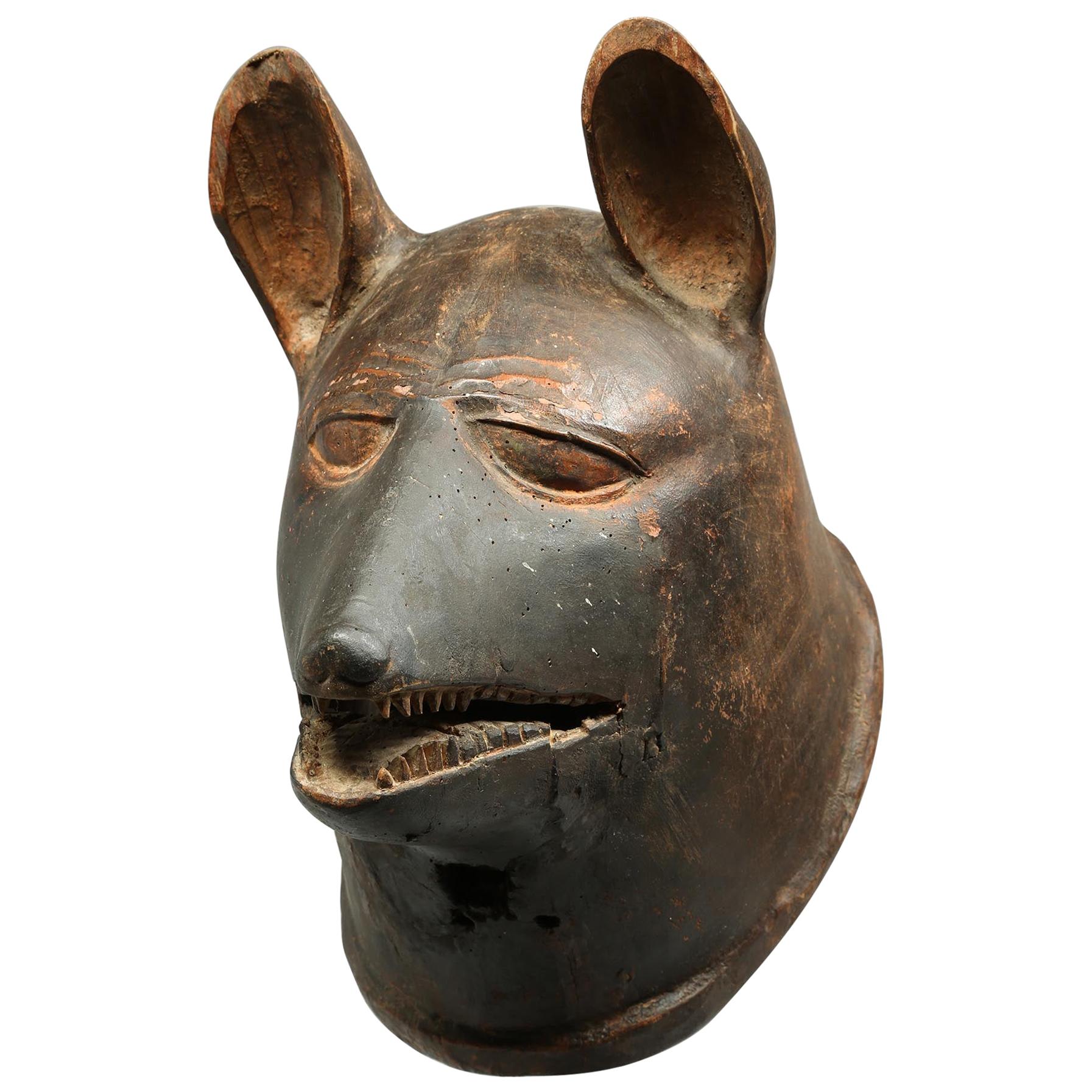
Striking Makonde Animal Helmet Mask, Dog or Hyena, Tanzania, Early 20th C.
Located in Point Richmond, CA
Striking Makonde animal helmet mask, dog or hyena, Tanzania. Early 20th century with dark patina from traditional tribal use, wear inside from being used. Finely carved features, wit...
Category
Early 20th Century Tanzanian Tribal Sculptures and Carvings
Materials
Wood

$1,400 Sale Price
20% Off
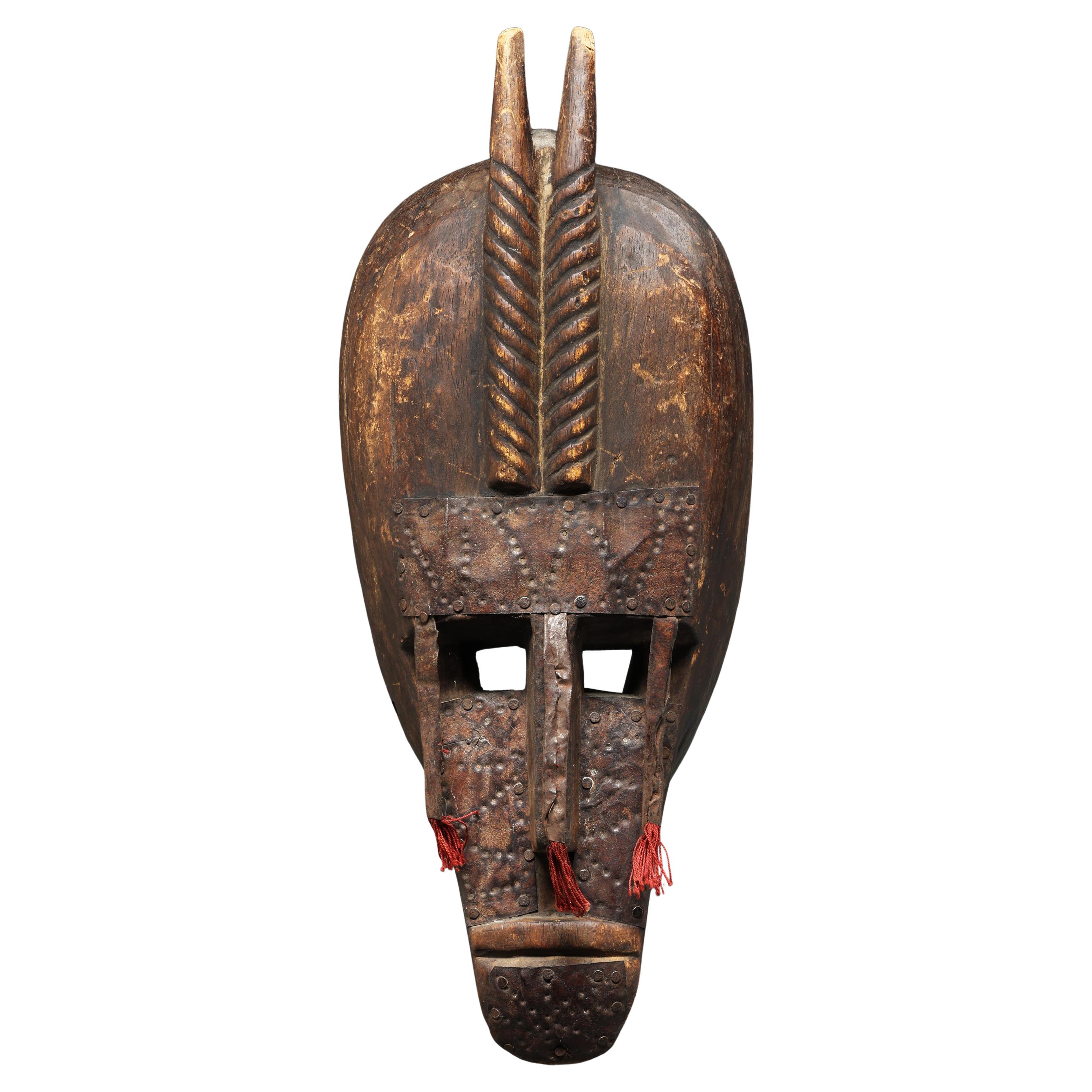
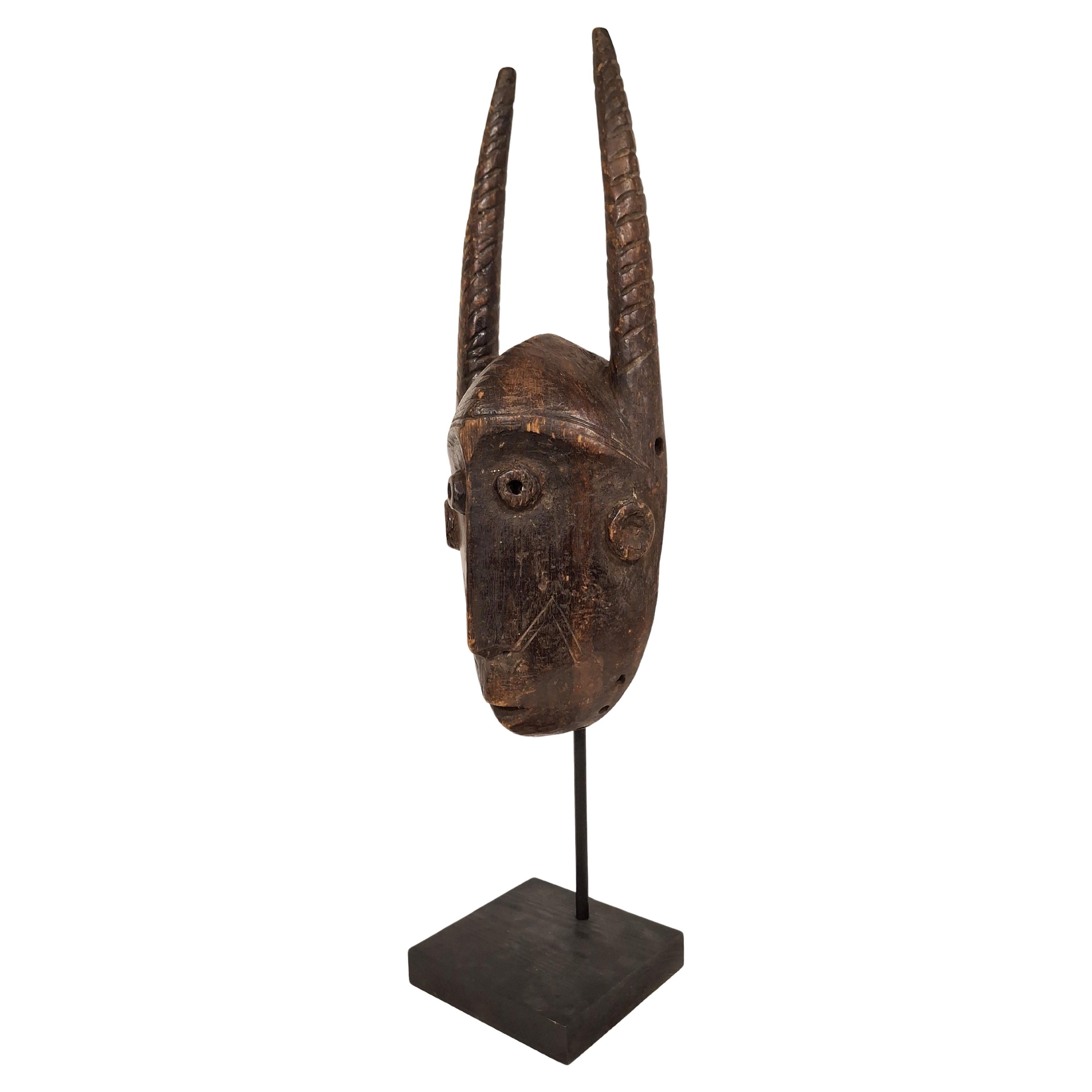
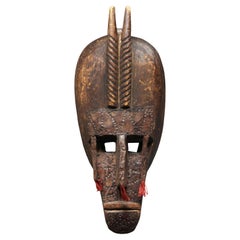
Strong Marka Antelope Human Mask Wood with Metal, Mali Africa
Located in Point Richmond, CA
Strong Marka antelope - human wood mask with metal, Mali Africa. Large square open eyes, long nose with horizontal lips, three projecting brass metal braids ending with feathered cl...
Category
Mid-20th Century Malian Tribal Tribal Art
Materials
Wood
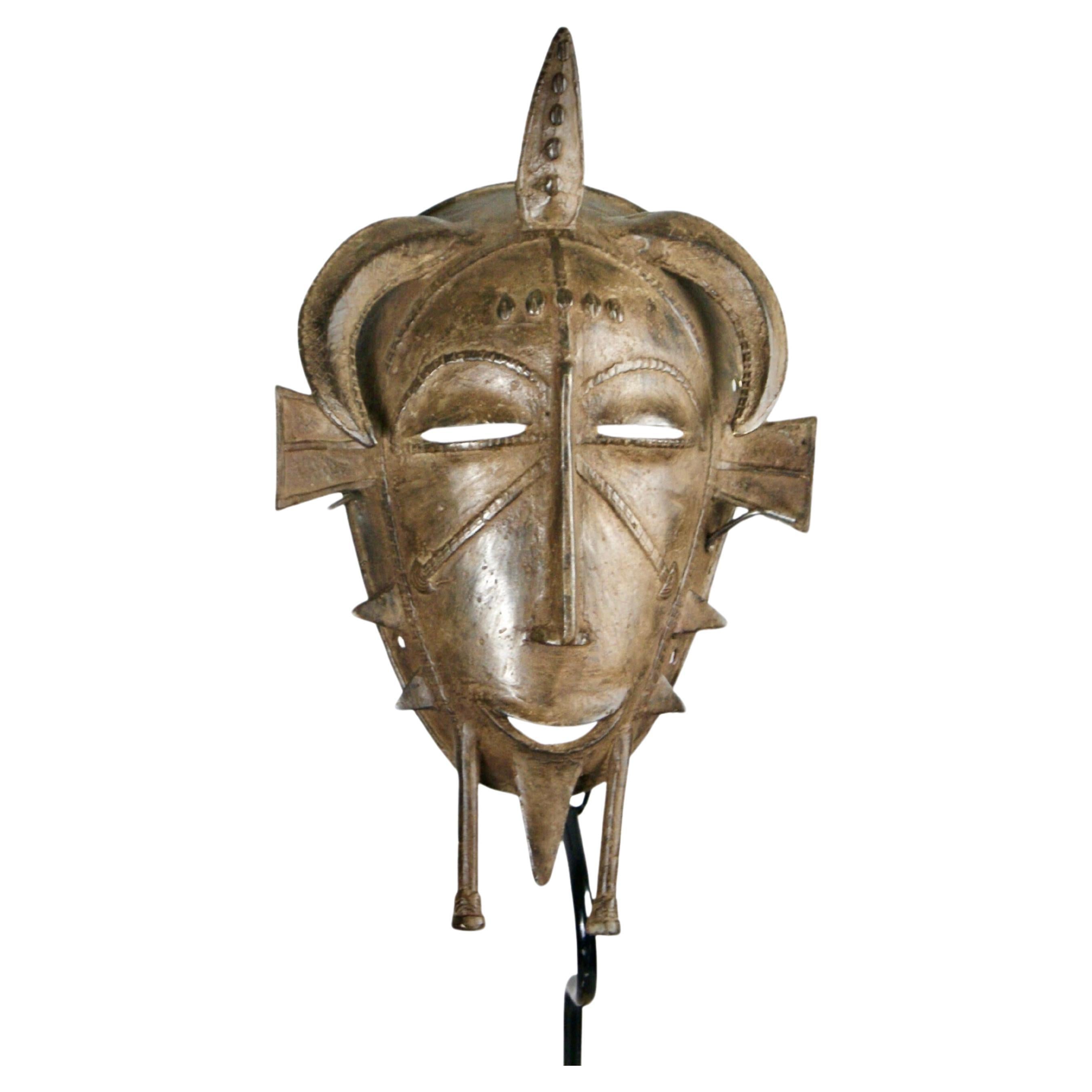
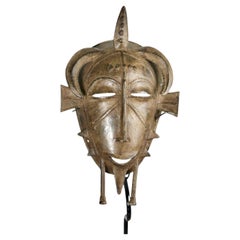
West Africa Senufo Cast Bronze Mask Kpelie, Circa 1950s
Located in Torquay, GB
Ancestral Senufo cast bronze face mask (Kpelie) from Côte d'Ivoire West Africa.
Made using the lost wax technique.
Traditionally, the 'Kpelie' is an ancestral mask worn during funeral rites, initiation ceremonies, weddings and births.
The function of the mask is determined by the crest at the top of it's head and the subtle scarification markings it carries.
The female mask will normally have a plug on it's mouth with the male masks having an open mouth and longer protruding jaw.
It is believed that the mask itself embodies the spirit of the dead, hence the name 'Dead Face'
The delicate attributes of this mask is a fine example of the excellent artistry of the Senufos.
This is a male Senufo Mask...
Category
Mid-20th Century Ivorian Tribal Masks
Materials
Metal, Bronze
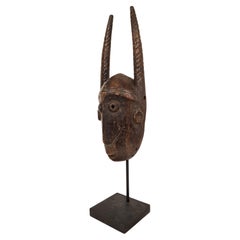
African Katanda Mask – Lega Tribe, DR Congo – Mid 20th Century
Located in Ljubljana, SI
Bring a piece of African heritage into your space with this authentic vintage Katanda mask from the Lega people of DR Congo. Hand-carved in the mid-20th century, this tribal mask is ...
Category
Vintage 1950s Congolese Tribal Masks
Materials
Hardwood
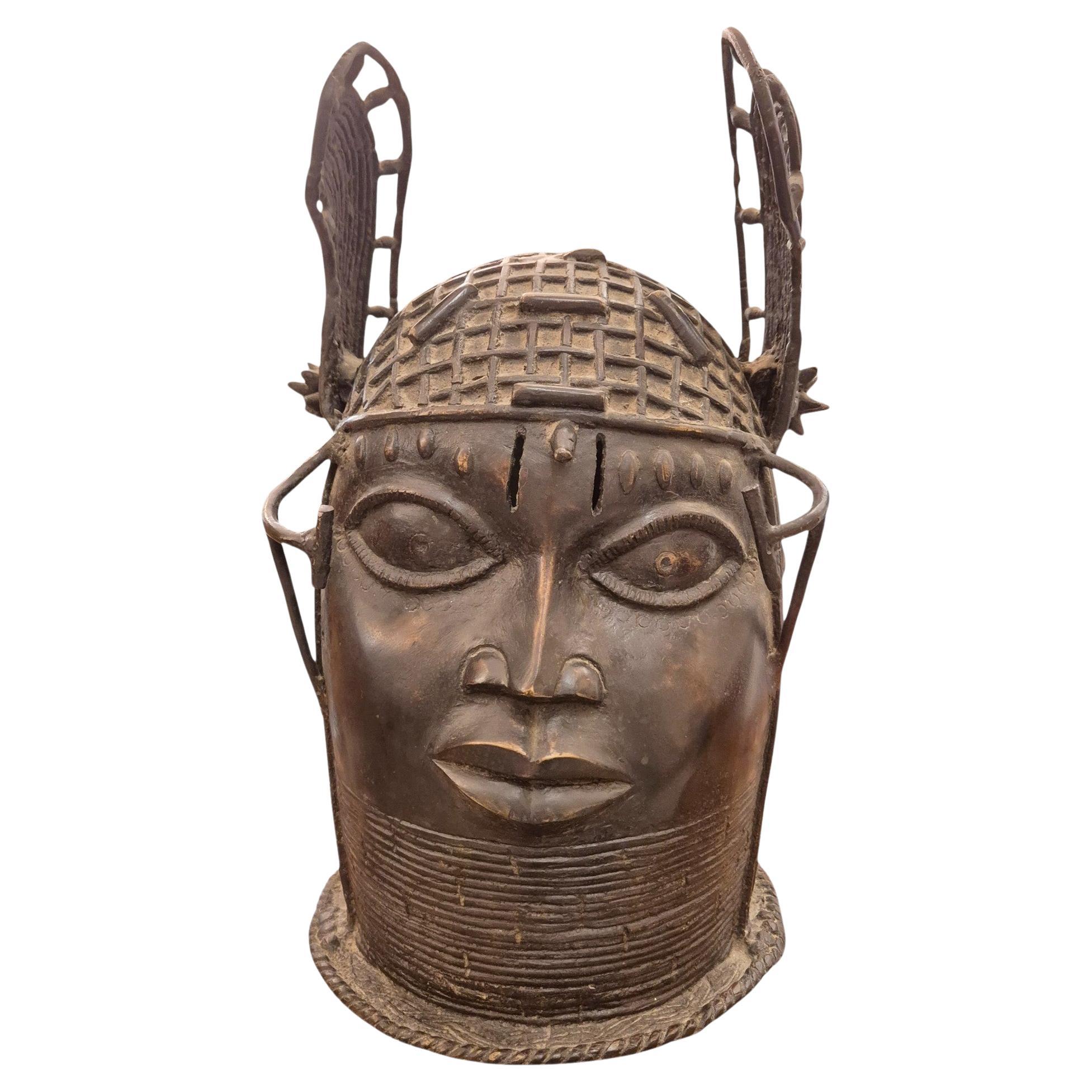
Mid-20th Century Ife-Style Bronze Royal Head, Benin
Located in NICE, FR
This rare and unique Ife-style bronze head, dating from the mid-20th century, draws inspiration from the great sculptural traditions of West Africa’s royal arts. Echoing the prestigious effigies of the kingdoms of Ife and Benin, these works embody the symbolic language associated with sovereign authority, lineage, and ancestral commemoration.
Crafted using the refined lost-wax casting technique, it demonstrates remarkable precision and mastery—harmonious proportions, finely worked surfaces, and a dignified presence. The style evokes the renowned Ife heads...
Category
Vintage 1940s Beninese Tribal Tribal Art
Materials
Bronze
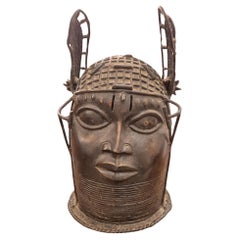
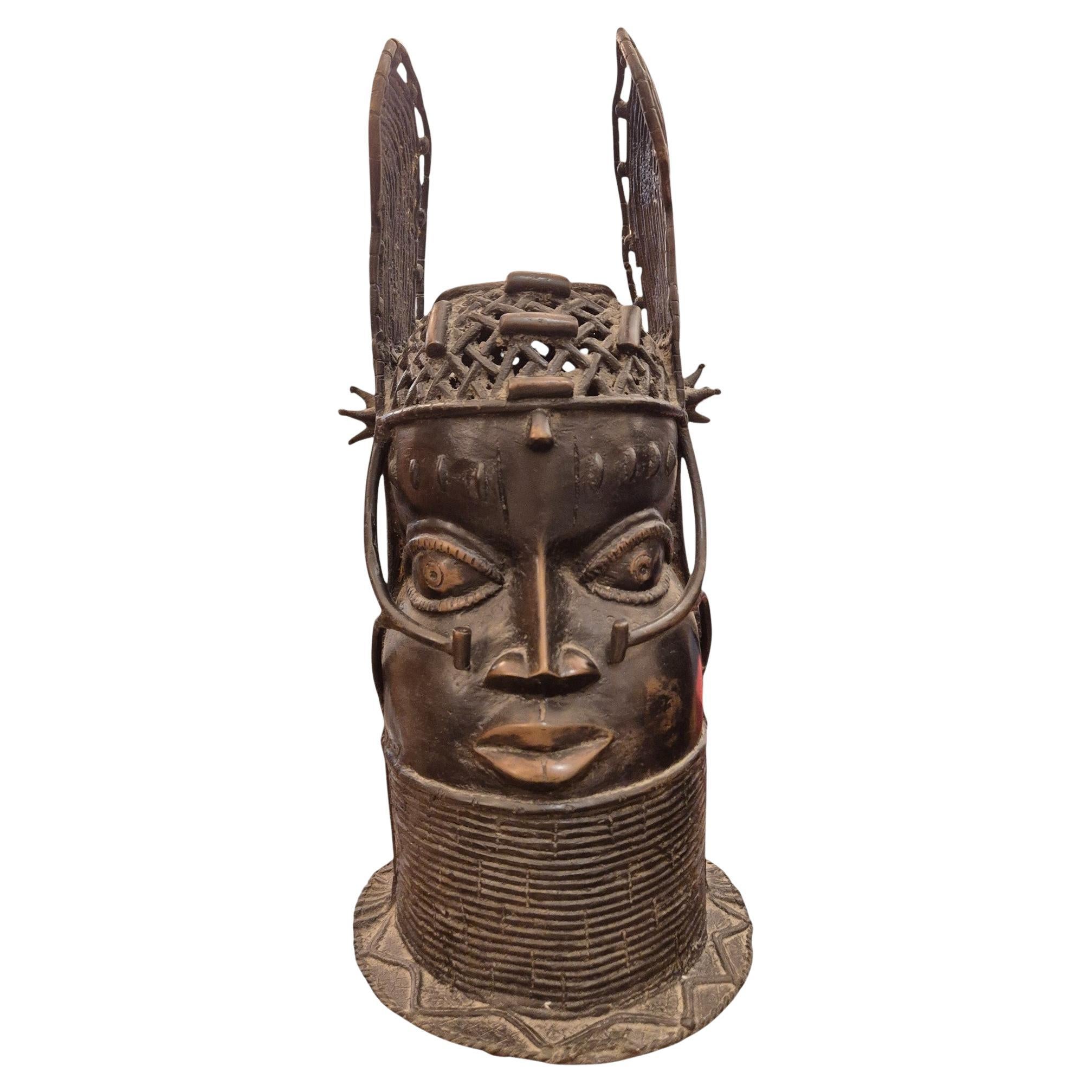
Mid-20th Century Ife-Style Bronze Royal Head, Benin
Located in NICE, FR
This rare and unique Ife-style bronze head, dating from the mid-20th century, draws inspiration from the great sculptural traditions of West Africa’s royal arts. Echoing the prestigious effigies of the kingdoms of Ife and Benin, these works embody the symbolic language associated with sovereign authority, lineage, and ancestral commemoration.
Crafted using the refined lost-wax casting technique, it demonstrates remarkable precision and mastery—harmonious proportions, finely worked surfaces, and a dignified presence. The style evokes the renowned Ife heads...
Category
Vintage 1940s Beninese Tribal Tribal Art
Materials
Bronze