Items Similar to Carved Twin figure Ibeji Yoruba People, Nigeria
Want more images or videos?
Request additional images or videos from the seller
1 of 9
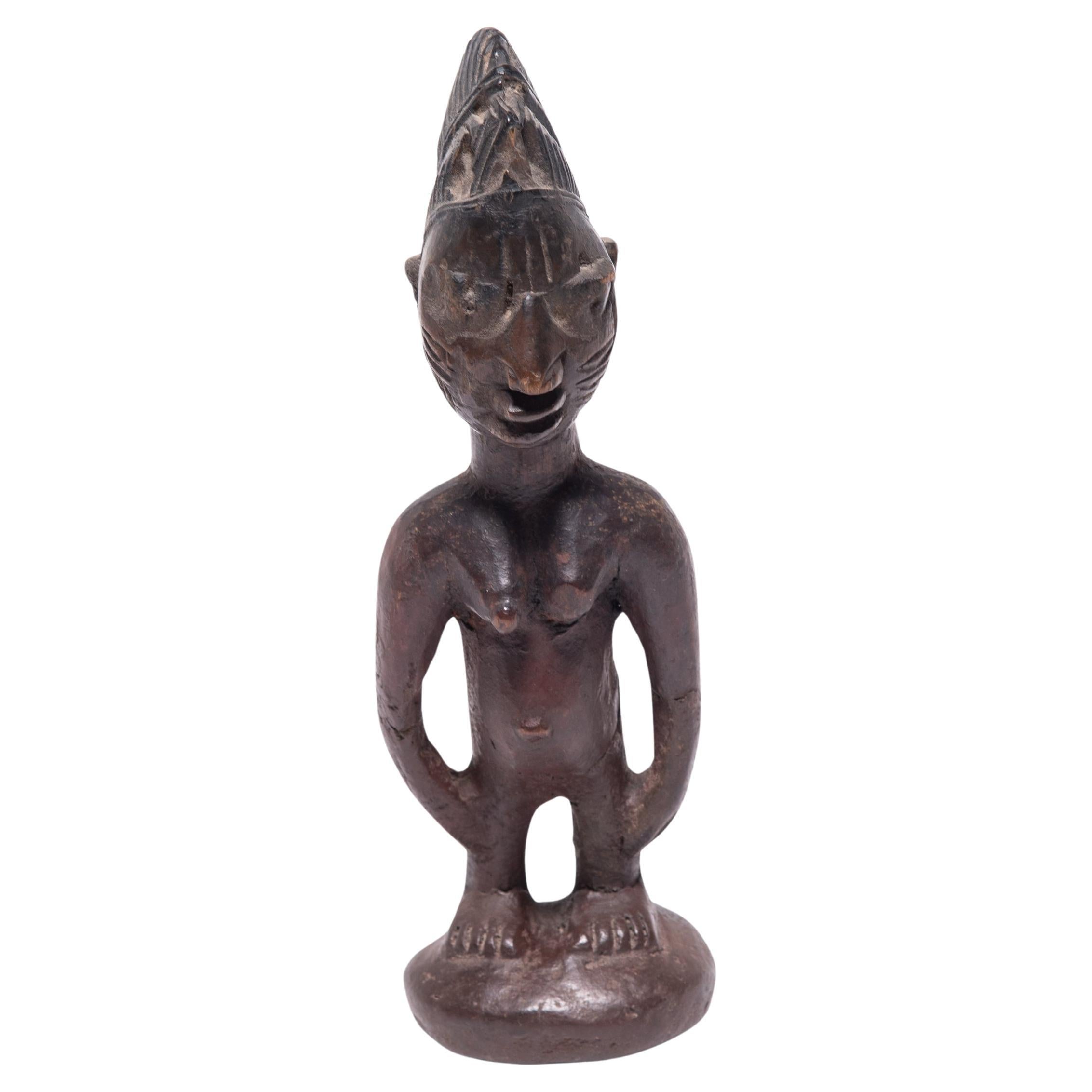
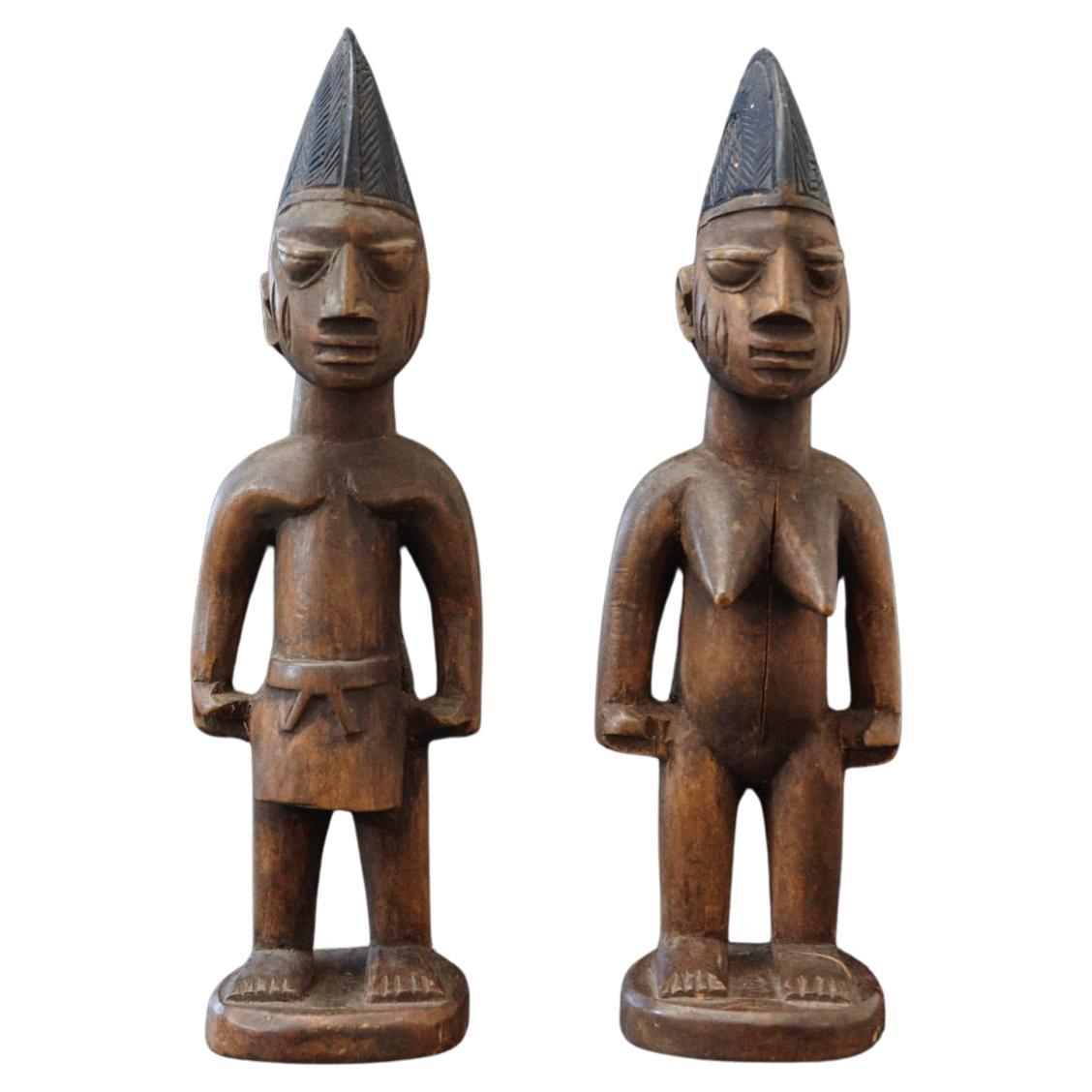
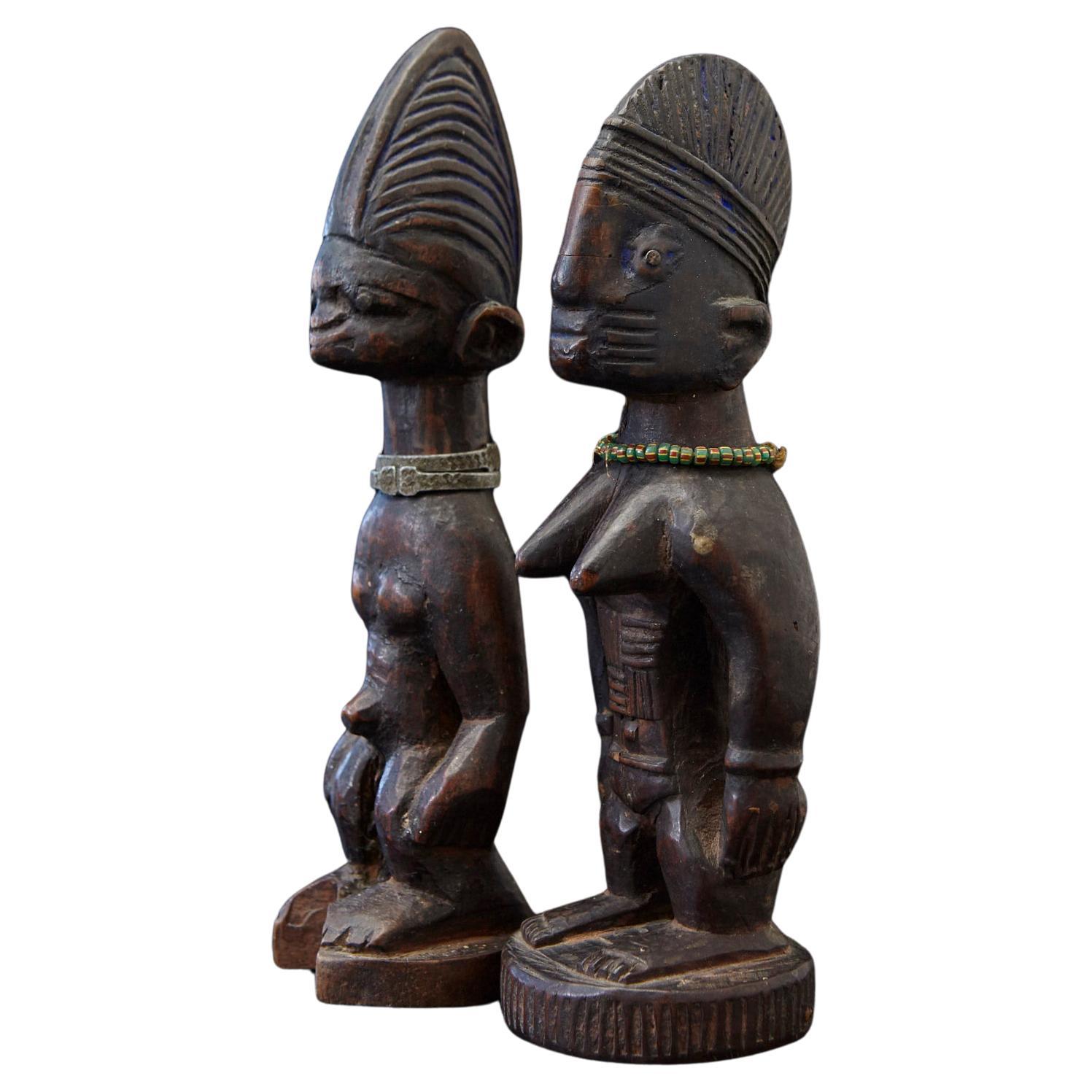
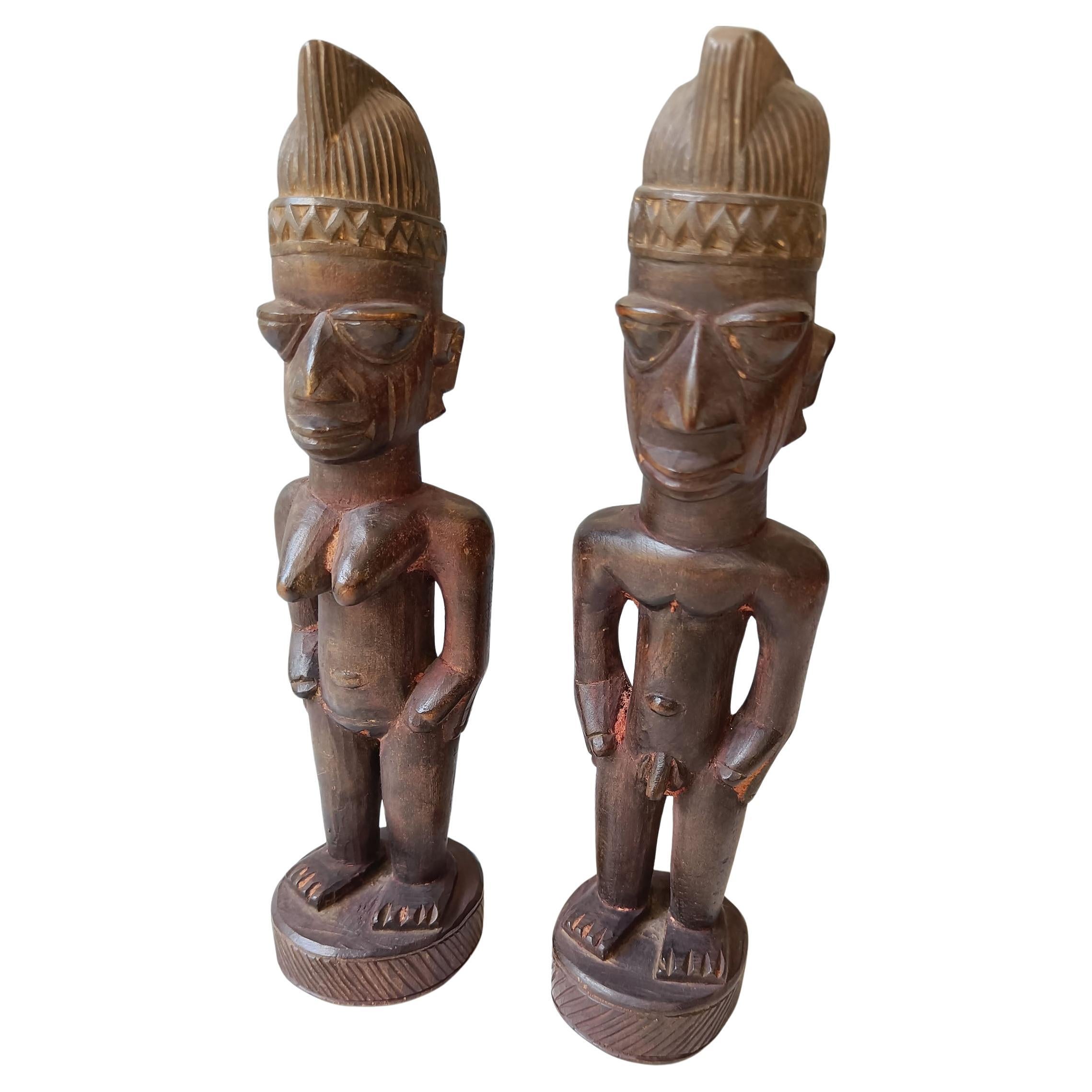
Carved Twin figure Ibeji Yoruba People, Nigeria
$5,023.45
£3,730.19
€4,200
CA$6,901.47
A$7,503.29
CHF 3,978.25
MX$89,945.41
NOK 50,561.55
SEK 46,321.25
DKK 32,017.47
About the Item
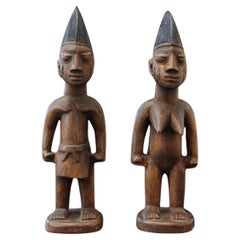
A finely carved significant Yoruba Male Ibeji figure with a tall headdress, expressive eyes, original bead belt and heavy wear and polish from native use. Areas of encrusted camwood powder between arms and around feet. Though the cause of the high rate of twin births among Yoruba women has not been established, the cultural grieving process is well documented. It may be observed in the carving of a figure known as Ere Ibeji, representing the lost child and serving as a ritual point of contact with the deceased's soul. The carving of the Ere Ibeji is commissioned under the guidance of an Ifa diviner, a Babalawo, whom the parents consult in selecting the particular artist who will do the work. The sculpture itself represents a deceased infant but is carved with features and attributes of an adult. The sculptural features of genitalia, pubic hair, wide hips, developed breasts, gender-specific facial scarification and mature coiffures exude erotic sexuality, uncommon for infants. The completed ibeji figure is carved as an adult rather than as the deceased infant, in a mythological form that depicts the concentrated calm of a Yoruba artist. When the carving of the Ere Ibeji is completed, the artist is given a feast and payment as determined by the Orishas.
Once the figure is brought to the family dwelling, it is placed on a shrine dedicated to Elegba, hoping that the Orisha or soul, split into two parts when the twins were born, will now again reside in the figure that represents the dead twin. The sculpted figure is treated and cared for as if it were alive. It is rubbed in sacramental oil, washed, fed, clothed, sung to and prayed to. It is kept standing during the day and is laid down at night.
Often it will be dressed in the same clothing as the living twin or be decorated in a beaded vest or shown with raised sandals, indicating possible royal connections. They watch the figure as if it was their child; they feed and wash it. It will be constantly rubbed with indigo and redwood powder. The responsibility of caring for the Ibeji is borne by the mother and female family members of subsequent generations. The sculpture is expected to avert evil from the household, strengthen the manifestations of family love, stare down death, illuminate the pathway through the valley of immortality, and bring good fortune to all who treat it with respect and offer it tokens of affection.
- Dimensions:Height: 26 in (66.04 cm)Width: 9 in (22.86 cm)Depth: 8 in (20.32 cm)
- Materials and Techniques:
- Place of Origin:
- Period:
- Date of Manufacture:1920/1930
- Condition:Wear consistent with age and use.
- Seller Location:Leuven , BE
- Reference Number:Seller: 2911stDibs: LU3301133886752
About the Seller
5.0
Vetted Professional Seller
Every seller passes strict standards for authenticity and reliability
Established in 2017
1stDibs seller since 2017
174 sales on 1stDibs
Typical response time: 7 hours
- ShippingRetrieving quote...Shipping from: Leuven , Belgium
- Return Policy
More From This Seller
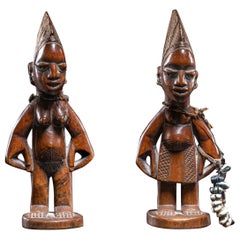
View AllPair of Decorative Figures ScuIptures Ibeji Twin Figures, Yoruba people Nigeria
Located in Leuven , BE
A pair of female ‘ibeji’ twin figures of the Yoruba people. From south-west Nigeria . Both ‘ibeji figures’ wear a high plaited coiffure, coloured blue by m...
Category
20th Century Nigerian Figurative Sculptures
Materials
Wood
Yoruba-Egba couple of Ere Ibeji Twin Figures signed by Akinyode, Yoruba People
Located in Leuven , BE
Yoruba Egba, couple of Ere Ibeji Twin Figures signed by Akinyode ,Yoruba People, Nigeria Abeokuta
Provenance
Monique Lancée (Maastricht '80)
Category
Early 20th Century Nigerian Figurative Sculptures
Materials
Wood
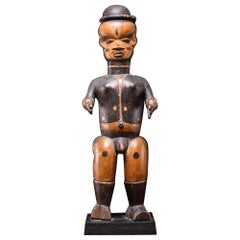
Ibibio Anthropomorphic Standing Male Janus Figure, Nigeria
Located in Leuven , BE
This elaborate Janus statue is a rare example of an Ibibio free-standing figure to recall a well-defined ancestor in what seems a European outfit .The Ibibios lend supernatural power...
Category
20th Century Congolese Tribal Art
Materials
Wood
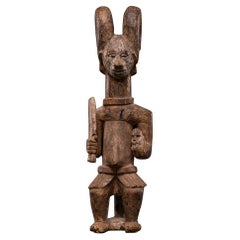
Ibo hardwood Ikenga Altar Statue Ibo People Nigeria
Located in Leuven , BE
Ibo hardwood Ikenga Altar Statue documented Van Lier provenance,Ibo People, Nigeria.
before 1959 Kunsthandel Van Lier (documented)-1959 Volkskundig museu...
Category
Early 20th Century Nigerian Figurative Sculptures
Materials
Wood
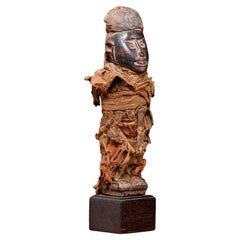
Yombe Power Figure Completely Covered with Original Fabrics, Yombe People, DRC.
Located in Leuven , BE
The statue is standing on a rectangular base, the body covered with bundles of knotted cloth from feet to chin, the rounded, ovoid head with tight mouth baring teeth and a slender no...
Category
20th Century Congolese Sculptures and Carvings
Materials
Wood
Jukun Commemorative Royal Ancestor Figure, Jukun People, Northeastern Nigeria.
Located in Leuven , BE
Jukun Commemorative Royal Ancestor Figure, Jukun People, Northeastern Nigeria.
Provenance
Martial bronsin
2009 Native
2012 - Martin Lagrain
AHDRC ao-0096159-001,002,003
The figure is depicted standing, bearded, with a tribal skull...
Category
Early 20th Century Nigerian Figurative Sculptures
Materials
Wood
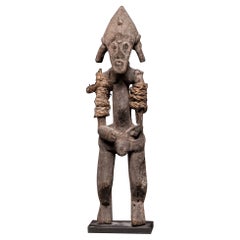
You May Also Like
Yoruba Ibeji Twin Figure
By Yoruba People
Located in Chicago, IL
With one of the highest rates of twin births in the world, Yoruba cultures place special social and religious significance on twins, referred to as "emi alagbara" or "powerful spirit...
Category
Mid-20th Century Nigerian Tribal Tribal Art
Materials
Wood
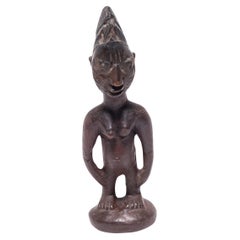
Yoruba Ibeji Twin Figures – Igbuke Workshop Oyo Nigeria African Tribal Art
Located in London, GB
African tribal art.
Fine old male and female pair of Yoruba Ibeji Figures from the Igbuke carving workshop in Oyo.
Igbuke was a known carver of Ibeji figures and this style is attri...
Category
Early 20th Century Nigerian Tribal Art
Materials
Hardwood
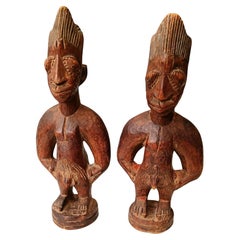
Fine Yoruba Ibeji Female Pair African Tribal Art
Located in London, GB
Good of female Yoruba Ibeji Figures
Finely carved in dense wood with linear decoration to the body
Nigeria Period Early 20th century
Size: 27 and 25 cm Condition: Good
Fine...
Category
Early 20th Century Nigerian Tribal Art
Materials
Hardwood
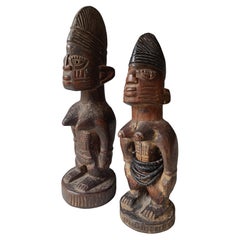
Ere Ibeji Pair of Commemorative Figures, Abeokuta, Yoruba People Nigeria, 20th C
By Yoruba People
Located in Aramits, Nouvelle-Aquitaine
Yoruba people have one of the highest incidents of twin births in the world. As a result, twin children are regarded as extraordinary, divine beings protected by Sango, the deity of ...
Category
Mid-20th Century Nigerian Tribal Tribal Art
Materials
Wood
Ere Ibeji Pair of Commemorative Figures, Oyo, Yoruba People Nigeria, late 19th C
By Yoruba People
Located in Aramits, Nouvelle-Aquitaine
Yoruba people have one of the highest incidents of twin births in the world. As a result, twin children are regarded as extraordinary, divine beings protected by Sango, the deity of ...
Category
Antique 1890s Nigerian Tribal Tribal Art
Materials
Wood
Fine Yoruba Ibeji Pair Ilorrin African Tribal Art
Located in London, GB
A pair of Ibeji figures from lIorin region Nigeria
A male and female pair with purple brown patination and encrusted with cam wood powder
Fine carvings from early 20th century
Siz...
Category
Early 20th Century Nigerian Tribal Art
Materials
Hardwood