Omani Tribal Art
to
1
1
1
1
1
1
1
1
23
788
645
319
168
1
1
1
Place of Origin: Omani
Oman, Silver
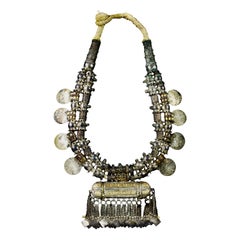
Gold Necklace with Amulet Box, 19th Century
Located in PARIS, FR
Stunning and rare Omani tribal necklace in gold and silver featuring eight Burgau thalers dated 1780 and a large amulet box (Hirz) also in gold and silver. 19th century.
Very good condition. Preserved and professionally framed.
Dimensions of the necklace: 52 x 30 x 3
Dimensions of the frame: 70 x 47 x 5
Secure shipping.
This fine Omani necklace of silver and gold comprises two strands of spiky, seed pod-like silver beads; gold-wrapped beads; eight silver Maria Theresa thaler coins; and a large silver and gold amulet box, with multiple chain tassels each of which finishes with a square-shaped pendant cut from sheet silver.
The cigar-shaped amulet box called hirz would have contained some Koranic verse or religious text.
Such a spectacular display of wealth would only have been worn at times of important festivities such as marriage celebrations.
Maria Theresa thalers were made in Austria since the reign of Empress Maria Theresa of the Austro-Hungarian Empire. The Empress died in 1780 and since that time, all thalers that were subsequently struck were minted with that date regardless of the actual year that they were produced. The coins achieved such a level of trust for their silver content (which is 83.3% silver) in the Middle East that neither the design not the date was varied, and so for more than 200 years the coins were used as an international currency among the tribes and the states of the Middle East, in much the same way as the Spanish dollar was used as an international currency at the time elsewhere. The thalers were used to complete most important transactions locally and were also given as dowries. They were also an important source of silver and were melted locally for jewellery.
The coins made their way to the ports of the Red Sea, Egypt and northern Africa from the ports of Genoa, Trieste, Livorno and Marseille. European traders used the coins to buy precious materials from the Gulf and northern Africa which it desired – commodities such as spices, coffee, gum Arabic, indigo, pearls, and tortoise shell.
The importance and the beauty of the coins saw them incorporated into local jewellery most particularly in Oman and Yemen.
References
Al-Jadir, S., Arab & Islamic Silver, Stacey International, 1981.
Harrigan, P., ‘Tales of a Thaler’, Saudi Aramco World, January/February 2003.
Hawley, R., Omani Silver, Longman, 1978.
Hawley, R., Silver: The Traditional Art of Oman, Stacey International, 2000.
Rajab, J.S., Silver Jewellery of Oman, Tareq Rajab Museum, 1998.
Ransom, M., Silver Treasures from the Land of Sheba: Regional Yemeni Jewelry...
Category
19th Century Antique Omani Tribal Art
Materials
Gold, Silver
Related Items
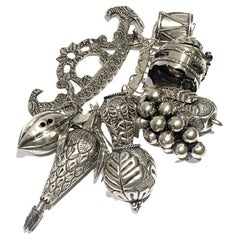
Rare Silver Balangandãs - 20th Century Brazilian Native Hanging Amulet
Located in Rio De Janeiro, BR
Mid 20th century brazilian silver hanging amulet from native culture in Brazil. Known as "Penca de Balangandãs" was used in the ancient times as an amul...
Category
Mid-20th Century Other Omani Tribal Art
Materials
Sterling Silver

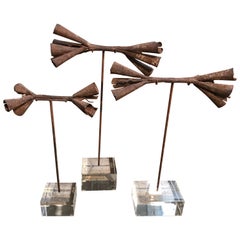
African Currency, 19th Century
Located in Dallas, TX
This set of 3 pieces of African currency is very interesting. Looking like some sort of ancient maraca, these 19th century pieces jingle and noise-make with each step. The dimensions...
Category
19th Century Antique Omani Tribal Art
Materials
Metal
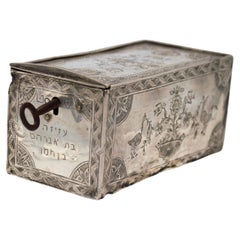
extremely rare Algerian Judaica silver, jewish Dowry box early 19th century
Located in Tel Aviv - Jaffa, IL
Amazing and scarce JUDAICA object, we have here one of the most touching jewish objects we had for a long time, this small silver dowry box was made in Algeria in the early 19th century, it is all covered with symbols of jewish faith and of couples, the sliding lid has 2 flanking birds with hamsa (protective hand) on each side and a flower vase in the middle.
one side shows two flanking lions with a tree in the middle and the other side shows again two big and two small birds with a flower bowl in the middle, front side has a key hole and next to it there is the Hebrew inscription ס״ט״" which says Siman tov or in English "a good sign" it is taken from the wedding blessing, underneath the lock there is another inscription with the name ״עזיזה בת אברהם בן חמו״ which is the name of the bride, her father and her grandfathers name.
the box is full marked a lot of times with the silversmith mark, every side of the box is marked.
this box was probably ordered by the grooms family to hold the jewelry they are giving to the bride as dowry, this type of objects are rare and there are just a few of them on museum collections.
DOWRY (Heb. נְדֻנְיָה), the property a wife brings to her husband at marriage; the Yiddish equivalent, nadn, is from the same root. The custom of nedunyah became clearly defined and institutionalized only in the talmudic period. In biblical times, mohar (מֹהַר), whereby the groom bought his wife from her father (Gen. 24:53; Ex. 22:15–16; Hos. 3:2), was the accepted practice. It was then customary that the groom give the bride gifts, and that she bring certain property to her husband's home upon marriage: slaves, cattle, real estate, etc. (cf. Gen. 24:59–61; 29; Judg. 1:14ff.; I Kings 9:16). Evidence of the custom of nedunyah is to be found in Tobit (7:14; 8:21) and in the Assuan papyri (Cowley, Aramaic, nos. 15, 18). Gradually, mohar was superseded by the ketubbah custom according to which the husband merely assumed the responsibility of compensation to his wife in case he divorced her: he had to pay her 200 zuzim if she had been a virgin at the time of marriage, and 100 zuzim if a widow or divorcée (see *Ketubbah).
By talmudic times, the institution of nedunyah was prevalent; the father gave a dowry to the bride since the daughter was excluded from paternal inheritance. Fifty zuzim (equivalent to the worth of 180 grams of silver) was the minimum amount a father was obliged to give to his daughter (Ket. 6:5). Parents usually gave much more, according to their social standing. Community funds provided the dowry for an orphan or a very poor girl (ibid.; cf. Sh. Ar., YD 251:8). In case of her father's death, the brothers of a minor girl were obliged to give her the minimum dowry, and the court estimated how much her father would have given her above the minimum dowry. The sum was then taken out of the father's estate and given to the daughter upon majority (Ket. 6:6; 68a–69b). In the absence of such an estimate, each daughter was entitled to receive one-tenth of the value of her father's estate in money, or in valuables (Yad, Ishut, 20:4–7; Sh. Ar., EH 113:4). If the father was unable or unwilling to pay the promised dowry at the betrothal ceremony, the groom could refuse to marry his bride (Ket. 13:5; Ket. 108b–109a). Insistence on exact payment of the promised dowry, however, was frowned upon by later rabbinic authorities (Rema to Sh. Ar., EH 2:1). In certain communities it was customary for the groom's father to make a dowry contribution equal to that of the bride's father (Ket. 102b). The dowry, whether given in real estate, slaves, money, or chattel was recorded in the marriage contract (the ketubbah) and in some instances one-third or one-fifth of the actual value of the dowry was added to the sum mentioned in the ketubbah. Based upon a decree enacted by *Simeon b. Shetah (first century C.E.), the Talmud ruled that the husband and his entire property were liable for compensation as stipulated in the ketubbah, either in case he died (when she collected the sum specified in the ketubbah from the heirs) or in case he divorced his wife (Ket. 82b). For the status of the dowry and the husband's rights and obligations, see below. The rabbinic enactments (Takkanot Shum) by R. Jacob *Tam and by the rabbinic synod of the communities of Speyer, Worms, and Mainz (Germany) stipulated that if a woman died...
Category
Mid-19th Century Antique Omani Tribal Art
Materials
Silver
$15,000
H 2.8 in W 2.8 in D 5.6 in
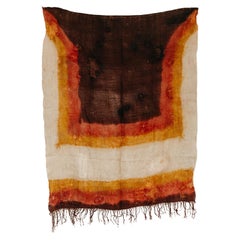
19th Century Berber Scarf
Located in Brecht, BE
A very rare find this mid 19th century unique berber scarf, sublime natural dye colors.
Category
Mid-19th Century Antique Omani Tribal Art
Materials
Wool
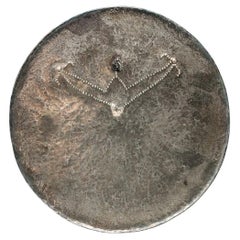
Late 19th to Early 20th Century Silver Pectoral Disc, Timor Island, Indonesia
Located in Point Richmond, CA
Late 19th to early 20th century pectoral disc or breast plate, Tetum people, Timor Island, Indonesia
These enigmatic hand hammered silver disks were worn as status symbols by presti...
Category
Late 19th Century Tribal Antique Omani Tribal Art
Materials
Silver
$1,200
H 0.25 in Dm 7 in
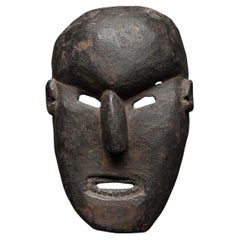
Nepal Wood Dance Mask with Open Mouth Teeth, Late 19th Century
Located in Point Richmond, CA
Oval dance mask from Nepal with powerful expression, open eyes and oval mouth with finely carved teeth, nicely carved ears. Heavy black encrusted patina inside and out from tradition...
Category
Late 19th Century Tribal Antique Omani Tribal Art
Materials
Wood
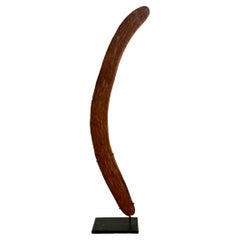
Australian boomerang, 19th century
Located in
S-HERTOGENBOSCH, NL
A 19th century boomerang from Australia.
Good patina and presented on a stand.
Category
Late 19th Century Tribal Antique Omani Tribal Art
Materials
Wood
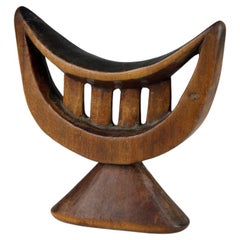
19th Century Ethiopian Headrest
Located in London, GB
This late nineteenth-century headrest, from the Oromo culture in Ethiopia, displays a rare form. Above a triangular-shaped base, the curved, crescent-shaped neck rest features four c...
Category
Late 19th Century Tribal Antique Omani Tribal Art
Materials
Wood
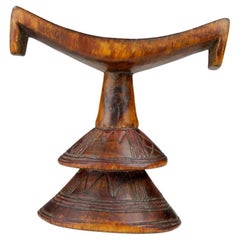
19th Century Gurage Headrest With Double-Tiered Structure, Ethiopia
Located in London, GB
Dating to the late 19th century, this is a fine and rarer form of Ethiopian headrest with a double-tiered, cone-shaped base.
Decorating the base ar...
Category
Late 19th Century Tribal Antique Omani Tribal Art
Materials
Wood
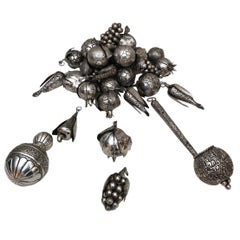
31 Brazilian Silver Amulets
Located in New York, NY
These 31 Brazilian amulets, or balangada, were hammered from sheets of silver in the 19th century to form pomegranates, sugar apples, guava, and other...
Category
Mid-19th Century Folk Art Antique Omani Tribal Art
Materials
Silver
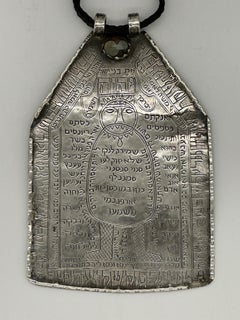
Important 18th century Persian Jewish silver Amulet for mother and newborn
Located in Tel Aviv - Jaffa, IL
Mysterious Amazing, 18th century silver talismanic amulet, Amulet for mother and Newborn with image of Lilith in the center made by Jews in Persia, the top of the Amulet has an amazi...
Category
1790s Antique Omani Tribal Art
Materials
Agate, Silver
$8,000
H 5.2 in W 3.4 in D 0.5 in
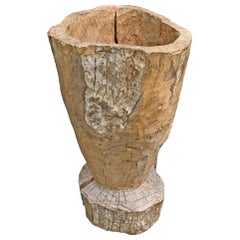
Large 19th Century Wooden Mortar
Located in Chicago, IL
A large 19th century Central American wooden mortar with a beautifully hand-hewn texture and a well worn finish. Mortars like these were used to crush grains, spices, herbs, and othe...
Category
19th Century Tribal Antique Omani Tribal Art
Materials
Wood
Previously Available Items
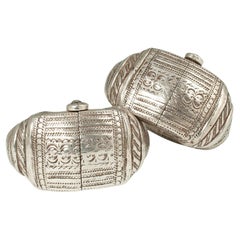
Late 19th to Early 20th Century Silver Anklets, Oman
Located in Point Richmond, CA
Late 19th to early 20th century silver Anklets, Oman
These silver anklets were fashioned in India for the Omani market. Made of repousse silver over a wood frame, they open with a central screw pin. This pair is in wonderful worn condition - an important addition to any ethnographic jewelry...
Category
Late 19th Century Tribal Antique Omani Tribal Art
Materials
Silver