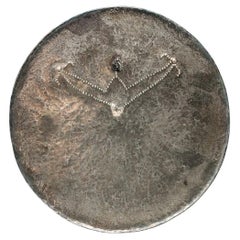
19th Century Tribal Art
to
12
99
90
204
5
1
1
44
204
1,095
34
429
423
72
8
4
20
28
16
31
33
23
17
4
105
58
35
18
17
103
87
66
23
18
204
204
204
4
3
3
2
1
Period: 19th Century
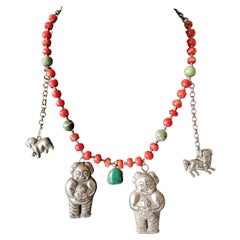
Rare Antique Qing Dynasty Chinese Ethnic Minority silver Coral necklace
Located in London, GB
A beautiful rare Antique Qing Dynasty Chinese Ethnic Minority silver Coral turquoise necklace from Yunnan.
A superb chain necklace with added Taoist charms with turquoise and fine r...
Category
Chinese Antique 19th Century Tribal Art
Materials
Silver
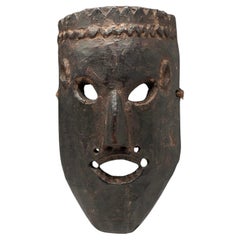
Late 19th-Early 20th Century Tribal Mask, West Nepal
Located in Point Richmond, CA
Late 19th-early 20th century Tribal mask, West Nepal
A mask from West Nepal with slanted almond shaped eyes, very small ears and an oval mouth showing carved upper and lower teeth o...
Category
Nepalese Tribal Antique 19th Century Tribal Art
Materials
Wood
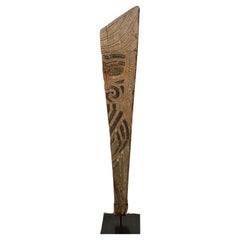
Antique Māori Carved Hardwood Architectural Panel – Tiki Oceanic Polynesian
Located in London, GB
Antique Māori Carved Hardwood Architectural Panel – Tiki Design
A Rare and finely carved antique Māori hardwood architectural element, likely originati...
Category
New Zealand Antique 19th Century Tribal Art
Materials
Hardwood
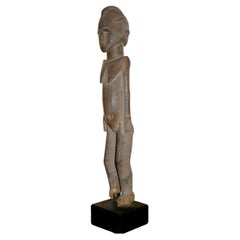
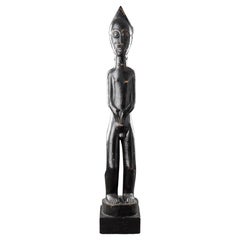
A Lobi sculpture
Located in grand Lancy, CH
A Lobi sculpture with nice patina and nice style
Category
Burkinabe Antique 19th Century Tribal Art
Materials
Wood

$3,800
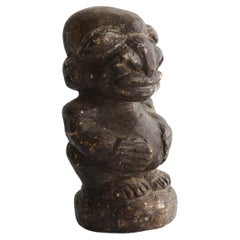
Nomoli - Carved Stone Figurine, Kissi People, Sierra Leone, 19th Century
Located in Aramits, Nouvelle-Aquitaine
A Nomoli is a carved stone figurine native to Sierra Leone and Liberia. They are usually made of soapstone, limestone, or granite.
The carving depicts a man holding his belly with a...
Category
Sierra Leonean Tribal Antique 19th Century Tribal Art
Materials
Stone, Soapstone
Late 19th Century Ceremonial Wood and Coconut Ladle, Bali Indonesia
Located in Point Richmond, CA
Late 19th Century Ceremonial Wood and Coconut Ladle, Bali Indonesia
This is a rare coconut shell holy water dipper from the Bali Aga people of the Kintamani region of Bali, Indonesi...
Category
Indonesian Tribal Antique 19th Century Tribal Art
Materials
Wood, Coconut

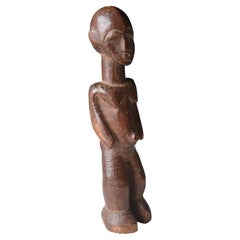
Genuine carved wooden statue from the Lobi tribe, Ghana Burkina Faso, early 1900
By Lobi People
Located in Bilzen, BE
Finely carved large geometric figure from the Lobi tribe, Ghana and Burkina Faso, dating from the early 20th century. I Carved from hard wood with fine small adze marks creating a v...
Category
Ghanaian Tribal Antique 19th Century Tribal Art
Materials
Wood
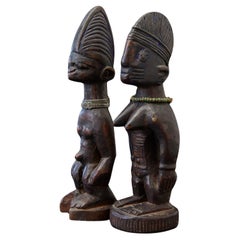
Ere Ibeji Pair of Commemorative Figures, Oyo, Yoruba People Nigeria, late 19th C
Located in Aramits, Nouvelle-Aquitaine
Yoruba people have one of the highest incidents of twin births in the world. As a result, twin children are regarded as extraordinary, divine beings protected by Sango, the deity of ...
Category
Nigerian Tribal Antique 19th Century Tribal Art
Materials
Wood
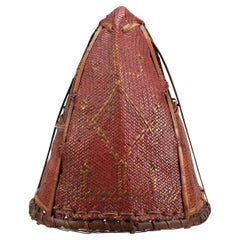
Naga Warrior
s Ceremonial Headdress, 20th Century
Located in Point Richmond, CA
Man’s Ceremonial Headdress
Naga people, Northeast India
Probably 19th century
Cane, yellow orchard fiber, dyed goat hair plume
A handwritten...
Category
Indian Tribal Antique 19th Century Tribal Art
Materials
Bamboo, Natural Fiber
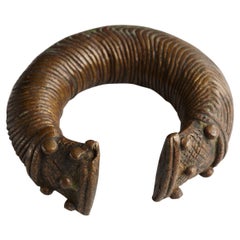
Bronze Currency Bracelet/Manilla, Dogon People, Burkina Faso, 19th Century
Located in Aramits, Nouvelle-Aquitaine
19th-century bronze currency bracelet / Manilla in horseshoe form with fixed opening. Intricate graphical swirl design and tips are shaped with large flat ends with 5 beads on each s...
Category
Burkinabe Tribal Antique 19th Century Tribal Art
Materials
Brass
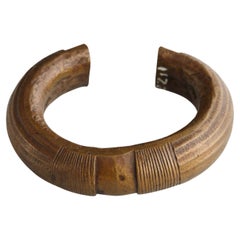
Bronze Currency Bracelet/Manilla, Dogon People, Burkina Faso, 19th c. - No 2
Located in Aramits, Nouvelle-Aquitaine
19th-century bronze currency bracelet / Manilla in horseshoe form with fixed opening. Intricate graphical design with lines and accent points on the top and at both tips. This type o...
Category
Burkinabe Tribal Antique 19th Century Tribal Art
Materials
Brass
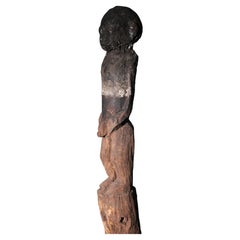
Wooden sacrificial pole figure Fon
Located in Haaltert, BE
Wooden pole figure, dark sacrificial patina of mainly oil. Kudio type of Bochio, also called “guardians” are thin pole-like figures. They function as a sort of “lightning conductor” ...
Category
Beninese Tribal Antique 19th Century Tribal Art
Materials
Wood
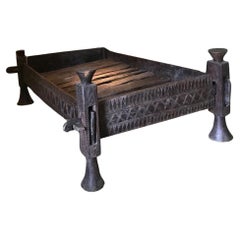
19th Century Ethiopian Royal Bed (Former Tekalegn Besapa Collection)
Located in London, GB
This amazing nineteenth-century Ethiopian bed, personally collected in Ethiopia in the 1990's, formally belonged to the collection of Tekalegn Besapa, in Addis Ababa. This type of be...
Category
Ethiopian Tribal Antique 19th Century Tribal Art
Materials
Wood
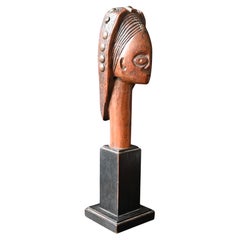
19th-20th Century Ovimbundu Staff Finial, Angola — Provenance Pierre Dartevelle
Located in Bilzen, BE
Description:
A striking carved wooden staff finial from the Ovimbundu people of Angola, dating from the late 19th to early 20th century.
This finely sculpted piece depicts an ideali...
Category
Tribal Antique 19th Century Tribal Art
Materials
Wood
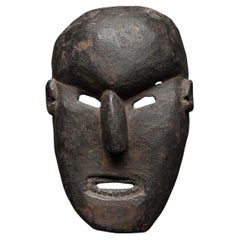
Nepal Wood Dance Mask with Open Mouth Teeth, Late 19th Century
Located in Point Richmond, CA
Oval dance mask from Nepal with powerful expression, open eyes and oval mouth with finely carved teeth, nicely carved ears. Heavy black encrusted patina inside and out from tradition...
Category
Nepalese Tribal Antique 19th Century Tribal Art
Materials
Wood
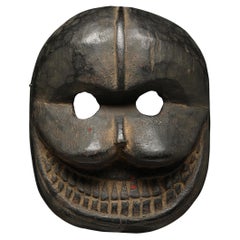
Nepal Citipati Wood Dance Mask with Open Eyes Mouth Teeth, Black Skull Mask
Located in Point Richmond, CA
Oval very dark wood dance mask from Nepal with powerful expression, open eyes and oval mouth with finely carved teeth. Heavy projecting cheek bones. This mask represents the Tibetan...
Category
Nepalese Tribal Antique 19th Century Tribal Art
Materials
Wood
Genuine wooden palmwine cup from the Kuba / Lele tribe DR Congo
By Kuba
Located in Bilzen, BE
A genuine carved wooden palmwine cup from the Kuba / Lele tribe DR Congo.
First half 20th century
Tribal aged using patina
Heigth 21.5 cm
Category
Tribal Antique 19th Century Tribal Art
Materials
Wood
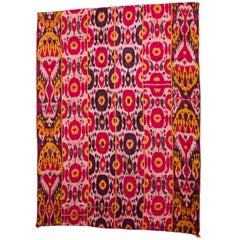
Late 19th Century Silk Ikat Uzbekistan Tribal Weaving
Located in New York, NY
Gorgeous handwoven silk Ikat weaving in rich magenta, gold and purple color, circa late 19th-early 20th century, Uzbekistan, Central Asia, on the ancient...
Category
Uzbek Tribal Antique 19th Century Tribal Art
Materials
Silk
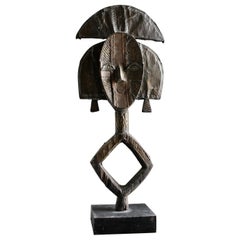
Kota Reliquary Figure Gabon, Christies Provenance
Located in Sharon, CT
Kota Reliquary of classic form. Brass and iron over wood. On an old base, with an old number label. Ex Estate of Willliam Kohler, Christies NY 'Important Tribal Art' Nov 20 1997.
Category
Gabonese Primitive Antique 19th Century Tribal Art
Materials
Brass, Copper, Iron
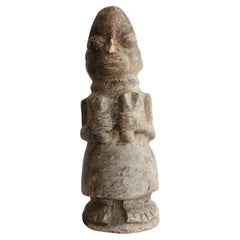
Nomoli - Carved Stone Figurine, Kissi People, Sierra Leone, 19th Century
Located in Aramits, Nouvelle-Aquitaine
A Nomoli is a carved stone figurine native to Sierra Leone and Liberia. They are usually made of soapstone, limestone, or granite.
The carving depicts a woman in a dress and choker,...
Category
Sierra Leonean Tribal Antique 19th Century Tribal Art
Materials
Stone, Soapstone
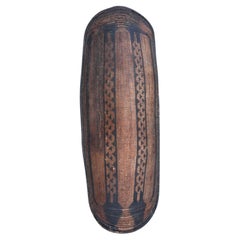
19th century African wicker shield from the Ngombe/Doko tribe, Ubangi area DRC
Located in Bilzen, BE
A rare wicker war shield with a fine woven and dyed natural pigment patern from the Ngombe/Doko tribe from the Ubangi area DR Congo
Late 19th century
The shield is intense used in ba...
Category
Congolese Tribal Antique 19th Century Tribal Art
Materials
Natural Fiber
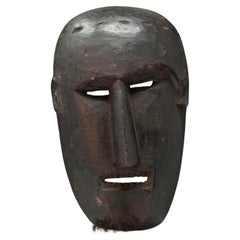
Late 19th-Early 20th Century Tribal Mask, West Nepal
Located in Point Richmond, CA
Late 19th-early 20th century Tribal mask, West Nepal
A mask from West Nepal with a sharp straight nose, squinting eyes and a square mouth showing upper and lower teeth. There are re...
Category
Nepalese Tribal Antique 19th Century Tribal Art
Materials
Wood
Late 19th Century Ceremonial Wood and Coconut Ladle, Bali Indonesia
Located in Point Richmond, CA
Late 19th Century Ceremonial Wood and Coconut Ladle, Bali Indonesia
This is a rare coconut shell holy water dipper from the Bali Aga people of the Kintamani region of Bali, Indonesi...
Category
Indonesian Tribal Antique 19th Century Tribal Art
Materials
Wood, Coconut

An Early Group of Four African Figures exhibited in New York, September 1935
Located in London, GB
An Early Group of Four African Figures exhibited in New York, September 1935, the same year as Moma’s groundbreaking African Art Exhibition
Two Baule Figures, a Ewe Figure and a Yor...
Category
Togolese Antique 19th Century Tribal Art
Materials
Wood
African Wooden Cup Kuba/ndengese Kingdom, Dr Congo, Late 19th Century
Located in Bilzen, BE
A palm wine cup from the Kuba Kingdom DR Congo with a beautiful tribal patina of use,
late 19th century
height 13 cm, Cup diameter 10.5 cm
Good condition
Category
Congolese Tribal Antique 19th Century Tribal Art
Materials
Wood
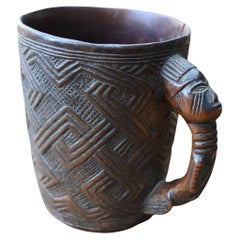
Kuba Anthropomorphic Palm Wine Cup, 19th century - provenance Didier Claes
By Kuba
Located in Bilzen, BE
Democratic Republic of Congo, Late 19th Century
Wood, glass bead (inlay)
Provenance: Didier Claes – Danisc Collection (Ole Christiansen)
A rare and elegant example of a Kuba palm wi...
Category
Congolese Tribal Antique 19th Century Tribal Art
Materials
Wood
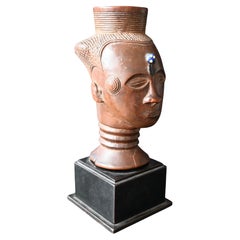
19th Century Aboriginal Australian Stone-Cut Wunda Shield
Located in London, GB
This 19th century finely incised, stone-cut Aboriginal Wunda shield from Australia (Western Desert) exhibits lineal decorations to the front and the rear.
- Ex Private Collection, ...
Category
Australian Tribal Antique 19th Century Tribal Art
Materials
Wood
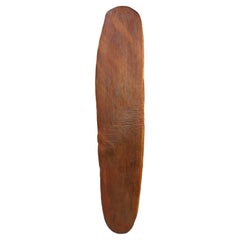
African Tribal Art Fine Zulu Neck Rest Head Rest South Africa
Located in London, GB
A fine Zulu head rest neck rest South Africa
Raised on central pillars with geometric lozenge shaped carving all over.
Measures: 22 x 14 x 5 cm approx.
Period Early 20th century
Ex U...
Category
Zimbabwean Antique 19th Century Tribal Art
Materials
Wood
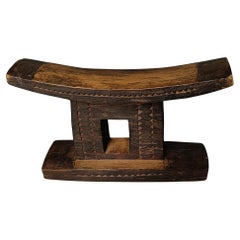
Rare Silk Antique Suzani from and For Private Collection
Located in Alessandria, Piemonte
This is not a simple beautiful embroidered Susani: it's a museum specimen, from private collection.
This ancient piece was embroidered in the surroundings of the ancient central cit...
Category
Turkmen Other Antique 19th Century Tribal Art
Materials
Canvas
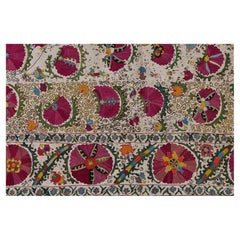
Wooden Make-up Box From The Kuba Tribe, Dr Congo, late 19th century
By Kuba
Located in Bilzen, BE
A very old wooden make-up box Circa: late 19th century
Origin: DR Congo
Very rich tribal aged patina and traces
9.5 x 15.5 cm, height 9 cm
Category
Congolese Tribal Antique 19th Century Tribal Art
Materials
Wood
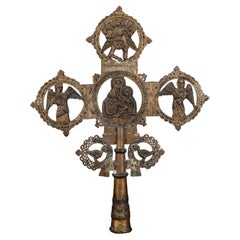
Ethiopian Procession Cross: A Sacred Heritage and Craftsmanship
Located in Ixelles, BE
Ethiopian Procession Cross: A Sacred Heritage and Craftsmanship.
Structure and Composition: This finely crafted Ethiopian procession cross is rich in iconographic detail. Constructed from metal, likely bronze or brass, it features a complex structure with several decorative elements.
- Central Part:
• Madonna and Child: At the heart of the cross is a depiction of the Virgin Mary holding the Child Jesus. This central image is framed within a circle adorned with openwork motifs and small inlays that appear to be precious stones or colored glass pieces.
Arms of the Cross:
• Angelic Musicians: Each lateral arm of the cross features an angelic musician, playing instruments and depicted in a flying position. The angels are finely detailed, with spread wings and carefully sculpted garments.
• Cherub: At the apex of the cross, a cherub is depicted, a celestial being with multiple wings and surrounded by cloud-like motifs.
• Bird Motifs: The lower extremities of the cross are adorned with bird motifs, likely doves, symbolizing peace and the Holy Spirit, placed within openwork circles.
Base and Handle:
• Engraved Base: The base of the cross, which serves as a handle, is also richly engraved with floral and geometric motifs, providing a sturdy and decorative grip for processions.
History of Ethiopian Procession Crosses
Origins and Evolution: Ethiopian procession crosses have a long history, dating back to the introduction of Christianity to Ethiopia in the 4th century under King Ezana. Influenced by Coptic and Byzantine traditions, these crosses evolved to adopt a distinctive style unique to Ethiopia.
- Characteristics:
• Style and Iconography: Ethiopian crosses...
Category
Ethiopian Primitive Antique 19th Century Tribal Art
Materials
Brass
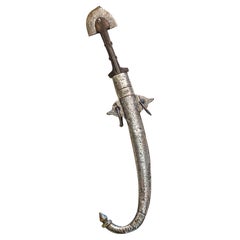
Marroquin Arab 1870 Koummya Dagger With Sheath In Wood Silver And Brass
Located in Miami, FL
Marroquin forged steel dagger with sheath.
Beautiful koummya dagger with a sheath from the region of Morocco, circa 1870. The blade was created with forged steel, mounted in wood and brass and embellished with silver parts decorated with chiseled and engraved motifs. The dagger is curved with a tick double edge blade, the handle is ornate with silver and wood. Like swords and daggers in most cultures, the Islamic dagger...
Category
Moroccan Islamic Antique 19th Century Tribal Art
Materials
Silver, Sterling Silver, Brass, Steel
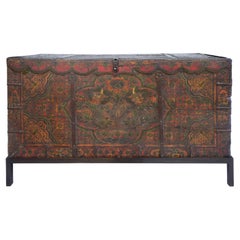
Large Tibetan Chest with Hand-Painted Front
Located in Point Richmond, CA
Large Tibetan storage chest with traditional hand painted Dragons
Tibet
Wood, Iron, Paint
19th century.
27 x 59.5 x 22.5 in./ 69 x 151 x 57
Height on custom display St...
Category
Tibetan Other Antique 19th Century Tribal Art
Materials
Iron
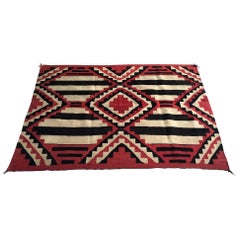
Antique Navajo Chief Blanket
Located in Atlanta, GA
Sometimes categorized as the fourth-phase chief blanket, this wonderful piece of Navajo textile art is well preserved and can be dated to 1890-1910. Wov...
Category
American Navajo Antique 19th Century Tribal Art
Materials
Wool
$12,500
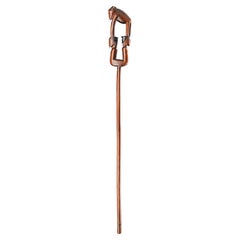
An Extremely Fine South African Tsonga Prestige Staff by the ‘Baboon Master
Located in London, GB
A Rare and Extremely Fine South African Tsonga Prestige Staff by the ‘Baboon Master’
Depicting a Zulu elder wearing a head-ring
Superb silky reddish brown patina
Late 19th Century ...
Category
South African Antique 19th Century Tribal Art
Materials
Wood
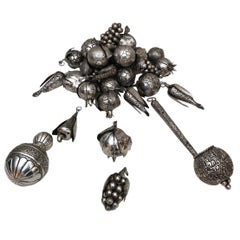
31 Brazilian Silver Amulets
Located in New York, NY
These 31 Brazilian amulets, or balangada, were hammered from sheets of silver in the 19th century to form pomegranates, sugar apples, guava, and other...
Category
Brazilian Folk Art Antique 19th Century Tribal Art
Materials
Silver
$8,500 / set
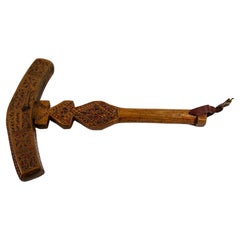
Moroccan Berber Wooden Sugar Hammer Marteau a Sucre Deggaga
Located in Moreno Valley, CA
Moroccan Berber hand-carved wooden sugar hammer "Deggaga".
Handcrafted by the Berber women of Morocco, hand-carved and hand painted wood with tribal desig...
Category
Moroccan Islamic Antique 19th Century Tribal Art
Materials
Wood
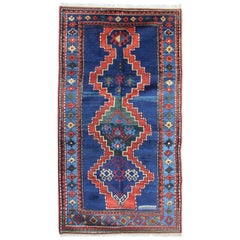
Antique Rugs Blue Caucasian Kazak Rugs, Geometric Carpet Livingroom Rug
Located in Wembley, GB
Kazak rugs have primarily been produced as village productions rather than city pieces. Made from materials particular to individual tribal provinces and the rugs of the Caucasus typically display bold geometric designs in primary colours. Kazak rugs are a type of Armenian rug...
Category
Caucasian Kazak Antique 19th Century Tribal Art
Materials
Wool, Natural Fiber, Organic Material
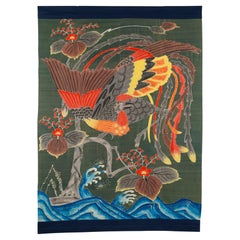
Rare Antique Formal Japanese Silk Tsutsugaki Futon Cover
Located in Point Richmond, CA
Rare Antique Formal Japanese Silk Tsutsugaki Futon Cover
An exceptional example of tsutsugaki from the late Meiji period. The abstract rendering of the auspicious phoenix and paulo...
Category
Japanese Meiji Antique 19th Century Tribal Art
Materials
Cotton, Silk
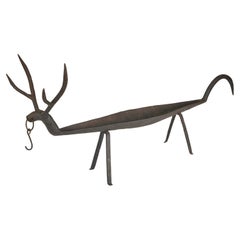
19th Century Forged Iron Deer-Form Teeth Blackening Ritual Dish
Located in Kilmarnock, VA
A rare 19th-century Japanese iron ohaguro tsubo-a ritual teeth-blackening dish-formed as a stylized deer. These were traditionally used to hold the heated iron implement and mixture ...
Category
Japanese Modern Antique 19th Century Tribal Art
Materials
Iron
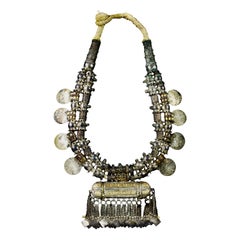
Oman, Silver
Gold Necklace with Amulet Box, 19th Century
Located in PARIS, FR
Stunning and rare Omani tribal necklace in gold and silver featuring eight Burgau thalers dated 1780 and a large amulet box (Hirz) also in gold and silver. 19th century.
Very good condition. Preserved and professionally framed.
Dimensions of the necklace: 52 x 30 x 3
Dimensions of the frame: 70 x 47 x 5
Secure shipping.
This fine Omani necklace of silver and gold comprises two strands of spiky, seed pod-like silver beads; gold-wrapped beads; eight silver Maria Theresa thaler coins; and a large silver and gold amulet box, with multiple chain tassels each of which finishes with a square-shaped pendant cut from sheet silver.
The cigar-shaped amulet box called hirz would have contained some Koranic verse or religious text.
Such a spectacular display of wealth would only have been worn at times of important festivities such as marriage celebrations.
Maria Theresa thalers were made in Austria since the reign of Empress Maria Theresa of the Austro-Hungarian Empire. The Empress died in 1780 and since that time, all thalers that were subsequently struck were minted with that date regardless of the actual year that they were produced. The coins achieved such a level of trust for their silver content (which is 83.3% silver) in the Middle East that neither the design not the date was varied, and so for more than 200 years the coins were used as an international currency among the tribes and the states of the Middle East, in much the same way as the Spanish dollar was used as an international currency at the time elsewhere. The thalers were used to complete most important transactions locally and were also given as dowries. They were also an important source of silver and were melted locally for jewellery.
The coins made their way to the ports of the Red Sea, Egypt and northern Africa from the ports of Genoa, Trieste, Livorno and Marseille. European traders used the coins to buy precious materials from the Gulf and northern Africa which it desired – commodities such as spices, coffee, gum Arabic, indigo, pearls, and tortoise shell.
The importance and the beauty of the coins saw them incorporated into local jewellery most particularly in Oman and Yemen.
References
Al-Jadir, S., Arab & Islamic Silver, Stacey International, 1981.
Harrigan, P., ‘Tales of a Thaler’, Saudi Aramco World, January/February 2003.
Hawley, R., Omani Silver, Longman, 1978.
Hawley, R., Silver: The Traditional Art of Oman, Stacey International, 2000.
Rajab, J.S., Silver Jewellery of Oman, Tareq Rajab Museum, 1998.
Ransom, M., Silver Treasures from the Land of Sheba: Regional Yemeni Jewelry...
Category
Omani Antique 19th Century Tribal Art
Materials
Gold, Silver
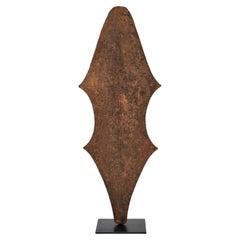
19th Century African Iron Currency Mfunte Mfumte Nigeria Cameroon
Located in Point Richmond, CA
The price is for an individual currency and includes the custom made stand.
The shape of a Mfunte currency has a seemingly simple yet complex design. The forged iron surface was scratched in an end-to-end direction to create a visually interesting surface, a central raised vein to create two sections, and swelling was incorporated on the front at the straight end. The aging of the iron has further added to the texture and attractiveness of the design.
Colonial coinage replaced Africa's traditional iron currencies...
Category
Nigerian Antique 19th Century Tribal Art
Materials
Iron
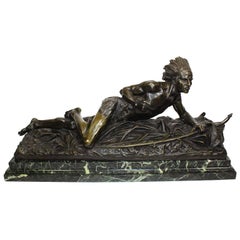
French Bronze Sculpture "Crouching Native American Indian" E. Drouot
Located in Los Angeles, CA
A very fine French, 19th century Patinated bronze group of a Crouching Native American Indian on the lookout, in a dark brown patina and raised on a veined green marble base, by Edou...
Category
French Native American Antique 19th Century Tribal Art
Materials
Marble, Bronze
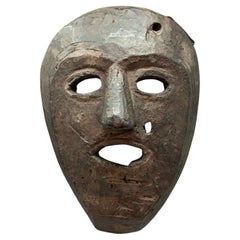
Late 19th-Early 20th Century Tribal Mask, West Nepal
Located in Point Richmond, CA
Late 19th-early 20th century Tribal mask, West Nepal
A mask from West Nepal with a rather heart shaped facial plane. There are three large iron staples, two of which may have secure...
Category
Nepalese Tribal Antique 19th Century Tribal Art
Materials
Wood
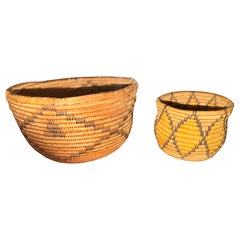
SUPERB Pair of Native American "Pima" Baskets
Located in Shamokin Dam, PA
SUPERB Pair of Native American "Pima" Baskets
These are early Native American baskets. The are woven very tightly.
Diameters of both are 6 inches and 3 inches.
Category
Native American Antique 19th Century Tribal Art
Materials
Reed
$472 Sale Price
30% Off
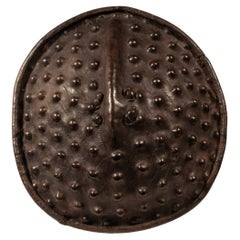
Late 19th Century Large Bumpy Hide Shield, Amarro People, Ethiopia
Located in Point Richmond, CA
Late 19th Century Hide Shield, Amarro People, Ethiopia
A shield from the Amarro people of Ethiopia, this is a more unusual type with raised bumps over the entire surface. The rolled...
Category
Ethiopian Tribal Antique 19th Century Tribal Art
Materials
Leather
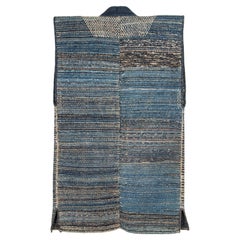
Antique Japanese Recycled Saki-Ori Farmer’s Vest
Located in Point Richmond, CA
Antique Japanese Recycled Saki-Ori Farmer’s Vest
This late 19th C recycled farmer’s vest from northern Japan was strip woven from repurposed cotton scraps in a technique known as sa...
Category
Japanese Meiji Antique 19th Century Tribal Art
Materials
Cotton
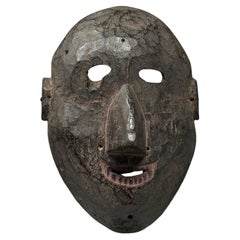
Late 19th-Early 20th Century Tribal Mask, West Nepal
Located in Point Richmond, CA
Late 19th-early 20th century Tribal mask, West Nepal
A large mask from West Nepal with a small grin and bared teeth surrounded with pink powder, faint traces of which can also be se...
Category
Nepalese Tribal Antique 19th Century Tribal Art
Materials
Wood
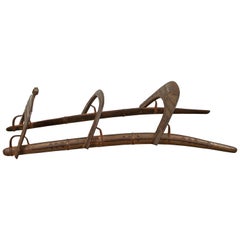
Wood and Brass Antique 19th Century Middle Eastern Camel Seat Saddle
Located in Moreno Valley, CA
Antique, 19th century Asian Middle Eastern collector two person wooden camel saddle with ornate brass mountings and iron reinforcements.
19th Century Midd...
Category
Egyptian Arts and Crafts Antique 19th Century Tribal Art
Materials
Brass, Iron
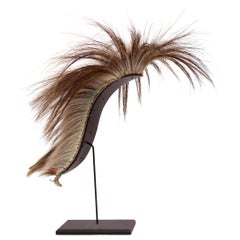
19th C. Plains Native American Roach Headdress, Deer
Porcupine Hair
Located in Denver, CO
This exceptional 19th-century Plains Indian roach headdress is a rare and visually striking example of traditional Native American ceremonial regalia. ...
Category
American Native American Antique 19th Century Tribal Art
Materials
Fur
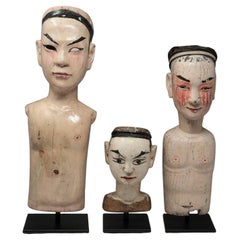
Late 19th-Early 20th Century Trio of Puppets, China
Located in Point Richmond, CA
Late 19th to early 20th century Trio of puppets, China
Two puppet torsos and one puppet head from China, all mounted on custom bases. The heights are 16, 9 and 13.5 inches (40.6, 23...
Category
Chinese Chinoiserie Antique 19th Century Tribal Art
Materials
Wood
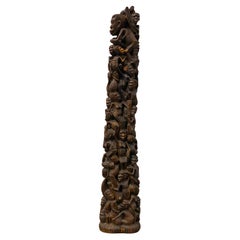
African Carved Wood "Tree of Life" Sculpture
Located in Chicago, IL
Beautiful, impressively sized and elaborately carved "Tree of Life" sculpture from Tanzania, Africa. These carvings are created from a single piece of wood and feature "Ujamma" or ...
Category
Tanzanian Tribal Antique 19th Century Tribal Art
Materials
Wood
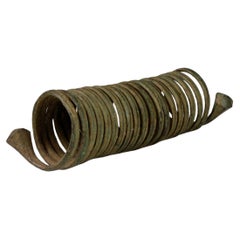
19th Century Igbo Spiral Copper Alloy Arm Adornment/Currency, Nigeria
Located in London, GB
Cast into a beautiful coiled form, this copper alloy Igbo woman's arm adornment from Nigeria was also used as a form of currency. This 19th century piece has developed a lovely green...
Category
Nigerian Tribal Antique 19th Century Tribal Art
Materials
Copper
extremely rare Algerian Judaica silver, jewish Dowry box early 19th century
Located in Tel Aviv - Jaffa, IL
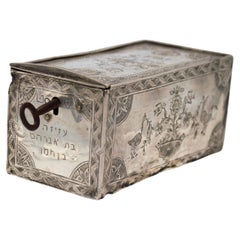
Amazing and scarce JUDAICA object, we have here one of the most touching jewish objects we had for a long time, this small silver dowry box was made in Algeria in the early 19th century, it is all covered with symbols of jewish faith and of couples, the sliding lid has 2 flanking birds with hamsa (protective hand) on each side and a flower vase in the middle.
one side shows two flanking lions with a tree in the middle and the other side shows again two big and two small birds with a flower bowl in the middle, front side has a key hole and next to it there is the Hebrew inscription ס״ט״" which says Siman tov or in English "a good sign" it is taken from the wedding blessing, underneath the lock there is another inscription with the name ״עזיזה בת אברהם בן חמו״ which is the name of the bride, her father and her grandfathers name.
the box is full marked a lot of times with the silversmith mark, every side of the box is marked.
this box was probably ordered by the grooms family to hold the jewelry they are giving to the bride as dowry, this type of objects are rare and there are just a few of them on museum collections.
DOWRY (Heb. נְדֻנְיָה), the property a wife brings to her husband at marriage; the Yiddish equivalent, nadn, is from the same root. The custom of nedunyah became clearly defined and institutionalized only in the talmudic period. In biblical times, mohar (מֹהַר), whereby the groom bought his wife from her father (Gen. 24:53; Ex. 22:15–16; Hos. 3:2), was the accepted practice. It was then customary that the groom give the bride gifts, and that she bring certain property to her husband's home upon marriage: slaves, cattle, real estate, etc. (cf. Gen. 24:59–61; 29; Judg. 1:14ff.; I Kings 9:16). Evidence of the custom of nedunyah is to be found in Tobit (7:14; 8:21) and in the Assuan papyri (Cowley, Aramaic, nos. 15, 18). Gradually, mohar was superseded by the ketubbah custom according to which the husband merely assumed the responsibility of compensation to his wife in case he divorced her: he had to pay her 200 zuzim if she had been a virgin at the time of marriage, and 100 zuzim if a widow or divorcée (see *Ketubbah).
By talmudic times, the institution of nedunyah was prevalent; the father gave a dowry to the bride since the daughter was excluded from paternal inheritance. Fifty zuzim (equivalent to the worth of 180 grams of silver) was the minimum amount a father was obliged to give to his daughter (Ket. 6:5). Parents usually gave much more, according to their social standing. Community funds provided the dowry for an orphan or a very poor girl (ibid.; cf. Sh. Ar., YD 251:8). In case of her father's death, the brothers of a minor girl were obliged to give her the minimum dowry, and the court estimated how much her father would have given her above the minimum dowry. The sum was then taken out of the father's estate and given to the daughter upon majority (Ket. 6:6; 68a–69b). In the absence of such an estimate, each daughter was entitled to receive one-tenth of the value of her father's estate in money, or in valuables (Yad, Ishut, 20:4–7; Sh. Ar., EH 113:4). If the father was unable or unwilling to pay the promised dowry at the betrothal ceremony, the groom could refuse to marry his bride (Ket. 13:5; Ket. 108b–109a). Insistence on exact payment of the promised dowry, however, was frowned upon by later rabbinic authorities (Rema to Sh. Ar., EH 2:1). In certain communities it was customary for the groom's father to make a dowry contribution equal to that of the bride's father (Ket. 102b). The dowry, whether given in real estate, slaves, money, or chattel was recorded in the marriage contract (the ketubbah) and in some instances one-third or one-fifth of the actual value of the dowry was added to the sum mentioned in the ketubbah. Based upon a decree enacted by *Simeon b. Shetah (first century C.E.), the Talmud ruled that the husband and his entire property were liable for compensation as stipulated in the ketubbah, either in case he died (when she collected the sum specified in the ketubbah from the heirs) or in case he divorced his wife (Ket. 82b). For the status of the dowry and the husband's rights and obligations, see below. The rabbinic enactments (Takkanot Shum) by R. Jacob *Tam and by the rabbinic synod of the communities of Speyer, Worms, and Mainz (Germany) stipulated that if a woman died...
Category
Algerian Antique 19th Century Tribal Art
Materials
Silver
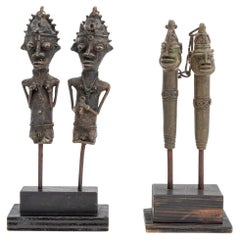
Yoruba Edan Ogboni Figural Brass Staffs, 2 Pairs
Located in Astoria, NY
Two Pairs of Yoruba Edan Ogboni Figural Brass Staffs, each pair atop a stepped base, together with Segy Gallery documentation. Taller overall: 11.25" H x 5.25" W x 2.25" D. Provenanc...
Category
Nigerian Tribal Antique 19th Century Tribal Art
Materials
Brass
$1,440 Sale Price / set
20% Off
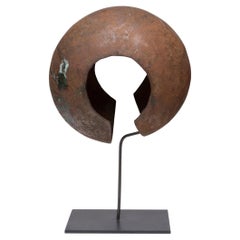
Fine 19th Century Bronze Arm Adornment, Cameroon
Located in London, GB
This finely cast bronze late 19th century arm adornment from Cameroon is possibly Kirdi in origin. Displays a beautiful form, the adornment features a prominent central ridge, and ov...
Category
Cameroonian Tribal Antique 19th Century Tribal Art
Materials
Bronze
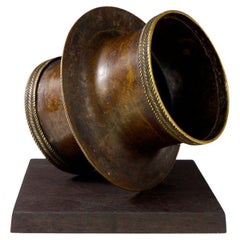
Mbole Copper Currency Anklet, c. 1900
Located in Chicago, IL
This sculptural metal form is a Mbole currency anklet from the early 20th century. Worn by both men and women, this type of leg ornament (ambi) was worn at the ankle as ceremonial at...
Category
Congolese Tribal Antique 19th Century Tribal Art
Materials
Copper
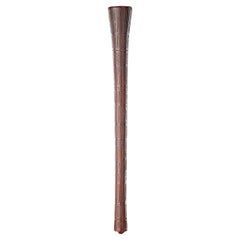
An Unusual Polynesian Fighting Club of Tapered ‘Pole’ Form
Located in London, GB
An Unusual Polynesian Fighting Club of Tapered ‘Pole’ Form
Decorated all over with a geometric design and ‘glyph’ type motifs
Dark glossy patina, excellent colour, retaining the or...
Category
Tongan Antique 19th Century Tribal Art
Materials
Wood
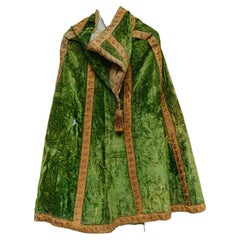
19th Century, Jewish Velvet and Goldthread Cape
Located in Brecht, BE
A rare find this 19th century green velvet and goldthread ceremonial jewish cape,
from Morocco.
Category
Moroccan Antique 19th Century Tribal Art
Materials
Velvet
Late 19th to Early 20th Century Silver Pectoral Disc, Timor Island, Indonesia
Located in Point Richmond, CA
Late 19th to early 20th century pectoral disc or breast plate, Tetum people, Timor Island, Indonesia
These enigmatic hand hammered silver disks were worn as status symbols by presti...
Category
Indonesian Tribal Antique 19th Century Tribal Art
Materials
Silver