Items Similar to Shell Plaque (Barava) from Solomon Islands, 19th Century
Want more images or videos?
Request additional images or videos from the seller
1 of 6
Shell Plaque (Barava) from Solomon Islands, 19th Century
$8,421.77
£6,172.06
€6,980
CA$11,559.31
A$12,214.32
CHF 6,568.93
MX$146,228.12
NOK 82,300.95
SEK 75,375.73
DKK 53,175.09
About the Item
Objects crafted from the shell of the giant Tridacna clam, also known as the fossilized giant clam, held great value among numerous Melanesian peoples. The artistry of working with fossilised Tridacna reached its zenith in the Solomon Islands, particularly evident in the creation of intricate and prestigious objects like the barava – perforated plates originating from the western Solomon Islands.
While some barava designs feature geometric patterns, many incorporate stylised human figures intertwined with shapes reminiscent of faces, characterised by spiral eyes and smiling mouths adorned with tiny teeth. Traditionally, barava were closely linked with burial sites, often used to embellish structures housing the skulls of esteemed individuals or enemies, or placed atop graves. In the past, certain barava even played a role in vovoso, potent charms worn aboard war canoes during headhunting expeditions, safeguarding the crew and ensuring successful endeavours.
The Didier Zanette Collection offers insight into these remarkable artefacts. Additionally, a selection of other 19th-century objects crafted from giant clam shells remains available.
For further exploration of this fascinating subject, refer to the book:
"Tridacna Gigas: Objects of Prestige in Melanesia"
by Éric Lancrenon and Didier Zanette
ISBN: 9782915654929
Publisher: Au vent des îles
Publication Date: November 16, 2011
Series: Pacific Culture
Pages: 277
Dimensions: 29.5 x 23.5 x 2.9 cm
- Dimensions:Height: 4.34 in (11 cm)Width: 8.27 in (21 cm)Depth: 1.19 in (3 cm)
- Style:Tribal (In the Style Of)
- Materials and Techniques:
- Place of Origin:
- Period:
- Date of Manufacture:19th Century
- Condition:Wear consistent with age and use.
- Seller Location:NICE, FR
- Reference Number:1stDibs: LU9202238961072
About the Seller
5.0
Platinum Seller
Premium sellers with a 4.7+ rating and 24-hour response times
Established in 2003
1stDibs seller since 2023
42 sales on 1stDibs
Typical response time: 2 hours
- ShippingRetrieving quote...Shipping from: NICE, France
- Return Policy
More From This Seller
View AllCiwara Bambara headdress in carved wood and basketry, Mali, Early 20th century
Located in NICE, FR
A very pleasing Ciwara crest, singularly small and accompanied by its original headdress, depicting a stylized antelope leaning on a pangolin. The antelope is ridden by a woman, and white horsehair has been added to the tips of the horns. The piece is carefully sculpted, with notches decorating the bodies of the antelope and the pangolin.
Rattan, plant fiber, cowries, wood Very fine velvety mat patina, Circa 1950
An animal called Ciwara is said to have taught the Bambara how to cultivate the land, and during agrarian ceremonies, they recall the myth through the stylized representation of an antelope whose name ci wara...
Category
Early 20th Century Malian Tribal Tribal Art
Materials
Wood
Ankle Bracelet "Djokélebalé" or "Nsoukou" – Kota Culture, Gabon, 19th century
Located in NICE, FR
Impressive open bronze alloy ankle bracelet, featuring a wide ring decorated with six raised moldings. The oxidized, granular patina attests to its age and ritual use.
These ornamen...
Category
Antique 1890s Gabonese Tribal Tribal Art
Materials
Bronze, Copper
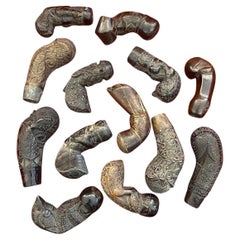
Collection of Kriss Handles, Java, Indonesia, Late 18th / Early 19th Century
Located in NICE, FR
A set of thirteen kriss handles originating from Java, Indonesia, dating from the late 18th to early 19th century.
Beautiful aged patina in dark or amber tones. Exquisite carving wo...
Category
Antique 1790s Indonesian Tribal Tribal Art
Materials
Wood
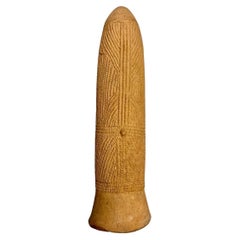
16th Century Ceremonial Urn from Burkina Faso, Africa
Located in NICE, FR
Beautiful funerary terracotta urn called from the Bura region (Niger) in West Africa. This cylindrical anthropomorphic sculpture is adorned with geometric designs. It depicts a human...
Category
Antique 16th Century Burkinabe Tribal Urns
Materials
Terracotta
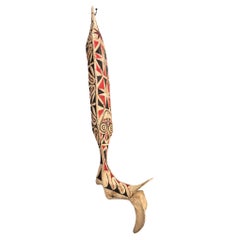
Anthropomorphic Baining Dance Mask – New Britain, Papua New Guinea, Circa 1990
Located in NICE, FR
Anthropomorphic Baining Dance Mask – New Britain, Papua New Guinea
Rare and spectacular anthropomorphic Baining dance mask, made of tapa painted with natural pigments, originating f...
Category
1990s Papua New Guinean Tribal Tribal Art
Materials
Other
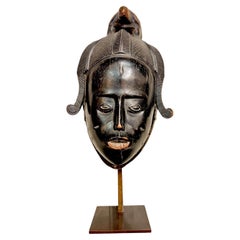
Ndoma Baule Portrait Mask, Ivory Coast, Wood, lacquered patina, Circa 1930
Located in NICE, FR
"Ndoma” Baule Portrait Mask, Ivory Coast, Circa 1930 Wood, heavy wood with deep brown-black lacquered patina.
A superb old hardwood dance mask featuring an ...
Category
Vintage 1930s Tribal Tribal Art
Materials
Wood
$4,633 Sale Price
20% Off
You May Also Like
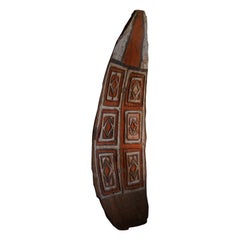
Oceanic Vintage Shield, Tribal Wall Art, Papua New Guinea, Late 19th Century
Located in Odense, DK
A large decorative and rare hand carved tribal war shield in traditional colors, made in Papua New Guinea in the late 19th century. Functional as beautiful ...
Category
Antique Late 19th Century Papua New Guinean Primitive Decorative Art
Materials
Wood, Paint
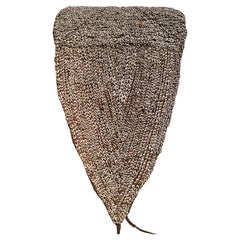
Shell Ceremonial Object from Papua New Guinea
Located in Schellebelle, BE
A remarkable Ceremonial Object from Papua New Guinea,
made of small shells mounted on fabric,
very decorative item, used for ceremonies,
good patina and shine of the object, nice obj...
Category
Vintage 1970s Asian Tribal Art
Materials
Shell, Fabric
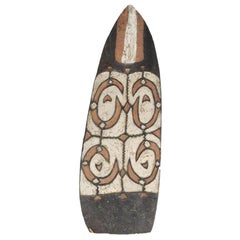
Monumental Oceanic Asmat People Carved Painted Wooden War Shield
Located in Forney, TX
A monumental, rare and important Oceanic Papuan Asmat People tribal carved war shield from the first half of the 20th century, collected from the coast of the headhunting tribe in Papua New Guinea, a Provincial Indonesian island in the mid 20th century.
Among the Asmat, war shields are the most powerful symbolic element of a warrior's equipment, and have many layers of meaning. Traditionally, they were functional items used to protect warriors in battle by deflecting an enemy's spears and arrows. The carved and painted images on the surface of the shields were also intended to frighten the enemy and symbolize the power of the ancestors.
Ancestral imagery appears on multiple forms of Asmat art...
Category
Early 20th Century Papua New Guinean Tribal Tribal Art
Materials
Wood
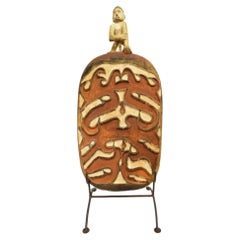
Important Oceanic Carved Asmat Tribal Sago Bowl Serving Platter after War Shield
Located in Forney, TX
A rare and important Oceanic Papuan Asmat tribal carved ancestral sago bowl (also known as a platter, serving shield and tray) crafted in the likes of the...
Category
20th Century Papua New Guinean Tribal Tribal Art
Materials
Wood, Paint
Antique Toraja Wood Panel, Sulawesi, Indonesia, Polychrome Detail
By Asian Modern
Located in Jimbaran, Bali
This intricately carved wooden panel originates from the Toraja people of South Sulawesi, Indonesia, renowned for their elaborate woodwork and rich ancestral traditions. Crafted by h...
Category
Antique Early 1900s Indonesian Folk Art Sculptures and Carvings
Materials
Fruitwood
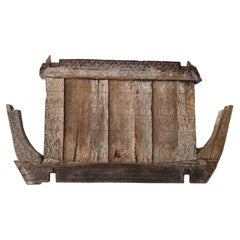
Large Carved Teak Decorative Tribal Wall Art Plaque Sculpture Native People
Located in Rockaway, NJ
Heavily carved large African tribal art wall plaque sculpture.
Category
20th Century African Wall-mounted Sculptures
Materials
Hardwood
