Items Similar to Rare Japanese Meiji Satsuma Crackle Ware Vase w/ Carving by Tashiro Factory
Want more images or videos?
Request additional images or videos from the seller
1 of 19
Rare Japanese Meiji Satsuma Crackle Ware Vase w/ Carving by Tashiro Factory
$15,040
$18,80020% Off
£11,457.98
£14,322.4820% Off
€13,076.27
€16,345.3320% Off
CA$21,134.76
CA$26,418.4520% Off
A$23,033.17
A$28,791.4620% Off
CHF 12,197.06
CHF 15,246.3220% Off
MX$276,652.61
MX$345,815.7720% Off
NOK 154,417.42
NOK 193,021.7820% Off
SEK 141,971.63
SEK 177,464.5420% Off
DKK 97,665.22
DKK 122,081.5320% Off
About the Item
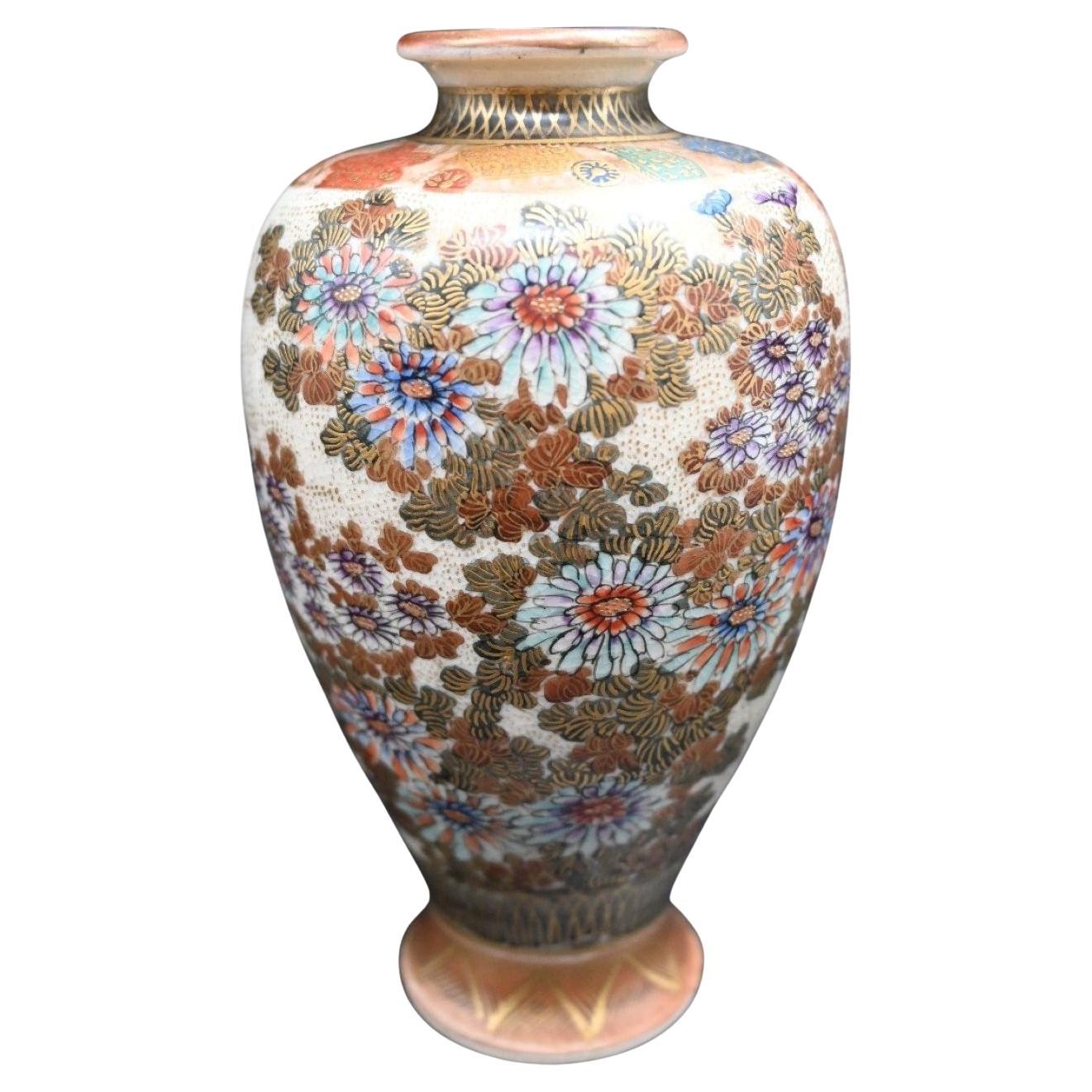
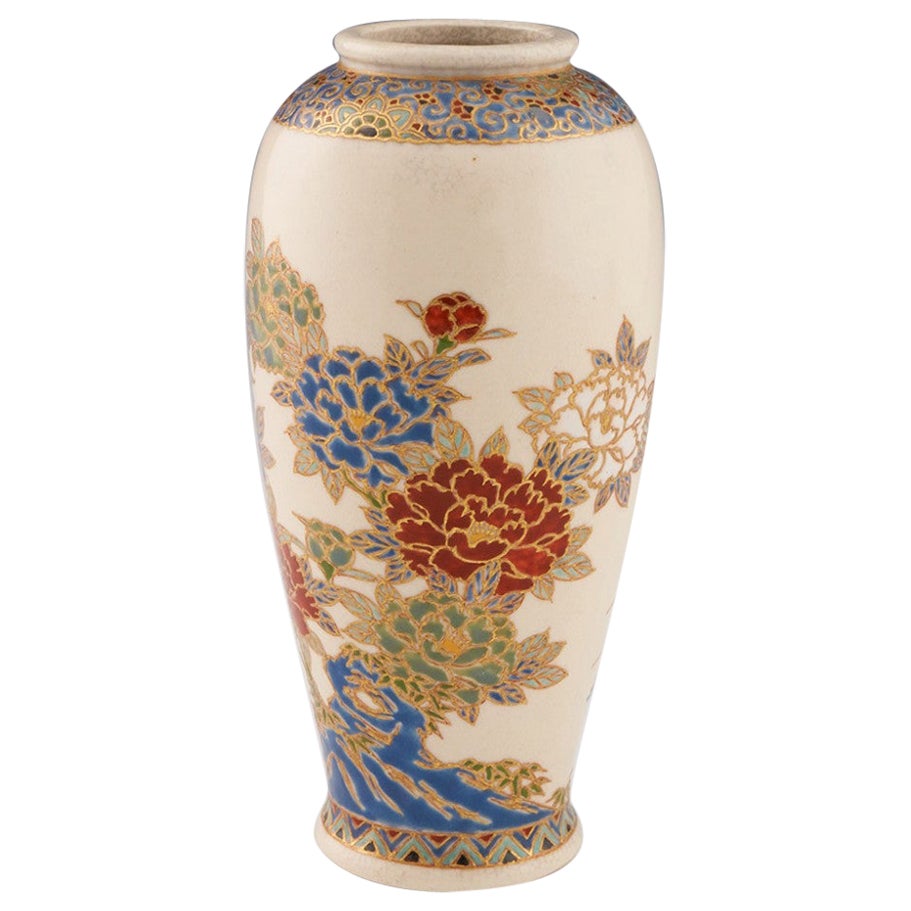
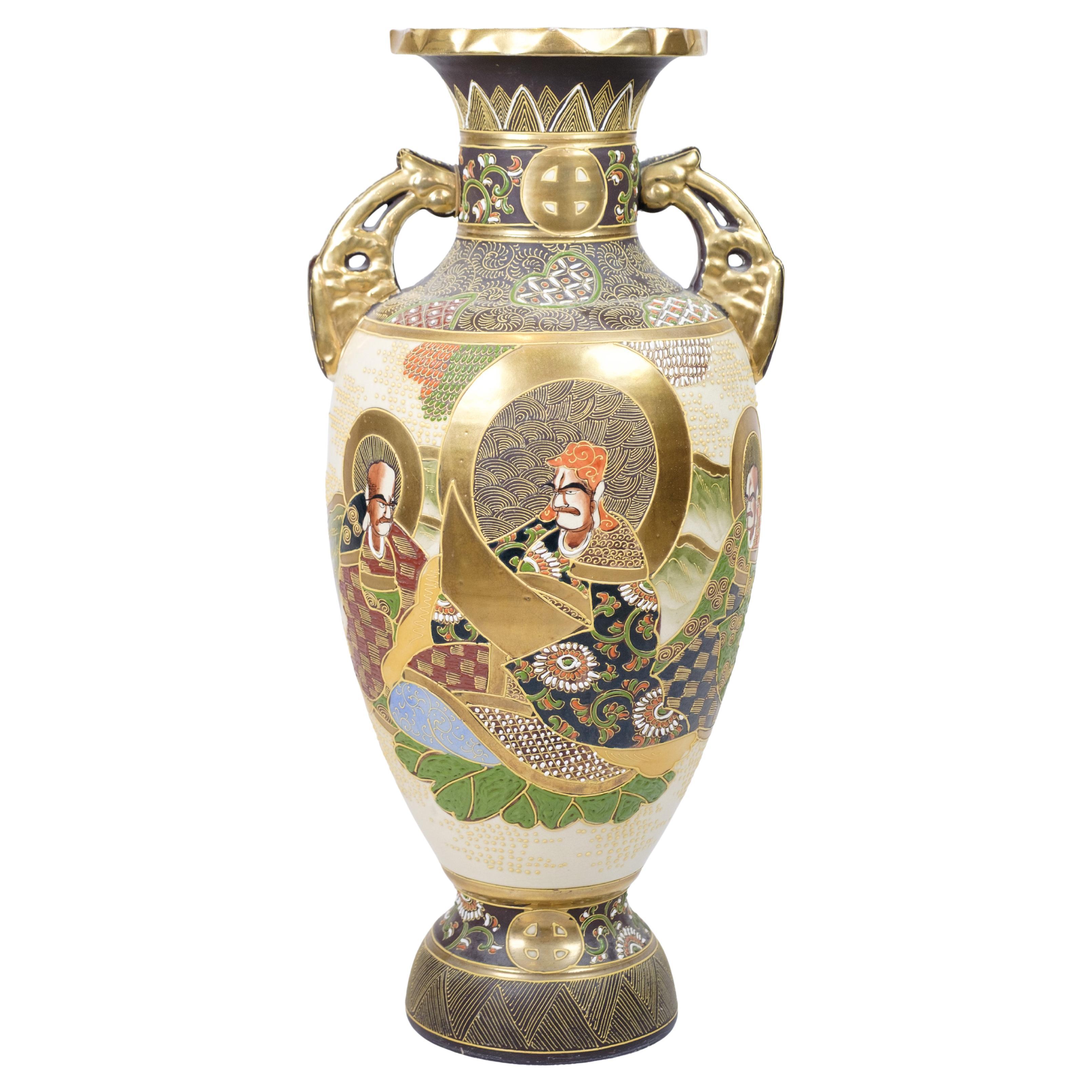
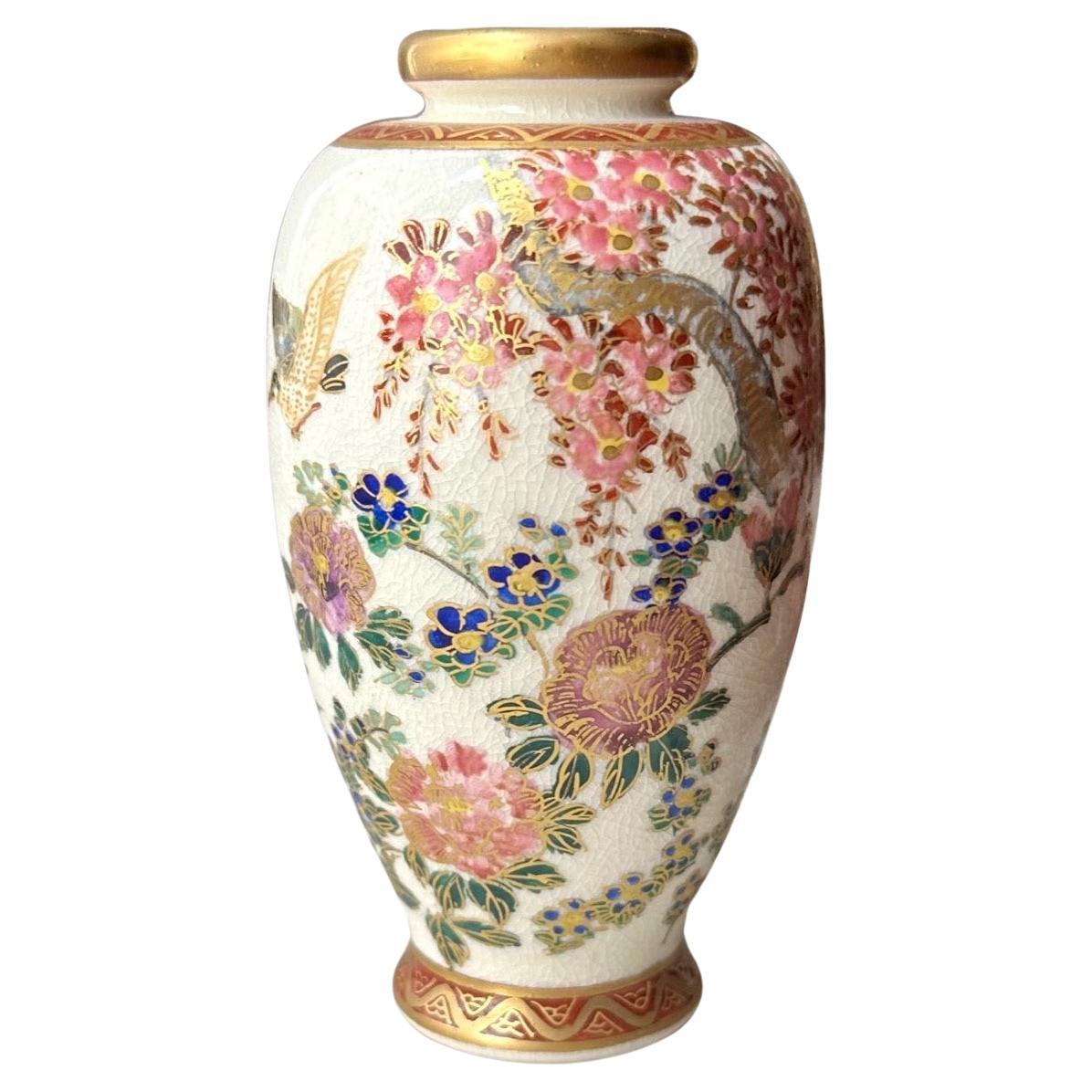
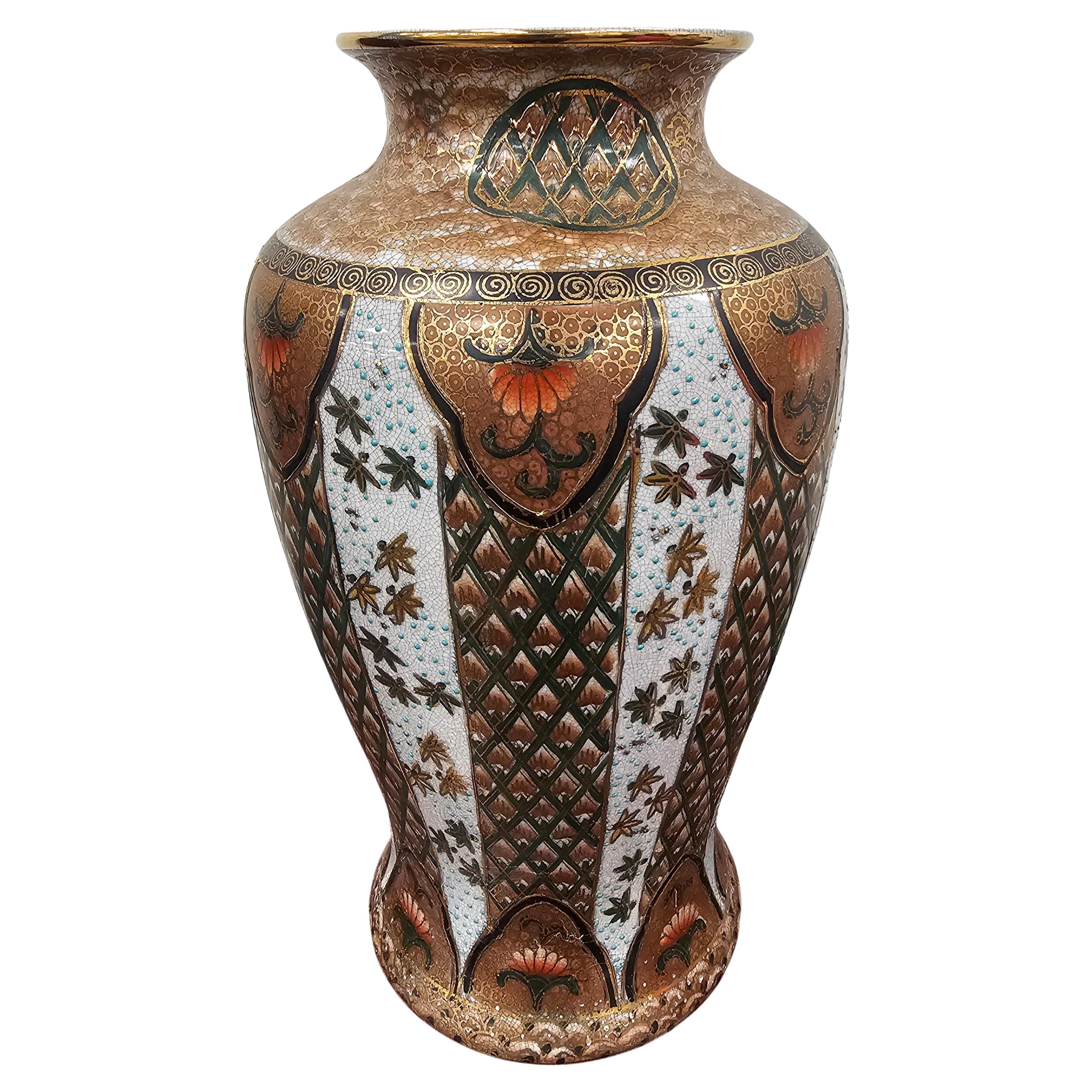
A Rare Japanese Meiji Period Satsuma Porcelain Double-Handled Crackled Ware Vase with Intaglio Carved Decoration and Gilt Adornment, Mark on Base: Tashiro Factory / Tashiro Giyōemon (田代儀右衛門), an important late Meiji to Taishō era manufacturer based in Yokohama. They were one of the major exporters of Satsuma-style ceramics to the Western market, especially from circa 1900–1920s.
The vase is formed in a tall baluster shape, standing on a short circular foot and rising to a broad flaring mouth. Its surface is covered in a cream crackled glaze, with a consistent network of fine crackles extending over the entire body and neck. On the shoulder are two handles modeled as gilt kara-jishi heads, each with a ring suspended from the mouth. The features of the kara-jishi are carefully detailed, with flowing manes and expressive brows, their forms highlighted with gilding to accentuate their sculptural presence against the pale body of the vase.
Decoration across the body and neck is executed in intaglio carving, recessed directly into the porcelain surface. The body is divided into pointed-arch panels, each bordered with fine linear frames, containing dense arrangements of scrollwork, stylized floral forms, and geometric patterns. The intaglio technique produces an effect where the designs are set beneath the surface, carved with precision and uniformity. The motifs are rendered with super fine cutting, each detail consistent throughout, indicating that the work was entirely hand-carved. Encircling the shoulder is a continuous narrow band of scroll designs, linking the neck and body decoration.
The neck features elongated petal-form panels carved in intaglio, each enclosing lotus-like blossoms and interlaced geometric patterns. These are framed by angular fretwork borders that extend up toward the mouth. The rim itself is finished with a Greek key band, while a further narrow linear border encircles the top edge. At the base, the foot is decorated with a recessed scrolling foliate band, maintaining continuity with the carved decoration above. The application of gilt to the kara-jishi heads contrasts with the carved panels, uniting the three-dimensional and incised decoration.
The intaglio carving demonstrates a high level of technical control, with every scroll, blossom, and geometric motif cut directly into the porcelain body before glazing. This required precise planning and execution to achieve uniform depth and sharpness across the surface. The crackled glaze sits evenly across both the intaglio panels and undecorated areas, enhancing the visual texture of the vessel. The combination of hand-carved intaglio decoration and the application of gilt to the sculptural handles makes this piece distinct within the Satsuma tradition, where overglaze enamels are more commonly found.
The base bears a Japanese mark written beneath the glaze, identifying the maker. The consistent crackle of the glaze across the entire surface reflects the controlled firing process used in Satsuma production. This vase is rare for its integration of large-scale intaglio carving with a traditional crackled glaze ground, further distinguished by the addition of kara-jishi handles highlighted in gilt.
- Creator:Satsuma (Manufacturer)
- Dimensions:Height: 17.5 in (44.45 cm)Diameter: 8 in (20.32 cm)
- Style:Meiji (Of the Period)
- Materials and Techniques:
- Place of Origin:
- Period:1900-1909
- Date of Manufacture:1910
- Condition:Wear consistent with age and use.
- Seller Location:New York, NY
- Reference Number:1stDibs: LU919546501812
About the Seller
4.9
Vetted Professional Seller
Every seller passes strict standards for authenticity and reliability
Established in 1820
1stDibs seller since 2011
197 sales on 1stDibs
Typical response time: 1 hour
- ShippingRetrieving quote...Shipping from: New York, NY
- Return Policy
More From This Seller
View AllMonumental Japanese Kutani Porcelain Vase, Meiji/Taisho Period, Signed
Located in New York, NY
A Monumental Japanese Kutani porcelain vase, Meiji/Taisho Period, Signed Akiyama sei. The main body is all hand-painted with wonderful ...
Category
Antique Early 1900s Japanese Meiji Vases
Materials
Porcelain
Very Large 19th Century Japanese Imari Porcelain Vase with Scalloped Top
Located in New York, NY
A Very Large 19th Century Japanese Imari Porcelain Vase with Scalloped Top.
The body of the vase is complete with two main cartouches and two smaller cartouches which flank the vase...
Category
Antique 1880s Japanese Japonisme Vases
Materials
Porcelain
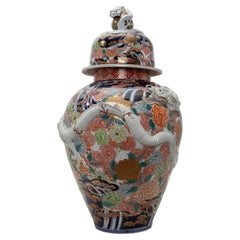
Massiv Meiji Japanese Imari Porcelain Vase, High-Relief Dragons
Dragon Finial
Located in New York, NY
A Large Meiji Period Japanese Imari Covered Dragon Vase, with High Relief Dragon and Dragon Finial
This large Japanese Imari porcelain vase features a baluster form with a domed cov...
Category
Antique 1870s Meiji Vases
Materials
Porcelain
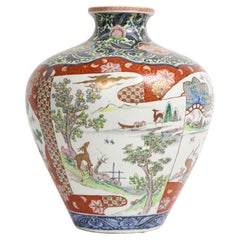
A 19th C. Japanese Porcelain Kutani Red Ground Scroll Cartouche Vase
Located in New York, NY
A 19th C. Japanese Porcelain Kutani Red Ground Scroll Cartouche Vase. This stunning piece features a breathtaking pastoral scene, meticulously hand-painted on a shape reminiscent of...
Category
Antique 19th Century Japanese Meiji Vases
Materials
Porcelain
Japanese Satsuma Kyotoware Monkey Vase
Located in New York, NY
Japanese satsuma Kyotoware monkey vase. Antique Japanese satsuma monkey vase beautifully modeled with raised monkey porcelain figures. Signed. Satsuma-Kyot...
Category
Antique 1880s Japanese Meiji Vases
Materials
Porcelain

Russian Imperial Lapidary Kalkan Jasper Covered Vase Ekaterinburg Workshops 1887
Located in New York, NY
A Highly Important and Very Rare Museum Worthy Russian Imperial Lapidary Kalkan Jasper Covered Vase, by the Imperial Russian Lapidary Ekaterinburg Workshops, Inscribed 1887. This mon...
Category
Antique 1880s Russian Neoclassical Vases
Materials
Stone
You May Also Like
High Quality Old Japanese Satsuma Earthenware Vase, ca 1900, Meiji period
By Satsuma
Located in Bilzen, BE
A rare antique handpainted Japanese Satsuma earthenware vase, signed
Fine quality
Good overall condition, no chips, cracks or restorations
Height 14 cm
Category
Early 20th Century Japanese Meiji Vases
Materials
Earthenware
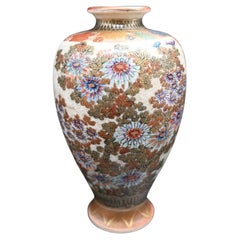
Japanese Meji Period Satsuma Vase c1885
Located in Tunbridge Wells, GB
Heading : Japanese Meji period satsuma vase
Date : c1885
Origin : Japan - possibly Satsuma province although most likely decorated in Kobe or Yokohama.
Bowl Features : Imari palette ...
Category
Antique 1880s Japanese Porcelain
Materials
Porcelain
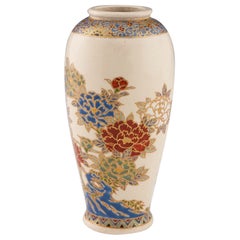
Japanese Satsuma Vase In Ivory Glaze In Meiji Period Style
Located in Lejre, DK
Large Japanese Satsuma vase made in the style of the Meiji period. The vase is decorated with ivory-colored glaze with a characteristic crackle finish and hand-painted figure scenes ...
Category
Late 20th Century Japanese Meiji Vases
Materials
Porcelain
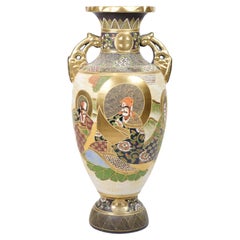
$526 Sale Price
20% Off
Meiji Period Diminutive Satsuma Baluster Vase.
By Satsuma
Located in Vero Beach, FL
Meiji Period Diminutive Satsuma Baluster Vase.
This Japanese Satsuma vase from the late Meiji period is hand painted and gilt decorated with a Japanese landscape in exquisite detail...
Category
20th Century Japanese Meiji Ceramics
Materials
Porcelain
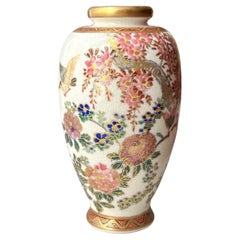
$680 Sale Price
20% Off
19th Century Meiji Japanese Satsuna Enanel Porcelain Vase
Located in Germantown, MD
A 19th Century Meiji Japanese Satsuna Enaneled Porcelain Vase.
Measures 7" in width x 7" in depth x 12.25" in height.
Category
Antique Late 19th Century Japanese Meiji Vases
Materials
Enamel
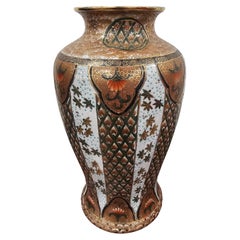
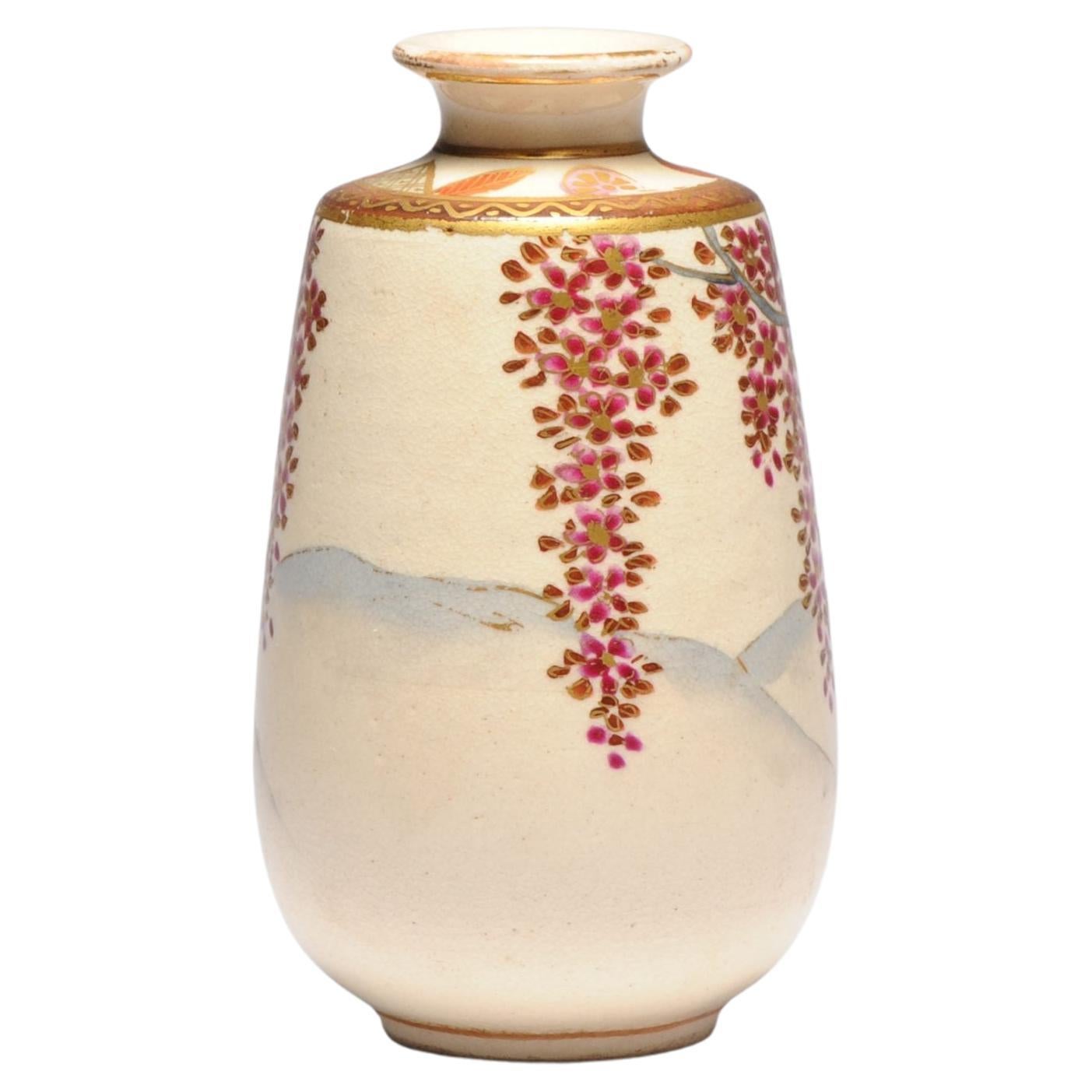
Antique ca 1900 Japanese Satsuma Hotoda Mini Vase Richly Decorated
Located in Amsterdam, Noord Holland
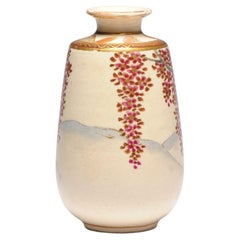
Sharing with you is this nice satsuma miniature vase decorated with wisteria.
Marked: Hotoda
Condition
Overall Condition Perfect. Size 91mm high
Period
Meiji Periode (...
Category
Antique 19th Century Japanese Meiji Ceramics
Materials
Porcelain
$957 Sale Price
20% Off