Video Loading
Want more images or videos?
Request additional images or videos from the seller
1 of 11

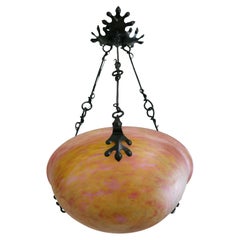
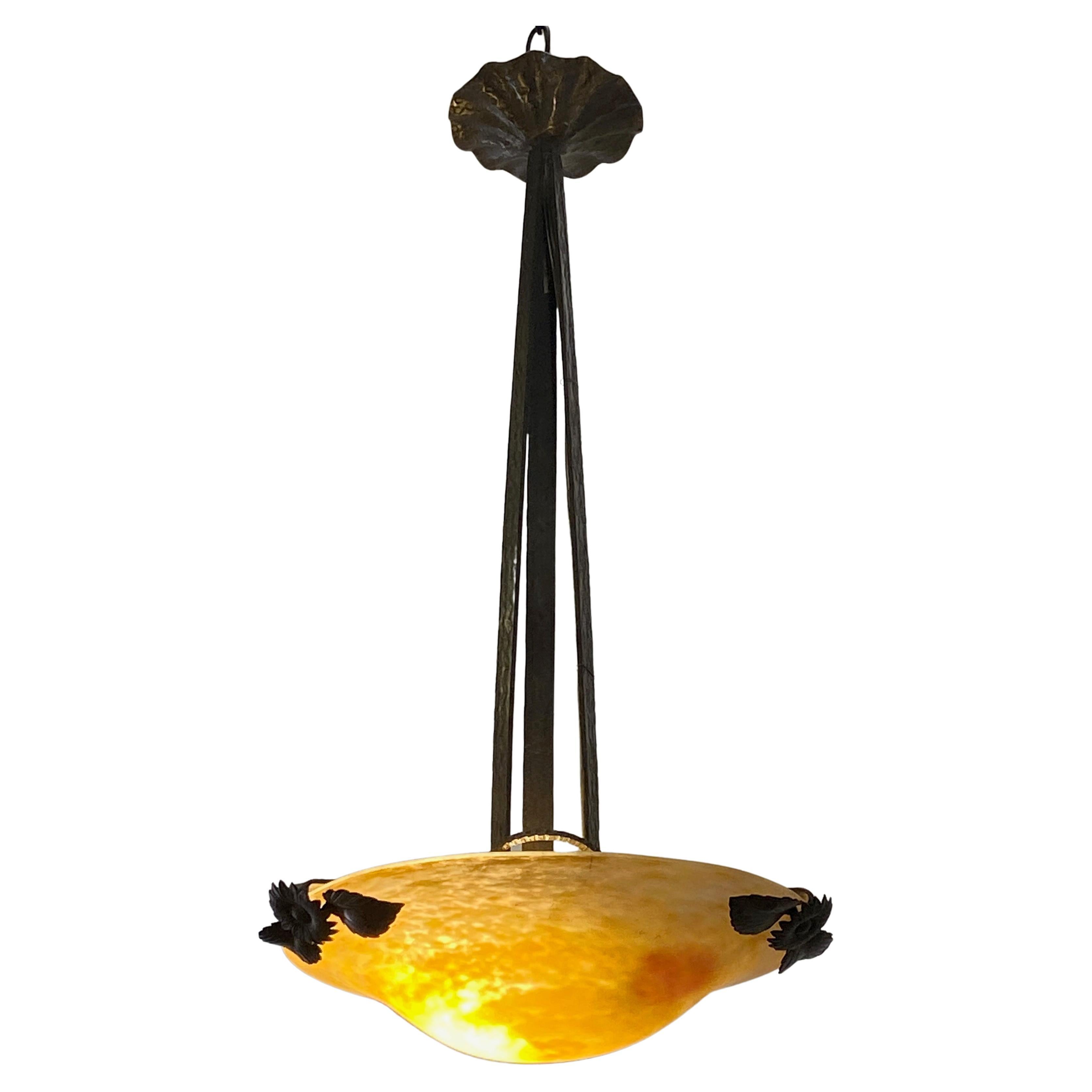
Daum Nancy Art Deco Pendant Lamp

$1,441.08
£1,067.33
€1,200
CA$1,971.32
A$2,145.40
CHF 1,137.28
MX$25,810.83
NOK 14,424.31
SEK 13,197.24
DKK 9,144.21

About the Item

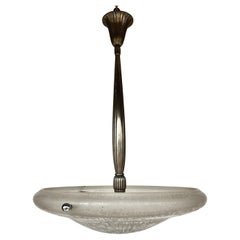
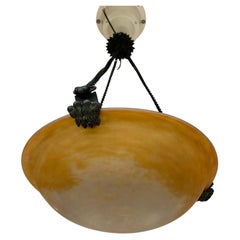
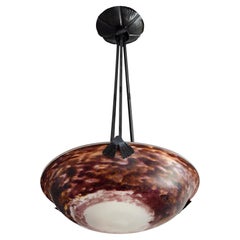
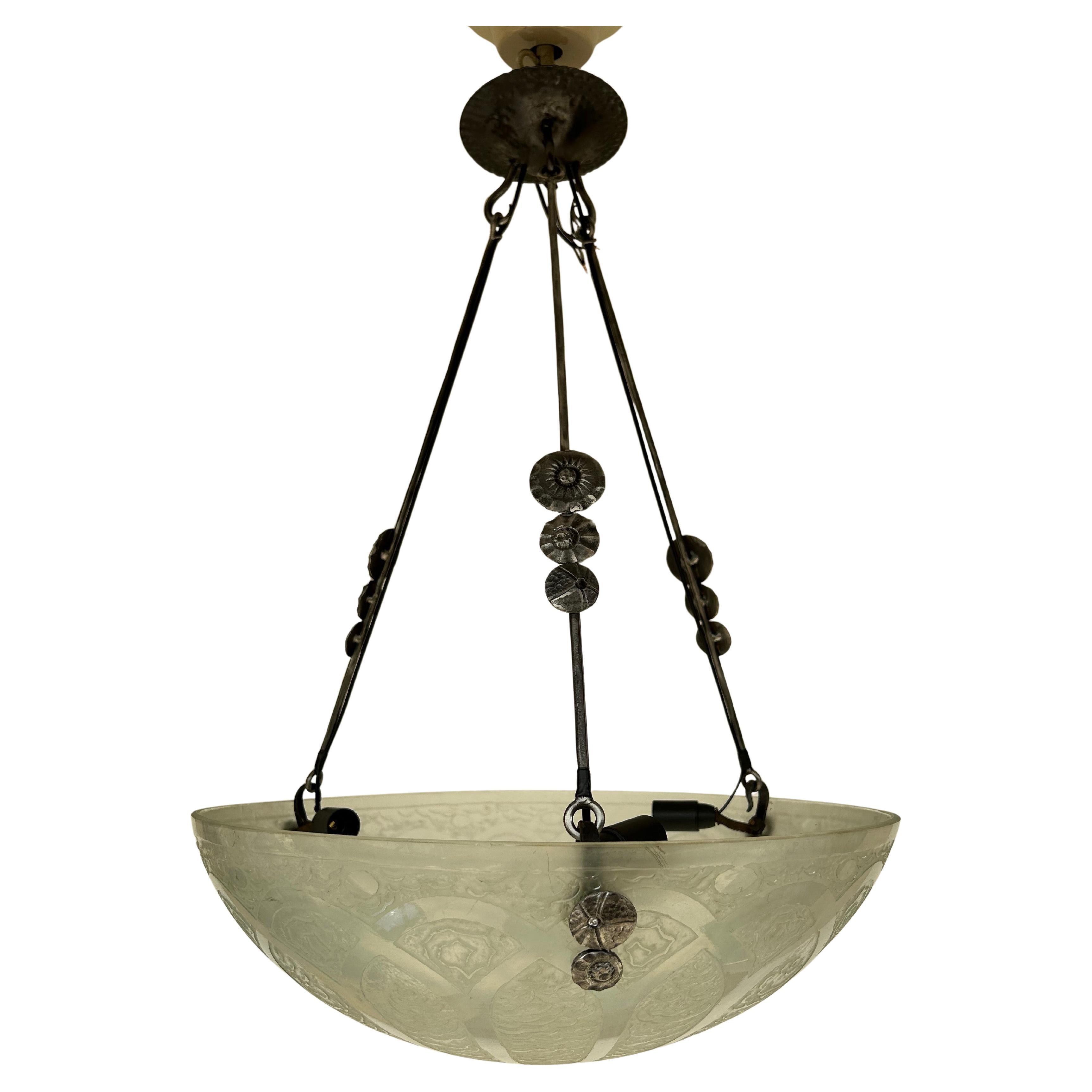
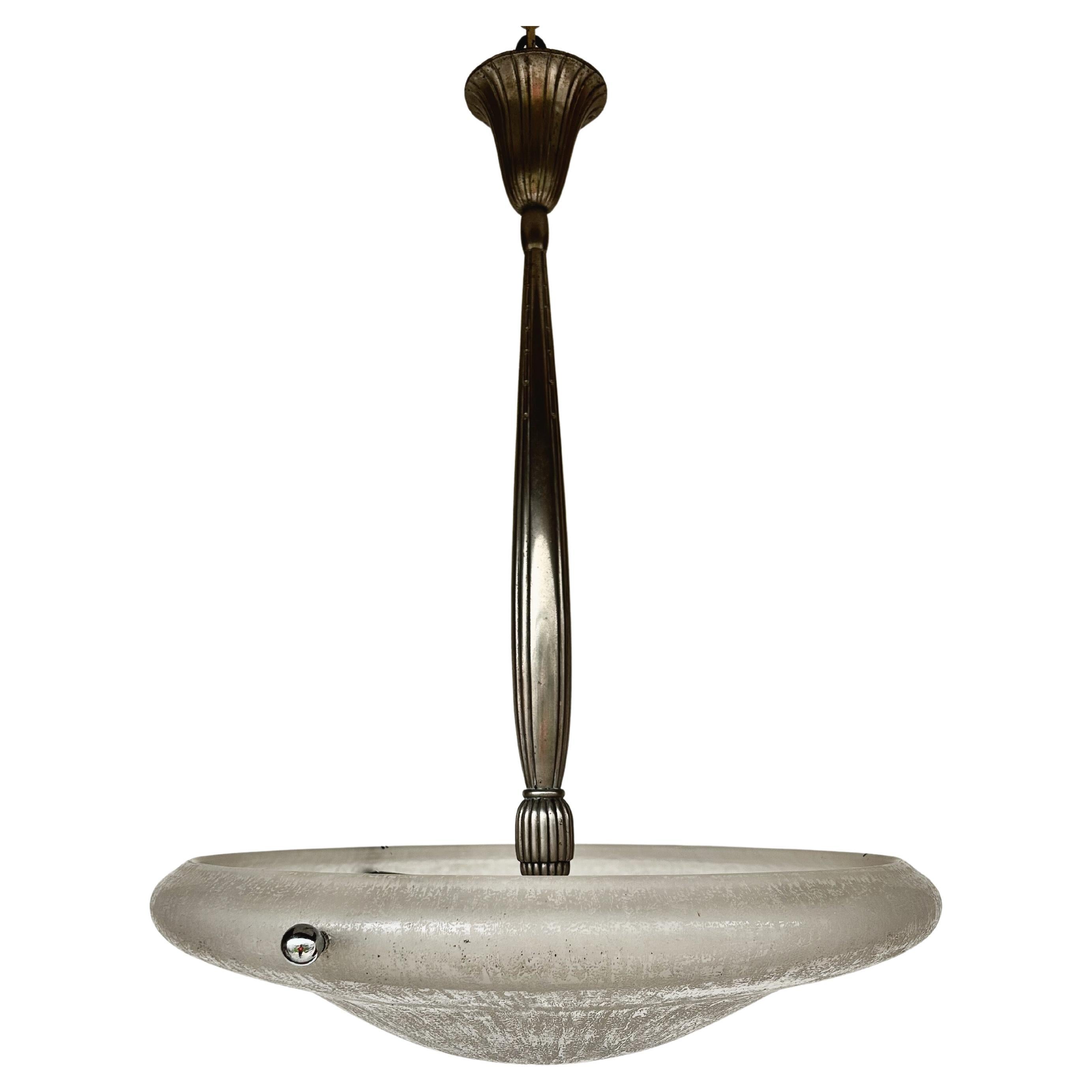
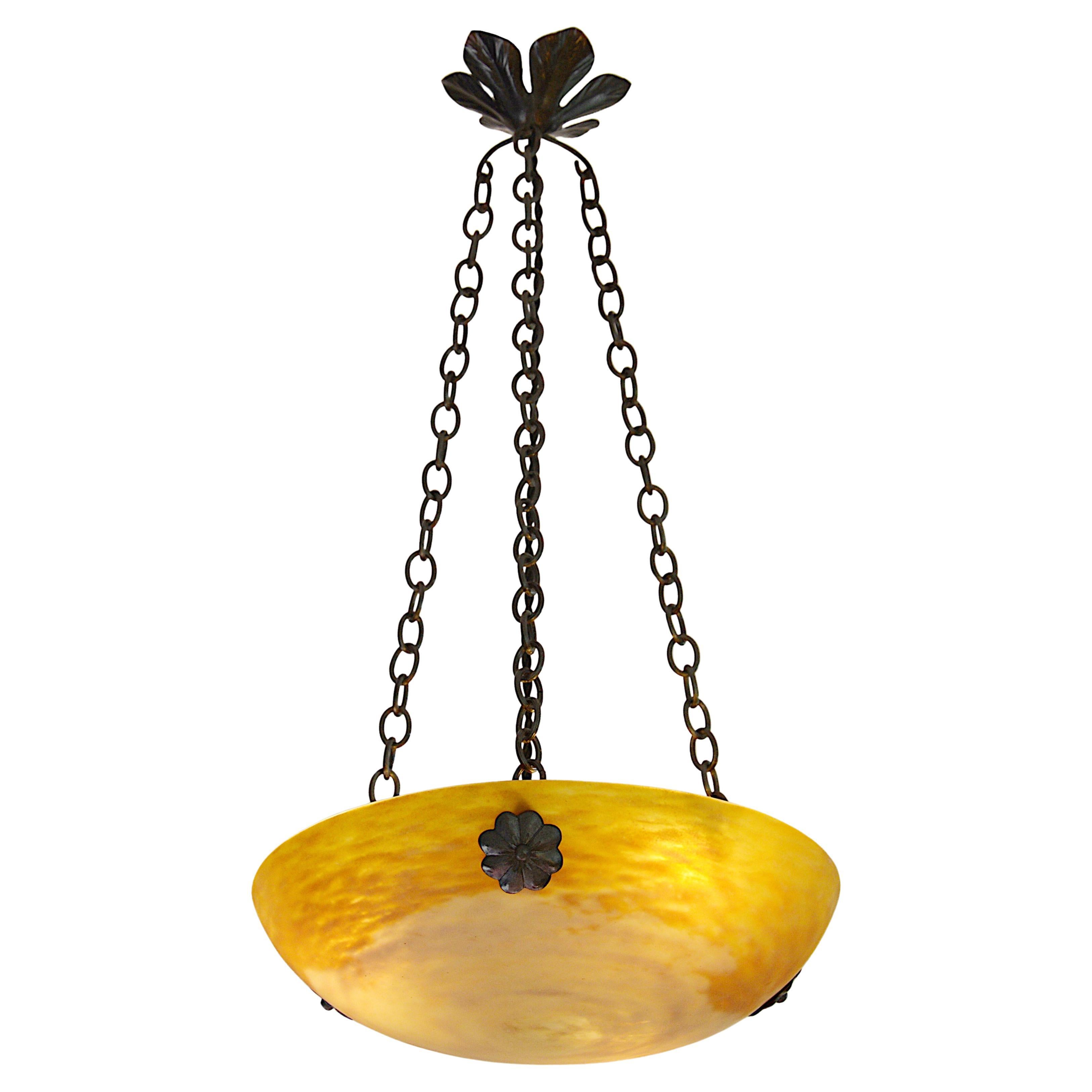
Art Deco pendant light, circa 1925. Bronze mount decorated with roses. Glass paste shade signed Daum Nancy. In perfect condition. Wired, E14 socket. The chain length can be adjusted. Total height: 50 cm Shade diameter: 35.5 cm Weight: 5 kg The Compagnie Française du Cristal Daum was a crystal glassworks founded by the Daum brothers in 1878 in Nancy, Lorraine. The workshops of the Daum brothers, Auguste (1853-1909) and Antonin (1864-1930), also trained some of the leading names of Art Nouveau, such as Jacques Grüber, Henri Bergé, Almaric Walter, and the Schneider brothers. Following the Franco-Prussian War of 1870, Jean Daum (1825-1885), a notary in Bitche, sold his practice and opted for French citizenship. He settled in Nancy in 1876 and, that same year, lent money several times to Avril and Bertrand, owners of the Sainte-Catherine glassworks in Nancy, a factory producing bottles and everyday glassware. The business failed to achieve financial stability, and Daum was forced to buy it outright in 1878, becoming head of a company with 150 workers in a field he knew nothing about. In 1878, Jean brought his son Auguste into the business, but he did not witness the company's initial successes. Upon his death in 1885, Auguste took sole control of the glassworks before being joined in 1887 by his brother Antonin, a recent graduate of the École Centrale des Arts et Manufactures in Paris. Faced with the glassworks' poor financial health, Auguste, who was training to be a lawyer, was compelled to assume the reins. Antonin began by embellishing the standard tableware. Familiar with glassmaking techniques through his training, he steered production towards artistic creation. Between 1889 and 1891, the two brothers prepared the establishment of an artistic department, which was entrusted to Antonin. Auguste provided him with all the necessary resources to follow in the footsteps of Émile Gallé in Art Nouveau glassmaking. Antonin Daum began with a few simple designs, quickly progressing to acid etching, then moving on to models using wheel engraving techniques and two- or three-layered glass. From 1890 to 1914, he created no fewer than three thousand designs. Jacques Grüber was the glassworks' first artist. Recruited in 1893, he was commissioned to create pieces for the 1893 World's Columbian Exposition in Chicago. This was the first major success that propelled Daum into the exclusive circle of art industries. The Daum brothers earned the right to participate in the Nancy exhibition in 1894. This was followed by exhibitions in Lyon (1894), Bordeaux (1895), and Brussels (1895 and 1897), where they received awards. A design school was established within the company in 1897, training its own decorators and engravers. Henri Bergé was the master decorator there, the company's second artist. He was joined by Émile Writz in 1898. The culmination of their success came when Daum and Gallé were awarded the first Grand Prize for art glass at the 1900 Universal Exhibition. Daum presented meticulously crafted pieces: vases with an intercalated decoration (patented in 1899) and lighting fixtures, which became a specialty. In 1904, Almaric Walter developed glass pastes there; he remained with Daum until 1915. In 1901, the statutes of the École de Nancy were officially established. Émile Gallé was the driving force behind this group and became its president. Antonin was vice-president. Antonin was also a prominent figure in the Nancy Chamber of Commerce. He played a significant role in the 1909 International Exhibition of Eastern France, which marked the end of the École de Nancy. Auguste died in 1909, and Antonin remained active until his death in 1930, sharing responsibilities with Auguste's sons: Jean, Henri, and Paul. Jean died in 1916, and Henri became manager, following in his father's footsteps. Paul graduated from the Nancy Institute of Physics and Chemistry and gradually took over from Antonin. After 1918, the Daum family ensured the company's adaptation to new production conditions, striving to maintain quality, techniques, and aesthetic rather than purely utilitarian approaches. The company continued to participate in major exhibitions: Barcelona in 1923, the International Exhibition of Decorative Arts in Paris in 1925, and the Colonial Exhibition in Paris in 1931. In the 1920s, Paul Daum shifted production towards Art Deco in response to the public's waning interest in Art Nouveau. Demand was high, and the company prospered. It opened a second crystal factory, Belle-Étoile, in Croismare in 1925, with Paul as its director. This factory supplied clear glassware, spheres, and novelty pieces bearing the Lorrain signature. Pierre Davesn began designing models in 1928. The economic crisis of the 1930s affected Belle-Étoile, which closed in 1934. A few large orders allowed the company to survive.The company continued its production: in 1935, the Compagnie Transatlantique ordered 90,000 glass and crystal pieces for the ocean liner Normandie. After the Second World War, crystal took center stage under the leadership of Henri and Michel Daum. Antonin's eldest grandchild, Antoine Froissart (1920-1971), an engineer from École Centrale Paris, developed the manufacturing process for a particularly transparent and brilliant crystal. This new crystal facilitated the creation of pieces with thick, supple forms and a luminous appearance. Jacques, Auguste's grandson, brought a fresh perspective in 1965 by commissioning contemporary designers.
  • Creator:
    Daum (Manufacturer)
  • Dimensions:
    Height: 19.69 in (50 cm)Diameter: 13.98 in (35.5 cm)
  • Power Source:
    Hardwired
  • Voltage:
    110-150v,220-240v
  • Lampshade:
    Not Included
  • Style:
    Art Deco (Of the Period)
  • Materials and Techniques:
  • Place of Origin:
  • Period:
  • Date of Manufacture:
    1925
  • Condition:
  • Seller Location:
    NANTES, FR
  • Reference Number:
    1stDibs: LU7403247375822

More From This Seller

View All
Daum Nancy Art Deco Chandelier
By Daum
Located in NANTES, FR
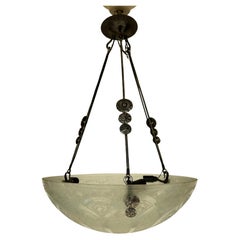
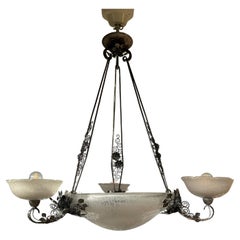
Large Art Deco chandelier circa 1930 in acid-etched white glass, signed Daum Nancy. Wrought iron frame by Marcel Vasseur for FAG (Ferronneries Artisanales des Galeries). Electrified,...
Category

Mid-20th Century French Art Deco Chandeliers and Pendants

Materials

Wrought Iron

Daum Nancy Art Deco Pendant Light
By Daum, Georges Capon
Located in NANTES, FR
Art Deco pendant light by Daum Nancy. Acid-etched glass bowl. Nickel-plated bronze mount by Capon. Electric, 3 lights. In perfect condition. Total height: 67.5 cm Diameter: 52 cm We...
Category

Vintage 1930s French Art Deco Chandeliers and Pendants

Materials

Bronze

Daum Nancy Art Deco Pendant Light
By Daum
Located in NANTES, FR
Art Deco chandelier circa 1930. Acid-etched glass bowl signed Daum Nancy. Wrought iron frame. Electrified with 3 E14 sockets. In perfect condition. Total height: 48 cm Bow diameter:...
Category

Mid-20th Century French Art Deco Chandeliers and Pendants

Materials

Wrought Iron

Daum Nancy Art Deco Suspension
By Daum
Located in NANTES, FR
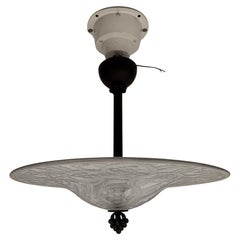
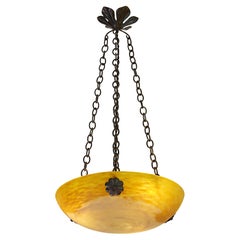
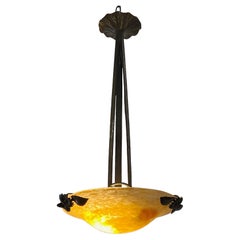
Art Deco pendant light by Daum Nancy. Glass paste bowl. Bronze frame. The height of the pendant light can be changed. In perfect condition and electrified. Height: 60 cm Diameter: 3...
Category

Vintage 1920s French Art Deco Chandeliers and Pendants

Materials

Glass

Louis Katona and Daum Nancy Art Deco Chandelier
By Daum, Louis Katona
Located in NANTES, FR
Art deco chandelier. 1 bowl and 3 tulips in white glass, acid-etched. The 4 pieces are signed Daum Nancy. Wrought iron frame by Louis Katona, stamped twice L. Katona. In perfect cond...
Category

Vintage 1920s French Art Deco Chandeliers and Pendants

Materials

Wrought Iron

Muller Frères Art Deco Pendant Light
By Muller Frères
Located in NANTES, FR
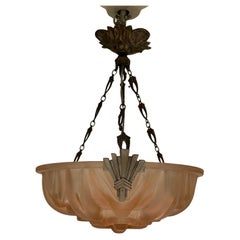
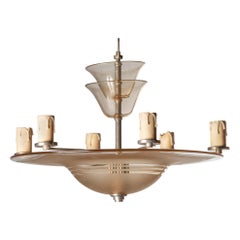
Muller Frères Art Deco pendant light, circa 1930. Slightly tinted pressed molded glass with a geometric design. Signed Muller Frères. Wired, E14 socket. 7 lights, small screw-in bul...
Category

Mid-20th Century French Art Deco Chandeliers and Pendants

Materials

Glass

You May Also Like

Daum Art Nouveau / Art Deco Pendant Chandelier, 1900-1905
By Daum
Located in Saint-Amans-des-Cots, FR
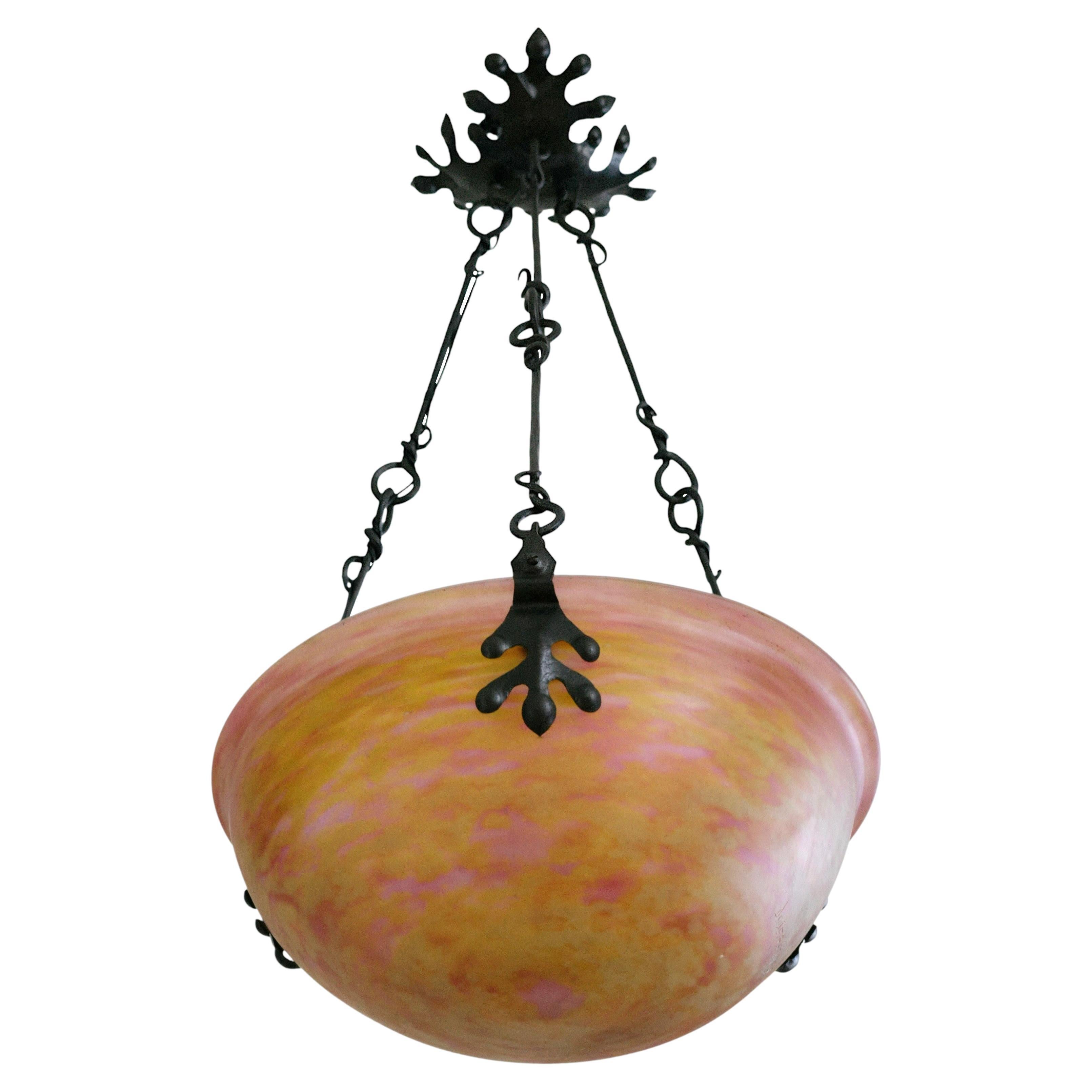
French Art Nouveau Pendant Chandelier by Daum, Nancy, France, circa 1900–1905 A stunning French Art Nouveau pendant chandelier by Daum (Nancy, France), dating from around 1900–1905....
Category

Antique Early 1900s French Art Nouveau Chandeliers and Pendants

Materials

Wrought Iron

DAUM French Art Nouveau / Deco Pendant Chandelier, 1910-1915
By Daum
Located in Saint-Amans-des-Cots, FR
French Art Nouveau Pendant Chandelier by Daum Nancy, 1910–1915 A stunning French Art Nouveau pendant chandelier by Daum Nancy, crafted in France between 1910 and 1915. This elegant ...
Category

Vintage 1910s French Art Deco Chandeliers and Pendants

Materials

Wrought Iron

Art Deco Daum Nancy Art Glass Pendant Light Fixture
Located in San Francisco, CA
Art Deco period art glass pendant light fixture with wrought iron hardware. Signed Daum Nancy. Recently re-wired and ready to install. In exce...
Category

Early 20th Century French Art Deco Chandeliers and Pendants

Materials

Wrought Iron

Art Deco Ceiling Pendant Lamp Signed DAUM, France
By Daum
Located in Casteren, Noord-Brabant
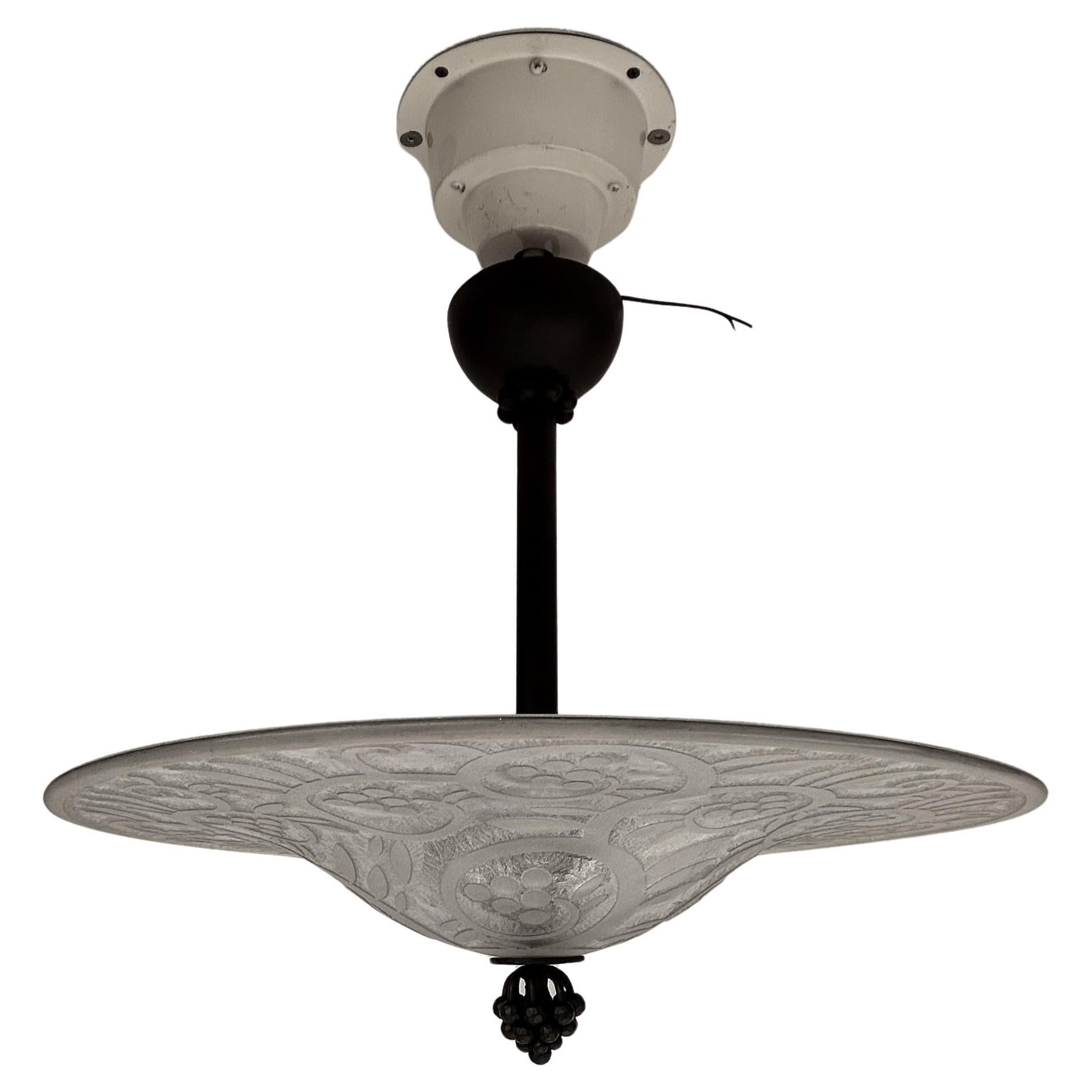
A French Art Deco ceiling lamp. Made in the end of the French Art Deco period, circa 1930-1940. It have a modernist appeal. The lamp have a frosted etched glass bowl. The base is an ...
Category

Antique Mid-19th Century French Art Deco Chandeliers and Pendants

Materials

Iron

Large Daum Nancy Art Deco Chandelier
By Daum
Located in Bridgewater, CT
An important Daum Nancy Art Deco chandelier, circa 1925, in acid etched frosted glass, inscribed Daum Nancy with croix de Lorraine.
Category

Vintage 1930s French Art Deco Chandeliers and Pendants

Materials

Glass

Daum French Art Nouveau / Deco Pendant Chandelier, 1900-1905
By Daum
Located in Saint-Amans-des-Cots, FR
French pendant chandelier by DAUM (Nancy), France, dating from 1900-1905. This exquisite piece features a blown double glass shade, suspended from its original wrought-iron frame. Th...
Category

Antique Early 1900s French Art Deco Chandeliers and Pendants

Materials

Wrought Iron