Items Similar to Elio Martinelli Step Chandelier in Black Lacquered Metal by Martinelli Luce 70s
Want more images or videos?
Request additional images or videos from the seller
1 of 8
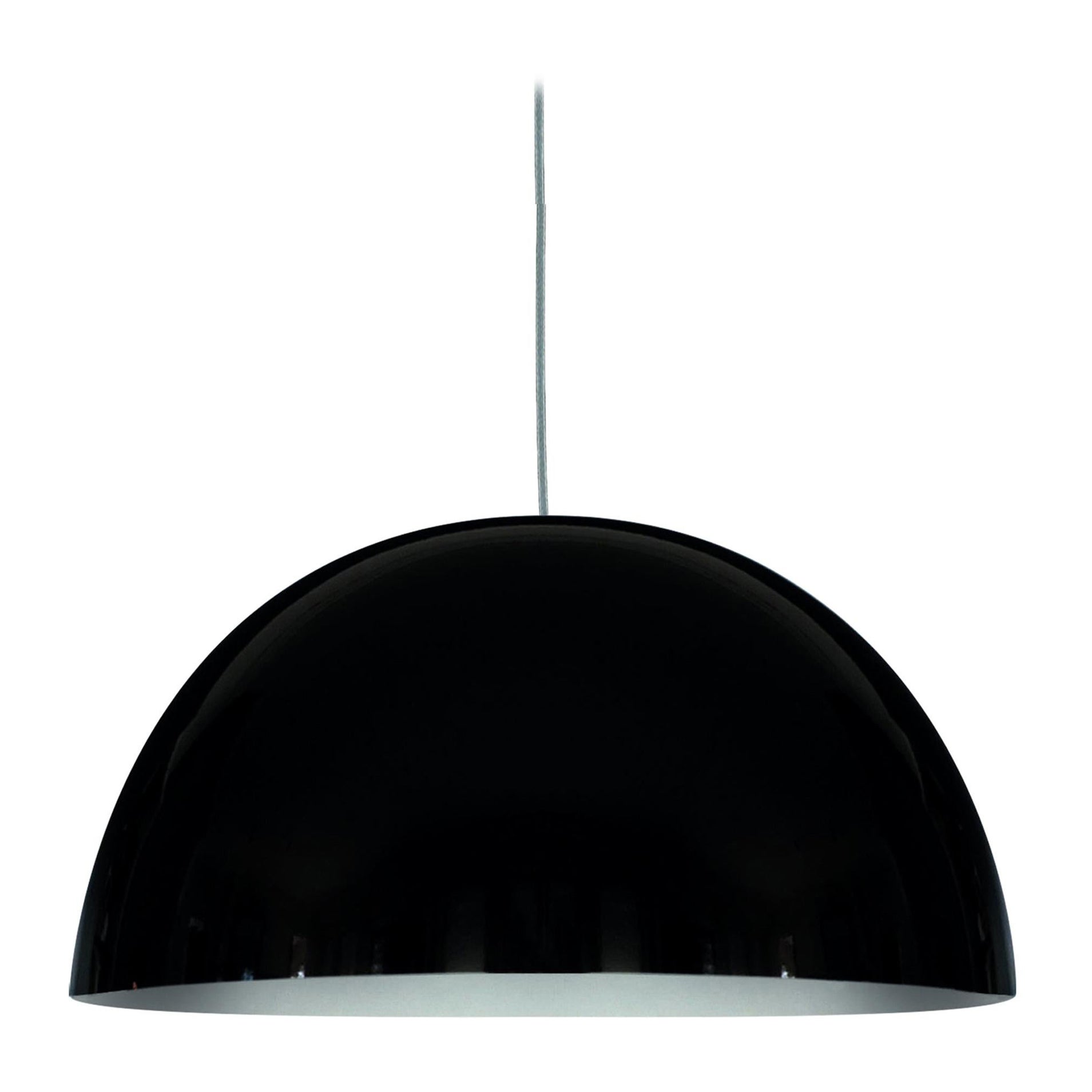
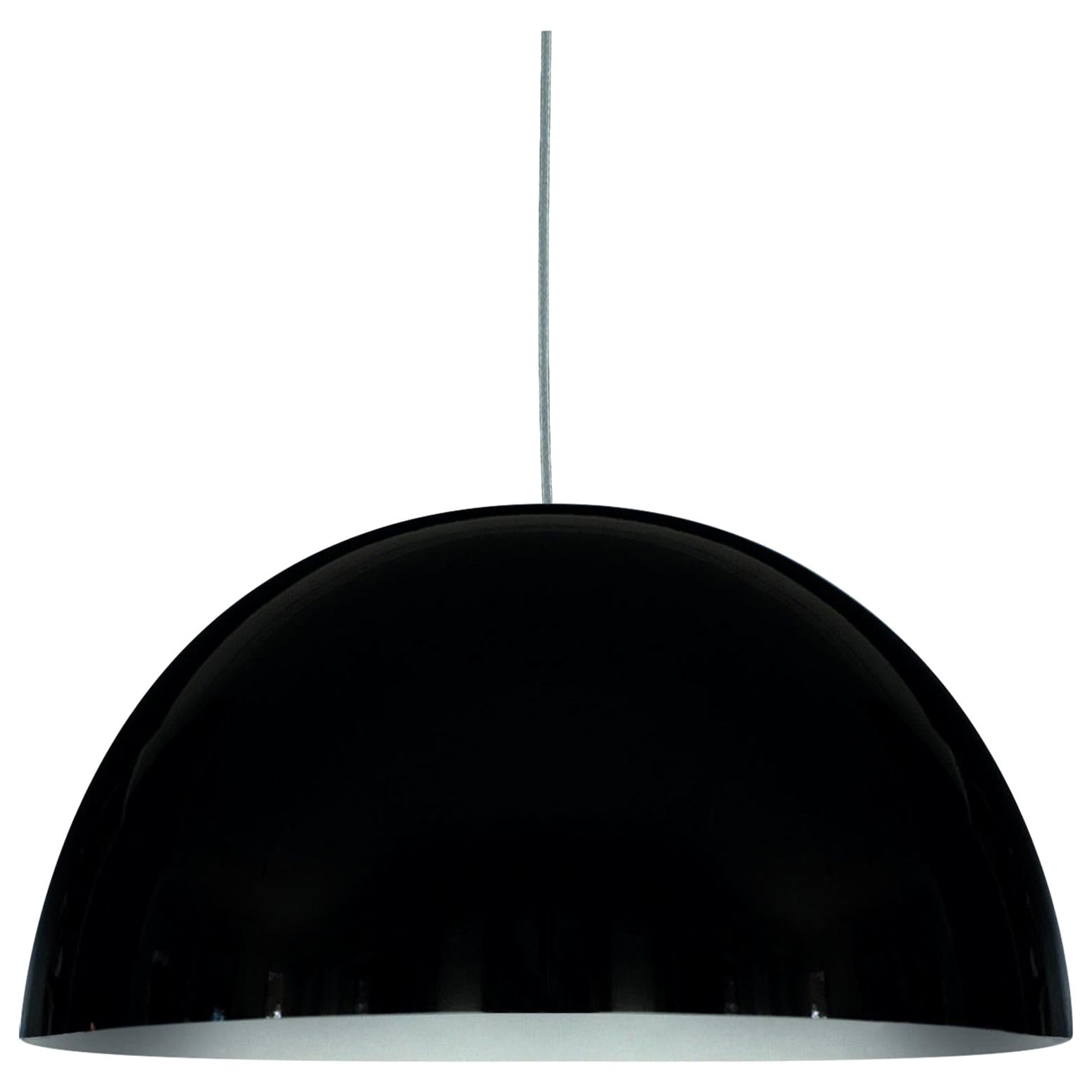
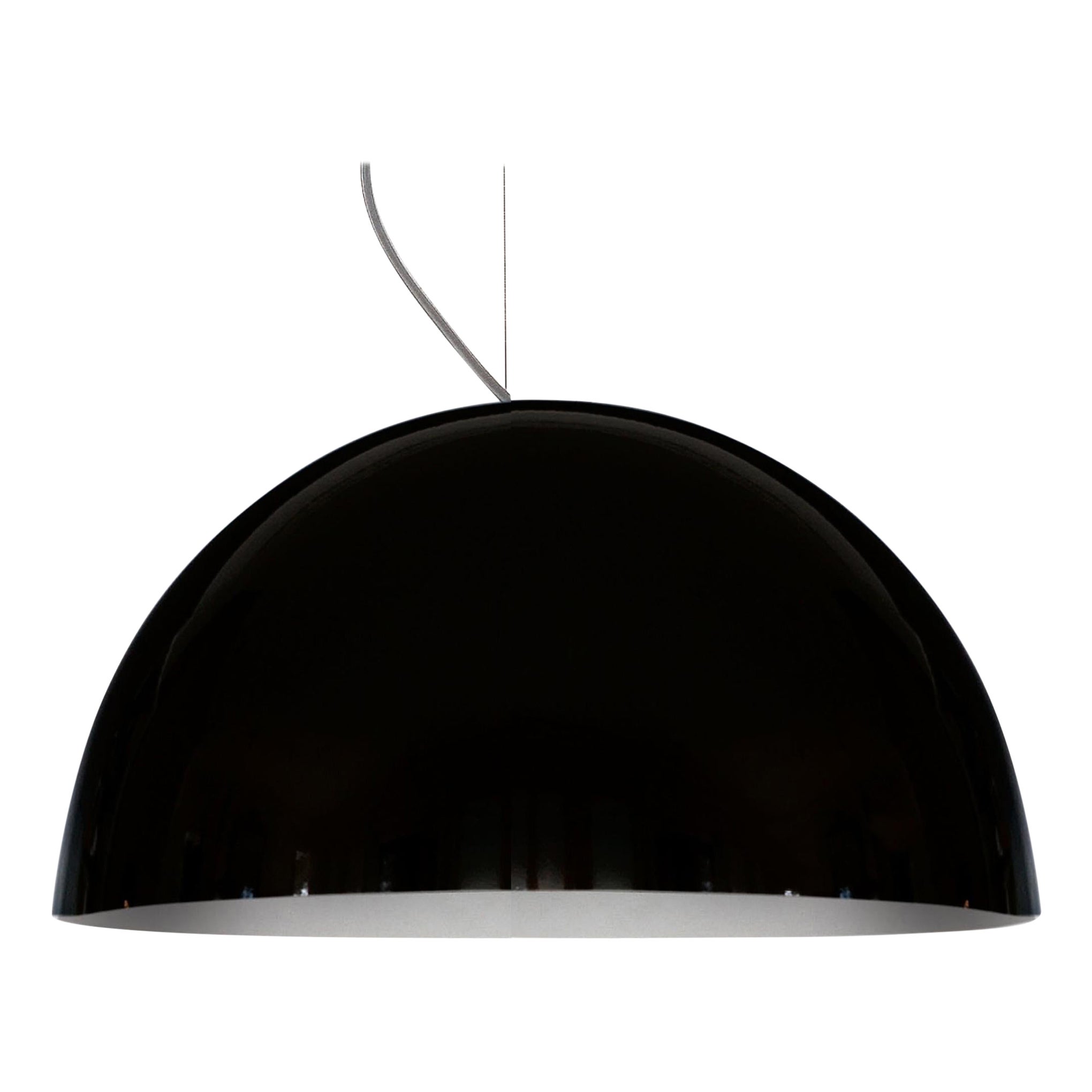
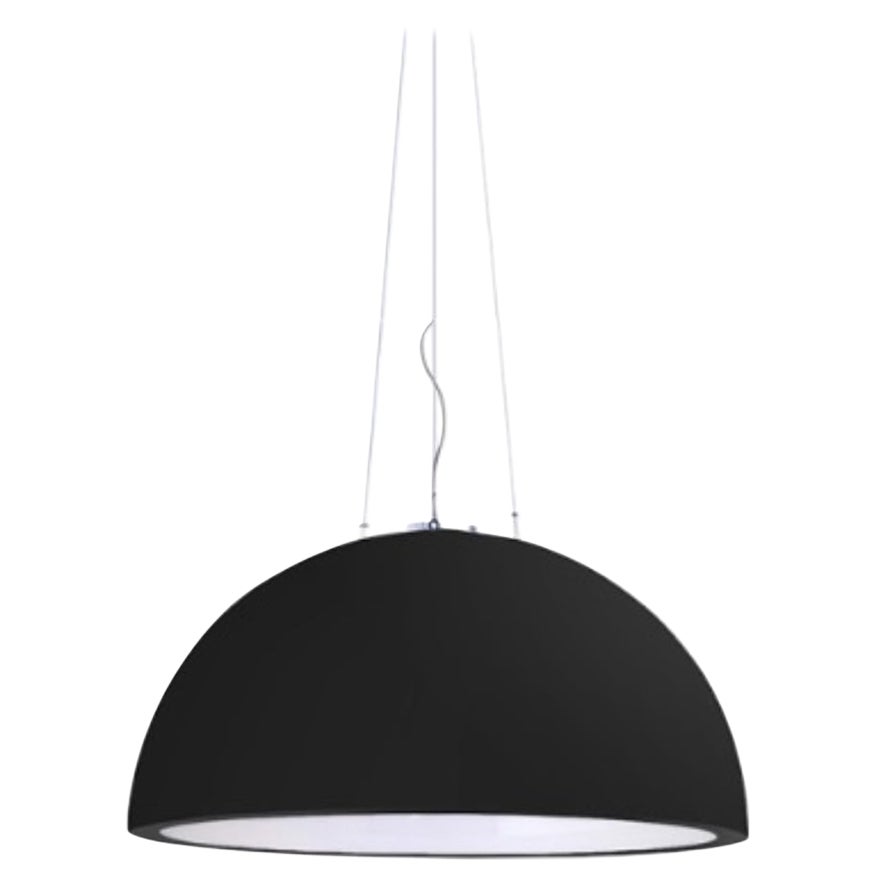
Elio Martinelli Step Chandelier in Black Lacquered Metal by Martinelli Luce 70s
$2,631.33
£1,953.91
€2,200
CA$3,615.06
A$3,930.29
CHF 2,083.85
MX$47,114.26
NOK 26,484.62
SEK 24,263.51
DKK 16,771.06
About the Item
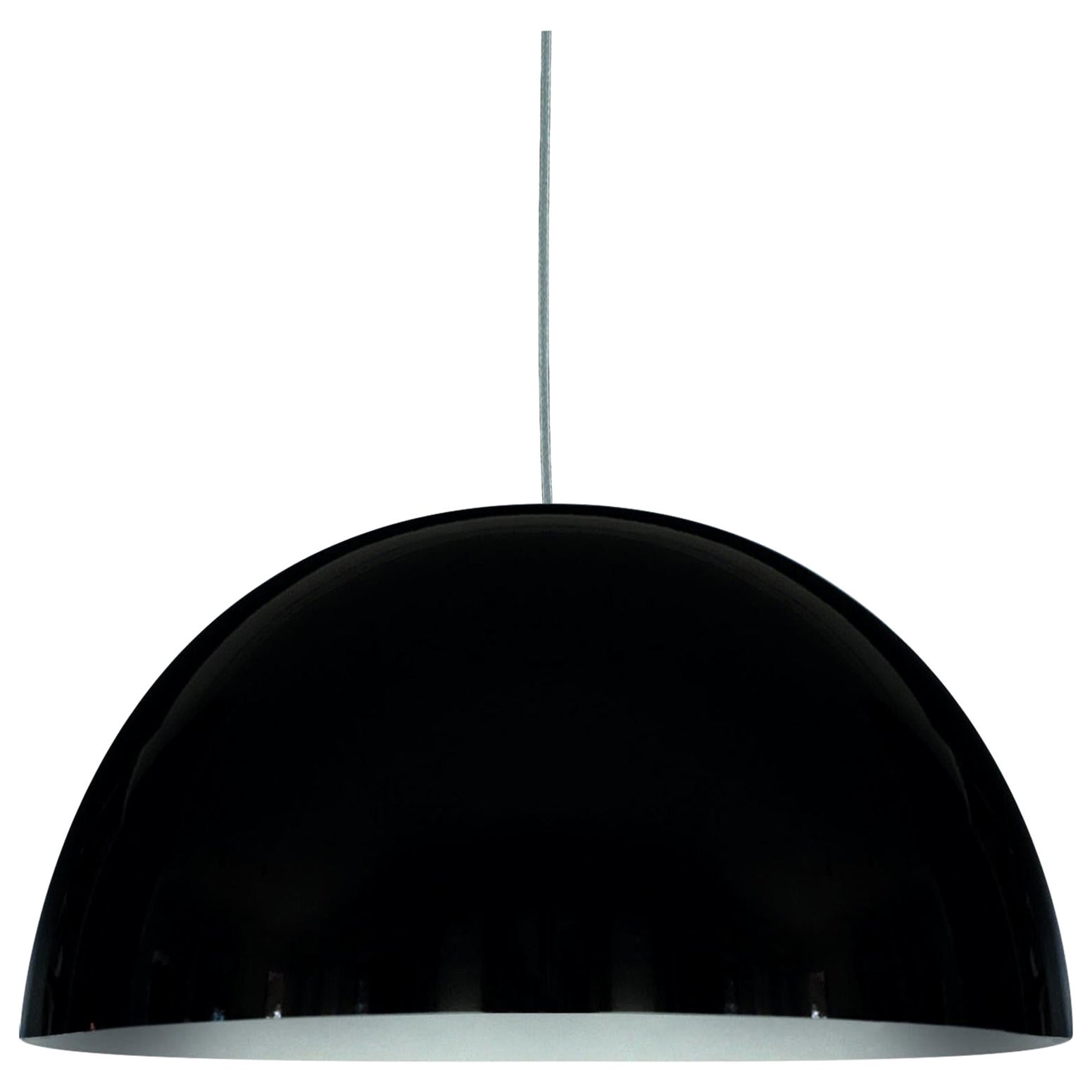
A rare ceiling lamp or chandelier (model Step) with a semisphere lampshade in black lacquered aluminum, it was designed by Elio Martinelli and produced by the Italian company, Martinelli Luce during the 1970s.
The concentric shapes repeated in a precise sequence, from which the Step lamp is structured, reveal an attitude of the designer in search of geometric essentiality. It is a lamp characterized by simple and functional lines in which all the elements are inserted into each other reducing to a disk a few centimeters high, with closing system and telescopic opening. Its particular metal lamellar structure recalls some of the most famous lamps by Alvar Aalto and the hexagonal lamp designed in 1959 by Bruno Munare for Danese.
Literature: Emiliana Martinelli, Elio Martinelli e Martinelli Luce, Milano, Mondadori Electa, 2018 pg 155.
Martinelli Luce was born in 1950 thanks to the intuition of Elio Martinelli, one of the most significant designers of the sixties and seventies in the field of lighting, able to transmit to his daughter Emiliana (today at the head of the company) the passion and rigor in her work characterized by an aesthetic language inspired by nature and the purity of geometric shapes, factors that have allowed the brand to become a benchmark in its industry.
Over the years the company collaborates with many important designers such as Gae Aulenti Sergio Asti, Richard Neutra, Studio Orlandini, Marc Sadler, Luc Ramael, Studio Lucchi
Biserni, Angelo Micheli, Karim Rashid, Massimo Farinatti, Paola Navone, Alfonso Femia and in recent years young talents such as Brian Sironi, Marco De Santi - Studio Natural, Studio 4P1B, Studio Habits, Adolini+Simonini Associati and many others.
''We believe in the essential, which for us means no frills or unnecessary frills; the lines we design and that give shape and outline to our products, are both the minimum and the maximum. It is not simply a matter of design: is design concept and production philosophy.
We want to stimulate new points of view by inspiring through our products the curiosity and creativity of people; whether they are engineers, architects, dealers or simply private. To make them see with new eyes what appears to them daily as ordinary.
Through these simple and priceless values for us we are able to remain faithful to the creative culture that pervades every project or product''.
- Creator:Elio Martinelli (Designer),Martinelli Luce (Manufacturer)
- Dimensions:Height: 15.75 in (40 cm)Diameter: 27.56 in (70 cm)
- Power Source:Hardwired
- Lampshade:Included
- Style:Post-Modern (Of the Period)
- Materials and Techniques:
- Place of Origin:
- Period:
- Date of Manufacture:1977
- Condition:Wear consistent with age and use.
- Seller Location:Cascina, IT
- Reference Number:1stDibs: LU5304235099542
About the Seller
4.9
Gold Seller
Premium sellers maintaining a 4.3+ rating and 24-hour response times
1stDibs seller since 2020
135 sales on 1stDibs
Typical response time: 4 hours
- ShippingRetrieving quote...Shipping from: Borgo a Buggiano, Italy
- Return Policy
More From This Seller
View AllElio Martinelli Step Chandelier in White Lacquered Metal by Martinelli Luce 70s
By Elio Martinelli, Martinelli Luce
Located in Cascina, Pisa
A rare ceiling lamp or chandelier (model Step) with a semisphere lampshade in white lacquered aluminum, it was designed by Elio Martinelli and produced by the Italian company, Martinelli Luce during the 1970s.
The concentric shapes repeated in a precise sequence, from which the Step lamp is structured, reveal an attitude of the designer in search of geometric essentiality. It is a lamp characterized by simple and functional lines in which all the elements are inserted into each other reducing to a disk a few centimeters high, with closing system and telescopic opening. Its particular metal lamellar structure recalls some of the most famous lamps by Alvar Aalto and the hexagonal lamp designed in 1959 by Bruno Munare for Danese.
Literature: Emiliana Martinelli, Elio Martinelli e Martinelli...
Category
Vintage 1970s Italian Post-Modern Chandeliers and Pendants
Materials
Metal
Achille
Pier Giacomo Castglioni KD6 Hanging Lamp for Kartell 1959 Italy
By Achille
Pier Giacomo Castiglioni, Kartell
Located in Cascina, Pisa
The hanging lamp model "KD 6” was designed by the brothers Castiglioni and was among the first lamps produced by the famous Italian company Kartell.
KD 6 lamp ...
Category
Vintage 1960s Italian Mid-Century Modern Chandeliers and Pendants
Materials
Brass
Achille
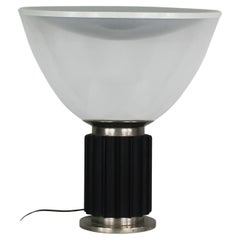
Pier Giacomo Castiglioni Taccia Black Table Lamp by Flos 1970s
By Flos, Achille
Pier Giacomo Castiglioni
Located in Cascina, Pisa
Taccia table lamp with base in polished and nickel-plated steel, and a black lacquered aluminum body. The adjustable light diffuser was made in hand-blown glass with a lacquered whit...
Category
Vintage 1960s Italian Mid-Century Modern Table Lamps
Materials
Aluminum, Brass, Steel
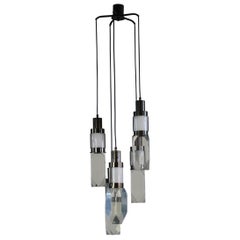
Gaetano Missaglia Ceiling Lamp with Lampshades in Lucite Plexiglass 1970s Italy
By Gaetano Missaglia
Located in Cascina, Pisa
Mid-Century Modern ceiling lamp with five lampshades in chromed metal and lucite plexiglass.
Designed by Gaetano Missaglia and manufactured in Italy during the 1970s.
Acrylic, also known as the brand names lucite or Plexiglas, was developed in the 1930s. Its scientific name is Poly(methyl methacrylate), or PMMA, and it is a type of thermoplastic, which is a plastic Material that is moldable at extremely hot temperatures and solid once cool.
The company that created acrylic licensed it in two ways; first as Plexiglas to be a glass replacement, and afterwards as lucite for commercial uses in 1937. Commercially, lucite was used in jewelry, handbags, and cosmetics packaging. Plexiglas, in comparison, was often used for larger projects, such as aircraft windows, lenses for lighthouses, and aquariums.
Before it was used widespread for furniture, acrylic was being utilized for military purposes, as wartime was quickly approaching. During World War 2 (1939-1945), the country’s resources were mostly directed to military uses, and acrylic was no different. Acrylic, as Plexiglas, was used to help the military, including as airplane windshields and submarine periscopes.
Despite that, some people began using acrylic to make furniture. In 1939, Helena Rubinstein, a wildly successful cosmetics mogul and art collector, commissioned to Ladislas Medgyesan an entire suite of acrylic furnishings for her NYC apartment, including an illuminated acrylic bed in her bedroom and acrylic chairs for business meetings.
When the war ended in 1945, acrylic was ready to be worked with in design on a larger scale. The company licensed lucite widely, making it much more available across every industry. It steadily gained momentum in the world of design, with artists and designers being inspired by its moldability and translucense. In 1959, French designer Erwine Laverne told a New York Times reporter, “The most important element in rooms is people, not furniture,” speaking to the growing popularity and importance of the clear furniture.
But acrylic furniture hit its peak popularity in the 1960s and ‘70s, as more acrylic furniture designers and artists entered the scene. Glass artists began to take more of an interest in acrylics, especially taking advantage of acrylic’s flexibility, light weight, cost, and capacity to refract and filter light. Designers like John Mascheroni and Charles Hollis Jones, known as the Godfather of lucite, created iconic pieces that still look beautiful in today’s modern home.
Designers and artists alike loved the durability and look of acrylic. As Charles Hollis Jones put in an interview with Ravelin Magazine,
“I worked a lot with lucite when I first started. When I worked with the company that wanted me to go to Europe, they had me work with glass, ceramic, enamel. I went over there and the glass was always in the wrong color and it always broke. When the earthquakes came, I got visual proof of that. I like to work with acrylic because it does two wonderful things that glass doesn’t. It’s shatter-proof, first of all. I can also change the microstructure and make it one-tenth the strength of steel. And the most important thing it does: it carries light. Glass reflects light. lucite holds it and carries it. If you play with it, you can make a lens to look at something in space. It’s that good. It’s purer than crystal.”
In fact, acrylic was often used in chandeliers as well, mixed with other materials to make incredible striking designs that would have been much more difficult to achieve with glass.
Recently, acrylic furniture has once again risen in popularity. While many of the designs are timeless, more designers are coming forward with acrylic furniture for the modern home. In 2002, designer Philippe Starck introduced his Louis Ghost Chair, and the trend has only grown from there.
You’ll now find entirely acrylic pieces of home furnishings and accessories, as well as acrylic-detailed furniture all across the market. With so many designs, options, and knock-offs all across the market, we at clear home design...
Category
Vintage 1970s Italian Mid-Century Modern Chandeliers and Pendants
Materials
Metal
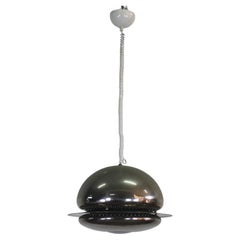
Tobia Scarpa Nictea Pendant Lamp in Nickel-Plated Brass by Flos 1960s
By Tobia Scarpa, Flos
Located in Cascina, Pisa
Nictea pendant lamp in nickel-plated brass, and glass was designed by Tobia Scarpa in 1961 and produced by Flos.
The Nictea lamp gives filtered and concentrated light thanks to the ...
Category
Vintage 1960s Italian Mid-Century Modern Chandeliers and Pendants
Materials
Brass, Nickel
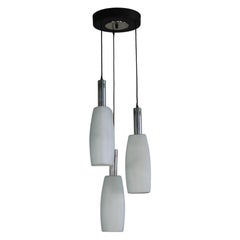
Stilnovo Chandelier with Lampshades in Opaline Glass Italian Manufacture 1970s
By Stilnovo
Located in Cascina, Pisa
Chandelier with three lampshades in opaline glass and a structure in enameled and nickel-plated metal.
Manufactured by Stilnovo in 1970s Italy.
Stilnovo was an important lighting c...
Category
Vintage 1970s Italian Mid-Century Modern Chandeliers and Pendants
Materials
Metal
You May Also Like
Vico Magistretti Suspension Lamps
Sonora
Medium Black by Oluce
By Vico Magistretti, Oluce
Located in Barcelona, Barcelona
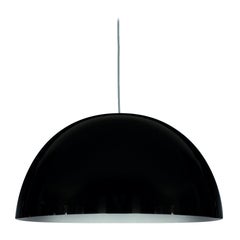
Suspension lamp 'Sonora' designed by Vico Magistretti in 1976.
Suspension lamp giving direct and reflected light. Turned aluminium reflector. Manufactured by Oluce, Italy.
The st...
Category
2010s Italian Mid-Century Modern Chandeliers and Pendants
Materials
Aluminum
$753 Sale Price / item
25% Off
Vico Magistretti Suspension Lamps
Sonora
Large Black by Oluce
By Oluce, Vico Magistretti
Located in Barcelona, Barcelona
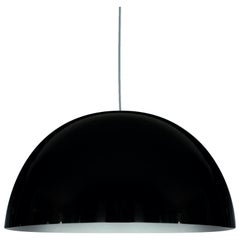
Suspension lamp 'Sonora' designed by Vico Magistretti in 1976.
Suspension lamp giving direct and reflected light. Turned aluminium reflector. Manufactured by Oluce, Italy.
The st...
Category
2010s Italian Mid-Century Modern Chandeliers and Pendants
Materials
Aluminum
$941 Sale Price / item
25% Off
Vico Magistretti Suspension Lamps
Sonora
Large Black by Oluce
By Oluce, Vico Magistretti
Located in Barcelona, Barcelona
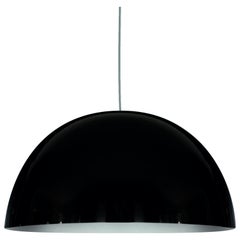
Suspension lamp 'Sonora' designed by Vico Magistretti in 1976.
Suspension lamp giving direct and reflected light. Turned aluminium reflector. Manufactured by Oluce, Italy.
The st...
Category
2010s Italian Mid-Century Modern Chandeliers and Pendants
Materials
Aluminum
$941 Sale Price / item
25% Off
Vico Magistretti Suspension Lamp
Sonora
490 Black by Oluce
By Vico Magistretti, Oluce
Located in Barcelona, Barcelona
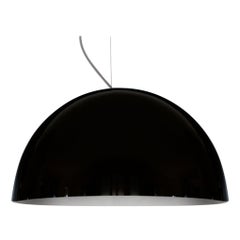
Suspension lamp 'Sonora' designed by Vico Magistretti in 1976.
Suspension lamp, giving direct and diffused light in blown PMMA. Manufactured by Oluce, Italy.
The story of Sonora is ...
Category
2010s Italian Mid-Century Modern Chandeliers and Pendants
Materials
Acrylic
$2,341 Sale Price / item
25% Off
Jet Black Cupole 80 Hanging Lamp by Giò Colonna Romano
Located in Geneve, CH
Jet Black Cupole 80 Hanging Lamp by Giò Colonna Romano
Dimensions: Ø 80 x H 40 cm.
Materials: Polyethylene.
Available in three sizes. Prices may vary. This product is suitable for i...
Category
2010s Italian Post-Modern Chandeliers and Pendants
Materials
Other
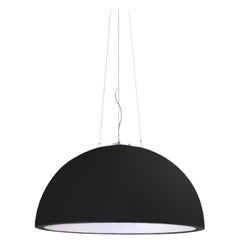
Stilnovo Original Black Shade Glass Pendant Light, Italy, 1950
By Stilnovo, Bruno Gatta
Located in Vienna, AT
Rare Stilnovo pendant light (marked) Italy, 1950; Applied manufacturer's label to inner shade.
Early vintage original light. Produced by the famous manufacturer Stilnovo in the 1950...
Category
Vintage 1950s Italian Mid-Century Modern Chandeliers and Pendants
Materials
Brass, Aluminum, Chrome
More Ways To Browse
Used Elio
Martinelli Luce Vintage
Hexagon Lamp
Elio Martinelli For Martinelli Luce
Neutra Richard
70s Lacquer
Adolini Simonini
Standing Chandelier
Stilnovo Six Chandelier
Swedish Empire Chandelier
Tom Blue Furniture
Tronchi Tube
Ufo Pendant Light
Venini Waterfall
Vintage 12 Light Crystal Chandelier
Vintage Bar Lights
White Ball Chandelier
Wooden Chain