Want more images or videos?
Request additional images or videos from the seller
1 of 12

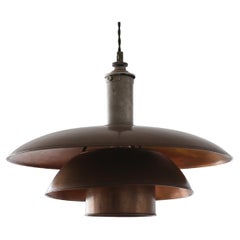
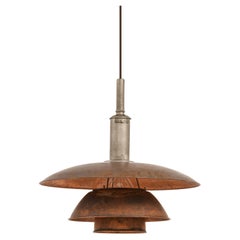
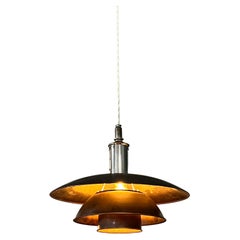
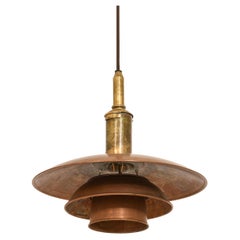
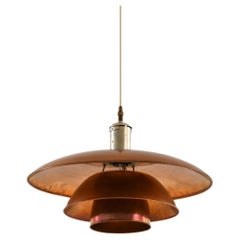
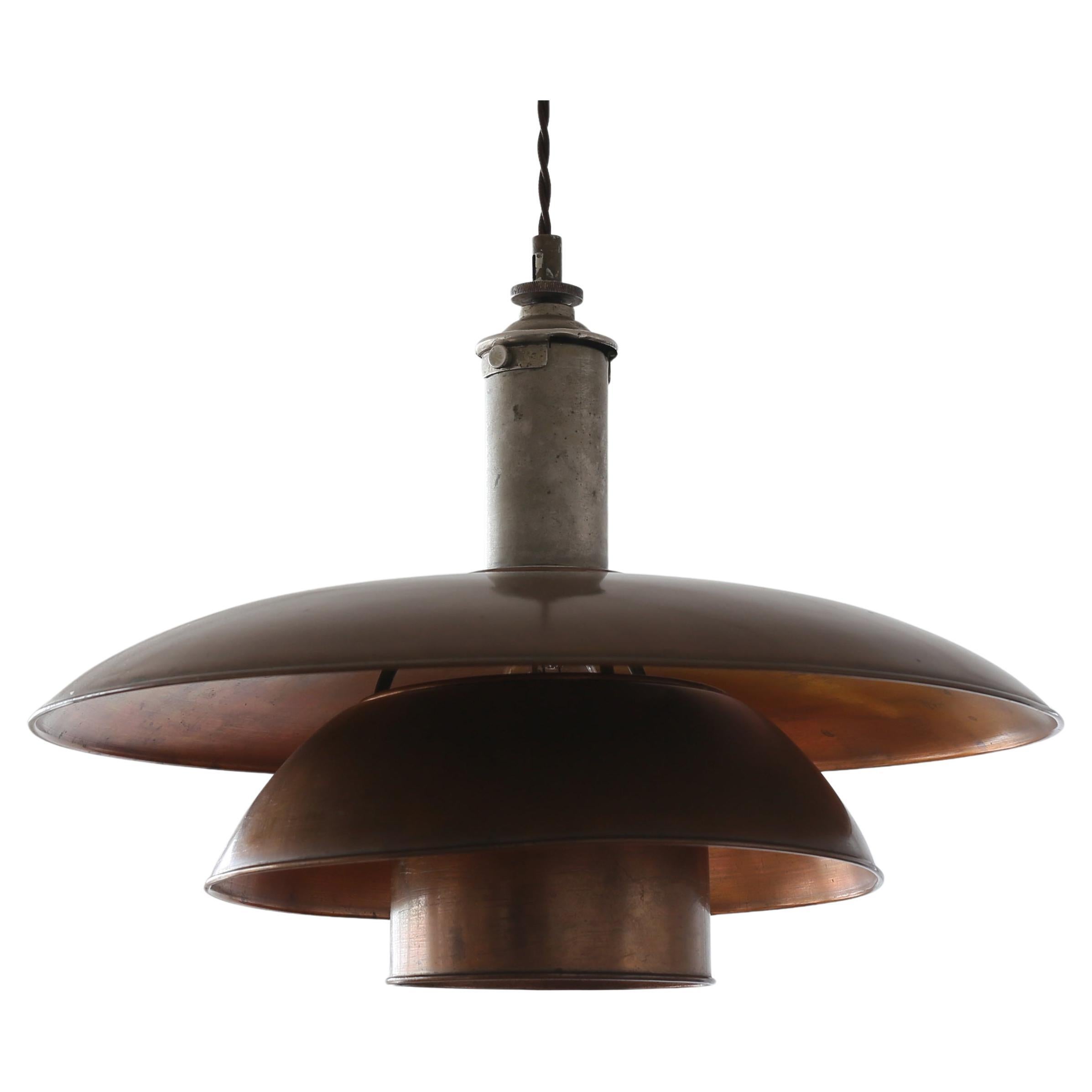
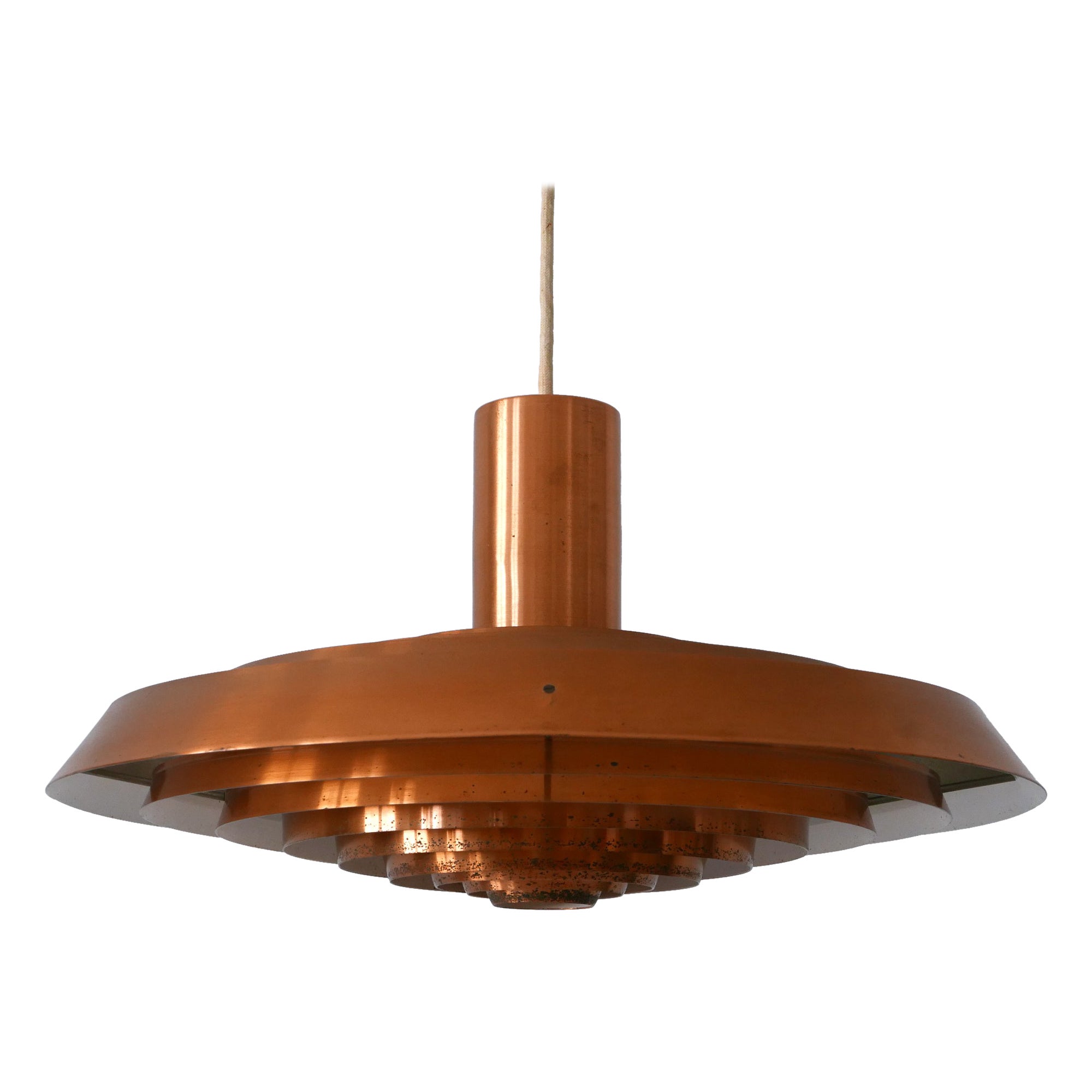
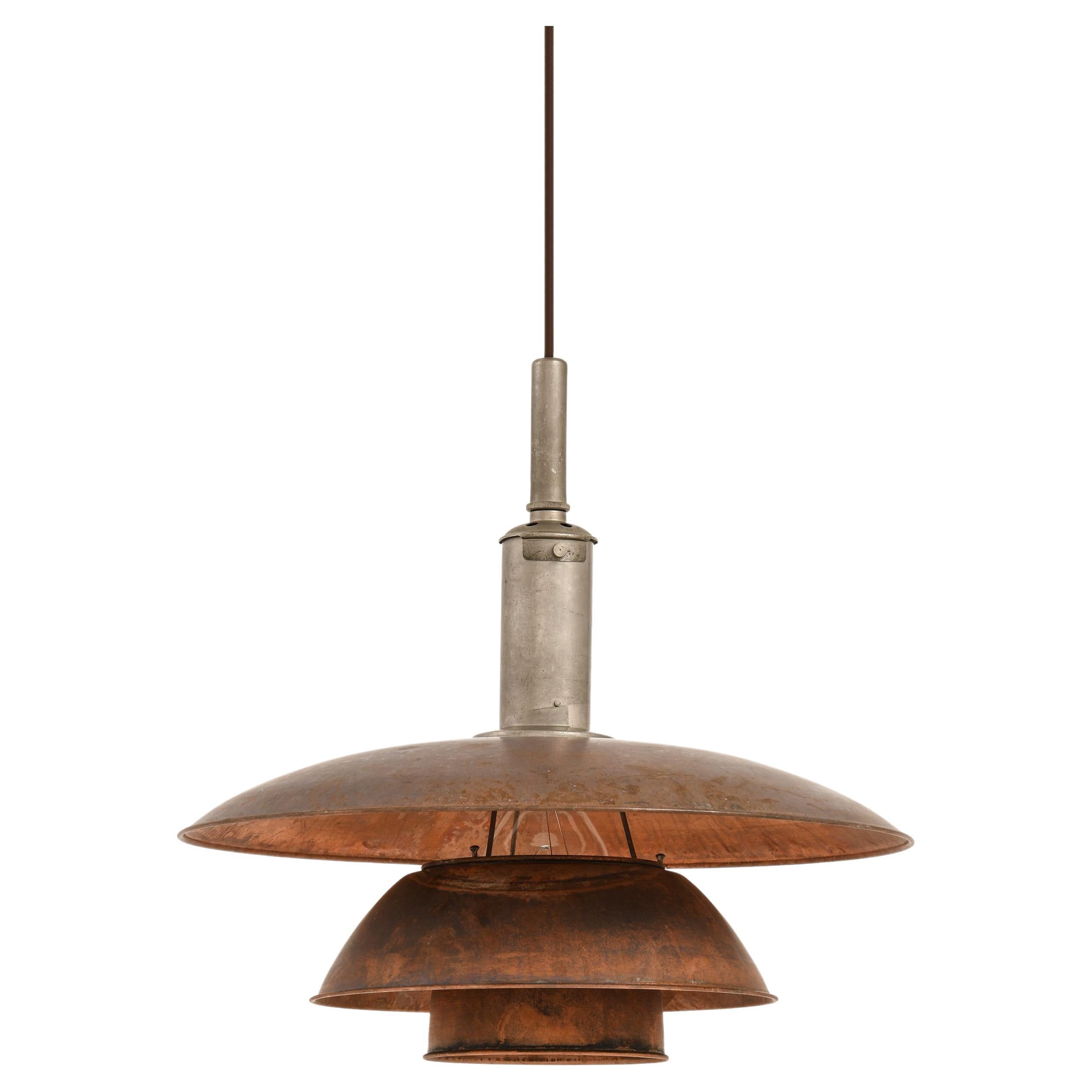
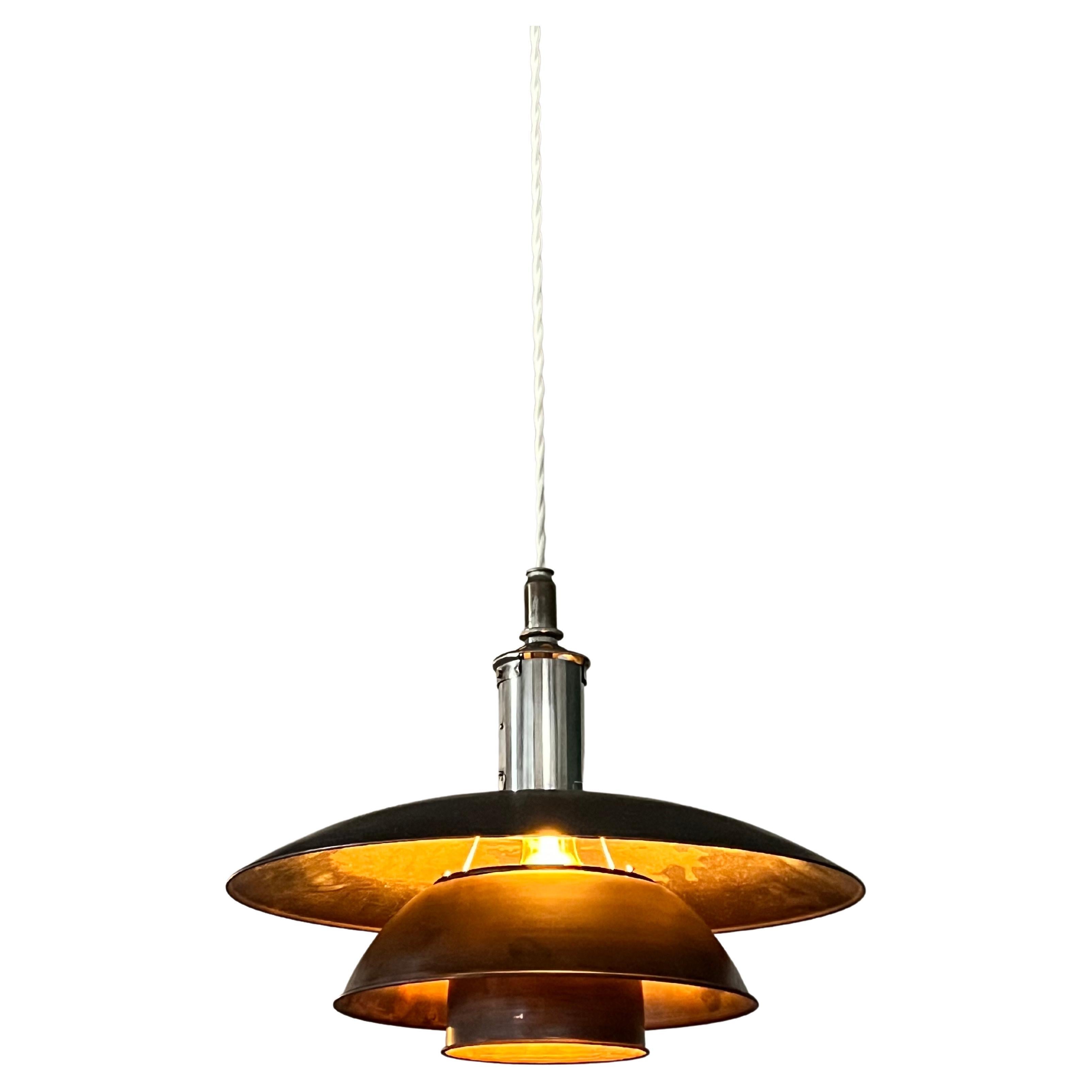
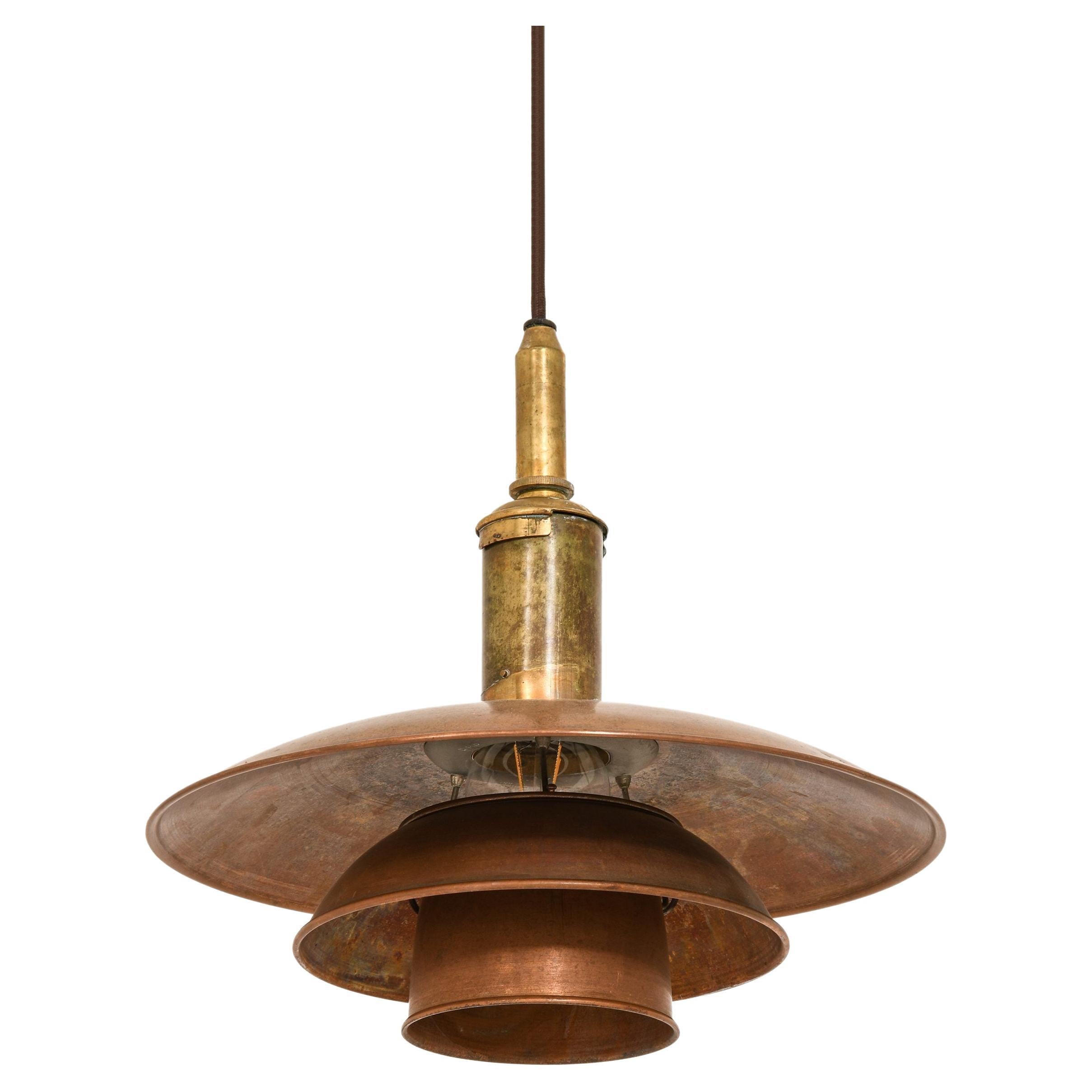
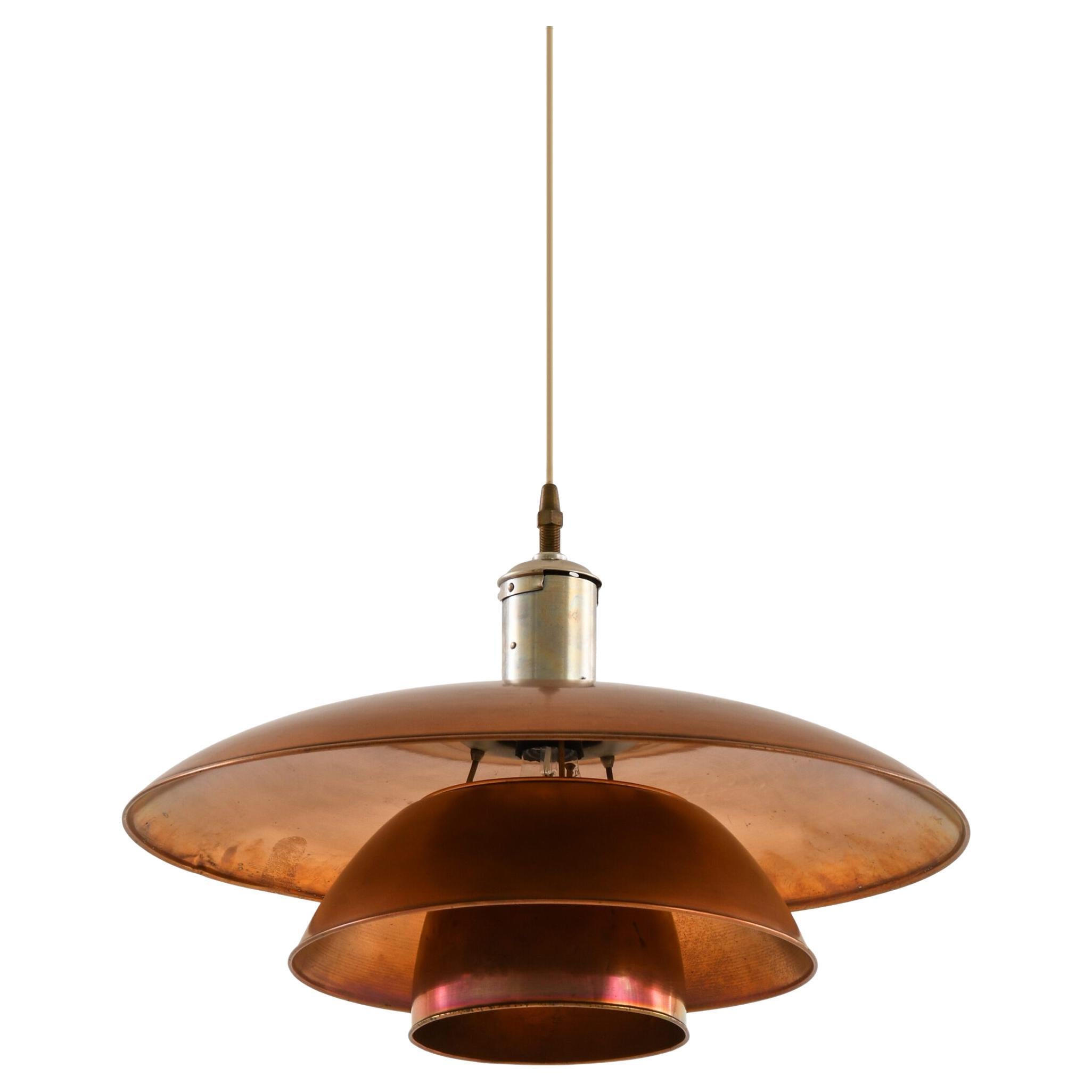
Large Poul Henningsen Pendant Patented in Copper, L. Poulsen Denmark 1930s

$35,773.87
£26,758.57
€30,000
CA$49,424.53
A$53,892.15
CHF 28,600.03
MX$651,538.67
NOK 361,954.08
SEK 331,781.26
DKK 228,550.47

About the Item

Rare and Large PH Pendant in copper and brass, designed by Poul Henningsen and manufactured by Louis Poulsen. Early model. Stamped 'Patented' Pendant with three shades that gives a beautiful light distribution. Good vintage condition with patina and a stunning attribution to any interior. Literature: Tina Jørstian and Poul Erik Munk Nielsen, eds., Light Years Ahead, The Story of the PH Lamp, Copenhagen, 1994, pp. 159, 20 Erik Steffensen, Poul Henningsen, Denmark, 2005, p. 79 Poul Henningsen: Poul Henningsen (9 September 1894-31 January 1967) was a Danish author, critic, architect, and designer, who was one of the leading figures of the cultural life of Denmark between the World Wars. In Denmark, he often is referred to, simply, as PH. PH's most valuable contribution to design was in the field of lighting. He designed the PH-lamp in 1925, which, like his later designs, used carefully analyzed reflecting and baffling of the light rays from the bulb to achieve glare-free and uniform illumination. His works are featured in the world's leading museums.
  • Creator:
    Louis Poulsen (Manufacturer),Poul Henningsen (Designer)
  • Dimensions:
    Height: 18.9 in (48 cm)Diameter: 19.69 in (50 cm)
  • Power Source:
    Hardwired
  • Voltage:
    220-240v
  • Lampshade:
    Included
  • Style:
    Scandinavian Modern (Of the Period)
  • Materials and Techniques:
  • Place of Origin:
  • Period:
  • Date of Manufacture:
    1930s
  • Condition:
    Wear consistent with age and use. Professional re-wired.
  • Seller Location:
    WIJCKEL, NL
  • Reference Number:
    1stDibs: LU8306245747792

More From This Seller

View All
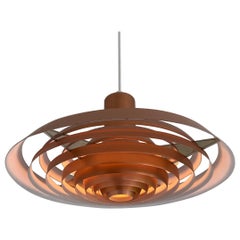
Midcentury Poul Henningsen Copper Pendant Langelinie Louis Poulsen Denmark 1950s
By Poul Henningsen, Louis Poulsen
Located in WIJCKEL, NL
Beautiful and rare Poul Henningsen pendant lamp for Louis Poulsen designed in 1958 for the Langelinie Pavillion in Copenhagen. Nine circul...
Category

Vintage 1950s Danish Scandinavian Modern Chandeliers and Pendants

Materials

Metal, Copper

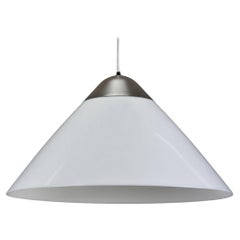
Hans Wegner white Opala Pendant for Louis Poulsen Denmark
By Louis Poulsen, Hans J. Wegner
Located in WIJCKEL, NL
This largeset pendant-chandelier lamp has a top in grey lacquered metal and high gloss acryl shade opal. The maximum bulb is 200W. Marked inside by Louis Poulsen. The Opala lamp...
Category

Vintage 1970s Danish Scandinavian Modern Chandeliers and Pendants

Materials

Metal

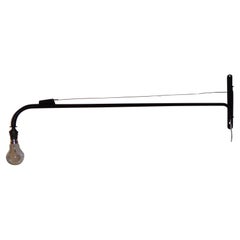
Jean Prouvé Swing Jib Wall Lamp Mid-century French Sconce, 1950s
By Jean Prouvé
Located in WIJCKEL, NL
In terms of purism and minimalism, this lamp, in the style of Jean Prouvé’s wall lamp ‘Swing Jib’ or ‘Potence’ is almost sovereign. Maximal funct...
Category

Vintage 1950s French Mid-Century Modern Wall Lights and Sconces

Materials

Brass, Steel

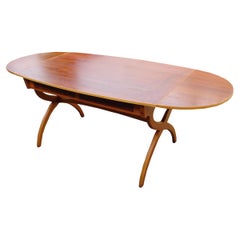
Borge Mogensen Drop-Leaf Dining Table in Teak for Soborg Mobelfabrik, Denmark
By Børge Mogensen
Located in WIJCKEL, NL
Danish Modernism free-standing office desk or dining table by Borge Morgensen, made of fined teak top and beech frame, fitted with drop-leaves on ...
Category

Vintage 1950s Danish Scandinavian Modern Dining Room Tables

Materials

Beech, Teak

Italian Circle Scone Wall lights by Rosario Hurtado and Roberto Feo, model Guau
Located in WIJCKEL, NL
Put light and shadow at play with this cool decorative scone or wall lamp. The "Guau" mood creating lamp will look great solo, as a pair or in groups, illuminating your space while e...
Category

Vintage 1980s Spanish Post-Modern Wall Lights and Sconces

Materials

Metal

Kaare Klint Sofa # 5011 in Original Cognac Leather Rud Rasmussen, Denmark 1940s
By Rud Rasmussen, Kaare Klint
Located in WIJCKEL, NL
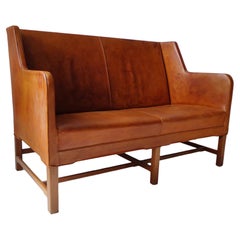
Two-seater sofa model 5011 in original cognac leather and six-legged mahogany base. Produced by Rud. Rasmussen Cabinetmakers, Denmark. Minor marks on the frame, patina to the leather. Back covered in original canvas. Shown at the Copenhagen Cabinetmakers’ Guild exhibition in 1935. Signed with manufacturer’s label to underside: (Rud. Rasmussens Snedkerier). Kaare Klint is widely recognized as the father of Danish modern design. It is hard to overstate his influence. He developed an entirely new analytical approach to furniture design that his students at the Danish Academy of Art would emulate for years to come, yet was also inspired by historic designs from various cultures, modernizing and re-interpreting classic pieces for new generations. Literature: Gorm Harkær, Klintiana: “Kaare Klint”, vol.2, pg 94. Kaare Klint (1888-1954) is regarded as the founding father of Danish Modernim. As an architect, furniture designer and leading professor at the Department of Furniture Design at the Royal Danish Academy of Fine Arts, Copenhagen, Klint established the principles of modern Danish furniture by combining a profound appreciation of traditional construction techniques with a modernist emphasis on function and a rejection of ornaments. Klint’s design was always based on relentless research; he never compromised. Every piece had to fulfill its purpose, be completely clear in its construction with dimensions and proportions corresponding to the human body and display materials and craftsmanship of the highest quality. Logic, often using a mathematical system of measures, and a constructive way of thinking were the foundation of Klint’s philosophy of furniture design. Like many of his contemporaries, counting Le Corbusier and Walter Gropius, he advocated standardization and functional requirements and dismissed the use of all ornamentation. But Klint realized his vision in wood and leather, using traditional craftsmen and working methods and often finding inspiration in historical models. In this way, he charted the course for an alternative Nordic Functionalism that idealized the workshop and the collaboration between furniture architects and cabinetmakers as opposed to the factory. Kaare Klint’s first major work was a collaboration with his mentor, the architect Carl Petersen. In 1914 they were commissioned to design furniture and fixtures for Faaborg Art Museum. One of the highlights to emerge from this commission was the Faaborg chair, a light and elegant chair with clear references to classical furniture. The construction and proportions of an 18th century English Chippendale chair was also clearly visible in the famous Red Chair, designed in 1927 for the lecture hall at The Museum of Arts and Crafts (now Design Museum Denmark), but with its straight back deprived of all unnecessary decoration and its beautiful Niger leather, the Red Chair was far from an imitation. Other important works include The Propeller Stool (1927), The ‘Mix Chair’ designed in collaboration with his pupil Edvard Kindt-Larsen in 1930, the Safari Chair (1930), The Deck Chair (1939 and The Church Chair designed in 1936 for the Bethlehem Church in Copenhagen. Also noteworthy are Klint’s well-proportioned cabinets and wardrobes...
Category

Vintage 1940s Danish Scandinavian Modern Sofas

Materials

Leather, Mahogany

You May Also Like

Early Poul Henningsen 4/4 Copper Ceiling Lamp, 1926
By Louis Poulsen, Poul Henningsen
Located in Copenhagen, DK
Rare and very early Poul Henningsen 4/4 Ceiling lamp in Copper and Nickel plated Steel. Designed by Poul Henningsen 1926 and made by Louis Poulsen, Denmark the same year in the sho...
Category

20th Century Danish Scandinavian Modern Chandeliers and Pendants

Materials

Metal, Copper, Nickel

Rare Copper Plate Pendant Lamp by Poul Henningsen for Louis Poulsen Denmark 1958
By Louis Poulsen, Poul Henningsen
Located in Munich, DE
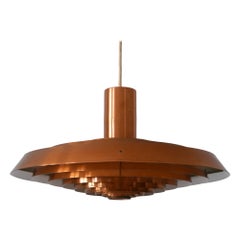
Extremely rare, highly decorative and elegant Mid-Century Modern 'Plate' or 'Tallerken' pendant lamp or hanging light. With wonderful light effect. Designed by Poul Henningsen for Lo...
Category

Vintage 1950s Danish Mid-Century Modern Chandeliers and Pendants

Materials

Copper

Ceiling Lamp in Copper and Nickel Plated Steel by Poul Henningsen, 1920 s
By Poul Henningsen
Located in Limhamn, Skåne län
Ceiling Lamp in Copper and Nickel Plated Steel by Poul Henningsen, 1920's Additional Information: Material: Copper, nickel plated steel Style: Mid century, Scandinavian Rare ceiling...
Category

20th Century Danish Scandinavian Modern Chandeliers and Pendants

Materials

Copper, Steel

Hanging copper Poul Henningsen PH4/4 1930 s original Louis Poulsen Denmark Rare
By Poul Henningsen, Louis Poulsen
Located in Forest, BE
Spectacular copper and brass nickeled suspension lamp made in the 1930s at the famous Louis Poulsen factory. The lamp come in few parts which includes 3 copper shades. Easy to fix install. The lamp remain in excellent condition and is ready to be used as she got a new cable in cotton. You can see lots of patina and traces of time. It becomes really hard to find a good PH lamps these days. _____________________________________________________________ Poul Henningsen est le fils illégitime de l'auteure Agnès Henningsen et de l'écrivain satirique Carl Ewald. Il a passé une enfance heureuse dans une maison moderne qui a été souvent visitée par les intellectuels de la région. Entre 1911 et 1917, Poul Henningsen suit une formation d’architecte sans pourtant en obtenir le diplôme. Durant les années 1920, Poul Henningsen a fait sa percée littéraire. Il a édité la revue Kritisk Revy (1926-1928, "Examen critique») dans laquelle lui et ses collègues méprisent le style ancien et le conservatisme culturel, reliant ainsi les thématiques politiques de l'époque . En même temps, il débute comme écrivain pour une revue sur les bienfaits d'une vie simple, en harmonie avec la nature et une sexualité plus libre . Il était l'homme qui a fait des revues danoises des armes politiques au service de aile gauche sans abandonner son caractère de divertissement (la soi-disant PH-revues 1929-1932). En 1933, il édita son ouvrage le plus célèbre Hvad med Kulturen? ("Qu'en est-il de la culture ?") Une critique polémique, audacieuse et urgente de la vie culturelle danoise avec son snobisme et sa nostalgie du passé, en dépit de tous les efforts de la percée du modernisme. Il a essayé de faire un parallèle entre la pruderie, moralisateurs et penchants fascistes; il a également accusé les sociaux-démocrates de manquer d'une ligne culturelle ferme et conséquente. Ce livre ainsi que ses activités dans son ensemble lui ont donné une réputation de semi-communiste ("compagnon de route"). Dans cette période, il se tenait en fait proche des communistes sans les rejoindre. Il a participé à la propagande anti-fasciste, en essayant toujours de faire des connexions entre la culture et la politique. Parmi ses autres initiatives durant cette période, il y a eu Danmarksfilmen en 1935, (en français : Le Film du Danemark) aussi connu comme Danmarksfilm PH. C'est un film sans prétention et non traditionnel dépeignant la vie contemporaine dans le Danemark d'une manière vivante et un peu irrespectueuse dans lequel les visuels sont saccadés par les rythmes de jazz. Il a été condamné et déchiré par la plupart des critiques, mais il est plus tard réhabilité et est devenu l'un des classiques des films documentaires danois. Il a également écrit des manuscrits de films. Pendant la Seconde Guerre mondiale et l'Occupation allemande du Danemark il a gardé un profil bas et s'est enfui vers la Suède en 1943. Après la guerre, il s'est dissocié du communisme qui lui reprochant son humanitarisme de façade dans son attitude lors de l'accord conclu avec les nazis ainsi que pour son scepticisme croissant au sujet de l'Union soviétique et à bien des égards, il a été isolé. Cependant, il a continué à écrire et à débattre, et au cours des années 1960, la nouvelle génération à de nombreux égards a fait de lui une sorte de gourou. Dans ses dernières années, il est devenu un membre de l'Académie danoise et a soutenu le nouveau mouvement des consommateurs. À bien des égards, Poul Henningsen est l'homme qui a achevé les travaux de Georg Brandes...
Category

Vintage 1930s Danish Scandinavian Modern Chandeliers and Pendants

Materials

Brass, Copper, Nickel

Early Ceiling Lamp in Copper and Brass by Poul Henningsen, 1930 s
By Poul Henningsen
Located in Limhamn, Skåne län
Early Ceiling Lamp in Copper and Brass by Poul Henningsen, 1930's Additional Information: Material: Copper and brass Style: Mid century, Scandinavian Rare and early ceiling lamp mod...
Category

20th Century Danish Mid-Century Modern Chandeliers and Pendants

Materials

Copper, Brass

PH-5/5 Ceiling Lamp in Copper and Nickel by Poul Henningsen, 1940s
By Poul Henningsen, Louis Poulsen
Located in Limhamn, Skåne län
PH-5/5 Ceiling lamp in Copper and Nickel by Poul Henningsen, 1940s Additional Information: Material: Copper and nickel Style: Mid century, Scandinavian PH-5/5 Ceiling Lamp Produced ...
Category

Vintage 1940s Danish Mid-Century Modern Chandeliers and Pendants

Materials

Copper, Nickel