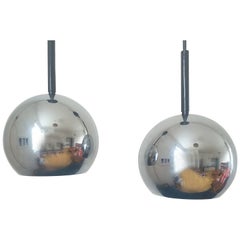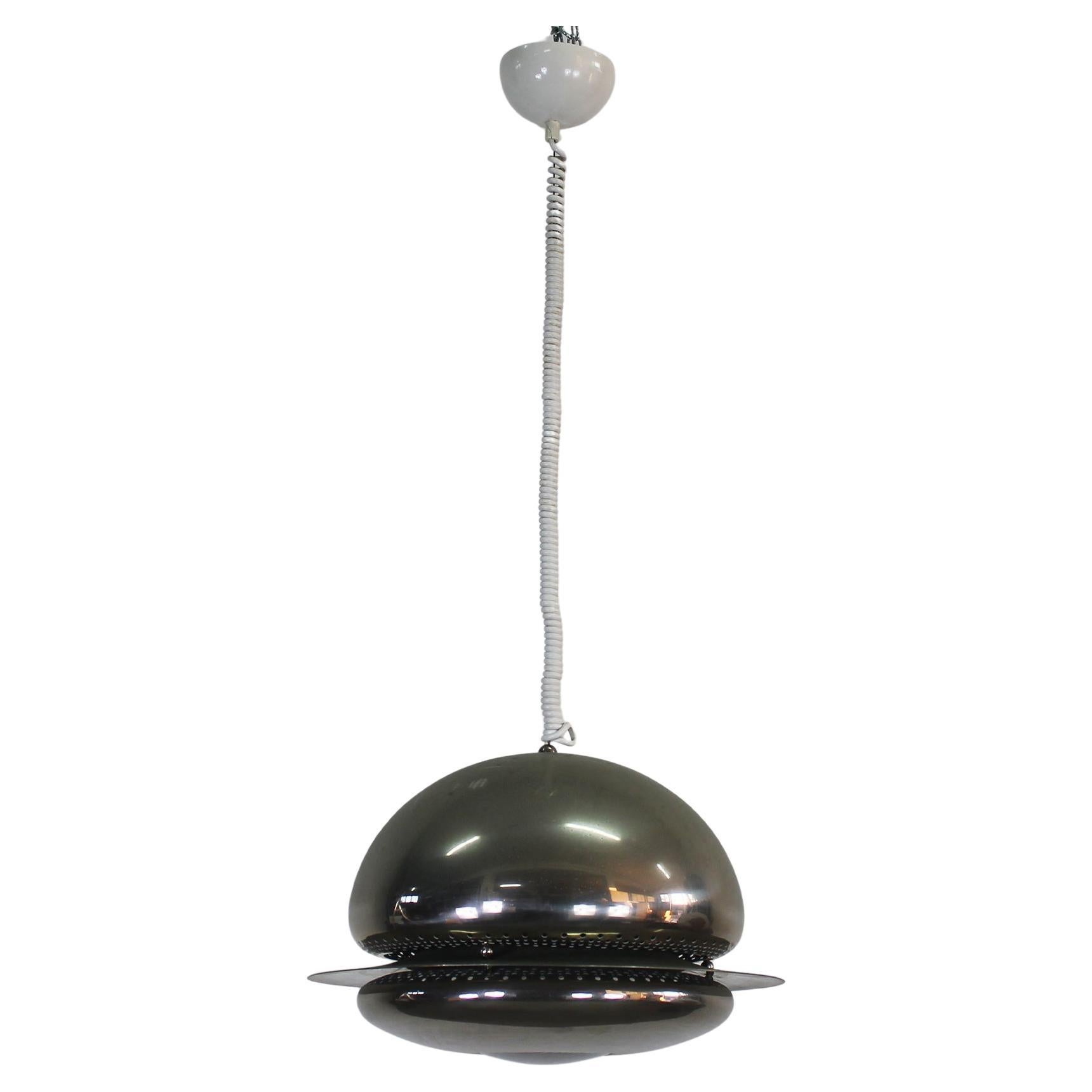
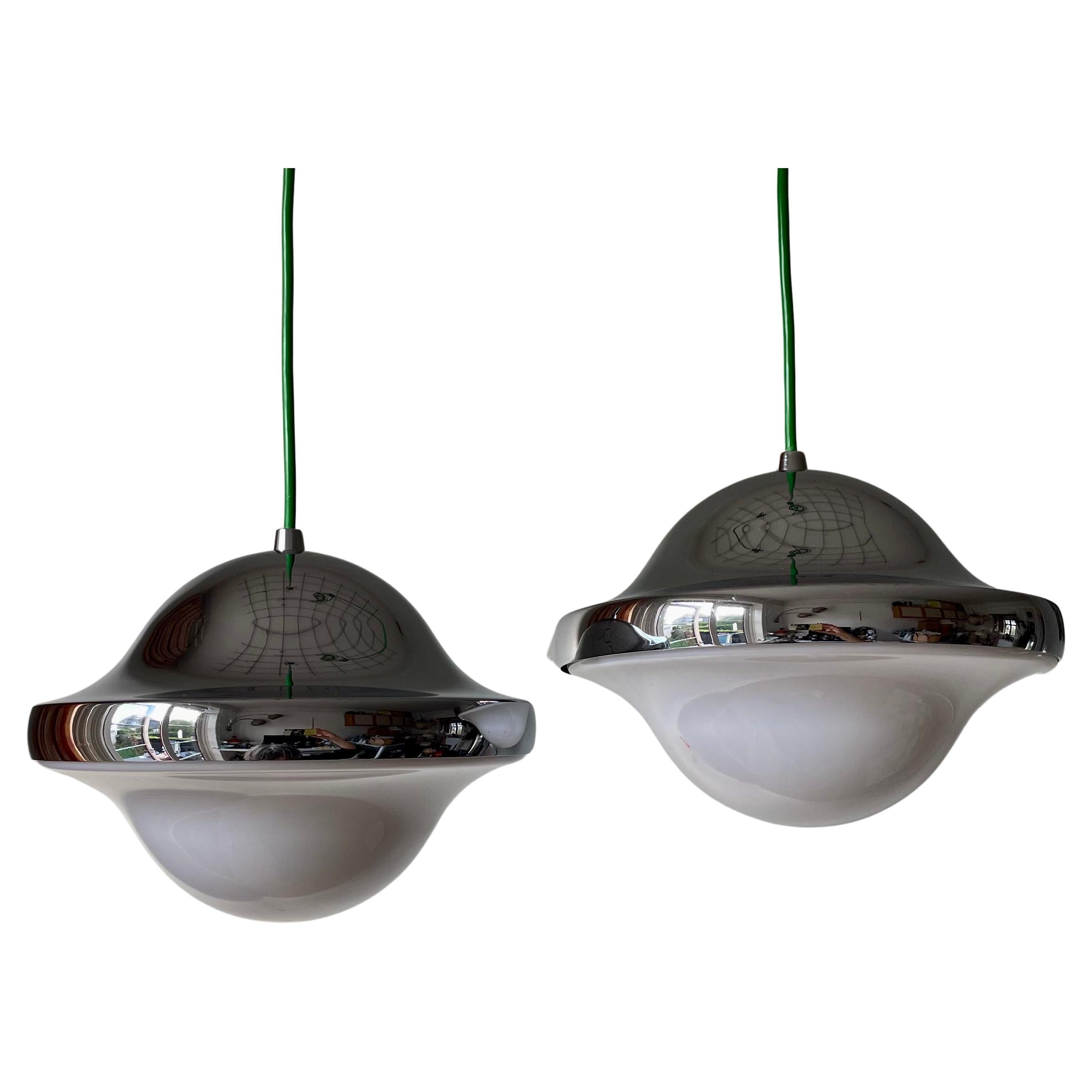
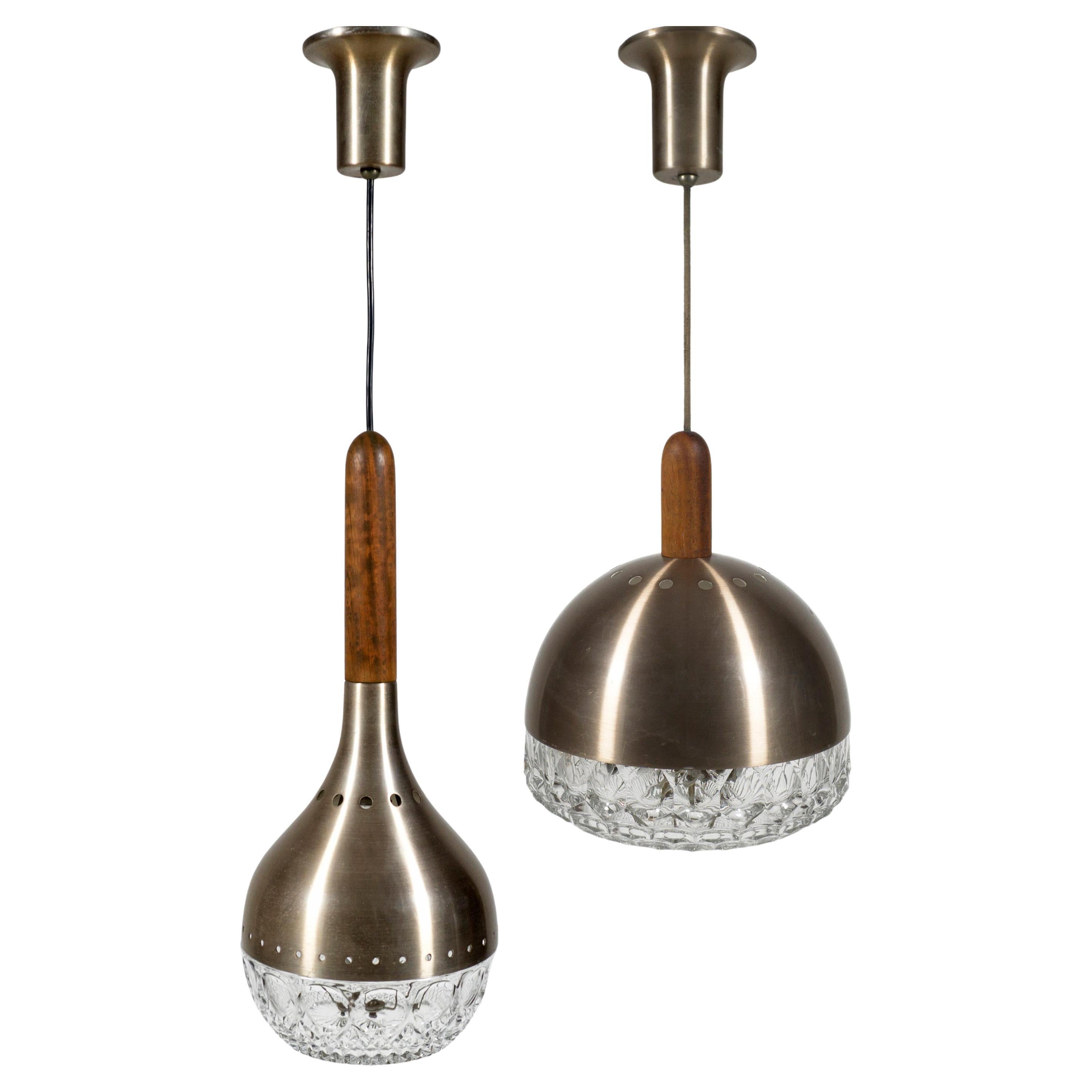
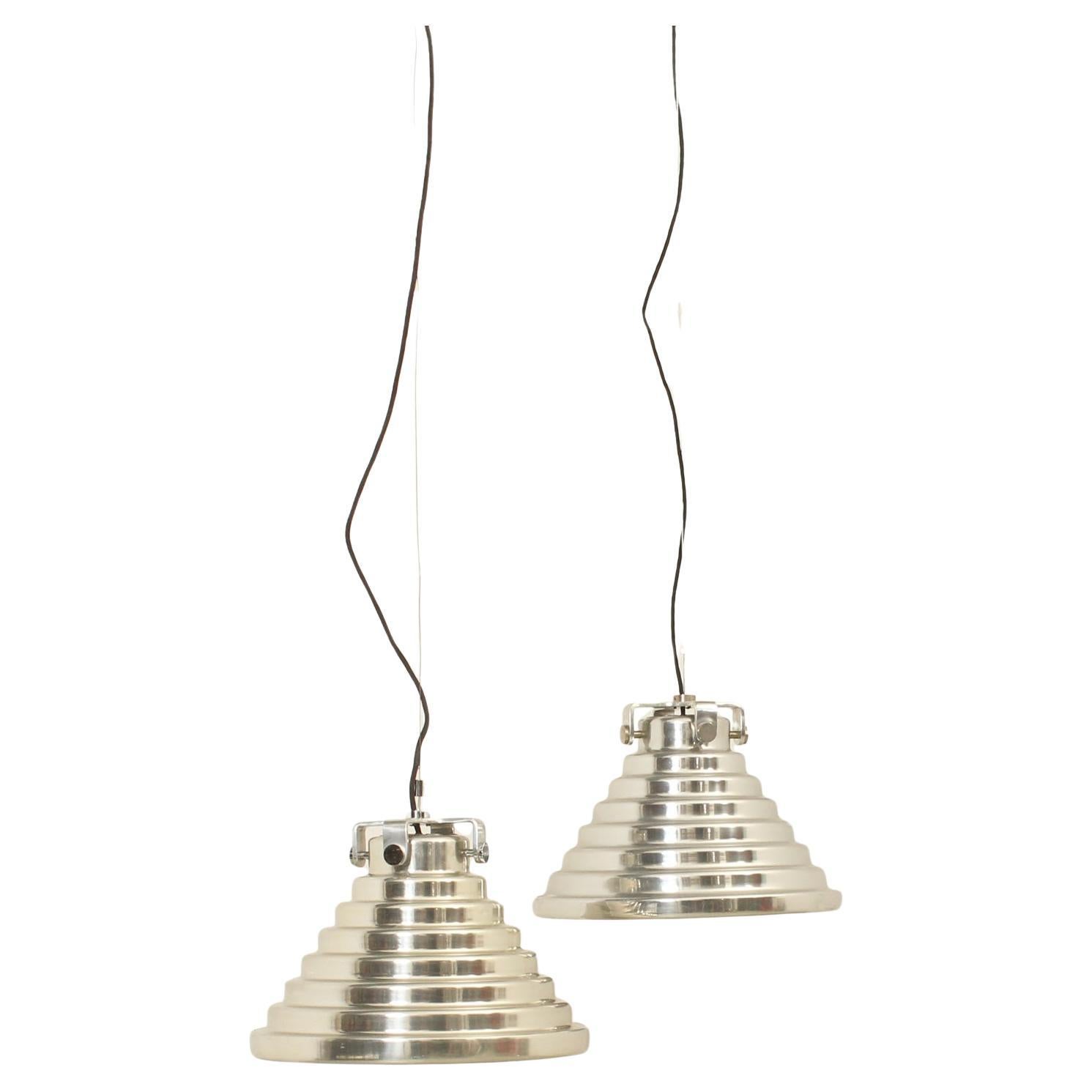
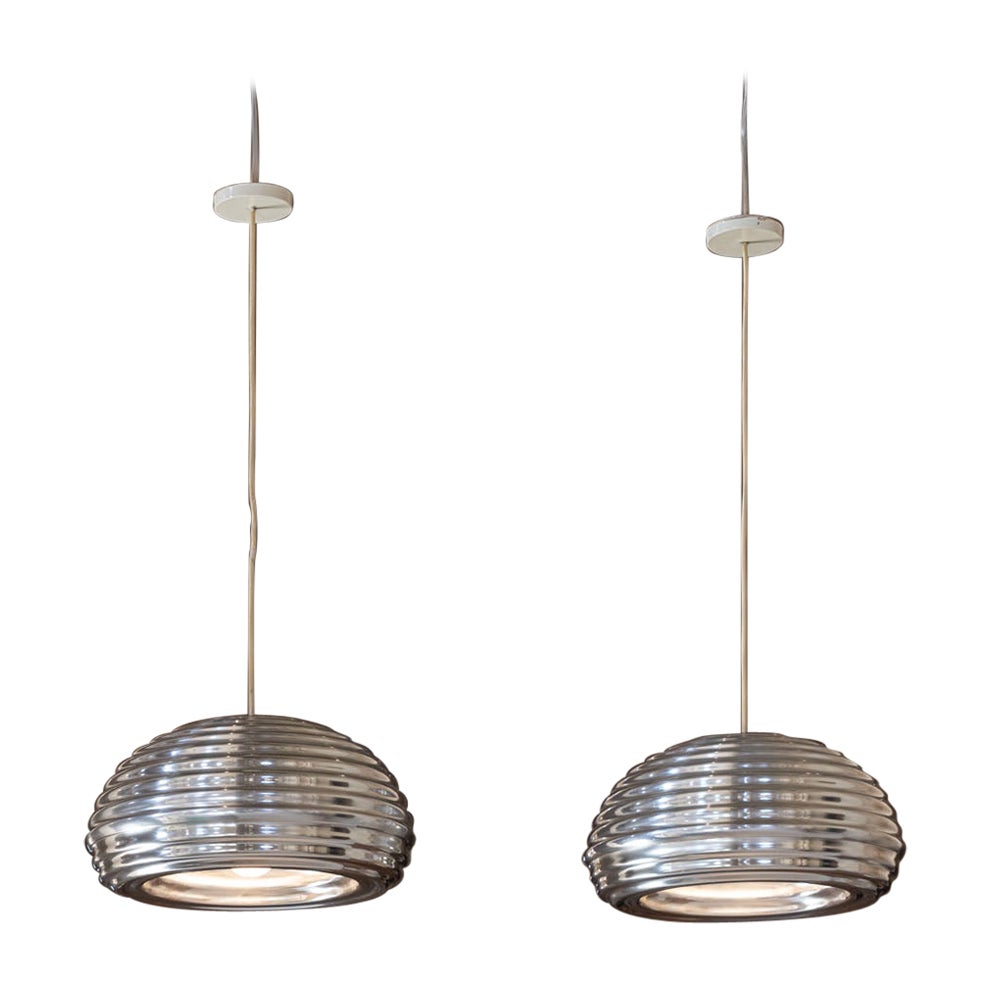
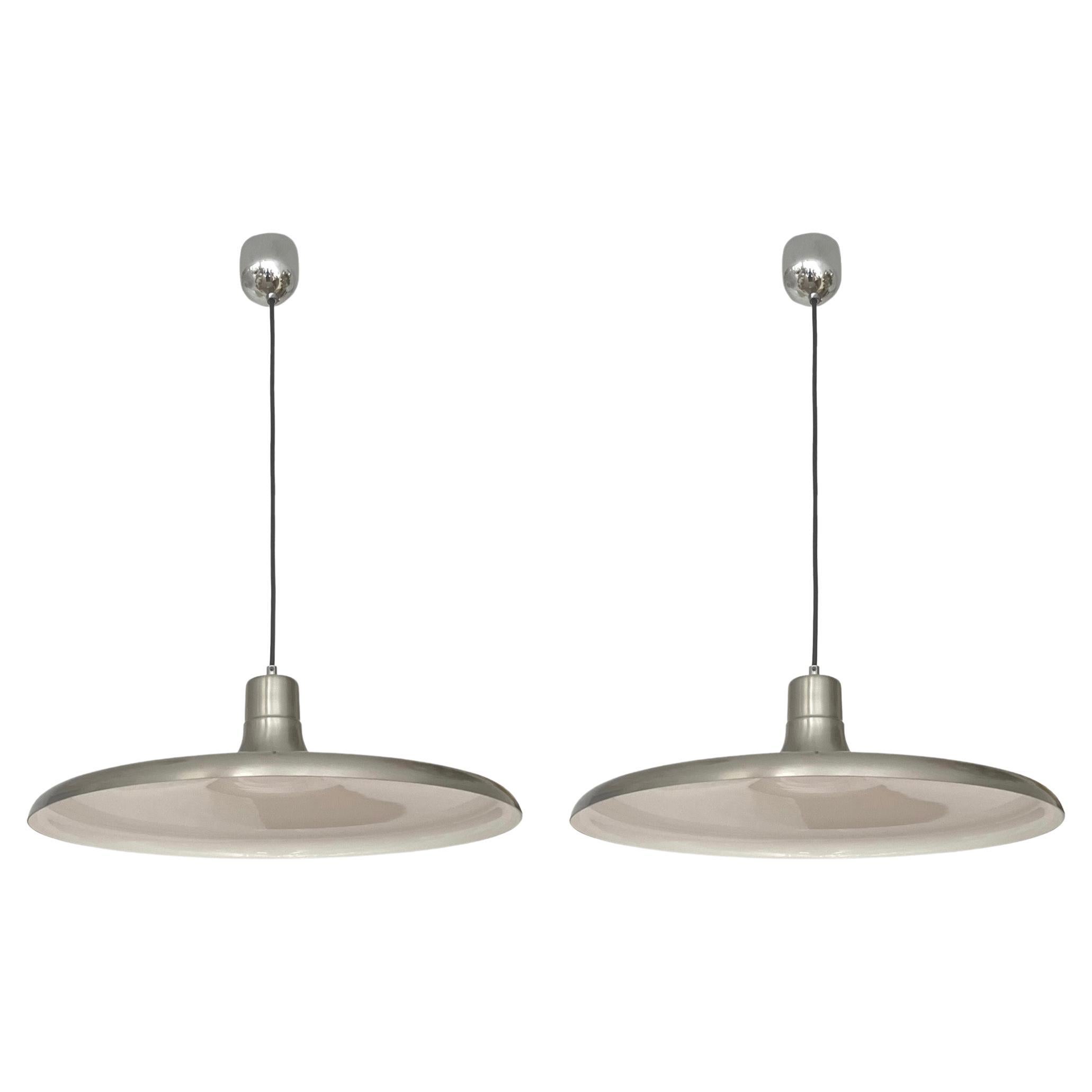
Tobia Scarpa Set of Two Nictea Lamps in Nickel-Plated Brass by Flos 1960s
About the Item
- Creator:Flos (Manufacturer),Tobia Scarpa (Designer)
- Dimensions:Height: 13 in (33 cm)Diameter: 18.31 in (46.5 cm)
- Sold As:Set of 2
- Power Source:Hardwired
- Lampshade:Included
- Style:Mid-Century Modern (Of the Period)
- Materials and Techniques:
- Place of Origin:
- Period:
- Date of Manufacture:1970
- Condition:Wear consistent with age and use.
- Seller Location:Cascina, IT
- Reference Number:1stDibs: LU5304246989802
Tobia Scarpa
Widely recognized as superstars of postmodern Italian design, husband-and-wife team Afra and Tobia Scarpa (1937–2011; b. 1935) collaboratively created chairs, sofas and other furniture that work equally well in both traditional and cutting-edge environments.
Afra Bianchin and Tobia Scarpa met as architecture students at the Università Iuav di Venezia. In a class led by architect and furniture designer Franco Albini, they created their first collaborative piece, the Pigreco armchair, later produced with Gavina. After graduating in 1957, Tobia Scarpa worked for Murano glass company Venini Co. before the couple opened a studio in Afra’s hometown, Montebelluna, in 1960. (Tobia, the son of famed glass artist and architect Carlo Scarpa, was born in Venice.)
Ranging from architecture and interior design to furniture and clothing, the Scarpas’ practice from its beginnings in the mid-1950s to the 21st century has included a diverse scope of projects combining new technology with thoughtful function and sculptural yet simple forms.
For Afra and Tobia, a close collaborative process was pivotal to the success of their designs. The duo was also prolific — they designed for the most influential European manufacturers, including B&B Italia, Cassina, Knoll and FLOS. With respect to the latter, Afra and Tobia were among the legendary Italian lighting maker’s earliest collaborators, and their pioneering designs for the brand included the Papillon lamp, one of the first fixtures to use halogen technology. Their most recognized designs include the Bastiano sofa (1962), the Vanessa bed (1959), the Coronado sofa (1966) and the Soriana seating collection (1970). Work on the Soriana sofa began in late 1969 for an early 1970 debut, and it feels as radical today as it did in its heyday.
Architecture was also a central part of Afra and Tobia’s practice, which spanned residential buildings and factories for Italian companies such as Benetton. Their commissions for the global fashion brand included numerous industrial projects, from textile plants to storefronts. By 1985, Afra and Tobia Scarpa’s work was celebrated in a 30-year retrospective at Center Four in Queens, New York. Looking around the 30,000-square-foot exhibition space, Afra joked to the New York Times, “Seeing all those things makes us feel very tired, and now we feel that maybe we worked too much.”
It was not too much for their legacy, as Afra and Tobia Scarpa’s work continues to inspire new generations. Scarpa designs are in collections at the Louvre, the Museum of Modern Art and the Victoria and Albert Museum. The couple was awarded the Compasso d’Oro in 1970 for the Soriana armchair.
Find vintage Tobia Scarpa table lamps, sofas, dining chairs and other furniture today on 1stDibs.
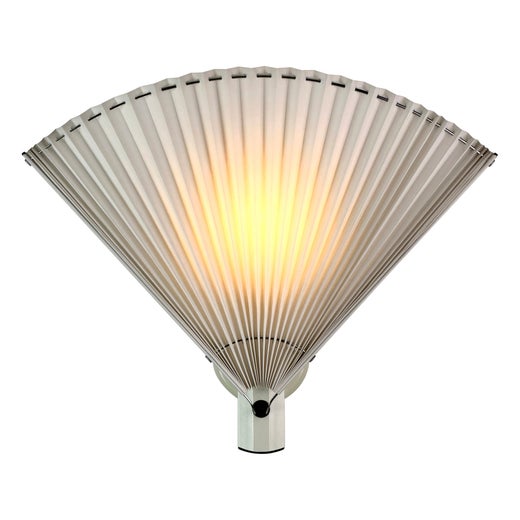
Flos
Imaginative lighting is a longtime hallmark of modern Italian design. Following in the footsteps of innovative companies such as Artemide and Arteluce, the company FLOS brought a fresh aesthetic philosophy to the Italian lighting field in the 1960s, one that would produce several of the iconic floor lamp, table lamp and pendant light designs of the era.
FLOS — Latin for “flower” — was founded in the northern town of Merano in 1962 by Cesare Cassina (of the famed Cassina furniture-making family) and Dino Gavina, a highly cultured businessman who believed that artistic ideas espoused in postwar Italy could inform commercial design. The two enlisted brothers Achille and Pier Giacomo Castiglioni as their first designers.
Even before FLOS was formally incorporated, the Castiglionis gave the firm one of its enduring successes with the Taraxacum pendant and associated designs made by spraying an elastic polymer on a metal armature. (George Nelson had pioneered the technique in the United States in the early 1950s.) For other designs, the brothers found inspiration in everyday objects. Suggestive of streetlights, their Arco floor lamp, with its chrome boom and ball-shaped shade sweeping out from a marble block base, has become a staple of modernist decors. Designing for FLOS since 1966, Tobia Scarpa has also been inspired by the commonplace. His folded-metal Foglio sconces resemble a shirt cuff; his carved marble Biagio table lamp looks like a jai alai basket.
In 1973, FLOS purchased Arteluce, the company founded in 1939 by Gino Sarfatti, and it continues to produce his designs. In recent decades, FLOS has contracted work from several noted designers, including Marcel Wanders and Jasper Morrison. As instantly recognizable as they are, many FLOS designs remain accessible. While FLOS lighting is the essence of modernity, its sleek, subtle designs can be used to strike a sculptural note in even traditional spaces.
Browse a broad range of FLOS lighting fixtures at 1stDibs.
- ShippingRetrieving quote...Shipping from: Borgo a Buggiano, Italy
- Return Policy
More From This Seller
View AllVintage 1960s Italian Mid-Century Modern Chandeliers and Pendants
Brass, Nickel
Vintage 1960s Italian Mid-Century Modern Wall Lights and Sconces
Metal, Nickel
Vintage 1970s Italian Mid-Century Modern Chandeliers and Pendants
Metal
Vintage 1960s Italian Mid-Century Modern Wall Lights and Sconces
Metal, Aluminum
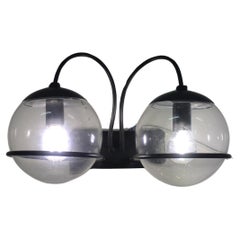
Vintage 1960s Italian Mid-Century Modern Chandeliers and Pendants
Brass
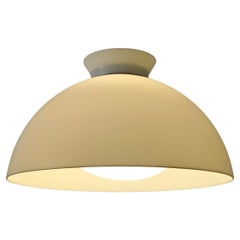
Vintage 1950s Italian Mid-Century Modern Table Lamps
Metal, Brass
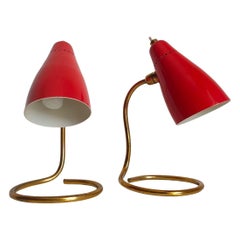
You May Also Like
Late 20th Century Danish Scandinavian Modern Chandeliers and Pendants
Chrome
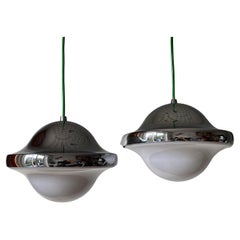
Mid-20th Century Italian Mid-Century Modern Chandeliers and Pendants
Metal
Vintage 1970s Spanish Mid-Century Modern Chandeliers and Pendants
Aluminum
Vintage 1960s Italian Mid-Century Modern Chandeliers and Pendants
Metal
Vintage 1970s Spanish Mid-Century Modern Chandeliers and Pendants
Metal
Vintage 1970s German Mid-Century Modern Chandeliers and Pendants
Chrome