Items Similar to Matchless Wonder Star #910 Double Row Green Crystal Holiday C-9 Bulb, USA, 1936
Video Loading
Want more images or videos?
Request additional images or videos from the seller
1 of 13
Matchless Wonder Star #910 Double Row Green Crystal Holiday C-9 Bulb, USA, 1936
$2,020per item
£1,509.89per item
€1,742.20per item
CA$2,827.80per item
A$2,987.82per item
CHF 1,607.10per item
MX$35,774.31per item
NOK 20,135.05per item
SEK 18,440.79per item
DKK 13,009.37per item
Quantity
About the Item
On May 2, 1935 Paul C. Dittman of Chicago filed an application for a patent for what he called simply "Decorative Lighting Device". In the patent he described it as "an ornamental device embodying a multiplicity of of prismatic light diffusing bodies with a light source..."
He related that while he was aware that others had patented lighted stars, his offering was different in that the light would enter the rays of the star radially, effectively refracting the light within the ray and producing a "pleasing effect."
His description of the refracted light produced by the stars was a bit of an understatement, as anyone who has seen them illuminated can attest: a lighted Matchless Wonder Star is stunningly beautiful. His patent was granted on December 8, 1936.
Paul Dittman, a German immigrant who passed through the gates of Ellis Island in New York City, worked for a time for George Westinghouse, where he got an education in the manufacturing of electric light bulbs. In 1912, Paul and his partners started the Matchless Electric Company, which was later incorporated (in 1918) "to manufacture, buy, sell and deal in electric supplies, light bulbs and radio tubes..." By 1930, the direction of the Company had changed a bit, and it was re-named The Century Lamp and Tube Company to reflect the fact that it was by this time the largest single licensee for the manufacture of RCA radio tubes. In addition to the tubes, the Company produced a large variety of small light bulbs, mainly miniature lamps that were used as indicators in telephone switch boards and various control panels, and automobile lamps as well. These lamps, an example of which is pictured below, are round, miniature based style with outside painted colors. These was even a Matchless brand set of Christmas lights available, which was a typical series string of eight cone shaped lamps.
In 1929, Mr. Dittman was the principle stockholder of a company incorporated as the D-G Electric Company, whose business was "to deal in all kinds and descriptions of electrical devices..." By 1931, the Company was renamed The Matchless Electric Company, and in 1934 the Century Lamp and Tube Company was dissolved.
The Matchless Electric Company of Chicago, Illinois made and sold these glass-prismed Christmas lights starting in about 1935, and continuing through the late 40s.The production of the Stars was a seasonal business for The Matchless Company, but Jim Dittman, inventor Paul's son, reports that the Stars were "my father's pride and joy." They were available in several sizes and many color combinations, and the glass points were made and hand cut in Czechoslovakia from authentic Austrian crystal. The lights were assembled and boxed in the United States. The earliest of these lights had a small paper label on one of the glass prisms, with "Made in Czechoslovakia" printed on it. The sticker was a bit confusing, as it referred only to the glass points and not the entire Star. During most of the year, the Company produced their regular stock of sewing machine, auto, radio pilot, aviation and instrument miniature lamps.
After World War II, the Company started selling their larger Stars made in Lucite instead of glass, as Communist occupation had cut off supplies of the needed Czechoslovakian crystal.
This page from a late 1930s hardware supply catalog features double Stars with various lamp sizes and color combinations. Also note the replacement lamps-something collectors would kill to get their hands on today, as the lamps with the bakelite backs have not been made for many years. Matchless Stars were some of the first Christmas lights offered with the ability to easily change the light bulb. NOMA had earlier offered their Dresden figural lights with changeable lamps, but the system was flawed and the socket parts froze together, making lamp exchange impossible.
Collectors who have researched these lights say that the Matchless Company did practically no advertising of this product, and references to the Stars can only be found in catalogs of the time. The 1939 and 1940 editions of Montgomery Wards Christmas catalogs feature them, and several hardware trade catalogs show the Stars. Matchless sold their Stars through the Marshall Fields stores as well. A major downside to these beautiful lights was their price-usually between 18 and 20 cents for a single row series 100 Star. While seemingly inexpensive in today's dollars, keep in mind that America was dealing with the effects of The Great Depression, and money was tight. An average Christmas tree of the time would feature between 40 and 48 miniature base series wired lights, and to fill the tree with Matchless Stars would have cost about $7.60. A typical boxed set of eight standard Christmas lights with the electrical cord sold for 65 cents in 1937, and a dozen eggs went for 12 cents. Spending almost $8.00 on Christmas lights was beyond the reach of many, so the Matchless Company wisely offered their Stars for sale singly as well as in sets of eight or ten.
The company offered their Stars in many different color combinations, with both clear and frosted crystals. The points were offered in red, green, aqua, steel blue, amethyst, pink, amber and clear. The center jewels were produced in red, green, amber and blue. Due to the Communist occupation of Czechoslovakia after World War II, the Matchless company found it difficult to obtain the proper quality glass crystals needed for the manufacture of their Stars. A redesign became necessary, and the larger Stars were then made in Lucite, and molded in one piece instead of individual points.
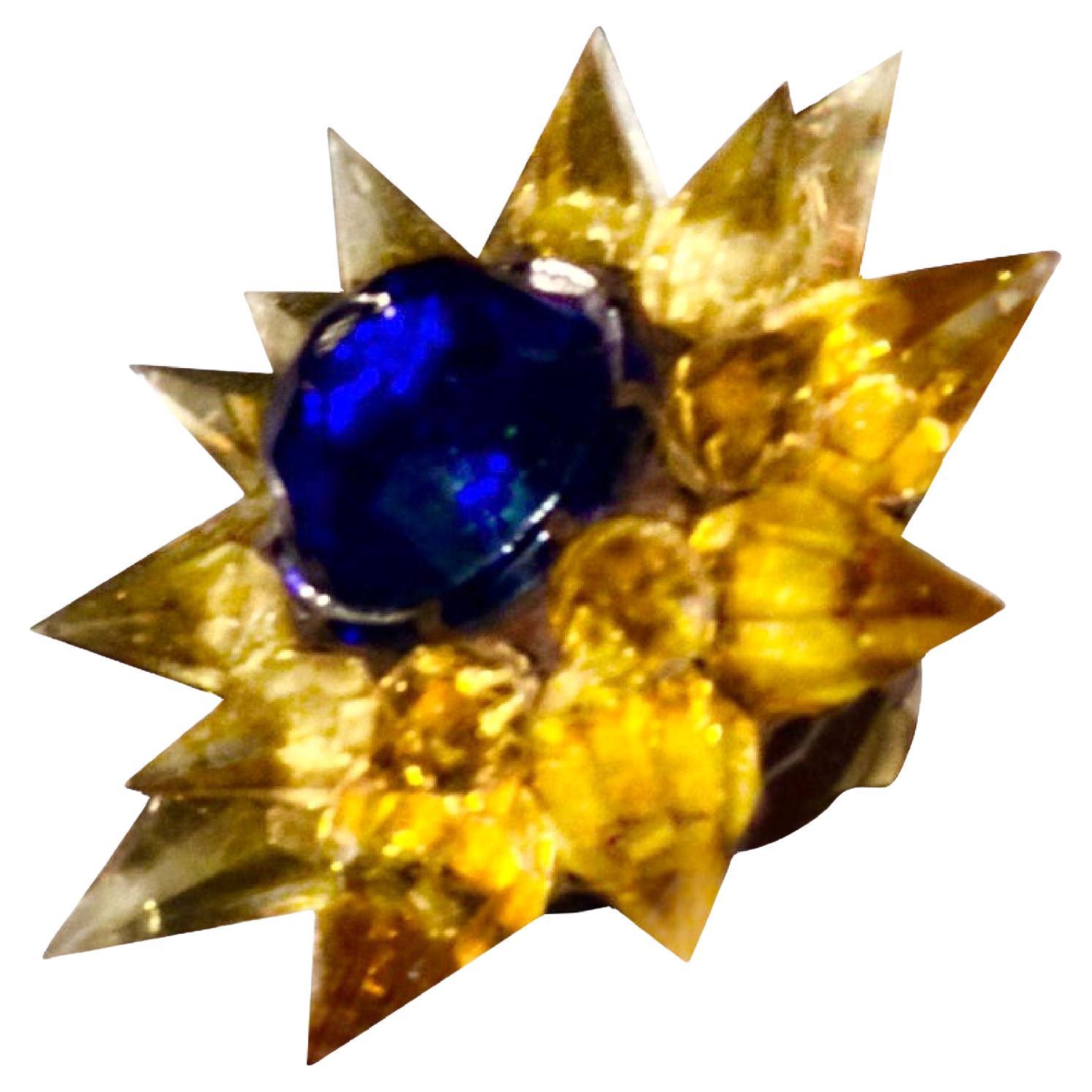
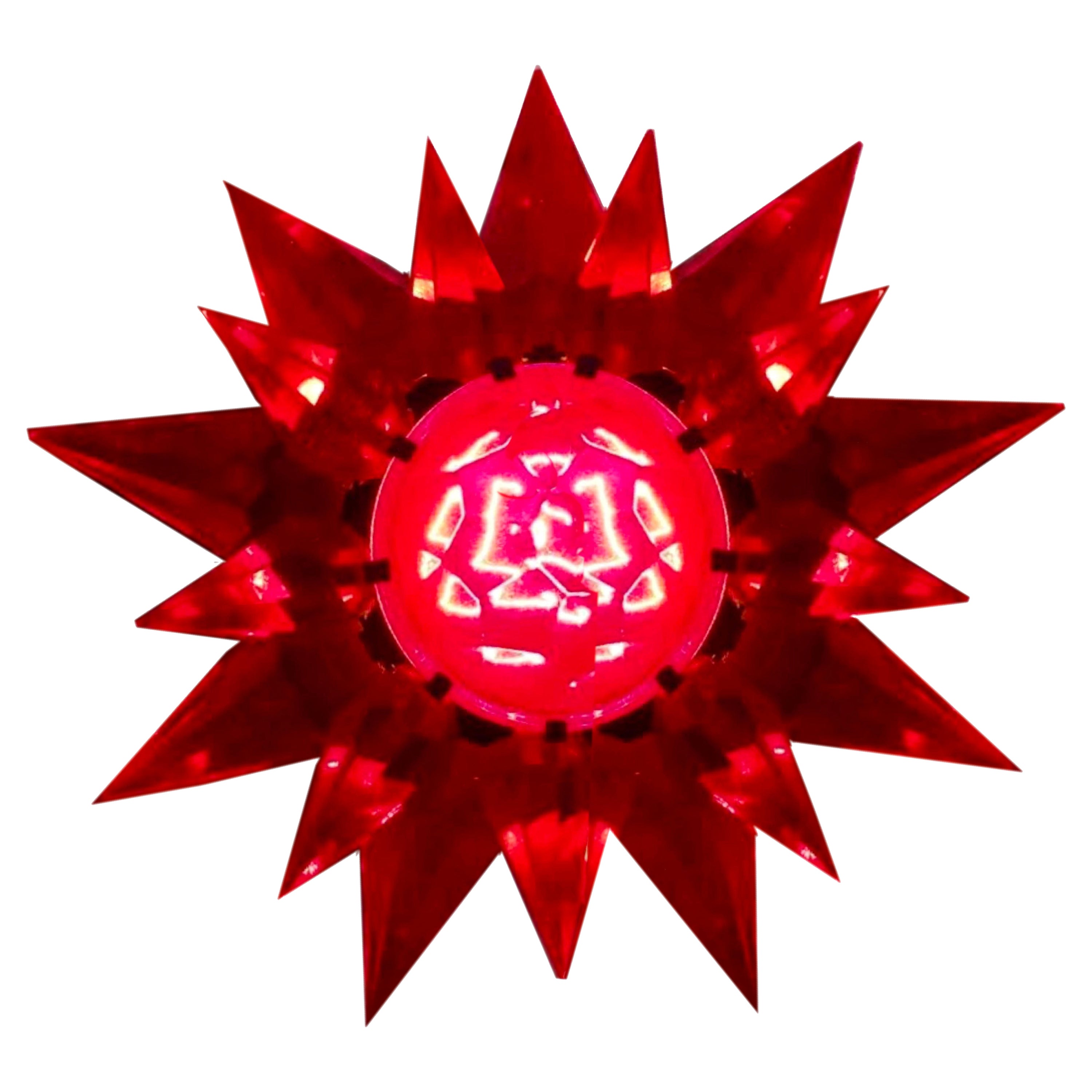
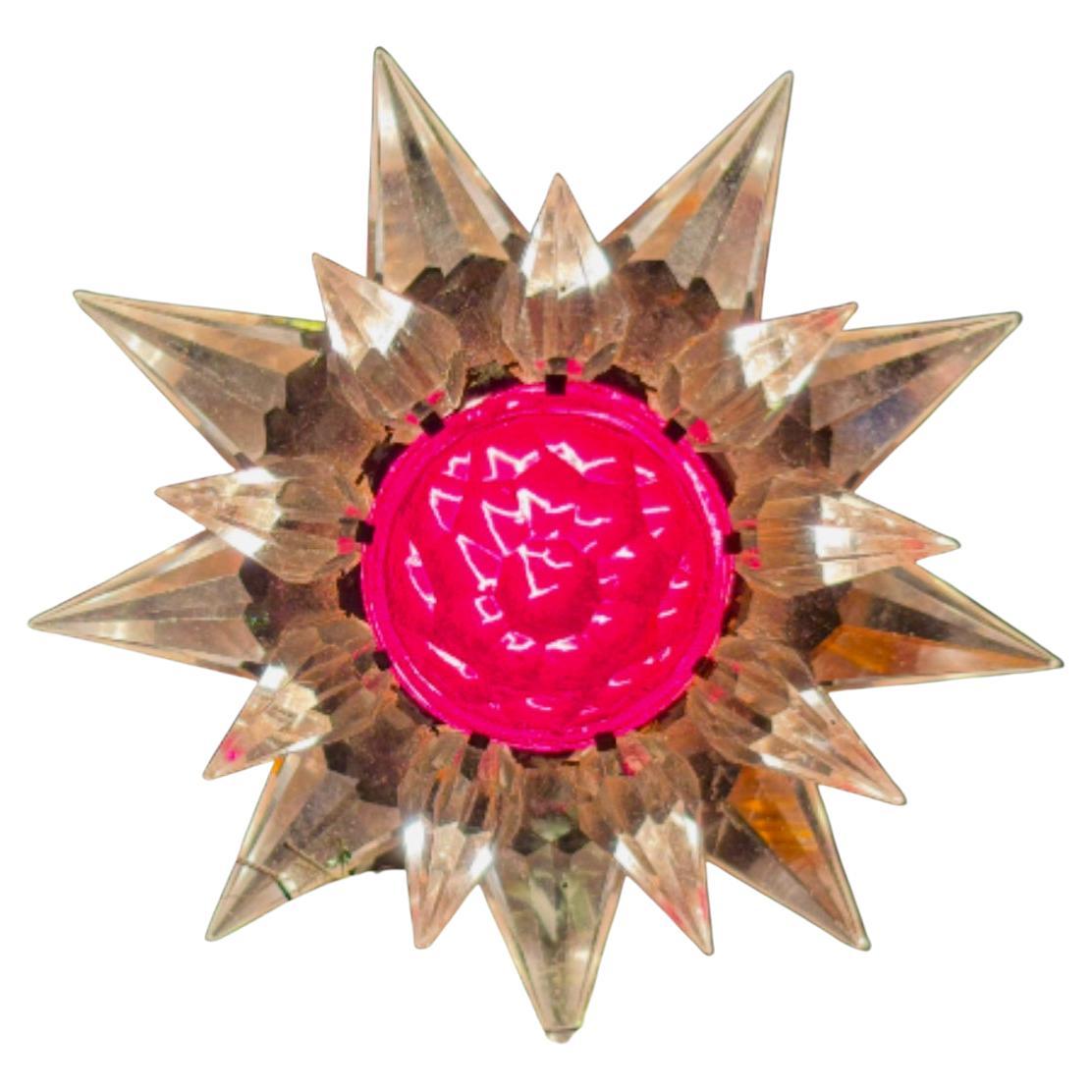
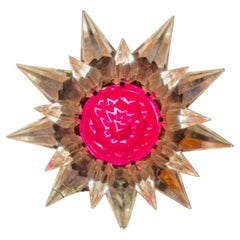
The piece available here is the largest and most rare of the Matchless Star production, #910 from series 900 (3.5” diameter). #910 featured a c-9 bulb, intermediate base. This is an authentic crystal version produced between 1936-1939. It comes with its original box. Original bulb. Working condition. Exceedingly Rare color combination. Emerald green central cut stone with emerald green points. Double row.
About the Seller
5.0
Platinum Seller
Premium sellers with a 4.7+ rating and 24-hour response times
Established in 2017
1stDibs seller since 2018
665 sales on 1stDibs
Typical response time: <1 hour
- ShippingRetrieving quote...Shipping from: Brooklyn, NY
- Return Policy
More From This Seller
View AllMatchless Wonder Star #910 Double Row Green
Red Crystal C-9 Holiday Bulb, 1936
Located in Brooklyn, NY
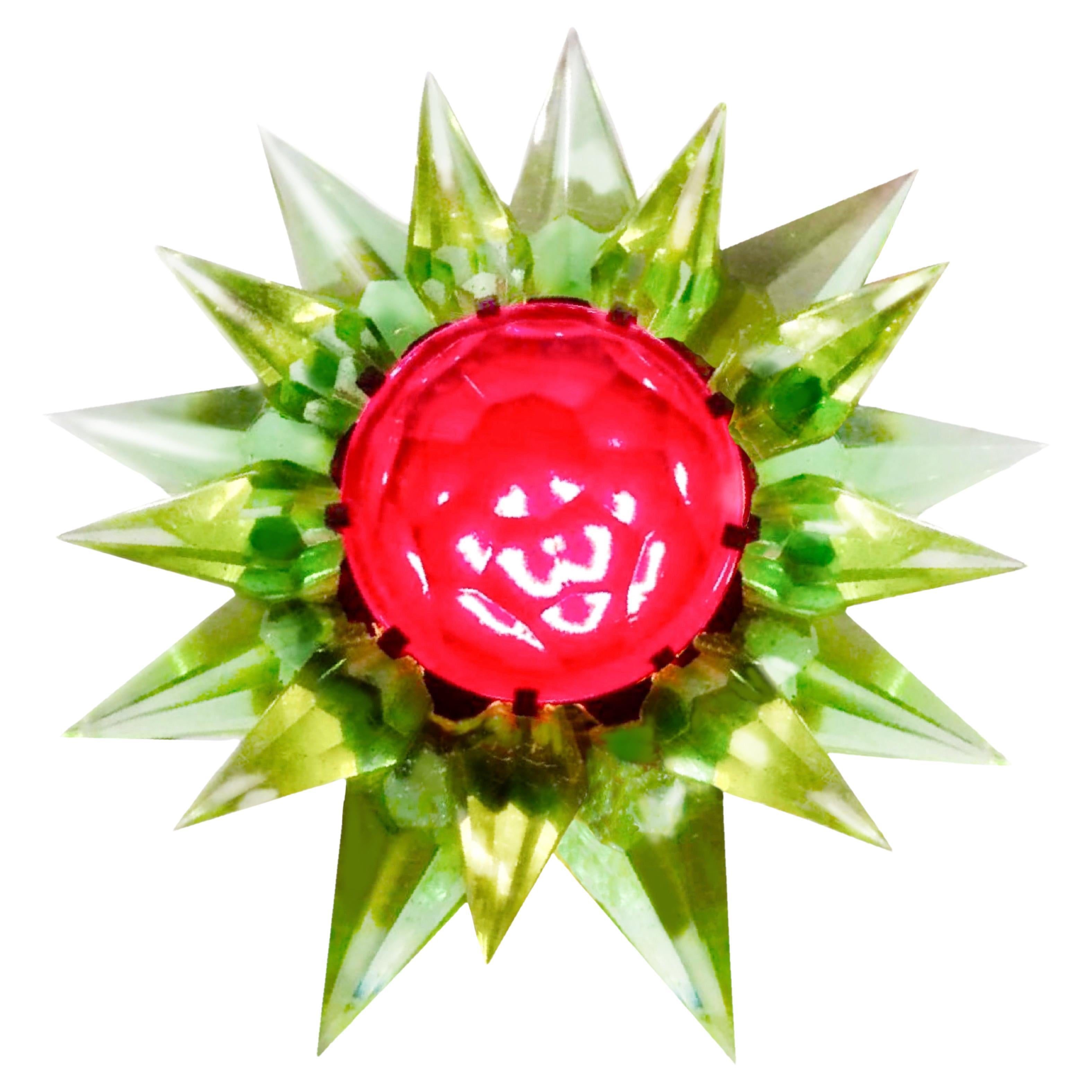
Matchless Wonder Star #910 Double Row Green & Red Crystal C-9 Holiday Bulb, 1936. Extremely rare early crystal production in green points with red center.
On May 2, 1935 Paul C. Dittman of Chicago filed an application for a patent for what he called simply "Decorative Lighting Device". In the patent he described it as "an ornamental device embodying a multiplicity of of prismatic light diffusing bodies with a light source..."
He related that while he was aware that others had patented lighted stars, his offering was different in that the light would enter the rays of the star radially, effectively refracting the light within the ray and producing a "pleasing effect."
His description of the refracted light produced by the stars was a bit of an understatement, as anyone who has seen them illuminated can attest: a lighted Matchless Wonder Star is stunningly beautiful. His patent was granted on December 8, 1936.
Paul Dittman, a German immigrant who passed through the gates of Ellis Island in New York City, worked for a time for George Westinghouse, where he got an education in the manufacturing of electric light bulbs. In 1912, Paul and his partners started the Matchless Electric Company, which was later incorporated (in 1918) "to manufacture, buy, sell and deal in electric supplies, light bulbs and radio tubes..." By 1930, the direction of the Company had changed a bit, and it was re-named The Century Lamp and Tube Company to reflect the fact that it was by this time the largest single licensee for the manufacture of RCA radio...
Category
Vintage 1930s Flush Mount
Materials
Crystal
Matchless Wonder Star #910 Blue, Pink
Green Crystal C-9 Holiday Bulb 1936
Located in Brooklyn, NY
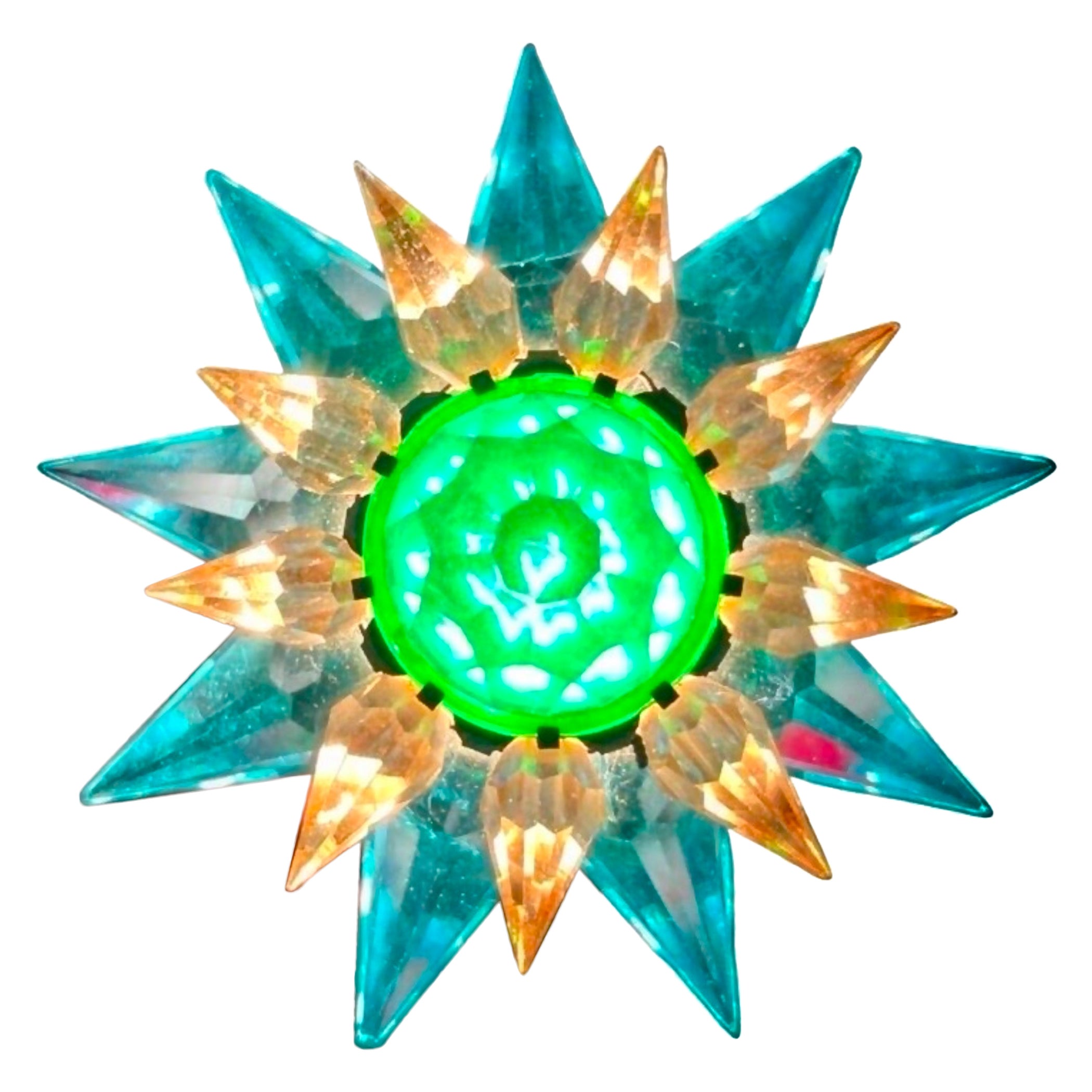
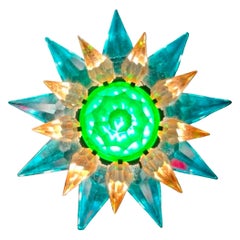
Matchless Wonder Star #910 Double Row Tricolor Light Blue, Pink
Green. Crystal C-9 Holiday Bulb, 1936. Extremely rare 900 series crystal production in rare three color combinat...
Category
Vintage 1930s American Art Deco Chandeliers and Pendants
Materials
Crystal
Matchless Wonder Star #910 Rare Purple
Amber Crystal C-9 Holiday Bulb 1936
Located in Brooklyn, NY
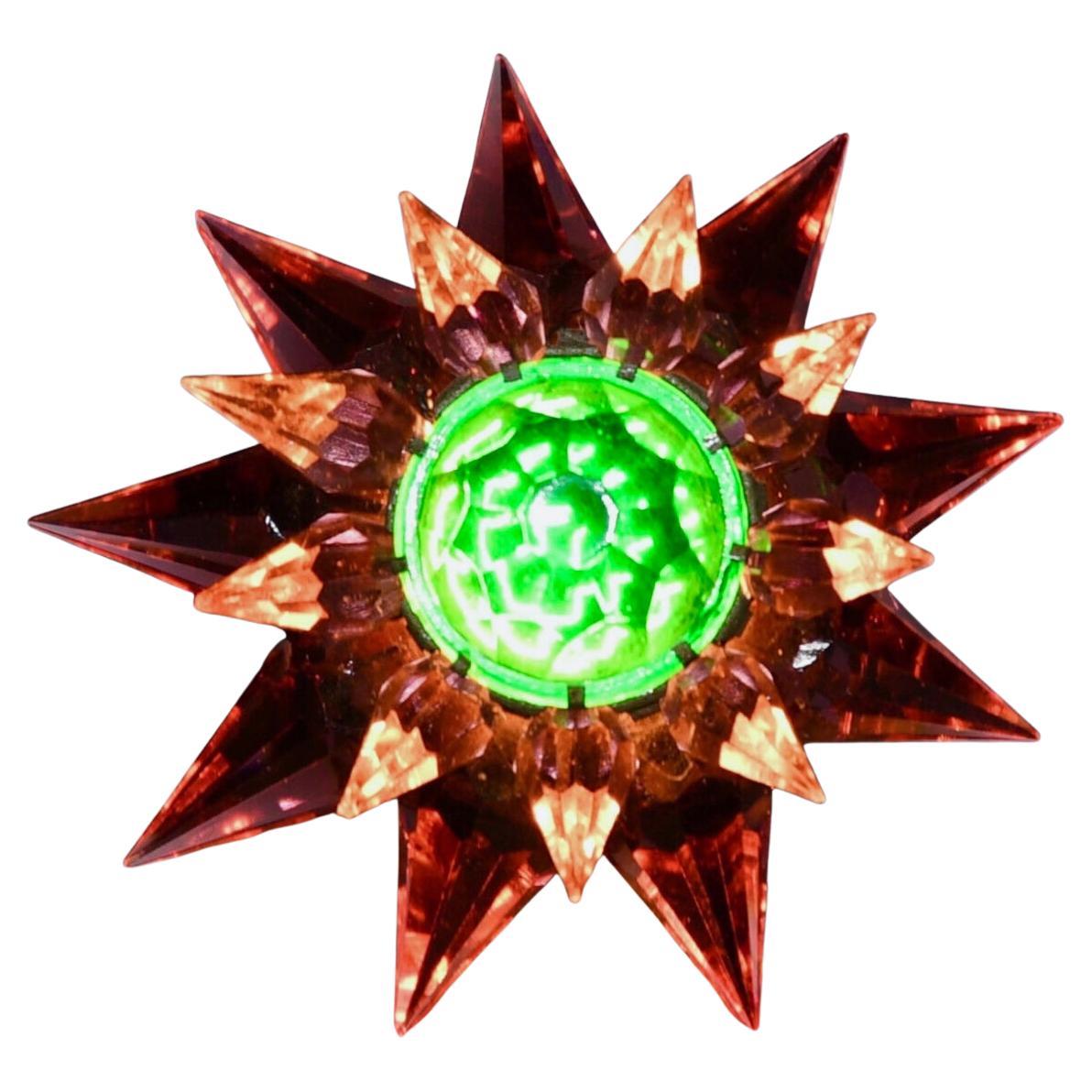
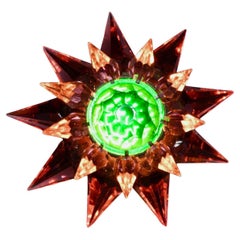
Matchless Wonder Star #910 Double Row Purple
Amber Crystal C-9 Holiday Bulb, 1936. Extremely rare early crystal 900 series production in the rarely seen purple points with ambe...
Category
Vintage 1930s American Art Deco Chandeliers and Pendants
Materials
Crystal
Matchless Wonder Star #910 Double Row Amber
Blue Crystal C-9 Holiday Bulb 1936
Located in Brooklyn, NY
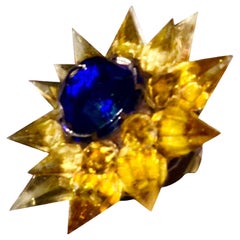
Matchless Wonder Star #910 Double Row Amber
Blue Crystal C-9 Holiday Bulb, 1936. Extremely rare early crystal production in the rarely seen Amber points with blue sapphire center.
On May 2, 1935 Paul C. Dittman of Chicago filed an application for a patent for what he called simply "Decorative Lighting Device". In the patent he described it as "an ornamental device embodying a multiplicity of of prismatic light diffusing bodies with a light source..."
He related that while he was aware that others had patented lighted stars, his offering was different in that the light would enter the rays of the star radially, effectively refracting the light within the ray and producing a "pleasing effect."
His description of the refracted light produced by the stars was a bit of an understatement, as anyone who has seen them illuminated can attest: a lighted Matchless Wonder Star is stunningly beautiful. His patent was granted on December 8, 1936.
Paul Dittman, a German immigrant who passed through the gates of Ellis Island in New York City, worked for a time for George Westinghouse, where he got an education in the manufacturing of electric light bulbs. In 1912, Paul and his partners started the Matchless Electric Company, which was later incorporated (in 1918) "to manufacture, buy, sell and deal in electric supplies, light bulbs and radio tubes..." By 1930, the direction of the Company had changed a bit, and it was re-named The Century Lamp and Tube Company to reflect the fact that it was by this time the largest single licensee for the manufacture of RCA radio...
Category
Vintage 1930s American Art Deco Chandeliers and Pendants
Materials
Crystal
$2,574 Sale Price
40% Off
Matchless Wonder Star #910 Double-Row Red Crystal Holiday C-9 Bulb, USA, 1930s
Located in Brooklyn, NY
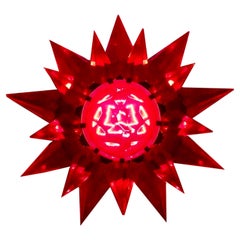
Matchless Wonder Star #910 Double-Row Red Crystal Holiday C-9 Bulb, USA, 1930s. Extremely rare early crystal production with original box.
On May 2, 1935 Paul C. Dittman of Chicago filed an application for a patent for what he called simply "Decorative Lighting Device". In the patent he described it as "an ornamental device embodying a multiplicity of of prismatic light diffusing bodies with a light source..."
He related that while he was aware that others had patented lighted stars, his offering was different in that the light would enter the rays of the star radially, effectively refracting the light within the ray and producing a "pleasing effect."
His description of the refracted light produced by the stars was a bit of an understatement, as anyone who has seen them illuminated can attest: a lighted Matchless Wonder Star is stunningly beautiful. His patent was granted on December 8, 1936.
Paul Dittman, a German immigrant who passed through the gates of Ellis Island in New York City, worked for a time for George Westinghouse, where he got an education in the manufacturing of electric light bulbs. In 1912, Paul and his partners started the Matchless Electric Company, which was later incorporated (in 1918) "to manufacture, buy, sell and deal in electric supplies, light bulbs and radio tubes..." By 1930, the direction of the Company had changed a bit, and it was re-named The Century Lamp and Tube Company to reflect the fact that it was by this time the largest single licensee for the manufacture of RCA radio tubes. In addition to the tubes, the Company produced a large variety of small light bulbs, mainly miniature lamps that were used as indicators in telephone switch boards and various control panels, and automobile lamps as well. These lamps, an example of which is pictured below, are round, miniature based style with outside painted colors. These was even a Matchless brand set of Christmas lights available, which was a typical series string of eight cone shaped lamps.
In 1929, Mr. Dittman was the principle stockholder of a company incorporated as the D-G Electric Company, whose business was "to deal in all kinds and descriptions of electrical devices..." By 1931, the Company was renamed The Matchless Electric Company, and in 1934 the Century Lamp and Tube Company was dissolved.
The Matchless Electric Company of Chicago, Illinois made and sold these glass-prismed Christmas lights starting in about 1935, and continuing through the late 40s.The production of the Stars was a seasonal business for The Matchless Company, but Jim Dittman, inventor Paul's son, reports that the Stars were "my father's pride and joy." They were available in several sizes and many color combinations, and the glass points were made and hand cut in Czechoslovakia...
Category
Early 20th Century American Art Deco Chandeliers and Pendants
Materials
Crystal
$1,349 Sale Price / item
25% Off
Matchless Wonder Star #910 Double Row Clear
Red Crystal C-9 Holiday Bulb, 1936
Located in Brooklyn, NY
Matchless Wonder Star #910 Double Row Clear
Red Crystal C-9 Holiday Bulb, 1936. Extremely rare early crystal production in clear points with red center.
On May 2, 1935 Paul C...
Category
Vintage 1930s American Art Deco Flush Mount
Materials
Crystal
You May Also Like
Monumental Louis XV Empire Green Crystal Bronze 15-Light Basket Chandelier
Located in Coimbra, PT
Stunning monumental French Regency Empire emerald green cut crystal beads and swags, basket shaped and bronze chandelier with 15 light
Measures:
Diam...
Category
Mid-20th Century French Hollywood Regency Chandeliers and Pendants
Materials
Crystal, Brass, Bronze
French Emerald Green Flower Crystal Prisms Maison Baguès Style Chandelier
By Maison Baguès
Located in Firenze, Toscana
Housing 1 light, inside top. This rare shaped prism flowers in emerald green chandelier will be newly rewired with certified US UL socket for...
Category
Vintage 1930s French Chandeliers and Pendants
Materials
Crystal
Emerald Green Glass Flower Light Fixture
Located in New York, NY
A circa 1950's green Murano millefiori light fixture with 8 Edison interior lights.
Measurements:
Present drop: 13"
Diameter: 29.5"
Category
Vintage 1950s Italian Chandeliers and Pendants
Materials
Glass
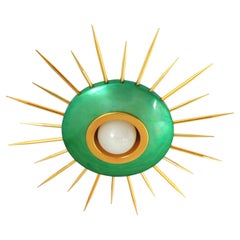
1950s Italian Sunburst Pendant Light Fixture in Green and Gilt Metal
Located in Barcelona, ES
Mid-Century Modern green metal and golden sunburst suspension light ot flush mount. Italy, 1950s.
This eye-catching ceiling lamp features a green metal shade surrounded by gilt metal...
Category
Mid-20th Century Italian Mid-Century Modern Flush Mount
Materials
Metal, Aluminum, Brass
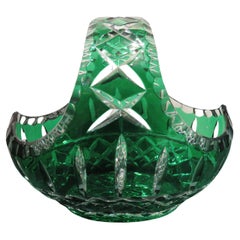
RARE 1900s Large Handcut Heavy Etched Diamond Cut Emerald Crystal Basket
Located in New York, NY
The Following Item we are offering is a Rare Antique Lovely HEAVY HANDCUT Emerald Hand Crystal Glass Basket. Basket is Finely Detailed Throughout in a Magnificent Pattern Surrounded ...
Category
20th Century French Vases
Materials
Crystal
$1,000 Sale Price
60% Off
Free Shipping
Flavio Poli Seguso Murano Green Yellow Sommerso Diamond Faceted Art Glass Bowl
By Flavio Poli, Seguso Vetri d
Arte
Located in Barcelona, ES
Eye-catching Sommerso faceted Murano glass bowl or ashtray in green and yellow double cased glass in clear class. Faceted diamond shape and vibrant colors. Attributed to Flavio Poli ...
Category
Mid-20th Century Italian Mid-Century Modern Decorative Bowls
Materials
Glass, Art Glass, Cut Glass, Murano Glass, Sommerso