Items Similar to Vintage Adlake RR Lantern, 1945-1965
Want more images or videos?
Request additional images or videos from the seller
1 of 10
Vintage Adlake RR Lantern, 1945-1965
$300
£227.22
€260.96
CA$420.40
A$457.06
CHF 242.33
MX$5,478.96
NOK 3,079.92
SEK 2,821.63
DKK 1,950.32
About the Item
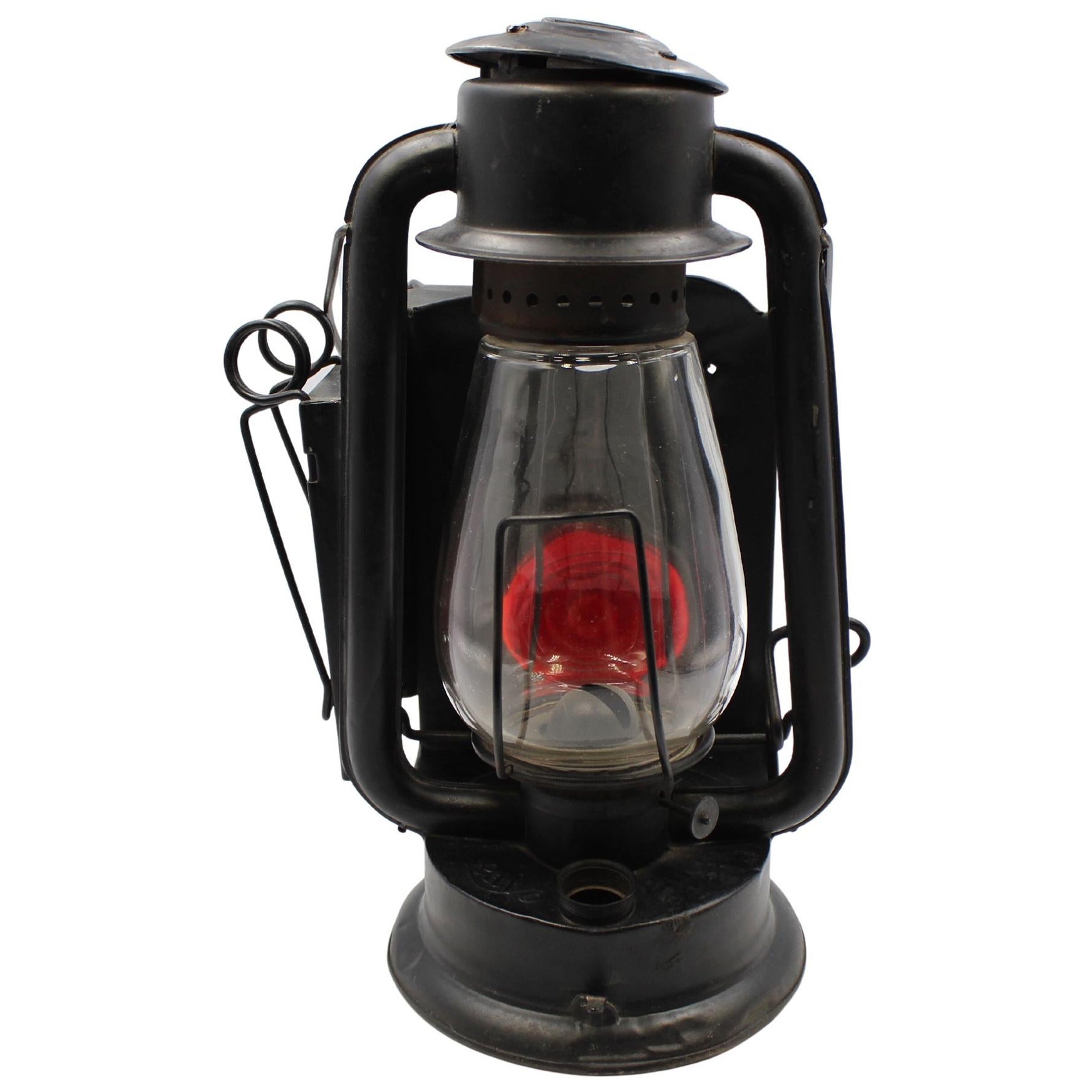
Presented is a vintage Adlake railroad kerosene lantern, with a red glass globe and wire caging. The lantern was manufactured by the Adams
Westlake Company of Chicago, Illinois, sometime between 1945-1965. It was originally used on the Chicago and Western Indiana Railroad, and is stamped "C
WI" along the dome's base.
Kerosene lanterns just like this one were used daily by railroad workers. They were not only a source of light, but also the best means of communication when operating and directing trains, as the noisy working environments and the distance involved in train operations negated communication by speaking or yelling.
Railroad lanterns were portable and were an effective light source that could be easily seen at night from a distance. As a method of communication, the railroad worker would swing and move the lantern in different ways according to what message he wanted to send. For instance, to give a stop signal, the lantern would be swung back and forth horizontally across the tracks and the signal to proceed was to move the lantern up and down vertically.
At the turn of the 20th century, railroad operators used colored globe lanterns for illumination and signaling at night. The meanings of the colors were the precursors to our modern traffic light system. White was used to indicate that it was safe to proceed, green signaled caution, and red indicated "Stop" or "Danger."
The Chicago
Western Indiana Railroad was a short line running 16 miles from downtown Chicago to Dolton, Illinois, the first suburb south of Chicago, with another line running southeast from Eighty-First Street to the Indiana state line. Built in the 1880s, it was owned by five trunk line railroads that used it as an efficient and inexpensive route into downtown Chicago. Like many 19th-century railroads, the C&WI reached its traffic peak in the middle of the 20th century.
CONDITION:
Good condition overall. Railroad lantern, with red glass globe, surrounded by a metal frame. Used kerosene as a fuel source . Scuffs and scratches to metal and metal coating. Small areas of tarnish and rust present. Glass globe intact. Top stamped "Adlake" and "kero." Stamped "C
WI" on the dome's base. Stamped "USA / 1415633/ 1415634-1415635/ 1660194" and "CANADA 921-19." Sold as décor item, it has not been tested.
Dimensions: (relaxed handle) 9 1/4" H x 7" W x 6 1/4" D.
Dimensions: (with wire handle completely extended) 12" H x 7" W x 6 1/4" D.
- Dimensions:Height: 9.25 in (23.5 cm)Width: 7 in (17.78 cm)Depth: 6.25 in (15.88 cm)
- Style:Mid-Century Modern (Of the Period)
- Materials and Techniques:
- Place of Origin:
- Period:
- Date of Manufacture:1945-1965
- Condition:Wear consistent with age and use. Minor structural damages. Minor fading.
- Seller Location:Colorado Springs, CO
- Reference Number:Seller: OT6161stDibs: LU909736662012
About the Seller
4.9
Platinum Seller
Premium sellers with a 4.7+ rating and 24-hour response times
Established in 2010
1stDibs seller since 2011
473 sales on 1stDibs
Typical response time: 4 hours
- ShippingRetrieving quote...Shipping from: Colorado Springs, CO
- Return Policy
More From This Seller
View AllVintage Rayo Pony No. 21 Lantern
By Standard Oil Company
Located in Colorado Springs, CO
Presented is a vintage Rayo Pony No. 21 lantern, from the early 20th century. This metal and glass lantern was manufactured by Standard Oil for their Rayo l...
Category
Early 20th Century American Lanterns
Materials
Metal
Silver Sheffield Cricket Sugar Jar, circa 1900
Located in Colorado Springs, CO
This is an exquisite early 20th century crystal jar with a silver lid and spoon. The lid's top is fashioned after a cricket wicket. The jar sits on a round silver base with decorativ...
Category
Antique Early 19th Century British Sheffield and Silverplate
Materials
Silver
Silver Plated Keepsake Box, Early 20th Century
Located in Colorado Springs, CO
Offered is a silver plated keepsake box, dating to the early 1900s. The hallmarked box offers great storage solution for jewelry, cufflinks, and other keepsakes, with a divided inter...
Category
Antique Early 1900s English Jewelry Boxes
Materials
Silver
Hallmarked Silver Plated Keepsake Box, Sheffield, Uk, Circa 1900
Located in Colorado Springs, CO
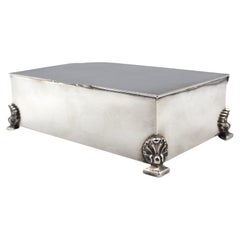
Offered is a stunning Sheffield silver keepsake box dating to 1900, with associated hallmark. This small box includes a clean interior and rounded corners. The box is free of names or initials, but would have been used to house keepsakes such as jewelry or cufflinks. A well maintained, elegant piece, this antique silver box is an excellent addition to any silver collection.
Trinket or keepsake boxes have taken on many forms since their first conception in ancient times. However their purpose remains the same; to store jewelry and other items precious to the owner. Originally, these boxes were used specifically for jewelry. These were in common use as early as 5000 BC in Ancient Egypt, when the majority of Egyptians, both male and female, wore jewelry. Boxes were used to keep these gemstone encrusted items safe. In Ancient Rome, jewelry was a status symbol. Rings and brooches were utilized to represent ones status in society. Again, boxes were needed for security and storage purposes. Finding early examples of these are quite rare.
Victorian and Edwardian examples of trinket boxes are far more common. This is because owning jewellery was a luxury until the Victorian era- let alone possessing so much a box was needed to store it all. Fine jewelry and other items became available to the masses after the industrial revolution due to the reduction in production costs. This led to a demand for trinket boxes, which were much smaller than jewelry boxes and therefore better suited to the needs of the middle class who did not yet possess an abundance of jewelry.
In Victorian households, collectables and other items of interested were also stashed inside these boxes. This is why they are known as trinket or keepsake boxes, rather than just jewelry boxes, although of course jewelry was also stored in them. Trinket boxes were produced in large numbers around this time. Many were lined with colored plush or velvet or rich wood. More elaborate designs had interior divisions and trays for rings and other pieces of jewellery. It was also common to see trinket boxes so small that they could only contain one item, such as a single ring. Ornate exteriors were created to reflect the value of the trinket boxes contents.
The Edwardian era saw the introduction of new styles of trinket box. These included small circular or oblong boxes...
Category
Antique Early 1900s British Art Deco Decorative Boxes
Materials
Silver
Vintage Cast-Iron Eagle Sculpture, Early 20th Century
Located in Colorado Springs, CO
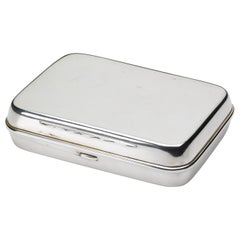
This is a cast-iron figural eagle doorstop, circa early 20th century. The eagle is depicted with wings spread wide, perched and mounted to a square marble base. The eagle retains traces of its original gilt surface and is embossed with “F.O.E.” at its midsection, possibly referring to the Fraternal Order of Eagles.
The eagle is both the national bird and the national animal of the United States. The eagle motif has been widely used throughout American history, most notably as part of our Great Seal. The founders of the United States were fond of comparing their new republic with the Roman Republic, in which eagle imagery, usually the golden eagle, was prominent. On June 20, 1782, the Continental Congress adopted the design for the Great Seal of the United States...
Category
Early 20th Century American Federal Animal Sculptures
Materials
Marble, Iron
Hallmarked Silver Plated Keepsake Box, Sheffield, UK, circa 1900
Located in Colorado Springs, CO
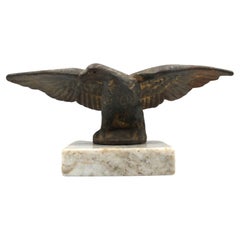
Offered is a stunning silver plated keepsake box dating to 1900, with associated hallmark. This small box includes a wooden interior with two slots and a blank square on top where initials could have been engraved. A well maintained, elegant piece, this antique silver box is an excellent addition to any silver or home decor collection.
Trinket or keepsake boxes have taken on many forms since their first conception in ancient times. However their purpose remains the same; to store jewelry and other items precious to the owner. Originally, these boxes were used specifically for jewelry. These were in common use as early as 5000 BC in Ancient Egypt, when the majority of Egyptians, both male and female, wore jewelry. Boxes were used to keep these gemstone encrusted items safe. In Ancient Rome, jewelry was a status symbol. Rings and brooches were utilized to represent ones status in society. Again, boxes were needed for security and storage purposes. Finding early examples of these are quite rare.
Victorian and Edwardian examples of trinket boxes are far more common. This is because owning jewellery was a luxury until the Victorian era- let alone possessing so much a box was needed to store it all. Fine jewelry and other items became available to the masses after the industrial revolution due to the reduction in production costs. This led to a demand for trinket boxes, which were much smaller than jewelry boxes and therefore better suited to the needs of the middle class who did not yet possess an abundance of jewelry.
In Victorian households, collectables and other items of interested were also stashed inside these boxes. This is why they are known as trinket or keepsake boxes, rather than just jewelry boxes, although of course jewelry was also stored in them. Trinket boxes were produced in large numbers around this time. Many were lined with colored plush or velvet or rich wood. More elaborate designs had interior divisions and trays for rings and other pieces of jewellery. It was also common to see trinket boxes so small that they could only contain one item, such as a single ring. Ornate exteriors were created to reflect the value of the trinket boxes contents.
The Edwardian era saw the introduction of new styles of trinket box. These included small circular or oblong boxes...
Category
Antique Early 1900s English Art Deco Decorative Boxes
Materials
Silver
$600 Sale Price
20% Off
You May Also Like
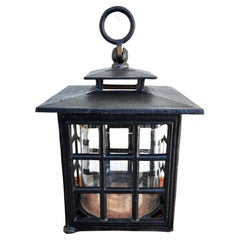
Iron Candle Lantern Mid Century Huge 30 Pounds
Located in Lake Worth, FL
For FULL item description click on More Details below.
Huge Mid-Century Iron Candle Lantern
Can rest on a table or hang and comes with original wavy blown glass candle holder.
We h...
Category
Mid-20th Century Lanterns
Materials
Iron, Metal
$956 Sale Price / item
20% Off
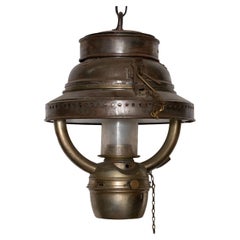
Vintage Retrofitted Kerosene Lantern
Located in Tarrytown, NY
Vintage metal kerosene lantern with central glass shade retrofitted for electrified home use.
Category
Vintage 1950s American Mid-Century Modern Lanterns
Materials
Metal
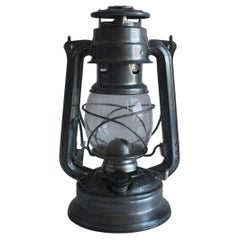
Vintage Kerosene Lamp, Meva, model 864, circa 1960
Located in Praha, CZ
Old kerosene lamp in metal design with glass cylinder and wick regulation.
Ideal as a decoration for vintage style lovers.
Material: Metal, Glass
Fuel: Kerosene
Good Original condition
Category
Vintage 1960s Czech Mid-Century Modern Lanterns
Materials
Metal
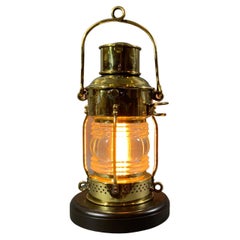
Antique Ships Anchor Lantern by French Maker
Located in Norwell, MA
Antique solid brass ships anchor lantern with Fresnel glass lens, hinged top, carry handle, etc. with makers plate from Ouvrard Villars, a highly regarded maker. This is a first-clas...
Category
Vintage 1940s European Lanterns
Materials
Brass
Early 20th Century French Tole and Glass Storm Lantern
Located in Pease pottage, West Sussex
Early 20th Century storm lantern, tole and original glass, once used with oil lamp, now ideal for a candle. pierced tole decoration.
France Circa 1930.
Category
Early 20th Century French Table Lamps
Materials
Sheet Metal
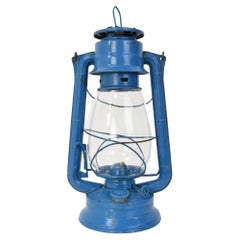
Mid-Century Kerosene Lamp, Meva, circa 1960
s
Located in Praha, CZ
Made in Czechoslovakia
Made of Metal,Glass
With aged patina
Original condition.
Category
Vintage 1960s Czech Mid-Century Modern More Lighting
Materials
Metal
More Ways To Browse
Traffic Light
Signal Lantern
Lantern With Red Glass
Red Glass Globe
Kerosene Lantern
Adams Westlake
Railroad Lantern
Bronze Dore Lantern
Bronze Gothic Lantern
Electric Lantern
English Copper Lantern
19th Century Ships Lantern
Anchor Brass Ship Lantern
Antique Lantern Colonial
Antique Lantern Verdigris
Antique Marine Lamp
English Lantern Light
Georgian Brass Lantern