1 of 10
19th Century Imari Porcelain French Bronze Table Lamp
$1,800List Price
About the Item
- Creator:Imari Porcelain (Manufacturer)
- Dimensions:Height: 28 in (71.12 cm)Diameter: 17 in (43.18 cm)
- Materials and Techniques:
- Place of Origin:
- Period:
- Date of Manufacture:19th Century
- Condition:Refinished. Rewired: New wiring and new silk lampshade.
- Seller Location:Fairfax, VA
- Reference Number:1stDibs: LU913629525872
Authenticity Guarantee
In the unlikely event there’s an issue with an item’s authenticity, contact us within 1 year for a full refund. DetailsMoney-Back Guarantee
If your item is not as described, is damaged in transit, or does not arrive, contact us within 7 days for a full refund. Details24-Hour Cancellation
You have a 24-hour grace period in which to reconsider your purchase, with no questions asked.Vetted Professional Sellers
Our world-class sellers must adhere to strict standards for service and quality, maintaining the integrity of our listings.Price-Match Guarantee
If you find that a seller listed the same item for a lower price elsewhere, we’ll match it.Trusted Global Delivery
Our best-in-class carrier network provides specialized shipping options worldwide, including custom delivery.You May Also Like
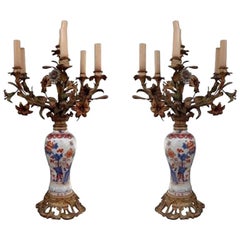
19th Century Pair of Imari Porcelaine Lamp Mounted Gilt Bronze
By Imari Porcelain
Located in Marseille, FR
19th century pair of porcelain lamp from Imari. Frame gilt bronze decorations of metal polychrome flowers.
Category
Antique 19th Century Chinese Chinese Export Ceramics
Materials
Porcelain
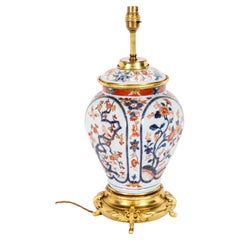
Antique Japanese Imari Porcelain Table Lamp c. 1840 19th Century
Located in London, GB
This is a superb decorative Japanese Imari table lamp on stand, circa 1840 in date.
The lamp has a bulbous shape and features Japanese decoration in the traditional Imari colour scheme of blue orange and red, profusely decorated with birds and flowers.
The rim has a cast ormolu bamboo-moulded mount and the lamp is raised on an ormolu base with four-leaf and scroll-form legs.
Add a touch of elegance to a special place in your home with this fabulous Japanese Imari porcelain lamp...
Category
Antique 1840s Table Lamps
Materials
Porcelain
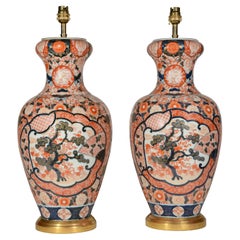
Japanese Imari Palette Pair of 19th Century Porcelain Table Lamps
Located in London, GB
A superb pair of late 19th century Japanese baluster vases, densely decorated throughout in the typical Imari palette of iron reds and blue on white background, now mounted as lamps ...
Category
Antique Late 19th Century Japanese Table Lamps
Materials
Ceramic
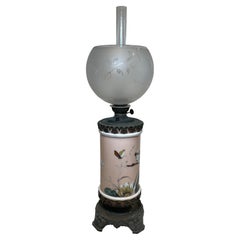
19th Century French Bronze Porcelain Hurricane Oil Lamp
Located in Guaynabo, PR
This is a hurricane oil lamp made of bronze and porcelain. It depicts a cylindrical shaped porcelain font hand painted with a light pink background...
Category
Antique 19th Century French Art Nouveau Table Lamps
Materials
Bronze
$1,295 Sale Price
30% Off
H 24.5 in W 8 in D 8 in
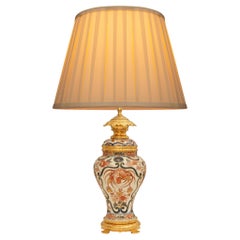
French 19th century Louis XVI st. Imari Porcelain and Ormolu lamp
Located in West Palm Beach, FL
A most charming French 19th century Louis XVI st. Imari Porcelain and Ormolu lamp. This elegant lidded urn converted into a lamp is raised by four duck feet below a round Ormolu socl...
Category
Antique 19th Century French Louis XVI Table Lamps
Materials
Ormolu
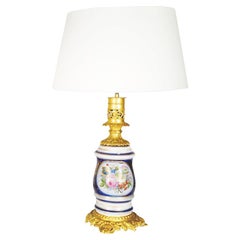
French Design, Gilt Bronze, Porcelain, Ornate Table Lamp, France, 19th C.
Located in Manhasset, NY
French Design, Gilt Bronze, Porcelain, Ornate Table Lamp, France, 19th C.
This elegant 19th-century gas lamp features exquisite gilt bronze mounts and vibrant hand-painted floral de...
Category
Vintage 1980s French Table Lamps
Materials
Bronze

$1,800
H 32 in W 11 in D 7 in
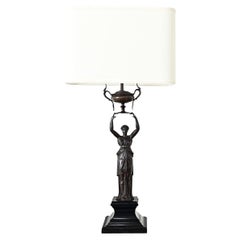
French 19th Century Empire Bronze Table Lamp
Located in Baton Rouge, LA
French 19th century Empire style cast bronze table lamp with new linen shade, converted from gas to electric. This substantial Neoclassical fixture has a Greco-Roman female figure fo...
Category
Antique 19th Century French Empire Table Lamps
Materials
Metal, Bronze
Louis XV Style Bronze Porcelain Table Lamp, 19th Century
Located in Lisbon, PT
A porcelain table lamp with a Sevres flower bouquet motif in vibrant colors and gilded bronze decorated with a golden wreath on feuillagée.
Doesn't include Lampshade
Height without...
Category
Antique Late 19th Century French Louis XV Table Lamps
Materials
Brass, Bronze
$1,110 Sale Price
39% Off
H 19.1 in Dm 8.27 in
19th-Century French Porcelain and Bronze Table Lamp with Floral Motif
Located in Atlanta, GA
This 19th-century French lamp is a stunning example of classic elegance and refined craftsmanship. The base is made from high-quality porcelain, featuring a delicate, hand-painted fl...
Category
Antique 19th Century French Table Lamps
Materials
Porcelain

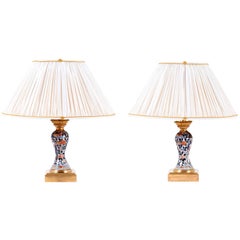
Pair of Porcelain Lamps with Imari Decor, Late 19th Century
Located in Saint-Ouen, FR
Pair of baluster shaped lamps in Imari porcelain. Chiselled and gilt bronze mount, standing on a moulded square shape base.
Lamp body bottom part decorated with a frieze of blue edgi...
Category
Antique Late 19th Century French Chinoiserie Table Lamps
Materials
Bronze
$3,076 / set
H 21.07 in W 5.52 in D 5.52 in