1 of 10
19th Century Imari Porcelain and Gilt Bronze-Mounted Electrified Oil Lamp
$1,900List Price
About the Item
- Creator:Imari Porcelain (Manufacturer)
- Dimensions:Height: 30 in (76.2 cm)Diameter: 17 in (43.18 cm)
- Materials and Techniques:
- Place of Origin:
- Period:
- Date of Manufacture:1880s
- Condition:New wiring and new silk lampshade.
- Seller Location:Fairfax, VA
- Reference Number:1stDibs: LU91364197923
Authenticity Guarantee
In the unlikely event there’s an issue with an item’s authenticity, contact us within 1 year for a full refund. DetailsMoney-Back Guarantee
If your item is not as described, is damaged in transit, or does not arrive, contact us within 7 days for a full refund. Details24-Hour Cancellation
You have a 24-hour grace period in which to reconsider your purchase, with no questions asked.Vetted Professional Sellers
Our world-class sellers must adhere to strict standards for service and quality, maintaining the integrity of our listings.Price-Match Guarantee
If you find that a seller listed the same item for a lower price elsewhere, we’ll match it.Trusted Global Delivery
Our best-in-class carrier network provides specialized shipping options worldwide, including custom delivery.You May Also Like
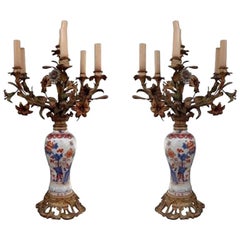
19th Century Pair of Imari Porcelaine Lamp Mounted Gilt Bronze
By Imari Porcelain
Located in Marseille, FR
19th century pair of porcelain lamp from Imari. Frame gilt bronze decorations of metal polychrome flowers.
Category
Antique 19th Century Chinese Chinese Export Ceramics
Materials
Porcelain
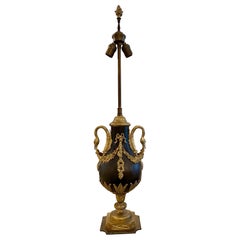
Late 19th Century Bronze and Gilt Metal Urn Electrified as a Lamp
Located in WEST PALM BEACH, FL
This is a stately late 19th century bronze urn decorated with gilt bronze swan handles and swags, later electrified.
Category
Antique Late 19th Century Table Lamps
Materials
Bronze
$1,450
Free Shipping
H 36 in W 9 in D 7 in
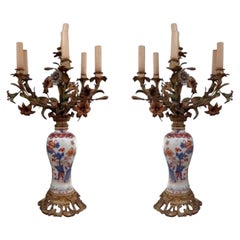
Pair of Imari Lamps Mounted in 19th Century Bronze
Located in Marseille, FR
Pair of Arita porcelain lamp called Imari on gilt bronze frame decorated with flowers in polychrome sheet metal from the 19th century. Imari porcelain is a style of Japanese ceramics...
Category
Antique 19th Century Japanese Table Lamps
Materials
Porcelain
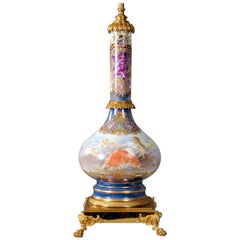
Beautiful Late 19th Century Gilt Bronze-Mounted Sèvres Style Porcelain Lamp
By Manufacture Nationale de Sèvres
Located in Long Island City, NY
A beautiful late 19th century gilt bronze-mounted sèvres style porcelain lamp.
Raised gilt decorations, the front scene is of a reclining maiden among flowers being attended by c...
Category
Antique Late 19th Century French Belle Époque Vases
Materials
Bronze
$12,500
H 39 in Dm 10.5 in
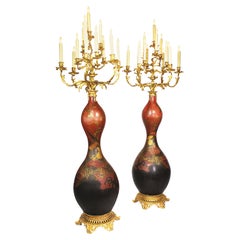
Pair 19th Century Japanese Imari Porcelain
Gilt-Bronze Torchere Candelabra
By Imari Porcelain
Located in Los Angeles, CA
A fine Pair of 19th century Japanese Imari Porcelain and French Gilt-Bronze Mounted Thirteen-Light Celadon Torchere Candelabra. The bottle-shaped Japonisme vases with a Royal red background, decorated with parcel-gilt and black soaring eagles in the hunt within a forestall scene. Each Vase fitted and surmounted with a French 19th century Louis XV Style 13-Light scrolled candelabrum and all raised on a circular pierced gilt-bronze plinth. circa: 1880.
Imari Porcelain (????) is the name for Japanese porcelain wares made in the town of Arita, in the former Hizen Province, northwestern Kyushu. They were exported to Europe extensively from the port of Imari, Saga, between the second half of the 17th century and the first half of the 18th century. The Japanese as well as Europeans called them Imari. In Japanese, these porcelains are also known as Arita-yaki (???). Imari or Arita porcelain has been continously produced up through the present day.
Characteristics
Though there are many types of Imari, Westerners' conception of Imari in the popular sense is associated only with a type of Imari produced and exported in large quantity in mid-17th century. This type is called Kinrande. Kinrande Imari is colored porcelain with cobalt blue underglaze and red and gold overglaze. The color combination was not seen in China at that time. Traditional Ming dynasty color porcelain used dominantly red and green, probably due to scarcity of gold in China, whereas gold was abundant in Japan in those days. The subject matter of Imari is diverse, ranging from foliage and flowers to people, scenery and abstractions. Some Imari design structures such as kraak style were adopted from China, but most designs were uniquely Japanese owing to the rich Japanese tradition of paintings and costume design. The porcelain has a gritty texture on the bases, where it is not covered by glaze. There is also blue and white Imari. Kakiemon style Imari is another type of Imari, but it tends to be categorized separately in Europe.
History
"Imari" was simply the trans-shipment port for Arita wares. It was the kilns at Arita which formed the heart of the Japanese porcelain industry.
Arita's kilns were set up in the 17th century, when kaolin was discovered in 1616 by the immigrant Korean potter, Yi Sam-pyeong (1579–1655). (He may also be known by the name, "Kanage Sambei".) Yi Sam-Pyeong, along with his extended family of 180 persons, left Korea on the offer of a privileged position in Japan. This decision was made after the occurrence of certain Japanese invasions of Korea. After Yi Sam-Pyeong's discovery, his kilns began to produce revised Korean-style blue and white porcelains, known as "Shoki-Imari".
In the mid-17th century there were also a lot of Chinese refugees in Northern Kyushu due to the turmoil on Chinese continent, and it is said one of them brought coloring technique to Arita. Thus Shoki-Imari developed into Ko-KutaniImari. Ko-Kutani was produced around 1650 for both export and domestic market. Blue and white porcelain continued to be produced and they are called Ai-Kutani. Ko-Kutani Imari for the export market usually adopted Chinese design structure such as kraak style, whereas Ai-Kutani for the domestic market were highly unique in design and are accordingly valued very much among collectors.
Ko-Kutani style evolved into Kakiemon style Imari, which was produced for about 50 years around 1700. Imari achieved its technical and aesthetic peak in Kakiemon style, and it dominated European market. Blue and white Kakiemon is called Ai-Kakiemon. Kakiemon style transformed into Kinrande in the 18th century. Kinrande used blue underglaze and red and gold overglaze, and later some other colors.
Imari began to be exported to Europe because the Chinese kilns at Ching-te-Chen were damaged in the political chaos and the new Qing dynasty government stopped trade in 1656–1684. Exports to Europe were made through the Dutch East India Company, but the designation "Imari Porcelain" in Europe connotes Arita wares of mostly Kinrande Imari.
Export of Imari to Europe stopped in mid-18th century when China began export to Europe again, since Imari was not able to compete against China due to high labor cost. By that time, however, both Imari and Kakiemon style were already so popular among Europeans, Chinese export porcelain copied both Imari and Kakiemon style, which is called Chinese Imari. At the same time, European kilns, such as Meisen also tried to copy Imari and Kakiemon.
Export of Imari surged again in late 19th century (Meiji era) when Japonism flourished in Europe. Thus in western world today, two kinds of Imari can...
Category
Antique 19th Century Japanese Japonisme Floor Lamps
Materials
Bronze, Ormolu
$18,950 Sale Price / set
61% Off
H 72.25 in Dm 24.25 in
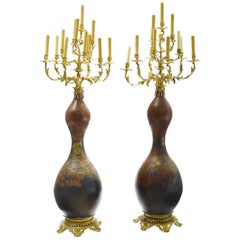
Pair 19th Century Japanese Porcelain and Gilt Bronze Mounted Torchere Floor Lamp
By Imari Porcelain
Located in Los Angeles, CA
A fine pair of 19th century Japanese porcelain and French gilt bronze mounted thirteen-light celadon torchiere, floor lamp candelabra. Wired for ...
Category
Antique 19th Century Japanese Rococo Floor Lamps
Materials
Bronze
$29,850 / set
H 64.25 in Dm 25 in
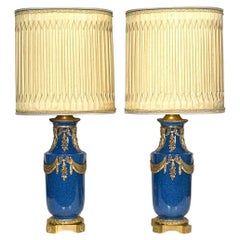
Pair 19th Century Gilt Bronze Mounted Eggshell Blue Glazed Porcelain Table Lamps
Located in New York, NY
Pair of antique (late 19th century) French porcelain vases in the Louis XVI period style, with lovely Chinese egg shell blue glaze and finely cast neoclas...
Category
Antique Late 19th Century French Louis XVI Table Lamps
Materials
Bronze
$6,500 / set
H 34 in Dm 6.75 in
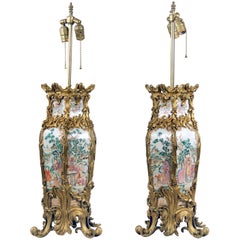
Pair of Late 19th Century French Gilt Bronze Mounted Chinese Porcelain Lamps
Located in Long Island City, NY
A Nice Quality Pair of Late 19th Century French Gilt Bronze Mounted Chinese Porcelain Lamps
Fine bronze mounts separate the six painted panels decorated with chinoiserie figures in ...
Category
Antique Late 19th Century French Belle Époque Table Lamps
Materials
Bronze, Ormolu
$50,000 / set
H 22 in Dm 10.5 in
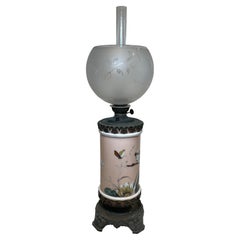
19th Century French Bronze Porcelain Hurricane Oil Lamp
Located in Guaynabo, PR
This is a hurricane oil lamp made of bronze and porcelain. It depicts a cylindrical shaped porcelain font hand painted with a light pink background...
Category
Antique 19th Century French Art Nouveau Table Lamps
Materials
Bronze
$1,295 Sale Price
30% Off
H 24.5 in W 8 in D 8 in
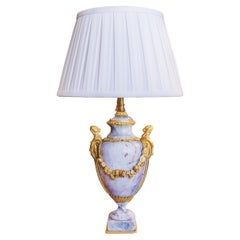
A fine 19th century French marble and gilt bronze mounted table lamp
Located in Dallas, TX
A very fine 19th century French marble and gilt bronze mounted lamp
Category
Antique Late 19th Century French Louis XVI Table Lamps
Materials
Bronze
Still Thinking About These?
All Recently ViewedMore Ways To Browse
Antique Stoneware Water Filter
Arditi Prismar
Art Deco Rocket Lamp
Art Deco Wave Lamp
Belt Buckle Table
Berger Table Lamps
Beth Weissman
Bf Lamp
Ceramic Lamp Whiskey
Charles Of Paris Lamps
Chinese Wedding Lamp
Cholla Wood Lamp
Daum Lamp Shades
David Krys Martini Lamp
David Krys
Eileen Grey Lamp
Enea Ferrari
Flexo Desk Lamp