Want more images or videos?
Request additional images or videos from the seller
1 of 6

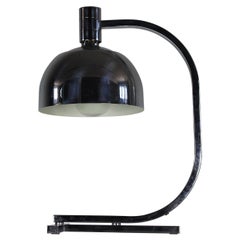
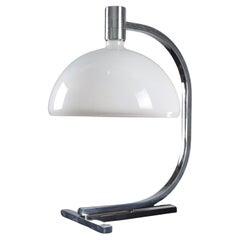
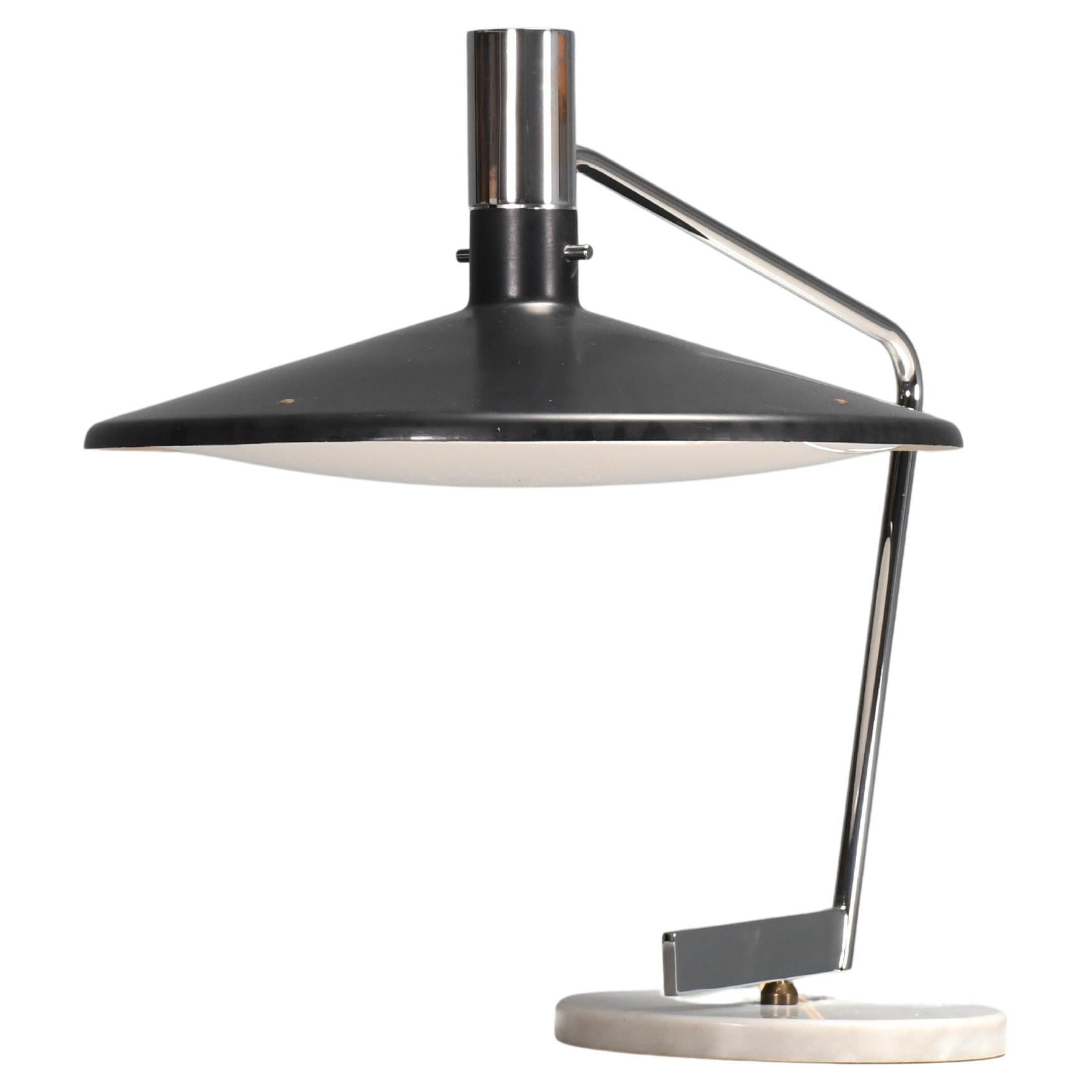
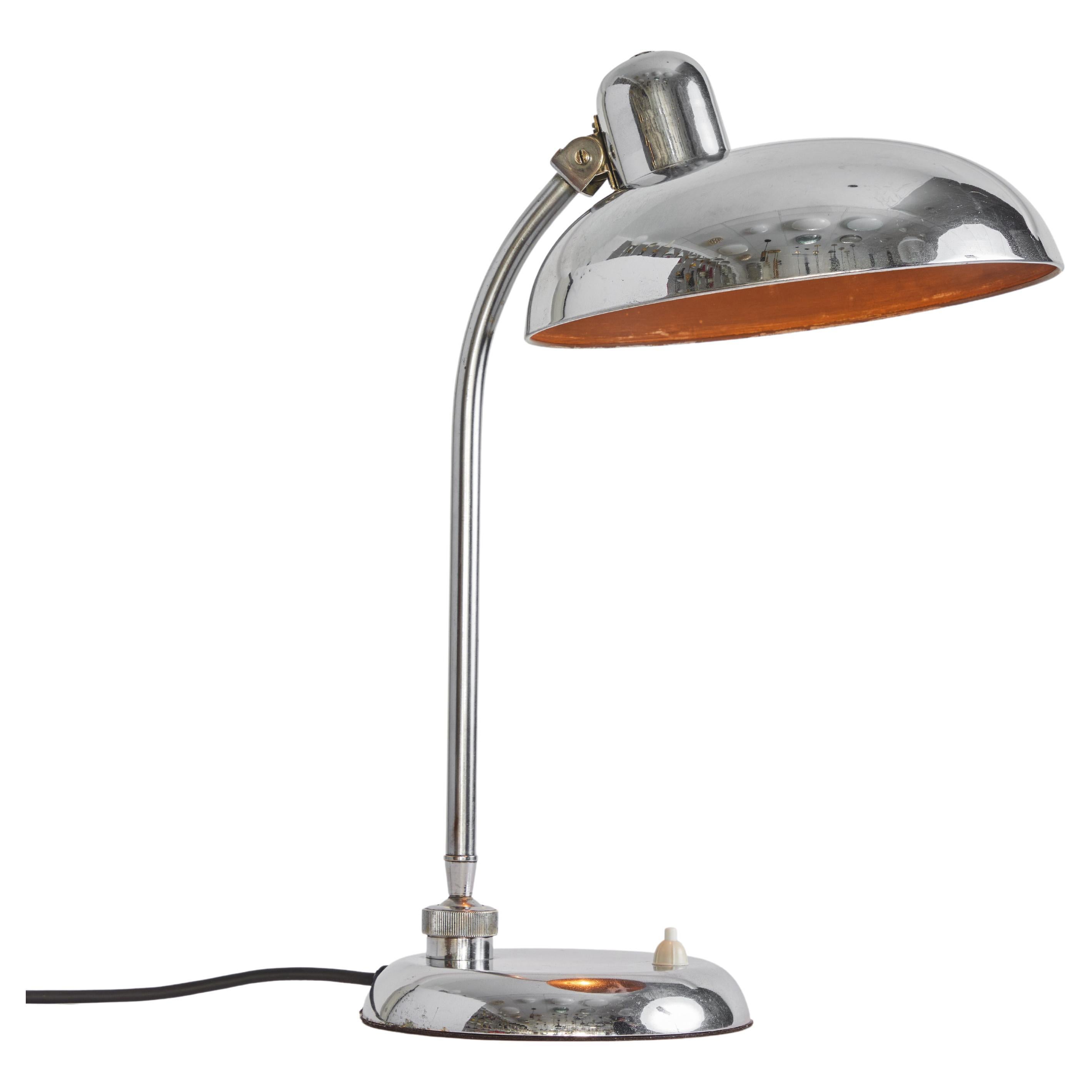
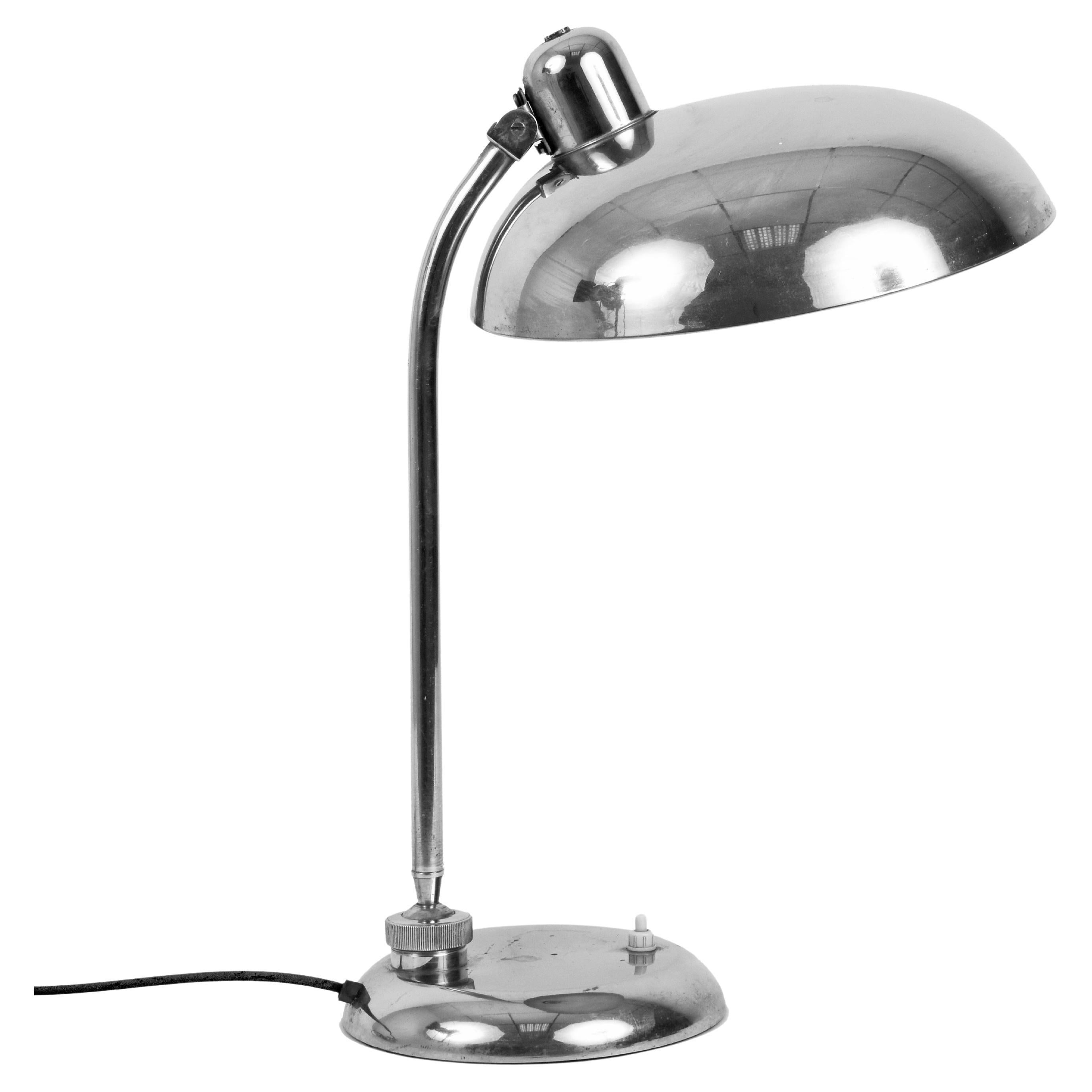
Chromed AS/AM Series Table Lamp by Franco Albini for Sirrah 1960s

$3,447.13
£2,584.76
€2,900
CA$4,810.02
A$5,207.85
CHF 2,768.77
MX$62,810.24
NOK 34,818.88
SEK 32,461.12
DKK 22,092.51

About the Item

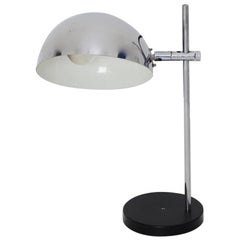
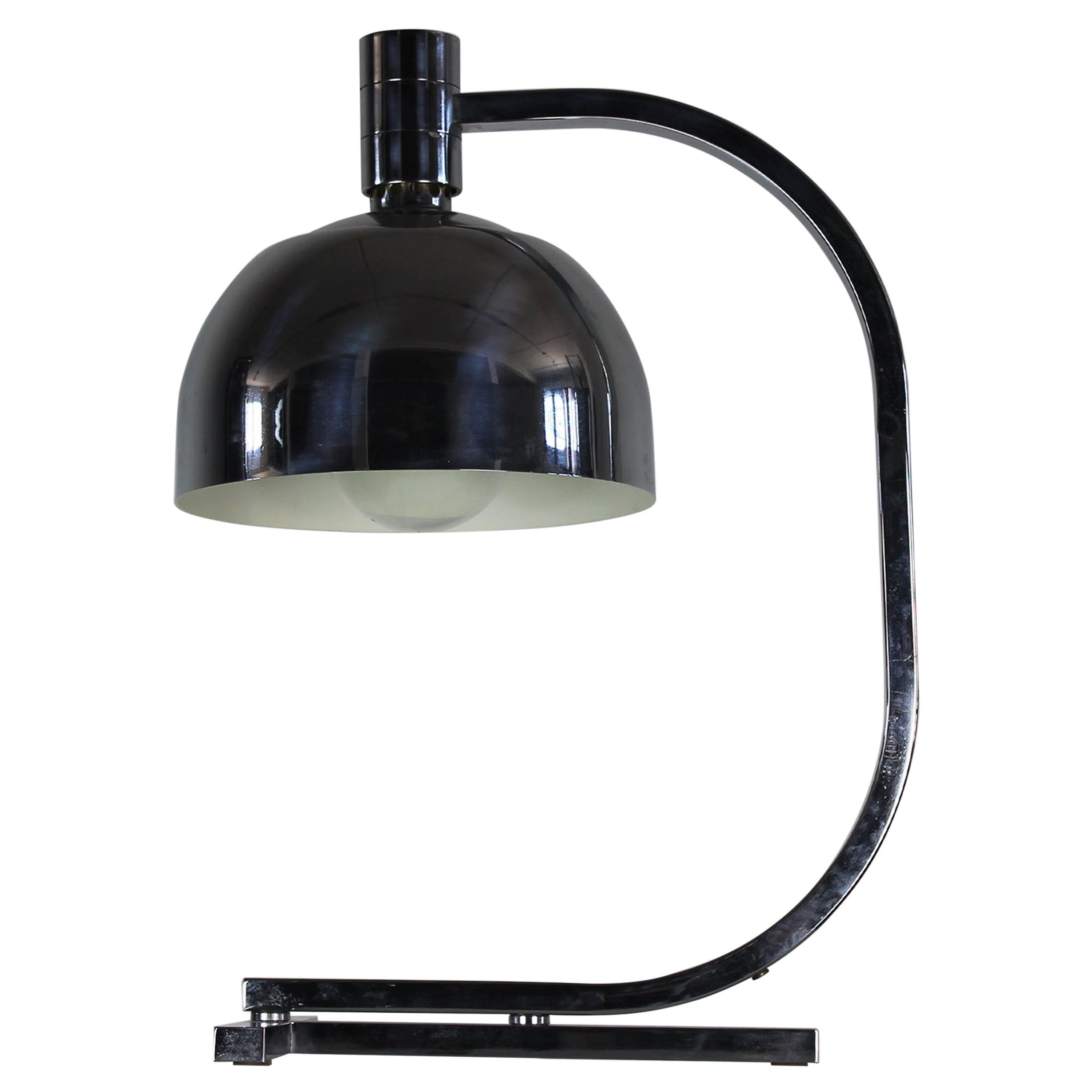
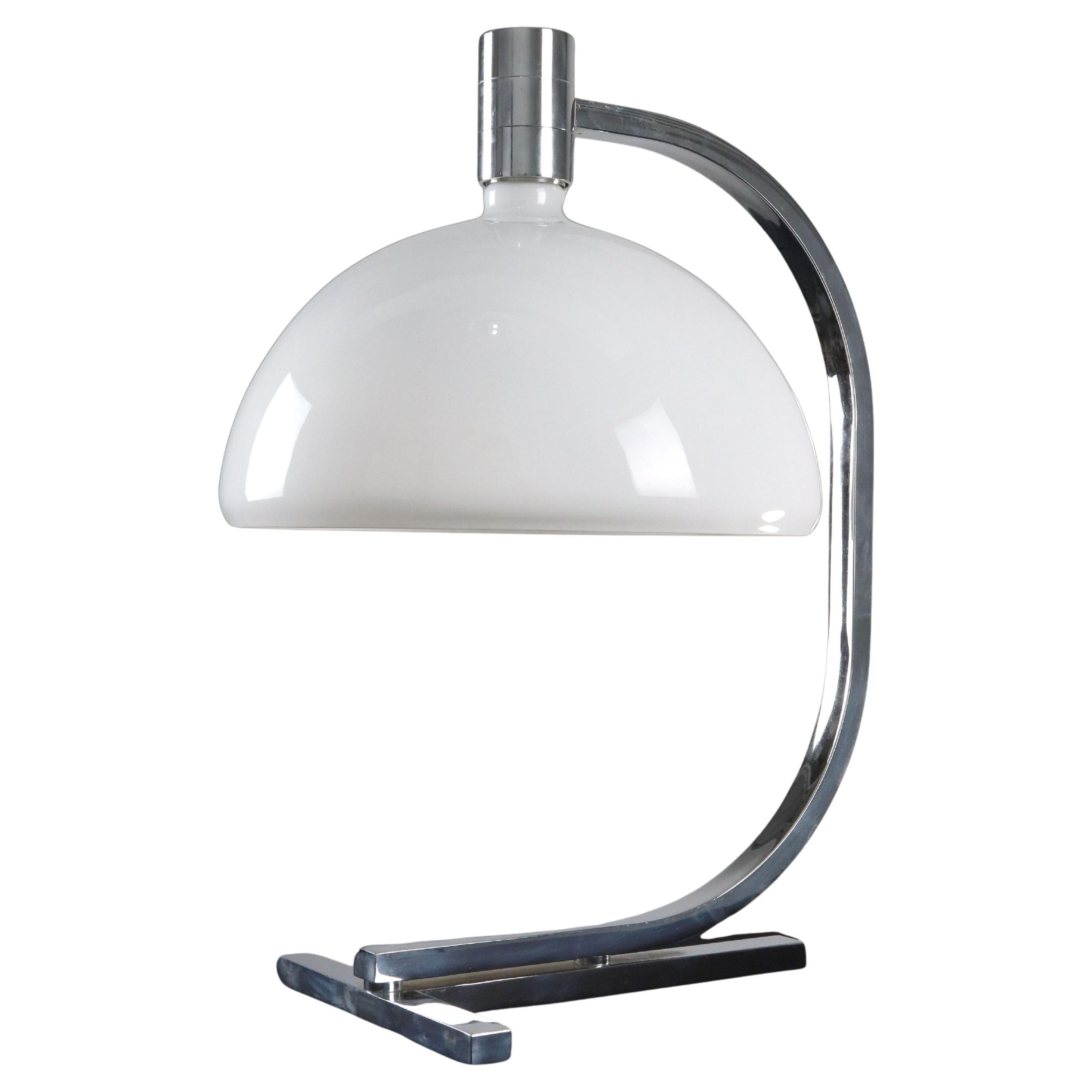
Table lamp with structure and lampshade entirely realized in chromed steel, from the AM/AS series designed by the iconic duo Franco Albini and Franca Helg and manufactured by Sirrah in the 1960s Licterature: P. Cortopassi, Cento lampade della collezione Cortopassi, Alinea, 2004, p. 86. After spending his childhood and part of his youth in Robbiate in Brianza, where he was born in 1905, Franco Albini moved with his family to Milan. Here he enrolled in the Faculty of Architecture of the Polytechnic and graduated in 1929. He starts his professional activity in the studio of Gio Ponti and Emilio Lancia, with whom he collaborates for three years. In those three years, the works carried out are admittedly of a twentieth-century imprint. But it was the meeting with Edoardo Persico that marked a clear turning point toward rationalism and the rapprochement with the group of editors of "Casabella." The Neapolitan critic's partly ironic and partly very harsh comments on a series of drawings, made by Albini for the design of some office furniture, cause him a great disturbance. The new phase that that meeting provoked started with the opening of the first professional studio in via Panizza with Renato Camus and Giancarlo Palanti. The group of architects began to deal with public housing by participating in the competition for the Baracca neighborhood in San Siro in 1932 and then creating the Ifacp neighborhoods. In the same years, Albini worked on his first villa (Pestarini), but it is above all in the context of the exhibitions that the Milanese master experiments his compromise between that "rigor and poetic fantasy" of which the critic and architect Pagano speaks, coining the elements that will be a recurring theme in all the declensions of his work - architecture, interiors, design pieces. The opening in 1933 of the new headquarters of the Triennale in Milan, in the Palazzo dell'Arte, becomes an important opportunity to express the strong innovative character of rationalist thought, a gym in which to freely experiment with new materials and new solutions, but above all a "method." Together with Giancarlo Palanti, Albini on the occasion of the V Triennale di Milano sets up the steel structure house, for which he also designs the furniture. At the subsequent Triennale of 1936, together with a group of young designers gathered by Pagano in the previous edition of 1933, Franco Albini takes care of the preparation of the exhibition of the house, in which the furniture of three types of accommodation. The staging of 'Stanza per un Uomo', at that same Triennale, allows us to understand the acute and ironic approach that is part of Albini, as a man and as a designer: the theme addressed is that of the 'existenzminimum' and the reference of the project is to the fascist myth of the athletic and sporty man, but it is also a way to reflect on low-cost housing, the reduction of surfaces to a minimum and respect for the way of living. In that same year Albini and Romano designed the Ancient Italian Goldsmith's Exhibition: vertical uprights, simple linear rods, design the space. A theme, that of the "flagpole," which seems to be the center of the evolution of his production and creative process. The concept is reworked over time, with the technique of decomposition and recomposition typical of Albinian planning: in the setting up of the Scipio Exhibition and of contemporary drawings (1941) the tapered flagpoles, on which the paintings and display cases are hung, are supported by a grid of steel cables; in the Vanzetti stand (1942) they take on the V shape; in the Olivetti store in Paris (1956) the uprights in polished mahogany support the shelves for displaying typewriters and calculators. The reflection on this theme arises from the desire to interpret the architectural space, to read it through the use of a grid, to introduce the third dimension, the vertical one, while maintaining a sense of lightness and transparency. The flagpole is found, however, also in areas other than the exhibition ones. In the apartments he designed, it is used as a pivot on which the paintings can be suspended and rotated to allow different points of view, but at the same time as an element capable of dividing spaces. The Veliero bookcase, built in a single prototype in 1940, has two main uprights, made up of slender curved and juxtaposed bars, linked by a complex tensile structure. The lightened upright is also found in the LB7 bookcase, produced by Poggi in the 1950s. Like the evolution of the upright, also the decomposition and recomposition of the architectural elements and the use of the module, constitute the elements of a method that tends to simplify the complex phenomena of design down to the essential nuclei. Albini is a complete designer, whose work ranges from construction to design, from installations to urban planning. Among his masterpieces are: the Genoese Museums that change the way the public uses the work of art, the Pirovano Refuge in Cervinia, the Rinascente in Rome and the Milan Metro, which inspires the projects of the New York and Sao Paulo.
  • Creator:
    Franco Albini (Designer)
  • Dimensions:
    Height: 25.2 in (64 cm)Width: 16.54 in (42 cm)Depth: 11.42 in (29 cm)
  • Power Source:
    Hardwired
  • Voltage:
    220-240v
  • Style:
    Mid-Century Modern (Of the Period)
  • Materials and Techniques:
  • Place of Origin:
  • Period:
  • Date of Manufacture:
    1960
  • Condition:
    Wear consistent with age and use.
  • Seller Location:
    Cascina, IT
  • Reference Number:
    1stDibs: LU5304246305412

More From This Seller

View All
Franco Albini Franca Helg AM/AS Table Lamp in Steel by Sirrah 1960s Italy
By Franco Albini, Sirrah, Franca Helg
Located in Cascina, Pisa
Table or desk lamp with structure and lampshade entirely realized in chromed steel, it as a part of the AM/AS series designed by the iconic duo Franco Albini and Franca Helg and manu...
Category

Vintage 1960s Italian Mid-Century Modern Table Lamps

Materials

Steel

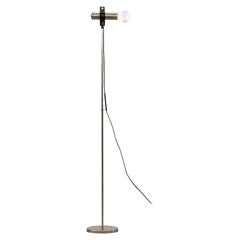
Danilo Corrado Aroldi Bridge Floor Lamp in Metal by Stilnovo 1970s Italy
By Stilnovo, Corrado and Luigi Aroldi
Located in Cascina, Pisa
Floor lamp model Bridge was designed by the Aroldi brothers, Danilo and Corrado, in the early 1970s and produced by the famous Italian company Stilnovo. The lampshade is in chromed metal fully swivel and directable in multiple ways, movable chrome stem, and a tubular frame in white lacquered metal. Circular base in metal e...
Category

Vintage 1970s Italian Mid-Century Modern Floor Lamps

Materials

Metal

Desk Lamp Model 665 in White Lacquered Metal by Martinelli Luce 1970s
By Martinelli Luce, Elio Martinelli
Located in Cascina, Pisa
Desk lamp model 665 or Zeta in white lacquered and chromed metal. It presents a double arm formed by two metal rods anchored to the rectangular base, and an adjustable diffuser in white lacquered aluminium that it's rotatable at 360° The lamp was produced by the Italian company Martinelli...
Category

Vintage 1970s Italian Mid-Century Modern Table Lamps

Materials

Metal, Chrome, Aluminum

Angelo Ostuni and Renato Forti 399 Floor Lamp in Metal by Oluce 1960s
By Angelo Ostuni, Oluce, Renato Forti
Located in Cascina, Pisa
Floor lamp model 399 (from cornalux series) with structure in nickel-plated metal, lacquered metal and cast iron. The lamp bulb is adjustable in height achieved by a bracket that allows the lamp to be slid up and down the lamp stem. This lamp was designed by the Italian duo formed by Angelo Ostuni & Renato Forti and manufactured by O-Luce in 1958. Measurements: H 141 x Ø 24 diameter (base 20cm). Founded in 1945 by Giuseppe Ostuni, Oluce is the oldest Italian design company still operating in the lighting world, a unique production excellence which translates passionate aesthetic and technological research into the potential of light into actual form. Over the years, Oluce has succeeded in building a collection structured like a tale, rich and multifaceted, inhabited by products that transcend fashion to become Italian design icons. Its relationship with the design world begins In 1951, Oluce successfully took part in the IX Triennale, presenting – in the lighting section curated by Achille, Livio and Pier Giacomo Castiglioni – a Luminator designed by Franco Buzzi. As was typical at that time, the company instantly gained visibility on the international panorama thanks to Domus magazine. Major success was then reasserted by Tito Agnoli with nominations at the second edition of the Compasso d’Oro awards, in 1955, for his two lamps (the 363 floor lamp and a special bookshelf model). In 1956 these were followed in rapid succession by two more nominations: one for a remarkable table lamp in polyvinyl slats and another for a pendant lamp (mod. 4461) with double perspex shade. Then, there was the noteworthy 255/387 lamp (known as ”Agnoli”), a spot light supported...
Category

Vintage 1960s Italian Mid-Century Modern Floor Lamps

Materials

Metal, Iron

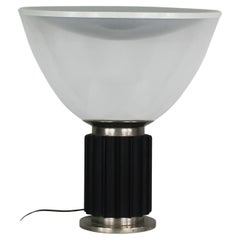
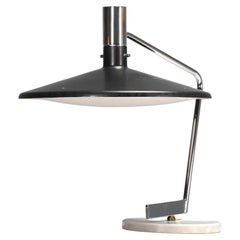
Achille Pier Giacomo Castiglioni Taccia Black Table Lamp by Flos 1970s
By Achille Pier Giacomo Castiglioni, Flos
Located in Cascina, Pisa
Taccia table lamp with base in polished and nickel-plated steel, and a black lacquered aluminum body. The adjustable light diffuser was made in hand-blown glass with a lacquered whit...
Category

Vintage 1960s Italian Mid-Century Modern Table Lamps

Materials

Aluminum, Brass, Steel

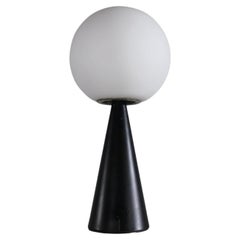
Gio Ponti Bilia Table Lamp in Black Metal and Opaline Glass by Fontana Arte 1970
By Fontana Arte, Gio Ponti
Located in Cascina, Pisa
Bilia table lamp with a black lacquered metal conical base connected with a spherical shade in blown opaline glass. This is an iconic lamp based on two essential shapes which mixed ...
Category

Late 20th Century Italian Mid-Century Modern Table Lamps

Materials

Metal

You May Also Like

Mid-Century Modern Vintage Chromed Table Lamp by Omi Elux 1960s Germany
Located in Vienna, AT
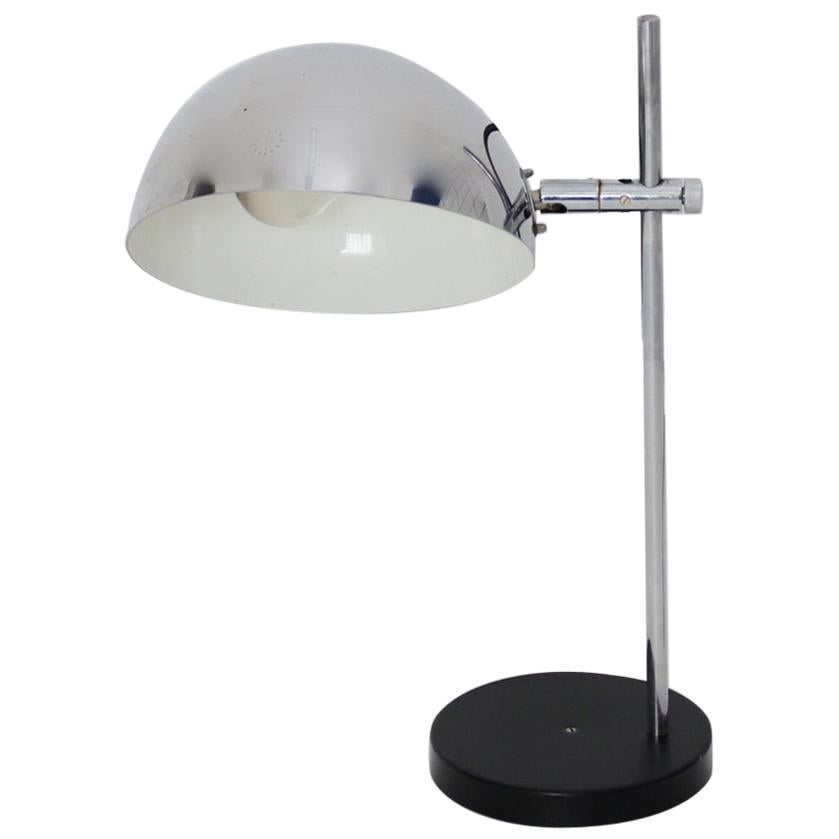
Mid Century Modern vintage table lamp from the 1960s. A pivoting and adjustable table lamp shows a black lacquered stem and chromed steel. Also the table lamp features one socket E 2...
Category

Vintage 1960s German Mid-Century Modern Table Lamps

Materials

Steel

1960s Italian Modern Chrome Glass Table Desk Lamp
Located in New York, NY
Mid-Century Modern ASC1 table desk lamp in the style of Franco Albini for Sirrah. Made of a chrome finish frame with a white glass shade. Cleaned and restored. This requires three st...
Category

Vintage 1960s Italian Mid-Century Modern Table Lamps

Materials

Metal, Chrome

1940s Giovanni Michelucci Chrome Ministerial Table Lamp for Lariolux
By Kaiser Idell, Giovanni Michelucci, Lariolux
Located in Glendale, CA
1940s Giovanni Michelucci chrome ministerial table lamp for Lariolux. Produced circa 1940 and executed in polished chrome with swiveling arm and rotating adjustable shade. Reminiscen...
Category

Vintage 1940s Italian Scandinavian Modern Table Lamps

Materials

Metal, Chrome

Giovanni Michelucci Chrome Ministerial Table Lamp for Lariolux, Italy, 1940s
By Lariolux, Giovanni Michelucci
Located in Roma, IT
Stunning and extremely rare chrome ministerial table lamp designed by Giovanni Michelucci and produced by Lariolux in Italy during the 1940s. A striking example of early Italian ind...
Category

Mid-20th Century German Bauhaus Table Lamps

Materials

Steel, Chrome

Scandinavian Modern Chromed Table Lamp by Vilhelm Lauritzen, 1940s
By Vilhelm Lauritzen
Located in Odense, DK
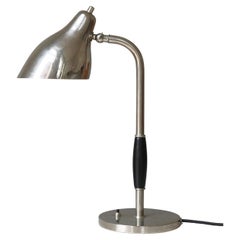
Rare table lamp designed by Vilhelm Lauritzen and manufactured by LYFA, Copenhagen in the 1940s. The lamp is made from chromed metal and the handle is black lacquered wood.
Category

Vintage 1940s Danish Scandinavian Modern Table Lamps

Materials

Metal, Chrome

MidCentury Table Lamp by Franco Albini and Franca Helg for Sirrah , Italy, 1960s
By Sirrah, Franco Albini and Franca Helg
Located in Argelato, BO
Chrome and glass table lamp model AS1N, designed by Franco Albini, Franca Helg e Antonio Piva Produced by Sirrah, Italy 1968-71 ca. Original in every piece, excellent condition.
Category

Vintage 1960s Italian Mid-Century Modern Table Lamps

Materials

Metal