Video Loading
Want more images or videos?
Request additional images or videos from the seller
1 of 13

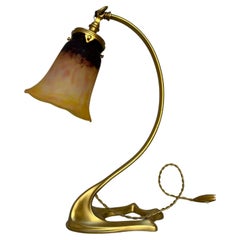
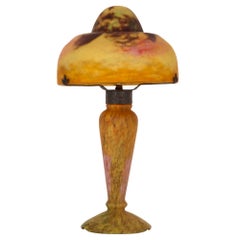
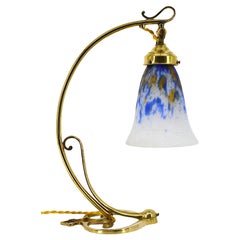
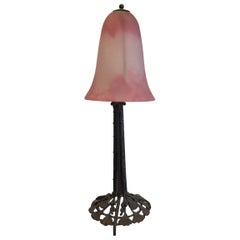
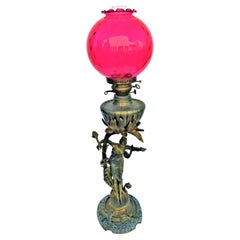
Daum Nancy Art Nouveau Lamp

$4,786.57
£3,575.07
€4,000
CA$6,594.38
A$7,186.71
CHF 3,805.67
MX$86,319.94
NOK 48,180.65
SEK 44,297.37
DKK 30,473.08

About the Item

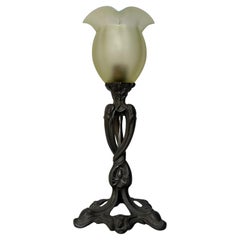
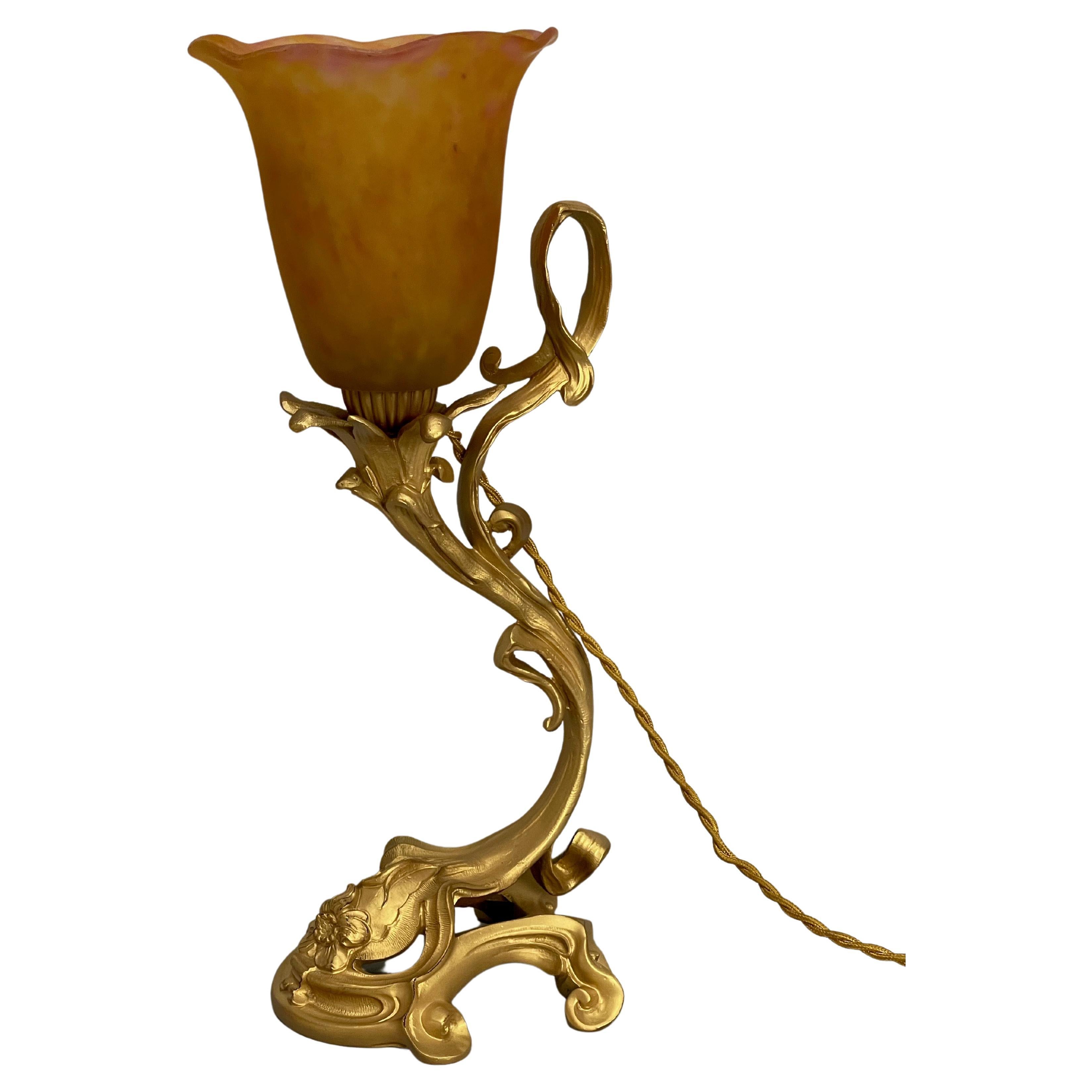
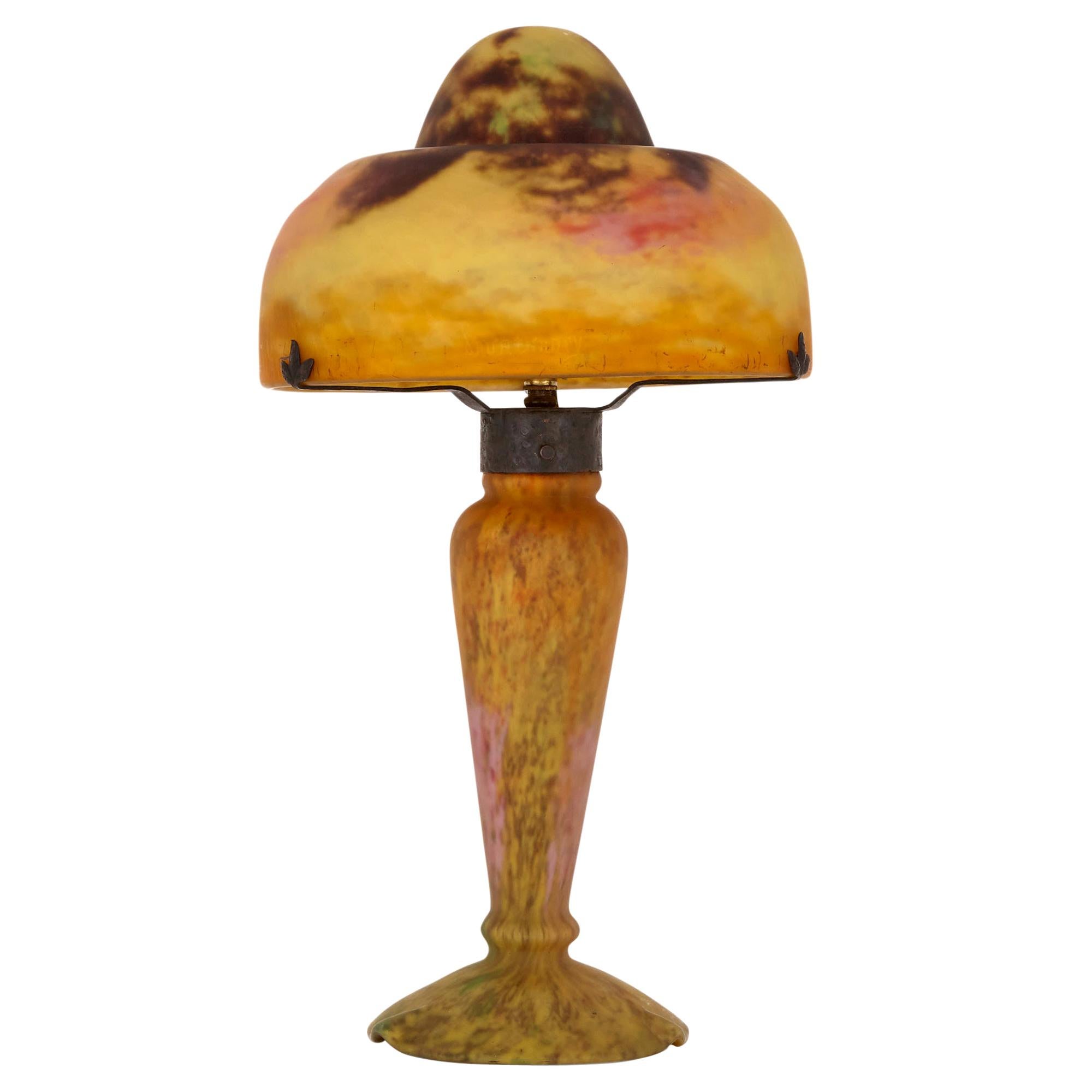
Daum Nancy Art Nouveau table lamp, circa 1910. High-quality wrought iron base, stamped (illegible). Powder tulip signed Daum Nancy. Electric and in perfect condition. Height: 40.5 cm Width: 30 cm Depth: 21 cm Weight: 2 kg The Compagnie française du cristal Daum is a crystal factory founded by the Daum brothers in 1878 in Nancy, Lorraine. The workshops of the Daum brothers, Auguste (1853-1909) and Antonin (1864-1930), also trained some of the great names of Art Nouveau, such as Jacques Grüber, Henri Bergé, Almaric Walter, and the Schneider brothers. Following the Franco-Prussian War, Jean Daum (1825-1885), a notary in Bitche, sold his practice and opted for France. He settled in Nancy in 1876 and, that same year, lent money on several occasions to Avril and Bertrand, owners of the Sainte-Catherine glassworks in Nancy, a factory that produced bottles and ordinary goblets. The company did not achieve financial stability and Daum was forced to buy it in 1878 and became head of a company with 150 workers, in a field he knew nothing about. In 1878, Jean brought his son Auguste into the business, but he did not experience the company's first successes. Upon his death in 1885, Auguste took sole charge of the glassworks before being joined in 1887 by his brother Antonin, who had just graduated from the École Centrale des Arts et Manufactures in Paris. Faced with the poor financial health of the glassworks, Auguste, who was training as a lawyer, was forced to take over. Antonin began by embellishing the standard tableware. Familiar with glass techniques through his training, he oriented production towards artistic creation. Between 1889 and 1891, the two brothers prepared the establishment of an artistic department, which was entrusted to Antonin. Auguste gave him all the resources he needed to follow the path pioneered by Émile Gallé in Art Nouveau glassmaking. Antonin Daum began with a few simple models, quickly progressing to acid etching, then moved on to models using wheel engraving techniques and two- or three-layer glass. From 1890 to 1914, he created no fewer than 3,000 pieces. Jacques Grüber was the glassworks' leading artist. Recruited in 1893, he was entrusted with the creation of pieces for the 1893 Chicago World's Fair. This was the first major success that propelled Daum into the elite circle of art industries. The Daum brothers won a place at the Nancy Exhibition in 1894. Exhibitions followed in Lyon (1894), Bordeaux (1895), and Brussels (1895 and 1897), at which they received distinctions. A design school was created within the company in 1897, training its own decorators and engravers. Henri Bergé was the master decorator, the company's second-in-command. Émile Writz joined him from 1898 onward. The venture culminated in Daum and Gallé being awarded the first grand prize for art glass at the 1900 World's Fair. Daum presented carefully curated pieces: vases with intercalary decoration (patented in 1899) and lighting fixtures, which became a specialty. In 1904, Almaric Walter developed glass pastes there, and he remained at Daum until 1915. In 1901, the statutes of the École de Nancy were officially established. Émile Gallé was the man behind this grouping and became its president. Antonin was vice-president. Antonin was also a leading figure in the Nancy Chamber of Commerce. He played an important role in 1909 during the International Exhibition of Eastern France, which marked the end of the École de Nancy. Auguste died in 1909. Antonin remained active until his death in 1930, but shared responsibilities with Auguste's sons: Jean, Henri, and Paul. Jean died in 1916, and Henri was manager like his father. Paul graduated from the Institute of Physics and Chemistry in Nancy and gradually took Antonin's place. After 1918, the Daums ensured the company's adaptation to new production conditions, careful to maintain quality, techniques, and aesthetic rather than utilitarian orientations. The company continued to participate in major exhibitions: Barcelona in 1923, the International Exhibition of Decorative Arts in Paris in 1925, and the Colonial Exhibition in Paris in 1931. In the 1920s, Paul Daum shifted production toward Art Deco, as the public's interest in Art Nouveau declined. Demand was high, and the company prospered. It opened a second Belle-Étoile crystal factory in Croismare in 1925, with Paul as director. It supplied white glassware, baubles, and Lorraine-designed novelty pieces. Pierre Davesn created models from 1928. The economic crisis of the 1930s affected Belle-Étoile, which closed in 1934. A few large orders allowed the company to continue its Production: In 1935, the Compagnie Transatlantique ordered 90,000 pieces of glass and crystal for the ocean liner Normandie. After World War II, crystal took on a prominent role under the direction of Henri and Michel Daum. Antonin's eldest grandchild, Antoine Froissart (1920-1971), an engineer at the École Centrale Paris, developed the production of a particularly transparent and brilliant crystal. This new crystal favored the creation of pieces with thick, supple shapes and a luminous appearance. Jacques, Auguste's grandson, brought a breath of fresh air in 1965 by calling on contemporary designers.
  • Creator:
    Daum (Manufacturer)
  • Dimensions:
    Height: 15.95 in (40.5 cm)Width: 11.82 in (30 cm)Depth: 8.27 in (21 cm)
  • Power Source:
    Hardwired
  • Voltage:
    110-150v,220-240v
  • Lampshade:
    Included
  • Style:
    Art Nouveau (Of the Period)
  • Materials and Techniques:
  • Place of Origin:
  • Period:
    1910-1919
  • Date of Manufacture:
    1910
  • Condition:
  • Seller Location:
    NANTES, FR
  • Reference Number:
    1stDibs: LU7403245157052

More From This Seller

View All
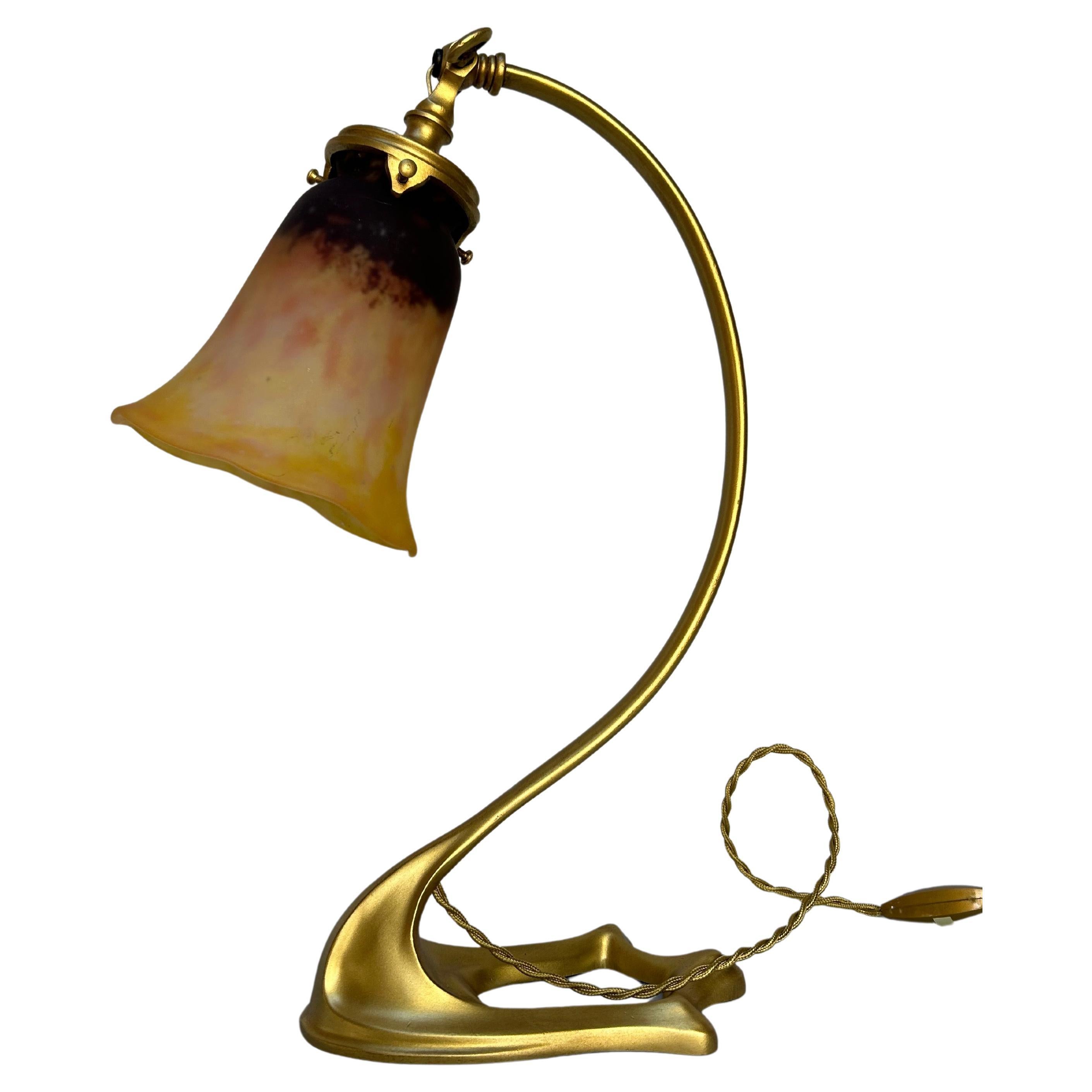
Daum Nancy Art Nouveau Lamp Probably by Majorelle
By Louis Majorelle, Daum
Located in NANTES, FR
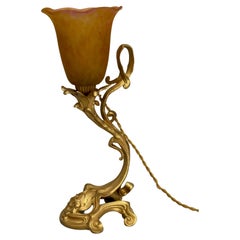
Art nouveau lamp circa 1900. Gilt bronze base probably by Louis Majorelle. Glass paste tulip signed Daum Nancy. In perfect condition. Electrified, B22 socket, bayonet bulb. Height: ...
Category

Early 20th Century French Art Nouveau Table Lamps

Materials

Bronze

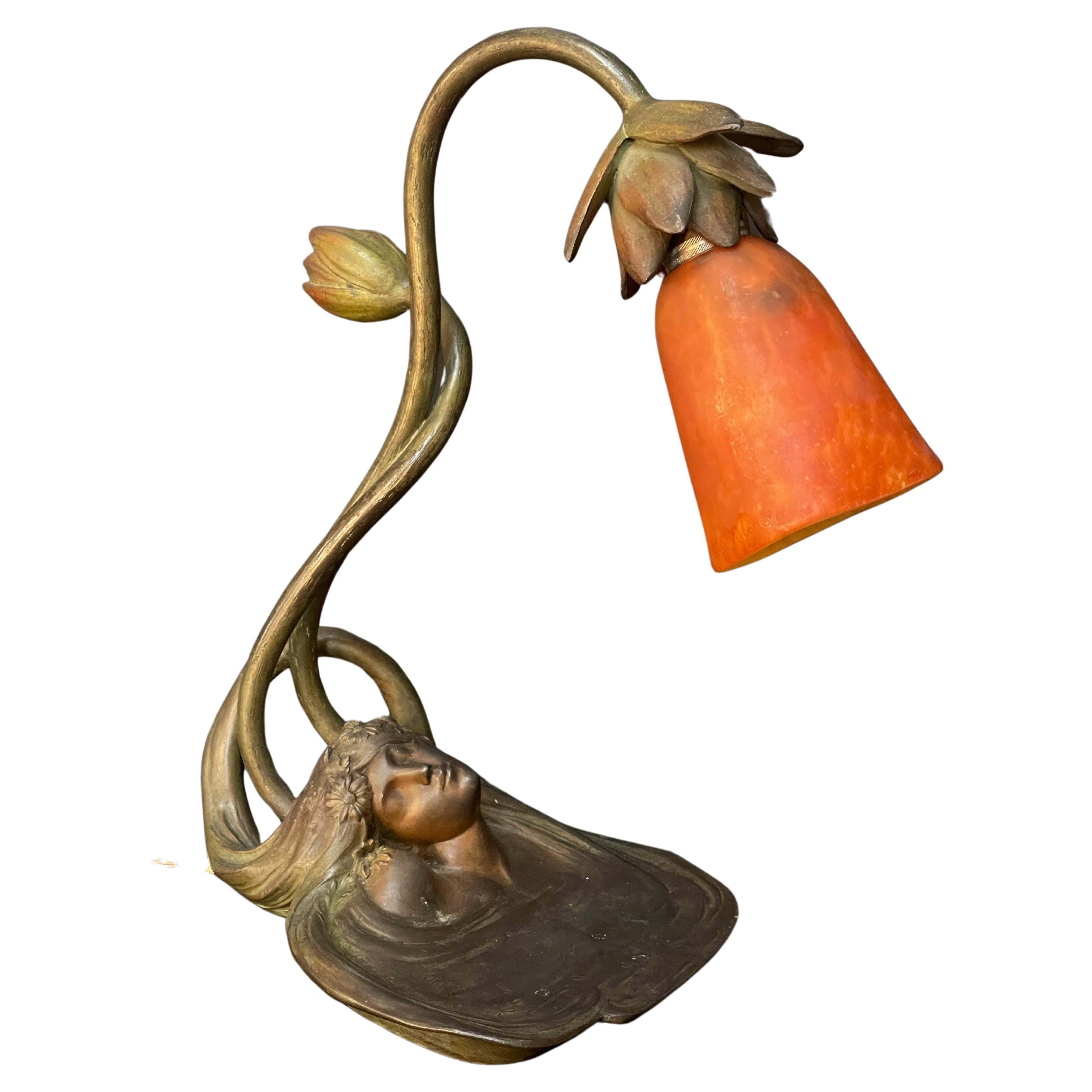
L. Bessin and Daum Nancy Art Nouveau Lamp
By Daum, Paul-Lucien Bessin
Located in NANTES, FR
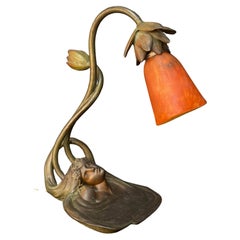
Art Nouveau lamp circa 1900. Patinated regula representing a nymph, signed L. Bessin for Paul Lucien Bessin. Glass paste tulip signed Daum Nancy. Electrified and in perfect condition...
Category

Early 20th Century French Art Nouveau Table Lamps

Materials

Spelter

Art Nouveau Lamp by Victor Saglier and Daum Nancy
By Victor Saglier, Daum
Located in NANTES, FR
Gilt bronze lamp around 1900, probably by Majorelle executed by Victor Saglier. Stamped on the foot VS. Glass paste tulip signed Daum Nancy. Lamp electrified and in perfect condition. Total height: 38.5 cm - 15.15 in width: 15cm depth: 13cm weight: 2.3kg Victor Saglier (1809 - 1894) Victor Saglier is a ceramist and goldsmith known in particular for his creations in the Art Nouveau style of the late 19th century. He produces, among other things, objects in enamelled glass, gilded metal and numerous pieces of silverware. On his death, the company was bought by his brothers who continued production until 1948. Victor Saglier's objects are signed by the "VS" brand. Known for his Art Nouveau work, Saglier made several pieces for Louis Majorelle, Daum and Émile Gallé. Its style is typically French Art Nouveau in the language of the École de Nancy. He often drew inspiration from nature for his work, the logic of which helped design both forms and settings. The sign of master goldsmith Victor Saglier is an oval-shaped three-master sailboat surrounded by the letters V and S in a rectangle. Saglier made everyday objects such as glass vases, bowls and pitchers with metal mounts, planters, tea and coffee services and candlesticks in bronze or silver-yellow metal or cast zinc. On his death, the Victor Saglier company at 12 rue d'Enghien in Paris became Saglier Frères. It was run by his brothers Eugène and André until his death in 1948. Daum (French establishment created in 1878) is a glass and crystal workshop located in Nancy. Founded by the industrialist and notary Jean Daum, the workshop was then taken over by his sons Auguste and Antonin, who ran it during the Art Nouveau period. It was not until the Universal Exhibition of 1900 that the company was at the forefront of the decorative art scene, when Daum received the prestigious Grand Prix medal. At this time, Daum glass became more complex, acid treatment was often used in the cutting, enameling and etching of a piece to produce glass masterpieces. Daum also produces applied glass elements, such as handles and ornamental motifs in naturalistic shapes. The Daum brothers quickly became big names in Art Nouveau, rivaling the famous designer Émile Gallé, and established themselves as leaders in the field of decorative glass after his death. In 1906, Daum revived glass paste, a process by which glass is transformed into paste, then it is applied to the surface of a mold and fired. This technique originates from ancient Egypt. Today, Daum is the only industrial crystal manufacturer that uses the glass paste process for its glass objects and crystal sculptures. Following the First World War, Paul Daum began to develop works in the Art Deco style, moving away from naturalistic forms and turning to linear, angular, simplified forms and geometric patterns characteristic of the movement. After the Second World War, Henri and Michel Daum became interested in the transparency of glass and pure lines. Daum collaborates with a large number of famous artists, such as Louis Majorelle, Salvador Dalí, Hilton Mac Connico, Elizabeth Garouste and Mattia Bonetti to create glass paste objects.
Category

20th Century French Art Nouveau Table Lamps

Materials

Bronze

Art Nouveau Lamp by Quezal
By Quezal
Located in NANTES, FR
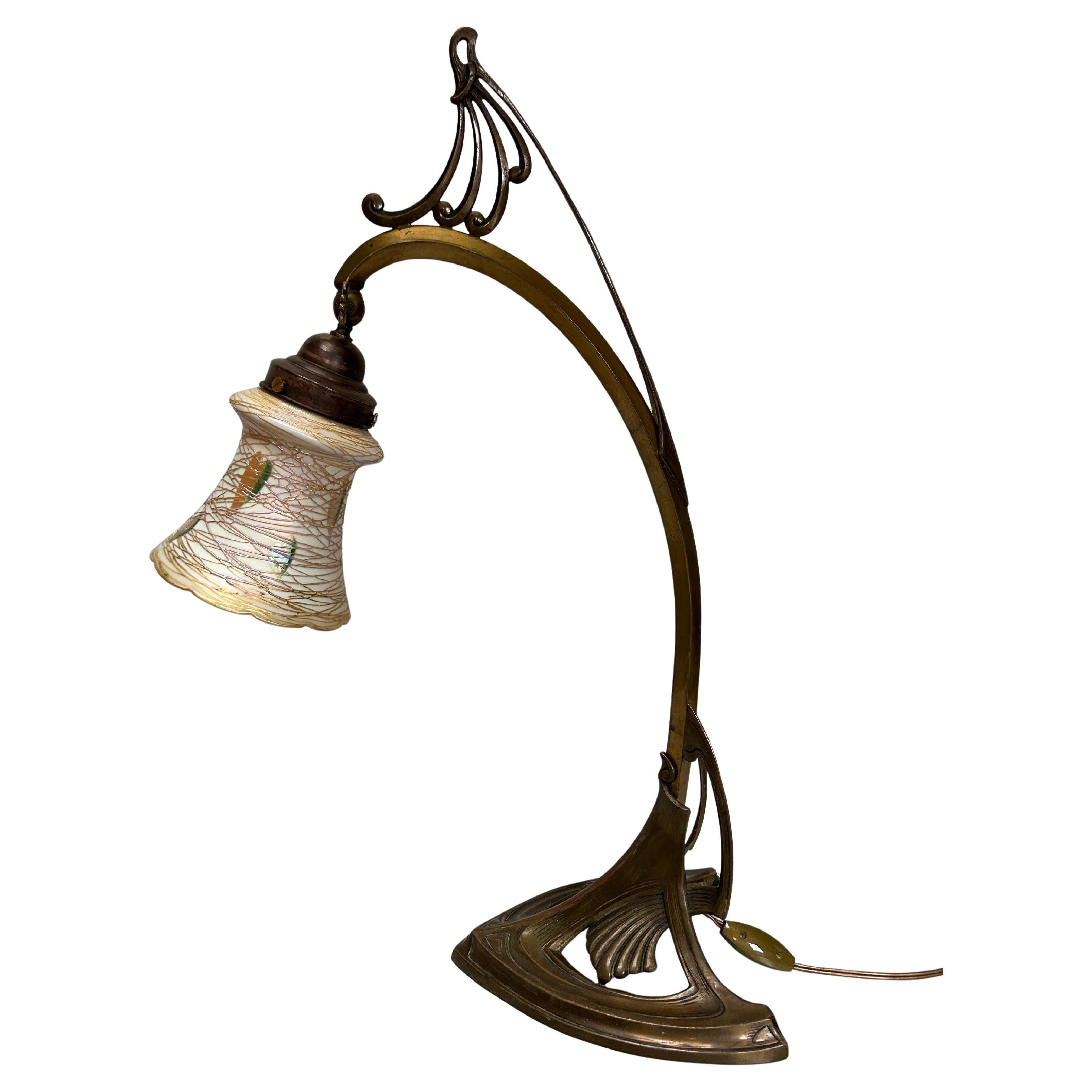
Art Nouveau desk lamp, circa 1905. Brass and copper frame. Rare iridescent glass shade signed Quezal. Electrified and in very good condition. Height: 60.5 cm Width: 21 cm Depth: 35 cm Weight: 2.6 kg Quezal Art Glass Quezal Art Glass – The Journal of Antiques and Collectibles – April 2003 By Malcolm Mac Neil Some of the most beautiful and alluring art glass made in America during the early part of the 20th Century was made by the Quezal Art Glass and Decorating Company. Often in the shape of blossoming lilies with brilliant gold interiors and colorfully decorated with floral and other motifs inspired by nature, Quezal art glass ranks right alongside the iridescent glass of Louis Comfort Tiffany and Frederick Carder. Quezal artisans created an extensive range of decorative and useful items, including vases, compotes, finger bowls, open salts, candle holders, and shades for lighting fixtures, which are equivalent in terms of beauty and quality of craftsmanship to Tiffany’s Favrile and Carder’s Aurene glass. In recent years, glass collectors have discovered anew the special charms and appeal of Quezal art glass, and collector desirability for this lovely glassware has increased dramatically. The Quezal Art Glass and Decorating Company was incorporated a century ago, on March 27, 1902. It was founded by Martin Bach, Sr., Thomas Johnson, Nicholas Bach, Lena Scholtz, and Adolph Demuth. The factory was located on the corner of Fresh Pond Road and Metropolitan Avenue in Maspeth, Queens, New York. In October 1902, the trademark “Quezal” was successfully registered. By 1904, roughly fifty glassworkers were employed at the works. Martin Bach, Sr. was the president, proprietor, and guiding force behind this successful company. Born in 1862 in Alsace-Lorraine to German parents, he emigrated to the United States in 1891. Before his emigration, Bach worked in Saint-Louis, France, at the Saint-Louis Glass Factory. After Bach arrived in this country, he was hired by Louis C. Tiffany as the latter’s first batch-mixer or chemist at the newly established Tiffany Glass and Decorating Company, in Corona, Queens. After a period of about eight years, Bach left Tiffany and established his own glassworks. By this time, Bach had already started his small family. He and his German-born wife, Anne-Marie Geisser, whom he married in the fall of 1889, in Paris, France, had three children. Two daughters, Jennie and Louise, were born in France and a son, Martin, Jr., was born in Corona. Bach was assisted by Thomas Johnson, an English immigrant, and Maurice Kelly, a native of Corona, both of whom were gaffers or master glassblowers. Johnson and Kelly helped pave the way for Quezal’s early accomplishments and later recognition. Thomas Johnson, like Bach, was a founding member and also previously employed by Louis C. Tiffany. Johnson’s association with Quezal, however, was relatively short lived. Around 1907, Johnson left for Somerville, Massachusetts, where he became involved in making Kew Blas...
Category

Antique Early 1900s American Art Nouveau Table Lamps

Materials

Brass, Copper

Art Nouveau lamp circa 1910
Located in NANTES, FR
Beautiful Art Nouveau lamp, circa 1910. Brown-veined alabaster shell. The base is bronze with floral decoration. Electric and in perfect condition. Total Height: 52 cm Shell Diamete...
Category

Vintage 1910s French Art Nouveau Table Lamps

Materials

Alabaster, Bronze

Art Nouveau Lamp Stamped Les Etains de France
Located in NANTES, FR
Flower lamp circa 1900. Pewter base topped with an opalescent uraline tulip. Electrified and in perfect condition. Stamped Les Etains De France. Total height: 35 cm Pedestal diamete...
Category

Early 20th Century French Art Nouveau Table Lamps

Materials

Pewter

You May Also Like

Daum Nancy Art Nouveau Table Lamp
By Daum
Located in Dallas, TX
Daum Cameo Glass and Wrought Iron Maple Leaf Table Lamp, circa 1920 Art Nouveau Art Deco design. Mottled and variegated glass base with with carve...
Category

Vintage 1920s French Art Deco Table Lamps

Materials

Art Glass

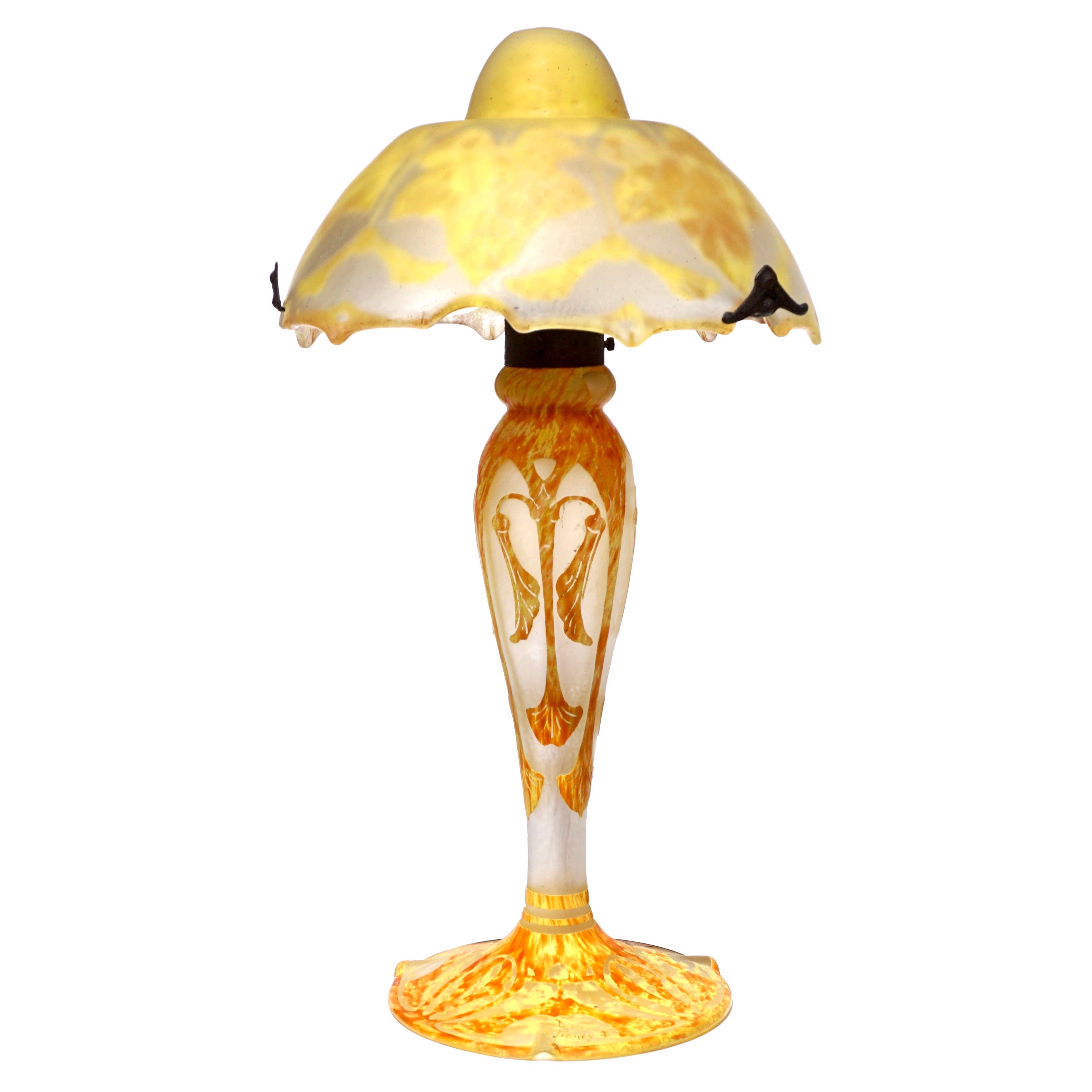
Antique French Art Nouveau Period Glass Lamp by Daum Studio
By Daum
Located in London, GB
This exquisite Art Nouveau lamp is by the celebrated French glasswork studio Daum which was founded in 1878 in Nancy, France. The lamp is inscribed ‘DAUM, NANCY’. The lamp is of ...
Category

Antique Early 1900s French Art Nouveau Table Lamps

Materials

Glass

Daum French Art Deco Nouveau Table Lamp, 1920
By Daum
Located in Saint-Amans-des-Cots, FR
French Art Deco / Nouveau Table Lamp, Nancy, France, Circa 1920 This exquisite French Art Deco / Nouveau table lamp, crafted in Nancy, France, circa 1920, features a stunning blown ...
Category

Vintage 1920s French Art Deco Table Lamps

Materials

Brass

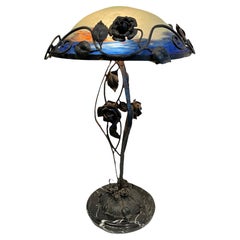
Daum Nancy Table Lamp Blown Glass Wrought Iron 1910 France
By Daum
Located in Milano, IT
Daum Nancy table lamp blown glass wrought iron 1910 France.
Category

Vintage 1910s French Art Nouveau Table Lamps

Materials

Glass

Antique Art Nouveau Lady Lamp, Bronze
Located in Los Angeles, CA
An Art Nouveau lamp in bronze circa 1890,s. Was an original oil lamp that was converted long ago to electric. A very good job. Shade and hurricane are newer glass. Large 31 1/2" in t...
Category

Antique 1890s European Art Nouveau Table Lamps

Materials

Bronze

Degue Art Nouveau Style Hand Painted Lamp
By Degué
Located in Guaynabo, PR
This is a hand painted half moon shaped glass paste shade lamp mounted in a wrought iron stem branches of roses and leaves. The half moon shade depicts an orange and royal blue color...
Category

Early 20th Century French Art Nouveau Table Lamps

Materials

Wrought Iron