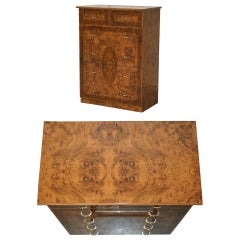
Finest Quality Waring
Gillow Burr Walnut Chest of Drawers Part of a Suite
About the Item
- Creator:Waring Gillow (Maker),Gillows of Lancaster London (Maker)
- Dimensions:Height: 39.97 in (101.5 cm)Width: 37.41 in (95 cm)Depth: 22.45 in (57 cm)
- Style:Art Deco (In the Style Of)
- Materials and Techniques:
- Place of Origin:
- Period:
- Date of Manufacture:20th Century
- Condition:Wear consistent with age and use. Minor fading.
- Seller Location:West Sussex, GB
- Reference Number:1stDibs: LU2823327407512

Gillows of Lancaster & London
It would be difficult to find an antique furniture enthusiast or collector unfamiliar with the name Gillows of Lancaster and London. The British furniture company — which has earned references in the writings of Jane Austen and elsewhere in literature — is renowned for its exceptional quality craftsmanship, and attracted designers such as Thomas Chippendale, Thomas Sheraton and George Hepplewhite in its heyday.
The firm was founded circa 1730 by Robert Gillow (1704–72), who worked as a joiner, housebuilder and overseas merchant before making furniture for homes and export. Gillow established his business in his home city of Lancaster. However, the company later expanded into London in the 1750s after Robert entered into a partnership with his son, Richard, who apprenticed with a London architect and learned the merchant trade in Barbados. Richard had entrepreneurial aptitude — he managed apprenticeships at the firm, ensured that quality materials were a priority, navigated economic hardships, and designed furniture, too. He created seating based on sketches drawn by his cousin, James Gillow, in London.
London’s wealthy upper class took notice of the Gillows’ high-quality furniture, which came to include bedroom furniture, cabinets, a range of seating and other pieces made of rosewood or rich mahogany imported from the West Indies and Jamaica. By the end of the 18th century, the manufacturer was one of the leading furniture makers in Britain. Gillows designed its own furnishings and worked with significant designers; they had in-house upholsterers and cabinetmakers and employed decorative techniques such as “japanning” in their designs.
Gillows of Lancaster and London became Gillow Co. in 1813 after selling to Redmayne, Whiteside and Ferguson. The company continued to thrive throughout the Georgian era and into the Victorian period, a time that yielded well-known collaborations with Scottish architect and designer Bruce Talbert on a regular basis. High-brow clients of the manufacturer clamored for their inventive and functional designs for tables and writing desks, many of which incorporated whimsical elements such as secret and pop-up drawers. There was also demand for earlier Gillow designs such as Baroque and Gothic Revival pieces as well as adaptations of Chippendale works.
Despite their success, Gillow Co. entered into financial hardship during the late 1800s with the advent of mass-produced furniture. By 1903, they merged with Waring of Liverpool to become Waring and Gillows and, in 1980, were taken over by Maple Co. to become Maple, Waring and Gillow. Today, many Gillows of Lancaster and London pieces are in museums throughout the United Kingdom, New Zealand and Australia.
Find antique Gillows of Lancaster and London furniture on 1stDibs.

Waring & Gillow
Historic furniture manufacturing company Waring Gillow Ltd. was at the forefront of luxury English furnishings for the better part of a century. Having furnished era-defining ocean liners — including the RMS Lusitania and HMS Queen Mary — the company’s name was synonymous with prestige.
It began as an informal partnership between English furniture companies Gillows of Lancaster and Warings of Liverpool. Gillows had built a reputation in the 18th and early 19th centuries by providing high-end furniture to some of the country’s wealthiest families. In the 19th century, the Waring company had supplied furniture to major hotels and public buildings across Europe.
The two companies formally merged in 1903, becoming Waring Gillow. With this combined expertise, the company flourished for decades. During the world wars, Waring Gillow converted their factories to produce protective clothing, glider wings and ammunition chests, among many other products.
In 1953, retail conglomerate Great Universal Stores acquired the company and kept the Waring Gillow name. In 1960, Great Universal Stores sold off a large share of the operation to the John Peters furniture retailer, while maintaining some of its manufacturing facilities.
In the 1980s, Waring Gillow was merged with furniture company Maple and Co. and rebranded as Maple, Waring and Gillow. The spirit of the original Waring Gillow companies still resonated in the sophisticated designs and quality manufacturing.
On 1stDibs, shop antique Waring Gillow tables, cabinets and desks.
You May Also Like
Vintage 1930s French Art Deco Commodes and Chests of Drawers
Nickel
Vintage 1940s Italian Mid-Century Modern Bedroom Sets
Walnut
Antique 19th Century French Commodes and Chests of Drawers
Bronze
21st Century and Contemporary Vietnamese Country Commodes and Chests of ...
Wood
Early 20th Century Spanish Spanish Colonial Night Stands
Iron
Early 20th Century Spanish Spanish Colonial Night Stands
Iron
Early 20th Century Spanish Spanish Colonial Night Stands
Iron
Mid-20th Century American Regency Commodes and Chests of Drawers
Brass
21st Century and Contemporary Italian Modern Commodes and Chests of Drawers
Marble
21st Century and Contemporary Italian Modern Commodes and Chests of Drawers
Marble
More From This Seller
View AllEarly 20th Century English Art Deco Bedroom Sets
Walnut
Early 20th Century English Edwardian Night Stands
Walnut
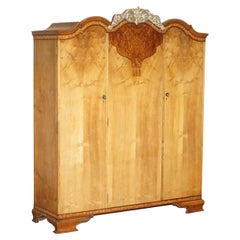
20th Century English Victorian Wardrobes and Armoires
Walnut
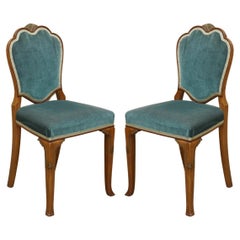
Early 20th Century English Art Deco Side Chairs
Walnut
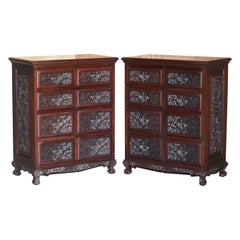
20th Century English Victorian Commodes and Chests of Drawers
Hardwood
20th Century Italian Art Deco Bedroom Sets
Walnut