Want more images or videos?
Request additional images or videos from the seller
1 of 11
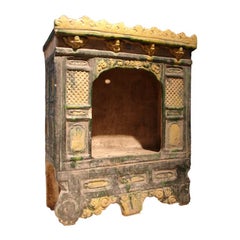
Large Chinese Lacquered and Gilt Wooden Model of a Pagoda or Pavilion
$4,200List Price
About the Item
- Dimensions:Height: 53.5 in (135.89 cm)Diameter: 26 in (66.04 cm)
- Style:Qing (Of the Period)
- Materials and Techniques:
- Place of Origin:China
- Period:
- Date of Manufacture:circa 1890
- Condition:Repaired: The roof with possible repairs. One apron section reattached. Wear consistent with age and use. Minor structural damages. Minor fading. In overall good condition, structurally sound. The roof with a possible repairs. The black paint/lacquer on the roof somewhat faded. One part of the apron at the base of the pagoda reattached.
- Seller Location:Austin, TX
- Reference Number:1stDibs: LU89478274523
About the Seller
5.0
Platinum Seller
Premium sellers with a 4.7+ rating and 24-hour response times
Established in 2001
1stDibs seller since 2010
356 sales on 1stDibs
Authenticity Guarantee
In the unlikely event there’s an issue with an item’s authenticity, contact us within 1 year for a full refund. DetailsMoney-Back Guarantee
If your item is not as described, is damaged in transit, or does not arrive, contact us within 7 days for a full refund. Details24-Hour Cancellation
You have a 24-hour grace period in which to reconsider your purchase, with no questions asked.Vetted Professional Sellers
Our world-class sellers must adhere to strict standards for service and quality, maintaining the integrity of our listings.Price-Match Guarantee
If you find that a seller listed the same item for a lower price elsewhere, we’ll match it.Trusted Global Delivery
Our best-in-class carrier network provides specialized shipping options worldwide, including custom delivery.You May Also Like
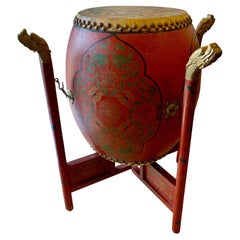
Chinese Lacquer Double Sided Qing Dynasty Drum with Wooden Stand and Drum Sticks
Located in Los Angeles, CA
A wonderful piece! two sided with leather hand painted snare on two sides trimmed in nail heads. The collapsable wooden stand, while making the piece complete, can be put aside and t...
Category
Antique 19th Century Chinese Chinese Export Musical Instruments
Materials
Brass
$3,100
H 39.5 in W 29.5 in D 29.5 in
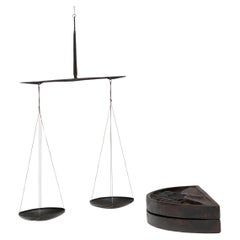
Chinese Hanging Opium Scale in Wooden Case
Located in Chicago, IL
This curious keepsake is a hanging opium scale with brass pans, used to measure opium and other goods by weight. The scale is held in a wooden case that folds to a half-moon shape an...
Category
20th Century Chinese More Asian Art, Objects and Furniture
Materials
Brass
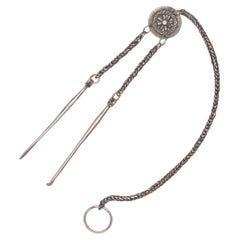
Chinese Wheel of Life Opium Tool Set
Located in Chicago, IL
A small Chinese chatelaine tool set strung with a petite white brass spoon and scraper tool. The small tools hang from a charm shaped as the "Wheel of Life," a Buddhist symbol of ete...
Category
Antique Early 1900s Chinese Qing More Asian Art, Objects and Furniture
Materials
Brass
Pair of Chinese Bronze Opium Scrapers, c. 1900
Located in Chicago, IL
These petite bronze tools date to the late 19th century and were originally among the many accessories that comprised an opium smoking kit. Both tools are ...
Category
Antique Late 19th Century Chinese Qing More Asian Art, Objects and Furni...
Materials
Bronze
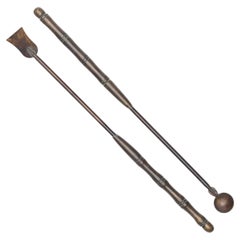
Pair of Chinese White Brass Coal Chopsticks, c. 1900
Located in Chicago, IL
A pair of white brass chopsticks for moving burning coals in a hibachi or hand-warmer. Such chopsticks were also used to safely touch opium pipe bowls or tools that had been heated b...
Category
Early 20th Century Chinese Qing More Asian Art, Objects and Furniture
Materials
Brass

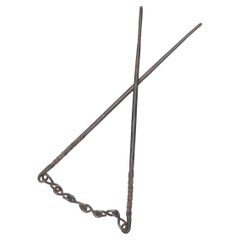
Pair of Chinese Twisted Iron Coal Chopsticks, c. 1900
Located in Chicago, IL
A pair of iron chopsticks for moving burning coals in a hibachi or hand-warmer. Such chopsticks were also used to safely touch pipe bowls or tools that had been heated by an oil lamp...
Category
Early 20th Century Chinese Qing More Asian Art, Objects and Furniture
Materials
Iron
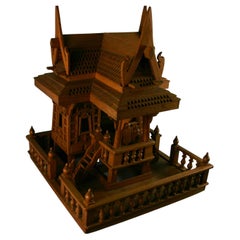
Large Teak Hand Crafted Architectural Model of a Northern Thailand Spirit House
Located in Douglas Manor, NY
3-800 hand made in teak wood architectural model of a northern Thailand Spirit house.
Category
Vintage 1970s Thai Architectural Models
Materials
Hardwood
$2,200
H 25 in W 20 in D 20 in
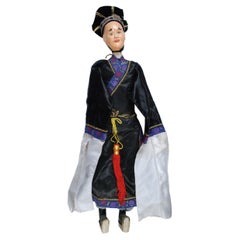
Chinese Opera Puppet, c. 1900
Located in Chicago, IL
Dressed in fine silks trimmed with embroidered bands and tassels, this puppet brought the glory of the imperial court to the small stage as part of an early 20th-century puppet opera. Complete with songs, acrobatics, farce, and drama, Chinese puppet...
Category
Early 20th Century Chinese Qing Toys and Dolls
Materials
Silk, Wood
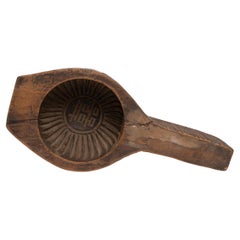
Handheld Chinese Mooncake Mold, c. 1900
Located in Chicago, IL
This late 19th century hand-held wood press is carved with a large mold used for shaping festive mooncakes. Packed with lotus root, red bean, or other regional fillings, mooncakes ar...
Category
Early 20th Century Chinese Qing More Asian Art, Objects and Furniture
Materials
Wood
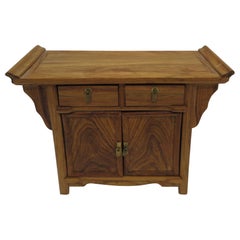
Miniature Huanghuali Wood Chinese Sideboard
Located in New York, NY
Miniature Huanghuali wood Chinese sideboard. An expertly crafted miniature architectural model in Huanhuali wood with brass hardware. A late 20th centu...
Category
Late 20th Century Chinese Qing Models and Miniatures
Materials
Rosewood
More From This Seller
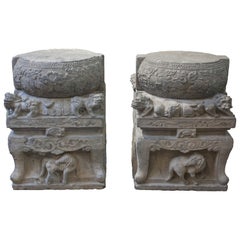
View AllPair of Chinese Qing Dynasty Carved Limestone Pedestals
Located in Austin, TX
A pair of Chinese carved limestone architectural drum form pedestals, Qing Dynasty, mid 19th century, China.
Masterfully carved, each pedestal is in two pieces. The top in the form a drum carved with "nails" surrounding the top, with relief carvings to the sides of opposing qilin, taotie masks, and scrolling foliage. The separately carved drums are supported by a lotus pedestal and surrounded by Buddhistic lions, all resting upon a high waisted table...
Category
Antique Early 19th Century Chinese Qing Pedestals and Columns
Materials
Stone
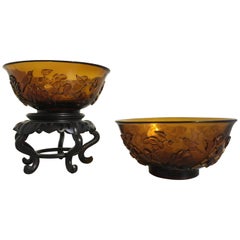
Pair of Chinese Amber Peking Glass Carved Bowls, Qing Dynasty, Late 19th Century
Located in Austin, TX
A fine pair of late 19th century Chinese Qing dynasty carved Peking glass bowls in a lovely amber hue.
The matching Peking glass bowls carved with opposing scenes of birds amongst flowering branches on a rocky outcrop. The amber glass bowls...
Category
Antique Late 19th Century Chinese Qing Decorative Bowls
Materials
Glass
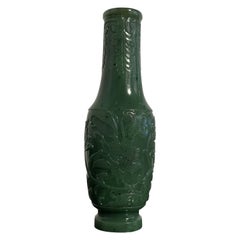
Chinese Spinach Green Jade Incense Tool Vase, Qing Dynasty, 18th/19th Century
Located in Austin, TX
A fine and well carved Chinese spinach jade incense tool vase, Qing Dynasty, Qianlong or Jiaqing Period, 18th/19th century, China.
The small jade vase ...
Category
Antique Early 19th Century Chinese Qing Scholar s Objects
Materials
Jade
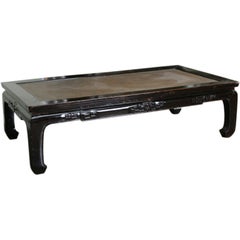
Large Chinese Lacquer and Rattan Day Bed
Located in Austin, TX
An oversized, beautifully proportioned daybed, suitable for use as a centre table. Subtle, low relief carved key fret pattern and horse hoof legs complete a fine and elegant example ...
Category
Antique Late 18th Century Chinese Qing Coffee and Cocktail Tables
Materials
Elm, Rattan
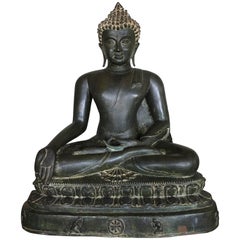
Large Burmese Bronze Medicine Buddha, Pagan Style, Late 19th Century
Located in Austin, TX
A large and magnificent cast bronze image of the Medicine Buddha, Bhaisajyaguru, rendered in the Burmese Pagan style, and most likely based on a period example that was either damaged or lost, 19th century, Burma or Thailand.
He can be identified as the Medicine Buddha by the hand that rests in his lap, with his middle finger touching the thumb. A medicine pot or fruit stem would originally have been placed in his upturned palm.
The face of this Buddha has been sculpted masterfully. He has a beautiful heart shaped face topped by hair neatly arranged in the typical "snail shell curls", and surmounted by a high ushnisha. Long, pendulous earlobes frame his face, a symbol of his princely past. He gazes serenely outwards from heavily lidded, downcast eyes, a content smile upon his full, lush lips.
The Buddha is portrayed seated in vajrasana (full lotus position), his elegant hands displayed in varada mudra, the gesture of granting favors and fulfilling wishes. Long, exquisite fingers extended, the thumb and middle finger touching in a gesture of compassion.
He is clothed in a simple kasaya wrapped around his body and over one shoulder, leaving the shoulder and part of his chest bare. The diaphanous garment clings to his body, outlining his well proportioned and graceful, almost sensuous, form. The excess material pooled in neat pleats in front of him. A sash thrown over his shoulder.
He sits upon a double lotus base upon a raised platform. The platform features two kneeling attendants, usually interpreted as the monks Ananda and Kasyapa. Between them is a circular disc representing the Wheel of Dharma. Contained in the disk is a flower with eight petals, symbolizing the eightfold path, one of the principle teachings of the Buddha.
The sides and back of the platform featuring a series of singha, or lions, representative of the Buddha's royal past.
An applied lacquer patina covers the entirety of the image. Large deposits of ash (from incense) are present between the curls of the hair, as well as some the other crevices, indicating this image was the subject of worship for many years.
Bhaisajyaguru, also called the Medicine Buddha, or Buddha of Healing, is a revered figure in the Buddhist pantheon as a master able to cure suffering, both physical and spiritual, through his teachings.
The Pagan Empire ruled most of present day Burma (Myanmar) from 849 to 1297. The capital, Bagan, served as a both the center of government and religion, where Buddhism reigned supreme. Bagan was also at a crossroads of the Buddhist world, with influence from India, Nepal, Tibet, China, and even Indonesia shaping their culture. As such, Pagan Buddha...
Category
Antique Late 19th Century Burmese Sculptures and Carvings
Materials
Bronze
Chinese Ming Dynasty Sancai Glazed Pottery Architectural Model, 16th Century
Located in Austin, TX
An unusually large Chinese Ming Dynasty glazed pottery architectural model of a shrine or cabinet, Ming Dynasty (1368 - 1644), circa 16th century, China.
The shrine model crafted o...
Category
Antique 16th Century Chinese Ming Sculptures
Materials
Pottery