Items Similar to Midshipman Proctor’s Sword for Valour at the Battle of Copenhagen
Want more images or videos?
Request additional images or videos from the seller
1 of 15
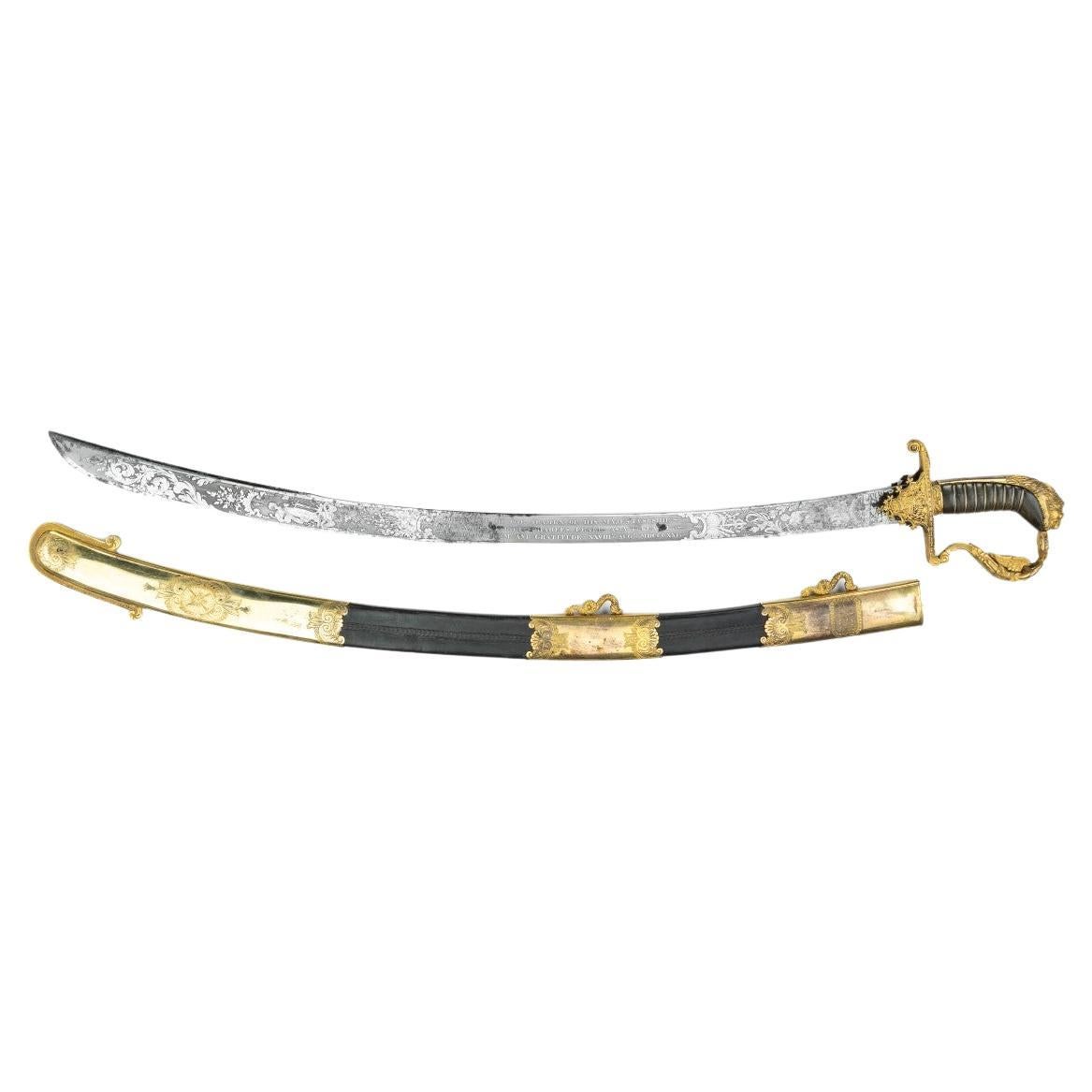
Midshipman Proctor’s Sword for Valour at the Battle of Copenhagen
$258,190.20
£187,500
€219,114.66
CA$353,195.15
A$384,964.68
CHF 203,527.46
MX$4,634,244.24
NOK 2,583,270.39
SEK 2,368,330.92
DKK 1,636,796.76
About the Item
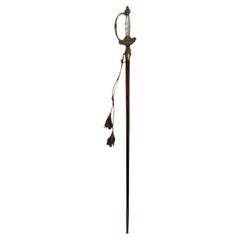
This curved sword has a blued steel German blade with an ivory cross-hatched grip bearing silver and gilt mounts in the form of a lion’s head and mane. The grip is mounted with an oval silver plaque engraved with the coat of arms (1801-1816 pattern) of King George III supporting a medal decorated with a fouled anchor; and the has reverse a similar plaque engraved with the monogram JP, probably for Midshipman James Proctor, surmounted by a naval coronet, within a garter inscribed ‘Battle of Copenhagen’ above the ship’s name ‘EDGAR’. The top of the blade signed in gilt ‘J.J. Runkel Solingen’. With belt and slings in a fitted mahogany box lined in green velvet.
English, c 1800.
James Proctor (died before 1814), the likely recipient of this presentation sword, was midshipman in HMS Edgar, 74 guns, which led Nelson’s division at the Battle of Copenhagen in April 1801. As the first ship to engage the enemy, Edgar sustained extensive damage and suffered 142 casualties including one lieutenant killed, another whose arm was shot away, and five midshipmen wounded. Among the wounded was Proctor who, given the officer losses, may have demonstrated outstanding leadership for which he received this sword, possibly from his grateful commanding officer Captain James Murray. Proctor recovered from his wound, was promoted lieutenant and by March 1805 was serving in Spencer, 74 guns, attached to Nelson’s fleet in the Mediterranean. However, with many of the crew suffering from scurvy and fever, Spencer was sent away to re-victual just days before Trafalgar. The ship subsequently joined Admiral Duckworth’s squadron for the Battle of San Domingo in February 1806 Presented before the institution in 1803 of Lloyd’s Patriotic Fund, this sword is an example of an unofficial presentation made on an ad hoc basis by a senior officer following an action. To Nelson’s dismay, the Battle of Copenhagen was not recognised with a gold medal and, unlike the Nile, it was not widely commemorated making relics connected to the action rare.
Johann Justus Runkel (1751-1808) was born in Germany. He emigrated to Britain as an importer of swords and sword blades from Solingen and set up shop at 8 Tookes Court, Castle Street, Holborn where he sold swords to military officers and unmounted blades to other English cutlers including Thomas Gill. Despite fines, court cases and confiscation of blades for undervaluing imports, he was one of the most important merchants involved in the trade of Solingen blades in London and became a freeman of the Cutlers Company in 1796.
Ivory License Ref: 27PA12UF
- Dimensions:Height: 37 in (93.98 cm)Width: 0.1 in (2.54 mm)Depth: 0.1 in (2.54 mm)
- Materials and Techniques:
- Place of Origin:
- Period:
- Date of Manufacture:1800
- Condition:Wear consistent with age and use.
- Seller Location:Lymington, GB
- Reference Number:1stDibs: LU973036542782
About the Seller
5.0
Recognized Seller
These prestigious sellers are industry leaders and represent the highest echelon for item quality and design.
Established in 1982
1stDibs seller since 2013
140 sales on 1stDibs
Typical response time: <1 hour
Associations
LAPADA - The Association of Arts
Antiques Dealers
- ShippingRetrieving quote...Shipping from: Lymington, United Kingdom
- Return Policy
More From This Seller
View AllFine Presentation Sword Given to Lieutenant Charles Peake
Located in Lymington, Hampshire
A fine presentation sword given to Lieutenant Charles Peake as a token of gratitude by the Men of His Ship when recommissioned for Foreign Service i...
Category
Antique 1820s English Arms, Armor and Weapons
Materials
Metal
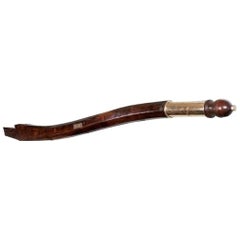
Large Elm Tiller from the Brixam Fishing Trawler
Provident
Located in Lymington, Hampshire
A large elm tiller with a bronze helm and turned finial from the Brixham fishing trawler 'Provident', 1924
Provident details:
Builder: J Sander...
Category
Vintage 1920s English Sports Equipment and Memorabilia
Materials
Elm
Pair of Antique English Naval Cannon
Located in Lymington, Hampshire
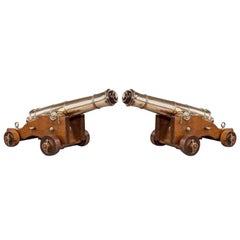
Pair of antique English naval cannon each with a tapering three stage barrel flanked by plain trunnions, with a knob shaped cascabel button before a shaped rectangular raised vent and ending in a 3 1/2” bore muzzle, enclosing a removable conforming wood plug, circa 1800.
Stood upon a naval type bronze-mounted four wheeled wooden carriage, including its wedge shaped quoin with knob handle.
The Earls of Lonsdale, Lowther Castle, Cumbria, presumably by descent to Hugh Cecil Lowther, 5th Earl of Lonsdale (1857-1944), until sold by his heir and brother, Lancelot, 6th Earl, as part of the contents of Lowther Castle, Maple & Co. Ltd./Thomas Wyatt, Tuesday 14 April 1947 and two following days, lot 558: ‘A pair of Old Gun Metal Cannons on teakwood carriages, 3ft. 6in. long’.
Mrs. P.M. Adie-Shepherd, sold Christie’s, London, 29 May 1970, lot 96.
Lowther Castle is a castellated mansion built by Robert Smirke between 1806 and 1814 for William Lowther, 1st Earl of Lonsdale (1757-1844). It was constructed on the foundations of the former 17th century family seat, Lowther Hall, but it was only in the early 19th century that it was afforded the name ‘castle’ in keeping with the Europe-wide fashion for romanticism and which was promoted by influential characters such as William Beckford at Fonthill Abbey, Wiltshire in England and by the writer Sir Walter Scott at Abbotsford, Roxburghshire, Scotland. While it’s not known when these naval cannon were acquired for Lowther they would have been entirely fitting in the castle or its approaches and it’s likely that they were in place soon after the castle was completed, or perhaps acquired later by the 5th Earl. A tantalising possibility is that the cannon were originally aboard the East Indiaman Lowther Castle which was active in the early 19th century.
HUGH CECIL LONSDALE, 5TH EARL OF LONSDALE (1857-1944) AND THE DEMISE OF LOWTHER CASTLE
In 1882 at the age of 25 Hugh Lonsdale (1857-1944) unexpectedly inherited the earldom and with it the extensive Lonsdale estate, including tens of thousands of acres of Cumberland and Westmorland and coalfields at Whitehaven. However, despite his spectacular inherited wealth – he was suddenly one of the wealthiest men in England, over the course of his lifetime he managed to decimate the family fortune. He led a full and colourful life, one of adventure and luxury. An early intrepid escapade took place in July 1888 when, as part of an expedition called the Scotch Naturalist Society, he set embarked on horse sleigh...
Category
Antique Early 1800s English Arms, Armor and Weapons
Materials
Bronze
$181,765 / set
Mid-Victorian Model of a Field Cannon
Located in Lymington, Hampshire
A mid-Victorian model of a field cannon, the bronze barrel set on an oak carriage with large iron-bound wheels, with traces of the original black, red an...
Category
Antique 1870s English Arms, Armor and Weapons
Materials
Bronze

Fine Pair of Bronze Cannon by McAndrew and Woore English, circa 1850
Located in Lymington, Hampshire
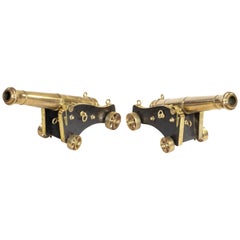
A fine pair of bronze cannon by McAndrew and Woore, set on their original brass bound black painted oak carriages with brass spider wheels, also with a p...
Category
Antique 1850s English Arms, Armor and Weapons
Materials
Bronze
Late 18th Century Bronze Lantaka Cannon
Located in Lymington, Hampshire
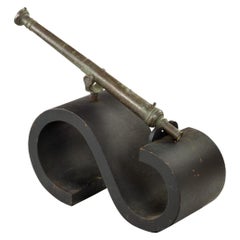
A late 18th century bronze Lantaka cannon, the slightly tapering barrel cast with flanges and set on a hinged pin. With a modern black S-scroll Stand. D...
Category
Antique 1790s Dutch Arms, Armor and Weapons
Materials
Bronze
You May Also Like
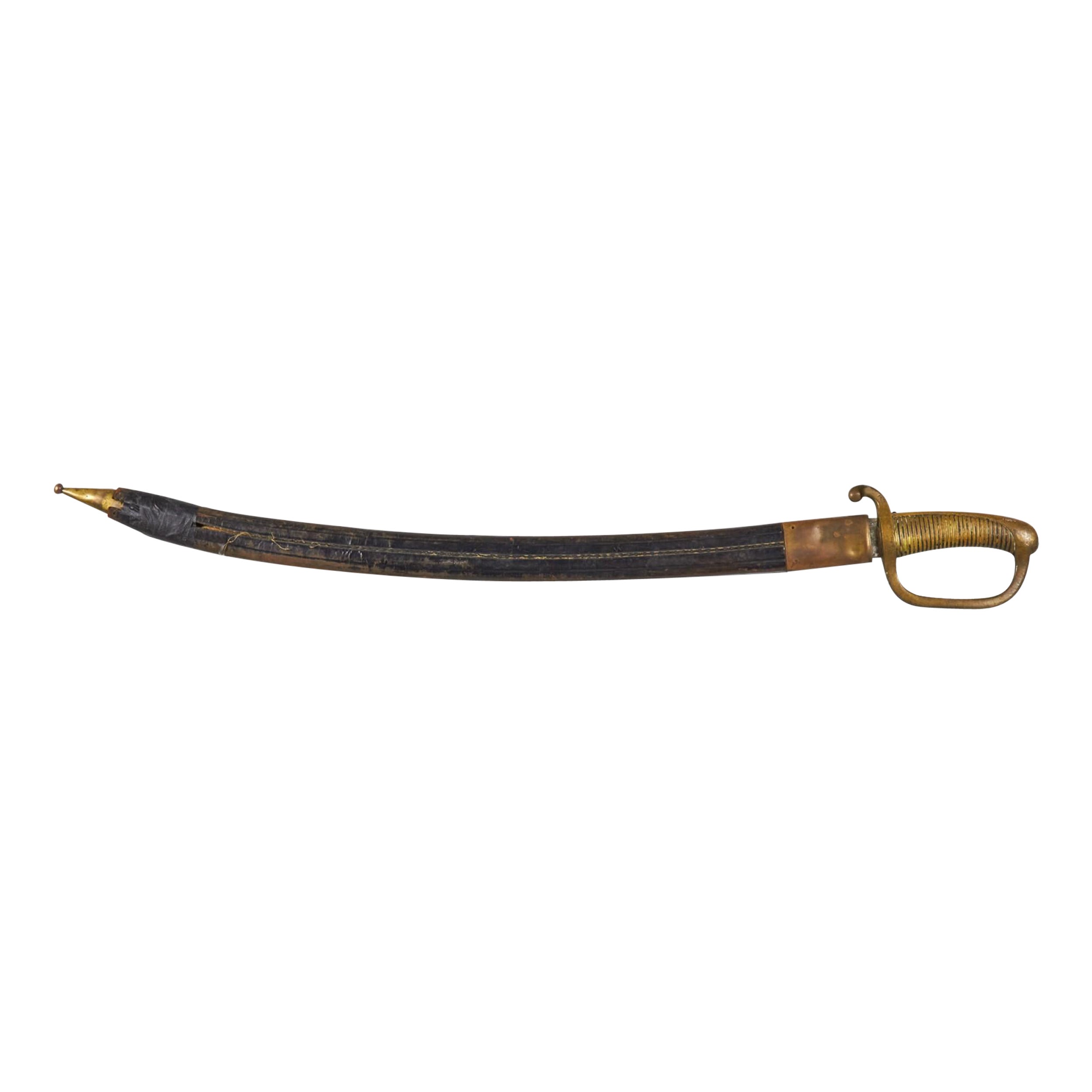
English Renaissance Curved Brass Sword and Leather Scabbard
Located in Queens, NY
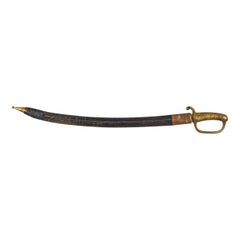
English Renaissance (19th Century) curved sword with brass fluted handle and black leather scabbard.
Condition: Good; Minor losses
Category
Antique 19th Century British Renaissance Arms, Armor and Weapons
Materials
Brass
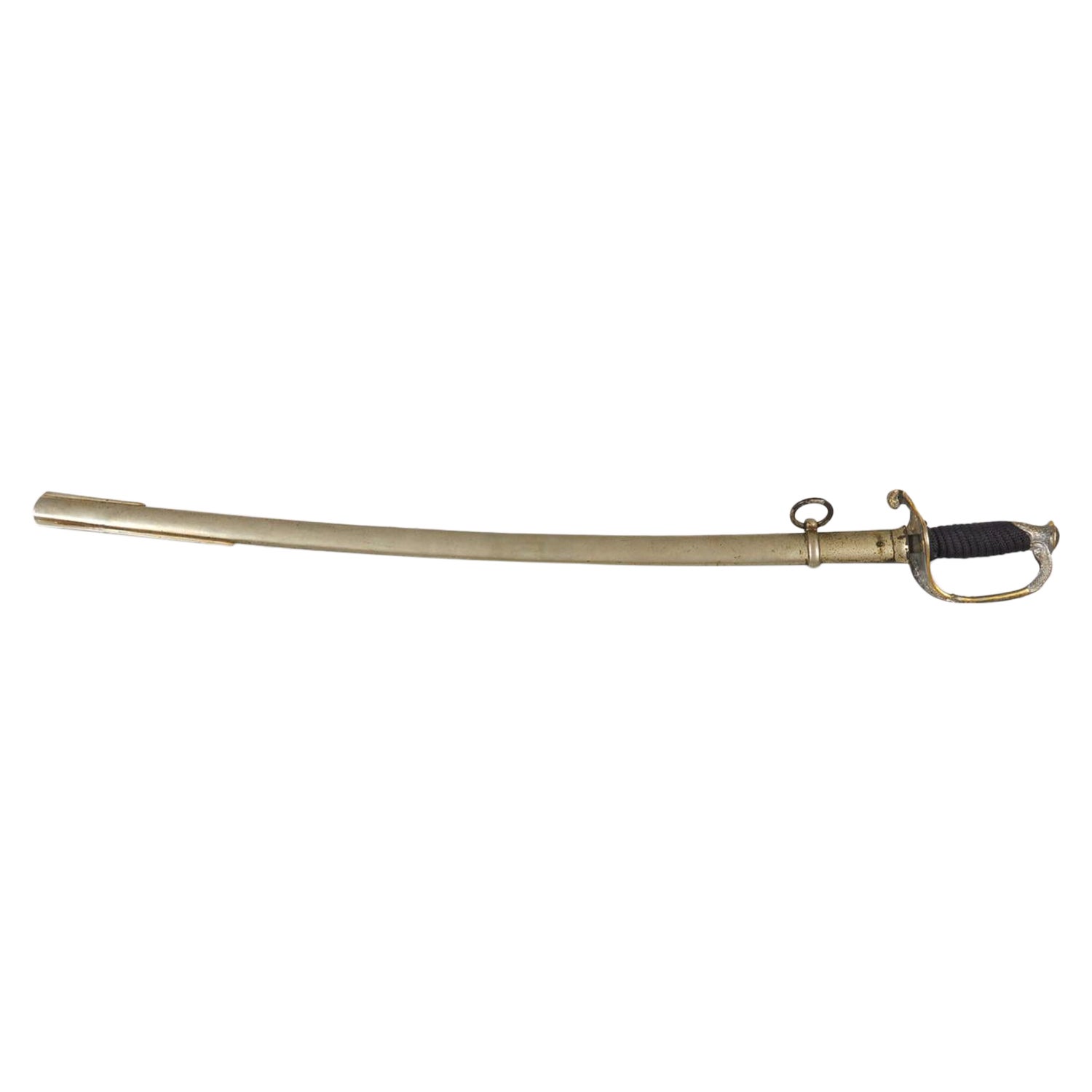
Continental Metal and Silver Filigree Sword with Scabbard
Located in Queens, NY
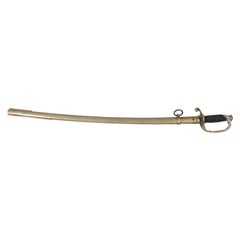
Continental (19th Century) metal sword with silver filigree handle wrapped in black rope with a small dolphin detail.
Category
Antique 19th Century Unknown Biedermeier Arms, Armor and Weapons
Materials
Metal
Officer
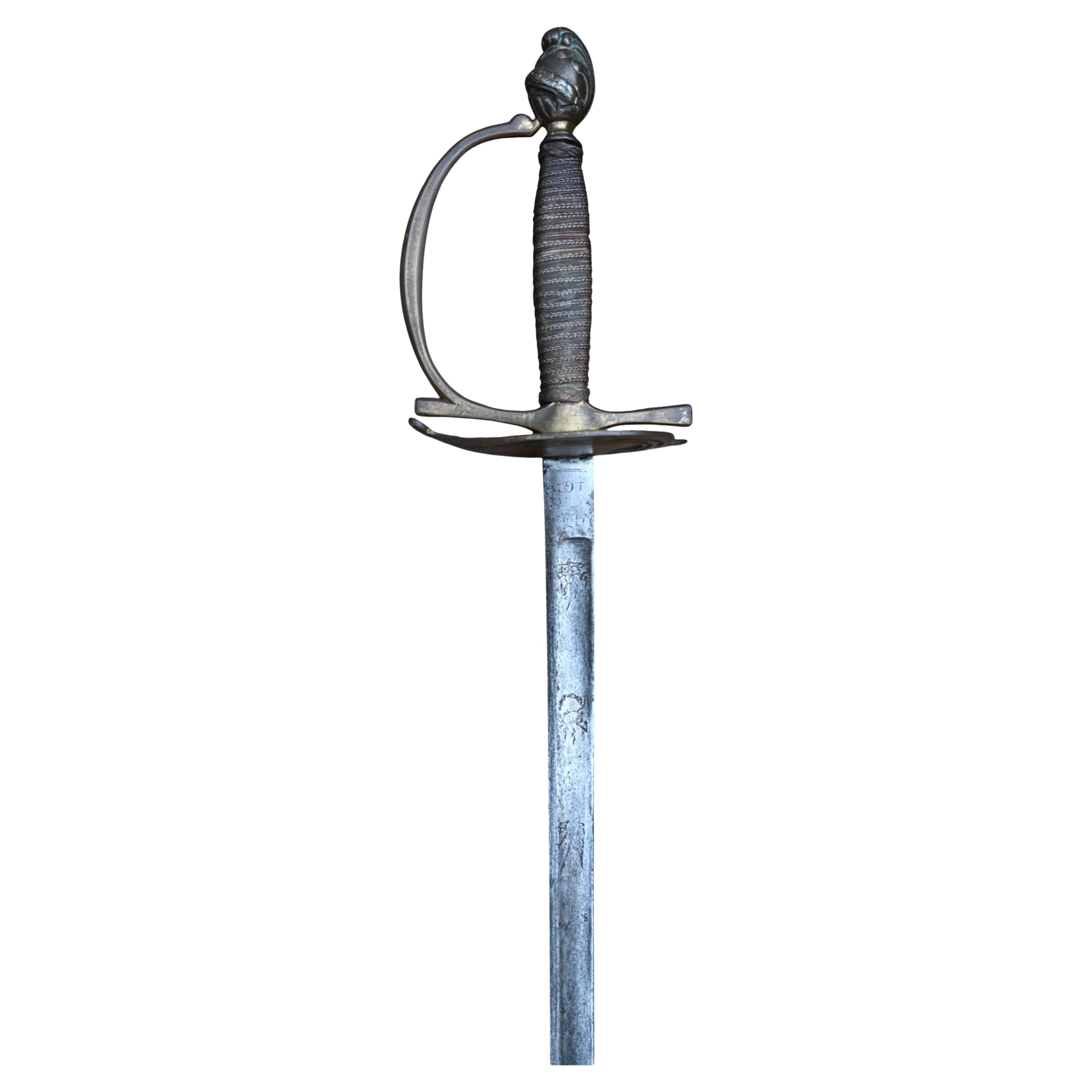
s Sword – France Or Austrian Netherlands – Circa 1770–1790
Located in Bilzen, BE
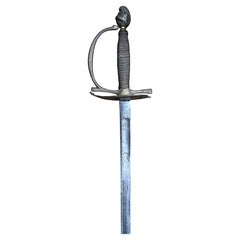
"Officer's Sword – France Or Austrian Netherlands – Circa 1770–1790 – Length 99 Cm"
An elegant officer's sword, late 18th century (circa 1770–1790), probably French or Austrian Nethe...
Category
Antique Late 18th Century French Louis XVI Arms, Armor and Weapons
Materials
Brass, Steel
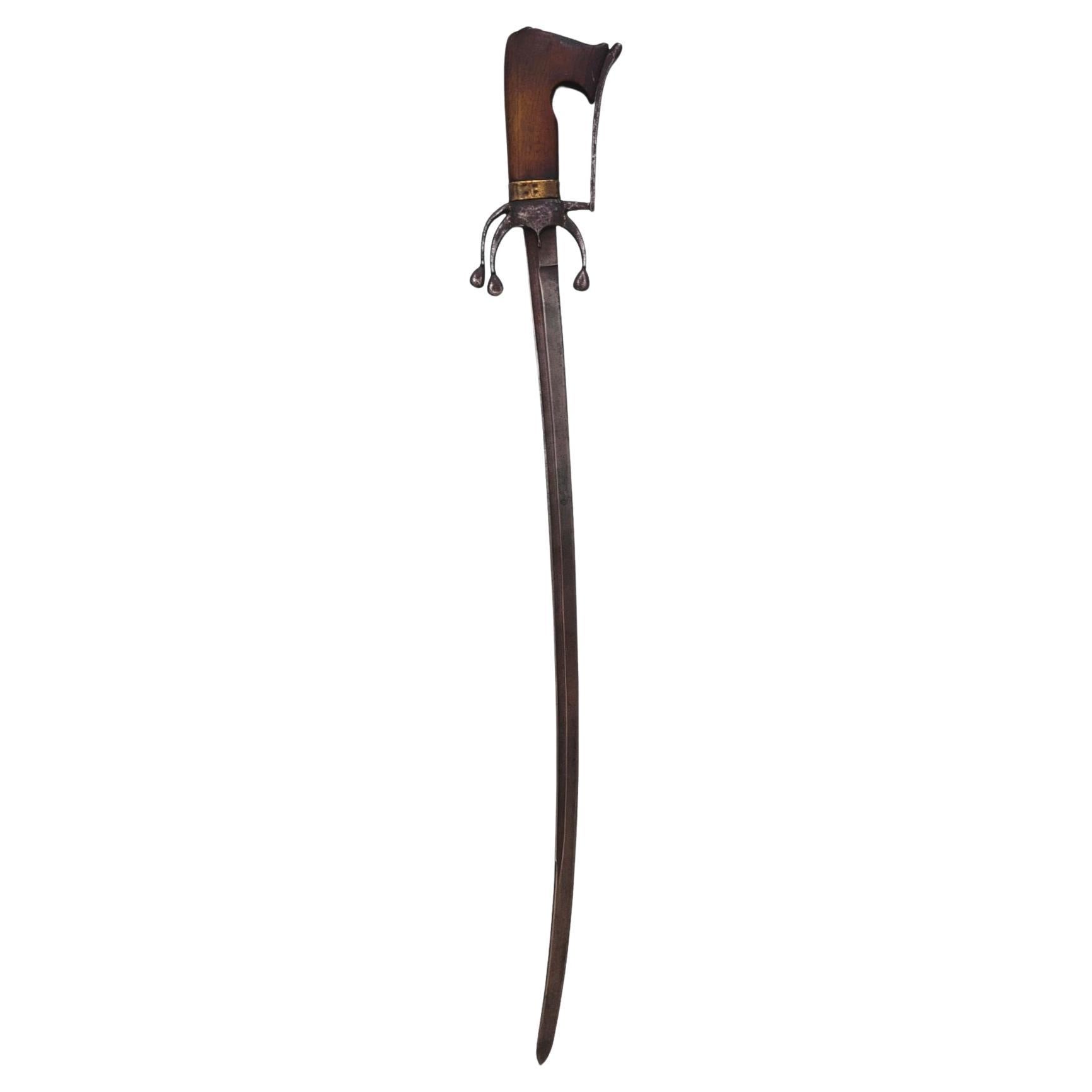
North African Sword (Nimcha), Morocco, Early 19th Century
Located in Madrid, ES
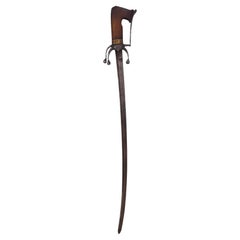
North African Sword (Nimcha), Morocco, Early 19th Century
This North African sword, known as a "Nimcha," is a remarkable piece originating from Morocco, dating back to the early 19th...
Category
Antique Late 19th Century Arms, Armor and Weapons
Materials
Wrought Iron
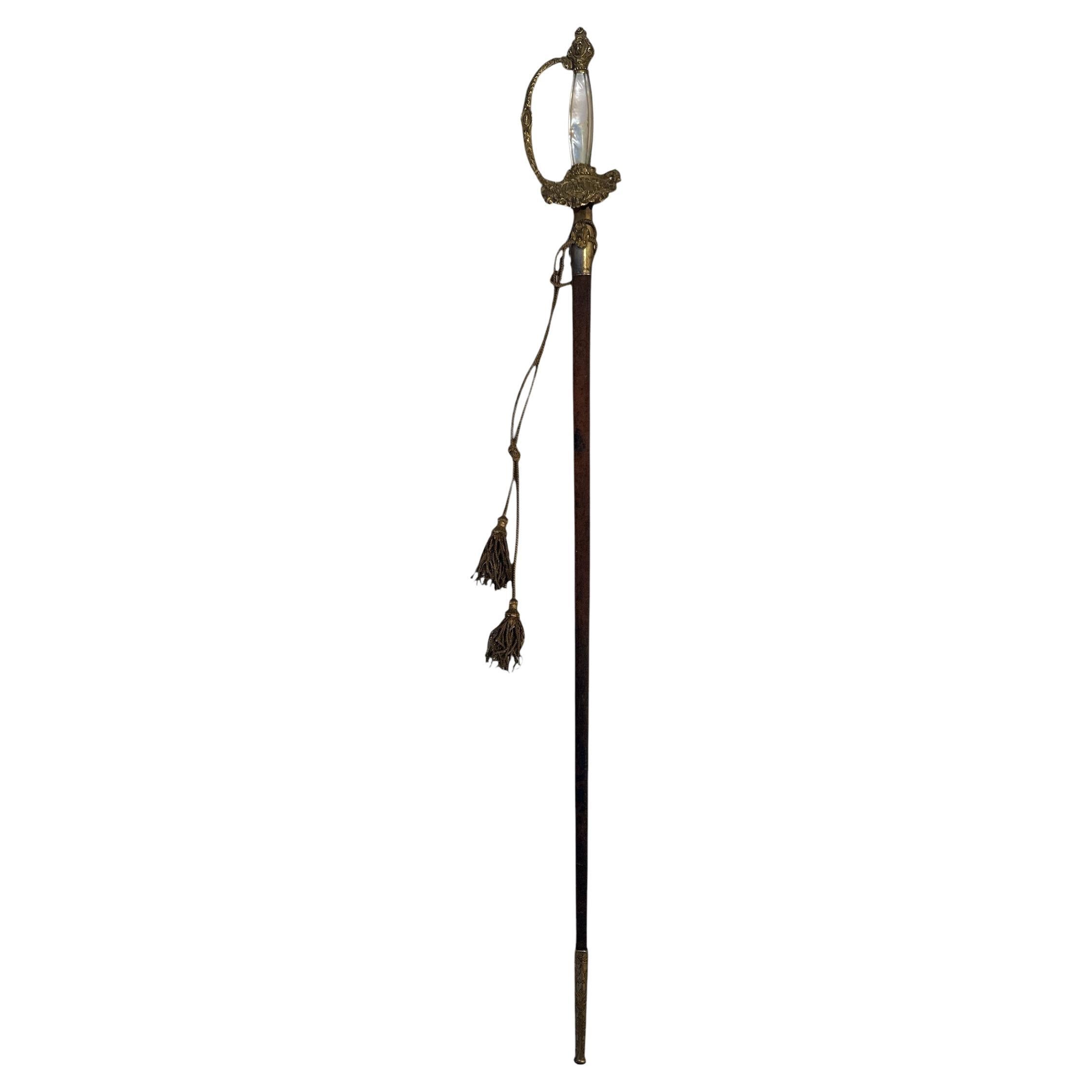
Napoleon III sword
Located in
S-HERTOGENBOSCH, NL
A Napoleon III sword in gilt brass. Handle is decorated with 2 mother of pearl plates. Urn shaped pommel. Knuckle guard transitioning into cross guard.
Guard plate with eagle. Black ...
Category
Antique 1880s French Napoleon III Arms, Armor and Weapons
Materials
Brass, Steel
$1,195
Sword with Wrought Iron Blade with Traces of Gold on Hilt with Cover Sheath
Located in Marbella, ES
Sword with Wrought Iron Blade with Traces of Gold on Hilt with Leather Cover Sheath
Category
Antique 17th Century Arms, Armor and Weapons
Materials
Gold, Wrought Iron