Items Similar to Renaissance Hunting Cranequin, Dated 1589 — With Maker’s Mark in Shield
Video Loading
Want more images or videos?
Request additional images or videos from the seller
1 of 12
Renaissance Hunting Cranequin, Dated 1589 — With Maker’s Mark in Shield
$10,679.10
£7,963.83
€9,000
CA$14,864.77
A$15,953.24
CHF 8,551.57
MX$191,989.93
NOK 107,822.60
SEK 98,319.27
DKK 68,574.56
About the Item
Renaissance Hunting Cranequin, Dated 1589 — With Maker’s Mark in Shield
Origin: Southern Germany or Flanders
Date: 1589 (engraved)
Material: Forged iron, turned hardwood handle
Length: 30 cm without swinging arm
Markings: Deeply struck maker’s mark featuring a running animal (likely a fox) in a heraldic shield
Inventory tag: Old brass collection tag numbered “447”
Description:
A rare and fully intact Renaissance-era cranequin (crémaillère), finely crafted for tensioning large hunting crossbows. This elegant mechanical windlass exemplifies the sophisticated engineering and artistry of late 16th-century Germanic or Flemish workshops.
The device features a central circular gear housing, driving a well-forged toothed rack terminating in finely sculpted double-hooked claws. A long crank arm with a gracefully forged shaft turns the gear, and is mounted with its original turned hardwood handle, decorated with delicate grooves and a ringed mid-band. The patina and age of the wood suggest it has remained untouched since the late 1500s.
Stamped on the housing is a maker’s hallmark in the form of a heraldic shield, containing the image of a running animal, most likely a fox — a symbol often associated with cunning, hunting, or used as a personal emblem by 16th-century craftsmen. The mark is deeply struck, original to the forging process, and not added later — indicating this was the identifier of the original artisan or workshop.
At the claw end of the rack is a clear period-engraved date: “1589”, further confirming the piece's authenticity and age. The style of the numerals, including decorative punched dots, corresponds to known workshop practices of the late Renaissance period.
Attached to the handle by wire is a small numbered brass tag ("447"), likely from a private or institutional collection. This detail suggests the piece was cataloged in a former museum or serious private arms collection, though the issuing source remains unverified.
Significance:
This cranequin is not of military origin but was almost certainly crafted for aristocratic or noble hunting purposes. The high-quality workmanship, refined aesthetic, and personalized mark all point to a custom-made tool for elite field use, rather than mass military production.
Cranequins of this type, especially dated and marked examples in untouched condition, are increasingly rare on the market and are highly sought after by collectors of antique arms, mechanical devices, and Renaissance hunting gear.
Condition:
Mechanism complete and operational
Handle original, stable, with aged but sound wood
Metal with uniform patina; light pitting and surface marks consistent with age
No modern restoration or repair observed
Maker’s mark and date clearly legible
Retains old brass inventory tag "447"
Comparable Examples:
Similar cranequins with heraldic hallmarks and original handles are preserved in:
The Kunsthistorisches Museum, Vienna
The Royal Armouries, Leeds
The Germanisches Nationalmuseum, Nuremberg
- Dimensions:Height: 11.82 in (30 cm)Width: 3.35 in (8.5 cm)Depth: 5.32 in (13.5 cm)
- Style:Renaissance (Of the Period)
- Materials and Techniques:Wrought Iron,Forged
- Place of Origin:
- Period:
- Date of Manufacture:1589
- Condition:Wear consistent with age and use. normal age traces.
- Seller Location:Bilzen, BE
- Reference Number:1stDibs: LU10361246086742
About the Seller
5.0
Platinum Seller
Premium sellers with a 4.7+ rating and 24-hour response times
Established in 1987
1stDibs seller since 2025
27 sales on 1stDibs
Typical response time: 1 hour
- ShippingRetrieving quote...Shipping from: Bilzen, Belgium
- Return Policy
More From This Seller
View AllScultetus Amputation Saw, 17th Century
Located in Bilzen, BE
Scultetus amputation saw, late 17th century, early 18th century.
It measures 32cm in length, with an 11cm blade. The blade can be removed by loosening the two screws, which are in go...
Category
Antique Late 17th Century German Baroque Scientific Instruments
Materials
Wrought Iron
Antique Corkscrew, 19th century English Thomason, Mechanical Barrel Corkscrew
Located in Bilzen, BE
A Thomason barrel mechanical corkscrew with cow bone handle
With coat of arms, patent
Middle 19th century
aged patina,
good condition, see photos,
length between 20 and 26.5 cm
Perfe...
Category
Antique Mid-19th Century British Other Barware
Materials
Brass, Iron
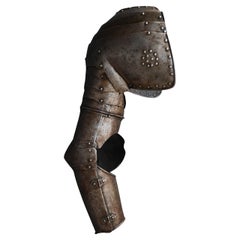
Arm And Shoulder Armor, Northern Italy (milan Or Brescia), Mid-16th Century
Located in Bilzen, BE
Arm and shoulder defence, Northern Italy (Milan or Brescia), mid-16th century (circa 1550–1580)
A substantial steel armour element comprising a pauldron, upper arm (rerebrace), arti...
Category
Antique 16th Century Italian Renaissance Arms, Armor and Weapons
Materials
Iron
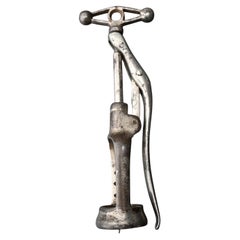
Antique Mechanical french corkscrew The Presto Paris Jhp Depose
Located in Bilzen, BE
Old corkscrew patented by Jacques Pérille on August 12, 1899
Straight connecting rod marked: "Presto" length in closed position 17 cm
Nickel plated steel
Aged patina
Perfect usable
Category
Antique Late 19th Century French Other Barware
Materials
Iron
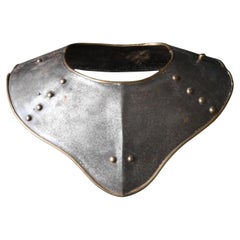
Medieval Iron Pauldron (shoulder Armor) C. 1480–1520
Located in Bilzen, BE
"Medieval Iron Pauldron (shoulder Armor) C. 1480–1520"
Late Medieval Iron Spaulder (Shoulder Defence) with Brass Edge & Rotating Button, c. 1480–1520
Authentic-looking late medieval...
Category
Antique 15th Century and Earlier German Renaissance Arms, Armor and Weapons
Materials
Brass, Iron
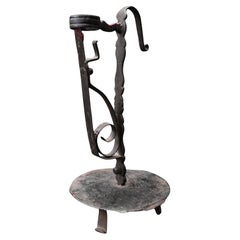
Antique Forged Iron Candlestick – 17th Century
Located in Bilzen, BE
A rare hand-forged wrought iron candlestick, likely dating to the 17th century, with beautiful scrollwork and a practical tripod base. Entirely hand-worked by a blacksmith, it featur...
Category
Antique 17th Century French Baroque Candlesticks
Materials
Iron
You May Also Like
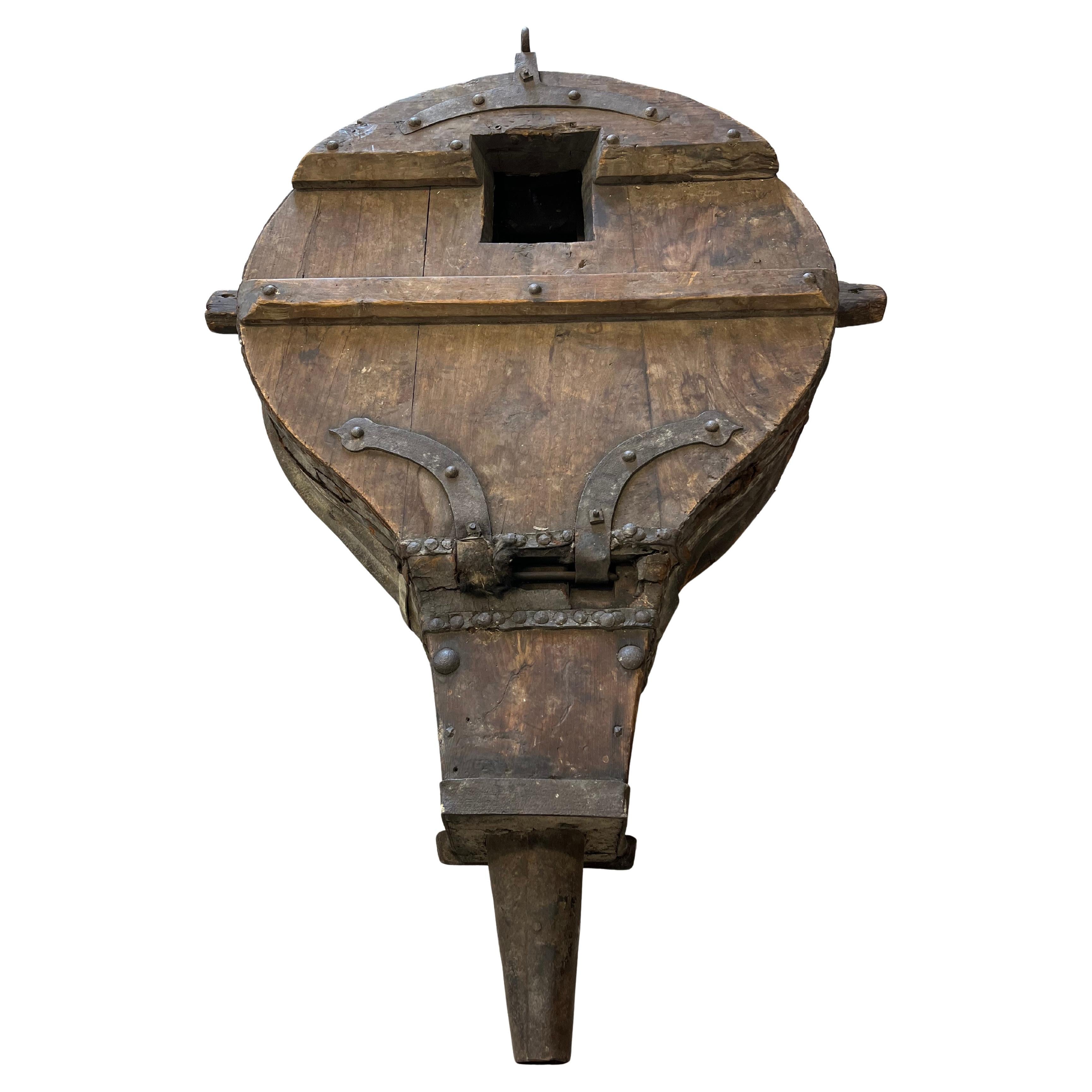
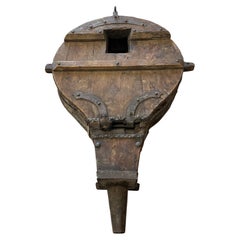
18thC Bellows
Located in Livorno, IT
Antique Italian blacksmith bellows from late 18thC.
Walnut, pinewood, leather and beautiful wrought-iron details.
Used to oxygenate the forge and keep high and stable the processing ...
Category
Antique Late 18th Century Italian Rustic Arms, Armor and Weapons
Materials
Iron, Wrought Iron
$2,847
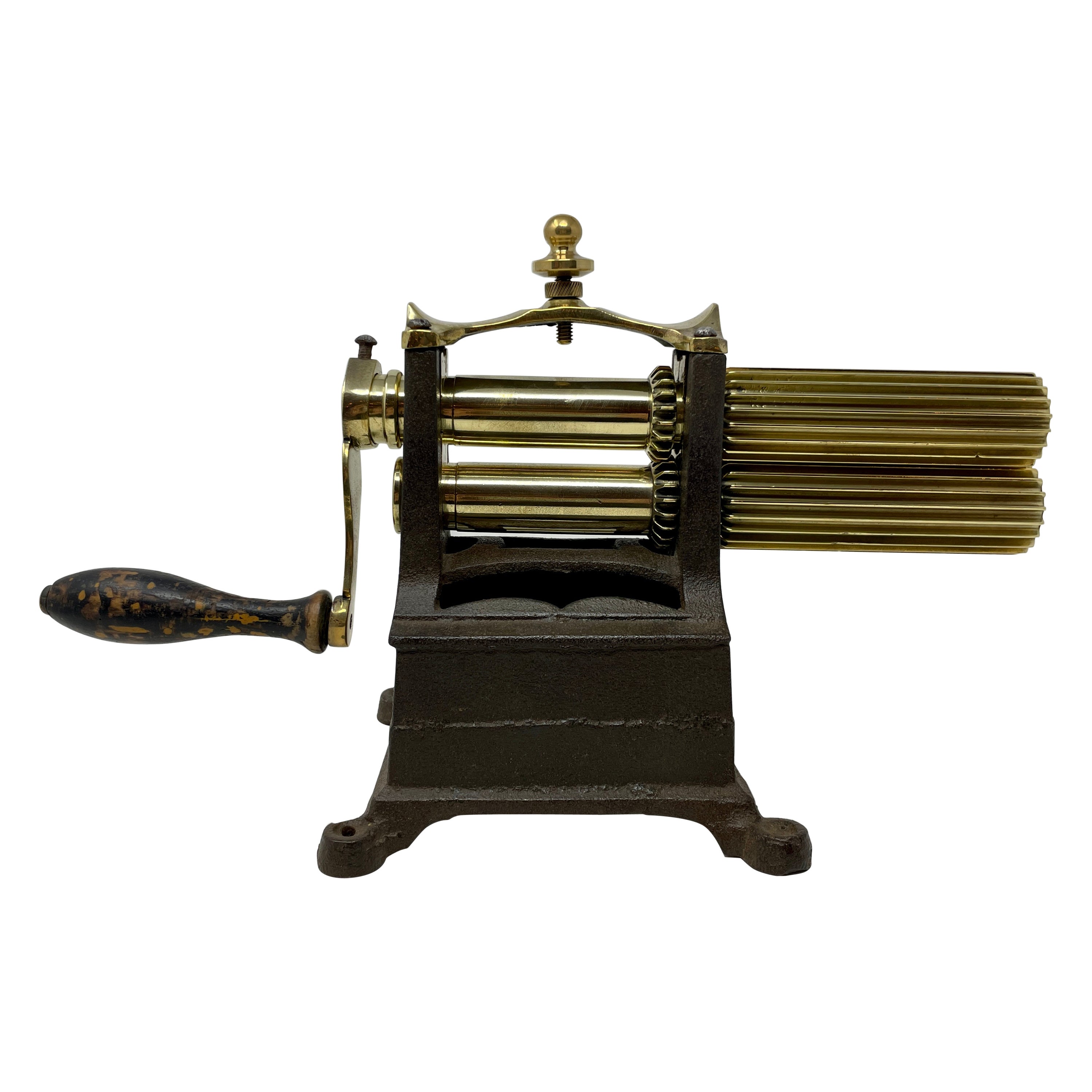
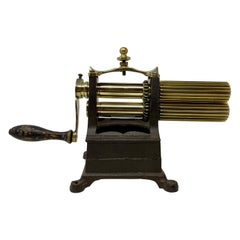
Antique Early 19th Century English Crimping or Goffering Iron, circa 1840
Located in New Orleans, LA
Antique early 19th century English crimping or goffering iron, Circa 1840.
Used to make ruffles, frills, flounces, and pleats in starched linen, the crimpling iron was first introduced in Italy in the early 17th century. Very popular from the Elizabethan era...
Category
Antique 19th Century Historical Memorabilia
Materials
Brass, Iron
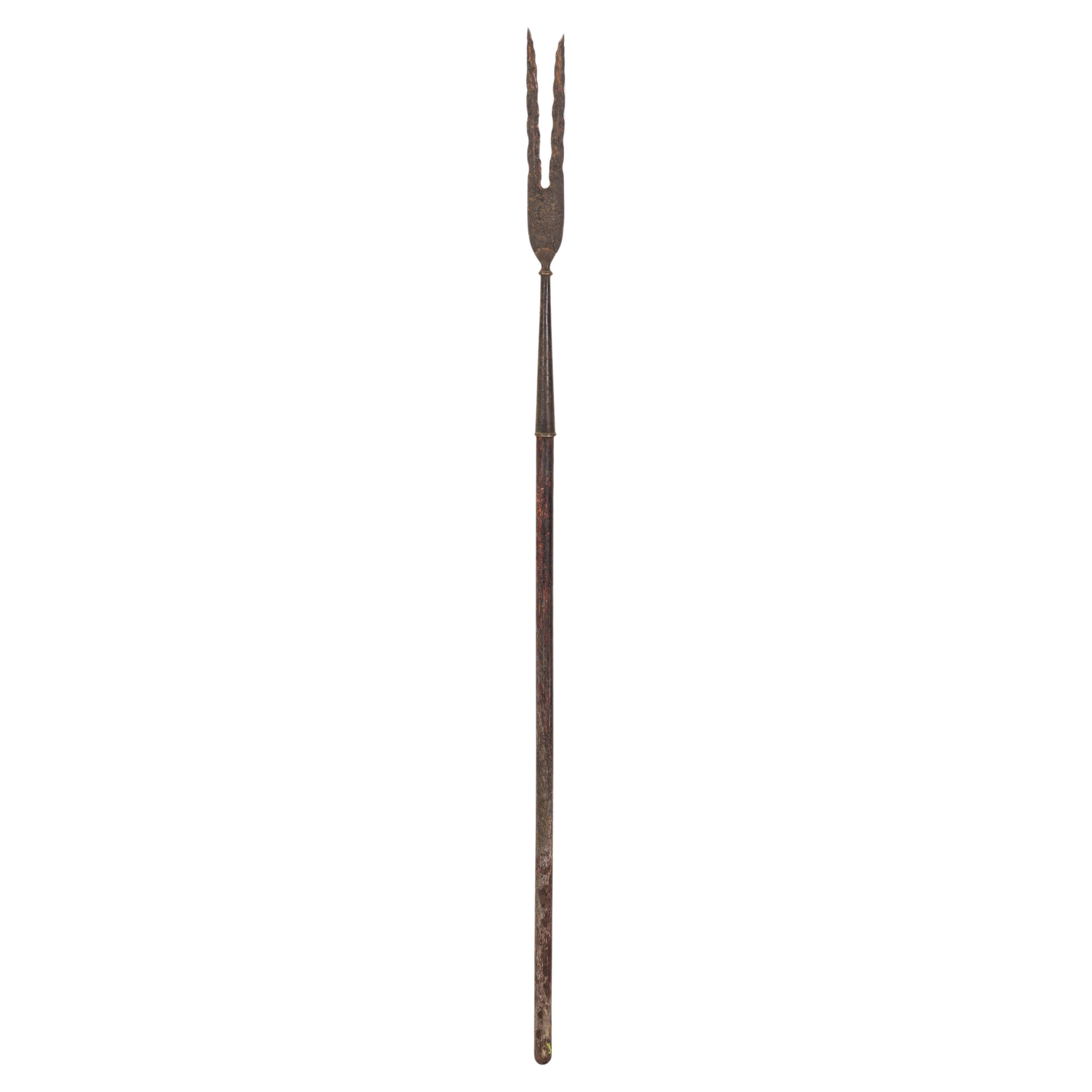
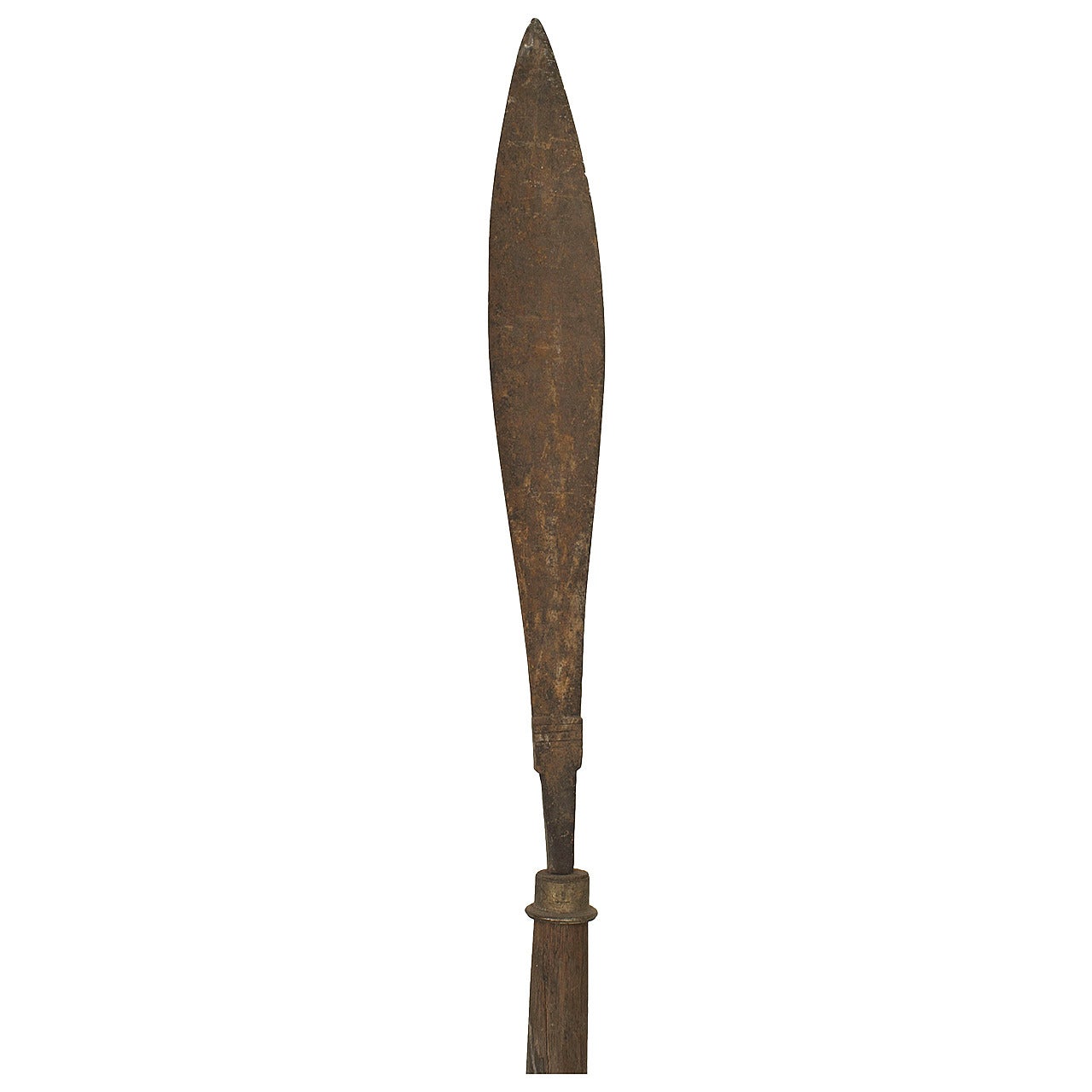
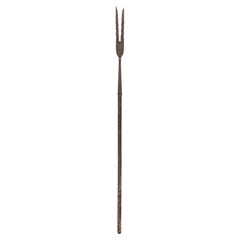
English Renaissance Style Two Pronged Wood and Iron Short Spear
Located in Queens, NY
English Renaissance-style short spear with simple wooden shaft and 24½-inch etched iron two-prong blade
Category
20th Century British Renaissance Revival Arms, Armor and Weapons
Materials
Wood
English Renaissance Style Steel and Leather Spear
Located in Queens, NY
English Renaissance-style spear with crossed leather covered shaft and polished steel blade.
Category
20th Century English Northern Renaissance Arms, Armor and Weapons
Materials
Iron
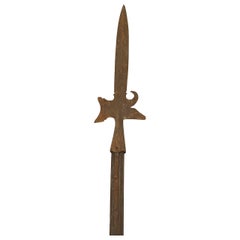
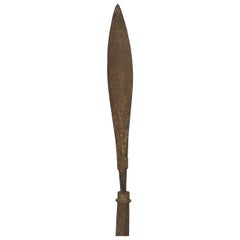
English Renaissance Style Wood and Iron Blade
Located in Queens, NY
English Renaissance-style spear with wooden shaft and simple 15-inch leaf-shaped iron blade.
Category
20th Century English Northern Renaissance Arms, Armor and Weapons
Materials
Iron
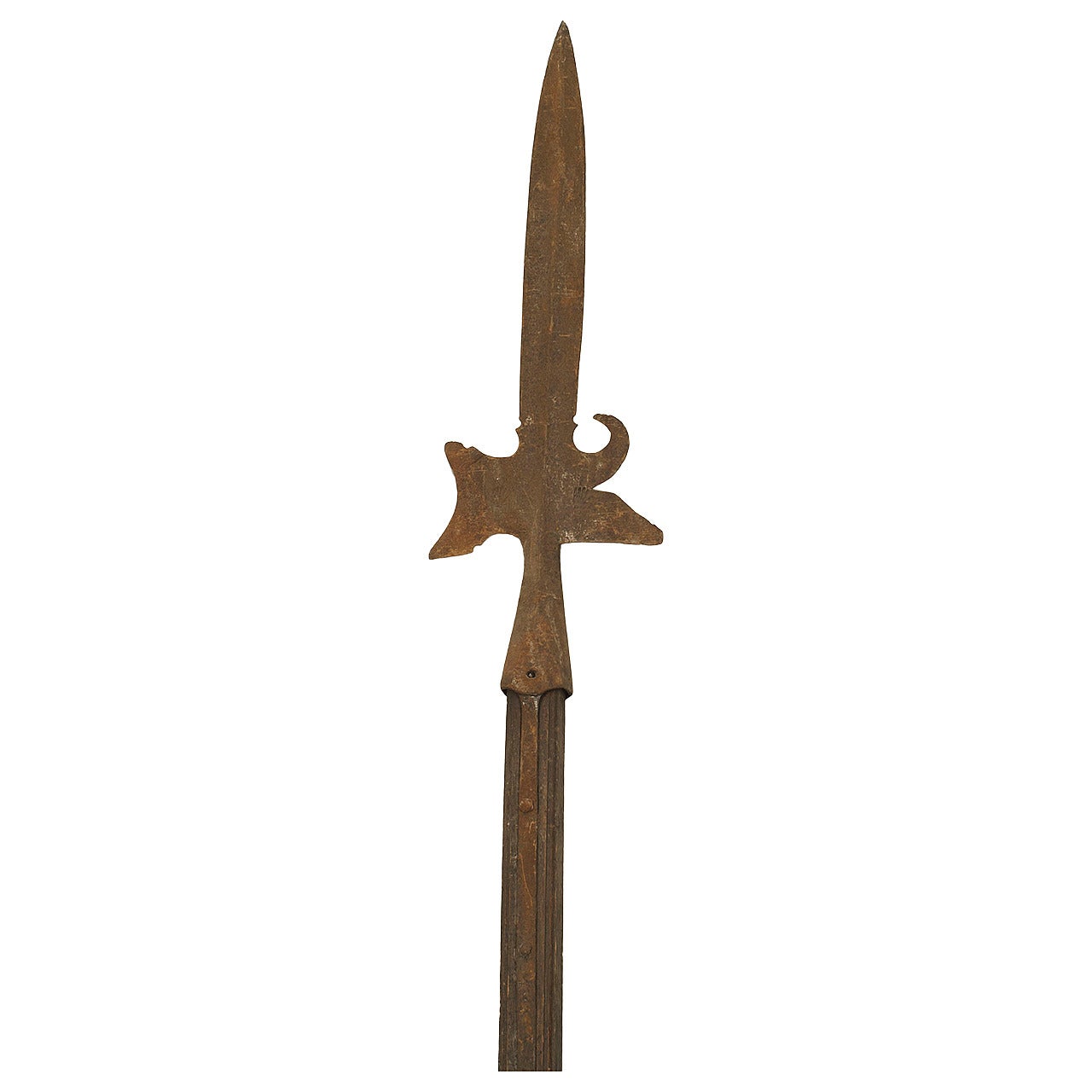
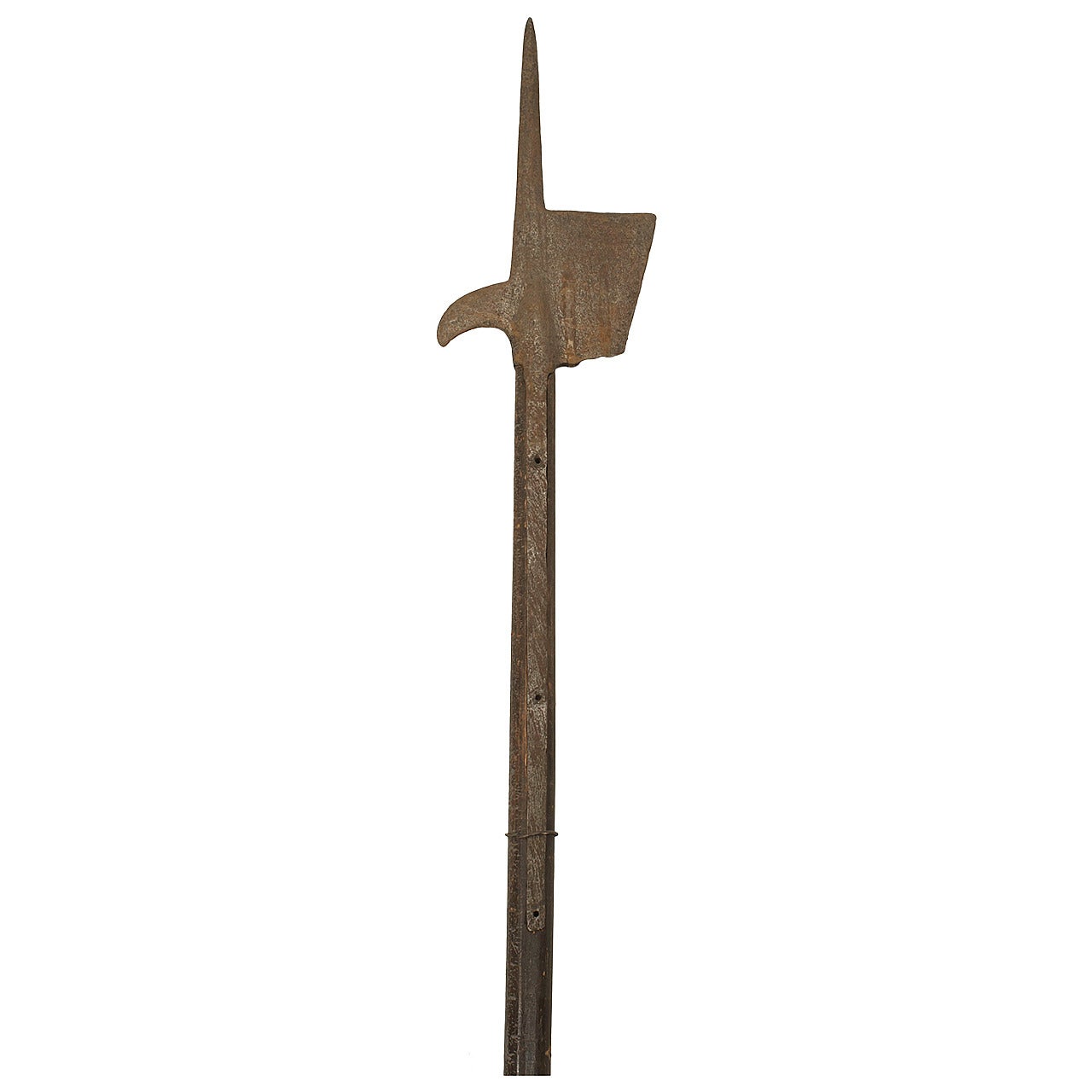
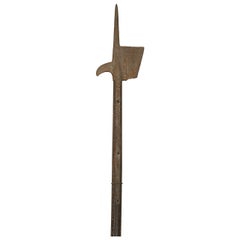
English Renaissance Style Halberd
Located in Queens, NY
English Renaissance-style halberd spear with wood shaft and 33 ¬Ω inch iron ax blade.
Category
20th Century English Northern Renaissance Arms, Armor and Weapons
Materials
Iron
More Ways To Browse
Antique German Marks
Antique Gear
Antique Gears
German Renaissance
Heraldic Shield
Antique Crank
16th Century German
German Hunting
Hunting Collectibles
Antique Hunting Collectibles
Antique Furniture Makers Mark
Antique German Furniture Makers
Steel Helmet
Antique Cannons
Collectible Antique Knife
Helmet Stand
18th Century Cannon
Antique Signal Cannon