Want more images or videos?
Request additional images or videos from the seller
1 of 9
Stylish and Very Unusual Martin Baker Aircraft Ejection Seat, circa 1974
$6,811.23List Price
About the Item
- Creator:Martin Baker (Maker)
- Dimensions:Height: 53.94 in (137 cm)Width: 16.54 in (42 cm)Depth: 16.54 in (42 cm)
- Materials and Techniques:
- Place of Origin:
- Period:
- Date of Manufacture:1974
- Condition:Wear consistent with age and use. In Great Condition, just general wear as expected.
- Seller Location:Royal Tunbridge Wells, GB
- Reference Number:Seller: A44161stDibs: LU134826206923
About the Seller
5.0
Platinum Seller
Premium sellers with a 4.7+ rating and 24-hour response times
Established in 2014
1stDibs seller since 2015
543 sales on 1stDibs
Typical response time: 4 hours
Authenticity Guarantee
In the unlikely event there’s an issue with an item’s authenticity, contact us within 1 year for a full refund. DetailsMoney-Back Guarantee
If your item is not as described, is damaged in transit, or does not arrive, contact us within 7 days for a full refund. Details24-Hour Cancellation
You have a 24-hour grace period in which to reconsider your purchase, with no questions asked.Vetted Professional Sellers
Our world-class sellers must adhere to strict standards for service and quality, maintaining the integrity of our listings.Price-Match Guarantee
If you find that a seller listed the same item for a lower price elsewhere, we’ll match it.Trusted Global Delivery
Our best-in-class carrier network provides specialized shipping options worldwide, including custom delivery.You May Also Like
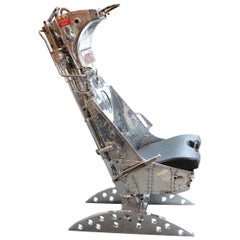
Ejection Seat from Percival Aircraft Jet Provost by Martin Baker
Located in Paris, FR
A Martin Baker ejection seat from a Percival aircraft BAC jet provost,
royal air force trainer aircraft used from 1955 to 1993.
Exceptional piece.
Category
Vintage 1970s English Mid-Century Modern Aviation Objects
Materials
Aluminum, Stainless Steel, Chrome
$51,385
H 55.12 in W 18.9 in D 35.44 in
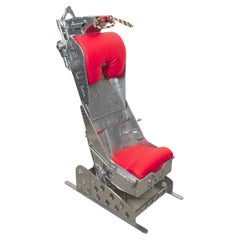
Sea Vixen Martin Baker Ejection Seat. Certified 1960. Refinished with Hand.
Located in Canterbury, England
An upward fire ejection seat, deactivated, from a De Havilland Sea Vixen, manufactured and issued/ certified 1960. Now, restored and converted into a perfect and fully functioning domestic or office seat...
Category
Vintage 1960s Other Aviation Objects
Materials
Metal
$17,720
H 51.97 in W 19.69 in D 33.08 in
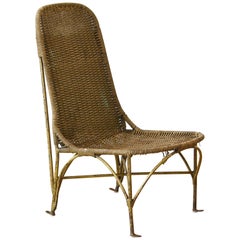
Iron and Woven Rush Pilot or Passenger Seat from a circa 1920s Aircraft
Located in Chicago, IL
This pilot's or passenger's seat from a circa 1920s airplane is an excellent example of early 20th century industrial design. The frame is made from rod iron, and the seat and back are woven rush. The rear of the seat back has a cleverly integrated map pocket of the same woven material. The legs bend at the bottom to form feet, which have holes to allow them to be secured to the floor of the aircraft. The design is an elegant and functional solution to the specific needs of light weight plus strength.
We purchased this piece from the estate of a collector of aviation related items. It was only identified as an airplane chair...
Category
Vintage 1920s Industrial Chairs
Materials
Iron
$1,700
H 29.5 in W 16 in D 25.5 in
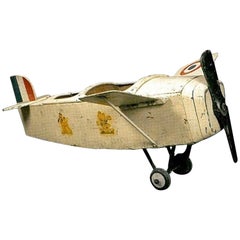
Two-Seat Aircraft Collector
s Item Forain Art Exceptional Piece
Located in Paris, FR
Two seats aircraft Forain Art Collector's item,
metal and painted wood. Year 1930.
Exceptional and unique piece.
Available now.
Category
Vintage 1930s French Aviation Objects
Materials
Wood
$10,660
H 23.63 in W 42.13 in D 60.24 in
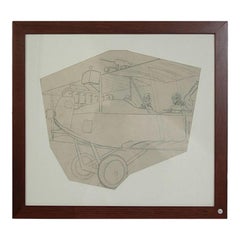
Antique Pencil Aviation Drawing depicting a WWI Two-Seat Biplane Aircraft
By Riccardo Cavigioli
Located in Milan, IT
Pencil drawing by Riccardo Cavigioli in the early 1920s depicting a two-seat biplane airplane for reconnaissance, probably a Fokker, armed with twin Spandau’s 7.92 mm. Aircraft produ...
Category
Vintage 1920s Italian Aviation Objects
Materials
Paper
$479
H 17.72 in W 19.49 in D 0.79 in
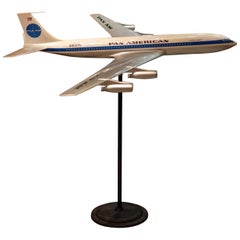
Pan Am Boeing 707 Model Aircraft, circa 1958
Located in London, GB
An exceptional large scale vintage fiberglass and resin composite promotional model of a Boeing 707 in Pan Am’s iconic livery on original steel and cast iro...
Category
Vintage 1950s American Aviation Objects
Materials
Steel, Iron
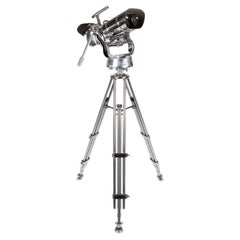
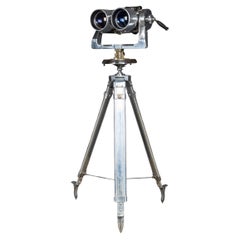
Aircraft Target Binocular
Located in Paris, FR
Binocular Aircraft Target on tripod, with adjustable height.
An exceptional and unique pair of WWII 25 x 105 binoculars
by Jos. Schneider & Co, Optische Werke KG, Göttingen. circa...
Category
Vintage 1940s German Nautical Objects
Materials
Aluminum, Stainless Steel, Chrome, Nickel
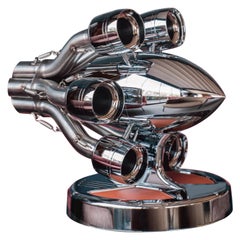
Aircraft Engine Chrome Speaker
Located in Paris, FR
Speaker aircraft engine chrome is inspired by radial aircraft engines
from early 20th-century radial aircraft engines. Structure in aluminum
alloy ...
Category
21st Century and Contemporary Italian Aviation Objects
Materials
Aluminum, Chrome
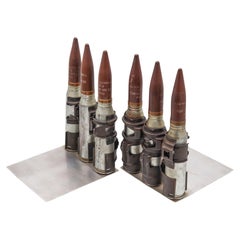
Post War 1953 Very Unusual Trencher Art Bookends In Bronze And Aluminum
Located in Miami, FL
Bookends with 1953 US Navy AER-53 Dummy Artillery Rounds
Elusive and historical pair of bookends, created during the post WWII period and the Korean war, back in the 1953-1955. They...
Category
Vintage 1950s American Mid-Century Modern Desk Sets
Materials
Bronze, Aluminum
$1,038 Sale Price / set
20% Off
H 7.75 in W 5.08 in D 4.75 in
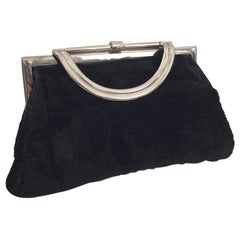
Stylish Art Deco Velvet and Chrome Handbag Purse, circa 1930s
Located in Devon, England
For your consideration is this superbly stylish and rare 1930s black silk velvet clutch bag originating from England. Features a chrome frame and cla...
Category
Mid-20th Century English Art Deco Collectible Jewelry
Materials
Chrome
More From This Seller
View All20th Century Soviet Cold War Anti Aircraft Binoculars c.1950
Located in Royal Tunbridge Wells, Kent
An impressive set of highly polished Cold War-era anti-aircraft binoculars from the former USSR, crafted in the 20th Century. Accompanied by a sleek and adjustable metal tripod, thes...
Category
Vintage 1950s Russian Other Scientific Instruments
Materials
Metal
Austrian Solid Silver-Gilt and Enamel Reliquary by Rudolf Linke, circa 1890
By Rudolf Linke
Located in Royal Tunbridge Wells, Kent
Antique 19th century Austrian rare and unusual solid silver-gilt and enamel reliquary, pierced and decorated with multicolored enamels, sides set with carved rock crystal panels and ...
Category
Antique 19th Century Austrian Centerpieces
Materials
Rock Crystal, Enamel, Silver

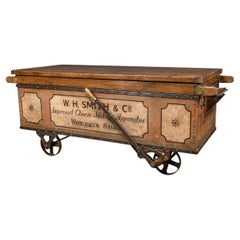
19th Century Victorian Freight Carriage with Oak Top, circa.1880
Located in Royal Tunbridge Wells, Kent
Antique 19th century Victorian freight truck used to transport feed to local dairies, this metal carriage has a solid oak top, original wheels and tilt lever, later sign written for ...
Category
Antique 19th Century British Victorian Historical Memorabilia
Materials
Metal
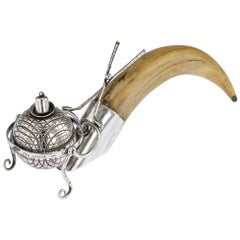
20th Century American Solid Silver Gimbal Novelty Golf Lighter, circa 1900
Located in Royal Tunbridge Wells, Kent
Antique early 20th century American very unusual, novelty solid silver gimbal golf themed lighter, of unusual design, the ball gimbol shaped as a golf ball, mounted with a tusk and a...
Category
20th Century American Historical Memorabilia
Materials
Silver
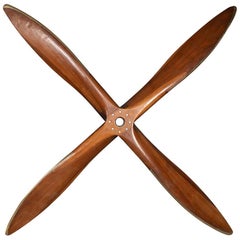
20th Century English Four-Blade Wood Propeller by Vickers Vernon, circa 1920
By Vickers-Armstrongs 1
Located in Royal Tunbridge Wells, Kent
An extremely rare four-blade propeller from a Vickers Vernon aircraft. The Vickers Vernon was a British biplane troop carrier used by the Royal Air Force. It entered service in 1921,...
Category
Vintage 1910s English Aviation Objects
Materials
Wood
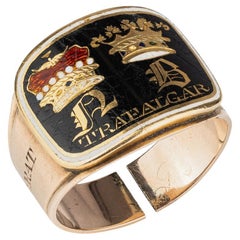
A Gold And Enamel Mourning Ring For Lord Nelson By John Salter, England, 1806
Located in Royal Tunbridge Wells, Kent
An extremely rare ring that commemorates the naval hero, Horatio Nelson, who died in 1805 at the Battle of Trafalgar, fighting against the Napoleonic forces. Dr William Nelson, the admiral's brother, ordered 58 mourning rings for family and friends and every admiral and post-captain who fought at the Battle of Trafalgar . The ring is inscribed on the bezel ‘Trafalgar’; outside the hoop with Nelson’s motto in Latin, ‘Let him who earned it bear the palm [of victory]’, adopted by Nelson from a poem ‘Ad Ventos’ written in 1727 by John Jortin (1698-1770). Inside is the inscription ‘Lost to his country 21 October 1805, aged 47’. The initials N and B stand for Nelson and Bronte.
Admiral Nelson was given the title of Duke of Bronte in 1799 by the King of Sicily and in 1801 became a Viscount. The two coronets above the initials refer to these titles. Tthe motto Palmam qui meruit ferat ("let him who has earned it, bear the palm") was added to his coat of arms in 1798 after the Battle of the Nile. Nelson was buried with full honours in St Paul's Cathedral. His cortege consisted of 32 admirals, over a hundred captains, and an escort of 10,000 soldiers.
This ring is an example of only fifty-eight that were made by Nelson's jeweller John Salter in 1806. Thirty-one were for Nelson's close family and friends, the rest for pall-bearers and other dignitaries (see The Nelson Dispatch, vol.3 pt.XII, oct.1990). Three similar examples of this ring are held extremely prestigious museums in the capital. One is in the Greenwich National Maritime Museum in London, another in The British Museum in London and another in the collection of the Victoria & Albert Museum, London, exhibited in the Jewellery Gallery, case 23, no. 8.
The ring has a particularly special provenance, arguably like no other mourning ring of Admiral Nelson’s. The ring belonged to the Reverend Alexander John Scott. The Reverend Alexander John Scott (1768-1840) was a British naval chaplain. He was appointed to the flagship H.M.S. Victory in 1803 where he served as private secretary to Lord Nelson. He was with Nelson when when he was shot on the quarter-deck of the Victory at the battle of Trafalgar on the 21st October 1805. Scott attended his dying chief in the cockpit of the flagship, receiving his last wishes. He refused to leave Nelson's body until it was brought back to England and placed in the coffin to lie in the Painted Hall Greenwich.
The ring, lock of hair and music book were passed down by the direct descendants of the Reverend Alexander John Scott's family and eventually gifted to the previous owners. The music book was a personal possession of the Reverend which gives watertight provenance of the person who owned the ring.
It is not clear exactly what Admiral Nelson’s last words really were although Scott documents Nelson’s last words to be “God and my country“. However, it is also recorded that a statement during his last hours was "Thank God I have done my duty.” Perhaps these two statements uttered in the last moments sound similar when mumbled by a feeble dying man. Nonetheless, it is noteworthy is that Scott remained by Admiral Nelson’s side as he died and his version is probably the most reliable.
The lock of hair is reputedly that of Lord Admiral Nelson. Without a DNA test there can be no conclusive proof of such. However, given that Reverend Alexander John Scott was with Nelson from the moment he was shot on the quarter-deck of H.M.S. Victory until the moment he was placed in his coffin, there is no reason to believe it is not a lock of Nelson’s hair.
It is difficult to overstate the significance and rarity of Nelson’s mourning rings. With only fifty-eight made, the vast majority of them were given to close family members and only a few were given to close friends. A close friend who receives a morning ring...
Category
Antique 19th Century English Historical Memorabilia
Materials
Gold, Enamel