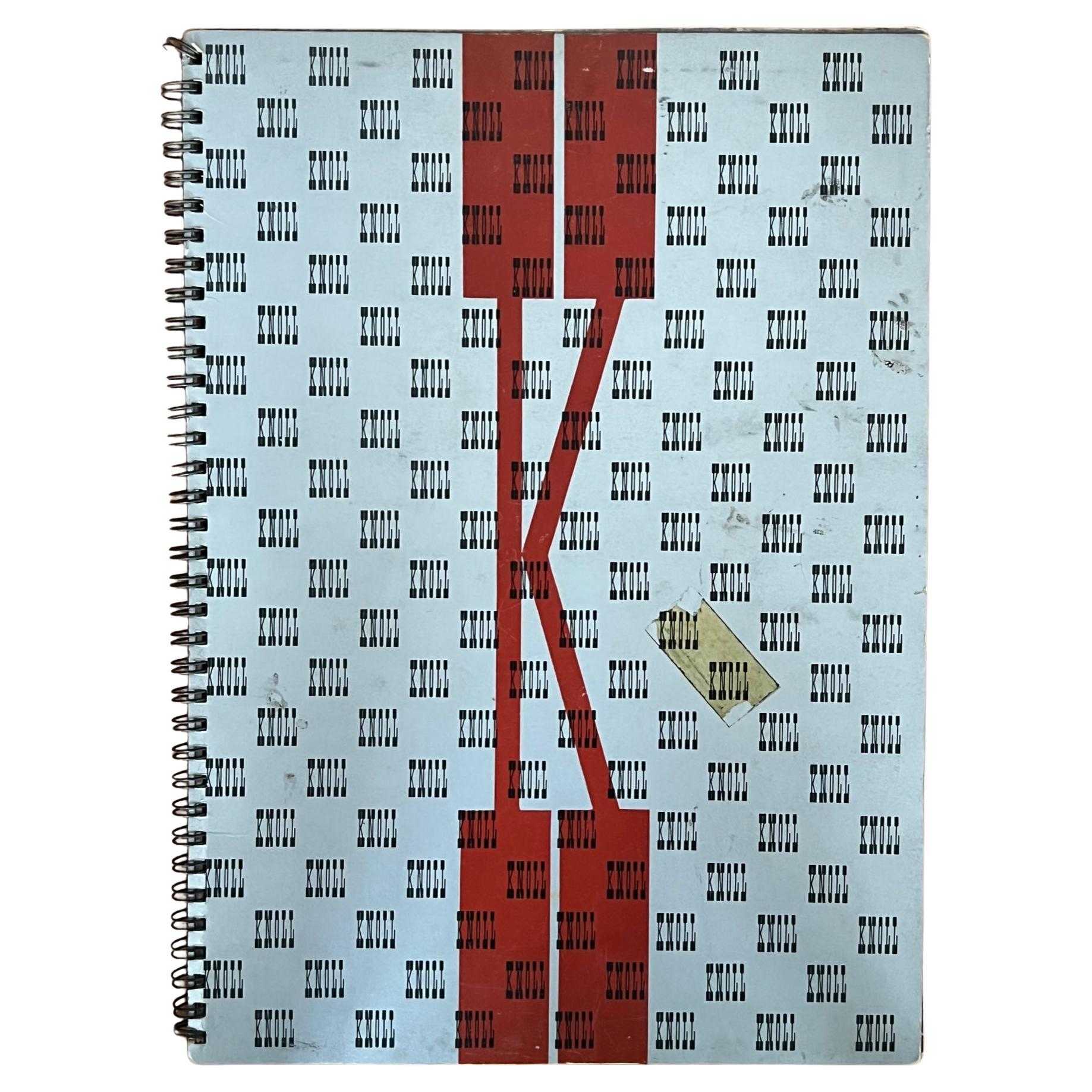
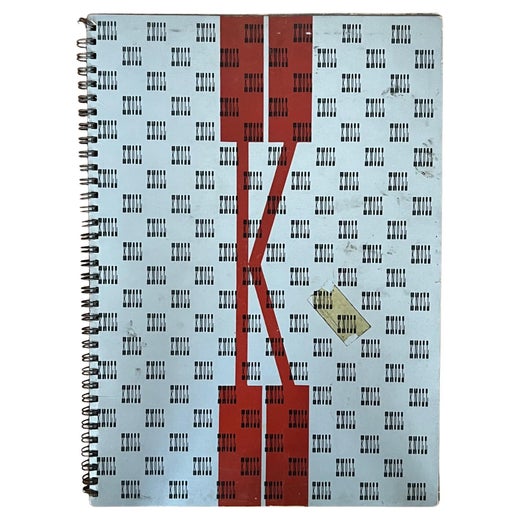
Chairs By Bertoia (Knoll Marketing Brochure/Poster)
About the Item
- Creator:
- Dimensions:Height: 19.5 in (49.53 cm)Width: 23 in (58.42 cm)Depth: 0.01 in (0.26 mm)
- Style:Mid-Century Modern (Of the Period)
- Materials and Techniques:
- Place of Origin:
- Period:
- Date of Manufacture:1957
- Condition:Wear consistent with age and use. Light bumping and rubbing to extremities.
- Seller Location:New York, NY
- Reference Number:1stDibs: LU828548083542
Harry Bertoia
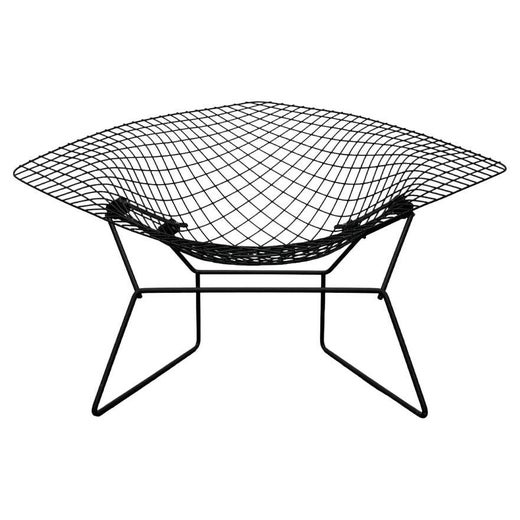
Sculptor, furniture and jewelry designer, graphic artist and metalsmith, Harry Bertoia was one of the great cross-disciplinarians of 20th-century art and design and a central figure in American mid-century modernism. Among furniture aficionados, Bertoia is known for his chairs such as the wire-lattice Diamond chair (and its variants such as the tall-backed Bird chair) designed for Knoll Inc. and first released in 1952.
As an artist, he is revered for a style that was his alone. Bertoia’s metal sculptures are by turns expressive and austere, powerful and subtle, intimate in scale and monumental. All embody a tension between the intricacy and precision of Bertoia’s forms and the raw strength of his materials: steel, brass, bronze and copper.
Fortune seemed to guide Bertoia’s artistic development. Born in northeastern Italy, Bertoia immigrated to the United States at age 15, joining an older brother in Detroit. He studied drawing and metalworking in the gifted student program at Cass Technical High School. Recognition led to awards that culminated, in 1937, in a teaching scholarship to attend the Cranbrook Academy of Art in suburban Bloomfield Hills, one of the great crucibles of modernism in America.
At Cranbrook, Bertoia made friendships — with architect Eero Saarinen, designers Charles and Ray Eames and Florence Schust Knoll and others — that shaped the course of his life. He taught metalworking at the school, and when materials rationing during World War II limited the availability of metals, Bertoia focused on jewelry design. He also experimented with monotype printmaking, and 19 of his earliest efforts were bought by the Guggenheim Museum.
In 1943, he left Cranbrook to work in California with the Eameses, helping them develop their now-famed plywood furniture. (Bertoia received scant credit.) Late in that decade, Florence and Hans Knoll persuaded him to move east and join Knoll Inc. His chairs became and remain perennial bestsellers. Royalties allowed Bertoia to devote himself full-time to metal sculpture, a medium he began to explore in earnest in 1947.
By the early 1950s Bertoia was receiving commissions for large-scale works from architects — the first came via Saarinen — as he refined his aesthetic vocabulary into two distinct skeins. One comprises his “sounding sculptures” — gongs and “Sonambient” groupings of rods that strike together and chime when touched by hand or by the wind. The other genre encompasses Bertoia’s naturalistic works: abstract sculptures that suggest bushes, flower petals, leaves, dandelions or sprays of grass.
As you will see on these pages, Harry Bertoia was truly unique; his art and designs manifest a wholly singular combination of delicacy and strength.
Find vintage Harry Bertoia sculptures, armchairs, benches and other furniture and art on 1stDibs.
Herbert Matter
Herbert Matter was a Swiss-born American photographer and graphic designer. He was born in Engelberg, on April 25, 1907. Matter studied painting at the École des Beaux-Arts in Geneva and the Académie Moderne in Paris with Fernand Léger and Amédée Ozenfant. He worked with Adolphe Mouron Cassandre, Le Corbusier and Deberny Peignot. In 1932, he returned to Zürich, where he designed posters for the Swiss National Tourist Office and Swiss resorts. The travel posters won instant international acclaim for his pioneering use of photomontage combined with the typeface. He went to the United States in 1936 and was hired by legendary art director Alexey Brodovitch. He soon started working for Harper's Bazaar, Vogue and other magazines. In the 1940s, photographers, including Irving Penn, used Vogue’s studios at 480 Lexington Avenue for shooting the advertising work commissioned by outside clients. The practice was at first tolerated but by 1950 it was banned because it interfered with Vogue’s interests and was a severe handicap to their editorial operations. In response to this, Matter and three other Condé Nast photographers, Serge Balkin, Constantin Joffé and Geoffrey Baker left to establish Studio Enterprises Inc. in the former House Garden studio on 37th Street. From 1946–66, Matter was a design consultant with Knoll Associates and worked closely with Charles and Ray Eames. From 1952–76, he was a professor of photography at Yale University and from 1958–68 he served as design consultant to Solomon R. Guggenheim Museum in New York and the Museum of Fine Arts in Houston. He was elected to the New York Art Directors Club Hall of Fame in 1977, received a Guggenheim Fellowship in photography in 1980 and the American Institute of Graphic Arts medal in 1983. As a photographer, Matter won acclaim for his purely visual approach. A master technician, he used every method available to achieve his vision of light, form and texture. Manipulation of the negative, retouching, cropping, enlarging and light drawing are some of the techniques he used to achieve the fresh form he sought in his still lifes, landscapes, nudes and portraits. As a filmmaker, he directed two films on his friend Alexander Calder, namely Sculptures and Constructions in 1944 and Works of Calder with music by John Cage for the Museum of Modern Art in 1950. Close friends of Matter and his wife Mercedes were the painters Jackson Pollock, Willem de Kooning, fellow Swiss photographer Robert Frank and Alberto Giacometti. Matter's wife Mercedes was the daughter of the American modernist painter Arthur Beecher Carles, and was herself the chief founder of the New York Studio School. “The absence of pomposity was characteristic of this guy”, said another designer, Paul Rand, about Matter. His creative life was devoted to narrowing the gap between the so-called fine and applied arts. Matter died on May 8, 1984, in Southampton, New York.
- ShippingRetrieving quote...Shipping from: New York, NY
- Return Policy
More From This Seller
View AllVintage 1950s American Mid-Century Modern Books
Paper
Vintage 1980s American Modern Books
Plastic, Paper
Vintage 1970s American Mid-Century Modern Books
Paper
Mid-20th Century American Mid-Century Modern Books
Paper
Early 2000s American Mid-Century Modern Books
Paper
Vintage 1940s American Mid-Century Modern Books
Paper
You May Also Like
Mid-20th Century American Mid-Century Modern Children s Furniture
Metal
21st Century and Contemporary American Mid-Century Modern Collectible Je...
Sterling Silver
Mid-20th Century American Mid-Century Modern Children s Furniture
Metal, Wire
Vintage 1950s Central American Mid-Century Modern Books
Paper
2010s American Collectible Jewelry
Sterling Silver
Vintage 1970s American Books
Paper
Read More
At Hosfelt Gallery, Bertoia Masterworks Complement Dynamic Contemporary Art
For nearly three decades, San Francisco–based Todd Hosfelt has curated against the grain — with a show on the legendary modernist Harry Bertoia the latest case in point.
The 21 Most Popular Mid-Century Modern Chairs
You know the designs, now get the stories about how they came to be.