Want more images or videos?
Request additional images or videos from the seller
1 of 7

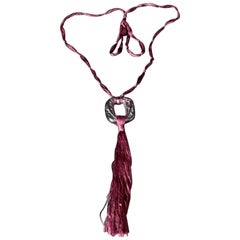
Rene Lalique Barrette Oiseaux Hair Clip or Brooch

$2,039.55List Price

You May Also Like

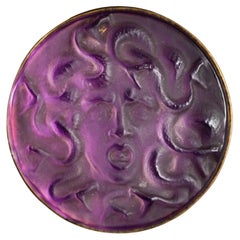
Art Nouveau Medusa Brooch by René Lalique - Glass Brass
By René Lalique, Lalique
Located in Palm Beach, FL
Embossed inscription Lalique France and company signet Note: We highly recommend shipping through 1stDibs for its cost effectiveness, full insurance coverage, and reliable handling. While standard parcel services are an option, the default quote does not include packing and insurance. 1stDibs shipping provides a level of value, protection, and care that aligns with our commitment to safeguarding historic artworks and providing excellent client service. "Few artists influenced the direction of early 20th century decorative design more than René Jules Lalique. Lalique was born in the small village of Ay in northern France in 1860, but moved with his family to Paris at the age of two. "Like many talented artists that emerged from Paris during the early 20th century, Lalique thrived in the creative epicenter of the European world, attending Collège Turgot, a premier Parisian school of the arts. After his father’s death in 1875, Lalique found employment apprenticing with jeweler Louis Aucoc, gaining experience that would lay the groundwork for his own mastery of the craft. By 1881, Lalique had transformed himself from an eager apprentice into a successful freelance jewelry designer, working for manufacturers such as Cartier and Boucheron, as well as a growing roster of private clientele including actress Sarah Bernhardt and oil magnate Calouste Gulbenkian. "Lalique’s nature-inspired creations, with their soft, sensual Art Nouveau curves...
Category

Vintage 1910s French Art Nouveau Collectible Jewelry

Materials

Brass

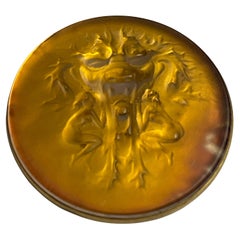
Brooch René Lalique Year 1912 Deux Figurines et Masque Clinquant Orange signed
By René Lalique
Located in SAINT-OUEN-SUR-SEINE, FR
Beautifull Brooch signed Lalique N° 1369 circa 1912 Catalogue Félix Marcilhac
Category

Vintage 1910s French Art Nouveau Collectible Jewelry

Materials

Glass

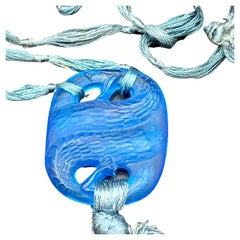
Rene Lalique Art Deco Snake Pendant
By René Lalique
Located in SAINT-OUEN-SUR-SEINE, FR
Rene lalique was a word famous jeweler before becoming a successful glass designer. He was a man of the Art Nouveau style and his creations were celebrated by French artists as Sarah bernard...
Category

Vintage 1920s French Art Deco Collectible Jewelry

Materials

Glass

Rene Lalique Art Deco Snake Pendant
$2,883
H 1.78 in W 1.19 in D 1.78 in
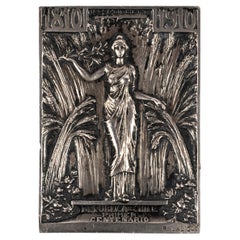
An Art Deco Silver Plaque by René Lalique
By René Lalique
Located in BARCELONA, ES
Republic, is a remarkable piece that embodies both historical significance and exquisite artistry. René Lalique, a master of Art Deco design, is celebrated for his exceptional craftsmanship and innovative techniques. This plaque, crafted from silver, is a testament to Lalique's unparalleled ability to blend elegance with profound symbolism. Owning this plaque means acquiring a unique artifact that commemorates a pivotal moment in Chilean history—the 100th anniversary of its independence. The intricate details and refined craftsmanship reflect Lalique's dedication to excellence, making it not just a commemorative item but a work of art. The Art Deco style, characterized by geometric patterns and luxurious materials, adds a layer of sophistication and timeless appeal. This plaque serves as a significant historical piece, bridging the cultural heritage of Chile with the artistic legacy of René Lalique. Its rarity and provenance make it a valuable addition to any collection, offering both aesthetic pleasure and a tangible connection to the past. The plaque’s elegant design and historical relevance ensure it will be a treasured item, admired for both its beauty and its story. Investing in this Lalique plaque...
Category

Early 20th Century French Art Deco Models and Miniatures

Materials

Silver

An Art Deco Silver Plaque by René Lalique
On Hold
$2,402
H 2.37 in W 1.66 in D 0.16 in
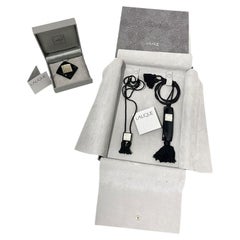
Lalique "Arethuse" Masque De Femme Art Deco Black Clear Crystal Set
By René Lalique
Located in Delft, NL
Lalique "Arethuse" Masque De Femme Art Deco Black & Clear Crystal set A set of 2 black resin pendants and a brooch with clear crystal on black resin and the pendants with twisted ...
Category

20th Century French Collectible Jewelry

Materials

Crystal

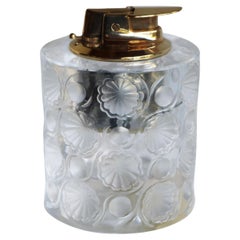
French Signed Lalique Crystal Tokyo Table Lighter with Frosted Floral Medallions
By René Lalique
Located in Ijzendijke, NL
When it comes to defining elegance and affluence as a lifestyle, Lalique crystal comes to mind for most people. From its earliest days to present times, the Lalique Company has consi...
Category

Vintage 1930s French Art Deco Tobacco Accessories

Materials

Crystal, Brass

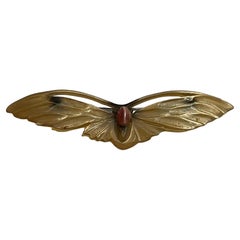
French Butterfly large brooch signed GIP For Georges Pierre horn and glass 1900
By René Lalique
Located in SAINT-OUEN-SUR-SEINE, FR
Very Good condition for this rare Horn Butterfly
Category

Antique Early 1900s French Art Nouveau Collectible Jewelry

Materials

Horn, Glass

Rare 19th Century English Tunbridgeware Hair Pin or Slide
Located in Dallas, TX
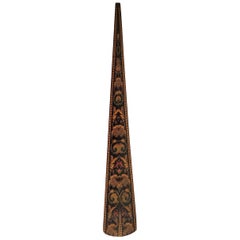
PRESENTING an EXTREMELY UNIQUE and RARE 19C British Tunbridgeware Hair Pin/Bobbin or Slide. This slide is unlike any of it’s kind we have seen before, it is a VERY RARE survivor. From circa 1860 – 80 and made in Tunbridge Wells, England. Made of walnut with gorgeous marquetry inlay on the entirety of the front with classic Tunbridgeware micro-mosaic all over the front. The rear is walnut. The marquetry inlay appears to be various different woods, namely, maple, walnut and satinwood. Would have been worn in a Lady’s hair bun with the micro-mosaic facing forward. This would have belonged to a VERY ELEGANT LADY in the mid to late 19th Century. Tunbridge ware is a form of decoratively inlaid woodwork, typically in the form of boxes, that is characteristic of Tonbridge and the spa town of Royal Tunbridge Wells in Kent in the 18th and 19th centuries. The decoration typically consists of a mosaic of many very small pieces of different coloured woods that form a pictorial vignette. Shaped rods and slivers of wood were first carefully glued together, then cut into many thin slices of identical pictorial veneer with a fine saw. Elaborately striped and feathered bandings for framing were pre-formed in a similar fashion. There is a collection of Tunbridge ware in the Tunbridge Wells Museum and Art Gallery in Tunbridge Wells. The famous makers of Tunbridge ware were in the Tunbridge Wells area of Kent; their most notable work was from circa 1830-1900. Early makers of Tunbridge ware, in Tunbridge Wells in the mid-18th century, were the Burrows family, and Fenner and Co. In the 19th century, around 1830, James Burrows invented a technique of creating mosaics from wooden tesserae. Henry Hollamby, apprenticed to the Burrows family, set up on his own in 1842 and became an important manufacturer of Tunbridge ware, employing about 40 people. Edmund Nye (1797–1863) and his father took over the Fenner company when William Fenner retired in 1840, after 30 years in partnership with him. Thomas Barton (1819–1903), previously apprenticed at the Wise factory, joined the Nyes in 1836, and worked as Nye’s designer; he took over the business in 1863 and continued there until his death. In Tonbridge (near to Tunbridge Wells), George Wise (1703–1779) is known to have had a business in 1746. It continued with his son Thomas, and Thomas’s nephew George (1779–1869), who took over in 1806. In its early years the company made articles such as workboxes and tea caddies with prints of popular views; later items had pictures created from mosaics. Their workshop in Tonbridge, Wise’s Tunbridge Ware Manufactory, was next to the Big Bridge over the Medway; the building was demolished in 1886 to widen the approach to the bridge. Tunbridge ware became popular with visitors to the spa town of Tunbridge Wells, who bought them as souvenirs and gifts. Articles included cribbage boards, paperweights, writing slopes, snuffboxes and glove boxes. At the Great Exhibition of 1851, Tunbridge ware by Edmund Nye, Robert Russell and Henry Hollamby was shown; Edmund Nye received a commendation from the judges for his work. He exhibited a table depicting a mosaic of a ship at sea; 110,800 tesserae were used in making the picture. The manufacturers of Tunbridge ware were cottage industries, and they were no more than nine in Tunbridge Wells and one in Tonbridge. The number declined in the 1880s; competent craftsmen were hard to find, and public tastes changed. After the death of Thomas Barton in 1903 the only surviving firm was Boyce, Brown and Kemp, which closed in 1927. Marquetry was an old technique which was continued by Nye and Barton to create images such as birds or butterflies. ‘Green Oak’ as caused by the fungus Chlorociboria aeruginascens. Stickware and half-square mosaic was invented by James Burrows in about 1830: a bunch of wooden sticks of different colours, each having triangular or diamond-shaped cross section, were tightly glued together; in the case of stickware, the resulting block was dried, then turned to form an article such as the base of a pincushion. For half-square mosaic, thin slices were taken from the composite block, and applied to a surface. Tesselated mosaic, was a development by James Burrows of half-square mosaic; it was adopted by George Wise and Edmund Nye. Minute tesserae were used to form a wide variety of geometric and pictorial designs. Many sorts of wood were used for the various colours; about 40 were in regular use. Only natural colors were used; green was provided by “green oak”, produced by the action of fungus on fallen oak. Designs for articles were often taken from designs of Berlin wool work.
Category

Antique Late 19th Century English High Victorian Collectible Jewelry

Materials

Satinwood, Walnut

19th Century Tortoise Shell Decorative Hair Comb or Head Piece
Located in Brooklyn, NY
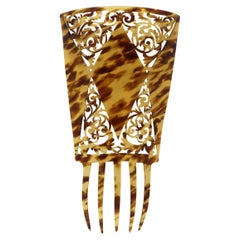
A stunning and large antique 19th century tortoise shell, celluloid, or Bakelite hair comb or head piece with an intricate carved floral and open scroll ...
Category

Antique Mid-19th Century Collectible Jewelry

Materials

Plastic

Antique English Horse Jumping or Steeplechase 9 Karat Yellow Gold Brooch or Pin
Located in Hamilton, Ontario
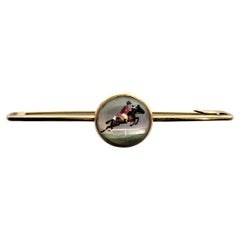
This antique brooch or pin is unsigned, but presumed to have originated from England and date to approximately 1900 and done in the period Edwardian style. The pin is composed of nine karat yellow gold with a glass medallion in the center portraying a man dressed in classic period attire mounted on a jumping horse. The medallion is hand-crafted and either reverse painted, or enameled and mounted to the bezel. The bezel is marked on the back for nine karat gold...
Category

Early 20th Century English Edwardian Collectible Jewelry

Materials

Gold

More From This Seller

View All
Rene Lalique Amber Glass Serpent Brooch
By René Lalique
Located in Chelmsford, Essex
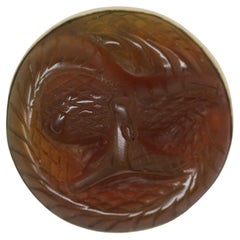
Rene Lalique amber glass 'Serpent' brooch, inset into a brass mount. Features a coiled snake. The brass mount has a stamped makers mark, 'LALIQUE FRANCE'...
Category

Vintage 1910s European Art Deco Collectible Jewelry

Materials

Glass

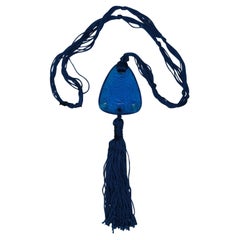
Rene Lalique Electric Blue Coloured Glass Graines Pendant
By René Lalique
Located in Chelmsford, Essex
Rene Lalique electric blue coloured glass 'Graines' Pendant. This pattern features a branch with berries. Threaded tassles and necklace. Engraved makers mark, 'Lalique'. Book referen...
Category

Vintage 1920s French Art Nouveau Collectible Jewelry

Materials

Glass

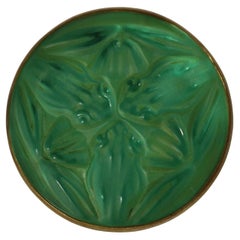
Rene Lalique Glass Grenouilles (Frogs) Brooch
Located in Chelmsford, Essex
Rene Lalique glass Grenouilles brooch. Clear glass with green staining, with foil backing. This pattern features a trio of frogs. Set in gold coloured mount with pin. Stamped with Ma...
Category

Vintage 1910s Collectible Jewelry

Materials

Glass

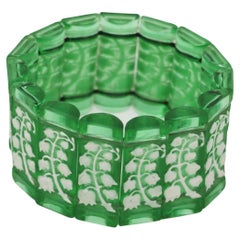
Rene Lalique Green Glass Muguet Haut Bracelet
By René Lalique
Located in Chelmsford, Essex
Rene Lalique green glass with white enamel 'Muguet Haut' Bracelet. The bracelet consists of 15 rectangular, cylinder-half shaped tablets, stru...
Category

Vintage 1920s Collectible Jewelry

Materials

Glass

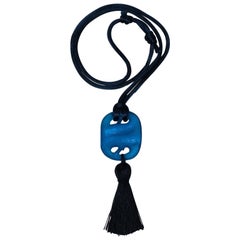
Rene Lalique Blue Glass Serpents Pendant
By René Lalique
Located in Chelmsford, Essex
Rene Lalique Electric blue Glass 'Serpents' pendant. This pattern features two open mouthed snakes, their heads forming the holes for the cord and tassle attachments. Necklace is a nylon/rayon cord and has sliding knot...
Category

Vintage 1920s Collectible Jewelry

Materials

Glass

Rene Lalique Plum Glass Lezards Pendant
By René Lalique
Located in Chelmsford, Essex
Rene Lalique purple coloured Glass 'Lezards' pendant. This design features lizards. Engraved makers mark, 'Lalique'. Book reference: Marcilhac 1648.
Category

Vintage 1920s French Art Deco Collectible Jewelry

Materials

Glass

Still Thinking About These?

All Recently Viewed