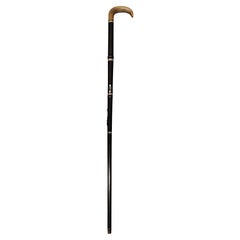
Items Similar to Walking stick made by W. A. Bolin, horn and silver gilt. Stockolm, Sweeden 1917.
Video Loading
Want more images or videos?
Request additional images or videos from the seller
1 of 20
Walking stick made by W. A. Bolin, horn and silver gilt. Stockolm, Sweeden 1917.
$8,068.59
£6,023.59
€6,800
CA$11,209.70
A$12,057.64
CHF 6,443.95
MX$142,125.23
NOK 81,243.16
SEK 74,271.66
DKK 51,823.63
About the Item
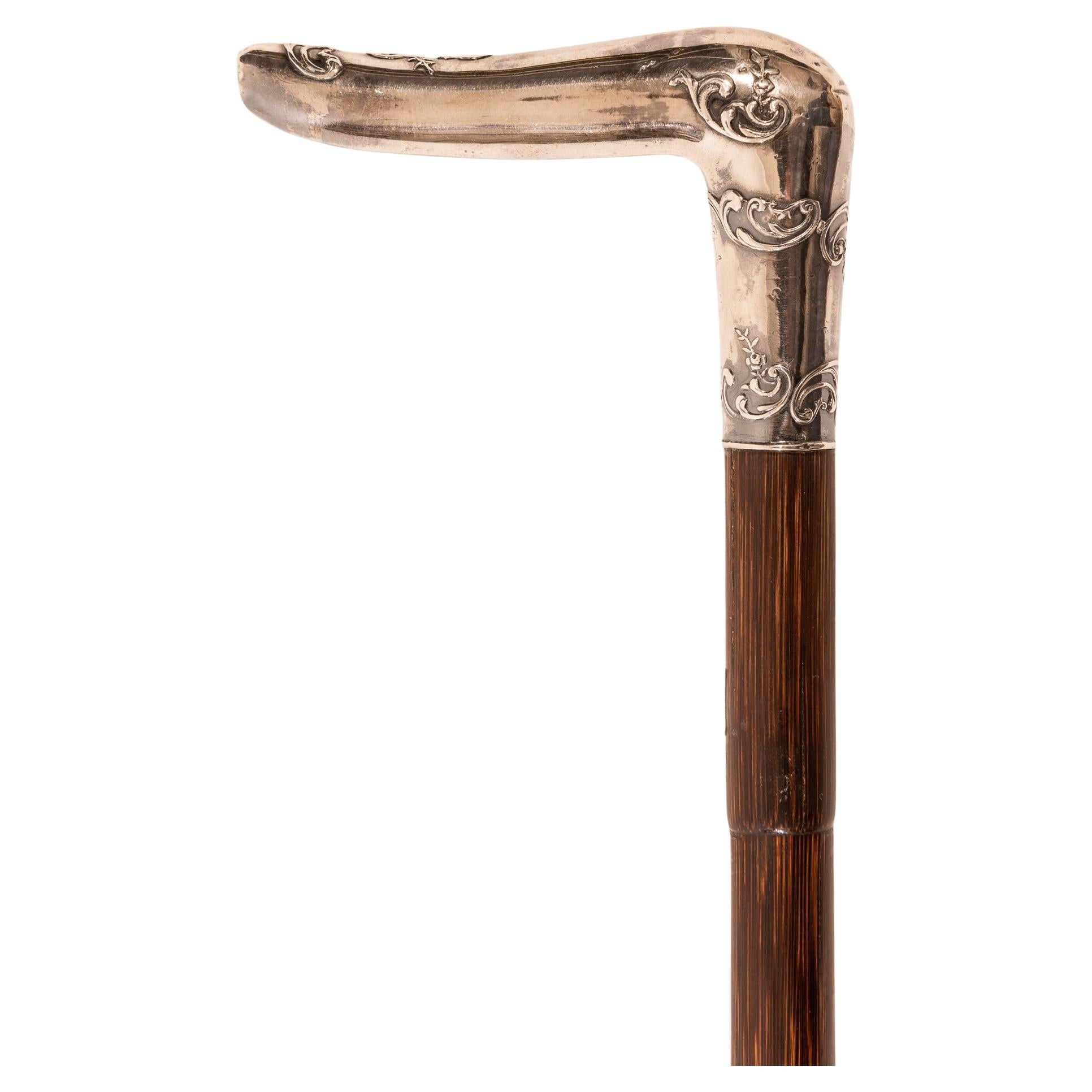
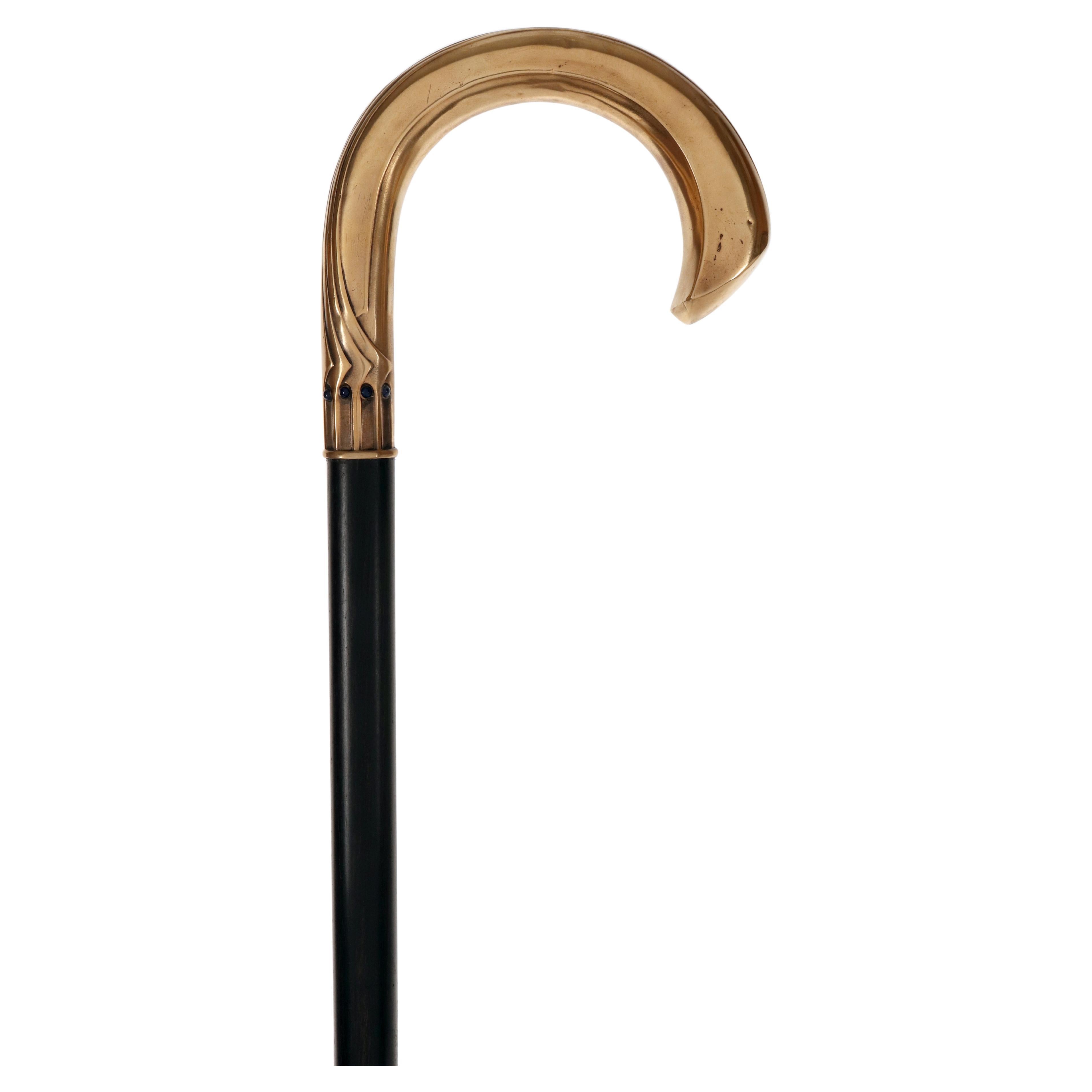
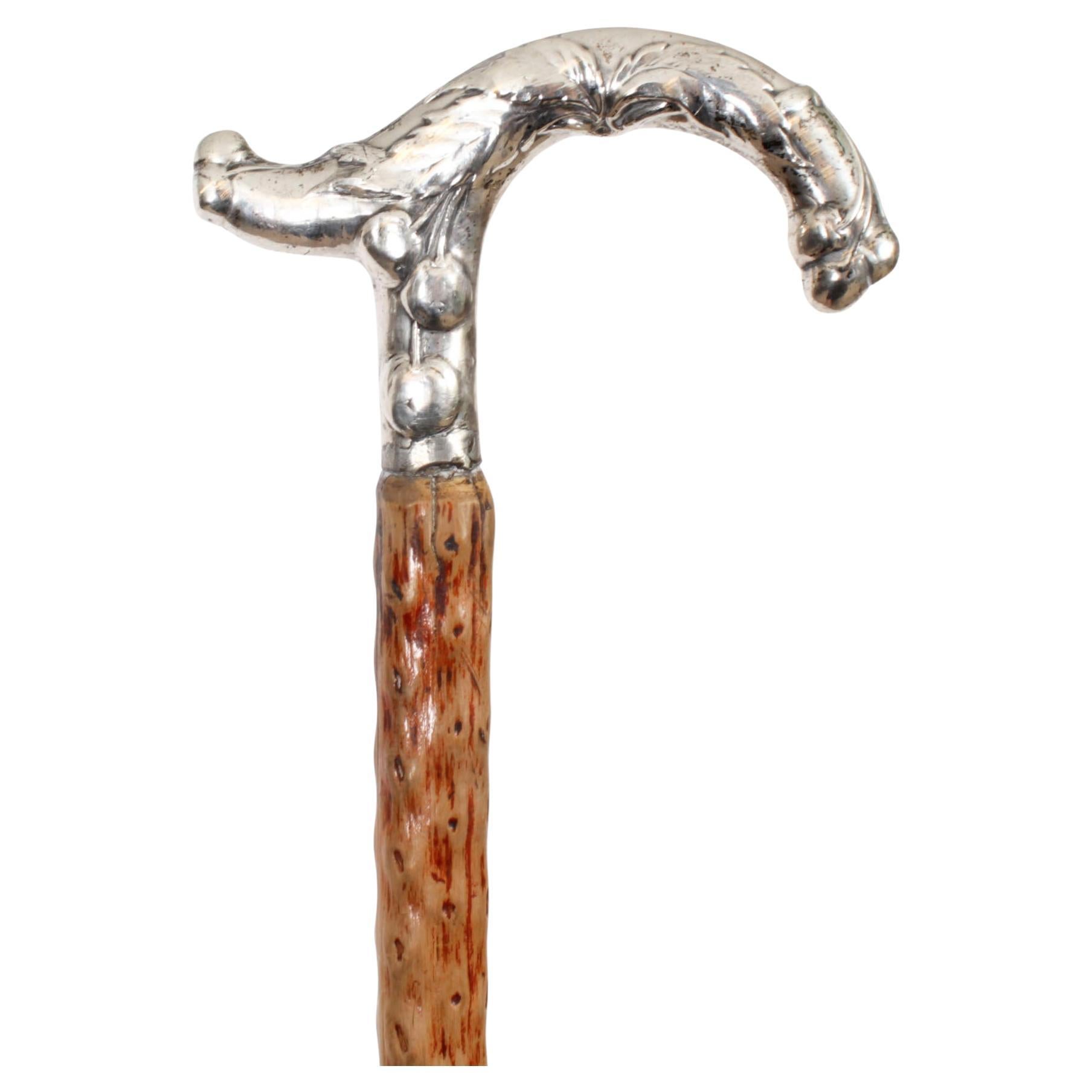
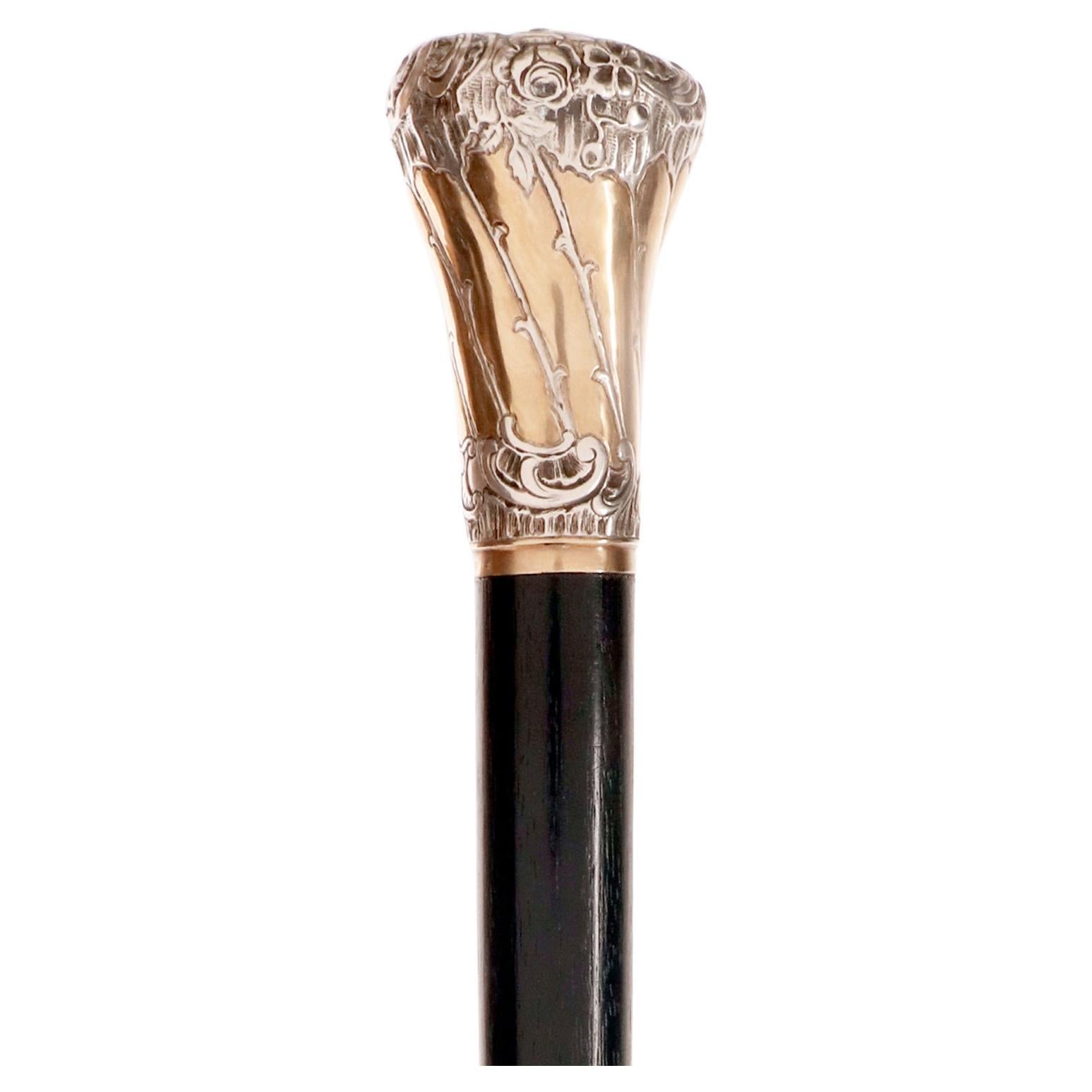
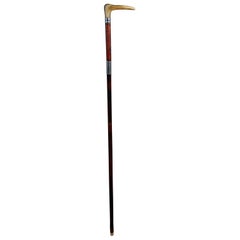
Walking stick with a cane made of Malacca wood and a pommel of ox horn with bands and a gilded silver cap depicting a double-headed eagle.The pommel is made of black ox horn enriched with a silver decoration. The band is smooth, surmounted by a ring with circular decorations that continues in a series of bands with curved sides at the base and along the back of the horn, following its natural shape. At the top is a large curved openwork, closed below by a smooth plaque. The coat of arms depicted is Russian, with the crowned double-headed imperial eagle at the center, with outstretched wings, the imperial insignia of the orb, and the scepter. At the center is the Moscow coat of arms of Saint George. Surrounding it is a wreath of single laurel leaves with a ribbon at the base. The date 1917 is carved into a gilded silver plate on the right, and the initials 'I P I' in Cyrillic on the left. Signed W. A. Bolin. The venerable Bolin firm was founded in St. Petersburg in 1796 by the German Andreas Roempler. In the 1830s, his youngest daughter married Carl Edvard Bolin, a Swedish émigré. In 1834, the firm changed its name to Jahn
Bolin. Bolin and his brother Henrik Conrad later took over the firm, changing the name to Bolin. In 1839, the firm was appointed jeweler to the Swedish Imperial Court. A branch was opened in Moscow, and for many years, the firm prospered under the leadership of Wilhelm James Andreevitch Bolin (1861–1934), so much so that by the end of the century it was in direct competition with the renowned firm of Peter Carl Fabergé. Fortunately, many of the Bolins retained Swedish citizenship and purchased property in that country. By the time the Bolsheviks finally confiscated the Bolins' Russian business, the family had already opened a branch in the German spa town of Bad Homburg. In 1916, the business moved to Stockholm.Walking stick with a cane made of Malacca wood and a pommel of ox horn with bands and a gilded silver cap depicting a double-headed eagle.The pommel is made of black ox horn enriched with a silver decoration. The band is smooth, surmounted by a ring with circular decorations that continues in a series of bands with curved sides at the base and along the back of the horn, following its natural shape. At the top is a large curved openwork, closed below by a smooth plaque. The coat of arms depicted is Russian, with the crowned double-headed imperial eagle at the center, with outstretched wings, the imperial insignia of the orb, and the scepter. At the center is the Moscow coat of arms of Saint George. Surrounding it is a wreath of single laurel leaves with a ribbon at the base. The date 1917 is carved into a gilded silver plate on the right, and the initials 'I P I' in Cyrillic on the left. Signed W. A. Bolin. The venerable Bolin firm was founded in St. Petersburg in 1796 by the German Andreas Roempler. In the 1830s, his youngest daughter married Carl Edvard Bolin, a Swedish émigré. In 1834, the firm changed its name to Jahn
Bolin. Bolin and his brother Henrik Conrad later took over the firm, changing the name to Bolin. In 1839, the firm was appointed jeweler to the Swedish Imperial Court. A branch was opened in Moscow, and for many years, the firm prospered under the leadership of Wilhelm James Andreevitch Bolin (1861–1934), so much so that by the end of the century it was in direct competition with the renowned firm of Peter Carl Fabergé. Fortunately, many of the Bolins retained Swedish citizenship and purchased property in that country. By the time the Bolsheviks finally confiscated the Bolins' Russian business, the family had already opened a branch in the German spa town of Bad Homburg. In 1916, the business moved to Stockholm.
- Creator:William Bolin (Jeweler)
- Dimensions:Height: 37.5 in (95.25 cm)Width: 3.5 in (8.89 cm)Depth: 1.75 in (4.45 cm)
- Materials and Techniques:
- Place of Origin:
- Period:
- Date of Manufacture:1917
- Condition:Wear consistent with age and use.
- Seller Location:Milan, IT
- Reference Number:1stDibs: LU917146185352
About the Seller
5.0
Gold Seller
Premium sellers maintaining a 4.3+ rating and 24-hour response times
Established in 1991
1stDibs seller since 2011
261 sales on 1stDibs
Typical response time: 4 hours
- ShippingRetrieving quote...Shipping from: Milan, Italy
- Return Policy
More From This Seller
View AllArt Nouveau/Jugenstil walking stick. Signed Orivit, Cologne, Germany, 1900.
Located in Milan, IT
Art Nouveau/Jugenstil walking stick: curved gilded alpaca handle featuring Jugendstil-style decorations in relief. Ebony shaft. Brass ferrule. Made and signed by Orivit, a metalworks renowned throughout Europe (the OAG mark, stamped on the band, is their trademark). Cologne, Germany, circa 1900.
Founded in 1895 by Ferdinand Hubert Schmitz (1863-1939), after acquiring a metalworks, in 1898 he registered the name Orivit, under which he designed, produced, and marketed pewter, alpaca, bronze, and silver...
Category
Early 20th Century German Antiquities
Materials
Metal, Brass
Jewel walking stick, signed Lazarus Pozen Witwe, Germany end 19th century.
By Lazarus Posen Witwe
Located in Milan, IT
Walking stick: a jeweled stick with a tactile L-shaped handle, played on the contrasts of 800/1000 silver and vermeil. Wide stepped silver arches surround niches in openwork vermeil ...
Category
Antique Late 19th Century German Collectible Jewelry
Materials
Vermeil, Silver
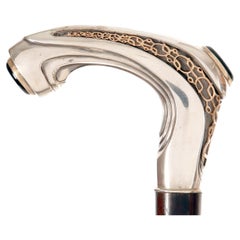
Walking stick, with painted miniature of St. Luke, Giulio Zanetti Italy 1860.
By Giulio Zanetti
Located in Milan, IT
Walking stick: jeweled walking stick, silver knob in the shape of a milord worked in tourchon, with finely engraved and gilded parts. At the top of the knob, a miniature painted in e...
Category
Antique 1850s Italian Collectible Jewelry
Materials
Metal, Silver, Enamel
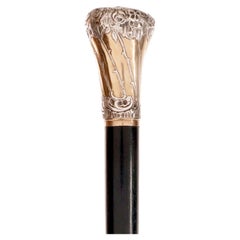
System walking stick with light, England 1920.
Located in Milan, IT
Gadget-System walking stick: a stick with light. Light in plastic knob at the end of a crook handle. Operated by a pivoting ring on the shaft, the light (which can be either yellow o...
Category
Early 20th Century English Antiquities
Materials
Plastic, Wood
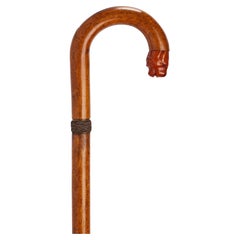
Art Nouveau walking stick, silver guilt knob with leaves, France 1900.
Located in Milan, IT
Art Nouveau walking stick: curved gilded silver knob, depicting leaves in relief. Snakewood shaft. Brass ferrule. France circa 1900.
Category
Early 20th Century French Antiquities
Materials
Silver, Brass
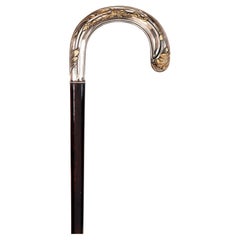
Jewel walking stick, signed Evald Nielsen, Copenhagen, Denmark 1920.
By Evald Nielsen
Located in Milan, IT
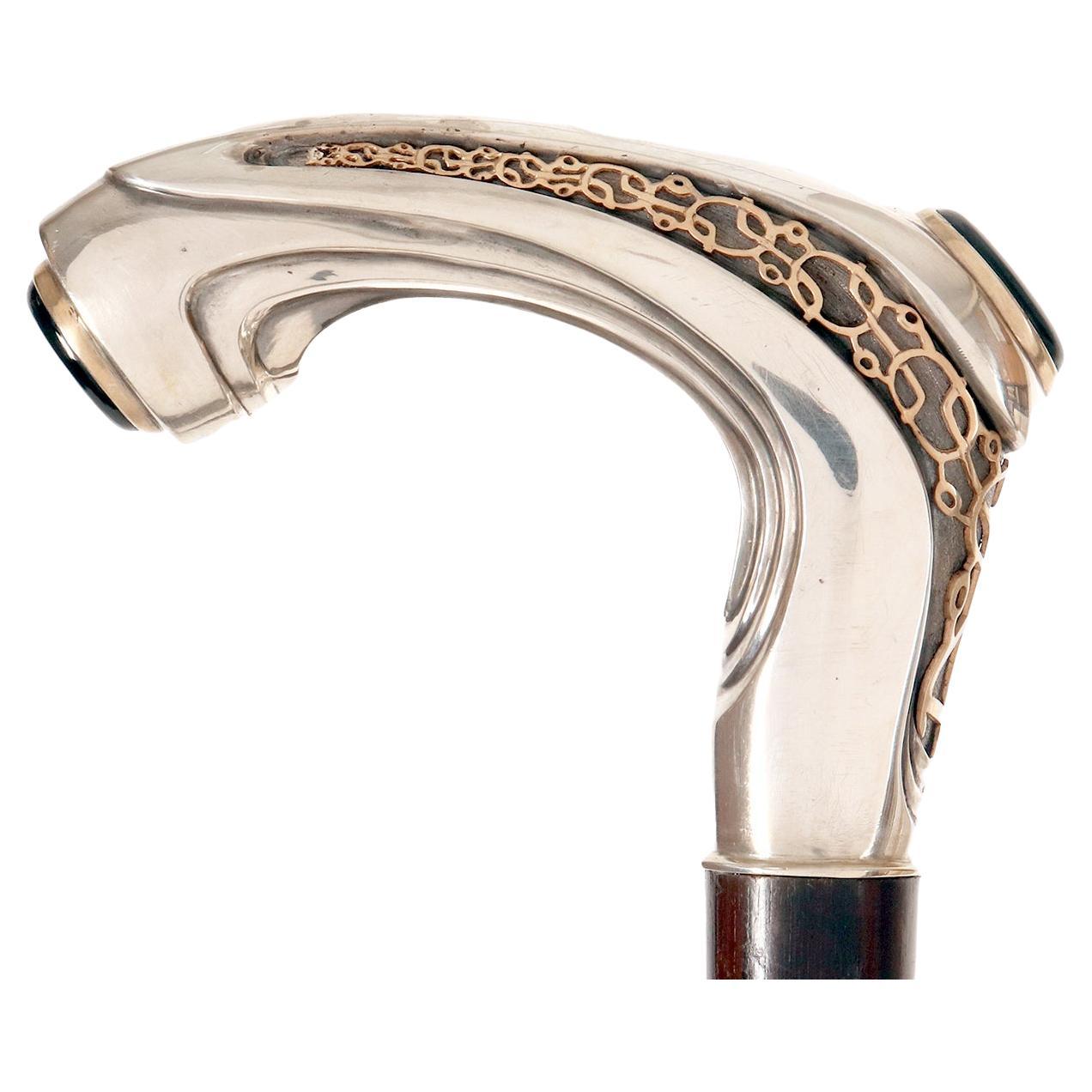
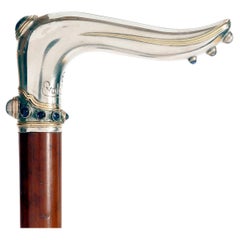
Walking stick: Art Nouveau jewel walking stick, smooth 925/1000 silver knob, pleasant to the touch, L-shaped with gold relief decorations, which delimit curved lines with semi-precio...
Category
Early 20th Century Danish Art Nouveau Collectible Jewelry
Materials
Stone, Metal, Silver
You May Also Like
Antique Walking Stick with Silver Handle
Located in Alessandria, Piemonte
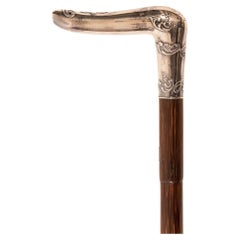
Antique walking stick with silver handle: may be French, from the early twentieth or late nineteenth century.
It's very elegant functional.
ref. O/7571
Category
Early 20th Century French Art Nouveau Sports Equipment and Memorabilia
Materials
Silver
$1,139 Sale Price
20% Off
Antique Victorian Silver Plated Child
s Walking Stick Cane 19th Century
Located in London, GB
This is a beautiful antique Victorian silver plated child's walking stick, circa 1890 in date
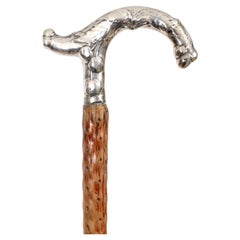
The striking stick features an ornate silver crutch handle having a profusely embossed ...
Category
Antique 1890s English Victorian Sports Equipment and Memorabilia
Materials
Silver Plate
19thC. Walking Stick With Sterling Silver Horn Simulated Handle American Ca 1880
Located in Incline Village, NV
Fine quality hand made craftsmanship to this 19th century Victorian walking stick; hand carved of premium hardwood (possibly pecan), with a continuous twist design. The top is decora...
Category
Antique 1880s American Victorian Sports Equipment and Memorabilia
Materials
Sterling Silver
Antique Walking Stick/Cane, Germany with Around 1910
Located in Berlin, DE
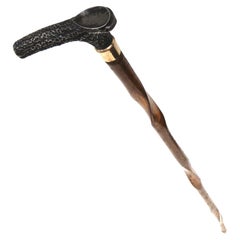
Antique walking stick/cane, Germany with around 1910
Antique historical condition.
Please refer to the detailed photos for the condition
(...
Category
Antique Early 1900s Sports Equipment and Memorabilia
Materials
Silver
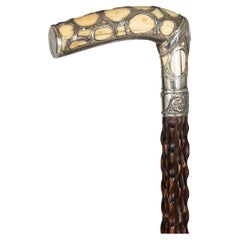
Vintage Carved Hardwood Sterling Silver Overlaid Cane Walking Stick
Located in Shippensburg, PA
CARVED HARDWOOD CANE WITH STERLING SILVER OVERLAID HANDLE
In the Art Nouveau taste, circa 20th century
34 1/2" H x 4 1/8" W (handle)
A finely carved hardwood cane, the tapering sha...
Category
20th Century Art Nouveau Decorative Art
Materials
Sterling Silver
19th Century Timber Flute Walking Stick with Horn Handle
Located in Dublin, IE
exceptional piece is finely hand carved, brass mounted with rich patination and fine grain. The fabulous curved horn handle is raised over a ring turned, elegantly tapering walking ...
Category
Antique 19th Century English Models and Miniatures
Materials
Brass