Items Similar to ANTIQUE ViCTORIAN BRITISH ARMY HORSE MARTINGALE RIDING STIRRUP STAND
STIRRUPS




Video Loading
Want more images or videos?
Request additional images or videos from the seller
1 of 21
ANTIQUE ViCTORIAN BRITISH ARMY HORSE MARTINGALE RIDING STIRRUP STAND
STIRRUPS
$2,678.59
£1,950
€2,284.30
CA$3,679.98
A$4,000.88
CHF 2,121.27
MX$47,960.35
NOK 26,960.23
SEK 24,699.24
DKK 17,072.23
About the Item
Royal House Antiques
Royal House Antiques is delighted to offer for sale this very rare and highly collectable Antique Victoria British Army Horse Martingale riding stirrup stand with stirrups, straps and chains and original Military badges
What a find…. This piece has a trifecta of collectability, its covers the Equestrian angle, the Military and the Antique, I have never seen another suite quite as well presented as this
The stand is Mahogany, it has on either end the British Army badges which read HONI SOIT QUI MAL Y PENSE, please read below for the history
The stand itself has a hidden drawer, once open it includes three sets of straps and one pair of chains, all the stirrups pictured are included in the sale
The condition is
Dimensions
Height:- 21cm
Width:- 40cm
Depth:- 9cm
Please note all measurements are taken at the widest point, if you would like any additional or specific measurements please ask
Honi soit qui mal y is a maxim in the Anglo-Norman language, a dialect of old Norman French spoken by the medieval ruling class in England, meaning "shamed be whoever thinks ill of it", usually translated as "shame on anyone who thinks evil of it” Older translations state this as "Evil be to him who thinks of evil"
Origin
King Edward III founded the Order of the Garter around the time of his claim to the French throne. The traditional year of foundation is usually given as 1348 (when it was formally proclaimed).
According to Polydore Vergil's Anglica Historia, written in 1512–1513, 166 years after the event, the origin was a trivial mishap at a court function. King Edward III was dancing with Joan of Kent, his first cousin and daughter-in-law, at a ball held in Calais to celebrate the fall of the city after the Battle of Crécy. Her garter slipped down to her ankle, causing those around her to laugh at her humiliation. Edward placed the garter around his own leg, saying: "Honi soit qui mal y pense. Tel qui s'en rit aujourd'hui, s'honorera de la porter."[citation needed] ("Shame on anyone who thinks evil of it. Whoever is laughing at this [thing] today will later be proud to wear it."). Scholars typically consider this version to be apocryphal, as there are no contemporary sources for it, and as garters were not worn by women at that time.
While Edward III may outwardly have professed the Order of the Garter to be a revival of the Round Table, it is probable that privately its formation was a move to gain support for his dubious claim to the French throne. The motto of the Order is a denunciation of those who think ill of some specific project, and not a mere pious invocation of evil upon evil-thinkers in general. "Shame be to him who thinks ill of it" was probably directed against anyone who should oppose the King's design on the French Crown.
Sir Gawain and the Green Knight
The motto in Anglo-Norman, a dialect of Old Norman French spoken by the medieval ruling class in England, appears in the late 14th century Middle English poem Sir Gawain and the Green Knight as hony soyt qui mal pence, at the end of the text in the manuscript, albeit in a later hand. The poem is connected to the Order of the Garter. In the poem, a girdle, very similar in its erotic undertones to the garter, plays a prominent role. A rough equivalent of the Order's motto has been identified in Gawain's exclamation corsed worth cowarddyse and couetyse boþe ("cursed be both cowardice and coveting", v. 2374). While the author of the poem remains disputed, there seems to be a connection between two of the top candidates and the Order of the Garter, John of Gaunt, and Enguerrand de Coucy, seventh Sire de Coucy. De Coucy was married to King Edward III's daughter, Isabella, and was admitted to the Order of the Garter on their wedding day.
Heraldic use
Arms of John of Gaunt include the garter and the motto Honi soit qui mal y pense. Picture from a 16th-century depiction In English heraldry, the motto Honi soit qui mal y pense is used either as a stand-alone motto upon a motto scroll, or upon a circular representation of the Garter. Knights and Ladies of the Garter are entitled to encircle the escutcheon of their arms with the garter and motto (e.g. The 1st Duke of Marlborough).The latter usage can also be seen in the royal coat of arms of the United Kingdom, with the motto of the royal arms, Dieu et mon droit, being displayed on a scroll beneath the shield.
As part of the royal arms, the motto is displayed in many public buildings in Britain and colonial era public buildings in various parts of the Commonwealth (such as all Courts of England and Wales). The royal arms (and motto) appear on many British government official documents (e.g. the front of current British passports); on packaging and stationery of companies operating under Royal Warrant (e.g. the banner of The Times, which uses the royal coat of arms of Great Britain circa 1714 to 1800); and are used by other entities so distinguished by the British monarch (e.g. as the official emblem of the Royal Yacht Britannia).
Several military organisations in the Commonwealth incorporate the motto inscribed upon a garter of the order within their badges (or cyphers) and some use Honi soit qui mal y pense as their motto. Corps and regiments using the motto in this fashion are ('*' indicates usage as a motto in addition to inclusion in the badge)
Any questions please feel free to ask before you bid
Condition
Please view the very detailed pictures as they form part of the description around condition
Please note vintage period and original items such as leather seating will always have natural patina in the form of cracking creasing and wear, we recommend regular waxing to ensure no moisture is lost, also hand dyed leather is not recommended to sit in direct sunlight for prolonged periods of time as it will dry out and fade.
- Dimensions:Height: 8.27 in (21 cm)Width: 15.75 in (40 cm)Depth: 3.55 in (9 cm)
- Style:Victorian (Of the Period)
- Materials and Techniques:
- Place of Origin:
- Period:
- Date of Manufacture:19th century
- Condition:Wear consistent with age and use. Minor fading.
- Seller Location:West Sussex, GB
- Reference Number:1stDibs: LU2823346866882
About the Seller
4.7
Platinum Seller
Premium sellers with a 4.7+ rating and 24-hour response times
Established in 2012
1stDibs seller since 2017
2,103 sales on 1stDibs
Typical response time: 1 hour
- ShippingRetrieving quote...Shipping from: West Sussex, United Kingdom
- Return Policy
More From This Seller
View AllANTIQUE ViCTORIAN STERLING SILVER MOUNTED LONDON MADE WALKING STICK COAT RACK
Located in West Sussex, Pulborough
Royal House Antiques
Royal House Antiques is delighted to offer for sale this lovely, English made Sterling Silver mounted Walking stick coat rack
A very good looking well made an...
Category
Antique 19th Century English Victorian Coat Racks and Stands
Materials
Sterling Silver
ANTIQUE ViCTORIAN HARDWOOD
BRASS JAMES JAS SHOOLBRED STICK UMBRELLA STANd
By Jas Shoolbred
Co.
Located in West Sussex, Pulborough
Royal House Antiques
Royal House Antiques is delighted to offer for sale this lovely Antique Victorian Brass & Mahogany fully stamped stick umbrella stand circa 1880
Please note th...
Category
Antique 1880s English High Victorian Umbrella Stands
Materials
Brass
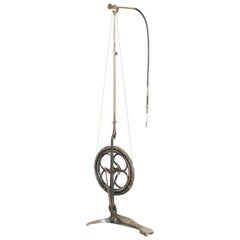
Decorative Antique Victorian 1890 James Beall Morrison Treadle Dentist Drill
Located in West Sussex, Pulborough
We are delighted to offer for sale this stunning original Victorian, circa 1890 James Beall Morrison Treadle Dentist drill
Please note the delivery fee listed is just a guide, it covers within the M25 only for the UK and local Europe only for international.
Dental treadle drill, English manufacture, 1890-1940
The foot pedal is pushed up and down to power this dental drill. It is also known as a ‘treadle drill’. The drill removed areas of tooth decay. These can become infected and painful if untreated. The treadle drill was invented in 1871 by American dentist James Beall Morrison (1829-1917). He also designed dental chairs. His drill was popular with dentists throughout Europe and America. It is an example of the first mechanically powered drill. These sped up dental treatments
This one seems to be in fully working order from what I can see, it’s a real survivor but then that’s not surprising, things made in the Victorian era were made to last
Dimensions
Height:- 144cm
Width:- 52.5cm
Depth:- 38cm
Please note all measurements are taken at the widest point, if you would like any additional or specific measurements please ask
Any questions please feel free to ask before you bid
This item is available for collection from our Pulborough warehouses RH20 1DF. We can have it delivered nationwide to include Scotland Wales and Ireland. Please contact me via email or my contact information...
Category
Antique 1890s English Late Victorian Scientific Instruments
Materials
Steel
SUBLIME LARGE
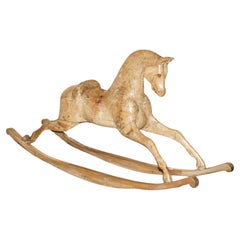
DECORATIVE FORMER MERRY GO ROUND ANTIQUE ViCTORIAN ROCKING HORSE
Located in West Sussex, Pulborough
Royal House Antiques
Royal House Antiques is delighted to offer for sale this absolutely exquisite original antique Victorian circa 1860 merry go round horse...
Category
Antique 1860s High Victorian Animal Sculptures
Materials
Oak
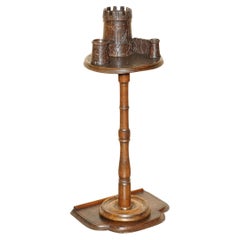
ANTIQUE ViCTORIAN SMOKERS SIDE TABLE DEPICTING CASTLES FOR PIPES TOBACCO CIGARS
Located in West Sussex, Pulborough
Royal House Antiques
Royal House Antiques is delighted to offer for sale this exquisitely crafted, Antique late Victorian Smokers side table depict...
Category
Antique 1890s English Late Victorian Side Tables
Materials
Walnut
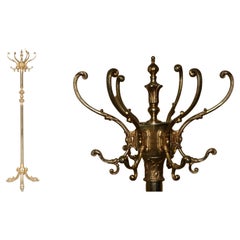
Antique Victorian circa 1880 Brass Coat Hat
Scarf Stand Rare Dolphin Cast Legs
Located in West Sussex, Pulborough
We are delighted to offer for sale this stunning original English circa 1880 brass hat glove and coat stand with rare Dolphin tripod base.
This is a bit of a unicorn in the world ...
Category
Antique 1880s English High Victorian Coat Racks and Stands
Materials
Brass
You May Also Like
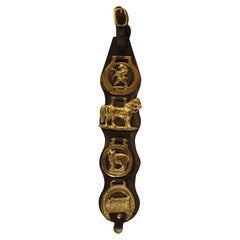
Early 20th Century English 4-Brass Leather Horse Strap
Located in Chapel Hill, NC
Early 20th century English 4-brass leather horse strap. Shaped leather featuring brasses of a Rampant Horse, Dray Horse, Cat, & "Lorna Doone Farm".
18.5" long, 3 3/8" w.
We are a fa...
Category
Early 20th Century English Late Victorian Historical Memorabilia
Materials
Brass
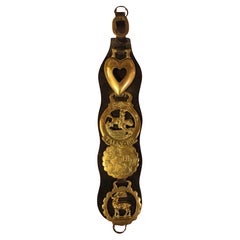
Early 20th Century English 4-Brass Leather Horse Strap
Located in Chapel Hill, NC
Early 20th century English 4-brass leather horse strap. Shaped leather featuring brasses of a Heart, "Tally Ho" hunt scene, engraved Stepping Horse, & Stag.
16.75" long, 3.5" w.
We ...
Category
Early 20th Century English Late Victorian Historical Memorabilia
Materials
Brass
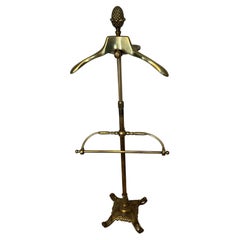
Solid Brass Adjustable Valet With Wallet Pants and Coat Holder and Acorn Detail
Located in Los Angeles, CA
Solid brass valet adjustable from 48" - 60". Holds pants, coat and a place for change, wallet, watch, etc. - a compliment to any dressing area, bathroom or closet... the brass works ...
Category
20th Century Coat Racks and Stands
Materials
Brass
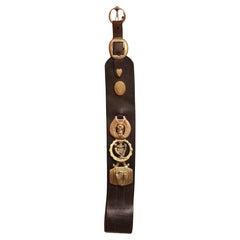
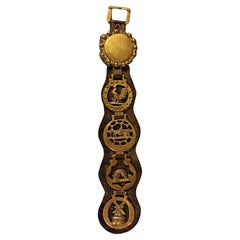
Late 19th Century English Long Leather Horse Strap
Located in Chapel Hill, NC
Late 19th century English long leather horse strap. Straight leather strap with rounded top adorned with heart & oval boss above the horse brasses of a horse bust in horseshoe, the s...
Category
Antique Late 19th Century English Late Victorian Historical Memorabilia
Materials
Brass
Late 19th Century English 5-Brass Leather Horse Strap
Located in Chapel Hill, NC
Late 19th century English 5-brass leather horse strap. Shaped leather featuring brasses of a Sun Boss, Cockeral, Horse & Wagon, Dolphin Fish, & Windmill.
22 1/8" long, 4" w.
We are ...
Category
Antique Late 19th Century English Victorian Historical Memorabilia
Materials
Brass
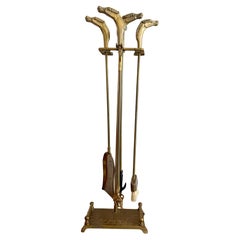
Elegant Brass Equestrian Horse Motif Fireplace Tool Set Maison Jansen Style 1950
By Maison Jansen
Located in Toronto, CA
An elegant set of solid brass fireplace tools in the Maison Jansen style, featuring sculptural horse head handles. This equestrian motif design, dating to the mid-20th century, inclu...
Category
Mid-20th Century Regency Fireplace Tools and Chimney Pots
Materials
Iron, Brass
$482 Sale Price / set
50% Off