Bone Historical Memorabilia
to
1
7
3
10
4
2
8
2,813
923
418
375
197
5
4
4
3
3
10
10
10
1
1
Material: Bone
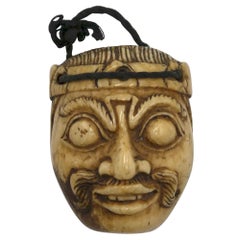
Ancient Netsuke, Late 18th Century
Located in Roma, IT
Beautifyl Ancient bone netsuke created in Japan during Edo period, depicting a A small carved mask-like human face with exaggerated features
Hollowed with string holes and a cord st...
Category
Late 18th Century Japanese Antique Bone Historical Memorabilia
Materials
Ivory
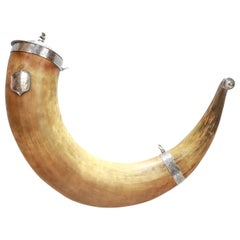
Antique 19c New York City Schillerbund Presentation Horn/Rhyton w Silver Mounts
Located in Philadelphia, PA
A fine 19th Century ceremonial toasting horn or rhyton.
Comprised of large, curved horn set with silver plated mounts.
Fitted with 2 silver-plated collars (each with jumps rings fo...
Category
1860s American Victorian Antique Bone Historical Memorabilia
Materials
Silver
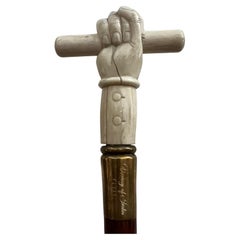
Antique Victorian Ivory Rosewood Walking Cane Stick G.N.C. Viceroy of India
Located in Doha, QA
A very rare unique example of British late Victorian 19th century Ivory and rosewood walking stick/cane.
Carved Ivory clenched fist holding a r...
Category
19th Century English Late Victorian Antique Bone Historical Memorabilia
Materials
Bronze
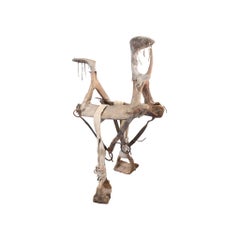
19th Century Native American Crow Woman
s Saddle
By Crow
Located in Coeur d
Alene, ID
Wood and Horn frame wrapped in rawhide with wooden stirrups. Original harness leather stitching complete with buffalo hide seat pad. Brain tanned bands attac...
Category
Mid-19th Century American Native American Antique Bone Historical Memorabilia
Materials
Horn
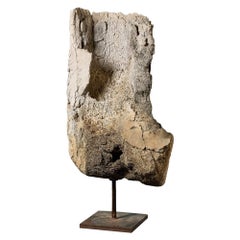
Huge Prehistoric Fossilised Whale Bone
Located in Wormelow, Herefordshire
Standing at over 120cm (47 inches) tall, this rare prehistoric fossilised whale bone is a fascinating sculptural artefact for an interior or live-in museum....
Category
15th Century and Earlier English Antique Bone Historical Memorabilia
Materials
Metal
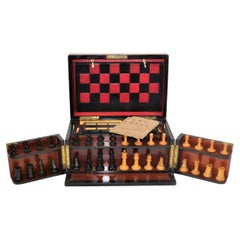
Mid 19th Century English Games Compendium
Located in Chicago, IL
This beautiful maple and ebony compendium box has a hinged lid and a pair of front doors that swing open to reveal the boxwood and ebony hand-carved chess pieces. Each chess piece si...
Category
Late 19th Century English Victorian Antique Bone Historical Memorabilia
Materials
Bone, Boxwood, Ebony, Maple
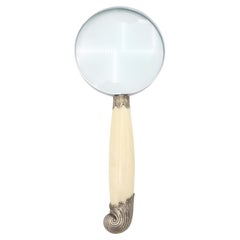
Sterling Silver Bone Magnifying Glass England 1894
Located in New York, NY
A fine sterling silver and bone magnifying glass from England 1894. Stamped with makers marks.
Category
Late 19th Century English Antique Bone Historical Memorabilia
Materials
Silver
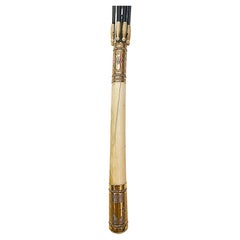
Antique Ladies Parasol Frame, Gold Handle, Band, Bone Handle and Tips
Located in Miami, FL
Antique Ladies Parasol Frame, Gold Handle, Band, Bone Handle and Tips
Offered for sale is a 19th-century ladies' parasol frame with a bone and gold ...
Category
Late 19th Century European Victorian Antique Bone Historical Memorabilia
Materials
Metal, Gold

$236 Sale Price
20% Off
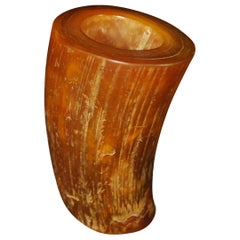
Mongolian Horn Libation Cup, circa 1900
Located in Chicago, IL
Used more for social interactions than everyday imbibing, this Mongolian libation cup accompanied a scholar to social gatherings held by literati known as...
Category
Late 19th Century Mongolian Antique Bone Historical Memorabilia
Materials
Horn
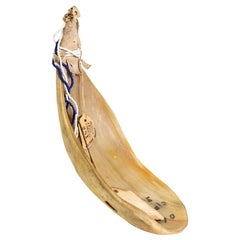
Ute Sheep Horn Spoon, circa 1870
Located in Coeur d
Alene, ID
Ute sheep horn spoon with old tag “Ute, Pine River, Battle, Ex. Cottchall Collection. Collected 1870.” Brain tanned with blue and white beading on top.
Per...
Category
Late 19th Century American Native American Antique Bone Historical Memorabilia
Materials
Horn
Related Items
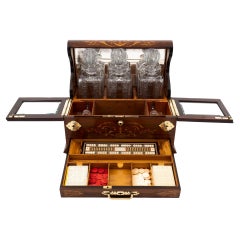
Antique English Victorian Decanter Humidor Games Box Compendium
Located in Northampton, GB
Dating to the late 19th Century Circa 1900
From our Games Boxes collection, we are delighted to offer this Victorian Entertainment Compendium. The Compendiu...
Category
Early 20th Century British Victorian Bone Historical Memorabilia
Materials
Mahogany, Cedar
$5,439
H 14.18 in W 16.15 in D 11.42 in
Rare 19th Century English Tunbridgeware Hair Pin or Slide
Located in Dallas, TX
PRESENTING an EXTREMELY UNIQUE and RARE 19C British Tunbridgeware Hair Pin/Bobbin or Slide.
This slide is unlike any of it’s kind we have seen before, it is a VERY RARE survivor.
From circa 1860 – 80 and made in Tunbridge Wells, England.
Made of walnut with gorgeous marquetry inlay on the entirety of the front with classic Tunbridgeware micro-mosaic all over the front. The rear is walnut.
The marquetry inlay appears to be various different woods, namely, maple, walnut and satinwood.
Would have been worn in a Lady’s hair bun with the micro-mosaic facing forward.
This would have belonged to a VERY ELEGANT LADY in the mid to late 19th Century.
Tunbridge ware is a form of decoratively inlaid woodwork, typically in the form of boxes, that is characteristic of Tonbridge and the spa town of Royal Tunbridge Wells in Kent in the 18th and 19th centuries. The decoration typically consists of a mosaic of many very small pieces of different coloured woods that form a pictorial vignette. Shaped rods and slivers of wood were first carefully glued together, then cut into many thin slices of identical pictorial veneer with a fine saw. Elaborately striped and feathered bandings for framing were pre-formed in a similar fashion.
There is a collection of Tunbridge ware in the Tunbridge Wells Museum and Art Gallery in Tunbridge Wells.
The famous makers of Tunbridge ware were in the Tunbridge Wells area of Kent; their most notable work was from circa 1830-1900.
Early makers of Tunbridge ware, in Tunbridge Wells in the mid-18th century, were the Burrows family, and Fenner and Co. In the 19th century, around 1830, James Burrows invented a technique of creating mosaics from wooden tesserae. Henry Hollamby, apprenticed to the Burrows family, set up on his own in 1842 and became an important manufacturer of Tunbridge ware, employing about 40 people.
Edmund Nye (1797–1863) and his father took over the Fenner company when William Fenner retired in 1840, after 30 years in partnership with him. Thomas Barton (1819–1903), previously apprenticed at the Wise factory, joined the Nyes in 1836, and worked as Nye’s designer; he took over the business in 1863 and continued there until his death.
In Tonbridge (near to Tunbridge Wells), George Wise (1703–1779) is known to have had a business in 1746. It continued with his son Thomas, and Thomas’s nephew George (1779–1869), who took over in 1806. In its early years the company made articles such as workboxes and tea caddies with prints of popular views; later items had pictures created from mosaics. Their workshop in Tonbridge, Wise’s Tunbridge Ware Manufactory, was next to the Big Bridge over the Medway; the building was demolished in 1886 to widen the approach to the bridge.
Tunbridge ware became popular with visitors to the spa town of Tunbridge Wells, who bought them as souvenirs and gifts. Articles included cribbage boards, paperweights, writing slopes, snuffboxes and glove boxes.
At the Great Exhibition of 1851, Tunbridge ware by Edmund Nye, Robert Russell and Henry Hollamby was shown; Edmund Nye received a commendation from the judges for his work. He exhibited a table depicting a mosaic of a ship at sea; 110,800 tesserae were used in making the picture.
The manufacturers of Tunbridge ware were cottage industries, and they were no more than nine in Tunbridge Wells and one in Tonbridge. The number declined in the 1880s; competent craftsmen were hard to find, and public tastes changed. After the death of Thomas Barton in 1903 the only surviving firm was Boyce, Brown and Kemp, which closed in 1927.
Marquetry was an old technique which was continued by Nye and Barton to create images such as birds or butterflies.
‘Green Oak’ as caused by the fungus Chlorociboria aeruginascens.
Stickware and half-square mosaic was invented by James Burrows in about 1830: a bunch of wooden sticks of different colours, each having triangular or diamond-shaped cross section, were tightly glued together; in the case of stickware, the resulting block was dried, then turned to form an article such as the base of a pincushion. For half-square mosaic, thin slices were taken from the composite block, and applied to a surface.
Tesselated mosaic, was a development by James Burrows of half-square mosaic; it was adopted by George Wise and Edmund Nye. Minute tesserae were used to form a wide variety of geometric and pictorial designs.
Many sorts of wood were used for the various colours; about 40 were in regular use. Only natural colors were used; green was provided by “green oak”, produced by the action of fungus on fallen oak. Designs for articles were often taken from designs of Berlin wool work.
Category
Late 19th Century English High Victorian Antique Bone Historical Memorabilia
Materials
Satinwood, Walnut
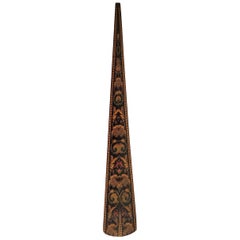
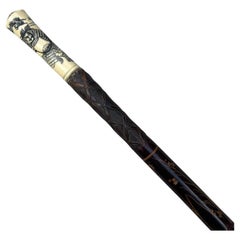
Antique Victorian Vintage Bovine Whale Bone Malacca Wooden Walking Stick Cane
Located in Dublin, Ireland
A Very Fine
Rare Example of a Mariner’s Whale Bone Walking Cane of exceptional quality. First half of the Nineteenth Century, possibly of English origin.
The plain ball grip ...
Category
Early 19th Century Indian Victorian Antique Bone Historical Memorabilia
Materials
Horn
$570
H 35.25 in W 35.25 in D 35.25 in
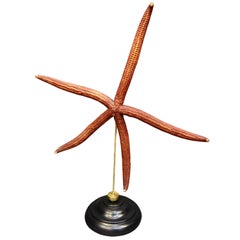
Red Extra-Size Starfish, Océano Pacific, Ophidiaster Ophidianus
By Oceanic Arts
Located in Valladolid, ES
Ophidiaster ophidianus, measures: 495 × 418 × 140 mm, 576 g weight
2018, Océano Pacífico
Red extra-size starfish!
A fantastic specimen of Ophidiaster ophidianus caught in the Solo...
Category
21st Century and Contemporary Pacific Islands Modern Bone Historical Memorabilia
Materials
Other
$855 Sale Price
20% Off
H 19.3 in W 16.15 in D 5.52 in
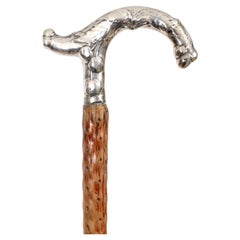
Antique Victorian Silver Plated Child
s Walking Stick Cane 19th Century
Located in London, GB
This is a beautiful antique Victorian silver plated child's walking stick, circa 1890 in date
The striking stick features an ornate silver crutch handle having a profusely embossed ...
Category
1890s English Victorian Antique Bone Historical Memorabilia
Materials
Silver Plate
$344
H 26.78 in W 3.55 in D 0.79 in
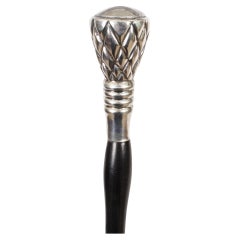
Antique French Silver Walking Cane Stick 19th Century
Located in London, GB
This is a beautiful antique sterling silver pommel walking stick circa 1880 in date
The striking stick features an ornate silver chequered pommel on a gentle tapering ebonized shaft...
Category
1880s English Antique Bone Historical Memorabilia
Materials
Sterling Silver
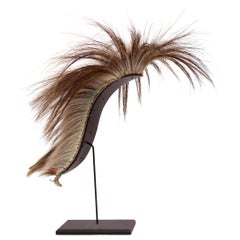
19th C. Plains Native American Roach Headdress, Deer
Porcupine Hair
Located in Denver, CO
This exceptional 19th-century Plains Indian roach headdress is a rare and visually striking example of traditional Native American ceremonial regalia. ...
Category
19th Century American Native American Antique Bone Historical Memorabilia
Materials
Fur
$3,750
H 11.25 in W 4.5 in D 18.75 in
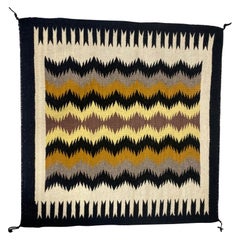
Native American Navajo Handwoven Wool Geometric Rug Mat
Located in Studio City, CA
A nicely woven wool mat/rug in a geometric pattern which the Navajo tribe is famed for. In fantastic vintage condition. Originally acquired some years ago and placed in storage for good keeping. From a large collection of Native American artifacts...
Category
20th Century American Native American Bone Historical Memorabilia
Materials
Wool
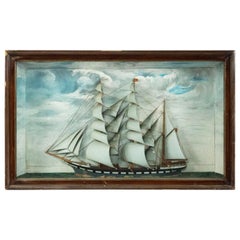
Late 19th Century English Diorama Clipper Ship Shadowbox
Located in Queens, NY
Late 19th century English Victorian painted diorama wall plaque of clipper ship with red flag painted in cloudy sky in mahogany frame.
Category
Late 19th Century British Victorian Antique Bone Historical Memorabilia
Materials
Mahogany
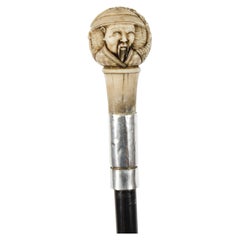
Antique Sword / Walking Stick Cane 19th Century
Located in London, GB
This is a beautiful antique English gentleman's hardwood sword stick with a carved bone pommel and a sterling silver mount, with hallmarks for Birmingham 1896 and makers marks for th...
Category
1890s Antique Bone Historical Memorabilia
Materials
Silver
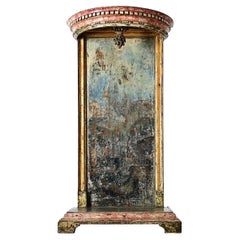
18th Century Portuguese Altar
Located in Baton Rouge, LA
An exquisite work of 18th century Portuguese craftsmanship, this carved, painted, and gilded wood tabletop altar-niche would have been used to stage religious artifacts or statuary f...
Category
18th Century Portuguese Baroque Antique Bone Historical Memorabilia
Materials
Gold
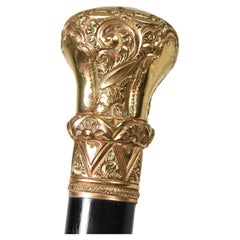
Antique Gold Filled Walking Stick Cane
Located in Toledo, OH
Antique black lacquer ebonized wood walking stick cane with gold filled ornately decorated top with monogram. 36 3/4" long. Top is 2 1/2" x 1 1/2".
Category
Early 20th Century Bone Historical Memorabilia
Materials
Wood
Previously Available Items
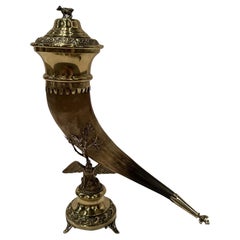
19th Century Horn
Brass Covered Trophy Cup Accessory
Located in Hopewell, NJ
Stunning 19th century horn and brass covered trophy cup having incredible details such as eagle at the base and cow on the lid.
Category
19th Century English Antique Bone Historical Memorabilia
Materials
Brass
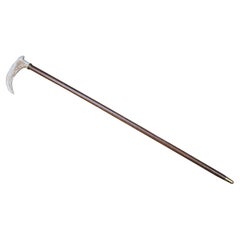
Oak Elk Stag Horn Antler Handle Walking Stick Cane Scottish Thistle 36"
Located in Dayton, OH
Vintage oak wood walking stick / cane with brass ferrule and collar, topped with a naturally curved L shaped stag horn / antler handle, etched along the top with the image of a Scott...
Category
20th Century Bone Historical Memorabilia
Materials
Horn, Oak
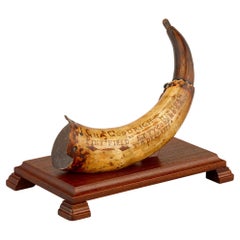
Revolutionary War Powder Horn
Located in New Orleans, LA
Powder Horn
Engraving by Charles Goodrich
1776
Powder horns stand among the rarest and most treasured forms of American folk art. Unlike commercial objects, these deeply personal items were crafted by soldiers, sailors and explorers for practical use during their journeys. Through scrimshaw—an intricate technique of engraving bone or horn with a simple jackknife and filling the crevices with available pigments like soot or ash—these individuals left tangible marks of their hopes, dreams and experiences. This exceptional American Revolutionary War powder horn belonged to Charles Goodrich (1720-1816), a significant figure in early Pittsfield, Massachusetts history. The horn displays distinctive period characteristics with the inscription "PITTSFIELD" clearly visible on its amber-colored surface.
Charles Goodrich, born in Wethersfield, Connecticut in 1720, became a prominent civic leader in Pittsfield. He built the first house in the settlement in 1754 and served in various official roles, including Justice of the Peace and town representative to Boston. While Goodrich's name may not appear prominently in history textbooks, historical documents—particularly his September 3, 1776 petition to the Massachusetts Assembly—reveal his compelling story. The petition shows that Goodrich faced accusations of being a British sympathizer and draft evader. According to his account, he was targeted for his public office, physically assaulted by a man named James Morey and subsequently fined by a local committee. Goodrich maintained that he merely defended himself when attacked and claimed ignorance of requirements to either serve as a drafted soldier or hire a substitute—accusations that branded him unpatriotic during the revolutionary fervor.
The Massachusetts Council's concurrence with Goodrich's petition likely inspired his subsequent military service. His powder horn, bearing the inscription of Pittsfield, accompanied him to Fort Ticonderoga, where Simonds' Regiment of Militia (2nd Berkshire County Regiment) was stationed during the difficult winter of 1776-1777. Fort Ticonderoga, a strategic stronghold in upstate New York, had been seized from the British in May 1775 by Ethan Allen and Benedict Arnold. By the time of Goodrich's service, American forces occupied the fort while preparing for an expected British counterattack. In August 1777, Goodrich and Simonds' Regiment participated in the Battle of Bennington—a decisive engagement where Patriot forces under General John Stark defeated British and Hessian troops. This victory significantly weakened General John Burgoyne's invasion force, contributing to his surrender at Saratoga in October 1777—a pivotal turning point that helped secure French support for the American cause.
Powder horns captivate elite collectors and major museums alike. The Metropolitan Museum of Art recognized their significance by dedicating an entire exhibition to American Engraved Powder Horns...
Category
18th Century American American Colonial Antique Bone Historical Memorabilia
Materials
Horn
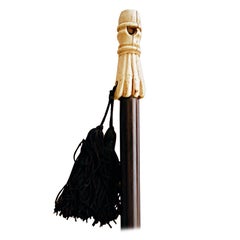
Antique Carved Bone Hand Whistle Walking Stick Cane
Located in Miami, FL
Antique Carved Bone Hand Whistle Walking Stick Cane.
Offered for sale is an antique bone-handled walking stick that has a carved hand for the ha...
Category
Early 20th Century Bone Historical Memorabilia
Materials
Bone, Wood
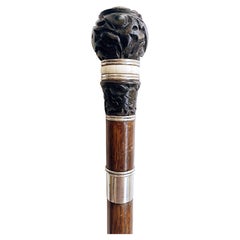
Antique Japanese Carved, Silver, Bone Dagger Walking Stick
Located in Miami, FL
Antique Japanese Carved, Silver, Bone Dagger Walking Stick
Offered for sale is an antique carved wood-handled walking stick that has a dagger concealed...
Category
Late 19th Century Japanese Antique Bone Historical Memorabilia
Materials
Silver
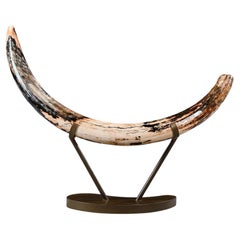
Superb Wooly Mammoth Tusk on Custom Bronzed Base
Located in Benington, Herts
A rare and fine example of a Wooly Mammoth Tusk set upon a custom made bronzed base.
Late Pleistocene Period circa 35,000 years ago
Superb example...
Category
15th Century and Earlier Antique Bone Historical Memorabilia
Materials
Bone
Watson Collection of 97 Fishing Priests
Located in Lymington, Hampshire
This collection comprises 97 varied antique fishing ‘priests’, or despatchers, diligently collected by Dave Watson over several decades, made from a var...
Category
19th Century Antique Bone Historical Memorabilia
Materials
Bone, Ivory, Wood, Ash, Boxwood, Ebony, Rosewood, Yew
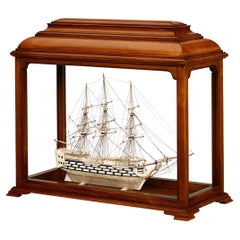
French Prisoner-of-war Bone Ship Model, HMS Victory
Located in New Orleans, LA
An incredible and extremely rare artifact of world history, this monumental model of the HMS Victory was created during the Napoléonic Wars by a French pri...
Category
18th Century French Antique Bone Historical Memorabilia
Materials
Bone, Horn
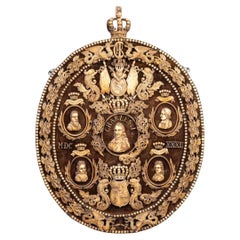
A Dieppe prisoner of war portrait plaque of Charles I and his advisors
Located in Lymington, Hampshire
This prisoner of war bone wall panel has a central roundel depicting Charles I and four of his closest advisors, William Laud, Archbishop of Canterbury, George Villers, Duke of Buckingham...
Category
1850s English Antique Bone Historical Memorabilia
Materials
Bone, Velvet
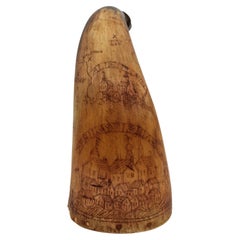
Late 18th to Early 19th Century Pennsylvania Etched Powder Horn
Located in Chapel Hill, NC
A Pennsylvania etched powder horn, late 18th to early 19th century. Showing a view of Philadelphia and of Allentown with map to various towns wrapping around the horn. End probably r...
Category
Late 18th Century Antique Bone Historical Memorabilia
Materials
Horn
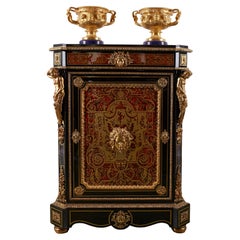
Cabinet 19th Century Styl Boulle Blue Turtle Shell
Located in Warsaw, PL
French antique Boulle cabinet.
Wood is decorated with inlaid brass and turtle, bronze details outside.
Inside the cabinet there are two shelves.
Cabinet top is marble.
Perfect co...
Category
Mid-19th Century French Napoleon III Antique Bone Historical Memorabilia
Materials
Bronze
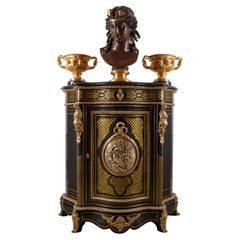
Cabinet 19th Century, Napoleon III Period, Style Boulle
Located in Warsaw, PL
This wooden cabinet is designed in the Boulle style. This style was very popular around the time of Napoleon III. The characteristic of this style is the use of small pieces of wood in furniture, inlaid designs with many different materials: precious wood, precious stones, enamel, ivory, seashells, metal, marble etc. In addition, to express the royal style, the "Boulle" style also uses a large amount of gilded copper on the furniture, such as tiger claw decoration, mirror border decoration, leaf decoration, etc.
The main elementsof this cabinet is ebony and turtle shell, with decorative details and gilded legs. This is a pretty prominent highlight in the overall black and gold color scheme. Moreover, the head of a woman is in the middle of the cabinet with waves in her hair and grape vines could be representing the Greek goddes of spring Spring. Surrounding the head are beautiful acanthus motifs incorporated in every layer and surface of the cabinet. Symmetricallly on the left and right side of the head are two identical faces, with one being the lock of the cabinet where key goes. The four corners of the cabinet have blooming carnations to create a feeling of spring coming. The details are collaged, decorated with golden bronze leaves in a classic French style. On the edges of the cabinet are sculptures of two women wrapped around with cloth and leaves. Through it, the author highlights the beauty of the woman's status in the past. On the side panels of the cabinet is placed a gilded face of a man with wings...
Category
1850s French Napoleon III Antique Bone Historical Memorabilia
Materials
Tortoise Shell, Wood
Still Thinking About These?
All Recently ViewedMore Ways To Browse
General Patton
Gettysburg Furniture
Glass Mushroom Ornament
Hand Crank Sewing Machine
Keep Em Flying
Memorabilia Queen Elizabeth Ii
Nyc Memorabilia
Pool Shark
Vintage Film Case
Vintage Glass Ball Ornaments
Voting Box
Ww2 Binoculars
1960s Christmas Ornament
Antique Iron Plow
Antique Police Memorabilia
Antique Stamp Machines
Antique Voting Box
Audrey Hepburn Personal Collection