Items Similar to Pair Confederate Civil War Cast Iron Cannonballs with Century Ormolu Mounts
Want more images or videos?
Request additional images or videos from the seller
1 of 15
Pair Confederate Civil War Cast Iron Cannonballs with Century Ormolu Mounts
$2,850per set
£2,176.21per set
€2,477.69per set
CA$4,001.85per set
A$4,374.81per set
CHF 2,314.47per set
MX$52,351.58per set
NOK 29,448.29per set
SEK 26,956.93per set
DKK 18,506.80per set
About the Item
Pair of Confederate Civil War Cast Iron Cannonballs with Century Ormolu Mounts,* United States, Circa 1861–1863
*This offering consists of four pieces, two cannonballs, and two period ormolu display rings.
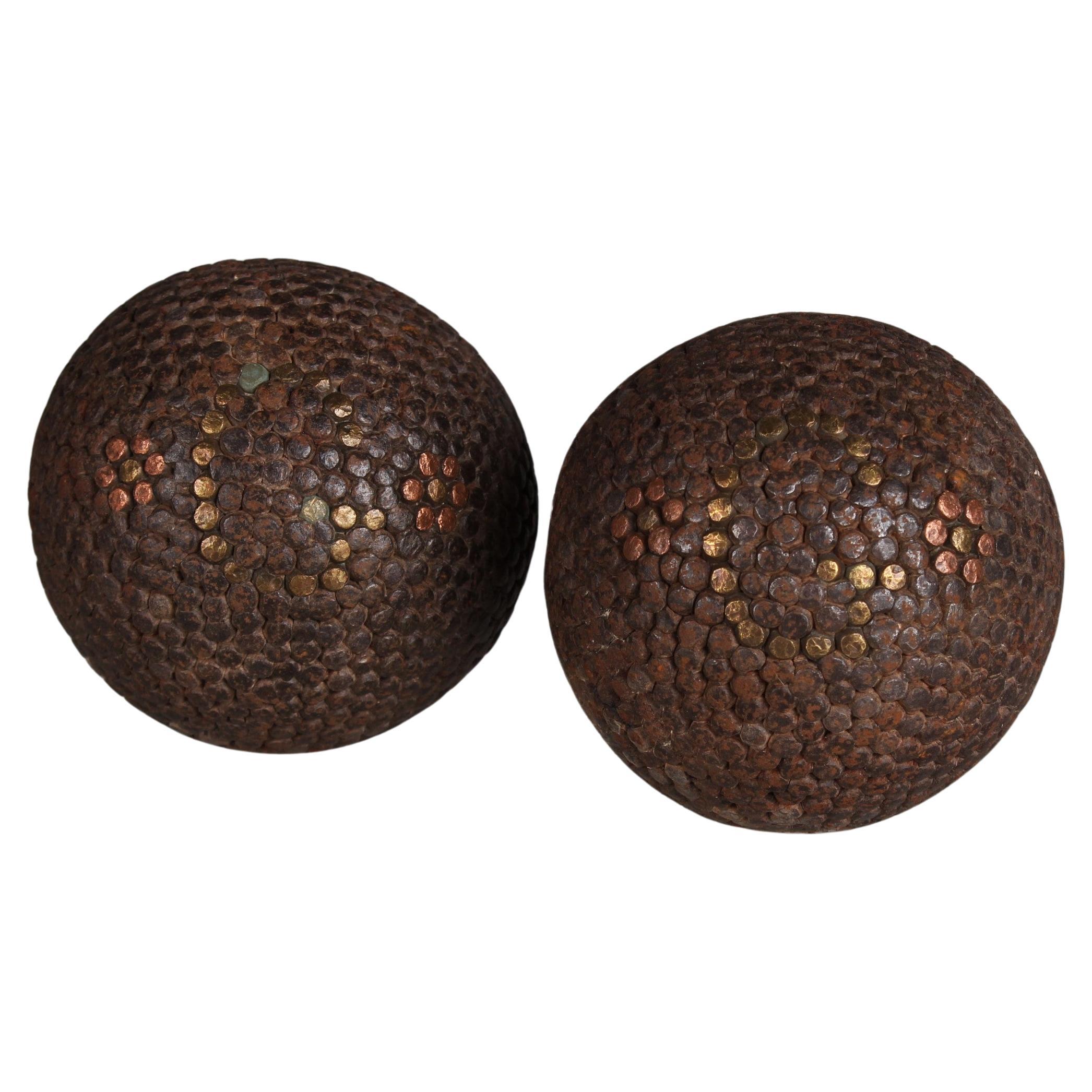
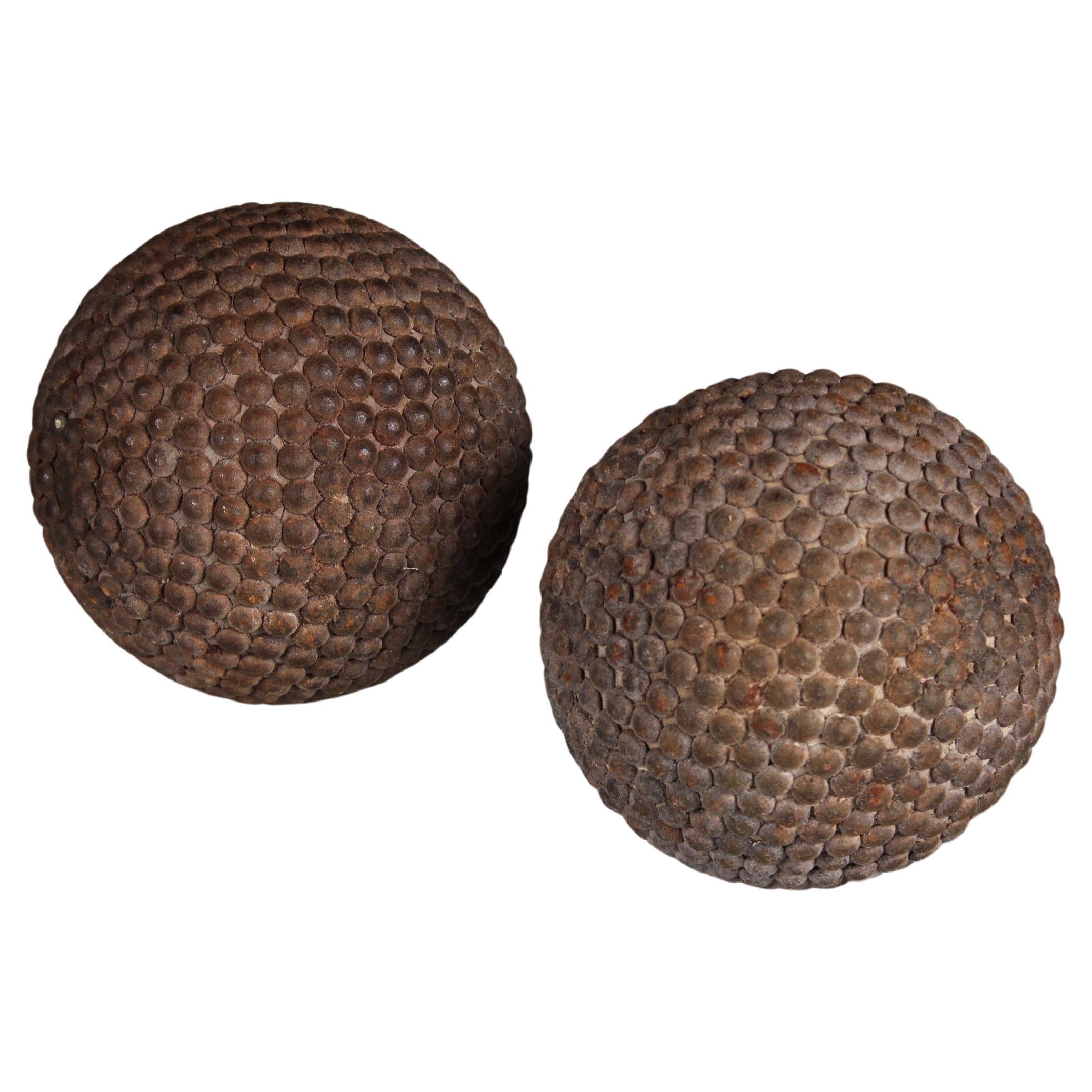
An evocative pair of solid cast iron cannonballs, each weighing approximately 8 pounds (8.02 and 8.05 lbs respectively), likely used in a 6-pounder field gun during the early years of the American Civil War. These are consistent with Confederate ordnance in their rougher cast surface, visible mold marks, and absence of lathe-turning—characteristics typical of munitions produced in Southern foundries operating under wartime material constraints.
Each sphere measures approximately 3.75 inches in diameter and rests atop a finely detailed 19th-century French ormolu ring mount, repurposed here as elegant display bases. The gilt bronze bases feature a textured diagonal rope motif with beaded accents—an unexpectedly refined contrast to the industrial simplicity of the iron above, making this pair ideal for collectors of Civil War militaria or curated historical interiors.
Unlike Union-manufactured ammunition, which was often precisely machined and finished, Confederate cannonballs were frequently hand-cast in rudimentary molds, often without turning or final polishing. The surface pitting, dark oxidation, and casting seams on these examples reinforce their authenticity and period manufacture.
Dimensions:
Each cannonball is approximately 3.75” in diameter.
Overall Height on Base: Approx. 4.25”
Weight:
8.02 lbs and 8.05 lbs
Provenance:
Private Southern collection
Condition:
Oxidation consistent with age; stable, authentic surfaces
- Dimensions:Height: 4.25 in (10.8 cm)Diameter: 3.75 in (9.53 cm)
- Sold As:Set of 4
- Style:Industrial (Of the Period)
- Materials and Techniques:
- Place of Origin:
- Period:
- Date of Manufacture:1860-1863
- Condition:Additions or alterations made to the original: The pair of period ormolu rings are included and are later additions that elevate the relics perfectly. Wear consistent with age and use. *This offering Consists of four pieces, two cannon balls, and two period ormolu display rings.
- Seller Location:West Palm Beach, FL
- Reference Number:Seller: T33591stDibs: LU2592345428652
About the Seller
5.0
Platinum Seller
Premium sellers with a 4.7+ rating and 24-hour response times
Established in 1996
1stDibs seller since 2017
1,471 sales on 1stDibs
Typical response time: <1 hour
- ShippingRetrieving quote...Shipping from: West Palm Beach, FL
- Return Policy
More From This Seller
View AllGraduated (9"
7") Pair of Artisan Bronze Garden Balls / Sculptural Spheres
Located in West Palm Beach, FL
Graduated (9" & 7") Pair of Artisan Bronze Garden Balls/Sculptural Spheres, Late 20th Century
A striking graduated set of two hand-crafted bronze spheres, one measuring 9 inches in ...
Category
Late 20th Century Modern Figurative Sculptures
Materials
Bronze
Pair of Modern Artisan Bronze Garden 8" Balls/Spheres, Late 20th Century
Located in West Palm Beach, FL
Pair of Modern Artisan Bronze 8" Garden Balls/Spheres, Late 20th Century
A sculptural pair of hand-crafted bronze spheres, each measuring 8 inches in diameter and weighing approxima...
Category
Late 20th Century Modern Figurative Sculptures
Materials
Bronze
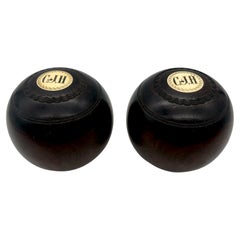
Pair of 19th Century Scottish Monogramed Hardwood Lawn Balls
Located in West Palm Beach, FL
Pair of 19th Century Scottish Monogrammed Hardwood Lawn Balls
A pair of 19th-century Scottish monogrammed hardwood lawn balls. Each ball, measuring 5 inches in diameter, is crafted...
Category
Antique Late 19th Century Scottish High Victorian Sports Equipment and M...
Materials
Hardwood
$416 Sale Price / set
20% Off
English Brass
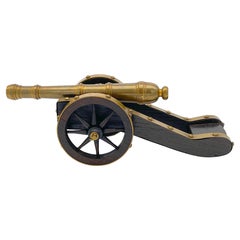
Wood Desk Top Model of a Signal Cannon
Located in West Palm Beach, FL
English Brass & Wood Desk Top Model of a Signal Cannon
England, circa 1950s
An English brass & wood desk top model of a signal cannon, a mid 20th century example. This delightful...
Category
20th Century English Models and Miniatures
Materials
Brass
$636 Sale Price
20% Off
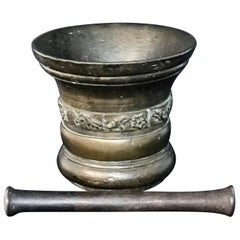
Substantial Antique Italian Bronze Mortar and Pestle
Located in West Palm Beach, FL
Substantial antique Italian bronze mortar and pestle, finely cast with shell and floral band, complete with 12" x 1.5" D pestle. The base of t...
Category
Antique 18th Century Italian Baroque Scientific Instruments
Materials
Bronze
$1,020 Sale Price / set
20% Off
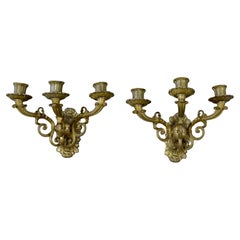
Pair of French Empire Orb Bronze Three-Light Wall Sconces
Located in West Palm Beach, FL
Pair of French Empire Orb Bronze Three-Light Wall Sconces
France, Early 19th Century
This exquisite pair of French Empire wall sconces embodies the elegance and workmanship of the...
Category
Antique 19th Century French Empire Candle Sconces
Materials
Bronze
You May Also Like
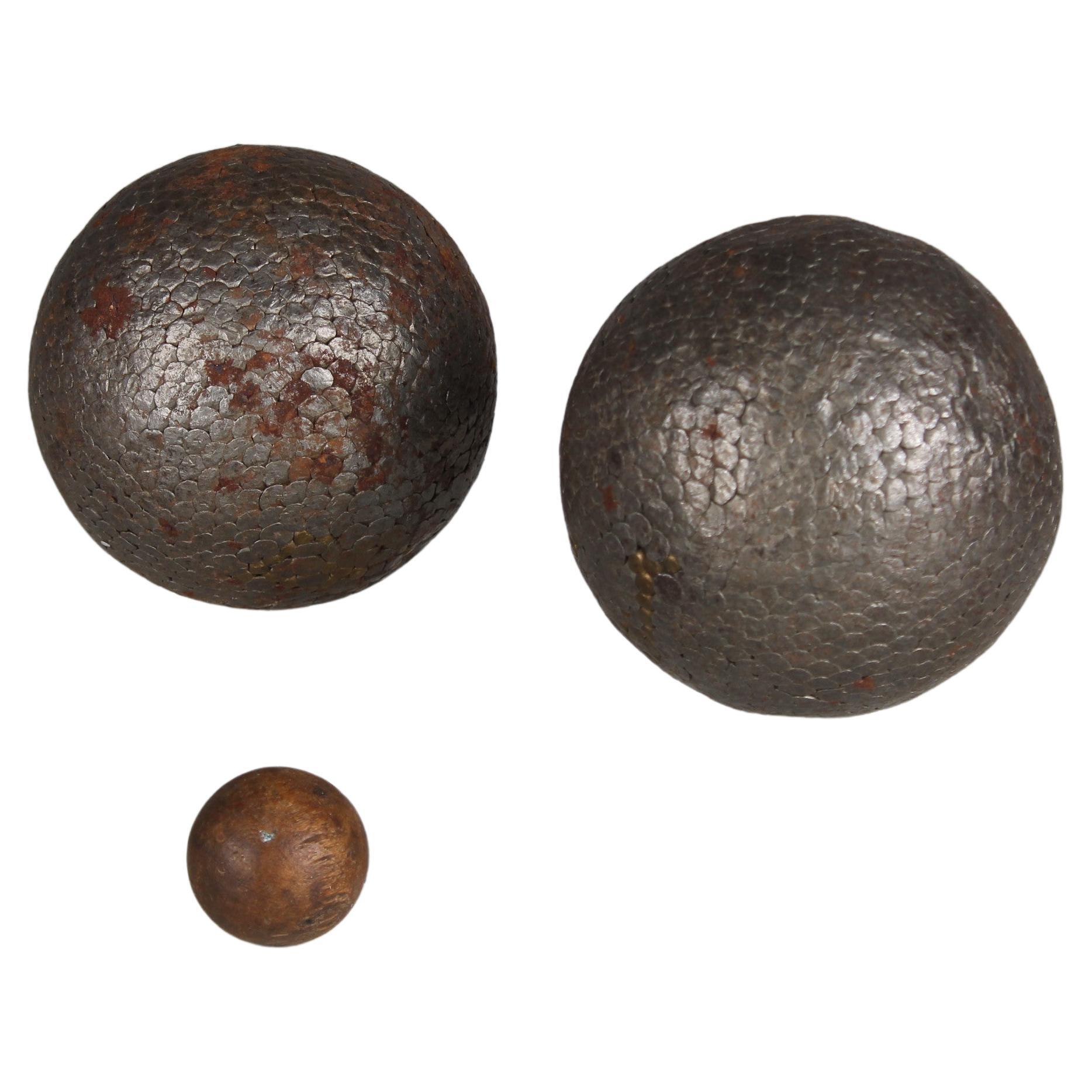
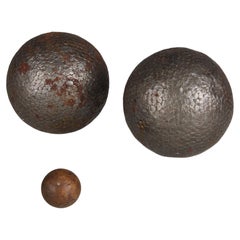
Pair Of Antique Boule Balls, Pétanque, 1880s, France, Craftsmanship
Located in Greven, DE
Beautiful, unique Boule ball pair and one target ball, France, late 19th Century.
In the 19th century, the manufacture of boules balls underwent significant development in France as...
Category
Antique Late 19th Century French Late Victorian Antiquities
Materials
Metal
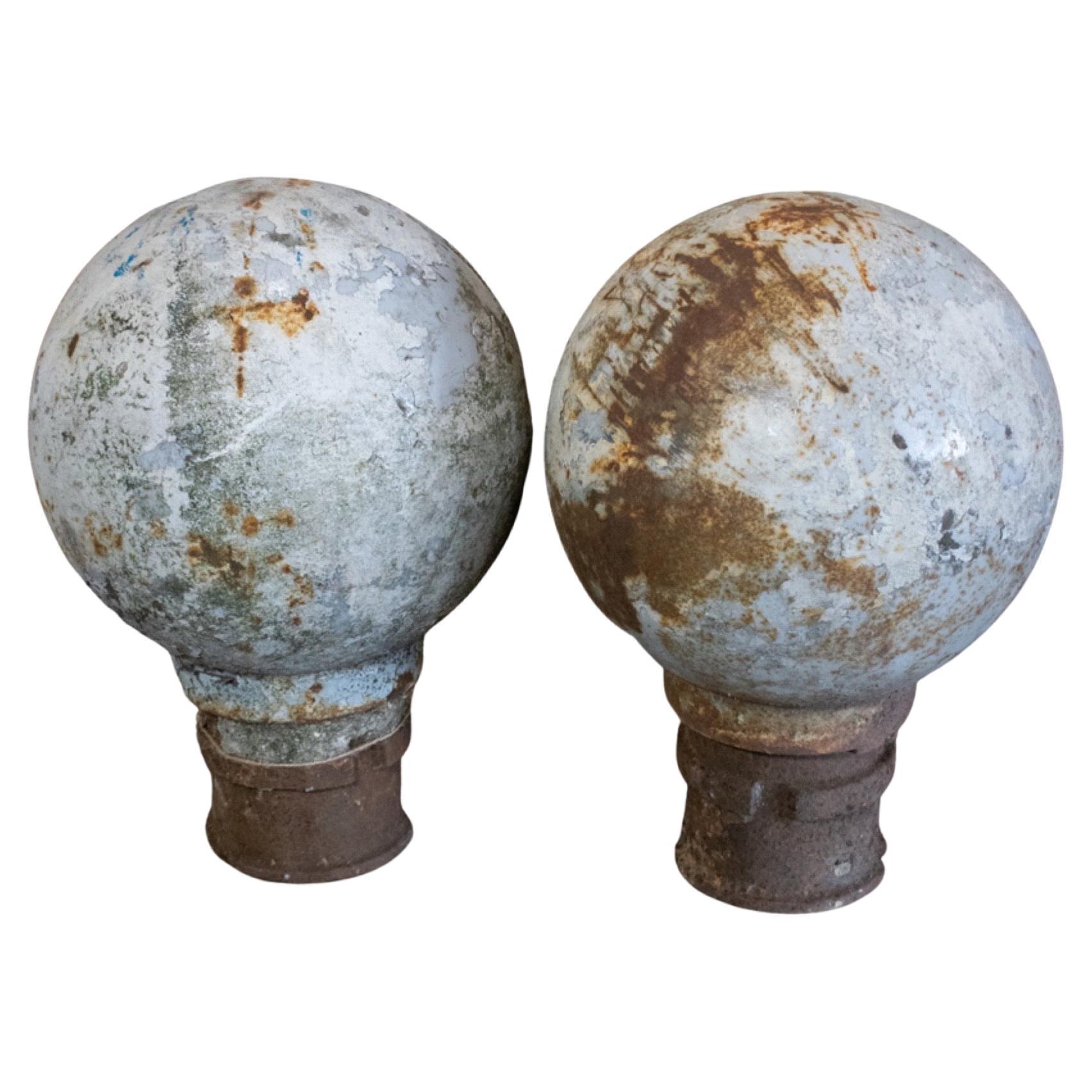
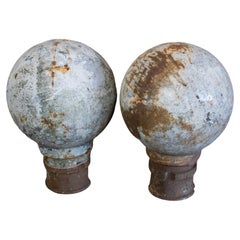
French Iron Ball Finials
Located in Dallas, TX
Pair of rustic round ball finials. Originates from France. Circa, 1880's. Sold as a set of two.
Category
Antique Mid-18th Century Architectural Elements
Materials
Iron
$3,640 / set
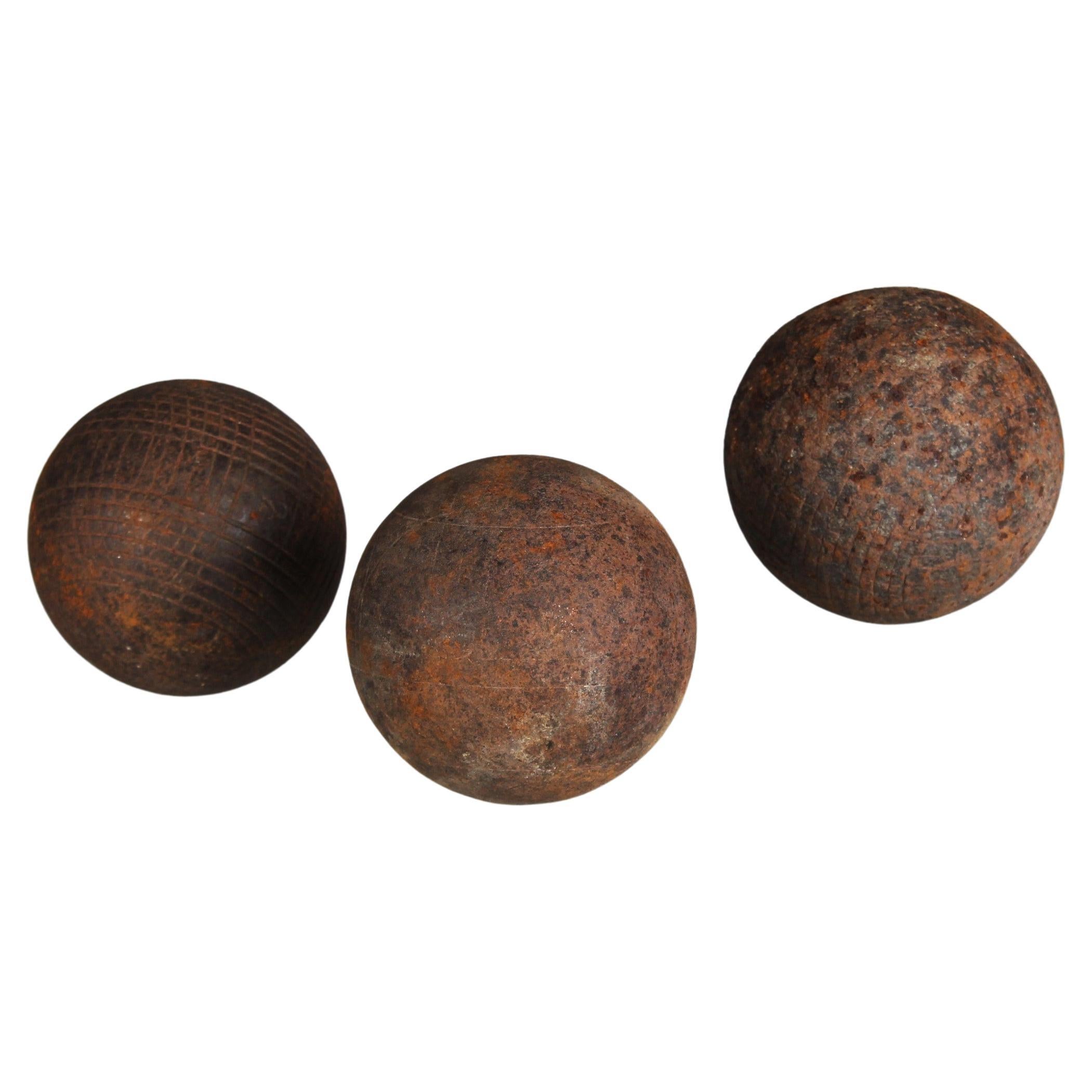
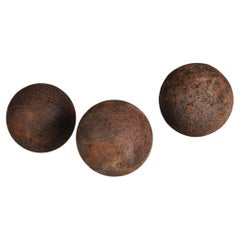
Antique Boule Set, Boule Balls, Pétanque, 1880s, France, Craftsmanship
Located in Greven, DE
Beautiful, unique Boule set of three Boule balls and one target ball, France, late 19th Century.
Diameter 8,5 cm.
Fantastic colour and patina!
In the 19th century, antique metal boules balls experienced a renaissance that took the game of boules to a new level.
These ornately crafted balls were not only instruments of the game, but also symbols of elegance and sophistication in leisure activities.
Made from high-quality metals such as steel or brass, Boule balls were forged and polished by skilled craftsmen to ensure a smooth and even surface.
The antique boules...
Category
Antique Late 19th Century French Late Victorian Antiquities
Materials
Metal
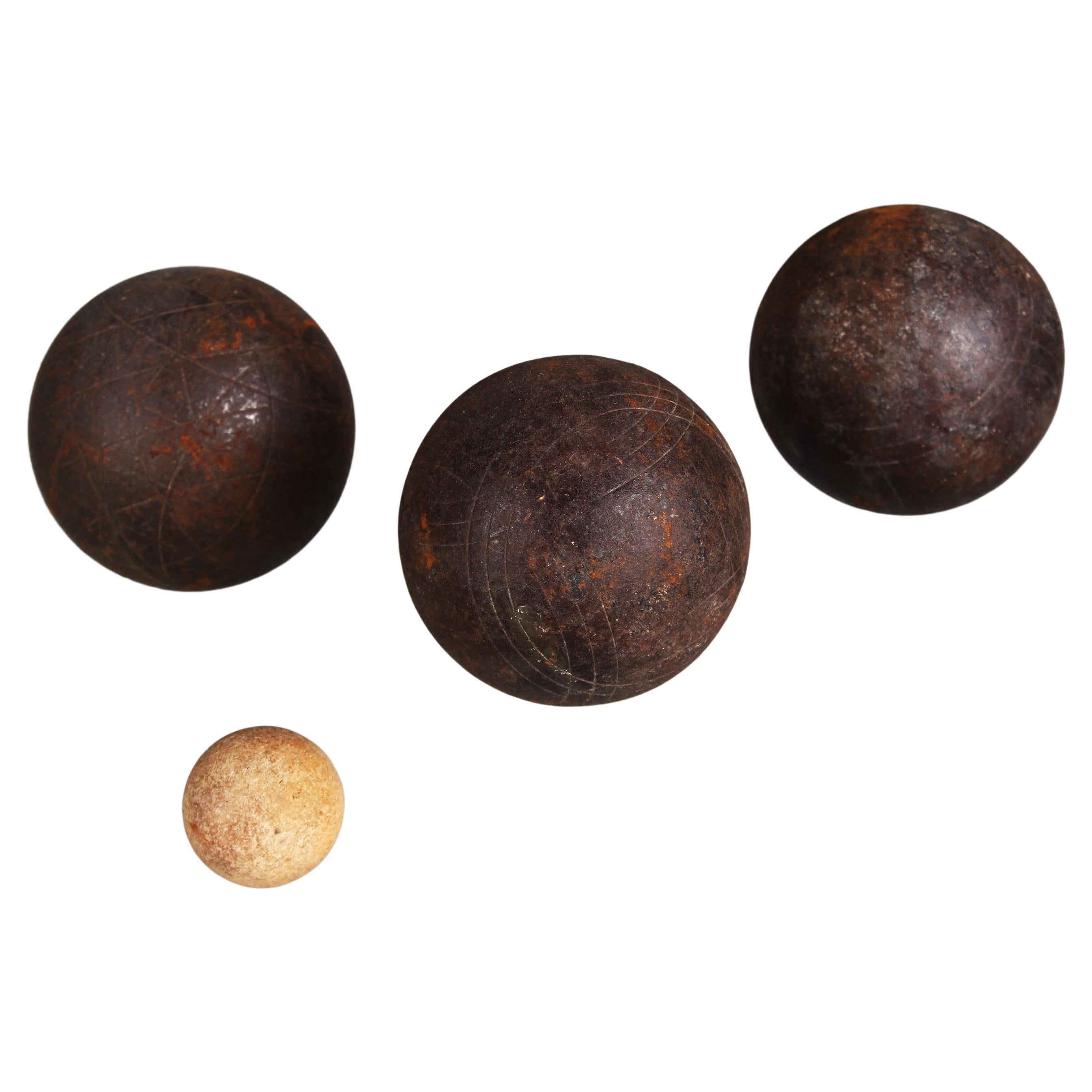
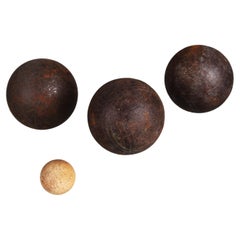
Antique Boule Set, Boule Balls, Pétanque, 1880s, France, Craftsmanship
Located in Greven, DE
Beautiful, unique Boule set of three Boule balls and one target ball, France, late 19th Century.
Fantastic colour and patina!
In the 19th century, antique metal boules balls experienced a renaissance that took the game of boules to a new level.
These ornately crafted balls were not only instruments of the game, but also symbols of elegance and sophistication in leisure activities.
Made from high-quality metals such as steel or brass, Boule balls were forged and polished by skilled craftsmen to ensure a smooth and even surface.
The antique boules...
Category
Antique Late 19th Century French Late Victorian Antiquities
Materials
Metal
Pair Of Antique Boule Balls "G", Pétanque, 1880s, France, Craftsmanship
Located in Greven, DE
Beautiful, unique Boule ball pair, France, late 19th Century.
In the 19th century, the manufacture of boules balls underwent significant development in France as the game of boules,...
Category
Antique Late 19th Century French Late Victorian Antiquities
Materials
Olive
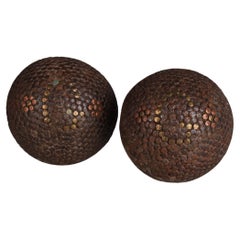
Pair Of Antique Boule Balls, Pétanque, 1880s, France, Craftsmanship
Located in Greven, DE
Beautiful, unique Boule ball pair, France, late 19th Century.
Diameter 9,5 cm.
In the 19th century, the manufacture of boules balls underwent significant development in France as the game of boules, particularly the pétanque variant, gained in popularity. The manufacture of boules balls during this period was a manual process that required expertise, precision and love to detail.
In the late 19th and early 20th centuries, particularly in rural areas of France and other Mediterranean regions, olive wood was a commonly used source of material for making boules balls. This was not only due to the availability of the material, but also to the outstanding properties of olive wood, which was characterized by hardness, strength and a rich grain.
First, the olive wood was carefully selected and shaped into raw balls, which were then sanded to the desired size and shape. The nails were then hammered into the balls one by one, making sure that they were evenly distributed and firmly anchored. Finally, the spheres were polished and coated with a protective varnish to enhance their natural beauty and protect them from the elements.
The use of nails to decorate and reinforce olive wood boules was a traditional practice that not only gave the ball a rustic aesthetic, but also improved its durability and contributed to customization. Many balls were made according to the specific requirements and preferences of the players. Nails were driven at regular intervals around the ball, with each nail hole precisely placed so as not to affect the balance and weight distribution of the ball. These nails not only served as a decorative element, but also helped to strengthen the structure of the ball and make it more resistant to the hard knocks and wear and tear during play. Individual engravings or decorations were often applied to the balls to make them unique and identify the player.
Antique boules...
Category
Antique Late 19th Century French Late Victorian Antiquities
Materials
Olive
More Ways To Browse
Antique Lathes
Texas Republic
Vintage Oil Can
Wine Memorabilia
Antique Barber Collectibles
Antique Ford Model T
Antique Glass Christmas Tree Toppers
Antique Magic Lantern Glass Slide
Bell Telephone System
Judges Gavel
Magic Lantern Slides
Mercury Glass Tree Topper
Portable Television
Rare Antique Christmas Ornaments
Singer On Sale
Tinsel Tree Antique
Vintage Belsnickle
Vintage Christmas Tree Toppers