Items Similar to Sword and its scabbard-Diplomatic gift from Negus Menelik II Emperor of Ethiopia
Want more images or videos?
Request additional images or videos from the seller
1 of 10
Sword and its scabbard-Diplomatic gift from Negus Menelik II Emperor of Ethiopia
$27,477.51
£20,535.32
€23,000
CA$37,906.61
A$41,519.49
CHF 21,860.01
MX$495,521.26
NOK 278,586.28
SEK 254,669.85
DKK 175,309.29
About the Item
This prestige weapon was commissioned by Emperor Menelik II of Ethiopia as a diplomatic gift for the renowned French Armenian merchant and honorary French envoy Matig Kevorkoff, a prominent tobacco magnate based in Ethiopia. Kevorkoff, who had first settled in Harar before establishing himself in Addis Ababa—the capital founded by Menelik II—played a significant role in fostering trade and diplomacy between France and Ethiopia.
True to Menelik II's iconic imagery, the blade features an engraved profile of the emperor, faithful to his official portraits. Below a decorative plant frieze on the curved blade, an inscription in Ge'ez, the liturgical language of the Ethiopian and Eritrean Orthodox Church, reads:
"Ethiopia stretches her hands to God."
The blade also bears a European count's crown and the inscription acknowledging its receiver:
"M. KÉVORKOFF
CO HARRAR."
The weapon's handle, crafted from horn, is adorned with a Maria Theresa thaler, adding to its intricate design and cultural significance.
Menelik II: A Brief Biography
Menelik II (August 17, 1844 – December 12, 1913) was one of Ethiopia’s greatest rulers. Initially king of Shewa (1865–1889), he ascended to the imperial throne in 1889, expanding the Ethiopian Empire nearly to its current borders. His reign is celebrated for modernizing Ethiopia and securing its sovereignty by defeating an Italian invasion at the Battle of Adwa in 1896.
Born to Haile Malakot, the Negus (king) of Shewa, and a court servant, Menelik claimed descent from the Solomonid dynasty through his paternal lineage. As a young man, he was captured by Emperor Tewodros II and held in Amba Magdala for nearly a decade. During this time, he witnessed Tewodros’s reform efforts and heavy-handed methods, which ultimately led to the emperor’s downfall.
After escaping captivity in 1865, Menelik returned to Shewa, where he deposed the appointed ruler and declared himself Negus. Renowned for his diplomacy and military acumen, Menelik expanded his territory to include Arusi, Harar, Jima, and several southern kingdoms. In 1889, he claimed the imperial crown following the death of Emperor Yohannes IV.
A dispute with Italy over the Treaty of Wichale culminated in the Battle of Adwa, where Ethiopian forces decisively defeated the Italians, cementing Ethiopia’s sovereignty and elevating Menelik’s international status. Post-Adwa, Menelik modernized Ethiopia, establishing ministries, schools, communication systems, and railways. However, a series of strokes from 1906 onwards diminished his role, leading to his death in 1913.
Matig Kevorkoff: The Diplomatic Merchant
Born in Üsküdar (near Constantinople) in 1867, Matig Kevorkoff received an education at the Hagop Kurken Armenian College. After brief stays in Egypt and Djibouti, he established a successful trading company in 1896, importing goods such as textiles, beverages, and building materials into Ethiopia. His monopoly on Ethiopia’s tobacco trade became the cornerstone of his wealth.
Kevorkoff, a French citizen, was deeply integrated into Ethiopian society. He served as an honorary French representative and later as the Armenian Republic's plenipotentiary ambassador to Ethiopia. Recognized for his contributions, Kevorkoff was among the first administrators of the Bank of Ethiopia and was decorated multiple times by the Ethiopian government. In 1927, he was elected president of the Armenian community in Ethiopia, solidifying his legacy as a cultural and diplomatic bridge between nations.
- Dimensions:Height: 35.83 in (91 cm)Width: 5.91 in (15 cm)Depth: 2.37 in (6 cm)
- Materials and Techniques:
- Place of Origin:Ethiopia
- Period:
- Date of Manufacture:1890
- Condition:Wear consistent with age and use. Minor losses.
- Seller Location:Leuven , BE
- Reference Number:1stDibs: LU3301142529942
About the Seller
5.0
Vetted Professional Seller
Every seller passes strict standards for authenticity and reliability
Established in 2017
1stDibs seller since 2017
174 sales on 1stDibs
Typical response time: 7 hours
- ShippingRetrieving quote...Shipping from: Leuven , Belgium
- Return Policy
More From This Seller
View AllShi People, DRC, Ceremonial Sword
Located in Leuven , BE
The Shi are an ethnic group located in the eastern part of the Democratic Republic of the Congo, (Zaire), mainly located in the South Kivu province. This old sword...
Category
Early 20th Century Congolese Arms, Armor and Weapons
Materials
Steel
Indonesian Wood and Bone Kris Dagger, Indonesia
Located in Leuven , BE
Indonesian Wood and Bone Kris Dagger, Indonesia
Category
Early 20th Century Indonesian Metalwork
Materials
Metal
Traditional Tribal Mandau (Parang Ilang) Sword – Dayak People, Borneo
Located in Leuven , BE
Traditional Tribal Mandau (Parang Ilang) Sword – Dayak People, Borneo
The Mandau is a traditional sword of the Dayak people of Borneo, revered both as a cultural artifact and a weap...
Category
Early 20th Century Indonesian Antiquities
Materials
Metal
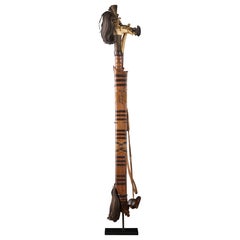
Haussa People, Nigeria, Dagger with Organic Handle
Located in Leuven , BE
Beautifully crafted dager from Nigeria (Haussa People) with an organic handle.
Hausa people are frond in northwestern Nigeria and adjacent southern Ni...
Category
20th Century Nigerian Tribal Art
Materials
Metal
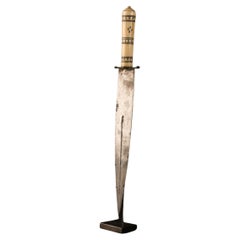
Bamileke People, Cameroon, Forged Knife with Carved Wooden Head
Located in Leuven , BE
Solid forged Bamileke short sword with a finely carved face on the top of the handle. Patina of use
Category
20th Century Cameroonian Antiquities
Materials
Metal
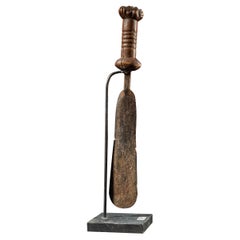
Decoative Small Kongo Whip
Located in Leuven , BE
This small decorated Whip is in excellent state for its age.The wooden base is decorated with metal and copper wiring and the end is made out of animal skin.
The topwas probably des...
Category
20th Century African Tribal Art
Materials
Iron
$322 Sale Price
40% Off
You May Also Like
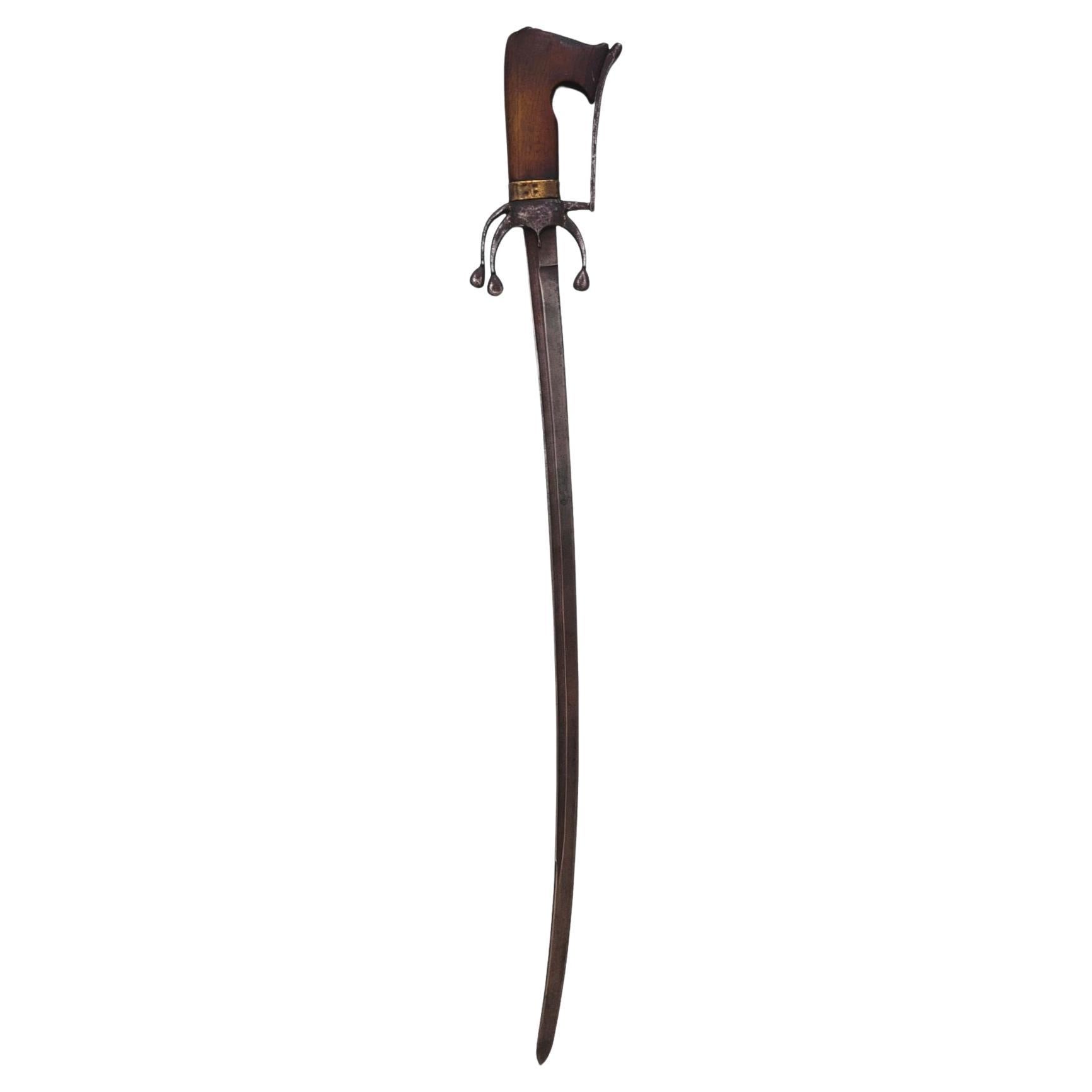
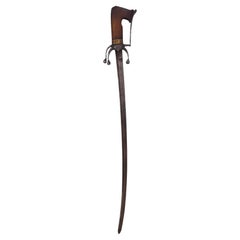
North African Sword (Nimcha), Morocco, Early 19th Century
Located in Madrid, ES
North African Sword (Nimcha), Morocco, Early 19th Century
This North African sword, known as a "Nimcha," is a remarkable piece originating from Morocco, dating back to the early 19th...
Category
Antique Late 19th Century Arms, Armor and Weapons
Materials
Wrought Iron
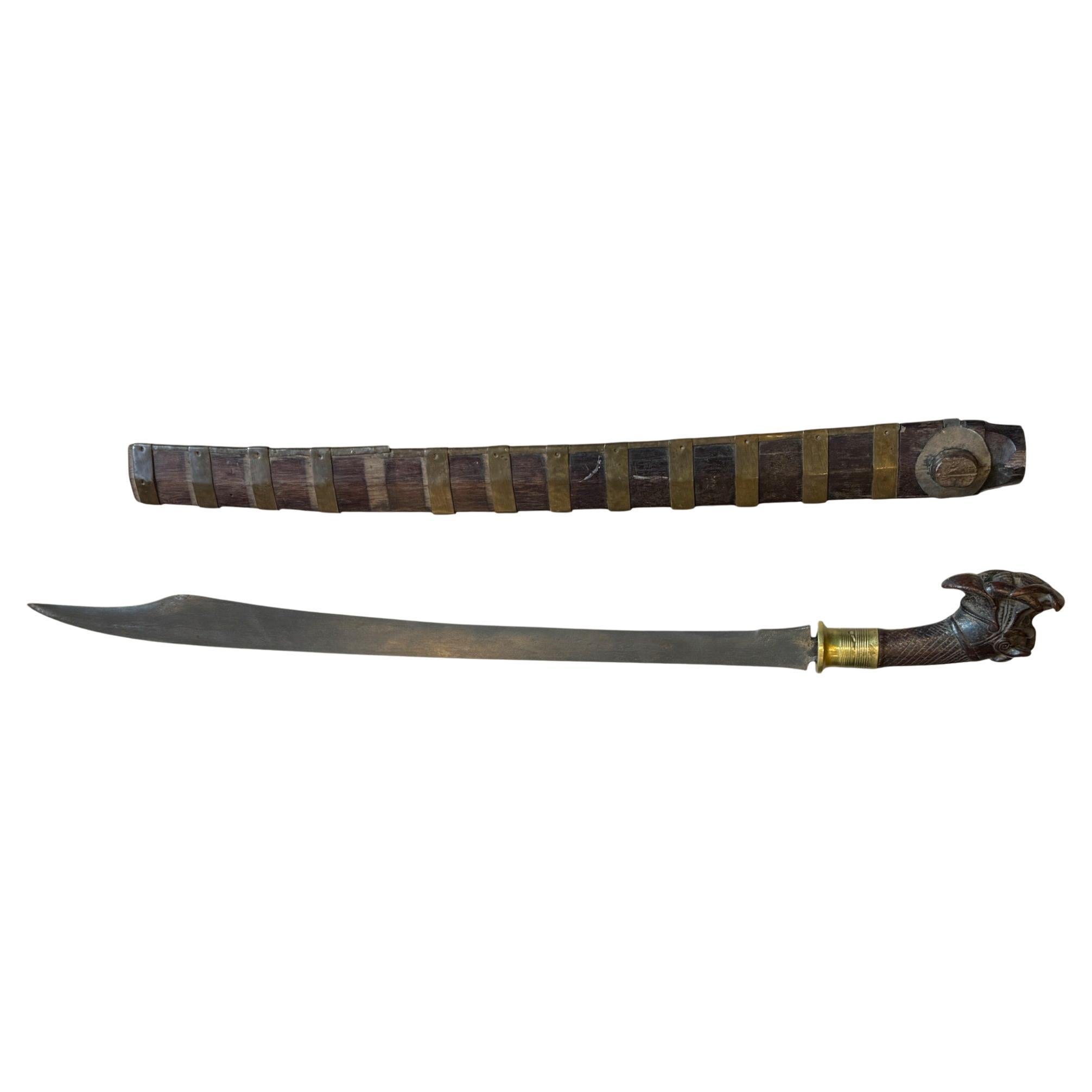
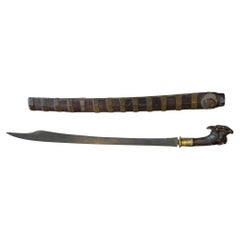
Indonesian Nias Sword with Carved Wooden Hilt and Brass-Bound Scabbard
Located in NICE, FR
This striking sword from Nias Island, Indonesia features a long single-edged blade paired with its original segmented wooden scabbard, reinforced with alternating brass and dark wood...
Category
Antique Late 19th Century Indonesian Tribal Arms, Armor and Weapons
Materials
Metal, Brass
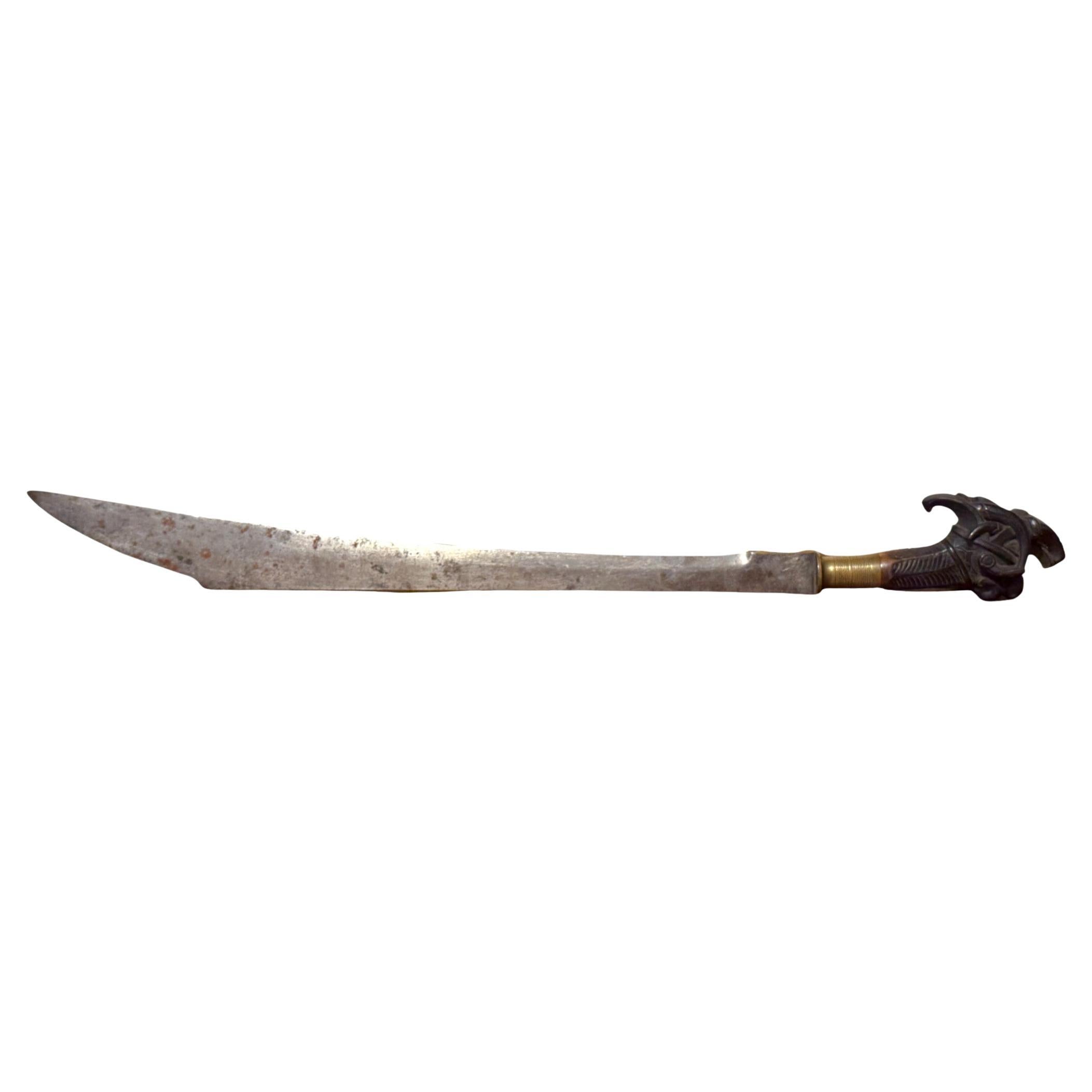
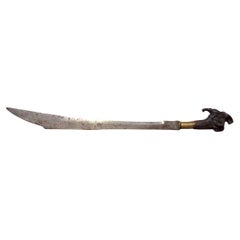
Indonesian Single-Edged Sword with Carved Wooden Hilt, 19th Century
Located in NICE, FR
An impressive ethnographic sword from Nias Island, Indonesia, featuring a broad single-edged metal blade with a characteristic forward-curving profile and a naturally aged, mottled p...
Category
Antique Late 19th Century Indonesian Tribal Arms, Armor and Weapons
Materials
Metal, Brass
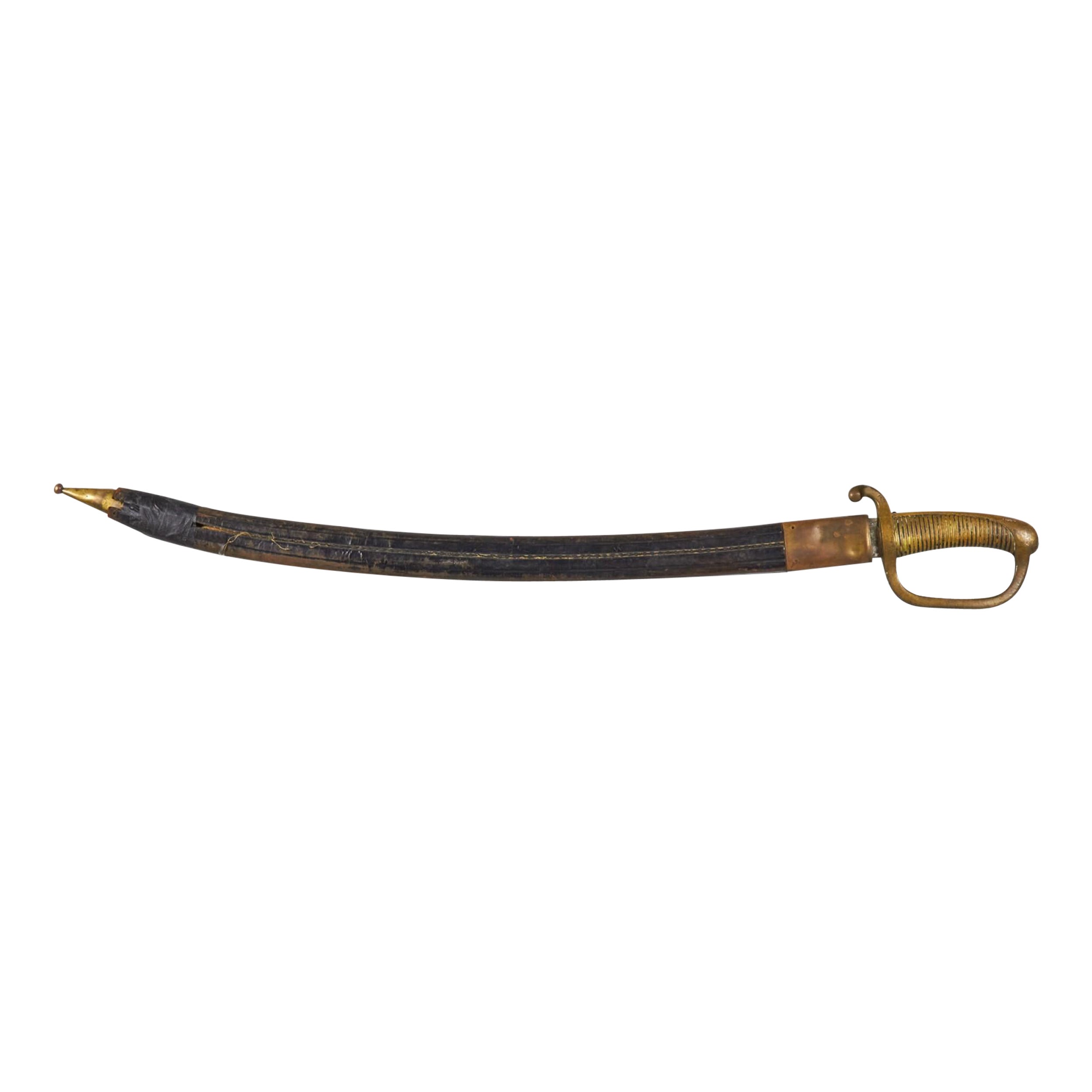
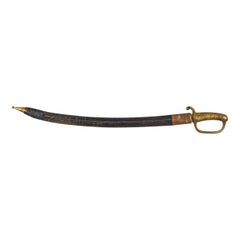
English Renaissance Curved Brass Sword and Leather Scabbard
Located in Queens, NY
English Renaissance (19th Century) curved sword with brass fluted handle and black leather scabbard.
Condition: Good; Minor losses
Category
Antique 19th Century British Renaissance Arms, Armor and Weapons
Materials
Brass
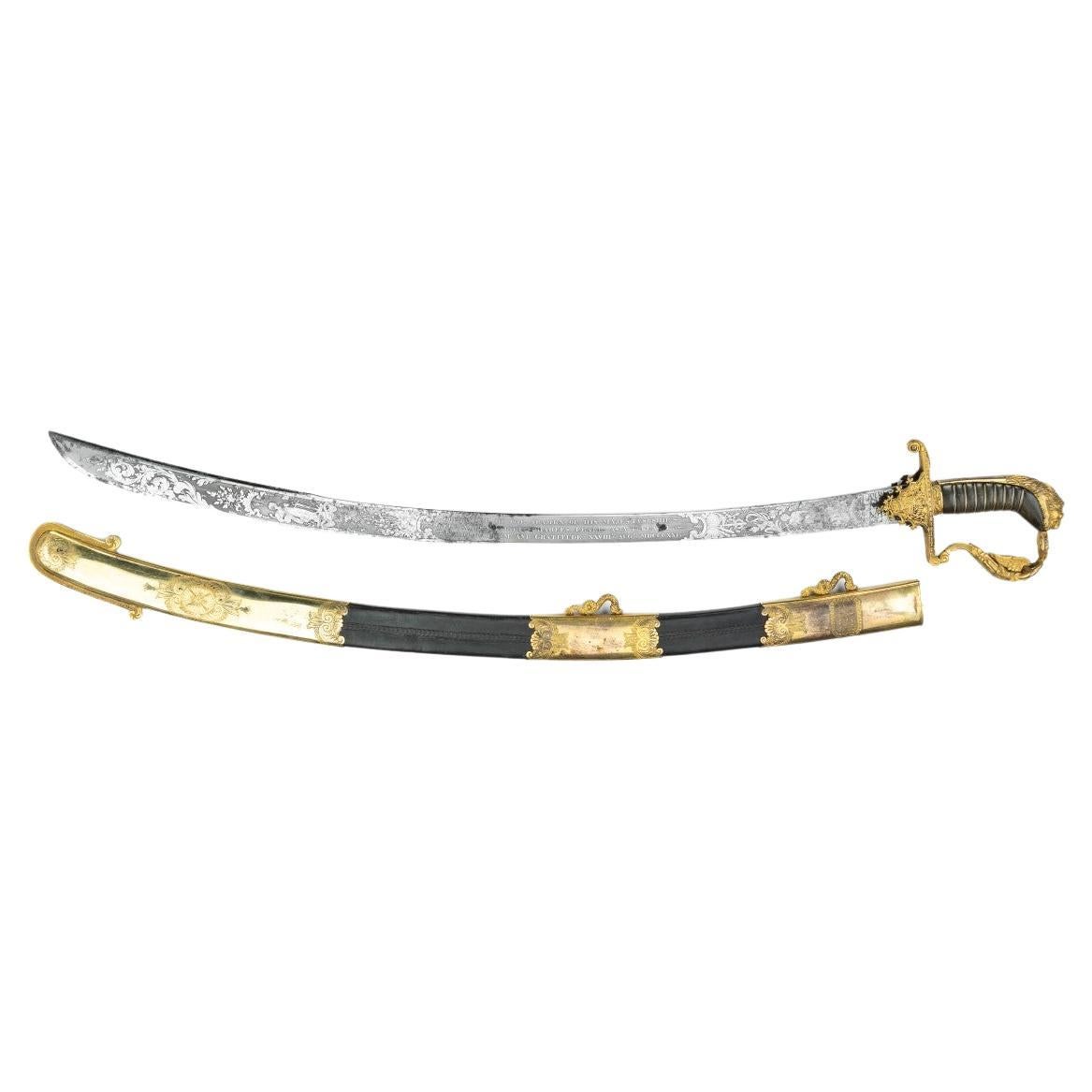
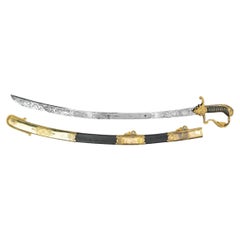
Fine Presentation Sword Given to Lieutenant Charles Peake
Located in Lymington, Hampshire
A fine presentation sword given to Lieutenant Charles Peake as a token of gratitude by the Men of His Ship when recommissioned for Foreign Service i...
Category
Antique 1820s English Arms, Armor and Weapons
Materials
Metal
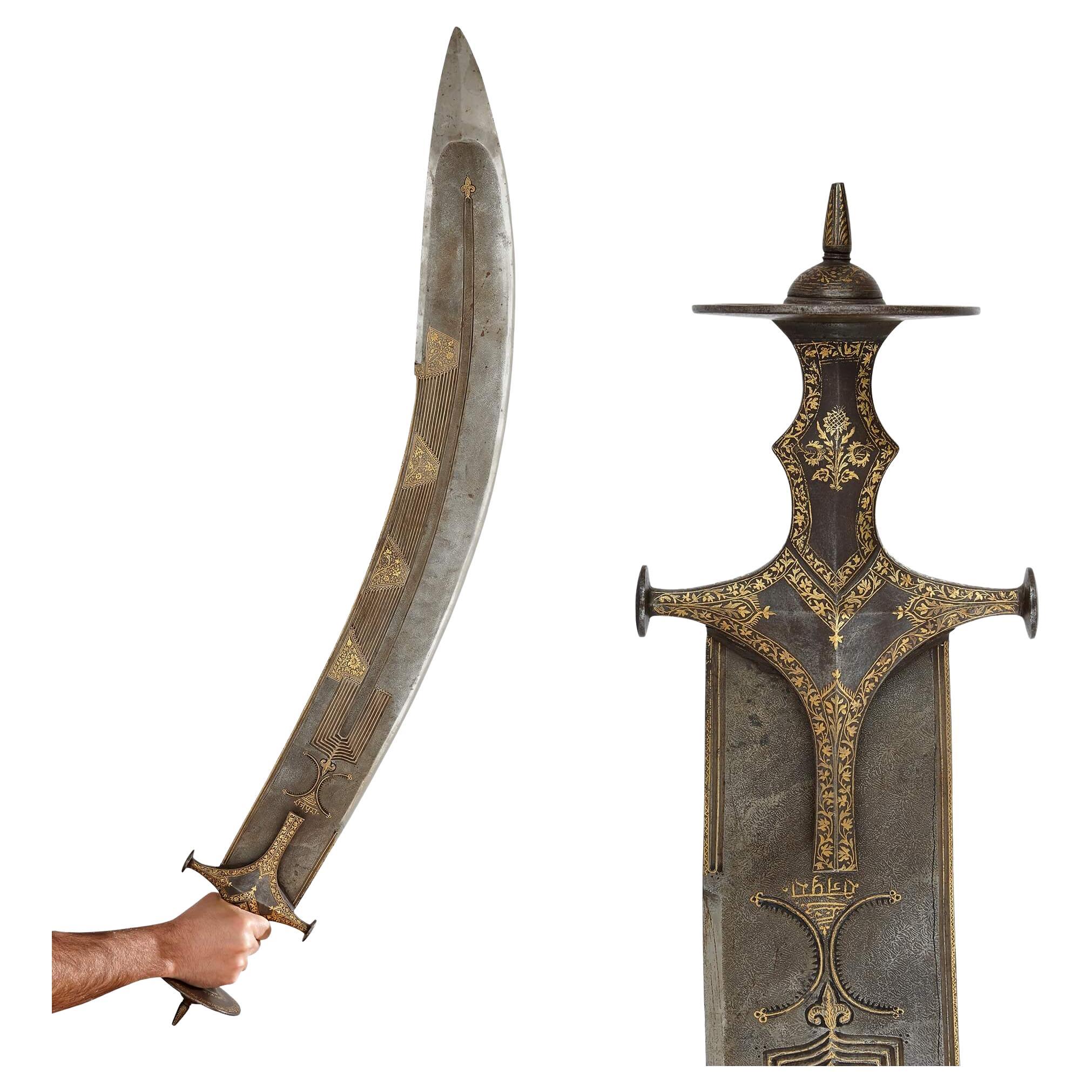
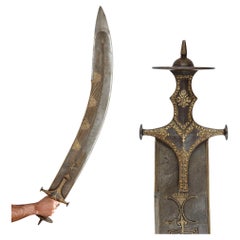
Large Indian Gold Damascened Steel Tegha Sword
Located in London, GB
Large Indian gold damascened steel tegha sword.
Indian, c. 1850
Length 112cm, width 16cm, depth 10cm
This remarkable sword is a tegha, a large Indian sword...
Category
Antique Mid-19th Century Indian Arms, Armor and Weapons
Materials
Gold, Steel
More Ways To Browse
Antique Orthodox
Imperial Crown
Emperor Profile
King Edward Coronation
Large Cast Iron Coffee Grinder
Music Memorabilia
Scottish Coat Of Arms
Train Memorabilia
Trench Art Ww1
Used Vornado Fan
Vintage Card Display
Vornado Fan
Antique Beer Memorabilia
Antique Cowboy Collectibles
Antique Fire Alarm
Antique Masonic Collectables
Christmas Tree Topper
Historical Flask