Items Similar to 18th Century Altar Modell, South Germany, with Original Painting, Wood

Want more images or videos?
Request additional images or videos from the seller
1 of 6
18th Century Altar Modell, South Germany, with Original Painting, Wood
$6,702.76
£4,980.31
€5,600
CA$9,181.40
A$10,016.41
CHF 5,312.50
MX$120,675.19
NOK 67,425.97
SEK 61,730.30
DKK 42,660.10
About the Item
18th century Altar Modell, South Germany, with original painting, wood
A rare altar model with original painting, in the middle Jesus Christus and on the top God the father
and two pairs of columns
South Germany, circa 1790.
The Modell piece is maybe executed for the Catholic church St. Agatha in Ingstetten near Roggenburg , not far away from Ulm.
- Dimensions:Height: 22.05 in (56 cm)Width: 18.12 in (46 cm)Depth: 2.76 in (7 cm)
- Style:Louis XVI (Of the Period)
- Materials and Techniques:
- Place of Origin:
- Period:
- Date of Manufacture:1780-1790
- Condition:Wear consistent with age and use.
- Seller Location:Epfach, DE
- Reference Number:1stDibs: LU5243218952372
About the Seller
4.9
Gold Seller
Premium sellers maintaining a 4.3+ rating and 24-hour response times
Established in 1986
1stDibs seller since 2020
63 sales on 1stDibs
Typical response time: 3 hours
- ShippingRetrieving quote...Shipping from: Epfach, Germany
- Return Policy
More From This Seller
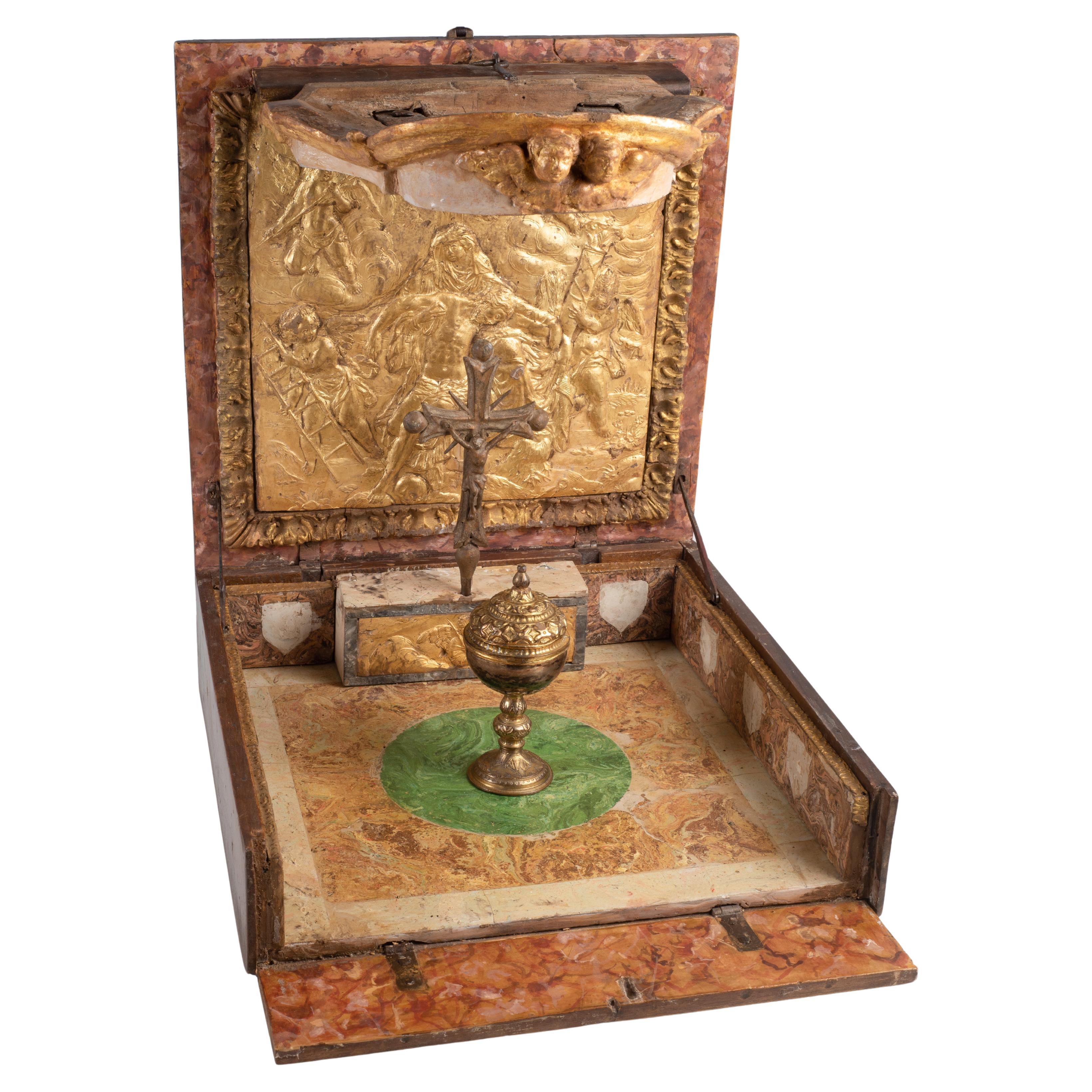
View All18th Century Italian Portable Travel Altar, c. 1730 Walnut Baroque Cartapesta
Located in Epfach, DE
Italian portable travel altar, c. 1730.
Walnut case with cartapesta, scagliola and carved wood, complete with original accessories.
This rare and beautifully preserved altar dates t...
Category
Antique 1730s Italian Baroque Religious Items
Materials
Scagliola, Walnut
18th Century Silver Monstrance c. 1797–1799 Augsburg Neoclassical Gilt Lüders
Located in Epfach, DE
Augsburg silver sunburst monstrance, c. 1797–1799.
Master: Jakob Hermann David Lüders
This impressive late 18th century sunburst monstrance was crafted in Augsburg between 1797 and...
Category
Antique 1790s German Neoclassical Religious Items
Materials
Silver
18th Century Models, Bozettis 4 Elements Limewood German, Franconia
Located in Epfach, DE
The four beautiful models, called Bozettis, portray the four elements fire, water, earth and air. They are of good quality and wonderfully fine carved with a love for details. For ex...
Category
Antique 1770s German Figurative Sculptures
Materials
Softwood
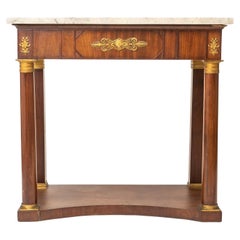
19th Century Empire Console Italy 1810 Marble Top Bronze Fittings
Located in Epfach, DE
19th Century Empire Console Tuscany Italy 1820 Marble Top Bronze Fittings
This extraordinary Empire console from Italy around 1820 combines elegance, master craftsmanship and histori...
Category
Antique Early 19th Century Italian Empire Console Tables
Materials
Marble, Bronze
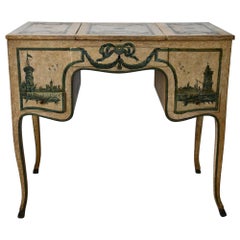
18th Century Poudreuse Writing Desk, Console Table Painted Piemont Italien
Located in Epfach, DE
18th Century Poudreuse Writing Desk, Console Table Painted Piemont Italien
Small, Rare Poudreuse or Console Table – Italy, Piedmont c. 1760/70
This elegant and finely crafted piece ...
Category
Antique 1770s Italian Console Tables
Materials
Wood
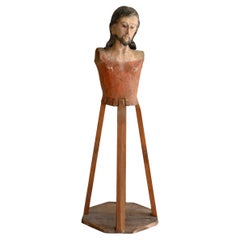
17th Century Processional Figur Mannequins Jesus Christus Carved Painted Wood
Located in Epfach, DE
An unusual and rare processional or lecturer figure from the 17th century, also called Mannequins. Carved from wood and of very good quality. A detailed and particular elaboration of...
Category
Antique Early 17th Century German Baroque Busts
Materials
Wood
You May Also Like
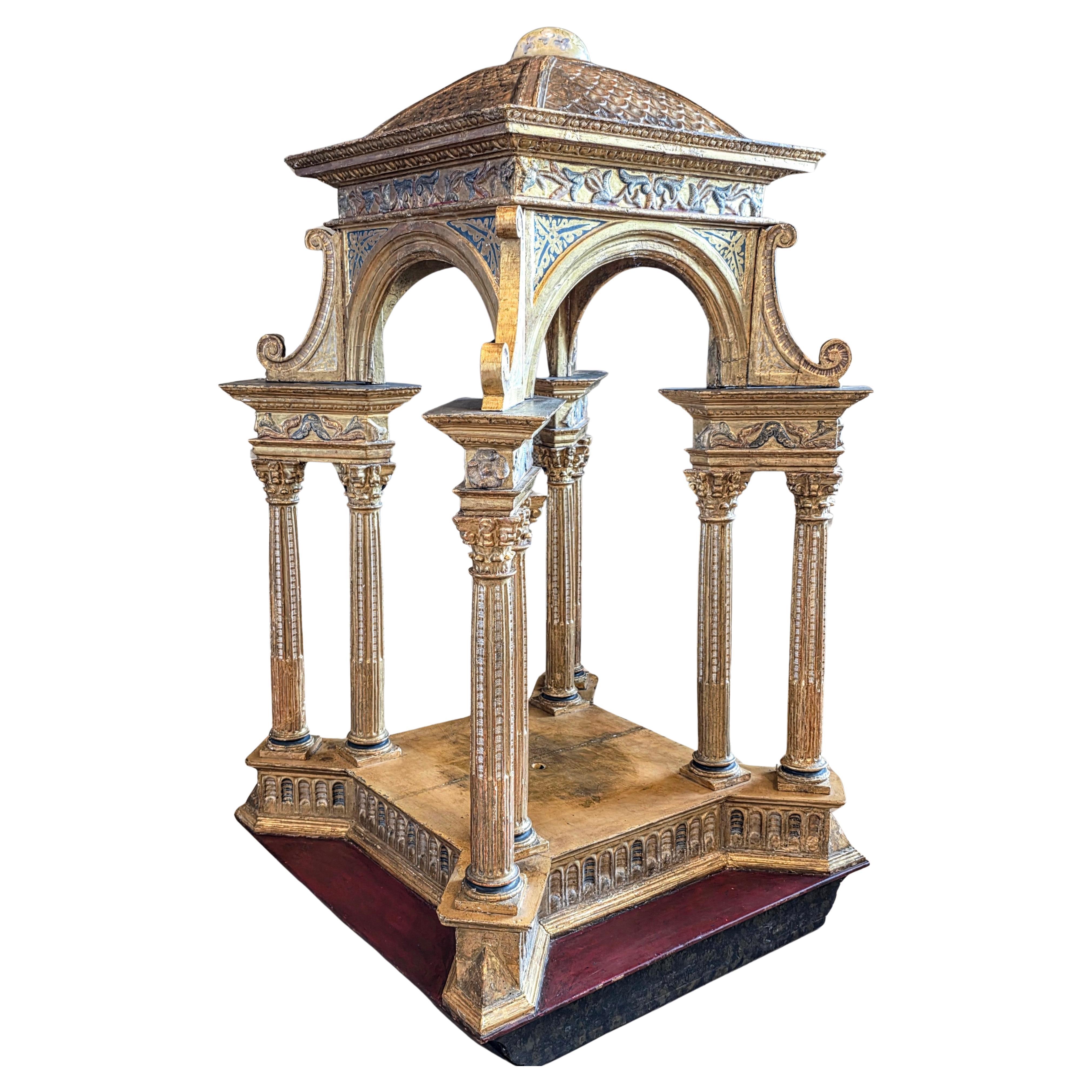
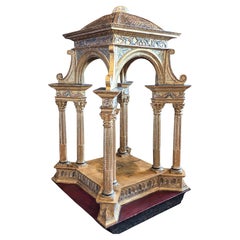
Large Antique Italian Church Carved Gilt Polychrome Tabernacle Altar Niche
Located in Forney, TX
A magnificent large rare and most impressive Italian baldachin tabernacle altar niche / altarpiece. circa 1800
Exquisitely hand-crafted in Italy in the early 19th century, this extraordinary one of kind masterpiece originally a prominent altarpiece fixture in a Catholic church, typically displaying a Santo or Jesus altar figure statue inside. Exceptionally executed throughout, parcel gilt polychrome painted, gessoed and carved wood two-piece architectural baldachin form, with dome top vaulted ceiling, raised on eight fluted Corinthian columns, over a shaped platform base with elaborate molded frieze, further raised on integral bracket risers in marbleized faux marble paint decorated finish.
Breathtaking visually striking aesthetic, very fine quality craftsmanship, lavishly decorated with extraordinary detail throughout, even the unseen interior of the dome profusely decorated with the most intricate painstaking hand applied 24k gold leaf ornamentation, the exterior in brillant gilded finish, enhanced by beautifully aged warm rich dark patina!
Dimensions: (approx)
45" Tall, 26.5" Wide, 26.5" Deep
*Additional photos available upon request*
Condition Report:
A superb museum quality example, in overall very good antique condition, especially considering its 200 years old.
Attractive appearance, with nicely aged distressed patina, authentic antique character and charm throughout, including scattered nicks, chips, losses, exposed gesso, fading, acrecetions, possible old touchups and restorations, all expected wear commensurate with age, use, handling and exposure. Overall strong, sturdy, stable, structurally sound. The floral dome painting likely later. Central hole and discoloration where altar figure was once placed. Overall a truly remarkable work of art!
--
We here at Lynx Hollow Antiques absolutely love decorating with religious antiques and have a special place in our heart for them. We have an extensive collection from around the world, spanning all regions and religions, including old world European Baroque period altarpiece, Spanish Colonial altar table, Roman Empire reliquary monstrance, architectural salvaged building elements, church architecture model, apprentice prototype, baptismal font, sacristy liturgical items, sanctuary vessel, vestment chest, monastery refectory table, Gothic court cupboard...
Category
Antique Early 19th Century Italian Baroque Religious Items
Materials
Enamel
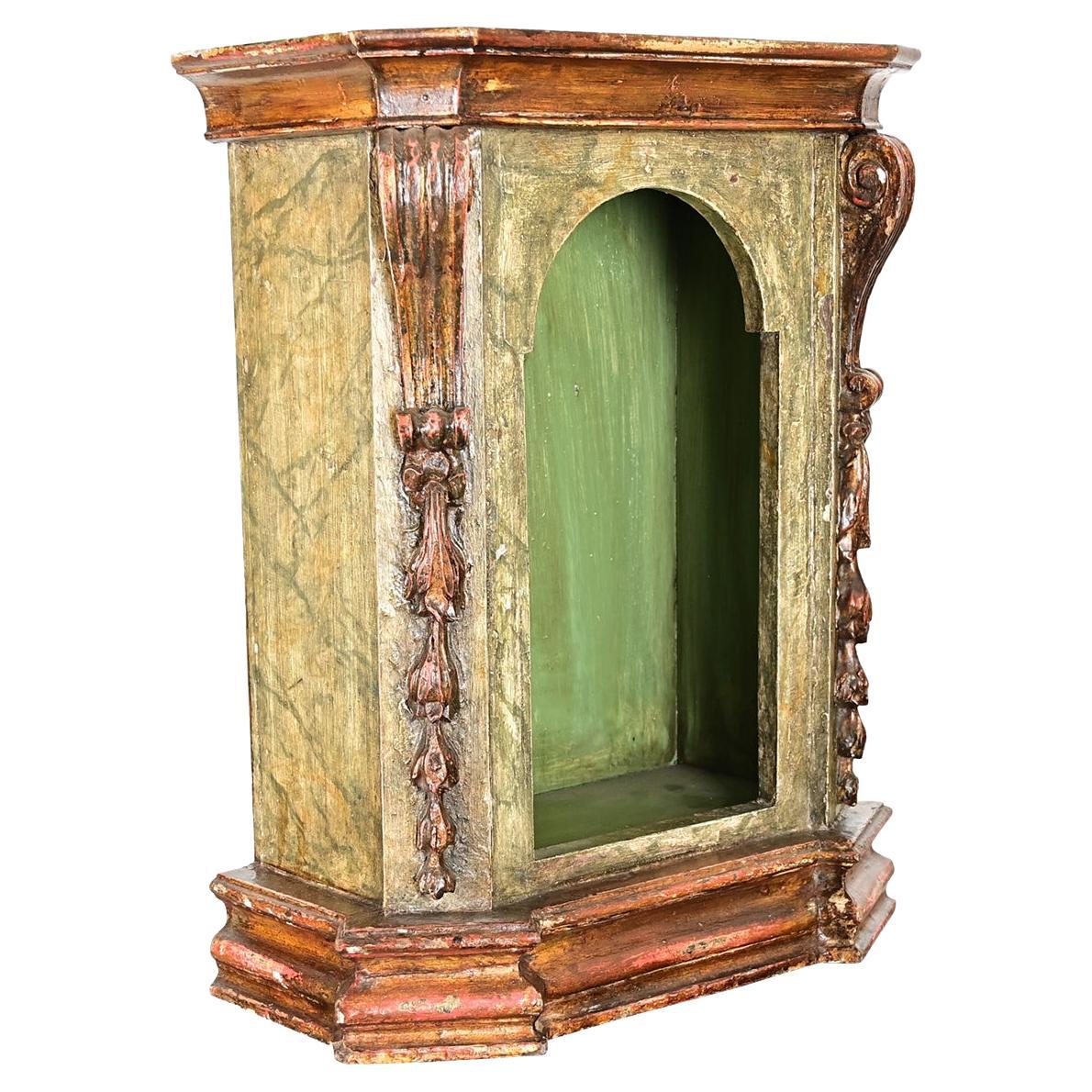
18th Century Portuguese Altar
Located in Baton Rouge, LA
A fantastic oratory or tabletop altar from 18th century Portugal, made of carved, painted, and gilded wood taking the form of a small cabinet (where religious statuary would be displ...
Category
Antique 18th Century Portuguese Baroque Religious Items
Materials
Gold
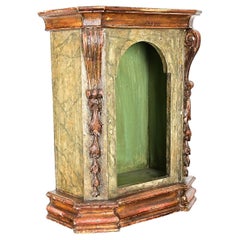
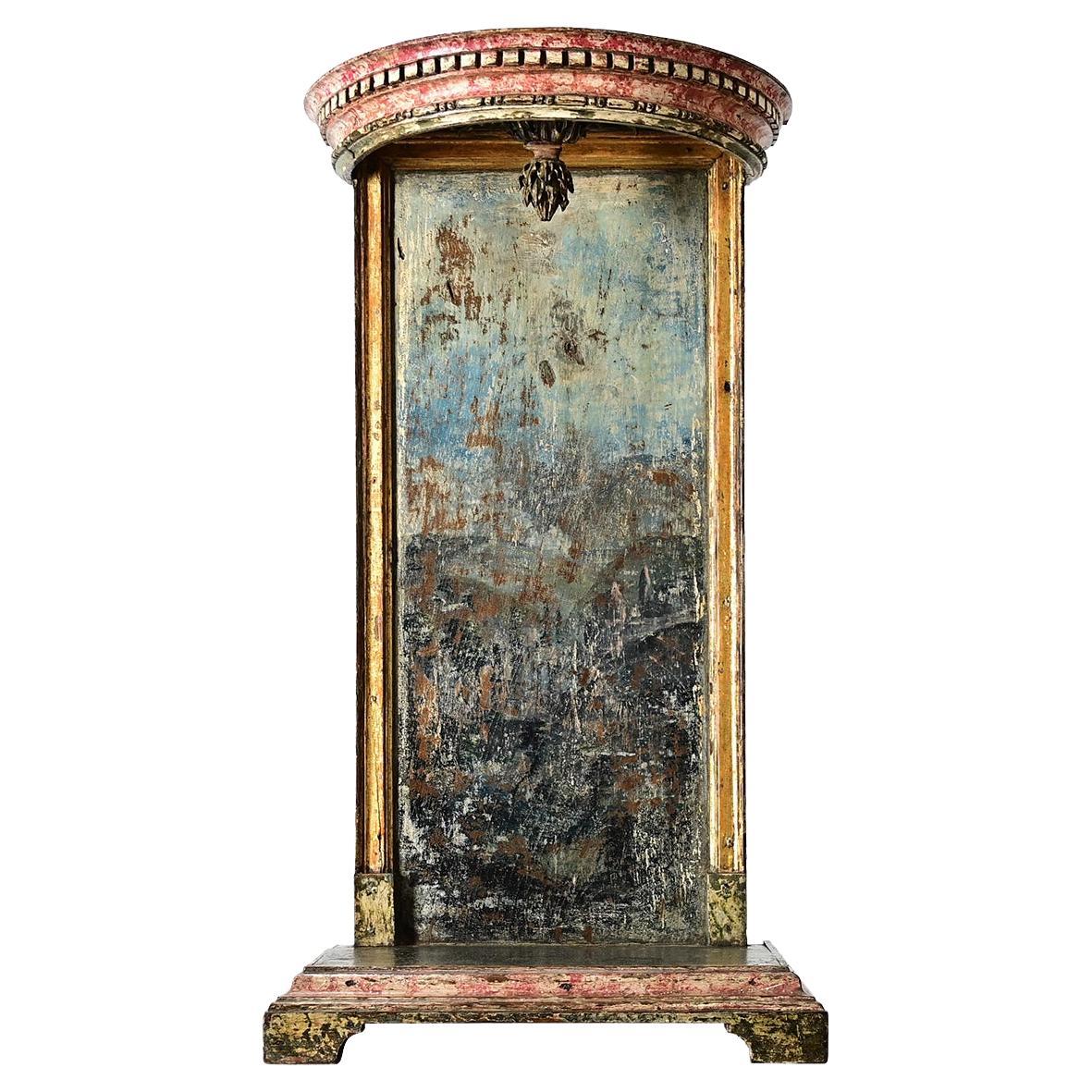
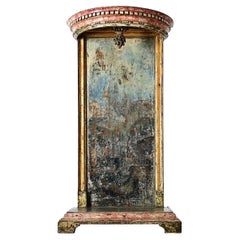
18th Century Portuguese Altar
Located in Baton Rouge, LA
An exquisite work of 18th century Portuguese craftsmanship, this carved, painted, and gilded wood tabletop altar-niche would have been used to stage religious artifacts or statuary f...
Category
Antique 18th Century Portuguese Baroque Religious Items
Materials
Gold
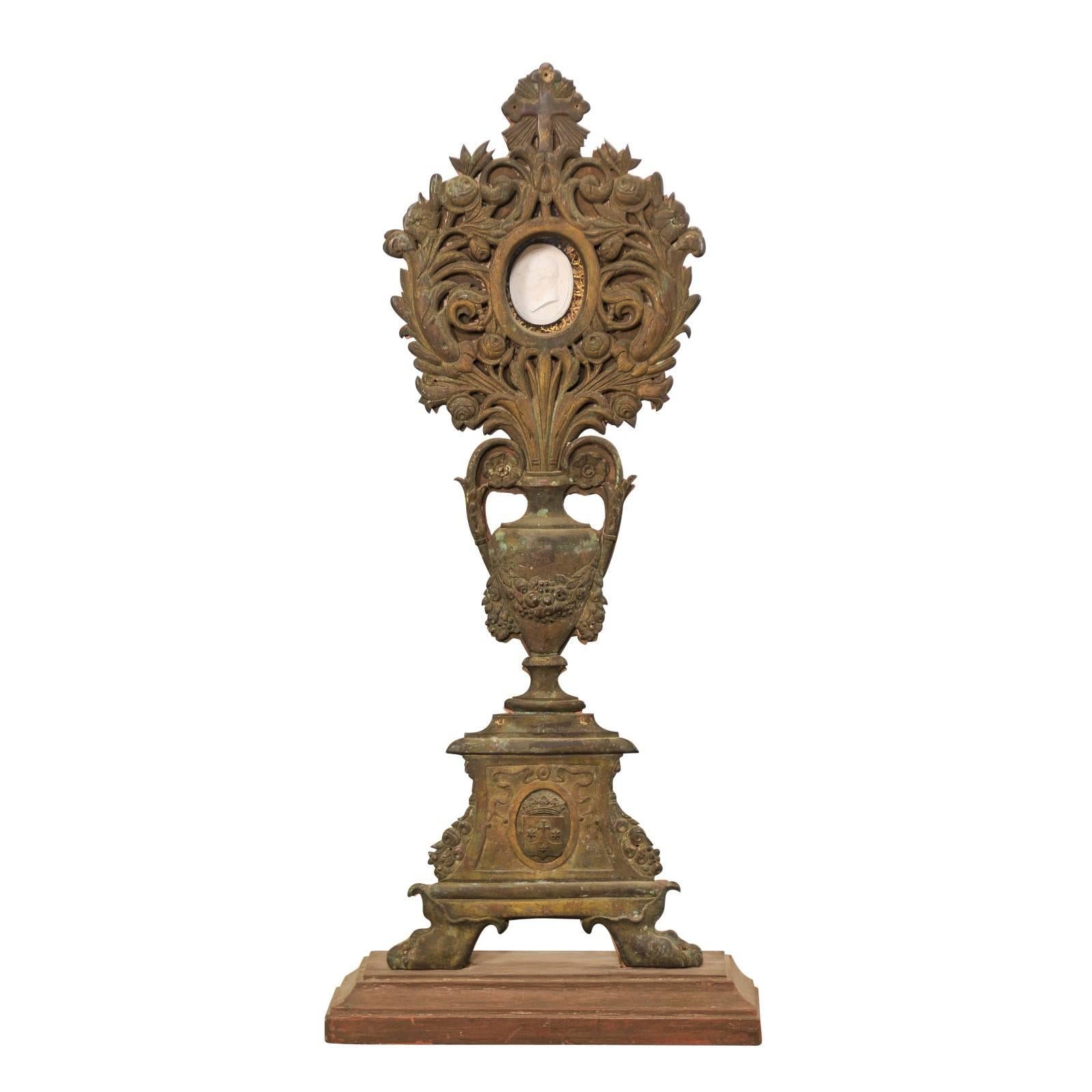
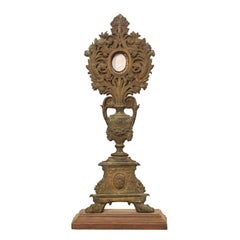
French 19th Century Altarpiece with Central Intaglio and Decorated Repoussé
Located in Atlanta, GA
A French 19th century altarpiece with intaglio. This antique French altarpiece features an urn and floral motif, with a single intaglio set into the central top bouquet. This altarpi...
Category
Antique 19th Century French Historical Memorabilia
Materials
Metal
IMPORTANT PORTUGUESE ORATORY WITH CALVARY 18th Century
Located in Madrid, ES
IMPORTANT PORTUGUESE ORATORY WITH CALVARY 18th Century
Portuguese, from the 18th century
in carved Brazilian rosewood.
Decoration with interrupted pediments, volutes, floral motifs...
Category
Antique Early 18th Century Portuguese Baroque Religious Items
Materials
Silver

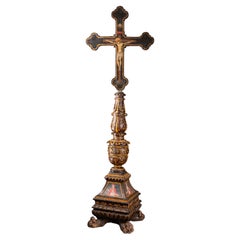
renaissance wooden candelabrum and painted cross - Umbria, 16th century
Located in Bruxelles, BE
Base of a carved wooden candelabrum, polychrome and gilded; cross painted on both sides.
Umbria or Tuscany, 16th century
136 x 43,5 x 30 cm
(The cross and the base of the candelabrum were later assembled)
The base of the candelabrum is intricately carved and adorned with polychrome and gilded finishes. The shafts take on the shape of balusters reminiscent of ancient columns, feature ornate foliage decorations, garlands and winged cherub faces. The feet are crafted in the likeness of lion paws. The base is further embellished with depictions of four saint martyrs, among them Saint Barbara and Saint Catherine of Alexandria. The plasticity of the figures, outlined with strong contour lines, the clear and vibrant colors, are stylistic elements linked to the Umbrian tradition of the sixteenth century.The precisely defined and elegant drawing, along with the clear color palette applied with refined chiaroscuro modulations, became the signature of a style that would leave a lasting mark on the era to come. This is exemplified by a preference for vibrant, multicolored images, accentuated in this case by the use of red and pink in the saint's attire.
A notable addition, introduced later, is a polylobed cross painted on both sides. On one side, the Crucifixion is vividly portrayed:The treatment of the corpus itself is in line with High Medieval practice, emphasizing pathos by showing Jesus dead, his arms sagging from the weight of the body. The upper section displaying a pelican pecks at her breast to feed her young with her own blood; a symbol of the sacrifice of Christ on the cross whose body and blood similarly nourishes the celebrant during Mass.
The lower part depicts Golgotha. On the reverse side, the Resurrection is artistically presented in a Renaissance iconography, reminiscent of the renowned composition painted by Piero della Francesca, now housed in the Civic Museum of Sansepolcro. In terms of composition, with the frontal depiction of Christ holding the banner, this motif became particularly widespread in central Italy, spanning from Tuscany to Umbria throughout the 16th century..
The double-sided construction suggests that it may also have been carried in liturgical processions. In Umbria from the 14th century, the use of portable crosses painted on both sides had become a widespread practice, aimed at satisfying the monastic clientele that had significantly increased following the establishment of new religious communities.
The earliest surviving Tuscan painted crucifix represent Christ as Christus Triumphans, or the “Triumphant Christ” with his head up and eyes open. This form was supplanted in the 13th century with the Christus Patiens, or “Suffering Christ” type who is shown often with his head fallen on his shoulder and his eyes closed, as In our cross. The iconography of the suffering Christ appears to have developed out of a new interest in Christ’s human nature, the development of the feast of Corpus Christi and with increased importance given to the Eucharist. The process of humanizing the figure of Christ reaches its peak with the abandonment of all the previous expressive conventions in favor of more realistic details we can observe in this Crucifix, such as the swollen belly, the arms stretched to the limit of muscle tearing, the body falling heavily forward, the abundant blood on
the wounds, and the cross firmly embedded in the rock of Calvary.
It's worth noting that Renaissance candelabra...
Category
Antique 16th Century Italian Renaissance Figurative Sculptures
Materials
Wood, Giltwood
More Ways To Browse
Antique Miniature Painting
Wood Altar
Miniature Altar
Ship Models Miniature
Bar Car
Vintage Skylights
Wood Diorama
Antique Miniature Iron
Antique Cobbler
Antique Salesman Sample Furniture
Schooner America
Traveling Salesman
Antique Miniature Houses
Antique Bronze Miniature
Tower Model
Used Model Planes
Apprentice Piece
Antique Steam Engine