Items Similar to Antique Swiss 10 Air Musical Box Langdorff
Fils 19th Century
Video Loading
Want more images or videos?
Request additional images or videos from the seller
1 of 19
Antique Swiss 10 Air Musical Box Langdorff
Fils 19th Century
$3,204.48
£2,350
€2,728.80
CA$4,415.62
A$4,853.84
CHF 2,548.25
MX$57,715.69
NOK 32,725.25
SEK 29,809.17
DKK 20,388.48
About the Item
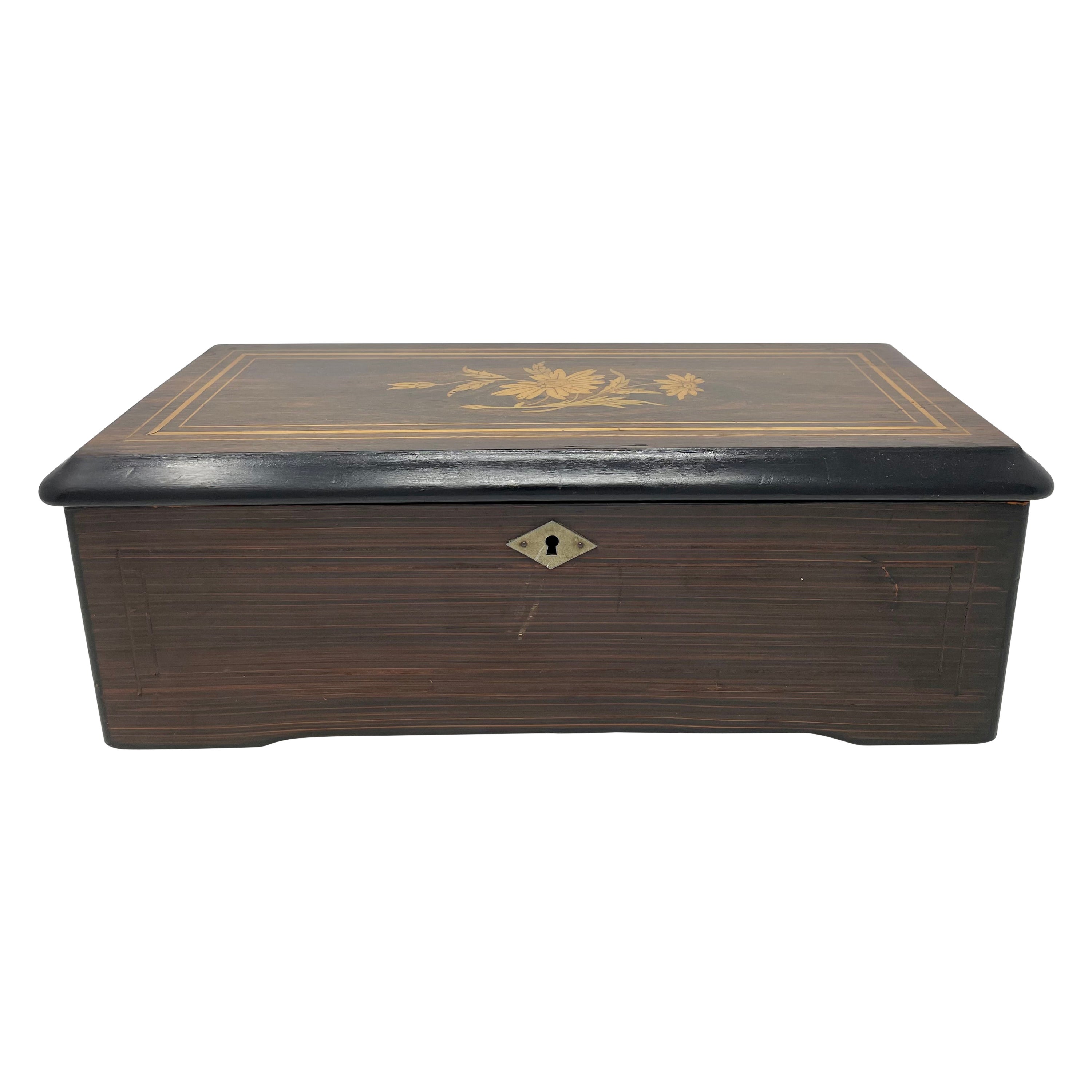
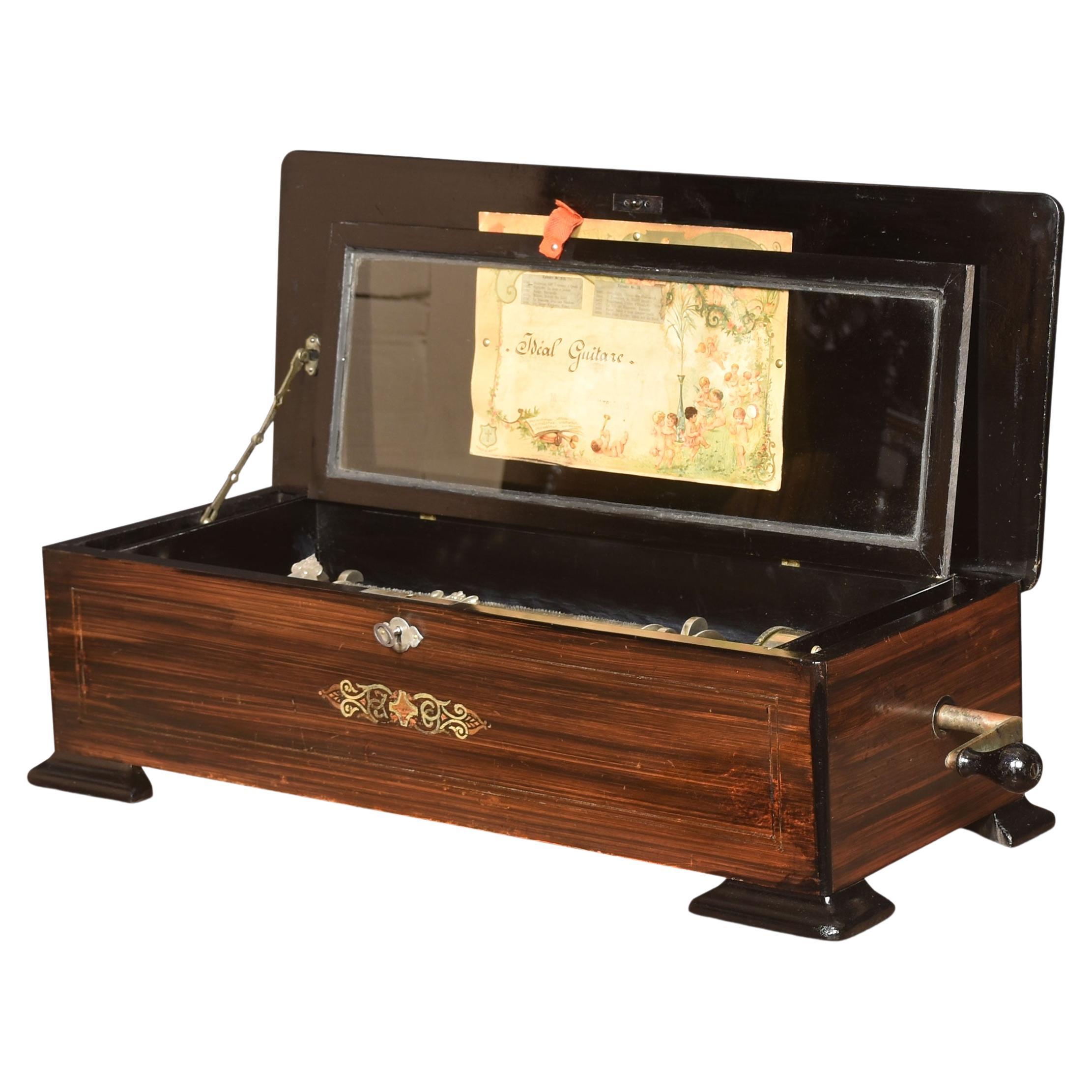
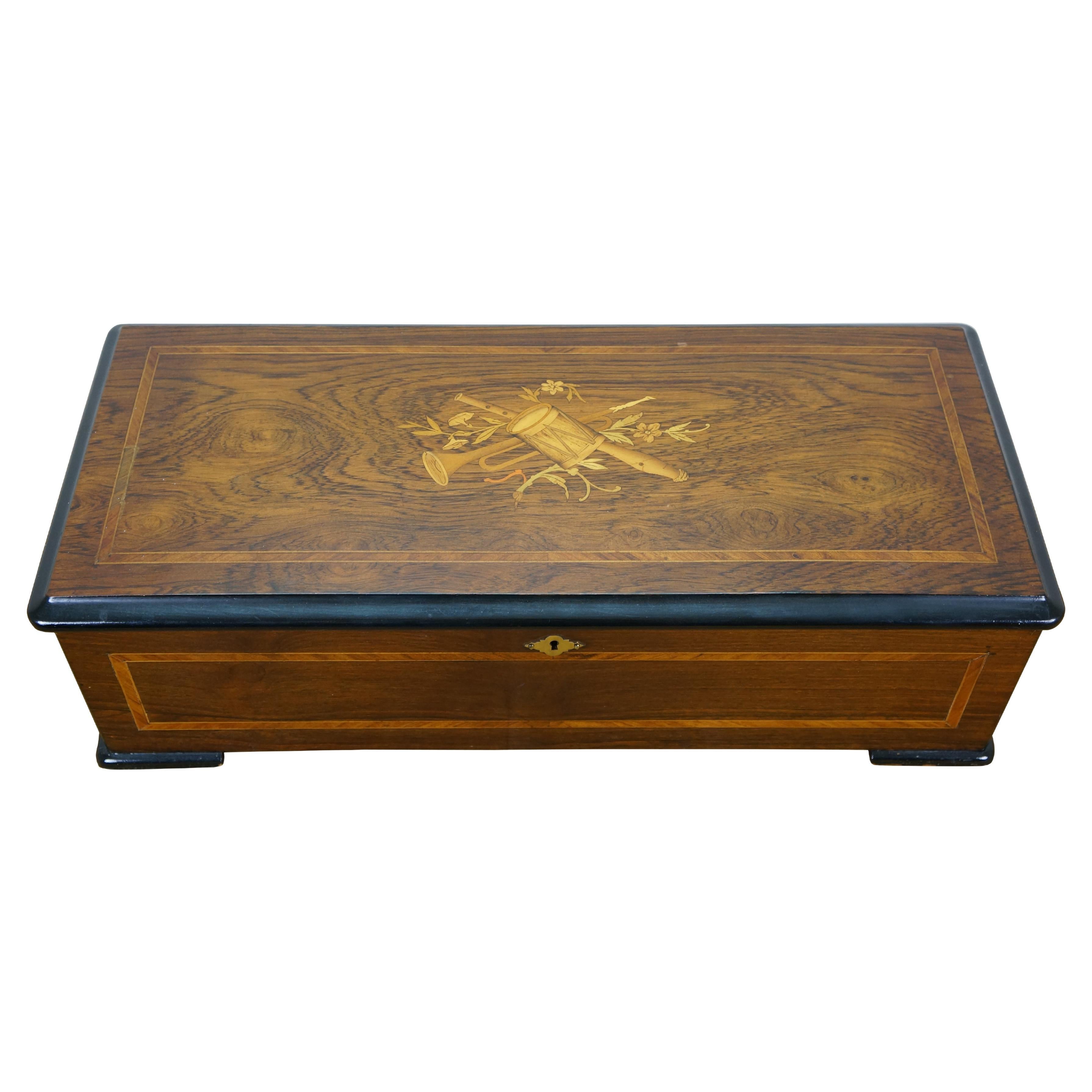
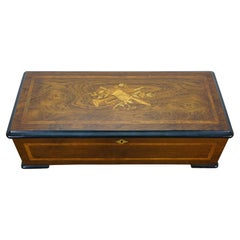
This is a lovely antique Swiss 10 airs Gonçalo Alves cylinder music box, manufactured by Langdorff
Fils, circa 1880.
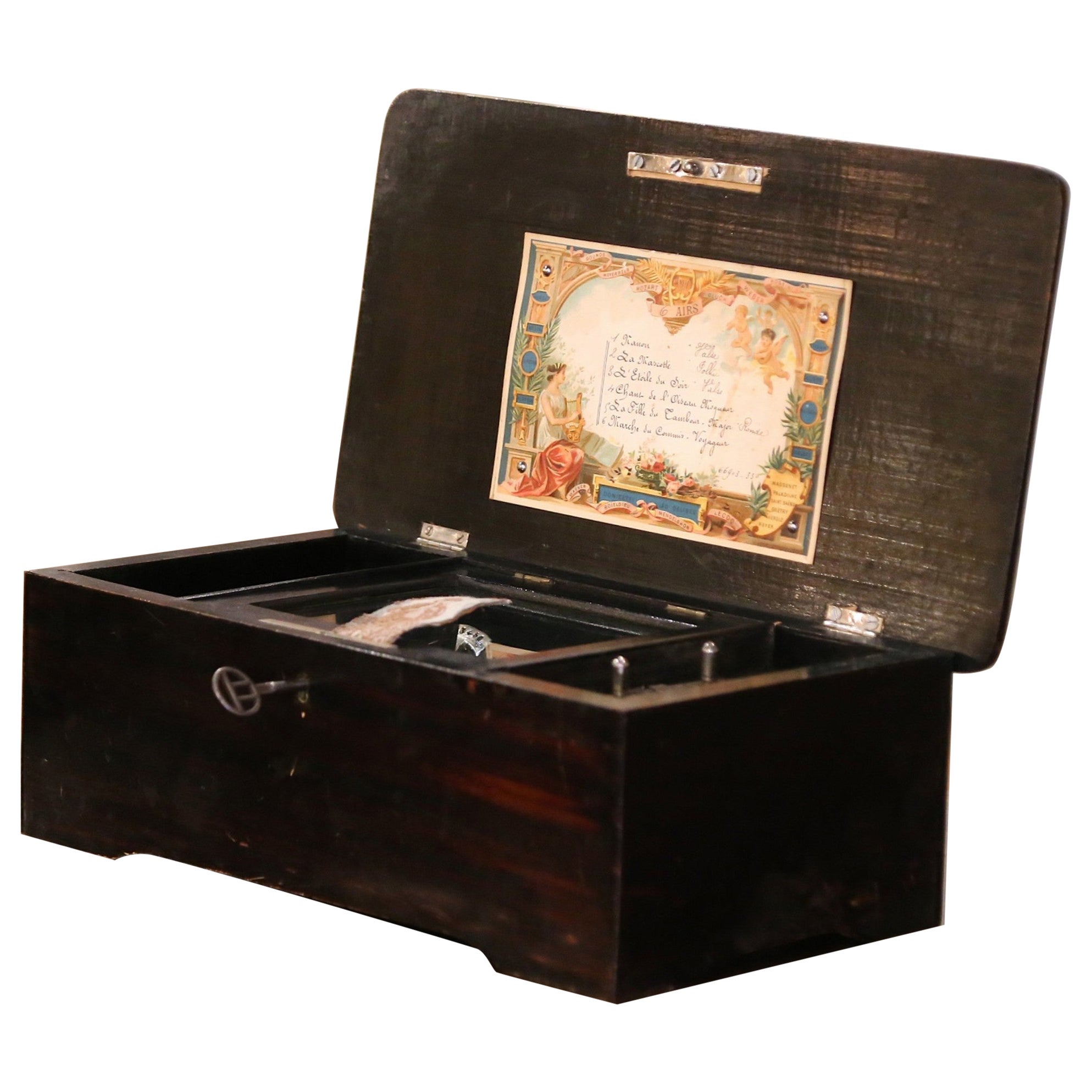
The case is inlaid and crossbanded with floral marquetry and banded decoration. The lid opens to reveal an ebonised interior with a glazed hinged cover showing the comb, and a paper label to the underside of the lid stating 'Fabrique De Geneve' Langdorff
Fils, Fabricants
The music box has got its original tune sheet which is stamped:
"No 24017 Fabrique de Geneve" and lists the ten tunes and composers.
Condition:
It is is in excellent condition and in working order.
Dimensions in cm:
Height 18 cm x Width 69 cm x Depth 27 cm
Dimensions in inches:
Height 7 inches x Width 2 foot, 3 inches x Depth 11 inches
Music box
(also musical box) is a 19th/20th century automatic musical instrument that produces sounds by the use of a set of pins placed on a revolving cylinder or disc so as to pluck the tuned teeth (or lamellae) of a steel comb. They were developed from musical snuff boxes of the 18th century and called carillons à musique. Some of the more complex boxes also have a tiny drum and/or small bells, in addition to the metal comb.
For most of the 19th century, the bulk of music box production was concentrated in Switzerland, building upon a strong watchmaking tradition. The first music box factory was opened there in 1815 by Jérémie Recordon and Samuel Junod. There were also a few manufacturers in Bohemia and Germany. By the end of the 19th century, some of the European makers had opened factories in the United States.
The cylinders were normally made of metal and powered by a spring. In some of the costlier models, the cylinders could be removed to change melodies, thanks to an invention by Paillard in 1862, which was perfected by Metert of Geneva in 1879.[citation needed] In some exceptional models, there were four springs, to provide continuous play for up to three hours.
Gonçalo Alves is a hardwood (from the Portuguese name, Gonçalo Alves). It is sometimes referred to as tigerwood — a name that underscore the wood’s often dramatic, contrasting color scheme.
While the sapwood is very light in color, the heartwood is a sombre brown, with dark streaks that give it a unique look. The wood’s color deepens with exposure and age and even the plainer-looking wood has a natural luster.
Two species are usually listed as sources for gonçalo alves: Astronium fraxinifolium and Astronium graveolens, although other species in the genus may yield similar wood; the amount of striping that is present may vary.
In the high tropical forests of Central and South America, well-drained soils furnish nutrients for a variety of dense, durable hardwoods sought for maritime use, heavyconstruction, and furniture. The Spanish began harvesting in Latin American forests in the early 1500s to provide timber for boatbuilding and repair. By the early 1900s, however, steel ships had replaced wooden ones, and the interest in tropical forests by both Europeans and Americans shifted to appearance-grade woods for furniture.
Although history fails to provide us with a shopping list of species from either harvest period, it's probable that the wood we know today as goncalo alves has always been sought. That's because goncalo alves, considered one of the most beautiful of tropical woods, has a tough reputation, too. Strong and durable, it's used for construction in its homeland and secondarily for fine furniture. Woodworkers elsewhere treasure the wood for decorative items and veneer accents.
Our reference: A3658
- Dimensions:Height: 7.09 in (18 cm)Width: 27.17 in (69 cm)Depth: 10.63 in (27 cm)
- Materials and Techniques:
- Place of Origin:
- Period:
- Date of Manufacture:circa 1880
- Condition:
- Seller Location:London, GB
- Reference Number:Seller: A36581stDibs: LU950637946922
About the Seller
5.0
Platinum Seller
Premium sellers with a 4.7+ rating and 24-hour response times
Established in 1983
1stDibs seller since 2012
1,442 sales on 1stDibs
Typical response time: <1 hour
Associations
LAPADA - The Association of Arts
Antiques Dealers
- ShippingRetrieving quote...Shipping from: London, United Kingdom
- Return Policy
More From This Seller
View AllAntique Swiss 8 Air Gonçalo Alves Musical Box 19th Century
Located in London, GB
This is a lovely antique Swiss 8 airs Gonçalo Alves cylinder music box, manufactured by Qualite Excelsior Sondrite Extra Puissant Harmonie, circa 1870 in date.
The Goncalo Alves case is inlaid and crossbanded with boxwood inlay and superb marquetry decoration of musical instruments. It is raised on a plinth base and is fitted with brass carrying handles.
The music box features a 28cm cylinder playing eight tunes with arrow and adjustable lyre damper, with handwritten "Tremolo a Zither" play sheet and makers plate for Qualite Excelsior Sondrite Extra Puissant Harmonie.
Condition:
In excellent working condition, please see photos for confirmation.
Dimensions in cm:
Height 28 cm x Width 66 cm x Depth 22 cm
Dimensions in inches:
Height 11 inches x Width 2 foot, 2 inches x Depth 9 inches
Music box
(also musical box) is a 19th/20th century automatic musical instrument that produces sounds by the use of a set of pins placed on a revolving cylinder or disc so as to pluck the tuned teeth (or lamellae) of a steel comb. They were developed from musical snuff boxes of the 18th century and called carillons à musique...
Category
Antique 1870s Decorative Boxes
Materials
Wood
Antique Victorian Table Top Jewellery Collectors Cabinet 19th Century
Located in London, GB
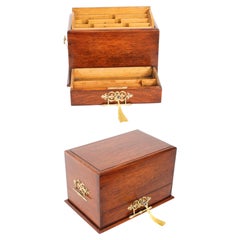
This is a elegant Victorian mahogany table top jewellery collectors cabinet, circa 1840 in date.
The cabinet is freestanding, finished all r...
Category
Antique 1840s English Victorian Jewelry Boxes
Materials
Mahogany
Antique Edwardian Oak stationery cabinet Early 20th Century
Located in London, GB
A rare antique Edwardian oak stationery cabinet of rectangular outline, the swing top with fall front enclosing fitted compartments, Circa 1900 in date.
The cabinet features ormolu ...
Category
Antique Early 1900s Decorative Boxes
Materials
Oak
Antique Victorian Brass Bound Oak Cigar Humidor 19th Century
Located in London, GB
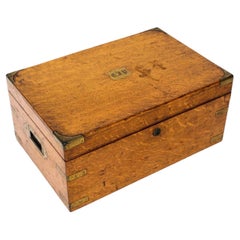
This is a stylish antique Victorian oak brass and cedar lined tabletop cigar humidor circa 1860 in date.
The rectangular box features a lift out tray and adjustable divisions with sunken handles to the sides and a hinged lid with a central brass shield.
Complete with the original Bramah lock and key.
It would make a beautiful gift to any connoisseur of fine cigars.
Condition:
In excellent condition. As an antique items, the humidor shows signs of use commensurate with age, these minor condition issues are mentioned for accuracy and, as seen in the accompanying photographs, it displays beautifully.
Dimensions in cm:
Height 19.5 x Width 44 x Depth 29
Dimensions in inches:
Height 8 inches x Width 1 foot, 5 inches x Depth 11 inches
Humidor
is any kind of box or room with constant humidity that is used to store cigars, cigarettes, orpipe tobacco. For private use, small wooden or acrylic glass humidor boxes for a few dozen cigars are used, while cigar shops may have walk-in humidors.
Humidors can be used to store other goods for which a certain level of humidity is desirable; the Colorado Rockies Major League Baseball team stores game balls in a large humidor at their home stadium, Coors Field, to counteract the effects of Denver's high altitude and generally low humidity. Humidors of all sizes use hygrometers to keep track of the humidity levels.
Classification of humidors
Walk-in humidor - most common in cigar bars or stores. One room is built as or converted to a humidor where all the cigars are stored.
Cabinet humidor - usually placed on the floor as a piece of furniture. Typically holds 1000-5000 cigars.
Table humidor - often quite heavy, though portable in theory, it's usually kept in one location. Capacity ranges from three hundred to a few thousand cigars. It usually comes with a polished wood exterior, marble, leather or combination of exotic elements, and glass top.
Personal humidor - semi-regular cigar smokers will sometimes keep a small humidor in their homes for personal storage, special events, or aesthetic characteristics of the humidor itself . Usually contains 20-75 cigars. This may also be known as a "Desktop Humidor".
Travel humidor - portable and made for carrying cigars enough for the outing or event, usually 2 to 10 cigars.
Oak
is a tree or shrub in the genus Quercus - Latin "oak tree" having approximately 600 extant species. Oak wood has a density of about 0.75 g/cm3, great strength and hardness, and is very resistant to insect and fungal attack because of its high tannin content. It also has very appealing grain markings, particularly when quartersawn. Oak wood is very durable, easy to maintain and resistant to wear and tear which is why it can be easily handed to the next generations if taken well care of.
Oak wood virtually lasts forever and you can still admire oak furniture in museums and palaces even if it was made many centuries ago. Oak has been prized since the Middle Ages for use in interior panelling of prestigious buildings such as the debating chamber of the House of Commons in London and in the construction of fine furniture.
Bramah
is London's oldest security company. Established at 124 Piccadilly, London in 1784, and today based in Marylebone, London and Romford, Essex.
Bramah made their first lock in 1784 and the patent was awarded in 1787. The designer was Joseph Bramah. Joseph Bramah was a leading inventor of the industrial revolution, patenting over 18 new ideas, including a new valve for the water closet (toilet), the hydraulic pump, a fountain pen, and a fire engine.
Bramah also introduced a beer hand pump for use at the bar, to prevent fluid loss when barmen went downstairs to pour a new jug! Due to the quality of his manufacturing, his name became a by-word amongst British Engineers for engineering excellence and many of his inventions are on display in the Science Museum in London. You can find one of his original toilets still working in Osborne House, Queen Victoria's home on the Isle of Wight.
The Bramah lock was unique and advanced property and valuables protection enormously. Indeed it was 50 years ahead of any Chubb lock...
Category
Antique 1860s English Victorian Cigar Boxes and Humidors
Materials
Oak, Cedar
Antique Italian Sorrento Ware Olive Wood Casket 19th Century
Located in London, GB
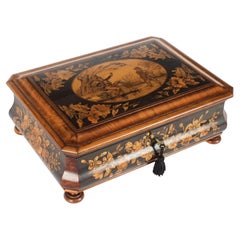
A superb antique Italian Sorrento Ware Olive wood and marquetry casket Circa 1840 in date.
The rectangular casket has fabulous inlaid marquetry decoration. It features a floral marq...
Category
Antique 1840s Decorative Boxes
Materials
Wood
Antique Palais Royal French Casket Necessaire Vanity Chest 19th Century
Located in London, GB
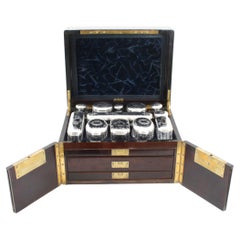
This is a fine and well fitted ebonised Gonçalo Alves Palais Royal travel necessaire / vanity chest, by Maison Smal L. Dujat - Palais Royal 7 (Paris), circa 1850 in date.
This sup...
Category
Antique 1850s French Decorative Boxes
Materials
Silver Plate
You May Also Like
Antique Swiss Music Box, circa 1890
Located in New Orleans, LA
Antique Swiss Music Box circa 1890.
Category
Antique Late 19th Century Swiss Musical Instruments
Materials
Mahogany
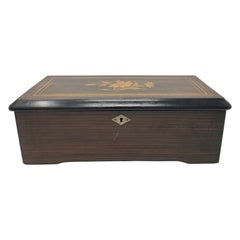
Early 20th Century French Mahogany and Painted Six-Song Cylinder Music Box
Located in Dallas, TX
Listen to soft, cheerful music in your living room with this traditional, antique music box. Crafted in Paris, France circa 1920, the wood case with inlaid decor, has black painted ...
Category
Early 20th Century French Musical Instruments
Materials
Brass

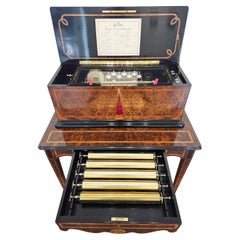
Orchestral Interchangeable Antique Music Box on Table, Ducommun Girod, c. 1870
Located in London, GB
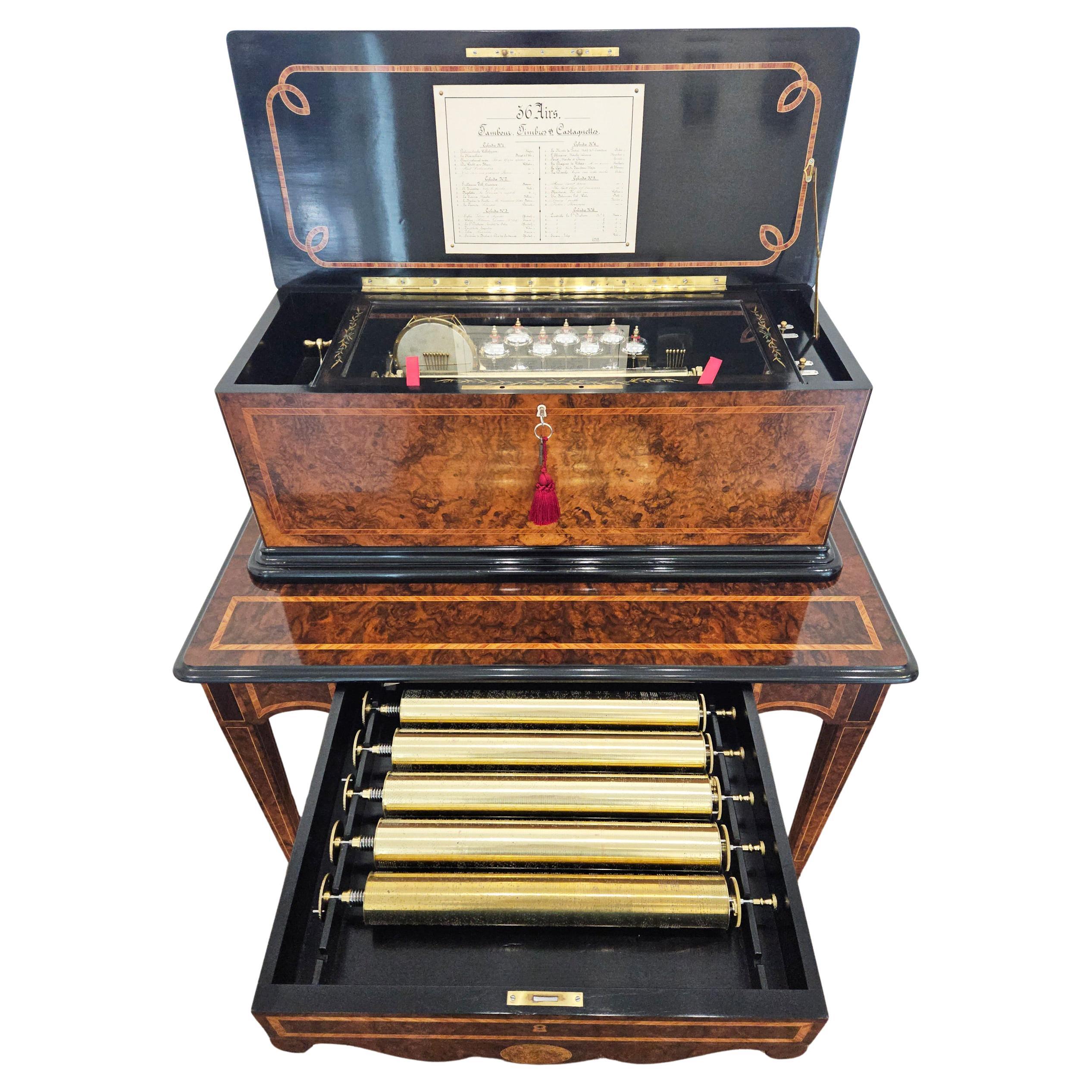
A magnificent drum, bell, and castanet orchestral music box with six interchangeable cylinders on matching table, made by Ducommun Girod in Geneva, Switzerland c. 1870.
The mechani...
Category
Antique Late 19th Century Swiss Late Victorian Musical Instruments
Materials
Brass, Stainless Steel
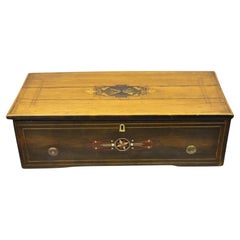
19th C. Antique Swiss Cylinder Roll Music Box 6 Tune Airs with Inlaid Case
Located in Philadelphia, PA
19th C. Antique Swiss Cylinder Roll Music Box 6 Tune Airs with Inlaid Case and Works Very Nicely. Circa 19th Century. Measurements: 5.25" H x 16.75" W x 7.5" D.
Category
Antique 19th Century Napoleon III Musical Instruments
Materials
Mahogany
Cylinder Musical Box
Located in Cheshire, GB
Swis music box with original tune sheet, cylinder, comb and the brass bed plate, within a rosewood case, the lid inlaid with boxwood lines and a central motif.
Dimensions
Height 8 ...
Category
Antique Late 19th Century French Musical Instruments
Materials
Walnut
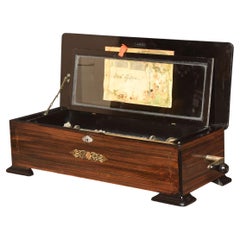
$2,181 Sale Price
46% Off
Antique Swiss Langdorff
Fils 8 Tune Niut Airs Marquetry Music Box 20"
Located in Dayton, OH
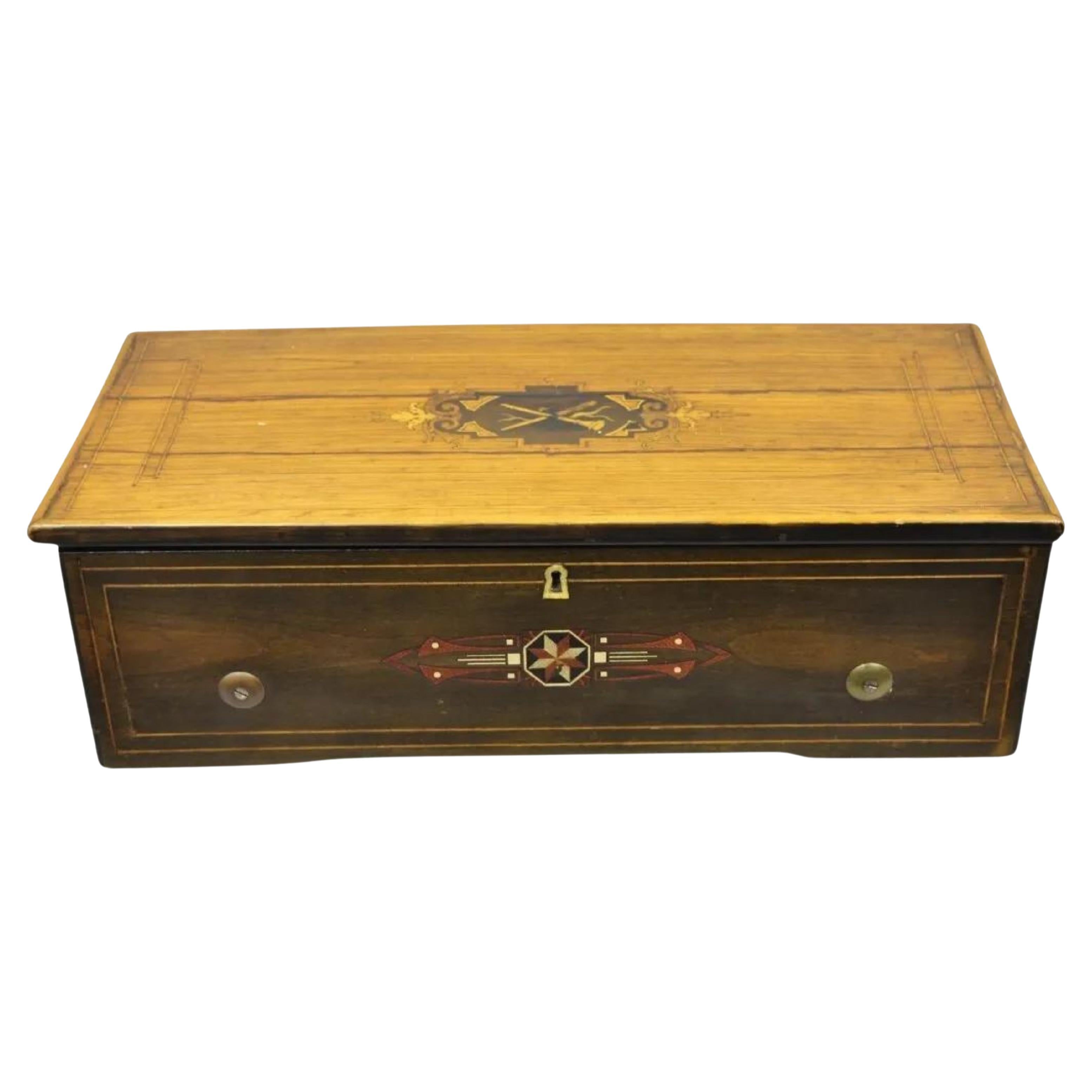
Exquisite late 19th century Swiss marquetry / parquetry cylinder music box capable of playing eight different tunes. Rectangular hardwood box with painted wood grain sides and inlaid...
Category
Antique 19th Century Swiss Neoclassical Musical Instruments
Materials
Rosewood
$2,520 Sale Price
30% Off
More Ways To Browse
Antique Music Boxes
Latin America Antique
Goncalo Alves
Antique Wood Plains
Antique Wooden Ships
Swiss 19th Century Music Box
Antique Carillon
Swiss Cylinder Music Box
Swiss Air
Musical Snuff Box
Brionvega Radio
Rare Musical Instruments
Used Band Instruments
Victorian Music Box
Cow Bells
Mid Century Record Player
Square Piano
Wall Gong