Items Similar to Exceptional Quality Antique C.Bechstein Victorian Rosewood Boudoir Grand Piano

Video Loading
Want more images or videos?
Request additional images or videos from the seller
1 of 22
Exceptional Quality Antique C.Bechstein Victorian Rosewood Boudoir Grand Piano
$27,343.89
£19,850
€23,388.43
CA$37,768.28
A$40,449.84
CHF 21,745.55
MX$491,286.94
NOK 274,765.68
SEK 251,568.41
DKK 174,754.32
About the Item
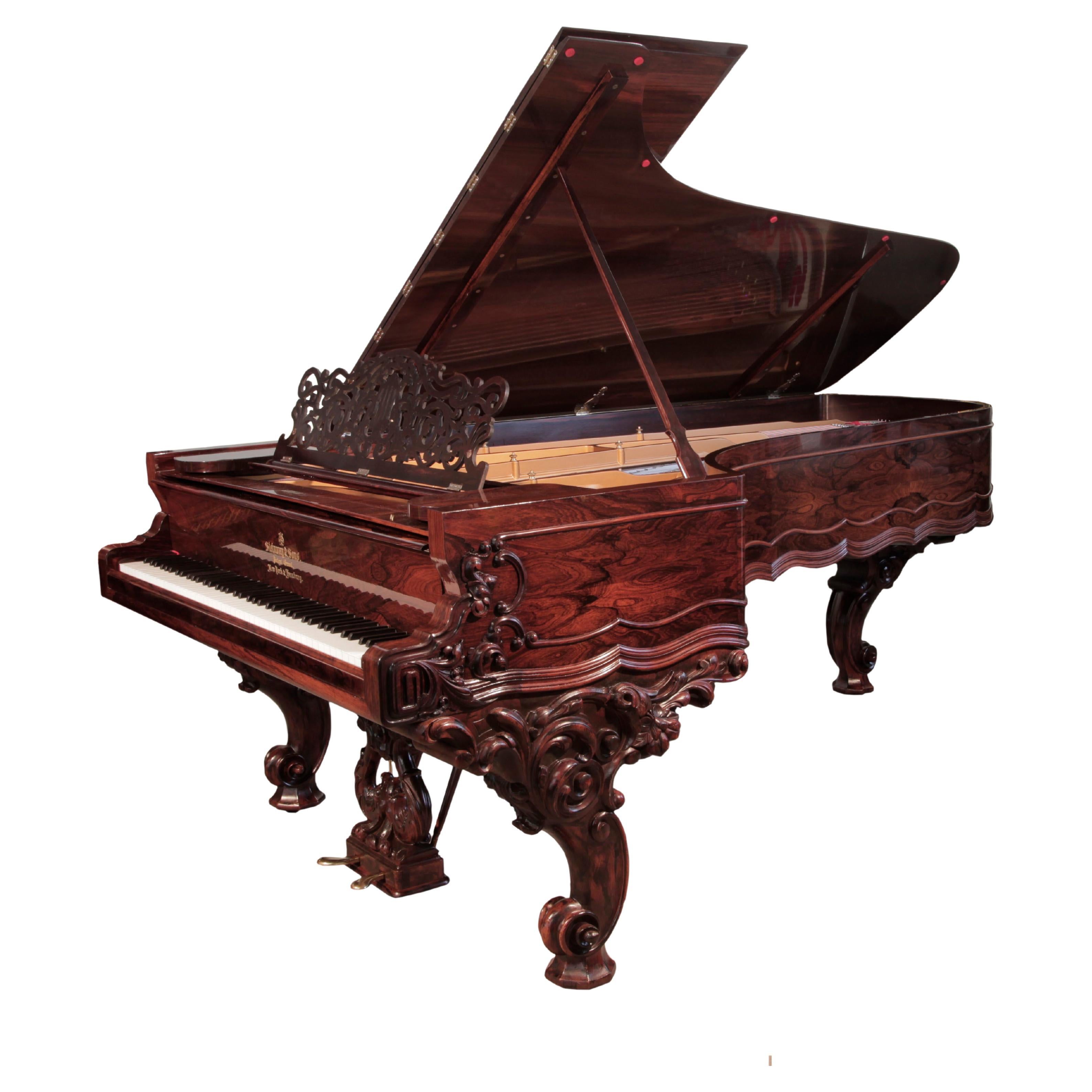
Exceptional quality antique C.Bechstein Victorian rosewood boudoir grand piano Model V (1898) having a superb quality rosewood lift up top opening to reveal an ornate adjustable music stand, overstrung iron frame, C.BECHSTEIN numbered 47038 , APHA ref PNGLXD5X in fabulous condition, serpentine shaped fall opening to reveal black and white playing keys standing on turned tapering horizontal legs with original brass castors, double brass pedals.
This beautiful example was previously privately owned, regularly tuned and played.
Dimensions:
Height 100 cm (39.37 in)
Width 150 cm (59.05 in)
Depth 200 cm (78.74 in)
Dated 1898
- Dimensions:Height: 39.38 in (100 cm)Width: 59.06 in (150 cm)Depth: 78.75 in (200 cm)
- Style:Victorian (Of the Period)
- Materials and Techniques:
- Place of Origin:
- Period:
- Date of Manufacture:1898
- Condition:Wear consistent with age and use. This beautiful example was previously privately owned, regularly tuned and played.
- Seller Location:Suffolk, GB
- Reference Number:Seller: 27051stDibs: LU5415245023252
About the Seller
5.0
Platinum Seller
Premium sellers with a 4.7+ rating and 24-hour response times
Established in 2020
1stDibs seller since 2020
455 sales on 1stDibs
Typical response time: <1 hour
- ShippingRetrieving quote...Shipping from: Ipswich , United Kingdom
- Return Policy
More From This Seller
View AllYamaha Baby Grand Quality Mahogany Piano Model C2
Located in Suffolk, GB
Quality Yamaha baby grand piano with an overstrung iron frame, frame and sound board in perfect condition, mahogany case standing on square tapering legs wi...
Category
Late 20th Century English Musical Instruments
Materials
Other
Fine Quality Antique Regency Mahogany Chiffonier / Sideboard
Located in Suffolk, GB
A fine quality antique Regency mahogany chiffonier / sideboard of superb craftsmanship and elegant proportion crafted from richly figured mahogany with a deep, lustrous patina, this ...
Category
Antique 19th Century English Regency Sideboards
Materials
Mahogany
Antique Regency Quality Figured Mahogany Pembroke Table
Located in Suffolk, GB
Antique regency quality figured mahogany Pembroke table having a quality figured mahogany top with a reeded edge and two drop leaves, single oak lined drawer with original brass lion...
Category
Antique 19th Century English Regency Drop-leaf and Pembroke Tables
Materials
Other
Antique Victorian Quality Mahogany Dressing Table
Located in Suffolk, GB
Antique Victorian quality mahogany dressing table having an adjustable swing mirror supported by two shaped carved mahogany scrolls, single drawer with original turned knobs above a ...
Category
Antique 19th Century English Victorian Vanities
Materials
Other

Antique Quality Edwardian Inlaid Mahogany Sutherland Table
Located in Suffolk, GB
A fine antique quality Edwardian mahogany Sutherland table showcasing excellent craftsmanship and elegant satinwood and boxwood string inlay throughout.
The well-figured mahogany to...
Category
Early 20th Century English Edwardian Drop-leaf and Pembroke Tables
Materials
Boxwood, Mahogany, Satinwood
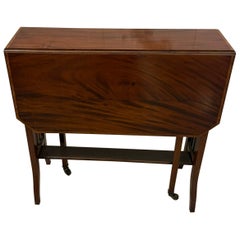
Antique Victorian Outstanding Quality Figured Mahogany Sideboard
Located in Suffolk, GB
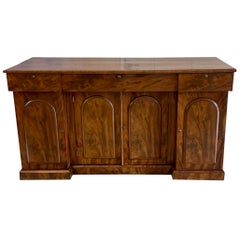
Antique Victorian outstanding quality figured mahogany sideboard having a wonderful quality figured mahogany top with 3 drawers above 4 arched panelled figured mahogany moulded doors...
Category
Antique 19th Century English Victorian Sideboards
Materials
Other
You May Also Like
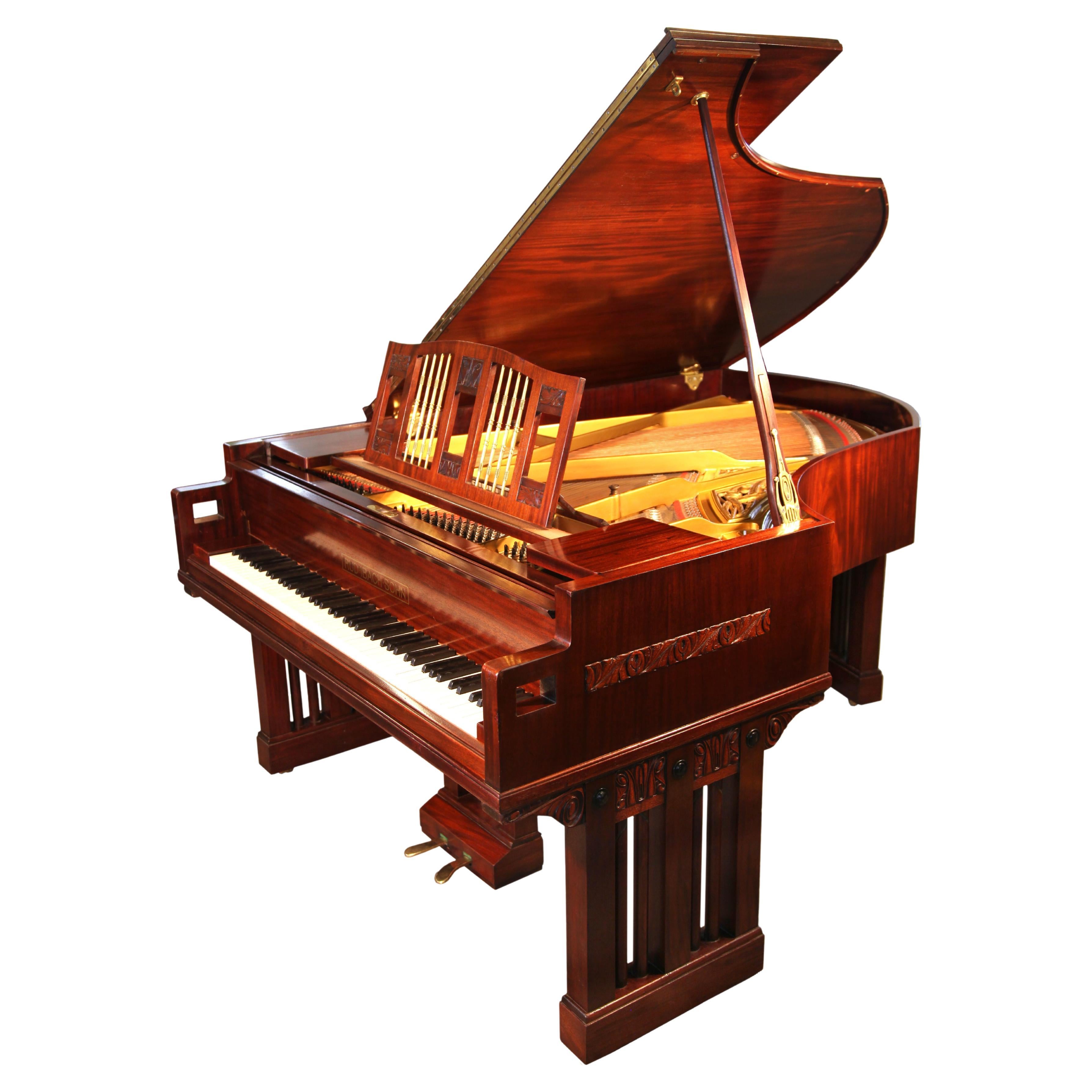
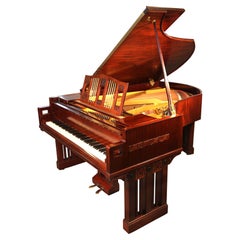
Secessionist, Bechstein Model VI Grand Piano with an Inlaid, Mahogany Case
Located in Leeds, GB
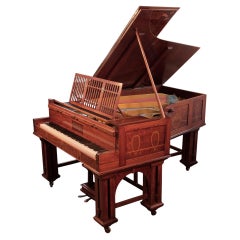
Secessionist 1902, Bechstein Model VI grand piano with an inlaid, mahogany case and statement copper hinges. Cabinet inspired by Arts and Crafts and Art Nouveau periods. The polished...
Category
Early 20th Century German Arts and Crafts Musical Instruments
Materials
Copper
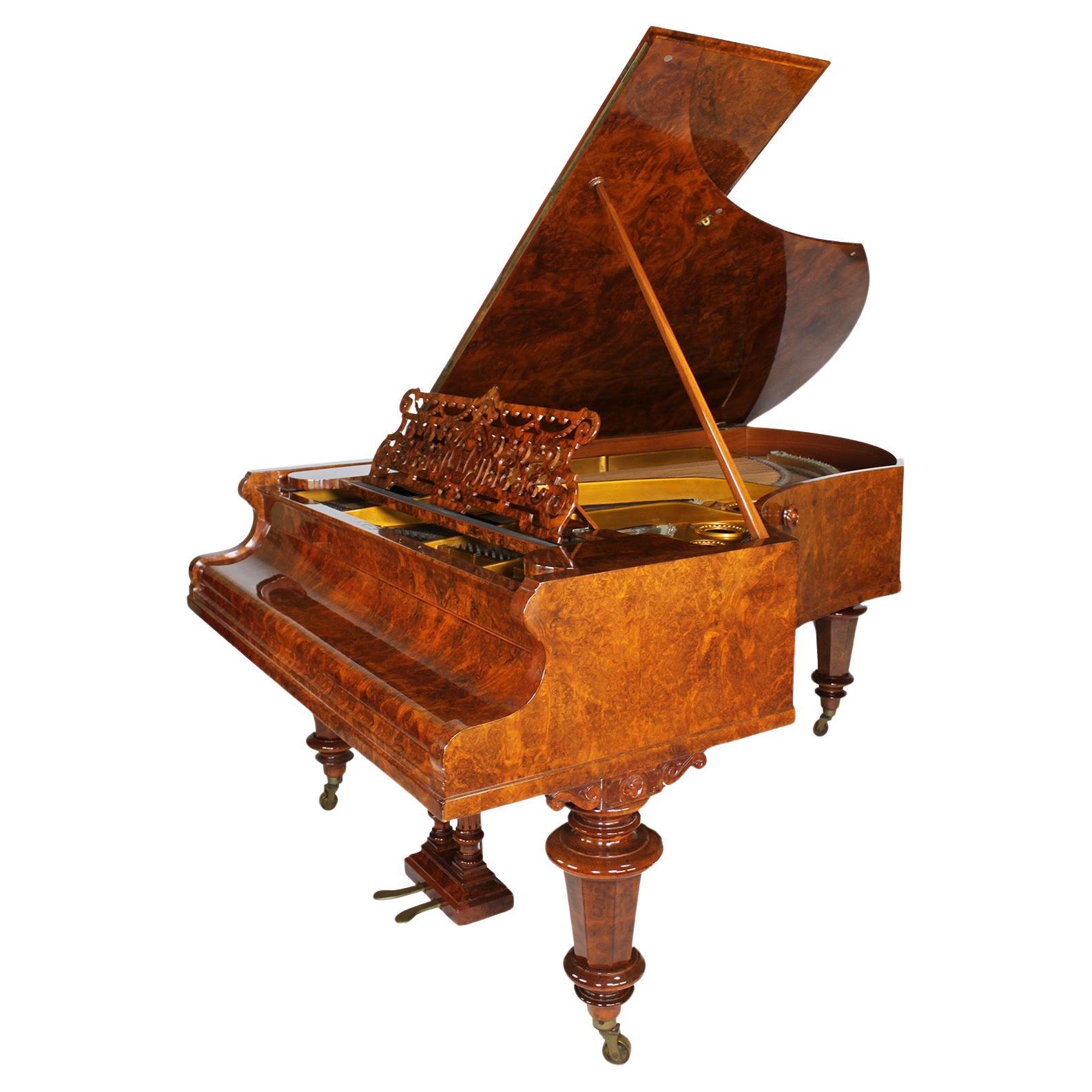
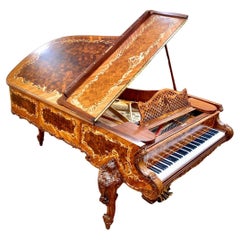
A German 19th Century Louis XVI Style Burr Walnut Bechstein Concert Grand Piano
By Bechstein Piano Company
Located in Los Angeles, CA
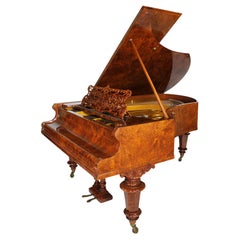
A Very Fine German 19th Century Louis XVI Style Burr Walnut Bechstein Concert Grand Piano, Serial No. 5655. The beautifully crafted Grand piano, raised on three tapered barrel shaped legs, with an intricately carved ornate music desk and original keys. Circa: 1872.
Length: 80 inches (203.2 cm)
Width: 59 inches: (149.9 cm)
Height (top closed): 38 5/8 inches (98.1 cm)
C. Bechstein Pianofortefabrik
C. Bechstein Pianofortefabrik AG (also known as Bechstein) is a German manufacturer of pianos, established in 1853 by Carl Bechstein.
Before Bechstein
Young Carl Bechstein studied and worked in France and England as a piano craftsman, before he became an independent piano maker. His first pianos were made for other companies.
C. Bechstein
C. Bechstein piano factory was founded on 1 October 1853 by Carl Bechstein in Berlin, Germany.
Carl Bechstein set out to manufacture a piano able to withstand the great demands imposed on the instrument by the virtuosi of the time, such as Franz Liszt. In 1857, Hans von Bülow (Liszt's son-in-law) gave the first public performance on a Bechstein grand piano by performing Liszt's Piano Sonata in B minor in Berlin
By 1870, with endorsements from Franz Liszt and Hans von Bülow, Bechstein pianos had become a staple in many concert halls and private mansions. By that time three piano makers, all of which were founded in 1853, became established as the industry leaders across the world: Bechstein, Blüthner and Steinway & Sons.
In 1881 Bechstein began supplying pianos to Queen Victoria. A gilded art-case piano was delivered to Buckingham Palace, followed by several more Bechstein pianos to Windsor Castle and other royal residences. By January 1886 they were among the piano manufacturers holding a Royal Warrant as a supplier to the Queen. Several British embassies across the world acquired Bechstein pianos.
In 1885, Bechstein opened a branch in London, that eventually grew to become the largest showroom and dealership in Europe. By 1890 showrooms had been opened in Paris, Vienna, and Saint Petersburg. On 31 May 1901, Bechstein Hall, built at a cost of £100,000, was opened next to the company's London showroom at 36-40 Wigmore Street. Between 1901 and 1914, C. Bechstein was the largest piano dealership in London. At that time, Bechstein was patronized by the tsars of Russia, the royal families of Spain, Belgium, the Netherlands, Italy, Sweden, Norway, Austria and Denmark, and other royalty and aristocracy. The list of royal clients of Bechstein may be found on the soundboard of vintage Bechstein pianos made before the Second World War. The list is part of the original Bechstein trademark logo; it can be seen under the strings in the center of a piano's soundboard.
The signature of Carl Bechstein
The years from the 1870s through 1914 brought Bechstein their most dramatic increase in sales. In 1880 a second Bechstein factory was opened in Berlin, and the third factory was opened in 1897 in Berlin-Kreuzberg. Production reached 3,700 pianos annually in 1900, and 4,600 in 1910, making Bechstein the largest German manufacturer of high-end pianos. At that time, about three quarters of production went to international markets, especially Britain and the Commonwealth, and Russia.
Carl Bechstein died in 1900, and the Bechstein company continued to operate under the management of his sons.
Between 1900 and 1914 C. Bechstein was one of the leading piano makers in the world, employing 1,200 craftsmen and workers by 1913 and making five thousand pianos per year.
First World War
C. Bechstein suffered huge property losses in London, Paris, and St. Petersburg during World War I. The largest loss was in London. Although the company's position in the United Kingdom was initially unaffected, with the company still listed as holding a Royal Warrant in January 1915, Warrants to both King George V, and his wife Queen Mary were cancelled on 13 April 1915. Bechstein was not the only musical concern to be affected by growing anti-German sentiment: there were earlier attempts, led by William Boosey, to boycott German music altogether. In 1915, despite being a Baronet and Privy Counsellor, Sir Edgar Speyer, who was then funding the Proms, was forced to leave the country. Following the passing of the Trading with the Enemy Amendment Act 1916 the British arm of the company was wound-up on 5 June 1916, all Bechstein property, including the concert hall and showrooms full of pianos, were seized as "enemy property" and closed. In 1916 the hall was sold as alien property at auction to Debenhams for £56,500. It was renamed Wigmore Hall, and then re-opened under the new name in 1917. All 137 Bechstein pianos at the Bechstein showrooms were confiscated too, and became property of the new owner of the Hall. After a dispute with his brother, Edwin Bechstein left the company and was paid off.
Eventually the Bechstein factory resumed full-scale production during the 1920s. At that time, technical innovations and inventions of new materials and tools, as well as improvements in piano design and construction, had allowed Bechstein to become one of the leading piano makers again.
The most successful models were the updated "A"-185 and "B"-208 grand pianos. The upright pianos became more popular after the war, and C. Bechstein were successful with its upright pianos Model-8 and Model-9, both of which have been considered the finest upright pianos.
As the company was changed into a joint-stock company 1923, Edwin Bechstein and his wife Helene, bought themselves back into the company as shareholders.
In 1930 the company collaborated with German electrical goods manufacturer Siemens under Nobel laureate Walther Nernst to produce one of the first electric pianos...
Category
Antique 19th Century German Louis XVI Musical Instruments
Materials
Bronze
$34,850 Sale Price
53% Off
Arts and Crafts Ibach Grand Piano Mahogany Designed by Dutch Architect Cuypers
Located in Leeds, GB
A 1916, German Arts and Crafts, Ibach grand piano with a mahogany case and carved panel detail. The mahogany cabinet is polished so as to emphas...
Category
Early 20th Century German Arts and Crafts Musical Instruments
Materials
Brass
Rare Antique 1901 Steinway Model B Rosewood Grand Piano Louis XV Rococo Restored
By Steinway
Sons
Located in Dayton, OH
Fully Restored 1901 Steinway & Sons Model B Louis XV Baroque Rococo Grand Piano – Serial Number 99151, Full 88 key keyboard.
The most exquisitely d...
Category
Early 20th Century American Louis XV Musical Instruments
Materials
Fruitwood, Rosewood
$400,000 Sale Price
20% Off
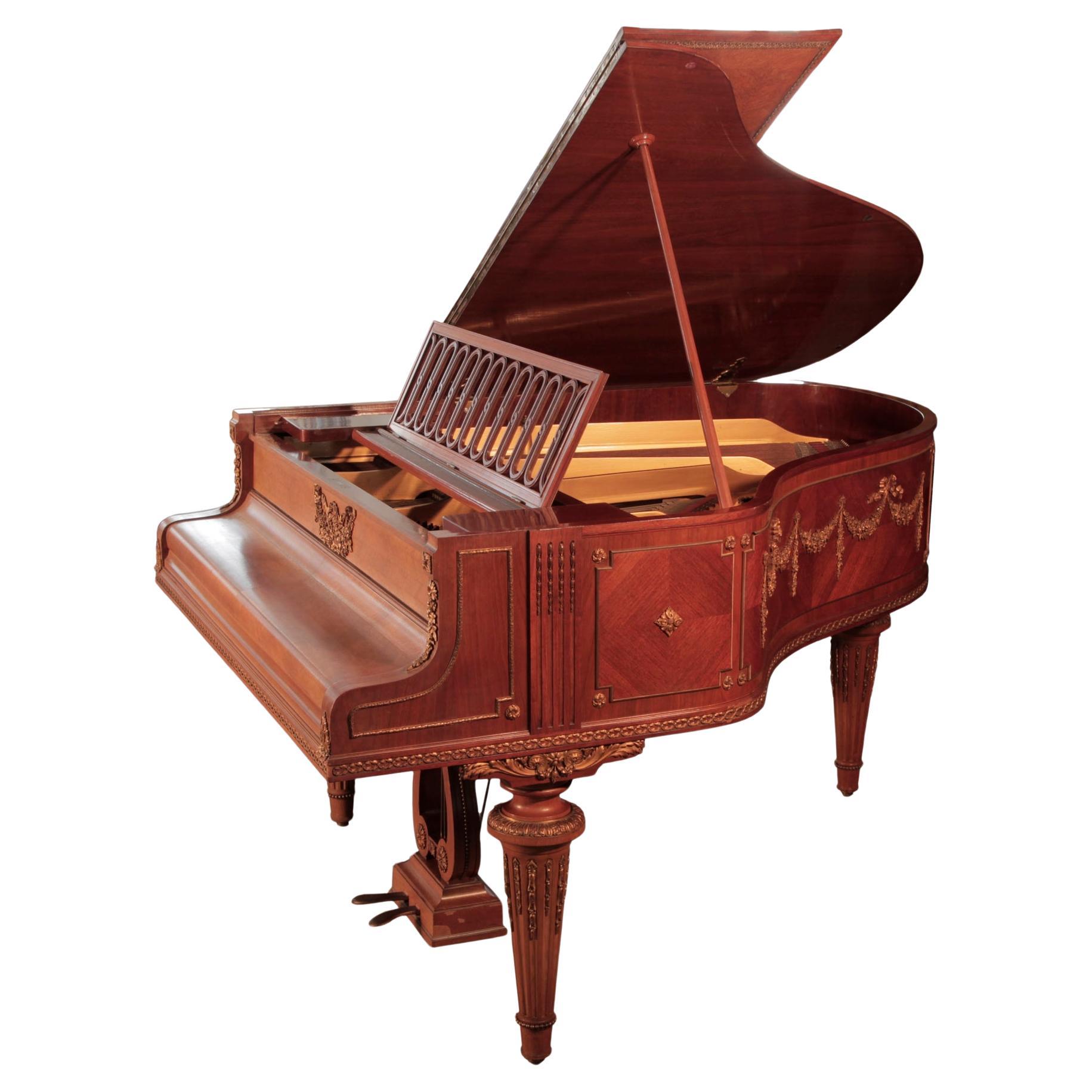
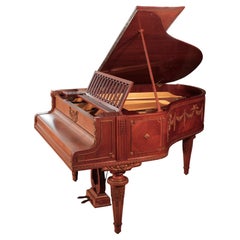
Empire Style, Schiedmayer Grand Piano Quarter-Cut Mahogany Ormolu Mounts
Located in Leeds, GB
Empire Style, 1901, Schiedmayer grand piano with a polished, quarter cut mahogany case. Entire cabinet embellished with intricate ormolu mounts. Side cabinet is decorated with festoo...
Category
Early 20th Century German Empire Musical Instruments
Materials
Ormolu
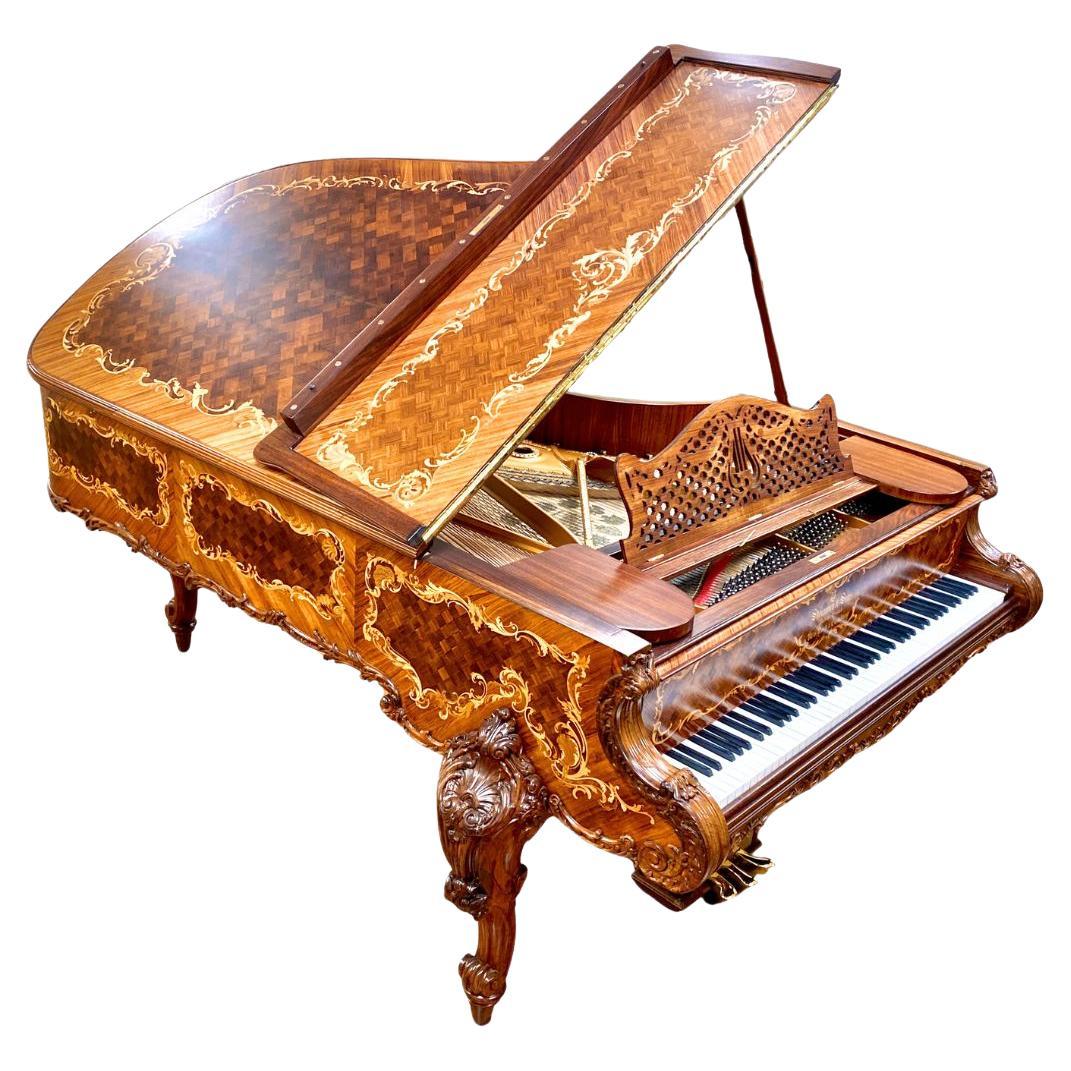
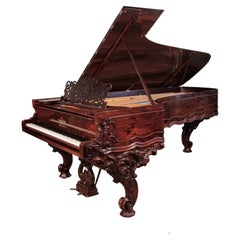
Rococo Style Steinway Centennial Concert Grand Carved Rosewood
Located in Leeds, GB
Rococo style, 1874, Steinway
Sons Centennial concert grand piano with a rosewood case, filigree music desk and ornately carved, reverse scroll legs. Piano is rebuilt.
The piano cheek features a carved, Classical meander and acanthus in high relief. The two-pedal piano lyre features carved inverted fish, c-scrolls and a central cartouche. The music desk in an openwork arabesque design and a central lyre motif. A sinuous wave pattern double moulding surrounds the cabinet base.
At the 1876 Centennial Exposition in Philadelphia, Pennsylvania, there were several manufacturer's competitions, including a piano competition. The Steinway company sent two grand pianos displaying their latest developments, demonstrating the firm's innovative and markedly improved piano quality. Their determined pursuit of quality was rewarded at the world exhibition with a gold medal. Steinway won the competition against several established, well-known American piano makers, including Chickering and Sons and Weber. This Steinway concert grand...
Category
Antique Late 19th Century German Rococo Musical Instruments
Materials
Rosewood
More Ways To Browse
Antique Boudoir
19th Century Piano
Antique Iron Music Stand
Antique Bechstein Piano
Bechstein Piano
Used Bechstein Pianos
Bechstein Grand Piano
Victorian Grand Piano
C Bechstein Grand Piano
Rca Radio
School Bell Antique
Used Xylophones
1930s Vintage Radio
Antique Cow Bells
Antique Pianoforte
Antique Square Pianos
Fm Radio
Gramophone Furniture