Items Similar to Burnished brass sextant signed Heath Co Eltham London second half 19th cent.
Want more images or videos?
Request additional images or videos from the seller
1 of 21
Burnished brass sextant signed Heath Co Eltham London second half 19th cent.
$3,870.81
£2,833.67
€3,200
CA$5,295.63
A$5,598.85
CHF 3,008.67
MX$67,243
NOK 37,673.84
SEK 34,474.34
DKK 24,374.89
About the Item
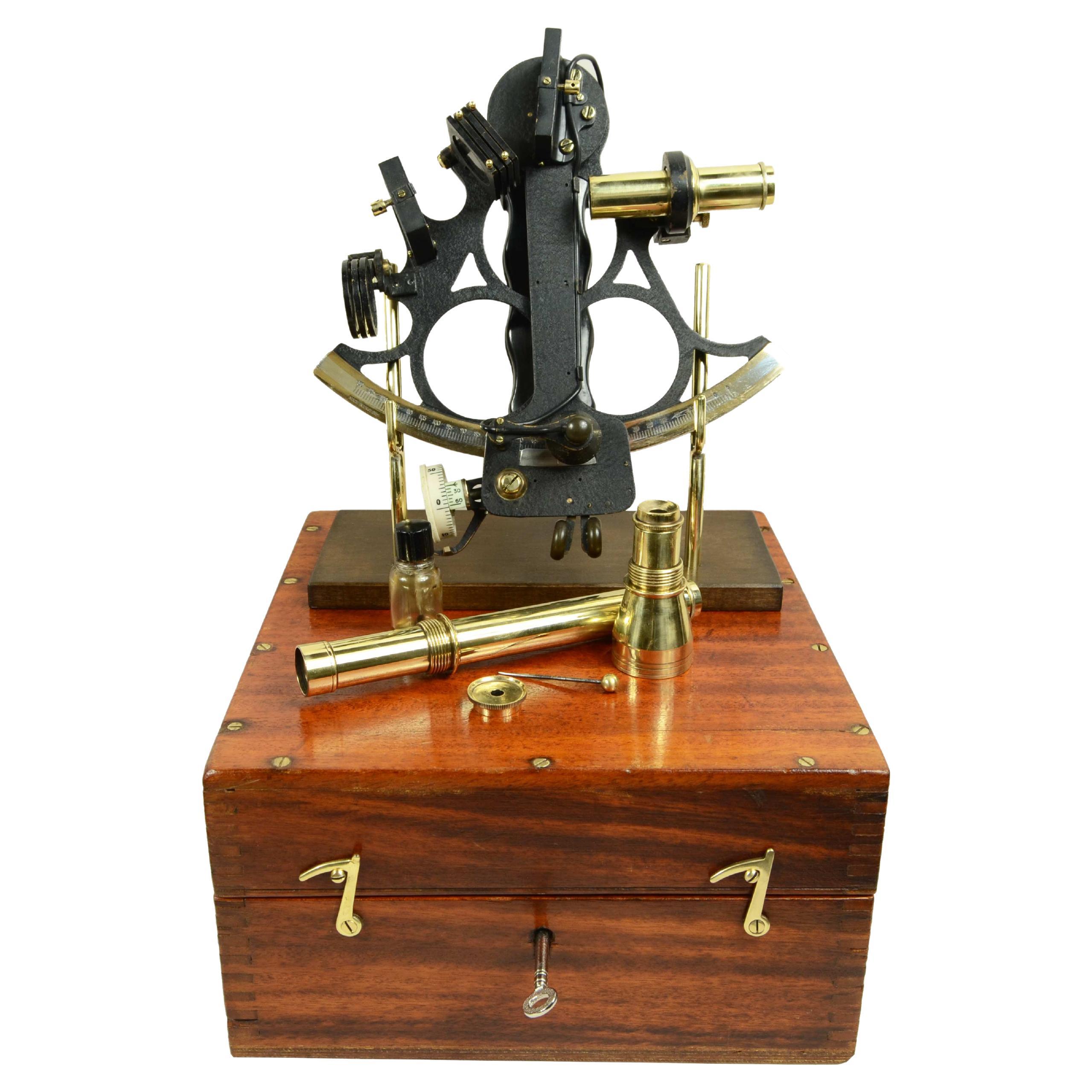
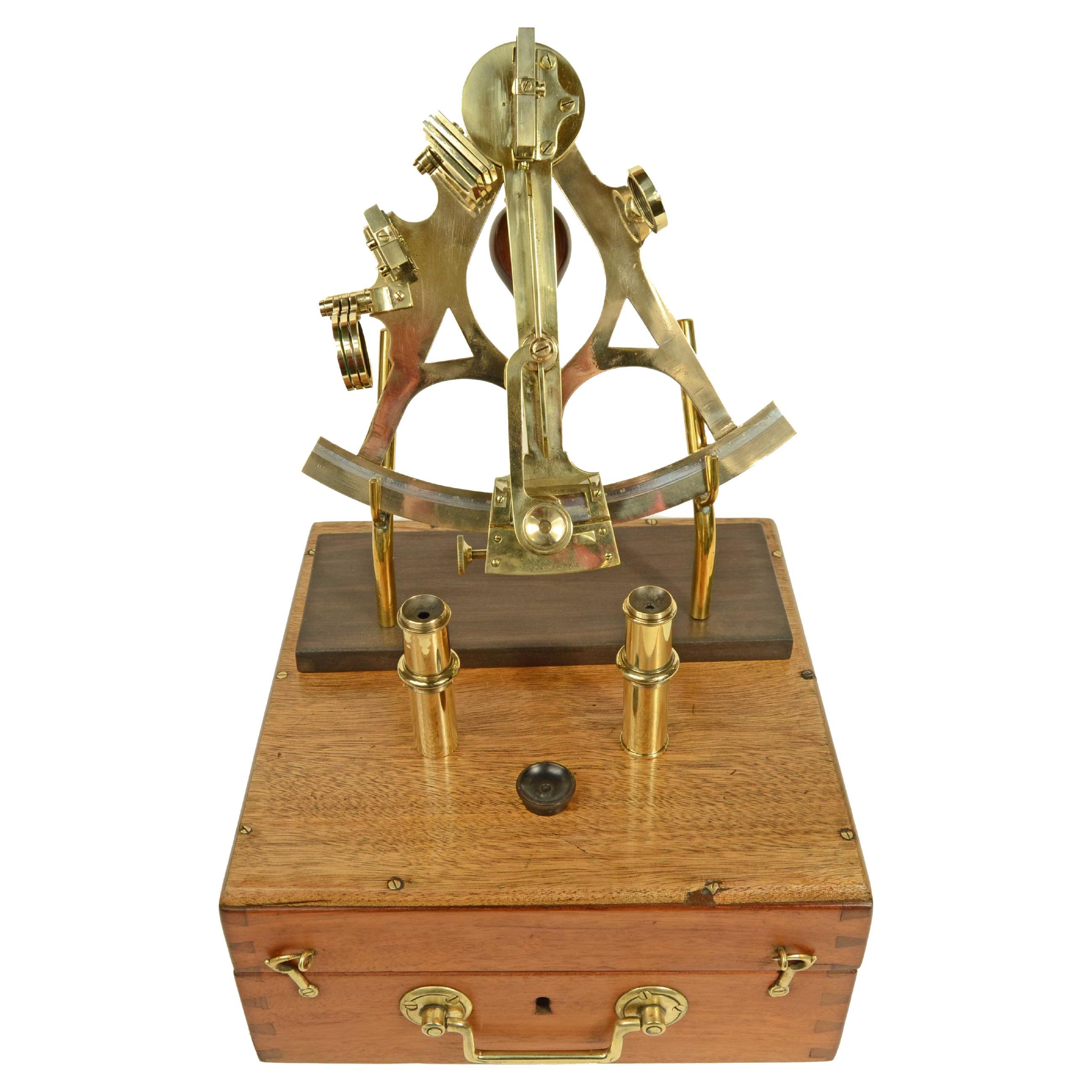
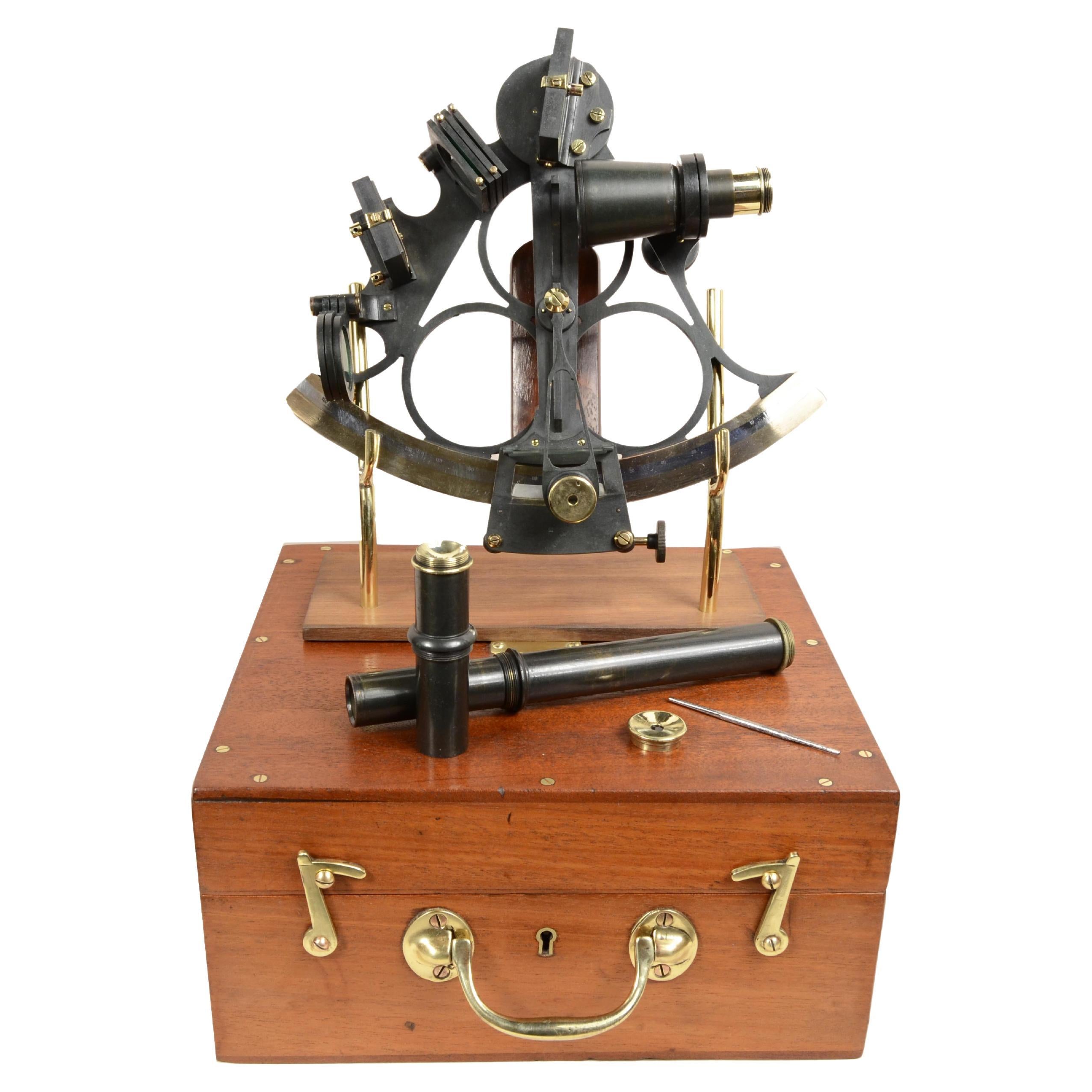
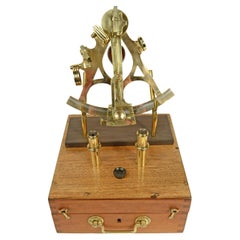
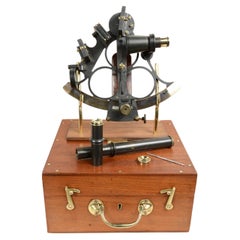
Black burnished brass sextant, signed Heath
Co Ltd . Eltham London, Hezzanith Pat 17840, second half of the 19th century, housed in its original mahogany box, with locking hooks, retractable handle, and brass hinges, with sextant locking device inside the box and complete with key. Box size cm 27.5 x25 x 14 - 10.8 x 9.8 x 5.5 in Silver flap and nonius, wooden handle, 3 colored glasses for fixed mirror and 4 for movable mirror, three telescopes one of which is long, spare optics, two filters, a microscope for reading the nonius graduated from 0 to 150°, index and horizon mirror. Perfectly working. State of preservation: very good.
Complete with custom-made stand made of wood and brass.
The last photo is the gift box.
Heath
Co. was one of Britain's most renowned manufacturers of scientific and nautical instruments. Founded in London around 1845 by George Heath, it continued the family tradition already active in optical and navigational instruments since the 18th century. During the nineteenth century the company distinguished itself by producing sextants, octants, compasses, barometers, and precision instruments for the British navy and merchant marine. Beginning in the 1880s the firm assumed the name Heath
Co. Ltd. and moved to the New Eltham plant. The brand name "Hezzanith"-a contraction of Heath's Zenith-was introduced to identify high-precision sextants produced with advanced techniques and prized for their mechanical and optical quality. The company remained active until the mid-20th century, when it was gradually absorbed by other companies in the industry, such as W. F. Stanley
Co.
The sextant is an ancient astronomical instrument used for measuring the height of a star (e.g., the Sun): one places the instrument in a vertical plane and, looking through the aiming device, aims at the horizon line visible through the unsilvered half of the fixed mirror. Moving the alidade, with which the mirror is integral, causes the light rays coming from the star and subsequently reflected by the moving mirror and the silvered half of the fixed mirror to be sent back by the latter in the direction of observation: if you look through the aiming device you can see the image of the star, obtained by double reflection, coincide with the horizon line. The height of the astro is expressed by the angle whose value is read on the graduated scale. The filter is used when the star to be looked at is the Sun. It was Sir Isaac Newton who invented the principle of double reflection in navigation instruments, but this research was never published. Subsequently, two men, independently of each other, discovered the sextant around 1730 : John Hadley (1682-1744), an English mathematician, and Thomas Godfrey, (1704-1749), an American inventor. But it was not until 1758 that Admiral John Campbell carried out a series of offshore trials to test a new method that relied on lunar distance as a means of calculating longitude. This was how the sextant was developed. Initially made of brass, they had scales divided with great precision by mathematicians who made scientific instruments.
About the Seller
5.0
Gold Seller
Premium sellers maintaining a 4.3+ rating and 24-hour response times
Established in 1999
1stDibs seller since 2014
405 sales on 1stDibs
Typical response time: 7 hours
- ShippingRetrieving quote...Shipping from: Milan, Italy
- Return Policy
More From This Seller
View AllBrass sextant signed H. Hughes
Son Ltd No. 32890 of the 1930s
Located in Milan, IT
Brass sextant signed H. Hughes & Son Ltd No. 32890 of the 1930s; instrument complete with optics and housed in its original mahogany wood box of with locking hooks and brass handle,...
Category
Vintage 1930s Nautical Objects
Materials
Brass
Brass sextant signed Eigens Fabrikat 1126 Germany second half 19th cent
Located in Milan, IT
Brass sextant signed Eigens Fabrikat 1126, German manufacture of the second half of the 19th century and housed in its original mahogany wood box with brass handle, hinges, and locki...
Category
Antique 1870s Nautical Objects
Materials
Brass
Burnished brass sextant D. Mc Lean
Co Lta 113 Frenchurch St. London 1890
Located in Milan, IT
Burnished brass sextant D. Mc Lean & Co Lta 113 Frenchurch St. London, datatable around the end of the 19th century, instrument complete with optics and housed in its original squa...
Category
Antique 1890s Nautical Objects
Materials
Brass
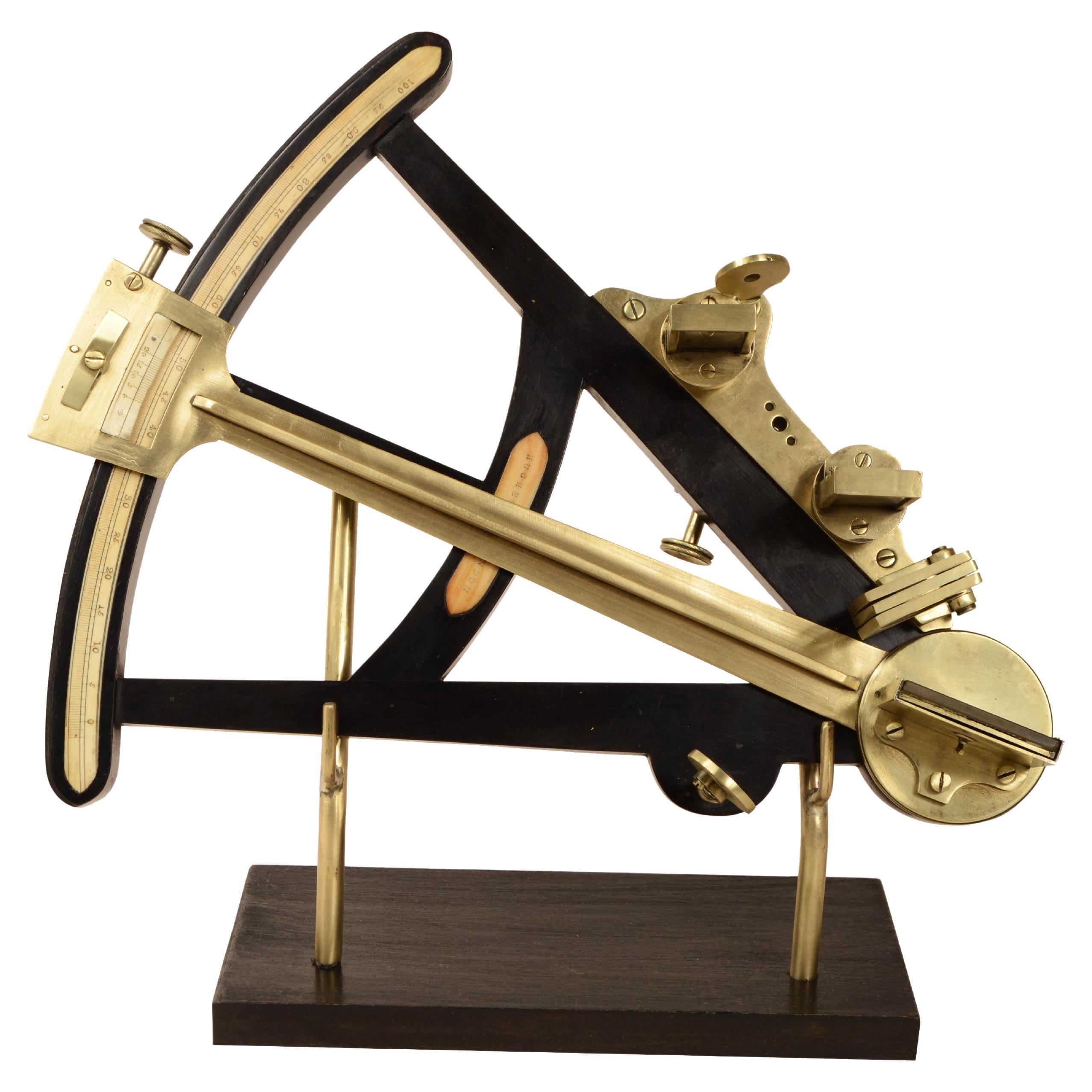
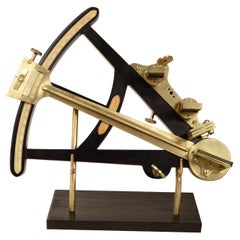
Ebony, brass octant signed Hughes London made around 1830
Located in Milan, IT
Ebony wood, brass and marine ivory octant, scale from 0° to 100°,signed Hughes London made around 1830.
Good condition, complete with custom-made display base made of wood and brass....
Category
Antique 1830s Nautical Objects
Materials
Wood
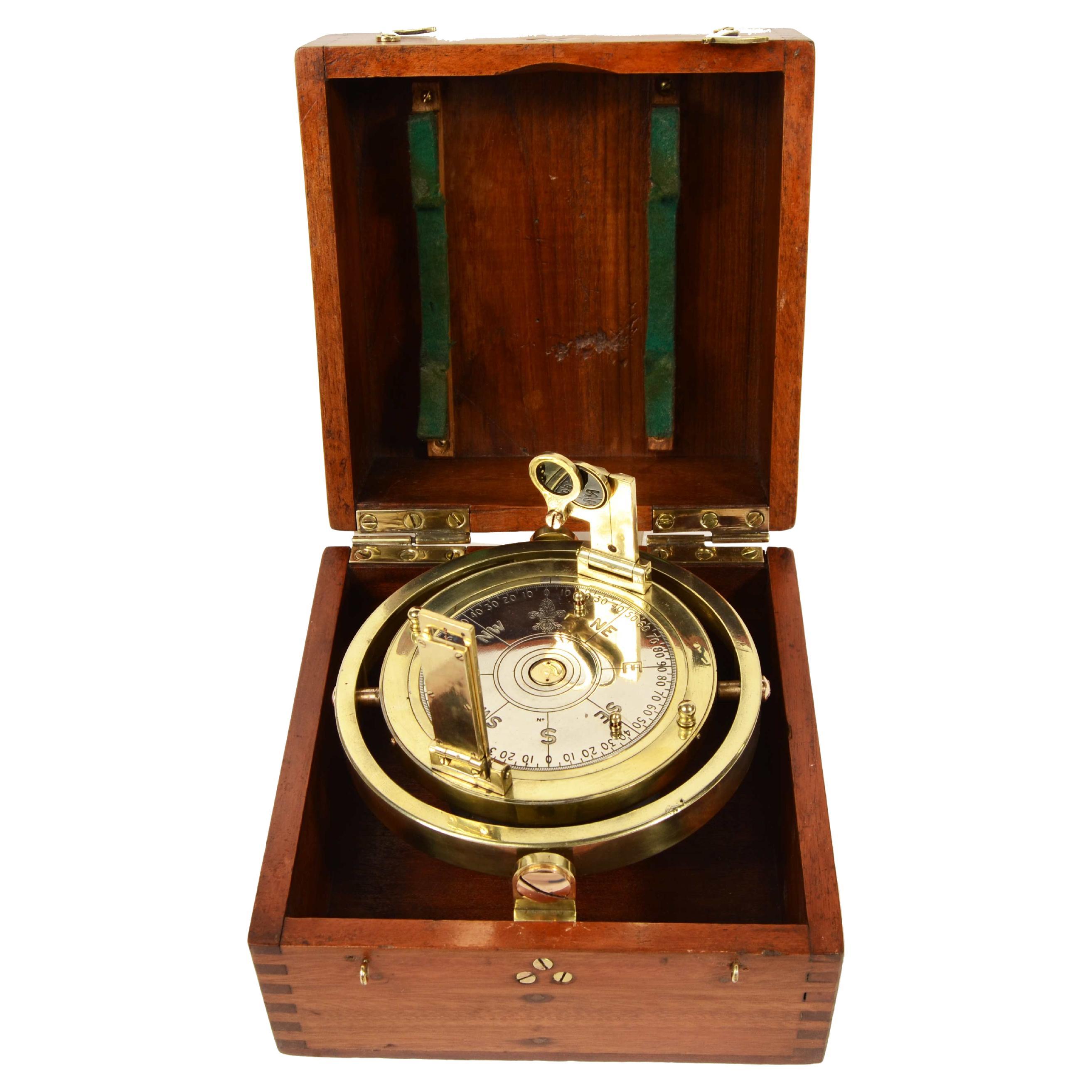
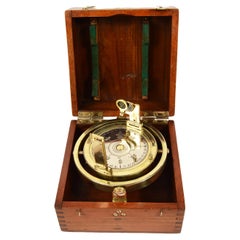
English Pelorus brass from the second half of the 19th century, on cardan joint
Located in Milan, IT
English Pelorus brass from the second half of the 19th century, mounted on gimbals within its original mahogany wood box with brass hinges and locking hooks.
The instrument has an...
Category
Antique 1870s Nautical Objects
Materials
Brass
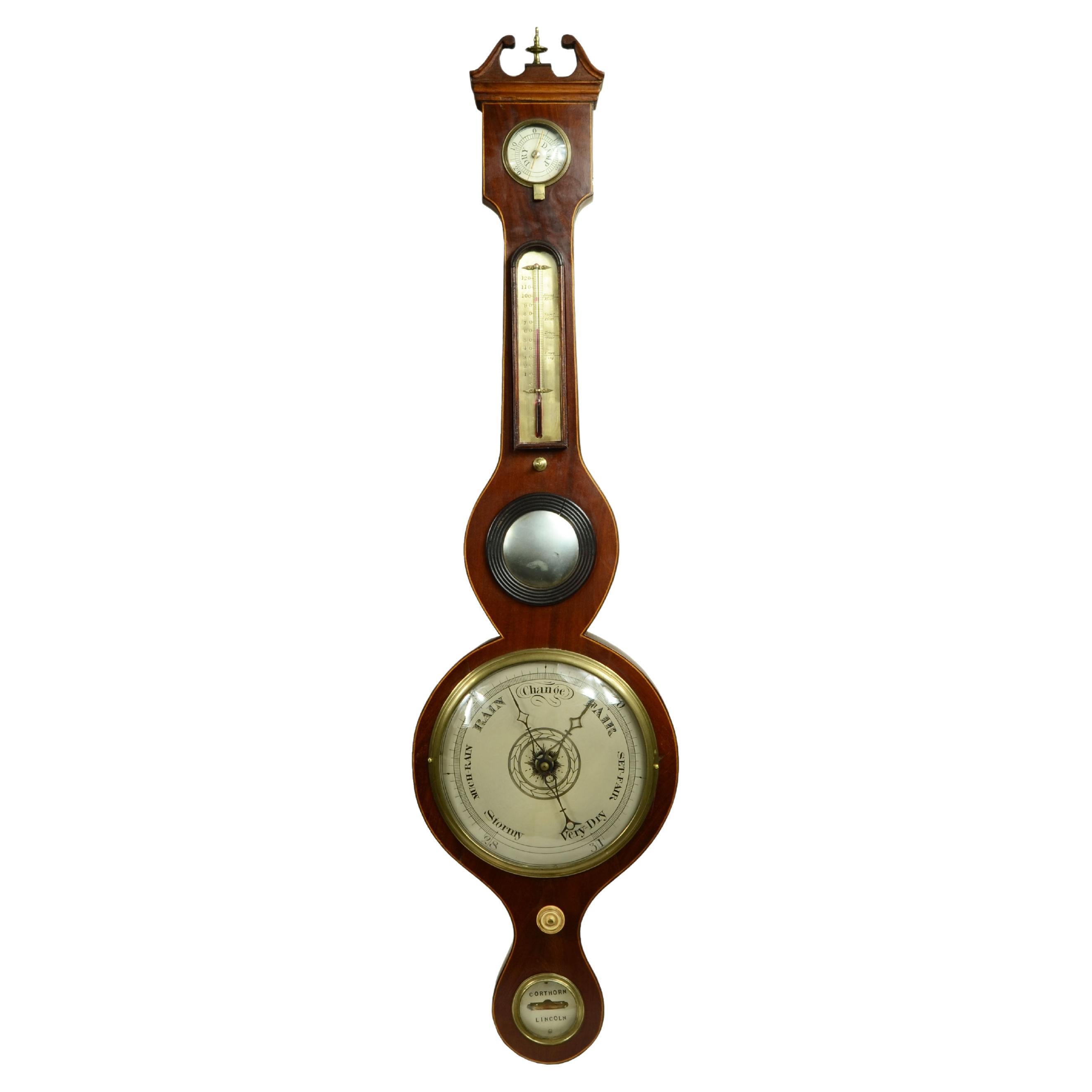
Torricellian mahogany barometer signed Corton Lincoln mid-19th cent.
Located in Milan, IT
Torricellian mercury barometer in mahogany wood, signed Corton
Lincoln of the mid 19th cent. complete with reading nonius for checking pressure variation, alcohol thermometer, hyg...
Category
Antique Mid-19th Century Scientific Instruments
Materials
Wood
You May Also Like
Marine chronometer, SEWILL, England late 19th century
By Sewill
Liverpool
Located in Vicenza, VI
Marine chronometer manufactured by Sewill, housed in a rosewood cubic case with brass edges and threads, measuring 18x18x19 cm. It has two lids: the first is tall and has a consultat...
Category
Antique Late 19th Century English Other Nautical Objects
Materials
Brass
Nautical marine Sextant by Negretti and Zambra London
Located in Norwich, GB
Nautical Marine Sextant by Negretti and Zambra, London.
Brass and oxidised nautical sextant signed Negretti and Zambra, London.
This fine instrumen...
Category
Antique Early 1900s Nautical Objects
Materials
Brass
Decorative Alidade, Metal, 20th Century
Located in Madrid, ES
It has a cover to protect the lens made of the same gold metal in which the rest of the instrument is made. The lines, pure and clean, are the protagonists, and make it a great opti...
Category
20th Century Unknown Other Scientific Instruments
Materials
Metal, Other
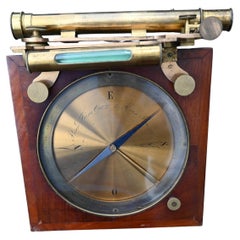
Antique Surveyor
s Circumcompendium Signed Brand Frères, 1850-1880
Located in Bilzen, BE
"Antique Surveyor's Circumcompendium Signed Brand Frères, 1850-1880"
Description: Antique Surveying Circumferentor by Brand Frères
Brand Frères, Optic...
Category
Antique Mid-19th Century Belgian Other Scientific Instruments
Materials
Brass
Vintage Surveyor
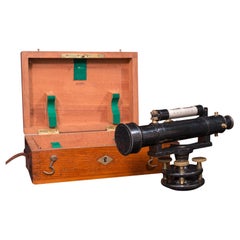
s Level, Brass, Scientific Instrument, Engineering, Circa 1950
Located in Hele, Devon, GB
This is a vintage surveyor's level. An English, brass scientific instrument with enamelled finish, dating to the mid 20th century, circa 1950.
Appe...
Category
Mid-20th Century British Scientific Instruments
Materials
Brass
Antique Surveyor
s Level, English, Brass, Scientific Instrument, Halden
Sons
Located in Hele, Devon, GB
This is an antique surveyor's level. An English, brass scientific instrument by J. Halden & Sons of Manchester, dating to the early 20th century, circ...
Category
Early 20th Century British Scientific Instruments
Materials
Brass