Items Similar to Ebony, brass octant signed Hughes London made around 1830
Want more images or videos?
Request additional images or videos from the seller
1 of 20
Ebony, brass octant signed Hughes London made around 1830
$3,104.96
£2,320.08
€2,600
CA$4,282.83
A$4,691.70
CHF 2,469.53
MX$55,996.73
NOK 31,480.27
SEK 28,777.71
DKK 19,809.96
About the Item
Ebony wood, brass and marine ivory octant, scale from 0° to 100°,signed Hughes London made around 1830.
Good condition, complete with custom-made display base made of wood and brass.
Measures 25x30x8 cm - inches 9.8x11.8x3.1.
The octant, eighth part of the circle, is a reflection instrument, proposed for the Western world around 1731 by John Hadley (1682-1744) and used to measure at sea the height of the Sun or a star relative to the horizon. A movable arm, equipped with a mirror and pivoted on a graduated arc, makes it possible to obtain by reflection the image of the star superimposed on that of the directly observed horizon. Early instruments were made of fine wood, usually ebony or mahogany, and had ivory graduation; later they were replaced by brass or bronze instruments, and the graduation was engraved on a silver strip embedded in the metal arch of the flap.
The need to make angle measurements more accurate required more and more precise instruments, and in the late seventeenth century the first document appears that mentions the principle of reflection of plane mirrors, applied to the measurement of angles, in this document an instrument is mentioned devised around 1665 by Robert Hooke (1635-1703) and presented to the scientific community. This instrument being equipped with only one mirror allowed for simple reflection and was therefore inadequate for the purpose.
Hooke realized the drawback, but failed to perfect his instrument; however, the idea of making use of reflection was taken up by other researchers who studied ways to correct the drawbacks of the initial instrument, until in 1731, John Hadley presented his double-reflection octant, formed by a 45-degree arc divided into 90 half-degrees, to the Royal Society of London.
In 1732, the British Admiralty made the yacht Chatman available to experiment in navigation with Hadley's instrument, which won praise from the most distinguished astronomers of the time.
Early instruments were made of fine wood, usually ebony, and had ivory graduation; later they were replaced by brass or bronze instruments, and the graduation was engraved on a silver strip embedded in the metal arch of the flap.
About the Seller
5.0
Vetted Professional Seller
Every seller passes strict standards for authenticity and reliability
Established in 1999
1stDibs seller since 2014
400 sales on 1stDibs
Typical response time: 4 hours
- ShippingRetrieving quote...Shipping from: Milan, Italy
- Return Policy
More From This Seller
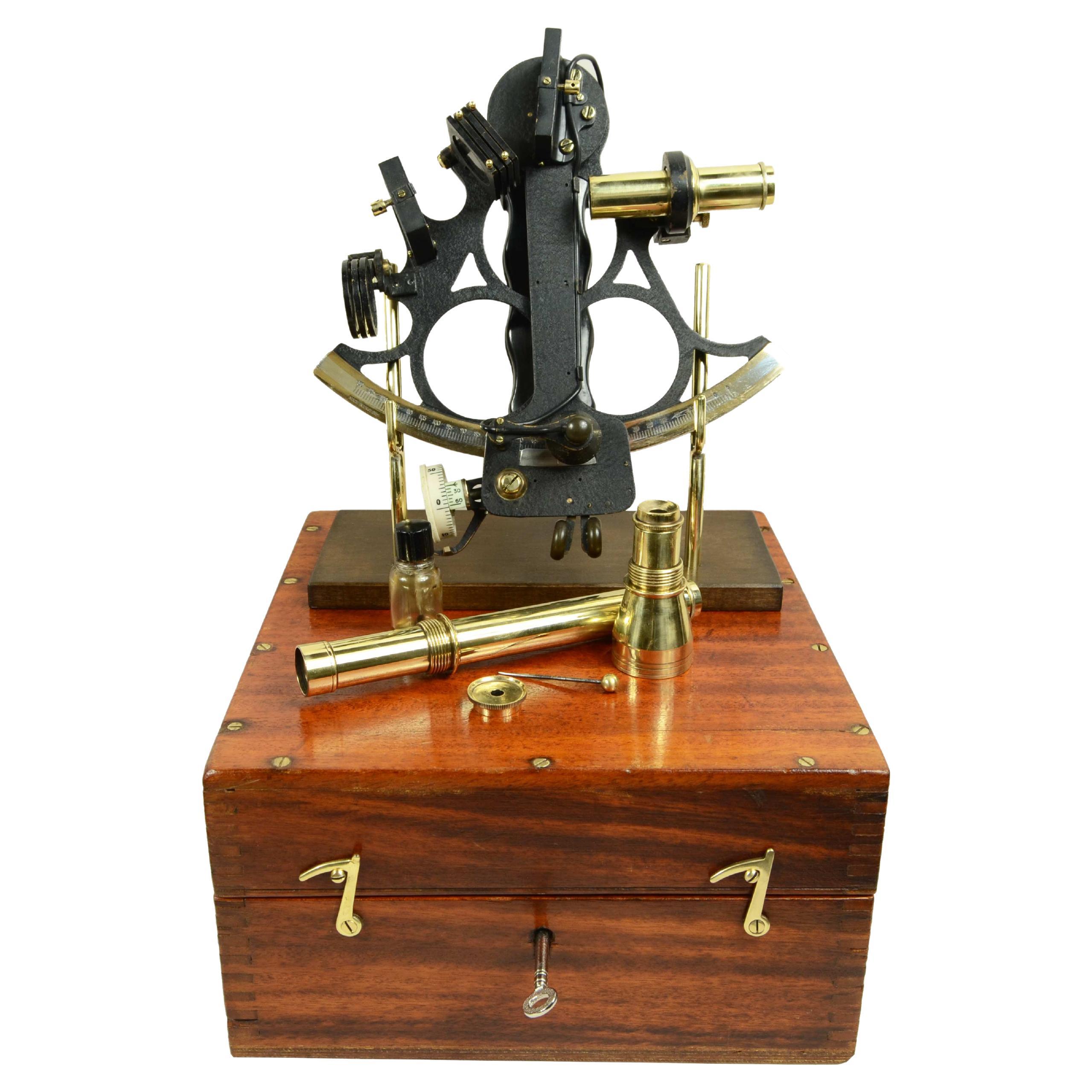
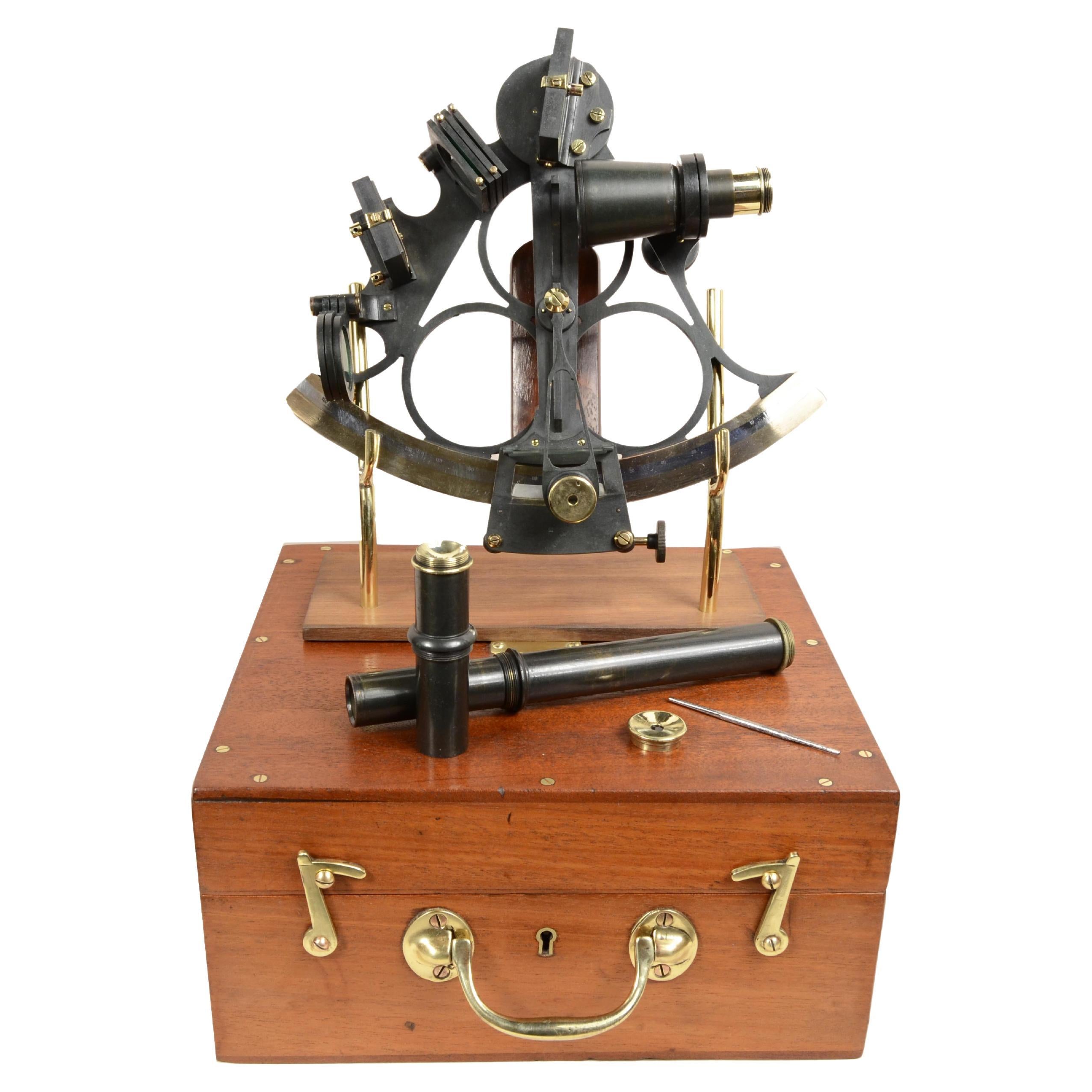
View AllBrass sextant signed H. Hughes
Son Ltd No. 32890 of the 1930s
Located in Milan, IT
Brass sextant signed H. Hughes & Son Ltd No. 32890 of the 1930s; instrument complete with optics and housed in its original mahogany wood box of with locking hooks and brass handle,...
Category
Vintage 1930s Nautical Objects
Materials
Brass
Burnished brass sextant D. Mc Lean
Co Lta 113 Frenchurch St. London 1890
Located in Milan, IT
Burnished brass sextant D. Mc Lean & Co Lta 113 Frenchurch St. London, datatable around the end of the 19th century, instrument complete with optics and housed in its original squa...
Category
Antique 1890s Nautical Objects
Materials
Brass
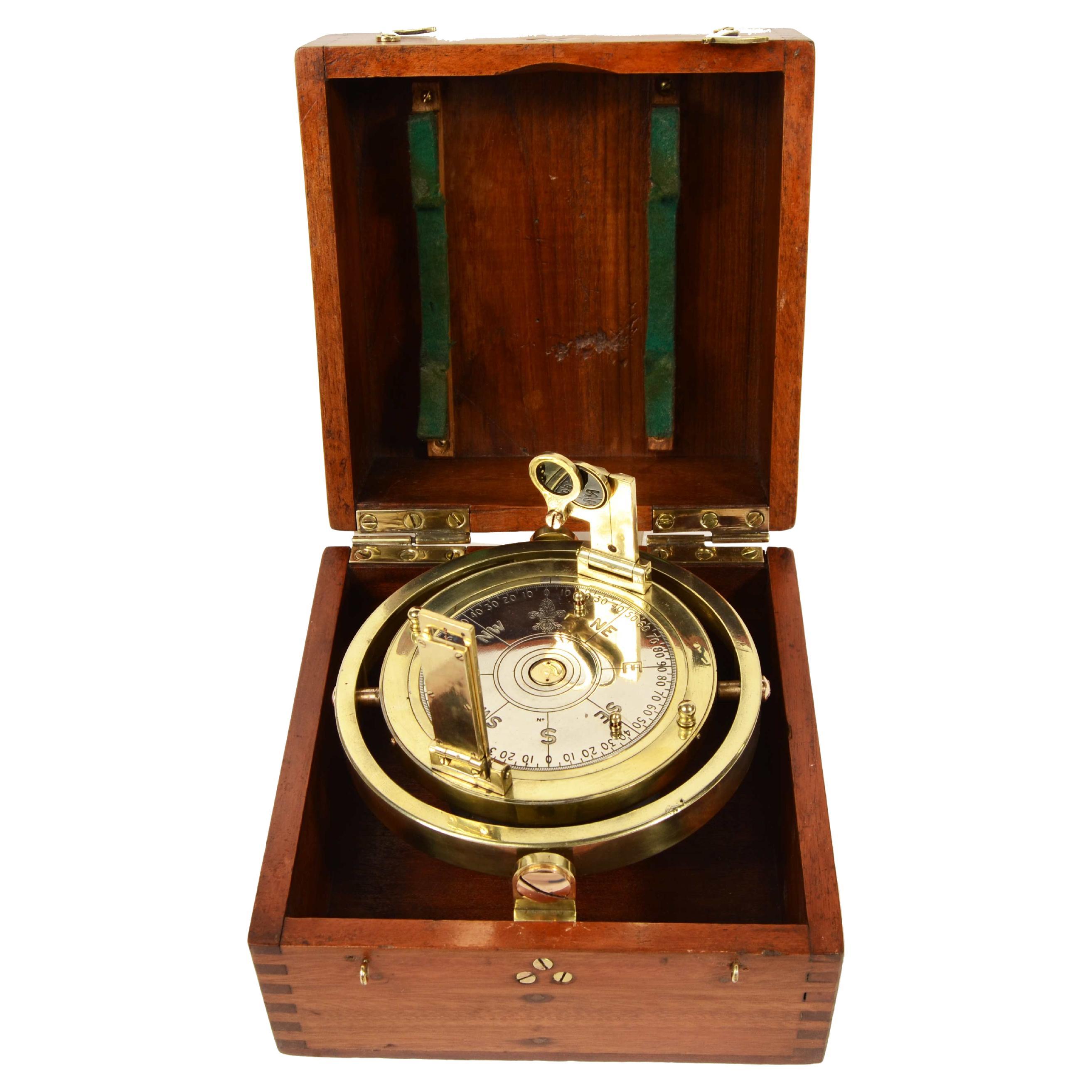
English Pelorus brass from the second half of the 19th century, on cardan joint
Located in Milan, IT
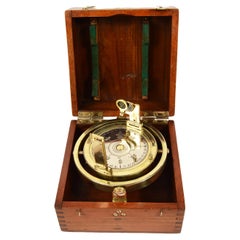
English Pelorus brass from the second half of the 19th century, mounted on gimbals within its original mahogany wood box with brass hinges and locking hooks.
The instrument has an...
Category
Antique 1870s Nautical Objects
Materials
Brass
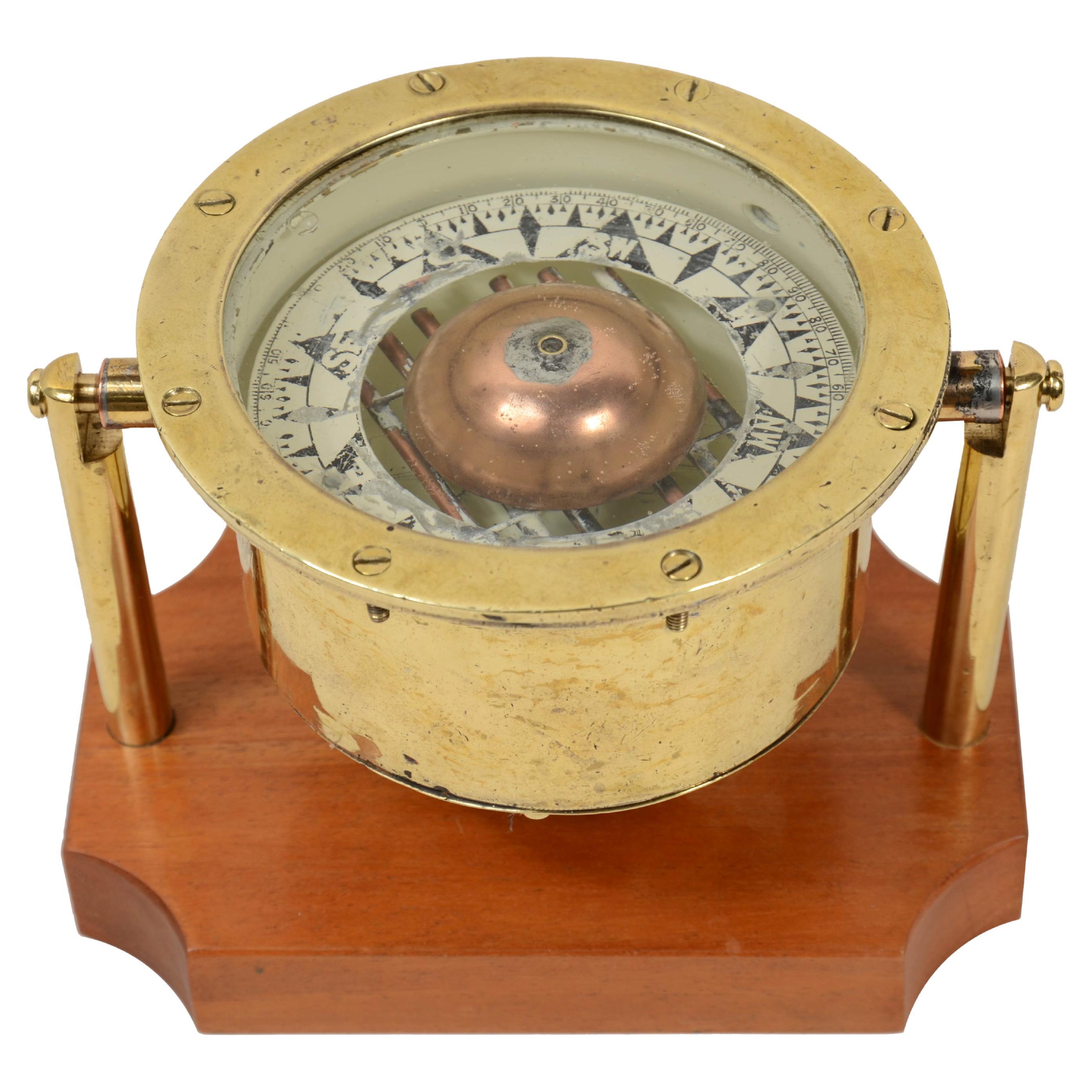
Liquid-filled compass on gimbal and mounted on mahogany wood plank
Located in Milan, IT
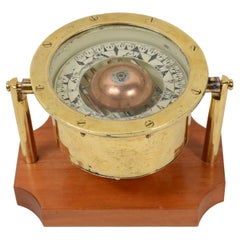
Liquid compass on gimbals and mounted on shaped mahogany wood plank. English manufacture of the late 19th century. The compass consists of a cylindrical-shaped vessel made of brass a...
Category
Antique Late 19th Century Nautical Objects
Materials
Brass
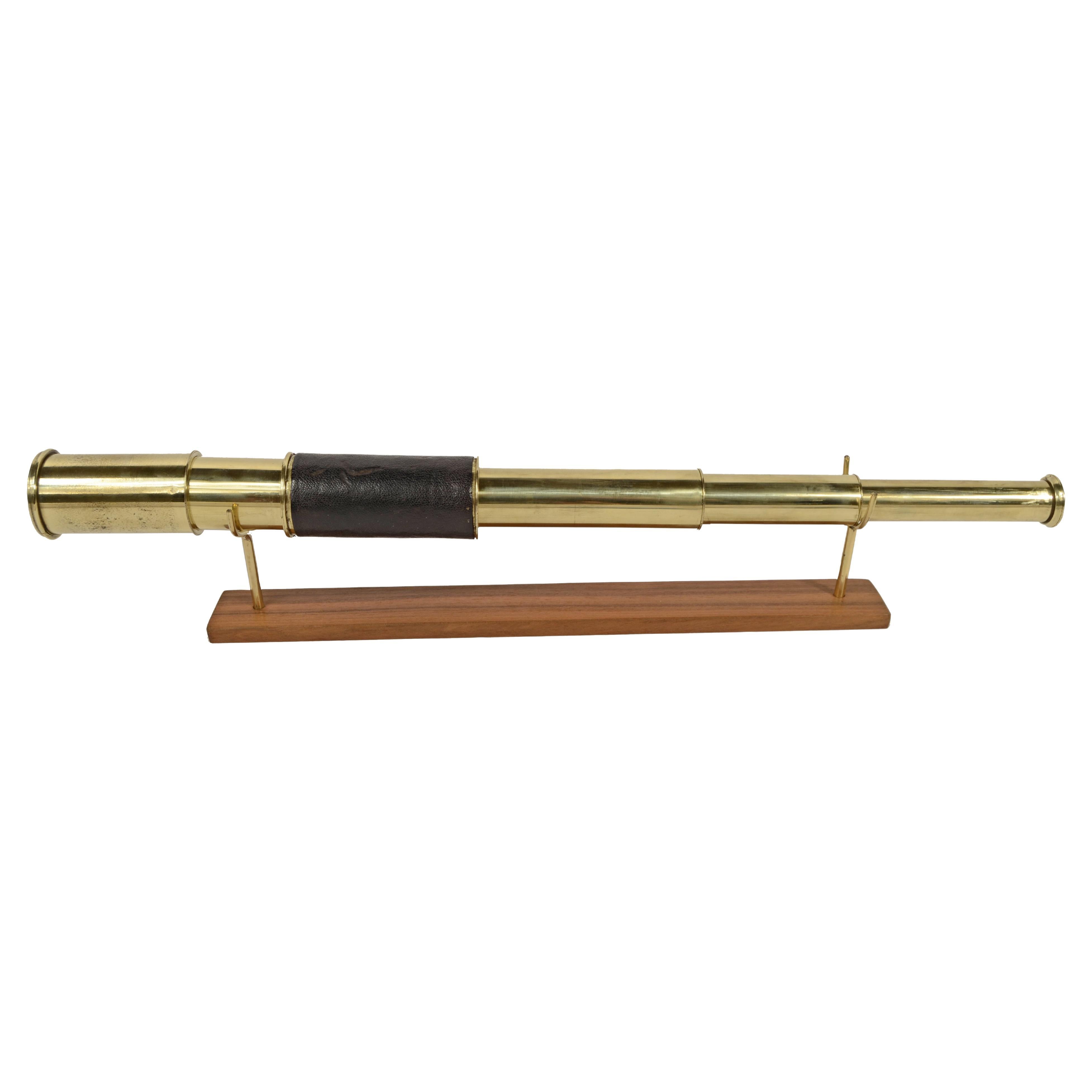
Spyglass round section brass and leather focus 3 extensions 1850
Located in Milan, IT
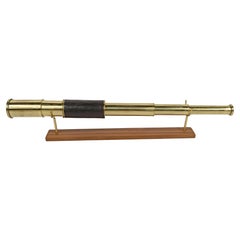
Round-section brass telescope with leather-covered handle and three-extension focus, complete with sunshade extension and dust cover tabs. English manufacture of the mid-19th centur...
Category
Antique Mid-19th Century Scientific Instruments
Materials
Brass
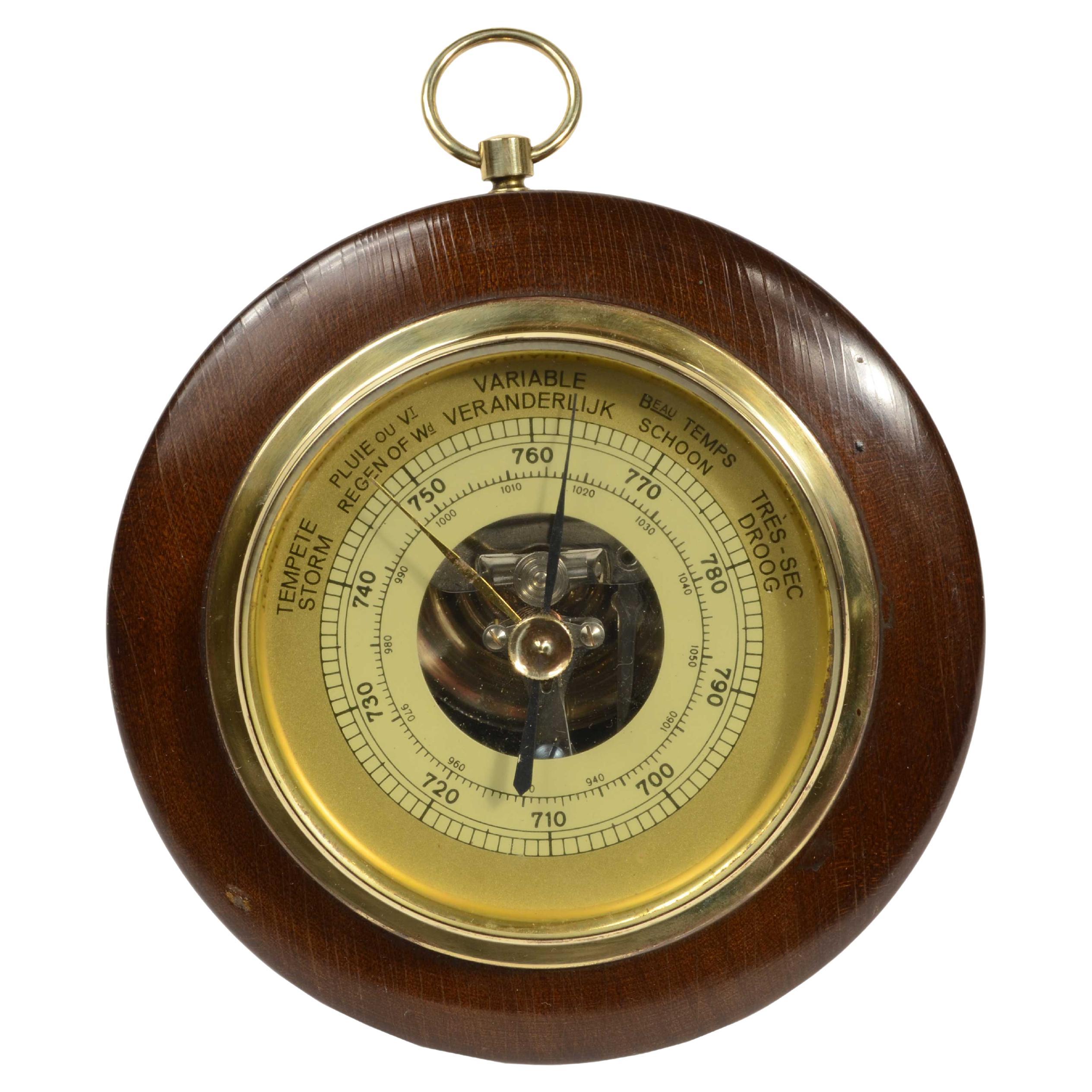
German aneroid barometer from the 1950s in wood tornit brass and glass
Located in Milan, IT
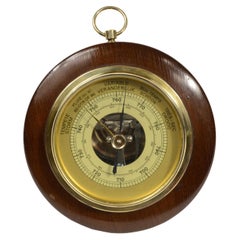
German aneroid barometer of the 1950s in turned wood, brass, and glass, with weather directions in German and French.
Good condition, working.
Measurements 13x4 cm - inches 5.1x1....
Category
Mid-20th Century Nautical Objects
Materials
Wood
You May Also Like
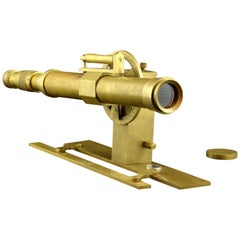
Decorative Alidade, Metal, 20th Century
Located in Madrid, ES
It has a cover to protect the lens made of the same gold metal in which the rest of the instrument is made. The lines, pure and clean, are the protagonists, and make it a great opti...
Category
20th Century Unknown Other Scientific Instruments
Materials
Metal, Other
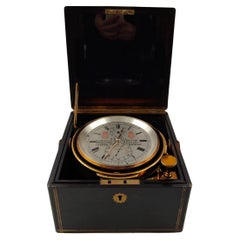
Cronometro da marina, SEWILL, Inghilterra fine XIX secolo
By Sewill
Liverpool
Located in Vicenza, VI
Cronometro da marina prodotto da Sewill, custodito in una cassa cubica in legno di palissandro, con spigoli e filettature in ottone, di dimensioni 18x18x19 cm. È dotato di due coperc...
Category
Antique Late 19th Century English Other Nautical Objects
Materials
Brass
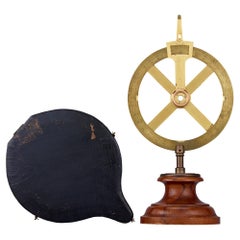
Holland Circle by Baumann and Kinzelbach
Located in New Orleans, LA
This intriguing item is almost certainly a Holland Circle by German scientific instrument makers Baumann & Kinzelbach. The Holland Circle, sometimes referred to as a Dutch Circle, was used in land surveying and is a precursor to the theodolite, an optical instrument for measuring angles. Baumann and Kinzelbach were based in Stuttgart, Germany, and in addition to crafting surveying instruments...
Category
Antique 19th Century German Scientific Instruments
Materials
Bronze
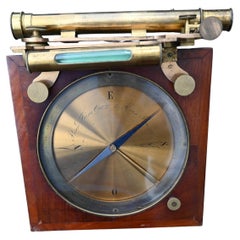
Antique Surveyor
s Circumcompendium Signed Brand Frères, 1850-1880
Located in Bilzen, BE
"Antique Surveyor's Circumcompendium Signed Brand Frères, 1850-1880"
Description: Antique Surveying Circumferentor by Brand Frères
Brand Frères, Optic...
Category
Antique Mid-19th Century Belgian Other Scientific Instruments
Materials
Brass
Antique Surveyor
s Level, English, Brass, Scientific Instrument, Halden
Sons
Located in Hele, Devon, GB
This is an antique surveyor's level. An English, brass scientific instrument by J. Halden & Sons of Manchester, dating to the early 20th century, circ...
Category
Early 20th Century British Scientific Instruments
Materials
Brass
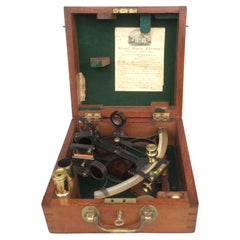
Nautical marine Sextant by Negretti and Zambra London
Located in Norwich, GB
Nautical Marine Sextant by Negretti and Zambra, London.
Brass and oxidised nautical sextant signed Negretti and Zambra, London.
This fine instrumen...
Category
Antique Early 1900s Nautical Objects
Materials
Brass
More Ways To Browse
London Antique And Collectable London
Antique Porthole Window
Antique Ship Helm
Antique Ship Pulley
Antique Ships Telegraph
Boat Plans
Brass Steering Wheel
Mahogany Ship Wheel
Nautical Lens
Nautical Sextants
Pilot Boats
Royal Bell
Vintage Air Pump
Wooden Pulley
Antique Brass Porthole Window
Antique Engine Order Telegraph
Brass Spyglass
Cabin Cruiser