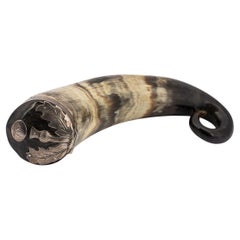
Items Similar to A Very Fine and Historically Significant George III Silver Mounted Powder Horn

Want more images or videos?
Request additional images or videos from the seller
1 of 9
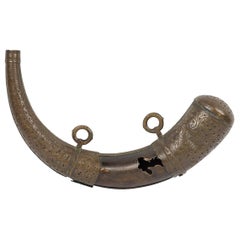
A Very Fine and Historically Significant George III Silver Mounted Powder Horn
$8,752.51
£6,375
€7,493.38
CA$12,135.74
A$13,050.98
CHF 6,978.38
MX$157,391.07
NOK 88,246.43
SEK 80,403.85
DKK 55,992.16
About the Item
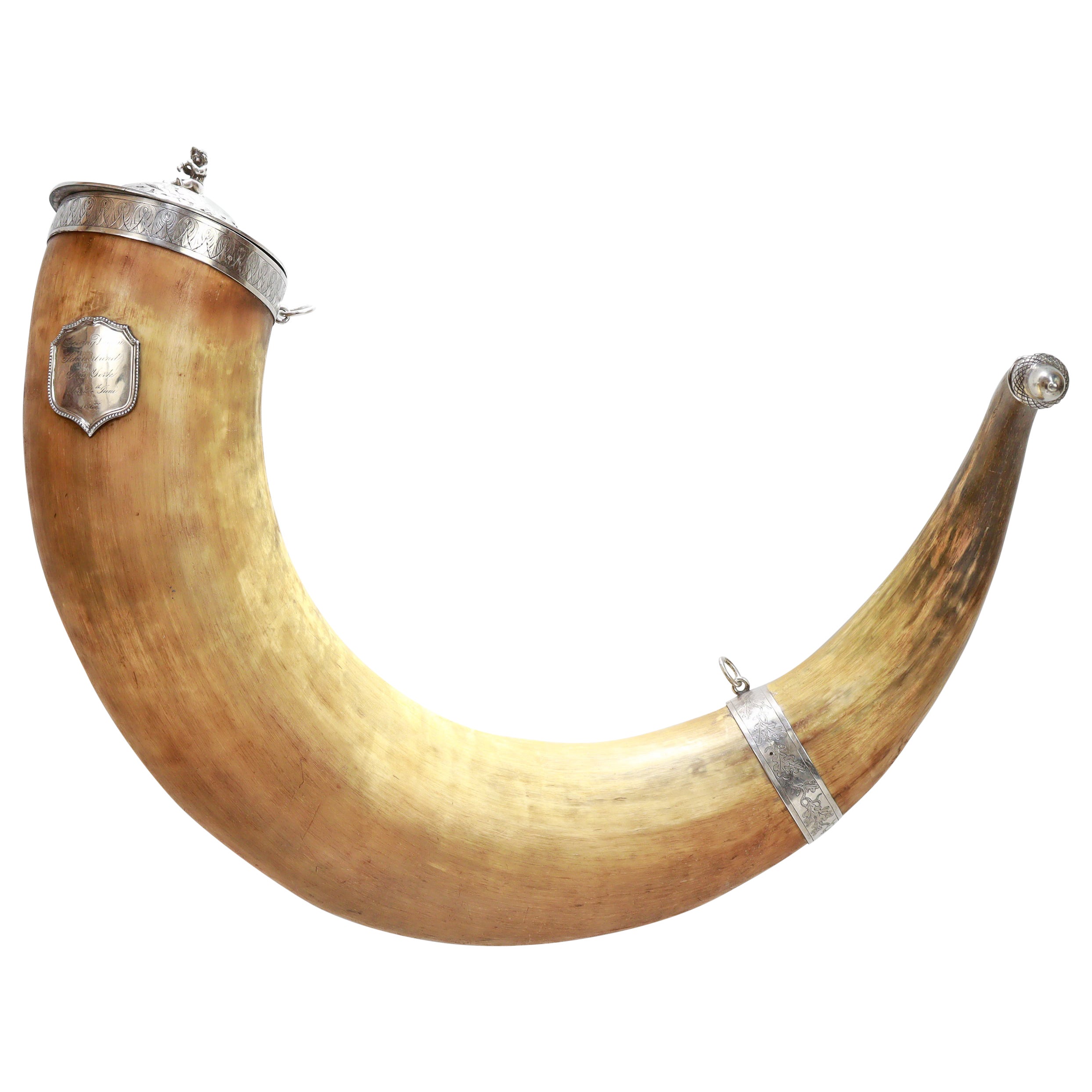
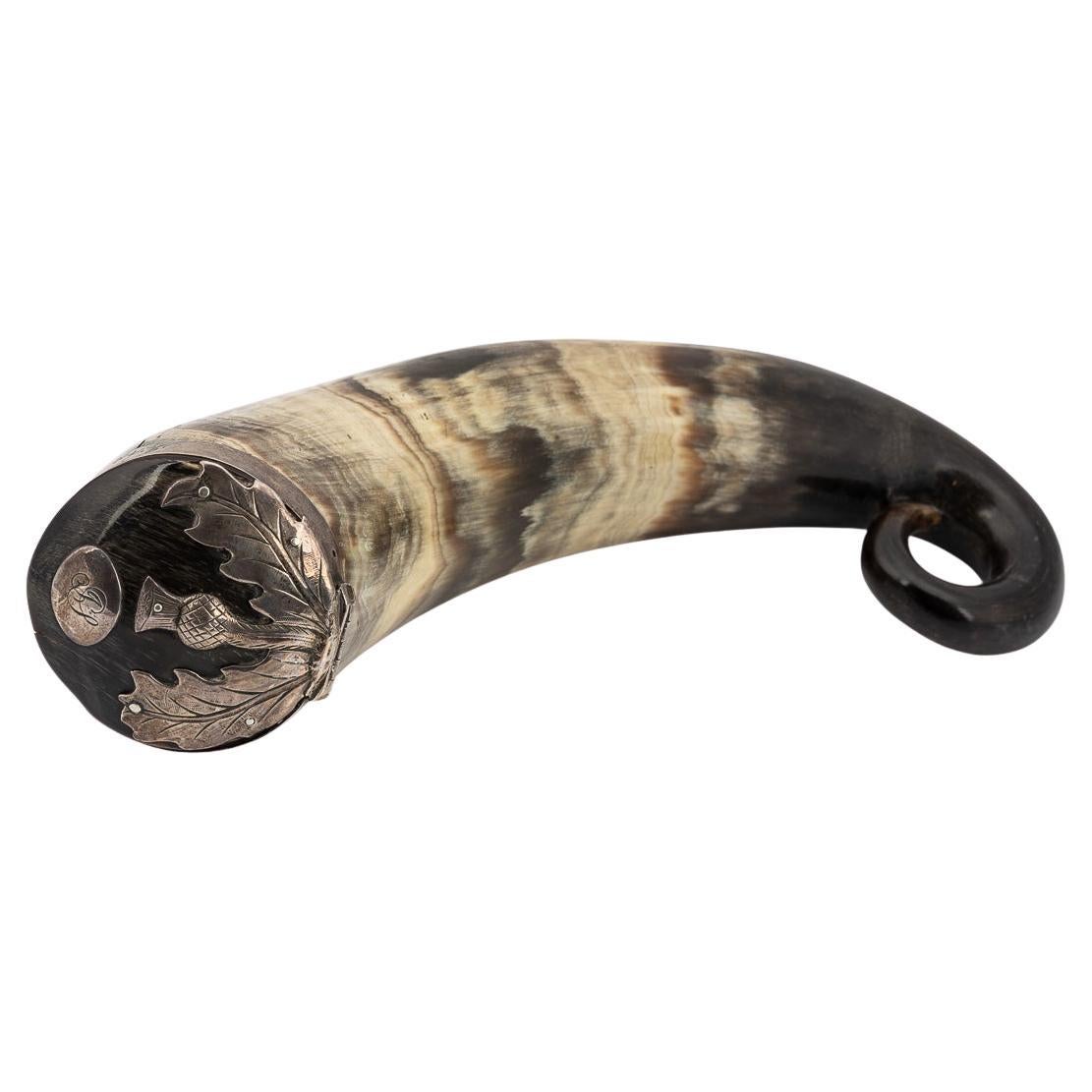
This fine powder horn has silver mounts by the silversmiths Thomas Phipps and Edward Robinson, hallmarked for London, 1803. The charger on the horn has three adjustments and a side lever system and the wider end of the horn has a silver cap engraved with two crests, shields and family mottoes. The crests are for the Maitland and Dick families and represent the lineage of Rear-Admiral Sir Frederick Lewis Maitland. The Maitland line, represented by the lion crest and the motto Consilio et Animus represents the arms of the male line. Maitland’s father, also Frederick Lewis Maitland (1730-1786), had an interesting and successful naval career though was rather overshadowed by the later successes of his son. The martlet (small bird) crest and motto In Domino Confido is the female line, in this case Margaret Dick, daughter of Viscount Frendraught. The Dick family was important in the clan hierarchy in Scotland, being the head of Clan Crichton and heir to Clan Makgill at this time.
Provenance
Rear-Admiral Sir Frederick Lewis Maitland KCB (1777-1839) and thence by descent
Rear-Admiral Sir Frederick Lewis Maitland KCB (1777-1839)
Born in Fife, Maitland was the father of a distinguished naval officer as discussed above. Mailtand joined the navy straight from school and, whilst serving on the frigate HMS Southampton under captain Robert Forbes, he was involved in his first major action when he was present at the Glorious 1st of June in 1794. Maitland’s career advancement was swift and he earned a promotion to Lieutenant in April of 1795, serving on HMS Andromeda, and, soon afterwards, Venerable. Maitland then moved to the Mediterranean fleet in 1797 and, whilst serving on HMS Kingfisher he was awarded a £50 naval sword for his bravery, in part during the capture of a number of privateers.
Maitland became Flag Lieutenant to Lord St Vincent and was briefly captured during an attempted reconnaissance mission in Gibraltar in 1799. Having taken command of the vessel Penelope due to the sickness of the captain, he was thwarted by disobedience and bad conduct amongst the crew and the vessel was captured by the Spanish fleet. He was released due to his connection to Lord St Vincent and was promoted to Commander upon his return to active duty. He was mentioned in dispatches during the campaigns fought in 1801 and 1802.
During the Napoleonic wars, Maitland was particularly distinguished by his role in the Battle of Muros bay in 1805. His conduct on this occasion was enough to earn him the freedom of the city of Cork, thanks from the City of London and a Lloyds Patriotic Fund Sword. It is for his role as commander of HMS Bellerophon that Maitland is most remembered, however, as in 1815 he intercepted Napoleon whilst in charge of this historic vessel and the Emperor surrendered to him on the 15th of July of that year and was taken on board the ship to England.
- Dimensions:Height: 24 in (60.96 cm)Diameter: 3 in (7.62 cm)
- Style:George III (Of the Period)
- Materials and Techniques:
- Place of Origin:
- Period:
- Date of Manufacture:1803
- Condition:Wear consistent with age and use.
- Seller Location:Lymington, GB
- Reference Number:1stDibs: LU973045616632
About the Seller
5.0
Recognized Seller
These prestigious sellers are industry leaders and represent the highest echelon for item quality and design.
Gold Seller
Premium sellers maintaining a 4.3+ rating and 24-hour response times
Established in 1982
1stDibs seller since 2013
140 sales on 1stDibs
Typical response time: 1 hour
Associations
LAPADA - The Association of Arts
Antiques Dealers
- ShippingRetrieving quote...Shipping from: Lymington, United Kingdom
- Return Policy
More From This Seller
View AllA rare scrimshaw decorated horn signed by C.H. Wood
Located in Lymington, Hampshire
A rare scrimshaw decorated horn signed by C.H. Wood. Each curled horn is ornately carved with important motif’s relating to the Battle of Trafalgar and iconic battleships. Our two ho...
Category
Antique 19th Century English Nautical Objects
Materials
Horn
A rare scrimshaw decorated horn Signed and inscribed by the base by C. Wood
Located in Lymington, Hampshire
A rare scrimshaw decorated horn, engraved over one side with the Royal Arms countersigned and titled ship profiles for the Great Eastern, the Great Britain,...
Category
Antique 1860s English Nautical Objects
Materials
Horn
George III Lloyds Patriotic Fund Silver and Silver Gilt Vase and Cover by Samuel
Located in Lymington, Hampshire
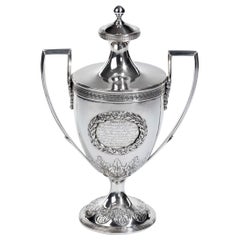
George III Lloyds patriotic fund silver and silver gilt vase and cover by Samuel Hennell, of Adam design, the lift-off cover with knop finial above an...
Category
Antique Early 1800s English Nautical Objects
Materials
Silver
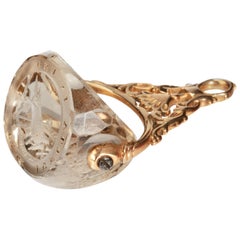
Admiral Viscount Bridport’s Gold and Hardstone Armorial Swivel Fob Seal
Located in Lymington, Hampshire
The openwork gold pendent mount supports a three sided faceted quartz, each side seal engraved respectively with the crest of Hood within the motto ‘Tria Juncta in Uno for the Order ...
Category
Antique 1780s English Nautical Objects
Materials
Quartz, Gold
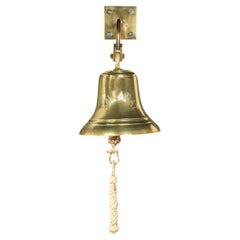
A brass ship’s bell from Peninsular
Orient liner S.S. Ballarat
Located in Lymington, Hampshire
This bronze ship’s bell is incised with the legend ‘Ballarat’ and has a suspension bracket and plaited rope bell-pull. The interior is painted white....
Category
Antique Late 19th Century English Nautical Objects
Materials
Brass
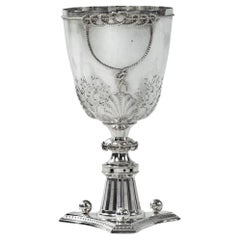
Silver Cup by Henry Wilkinson, Dated 1874
Located in Lymington, Hampshire
A silver cup by Henry Wilkinson, dated 1874, the goblet embossed and chased with seaweed fronds and seashells, applied with twisted and looped ropes around the rim, foot and blank ce...
Category
Antique 1870s English Barware
Materials
Silver
You May Also Like
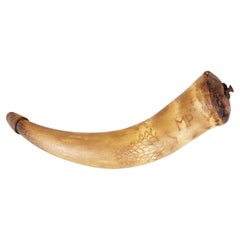
18th c. Engraved Powder Horn
Located in Greenwich, CT
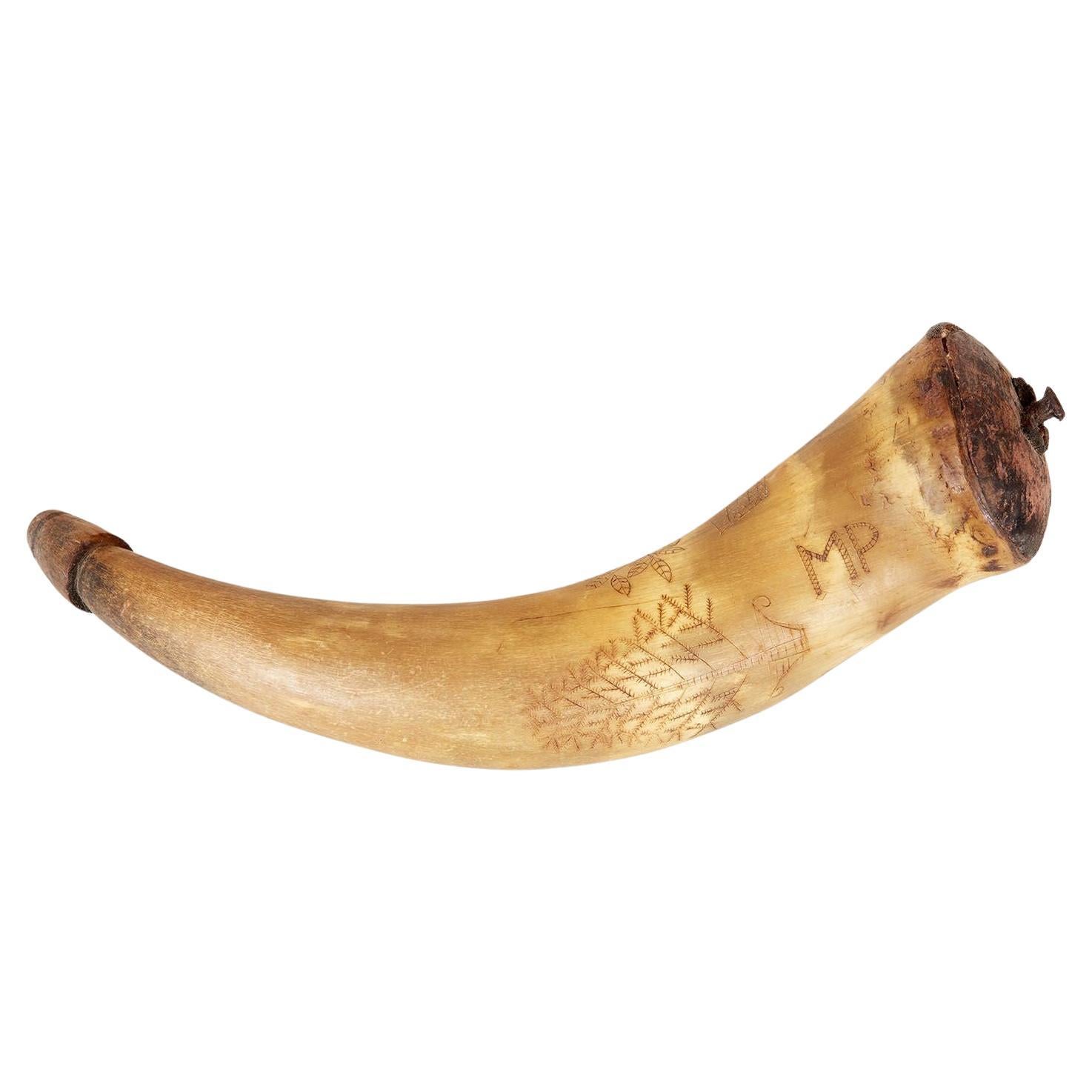
A horn for carrying gunpowder having engravings of two decorative trees, one decidious and one evergreen, each in a container, finely done, and also the initals MP. Retaining orig...
Category
Antique 18th Century American American Colonial Decorative Boxes
Materials
Horn
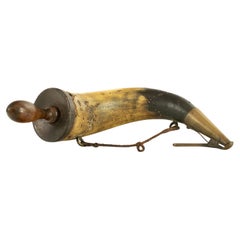
LARGE GUNNER
S POWDER HORN Naval - French, late 18th century.
Located in TEYJAT, FR
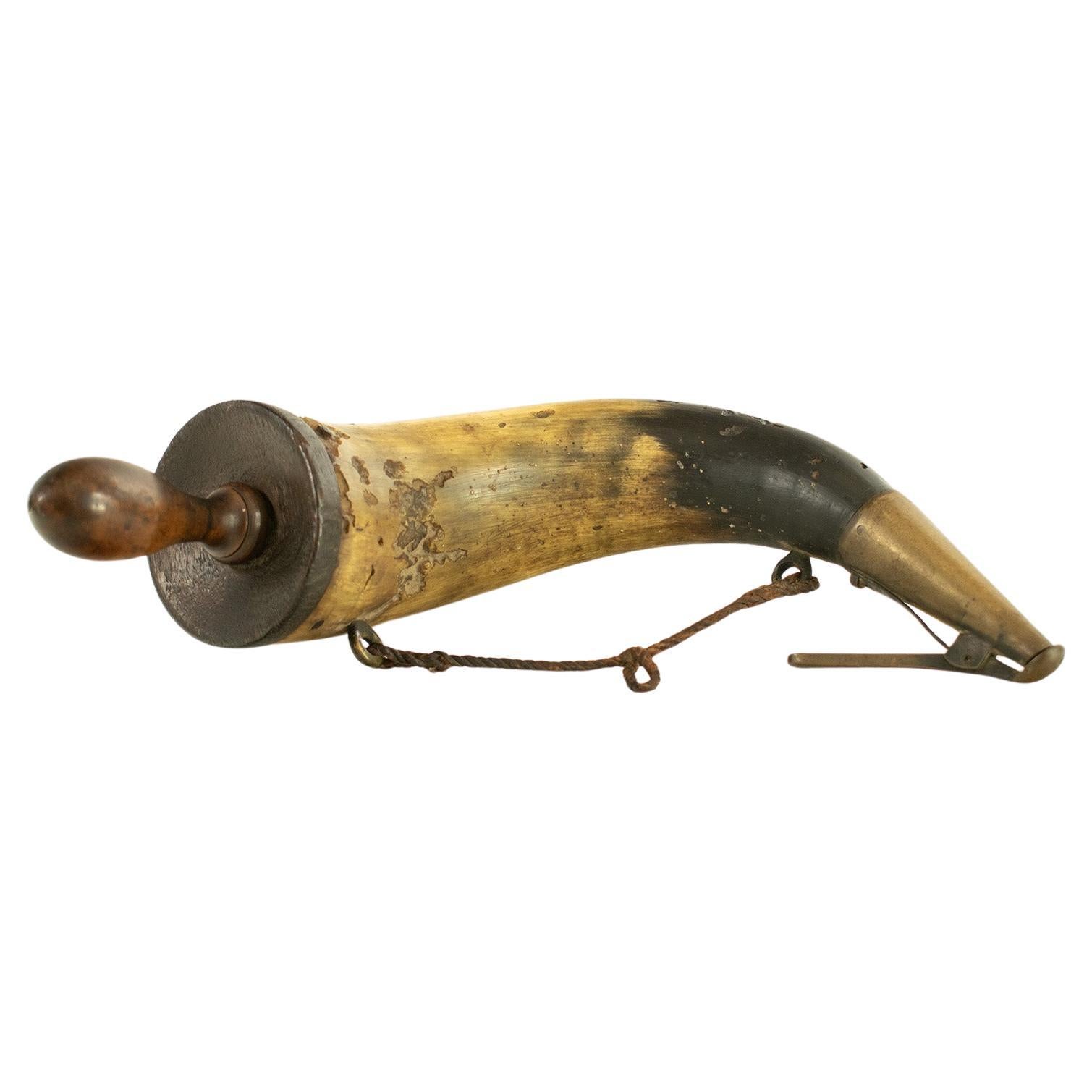
Original Large French Gunner's Powder Horn, Naval - French, late 18th century. Of large size used to load cannons aboard ship.
With fitted wooden plug and brass dispensing spout.
T...
Category
Antique 19th Century Arms, Armor and Weapons
Materials
Horn, Wood
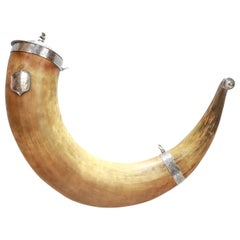
English Renaissance Style Powder Horn
Located in Queens, NY
English Renaissance style (18th Cent) animal horn and brass powder horn
Category
Antique 18th Century British Renaissance Arms, Armor and Weapons
Materials
Brass
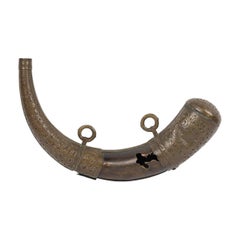
Antique 19c New York City Schillerbund Presentation Horn/Rhyton w Silver Mounts
Located in Philadelphia, PA
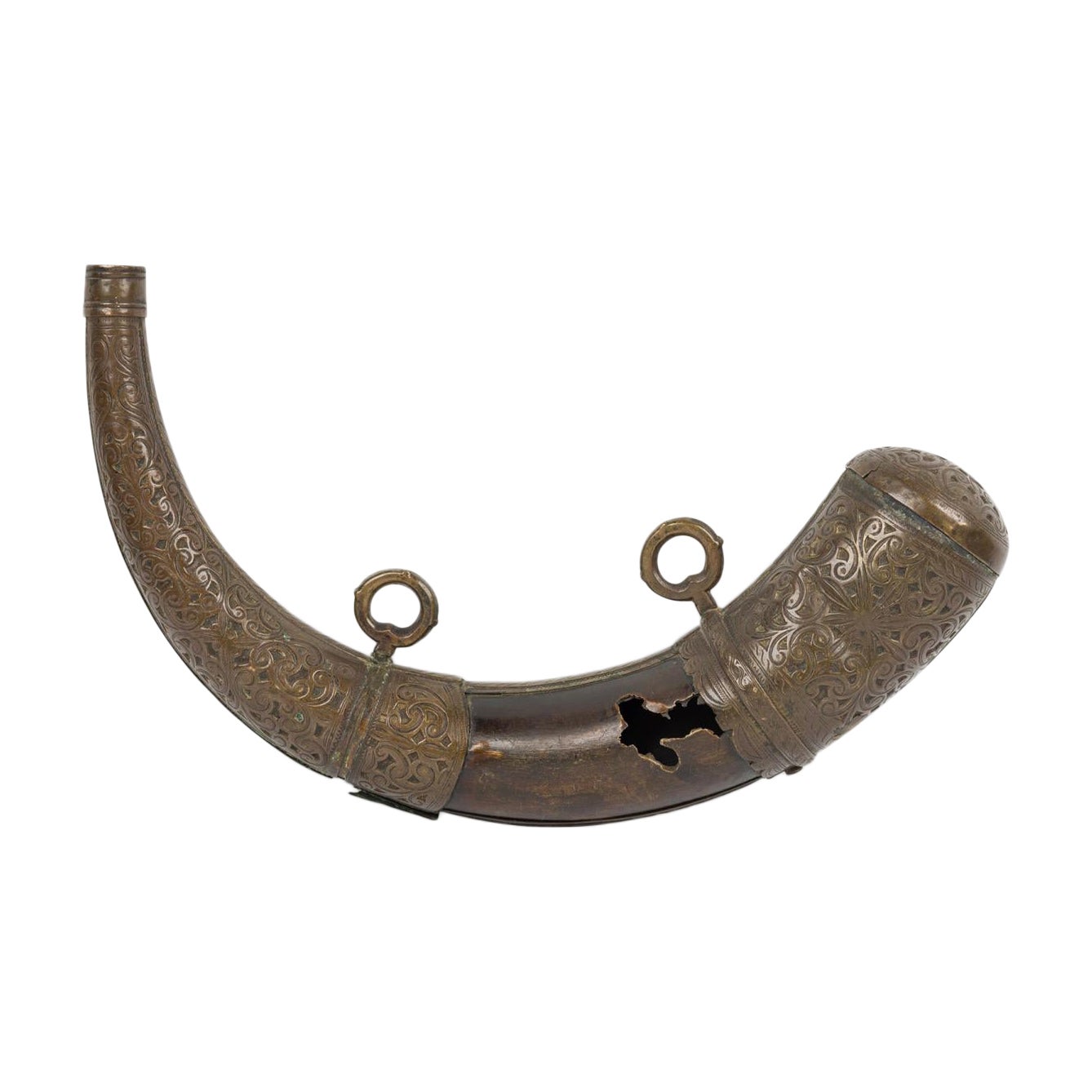
A fine 19th Century ceremonial toasting horn or rhyton.
Comprised of large, curved horn set with silver plated mounts.
Fitted with 2 silver-plated collars (each with jumps rings fo...
Category
Antique 1860s American Victorian Historical Memorabilia
Materials
Silver
English Renaissance Style Powder Horn
Located in Queens, NY
English Renaissance style (18th Cent) animal horn and brass powder horn
Category
Antique 18th Century British Renaissance Arms, Armor and Weapons
Materials
Brass
Antique 19th Century Scottish Silver Mounted Horn Table Snuff Mull c.1829
Located in Royal Tunbridge Wells, Kent
A large and impressive 19th Century Scottish silver mounted horn table snuff mull This striking piece exemplifies the grandeur and ceremony often associated with communal snuff-taking. Crafted from richly toned natural horn, the mull is mounted with finely worked silver detailing, including a hinged lid and decorative finial, lending a sense of refinement to its rustic form.
The silver cartouche bears an engraved inscription: John Stark Kinghorn, 27th August 1829, suggesting it was likely a commemorative or presentation piece. Both utilitarian and ornamental, this handsome object offers a fascinating glimpse into Scottish social customs of the period and makes a compelling addition to any collection of antique tobacciana...
Category
Antique 19th Century Scottish Other Tobacco Accessories
Materials
Silver