Items Similar to 10-Piece Italian Renaissance Terra Cotta Nativity
Want more images or videos?
Request additional images or videos from the seller
1 of 13
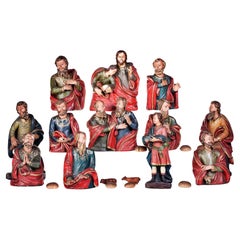
10-Piece Italian Renaissance Terra Cotta Nativity
$18,500
£14,020.86
€16,080.75
CA$25,848.01
A$28,198.78
CHF 14,956.06
MX$339,731.72
NOK 189,821.44
SEK 173,786.68
DKK 120,099.15
About the Item
Italian Renaissance style 19th Century terra cotta 10 piece religious creche/nativity set. (PRICED AS SET)
Minor chips and losses, shows wear consistent with age.
- Dimensions:Height: 26 in (66.04 cm)Width: 8 in (20.32 cm)Depth: 5 in (12.7 cm)
- Style:Renaissance (In the Style Of)
- Place of Origin:
- Period:
- Date of Manufacture:19th Century
- Condition:
- Seller Location:Queens, NY
- Reference Number:Seller: 0452481stDibs: LU977947924402
About the Seller
4.9
Recognized Seller
These prestigious sellers are industry leaders and represent the highest echelon for item quality and design.
Platinum Seller
Premium sellers with a 4.7+ rating and 24-hour response times
Established in 1939
1stDibs seller since 2013
1,052 sales on 1stDibs
Typical response time: <1 hour
- ShippingRetrieving quote...Shipping from: Long Island City, NY
- Return Policy
More From This Seller
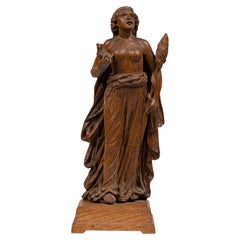
View AllItalian Renaissance Wooden Sculpture
Located in Queens, NY
Italian Renaissance oak carved sculpture featuring a semi-nude woman gasping looking upwards with hellenistic drapery wrapped around her arms and abdomen holding a staff and a cub in...
Category
Antique 17th Century Italian Renaissance Figurative Sculptures
Materials
Oak
Victorian Terra Cotta Group Figures
Located in Queens, NY
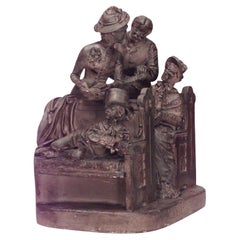
American Victorian Roger\'s Group of 4 figures in 2 pews titled \"Neighboring Pews\" made of plaster in a terra cotta finish (signed JOHN ROGERS, New York, patented Jan 29, 1884)
Category
Antique 19th Century American Victorian Figurative Sculptures
Materials
Plaster
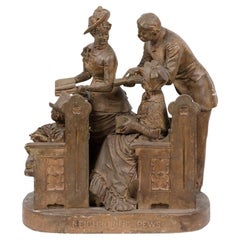
Victorian Terra Cotta Group Figures
Located in Queens, NY
American Victorian Roger's Group of 4 figures in 2 pews titled "Neighboring Pews" made of plaster in a terra cotta finish (signed JOHN ROGERS, New York, pate...
Category
Antique 19th Century American Victorian Figurative Sculptures
Materials
Terracotta, Plaster
Italian Renaissance Carved Wall Plaque
Located in Queens, NY
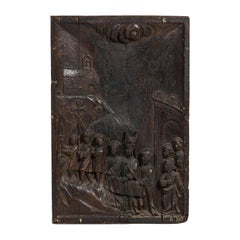
Italian Renaissance (16th Century) oak carved relief wall plaque of religious figure with children.
Category
Antique 16th Century Italian Renaissance Sculptures and Carvings
Materials
Oak
Pair of Renaissance Polychromed Kneeling Figures
Located in Queens, NY
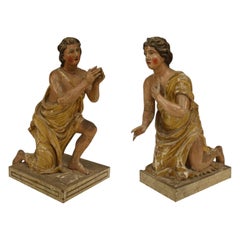
PAIR of Italian Renaissance style (19th Cent) polychromed life size kneeling figures (similar matching pair with wings #034018A)
Category
Antique 19th Century Unknown Renaissance Figurative Sculptures
Materials
Chrome
$18,500 / set
Polychrome Papier-mâché Madonna and Child
Located in Queens, NY
Polychrome and gilt papier-mâché Religious Madonna and child depicting the Nuestra Señora de la Candelaria. Figures stand on a gilt rectangular base with painted description by the a...
Category
Antique 17th Century Mexican Renaissance Figurative Sculptures
Materials
Chrome

You May Also Like
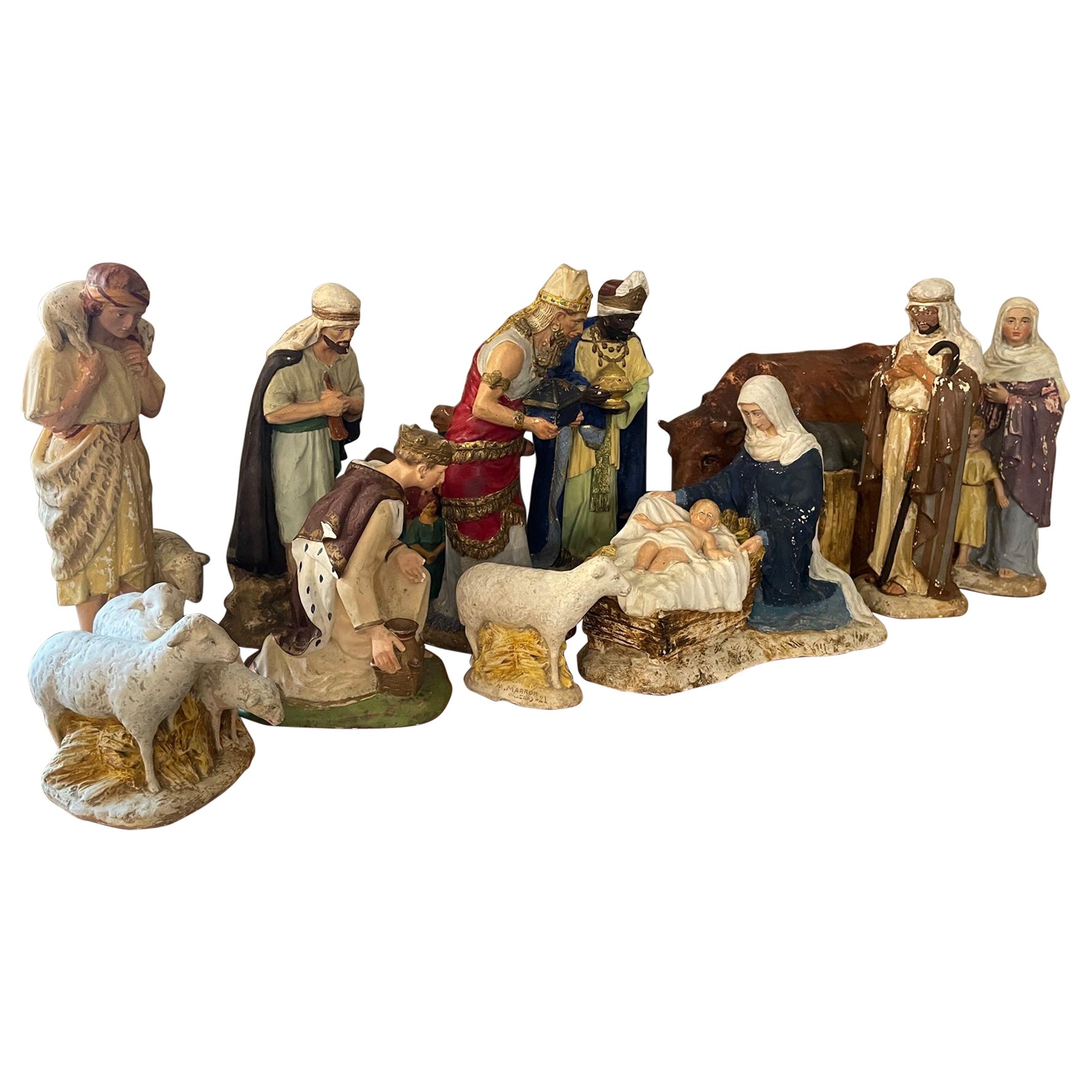
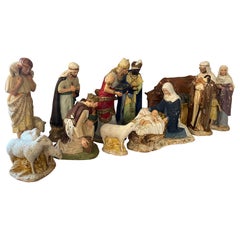
Early 20th century French Plaster Nativity Scene Figurines signed Marron, 1920s
Located in LEGNY, FR
Very nice and rare 20th century French set of plaster nativity scene figurines.
Twelve pieces are representing the religious nativity characters and the animals.
Large dimensions. ...
Category
Vintage 1920s French Figurative Sculptures
Materials
Plaster
$3,064 Sale Price / set
20% Off
Late 15th Century Polychrome Wood Carving Depicting the Nativity
Located in Saint-Ouen, FR
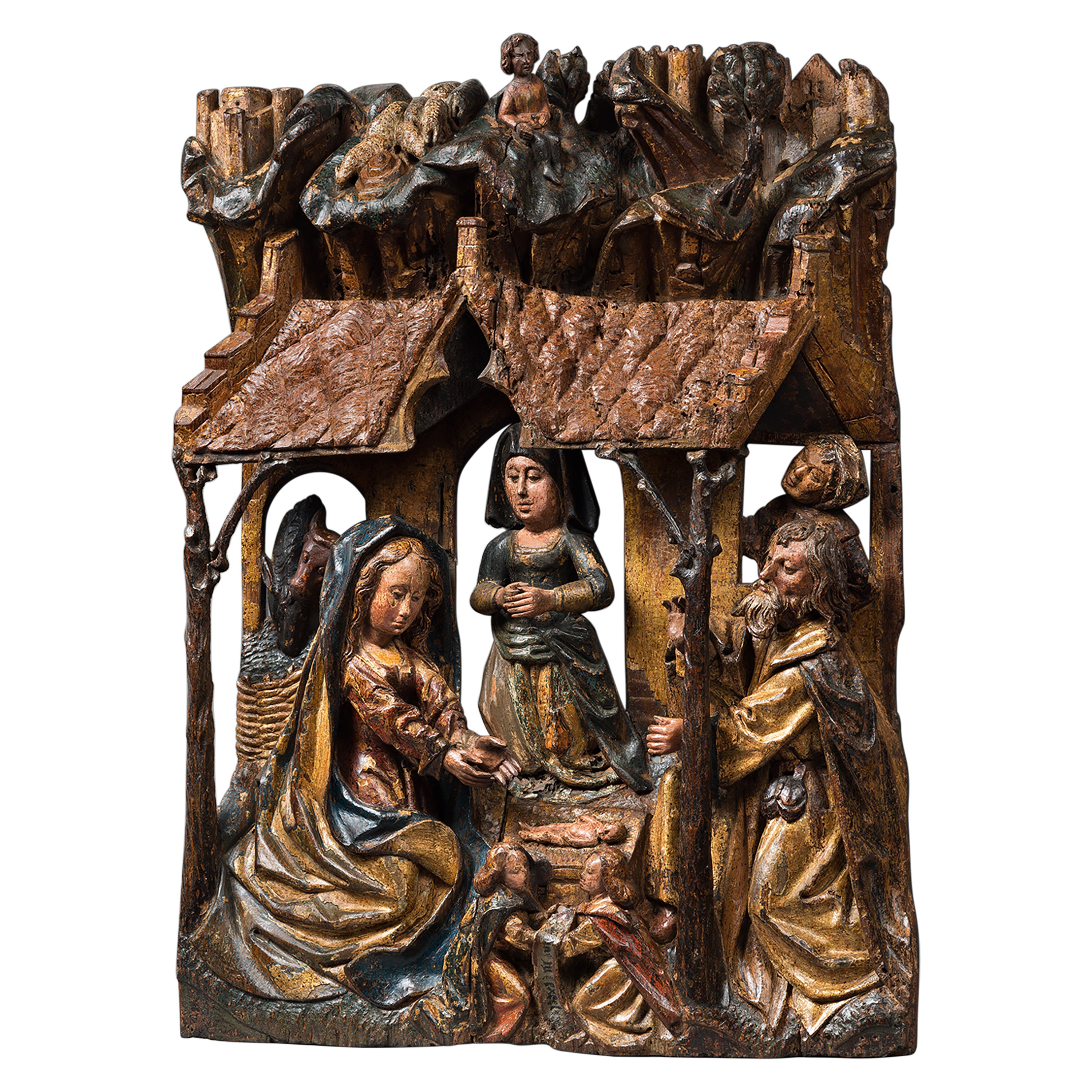
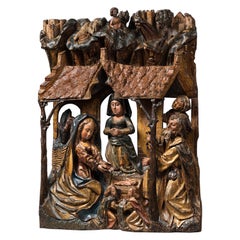
While the birth of Christ is briefly told in the Gospel of Luke (2, 7) it is in the apocryphal texts that we find most of the elements and details that have then inspired artists. As of the 14th century and even more of the 15th century the subject of the Adoration of the Child replaces in Western art the scene of the Birth, much favoured in Byzantine art. Instead of being depicted lying with the new-born swathed in the manger, the Virgin is now kneeling, her hands joined in prayer in front of the naked child. This change was probably hastened by the popularity of the visions of Saint Bridget of Sweden to whom the Virgin allegedly appeared to show how she had given birth to Jesus (Visions, VII, chap. 21).
Sheltered by a thatch-roofed structure the Virgin is kneeling in front of the Child Jesus. She wears a magnificent red dress under a large gold cloak. Her curled blond hair is partially veiled. The newborn is lying on a straw mat. Joseph is depicted with a parted beard and stands opposite from the Virgin. He wears a tunic and a coat with a purse hanging from the belt. His costume reminds us of the long journey him and Mary have accomplished to reach Bethlehem.
Two other women are present. One is looking through the stable’s window to observe the Holy Family while another one kneels in prayer in front of the divine child. The rich costume of the lady might indicate she is a donator.
However they could also both represent the women who took part in the birth of Christ, Zelemi and Salome. Salome, incredulous did not believe in the virginal conception of Mary and she is represented far from the scene. The artist has depicted her with an expression of doubt on her face. Zelemi, on the contrary, is a believer. She is rewarded by a place of honour at the heart of the scene, close to Mary.
To the left the donkey and ox that have accompanied Mary and Joseph to Bethlehem observe quietly the scene.
On the foreground two angels hold a scroll reading an excerpt from the Gloria : “/Gloria/ in excelsis /Deo/.” One of the angels wears a blue cape while the other’s is red Those two colours are very significant as during Middle-Ages blue symbolises hope and red charity. Together they express the hope in redemption thanks to the advent of Christ and his sacrifice to come.
Above the main scene, up a cliff, a small shepherd lets his herd of sheep graze amidst the trees. He is framed by two walled cities.
This wood carving is the work of a very skilled and inventive artist. The piece bears witness to his exceptional talent. The realism of the scene is emphasised by the amount of details depicted. The refinement of the carving itself is highlighted by the well preserved polychromy.
This key moment of the New Testament is set in a contemporary context thanks to the clothes of the characters and the scenes of rural life. The universal dimension of the scene is intensified while allowing contemporary viewers to grasp its meaning more easily.
This care for details, the picturesque realism as well as the extraordinary rendition of the cloths suggest it was made by a Flemish artist during the late 15th century.
This relief can be compared with the panel of the Nativity from the Saint-Vaast altarpiece made by Jacques Daret between 1433 and 1435, today in Madrid’s Thyssen-Bronemisza Museum.
Literature
Louis Réau, Iconographie de l’Art chrétien...
Category
Antique 15th Century and Earlier Dutch Gothic Figurative Sculptures
Materials
Wood
Religious Sculpture Representing the Nativity, Carved Wood from the 16th Century
Located in Saint-Ouen, FR
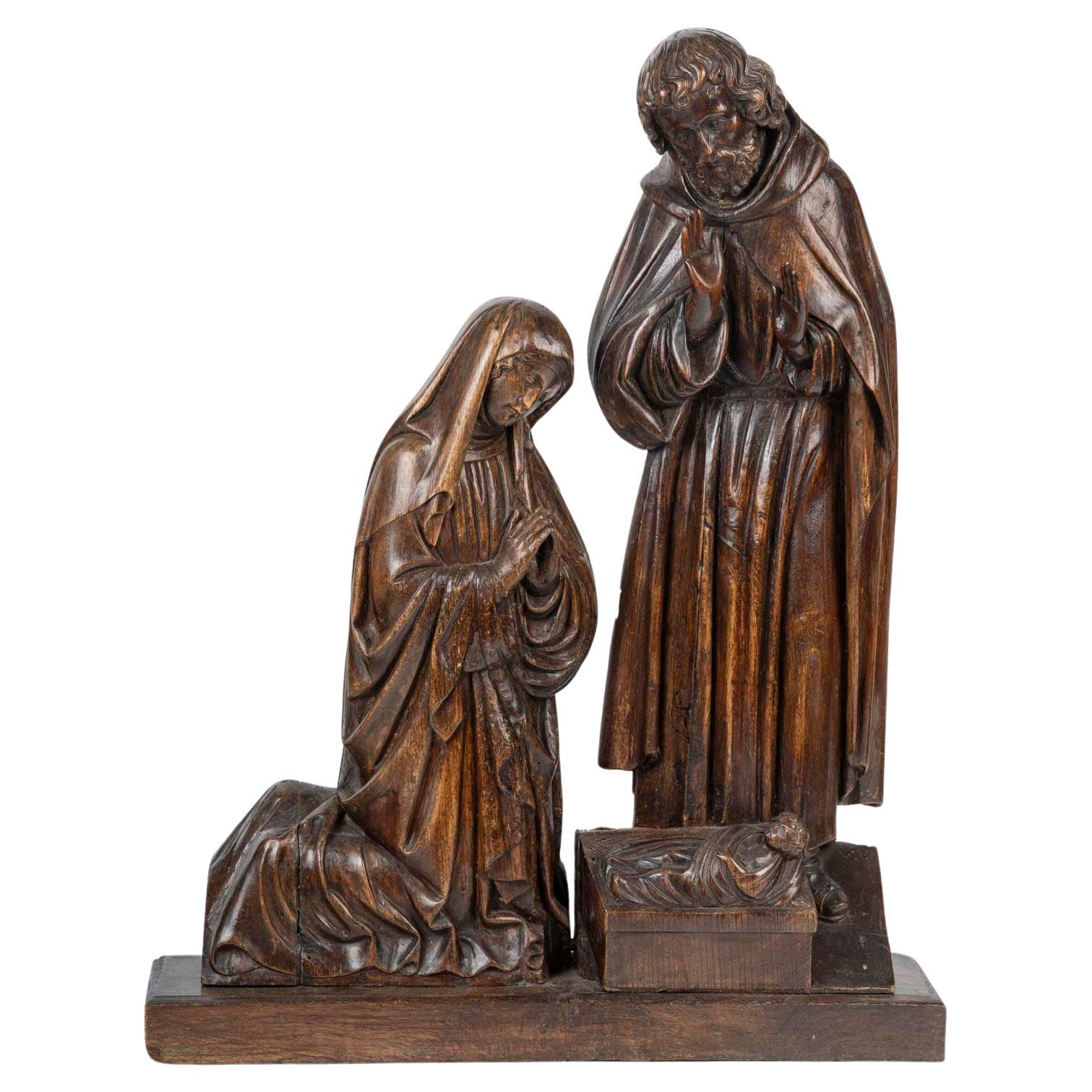
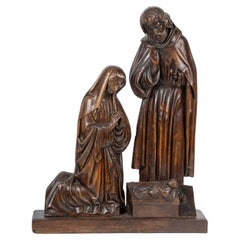
Religious sculpture representing the nativity, carved wood from the 16th century.
Carved wood sculpture, walnut wood and oak wood base, sculpture representing the nativity, circa 16...
Category
Antique 16th Century French Neoclassical Figurative Sculptures
Materials
Oak, Walnut
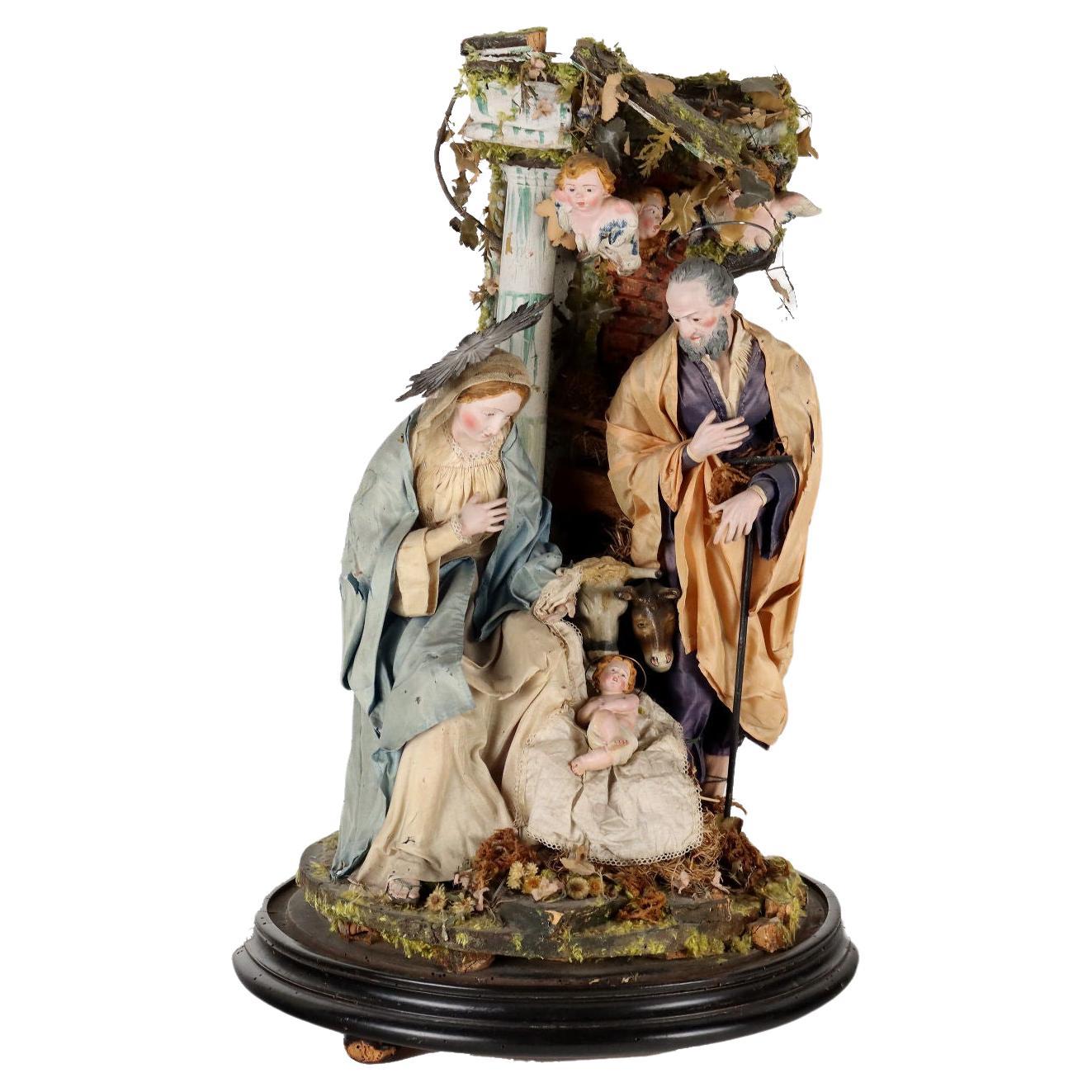
Great Neapolitan Nativity Scene Ancient Architectural Capriccio
800
By Non-Standard Furniture and Lighting
Located in Milano, IT
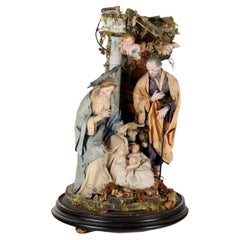
On a round base is placed the nativity composed of the Holy Family with the ox and donkey, three cherubim fly to heaven. The seated Madonna and St. Joseph standing turn an adoring ga...
Category
Antique Early 1800s Italian Other Figurative Sculptures
Materials
Terracotta, Silk, Wood, Cork
CHRIST
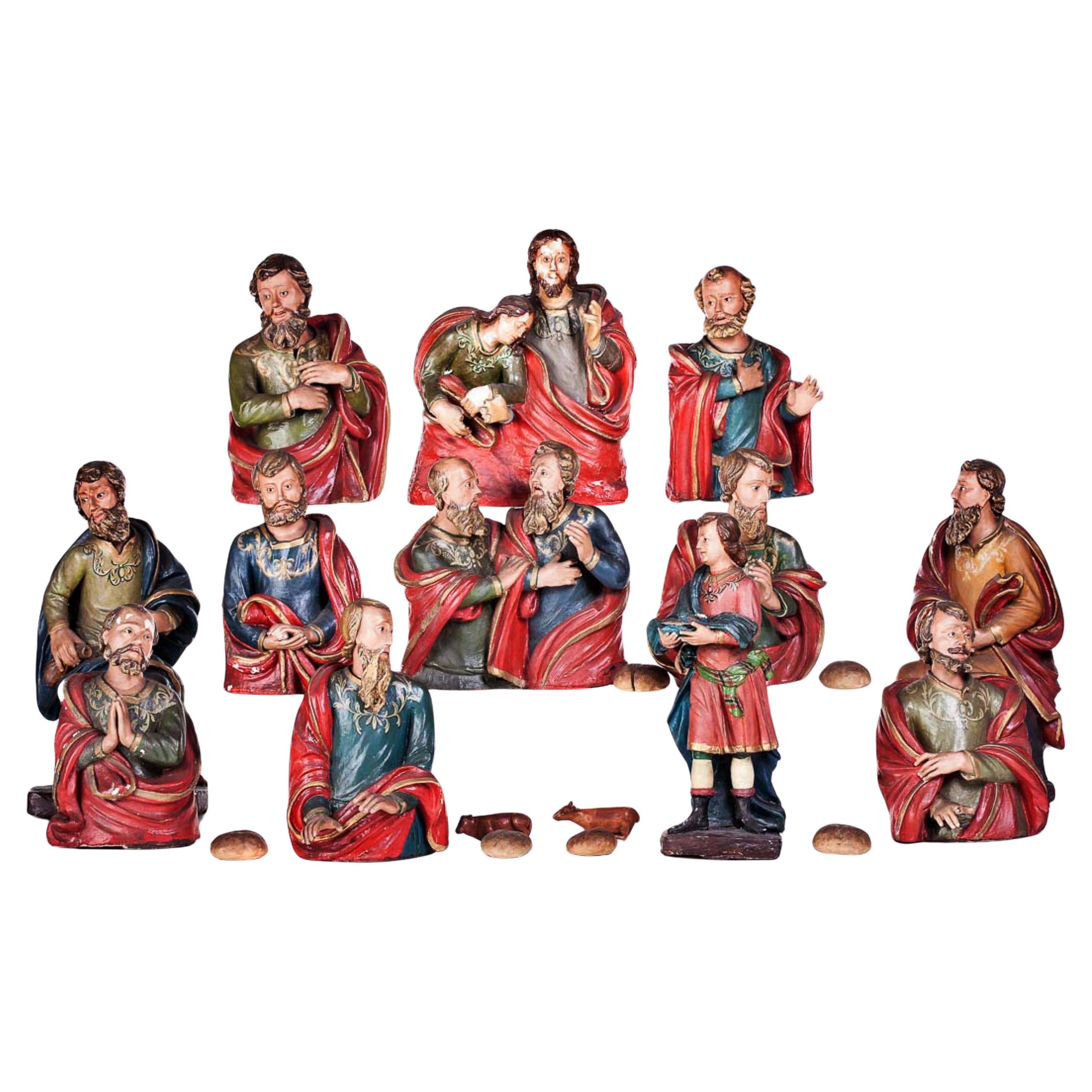
S SUPPER in Portuguese Terracotta 18th Century
Located in Madrid, ES
CHRIST'S SUPPER in Portuguese Terracotta 18th Century
composed of fourteen figures in polychrome terracotta.
Period defects and repainting
Height: (largest) 56 cm.
It belonged to th...
Category
Antique Early 18th Century Portuguese Baroque Figurative Sculptures
Materials
Terracotta
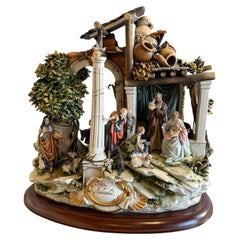
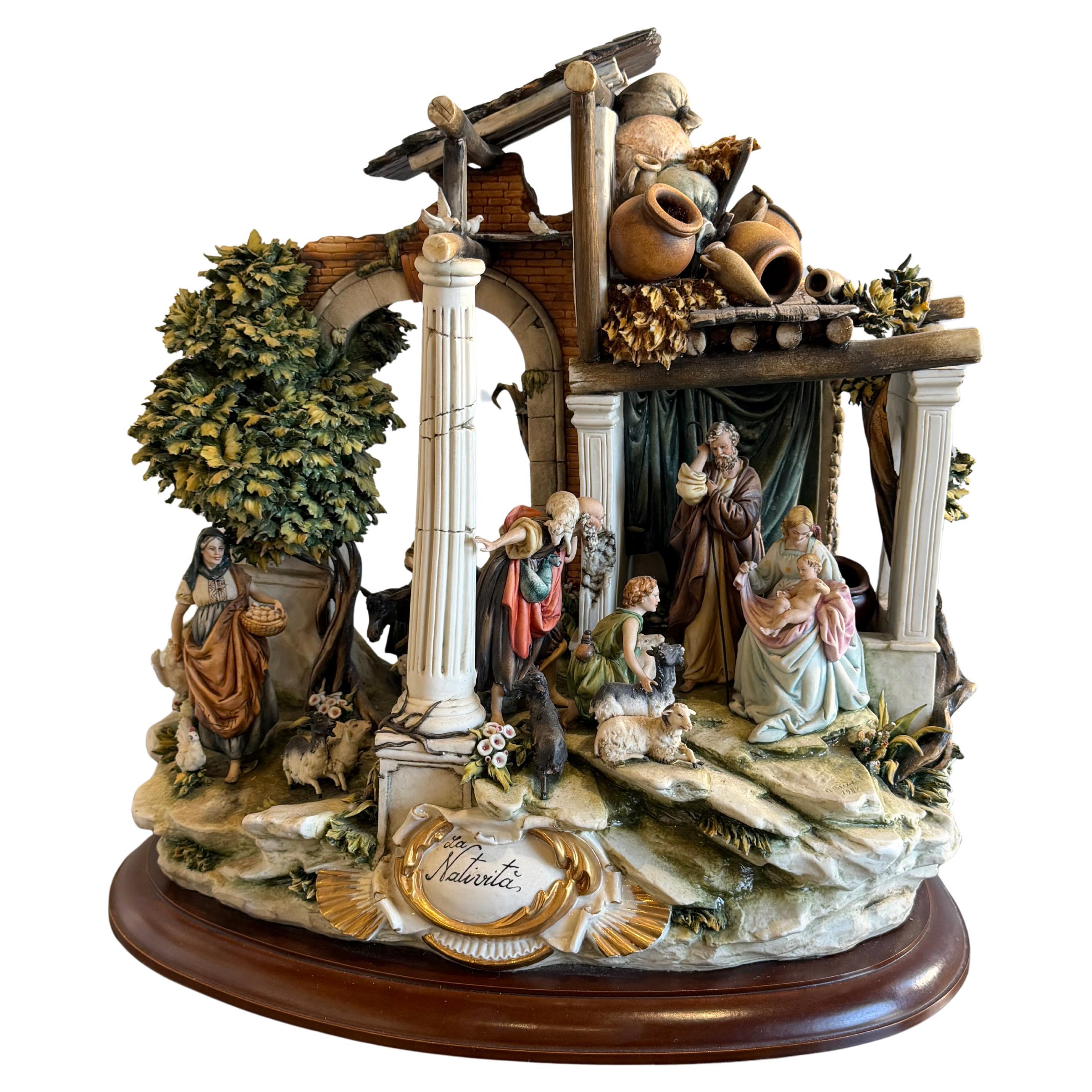
Majestic Nativity, Capodimonte Porcelain, piece numbered 383 of 500, 1990s
Located in Palermo, IT
Majestic Nativity "Principe", Capodimonte Porcelain, piece numbered 383 of 500, 1990s
A stunning Made in Italy creation. Good condition, with minor signs of wear.
Fast and insured sh...
Category
1990s Italian Figurative Sculptures
Materials
Porcelain