Items Similar to 18th Century Spanish Silver Holy Water Font, Baroque Style with Gilt Virgin Mary
Want more images or videos?
Request additional images or videos from the seller
1 of 12
18th Century Spanish Silver Holy Water Font, Baroque Style with Gilt Virgin Mary
$1,779.84per set
£1,328.73per set
€1,500per set
CA$2,472.73per set
A$2,659.77per set
CHF 1,421.46per set
MX$31,351.15per set
NOK 17,921.28per set
SEK 16,383.46per set
DKK 11,431.68per set
About the Item
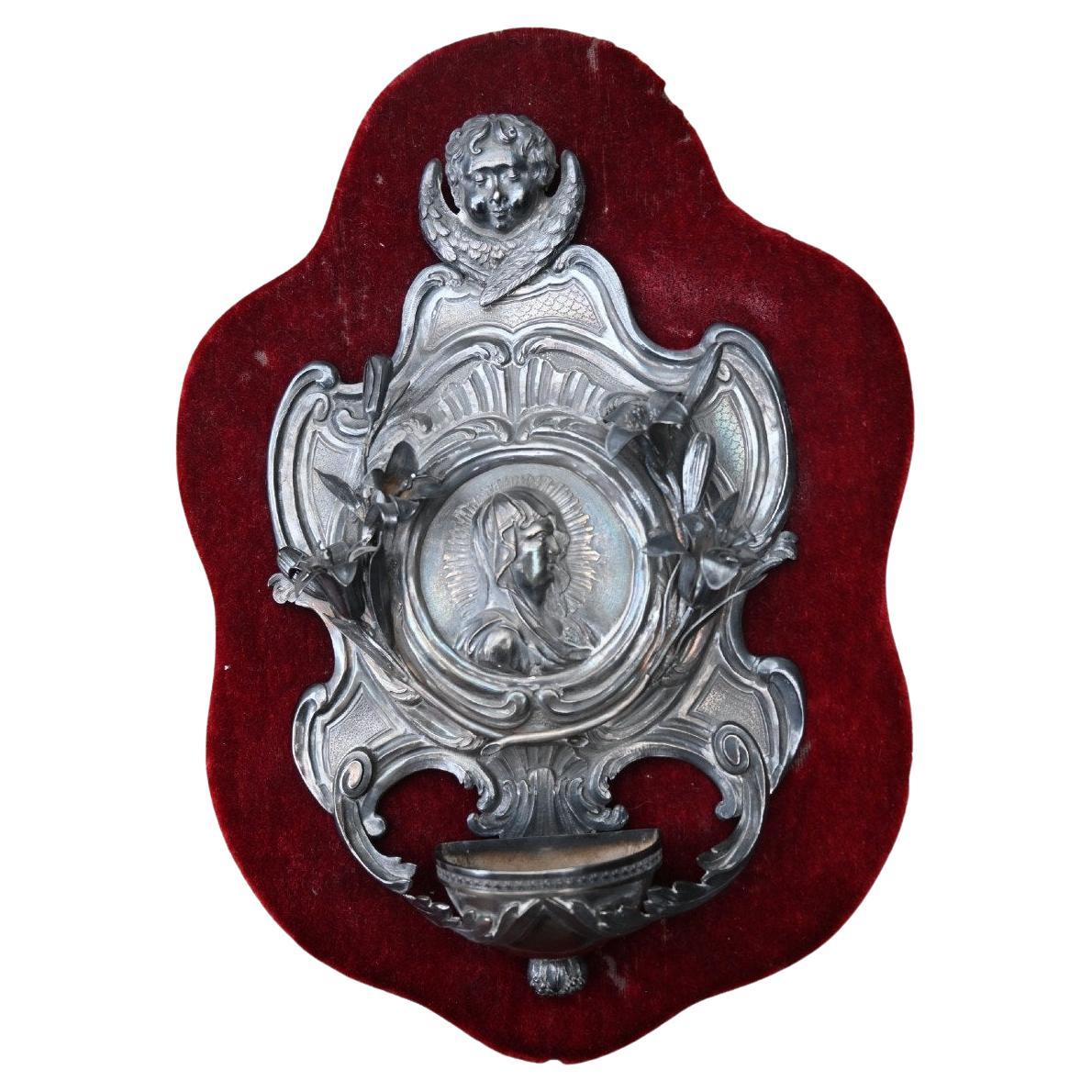
This highly decorative silver holy water font or stoup, is stamped with hallmarks placing its manufacture in Aspiazu, Bilbao, Spain during the late 18th century. The raised figure of the Virgin Mary at the center is silver gilt (or vermeil), in which silver is plated with a thin coating of gold. The surrounding designs, abstract, floral and garlands, were handcrafted using a technique known as “repoussé” when flat silver is shaped by hammering from the reverse side, creating a raised design to be viewed from the front. The small bowl at the bottom, meant for holding holy water, is also hand fashioned and decorated in repoussé. Included with the stoup is a red magenta velvet covered wooden plaque from which it hangs.
Stoups are smaller versions of the large holy water fonts found at the door of all Catholic churches, and are traditionally hung by the door of a home for the purpose of crossing one's self when entering or leaving. They are also found in bedrooms for bedtime prayer and blessings.
The piece is in good shape, though a bit tarnished. We like this patina of age, but the new owner could bring it to a brilliant finish with some silver polish if desired. There is an old solder repair across the top, seen on the back. This seam is not visible when viewed from the front. Overall weight of the silver is 337.5 grams.
- Dimensions:Height: 14.18 in (36 cm)Width: 9.45 in (24 cm)Depth: 2.96 in (7.5 cm)
- Sold As:Set of 2
- Style:Baroque (In the Style Of)
- Materials and Techniques:
- Place of Origin:
- Period:
- Date of Manufacture:Unknown
- Condition:Repaired: There is an old solder repair across the top of the silver piece, visible from the back. When this was done, and by whom, is unknown. Wear consistent with age and use. Minor structural damages. The mounting plaque measures 46cm high x 33cm wide x 2cm deep.
- Seller Location:Madrid, ES
- Reference Number:1stDibs: LU3306121569242
About the Seller
5.0
Vetted Professional Seller
Every seller passes strict standards for authenticity and reliability
Established in 1870
1stDibs seller since 2017
50 sales on 1stDibs
Typical response time: 12 hours
- ShippingRetrieving quote...Shipping from: Madrid, Spain
- Return Policy
More From This Seller
View All18th Century Spanish Virgin Mary of Immaculate Conception, Handcrafted Sculpture
Located in Madrid, ES
Completely hand-crafted in 18th century Spain, this sculpture of the Virgin stands 1.5 meters / 5 feet tall and was most certainly created for devotional purposes, to be displayed in a church or chapel.
Besides its impressive size this sculpture is an excellent, museum-quality example of the Spanish “Estofado” polychrome technique, developed during the Gothic period to imitate rich brocade fabrics. The finely carved “fabric” areas of the sculpture would be first covered in gesso, and then a layer of gold leaf would be applied. The gold leaf would then be painted over with various colors of tempera paints. Once dry, the painted surface would be incised or scratched away in patterns, revealing the gold beneath.
The sculpture was professionally restored in 2022 by a firm that is often hired by the Spanish government to work on historic building interiors and museum pieces. The virgin was carefully cleaned, repaired and its condition stabilized. A complete and fully-illustrated restoration report will be included with purchase.
Often confused with the virgin birth of Jesus, the belief that the Blessed Virgin Mary herself was conceived “immaculately” without original sin has been variously defended and debated within the Catholic Church since the pre-Middle Ages. For centuries, artists struggled to create an acceptable visual representation of this highly abstract concept, in part taking inspiration from the Book of Revelation and other scriptural sources.
We see the Virgin standing on a half moon (biblically inspired, though also an ancient symbol of chastity) with her long natural hair loose down her back, another indication of purity. Both her white tunic and flowing blue mantle...
Category
Antique 18th Century Spanish Baroque Figurative Sculptures
Materials
Silver, Gold Leaf
$30,375 Sale Price
20% Off
19th C. Spanish Brass Brazier / Planter / Ice Bucket with Dolphin Foot Motif
Located in Madrid, ES
Braziers (known as "braseros" in Spain) were used to heat areas of a home (or castle) by holding burning "picón" or charcoal in its concave bowl. Braziers of various designs have bee...
Category
Antique 19th Century Spanish Renaissance Fireplaces and Mantels
Materials
Brass
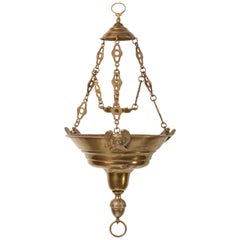
19th Century European Brass Hanging Church Sanctuary Pendant Lamp with Cherubim
Located in Madrid, ES
This 19th century brass hanging pendant sanctuary lamp is from a Spanish collection, but it shares characteristics with French sanctuary lamps of...
Category
Antique 19th Century Spanish Neoclassical Candle Lamps
Materials
Brass
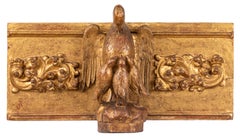
18th C. Giltwood Pelican Feeding Chicks Eucharist Allegory Religious Sculpture
Located in Madrid, ES
A striking 18th century Spanish giltwood religious sculptural panel, possibly part of an altarpiece, its central decorative motif of a stylized pelican bird and chicks a symbol of th...
Category
Antique 18th Century Spanish Baroque Religious Items
Materials
Gold Leaf
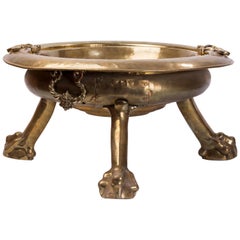
Antique Spanish Polished Brass Claw Foot Brazier, Planter or Ice Bucket
Located in Madrid, ES
Braziers (known as "braseros" in Spain) were used to heat areas of a home, palace or castle (!) by holding burning "picón" or charcoal in its concave bowl. Braziers of various design...
Category
Antique 19th Century Spanish Fireplaces and Mantels
Materials
Brass
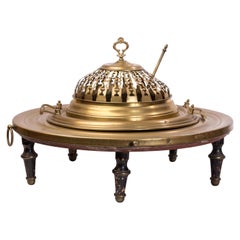
Exotic 19th Century Spanish Brass Brazier, Planter, Ice Bucket
Located in Madrid, ES
This 19th century Spanish brazier, or "brasero," is made of brass and wood, and was used to heat areas of a home (or castle) by holding burning coals i...
Category
Antique 19th Century Spanish Fireplaces and Mantels
Materials
Brass
You May Also Like
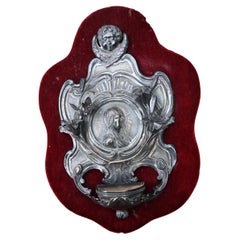
Large Holy waterfont In Sterling Silver, 19th century
Located in Bilzen, BE
Holy font in solid silver, hallmarked with 800
Holy font height 31 cm, width 19.5 cm, with rear shelf 38 x 28 cm
The silver waterfont can get taken of easely...
Category
Antique Late 19th Century German Baroque Religious Items
Materials
Sterling Silver
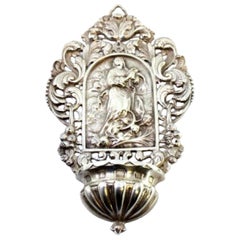
Holy water font w/ the Virgin hovering between angels
floral motifs in relief
Located in Porto, PT
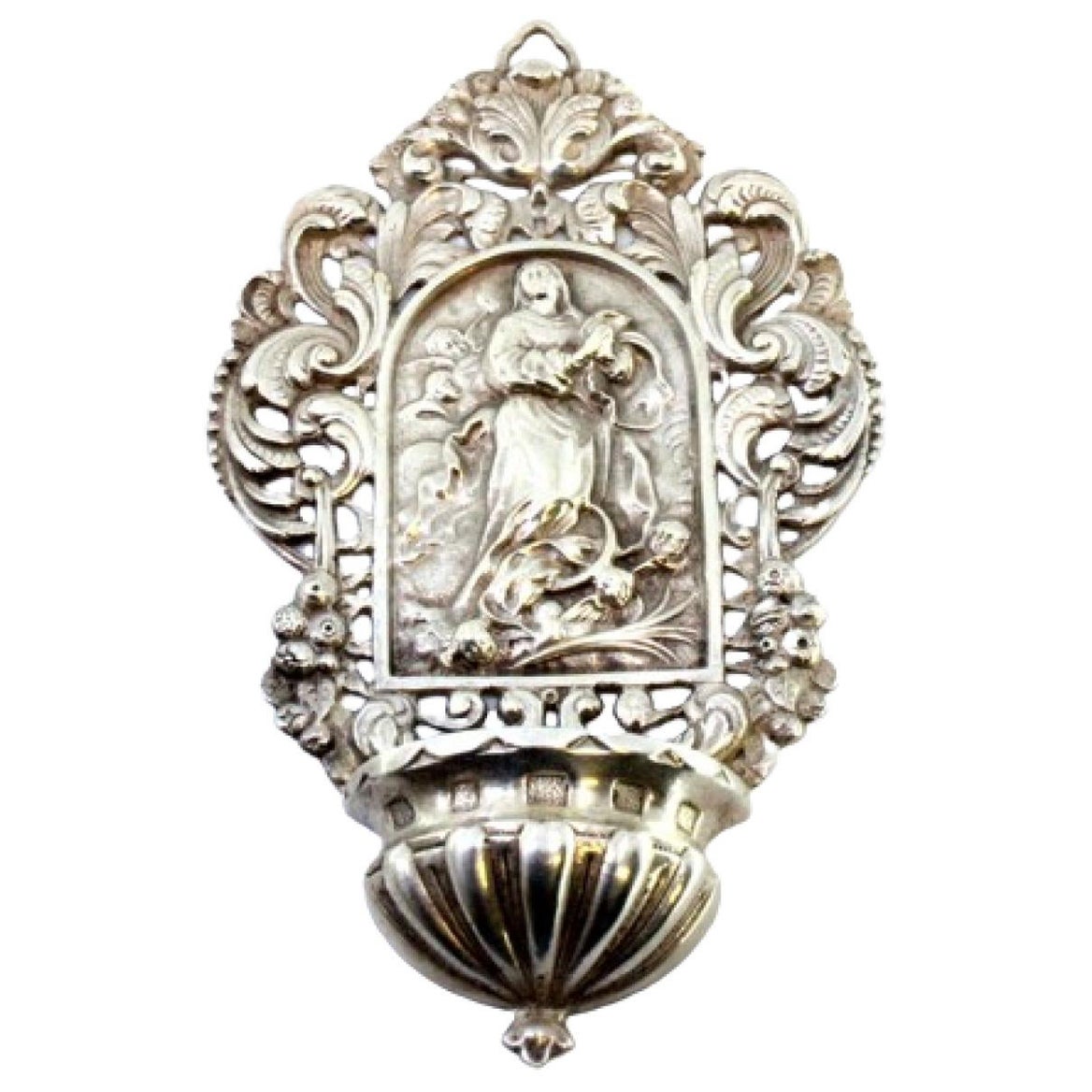
Description: Holy water font with a carved image of the Virgin Mary hovering among angels and floral motifs in relief. Metal: Silver. Origin: Spanish. Brand: Unknown. Weight: 130.65 ...
Category
20th Century European Religious Items
Materials
Silver
$625 Sale Price
50% Off
Free Shipping
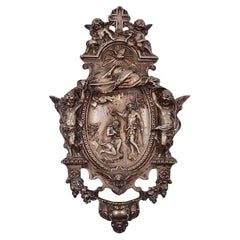
Holy water font depicting "The Baptism of Christ" in silver-plated copper - 19th
Located in Linkebeek, BE
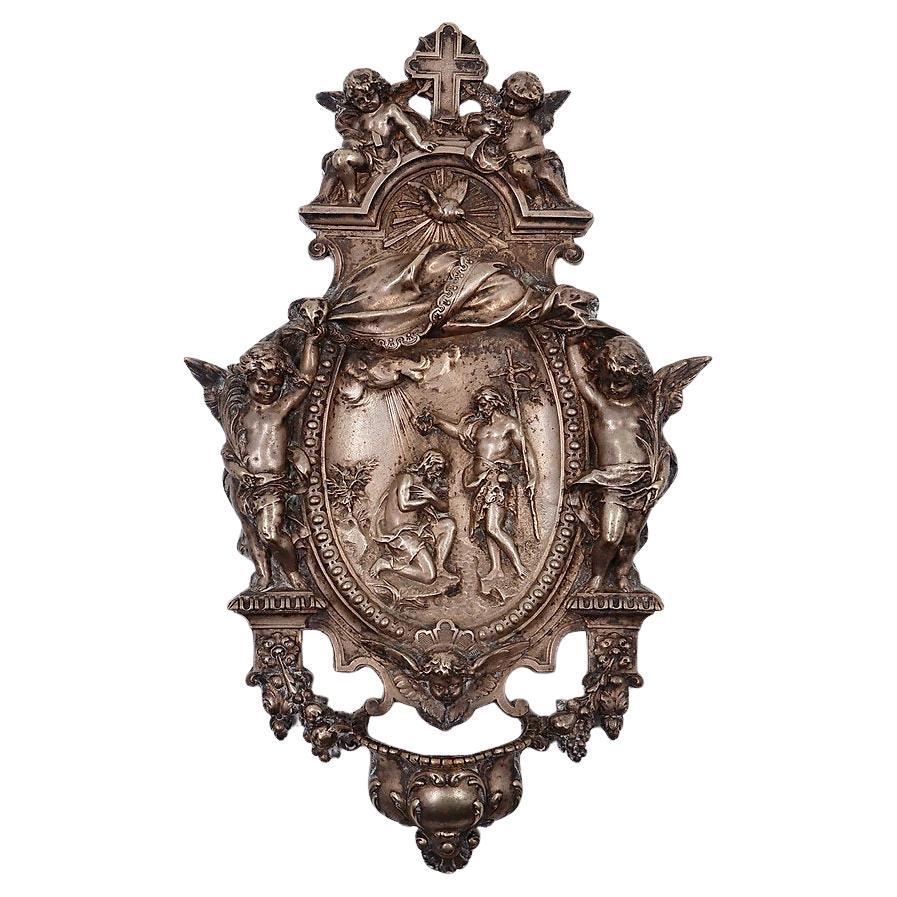
Holy water font depicting "The Baptism of Christ" in silver-plated copper
Fine Art - Catholic
Measures : 18x3cm H: 29cm
Material : silver-plated copper
Wear consistent with age and use
Category
Antique 19th Century Religious Items
Materials
Copper
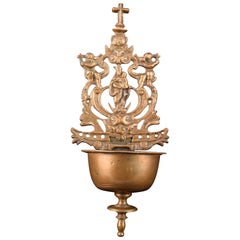
Bronze Bassin for Holy Water, Spain, 17th Century
Located in Madrid, ES
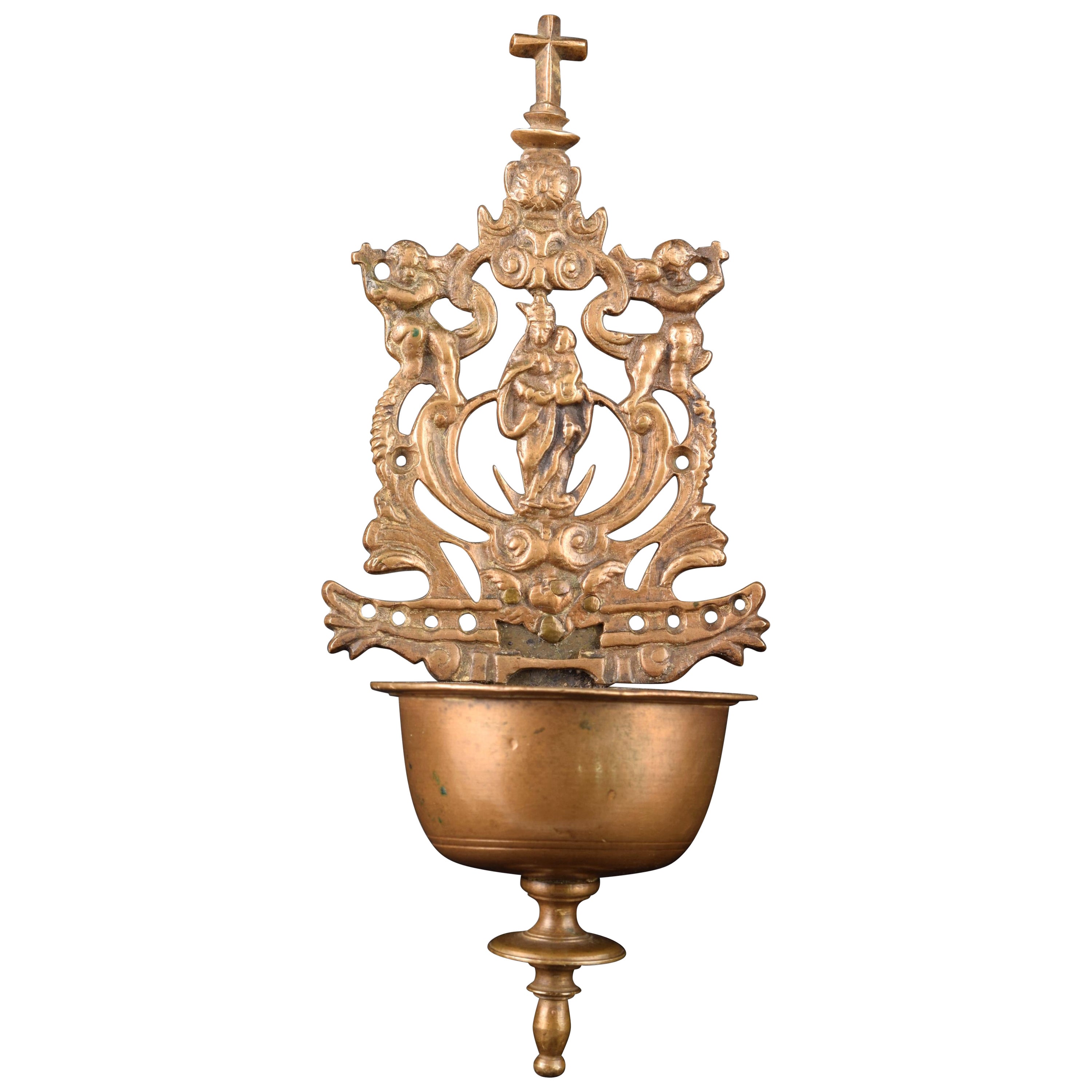
Holy wall font. Bronze. Spain, 17th Century.
Small font for holy water designed to be placed on a wall, which has a container decorated with moldings and architectural elements and...
Category
Antique 17th Century Spanish Baroque Religious Items
Materials
Bronze, Other
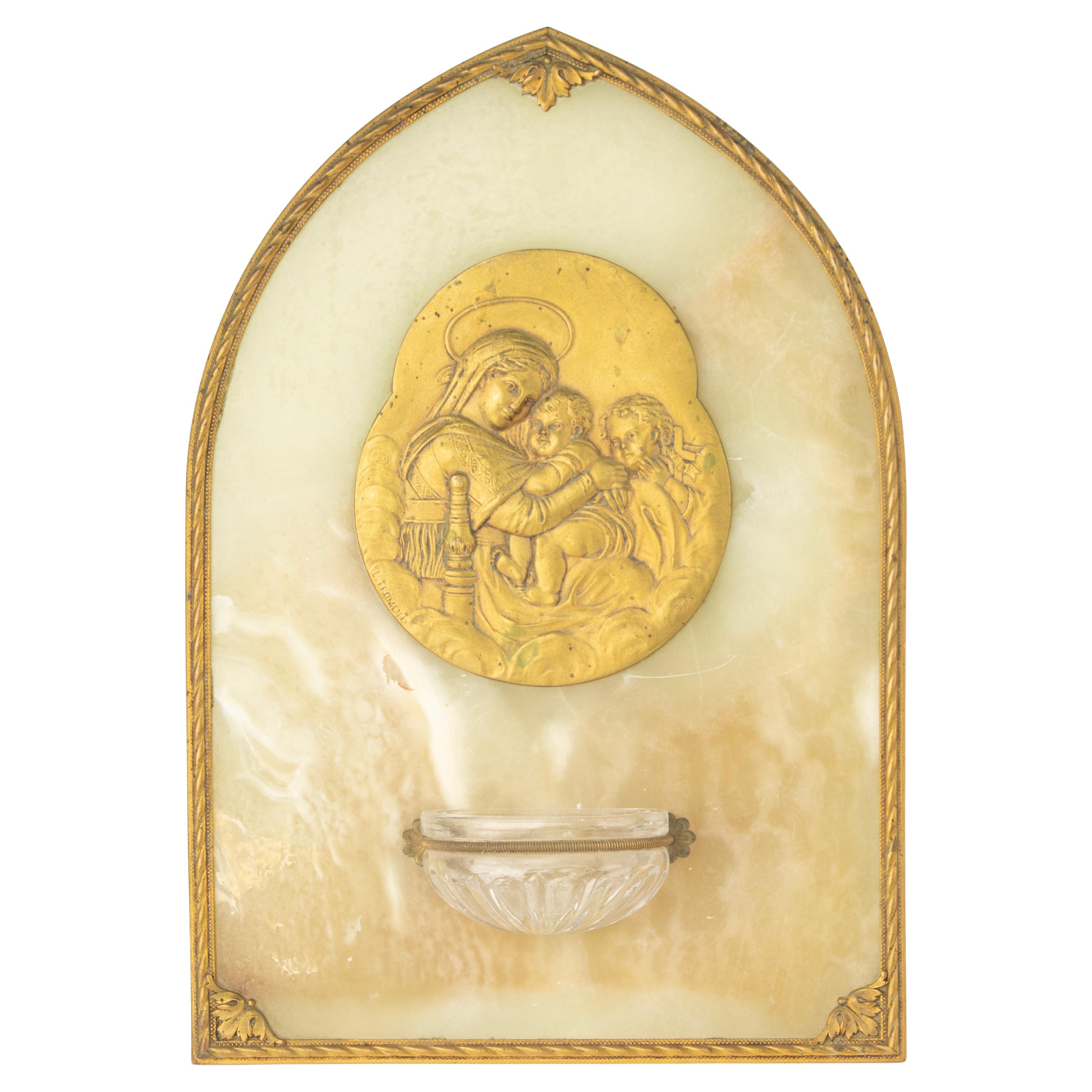
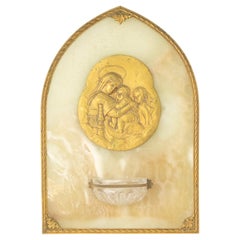
Early 20th Century Holy Water Font - France - Onyx, Bronze and Crystal
Located in Casteren, Noord-Brabant
Elegant French holy water font dating from circa 1900–1910, crafted from richly veined onyx, adorned with an ormolu gilt bronze relief depicting the Virgin Mary with Child, and fitte...
Category
Antique Early 1900s French Religious Items
Materials
Onyx, Brass, Bronze, Ormolu
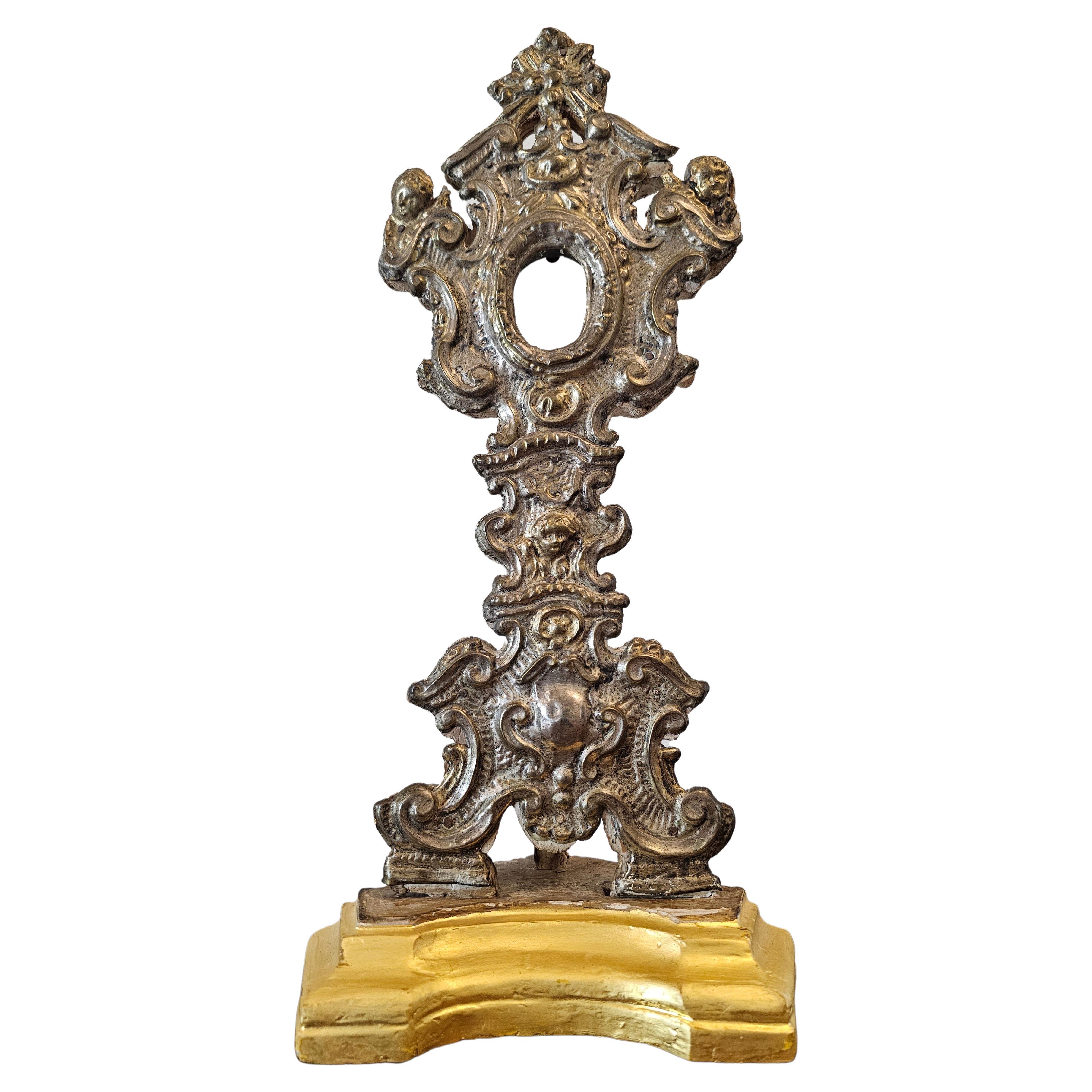
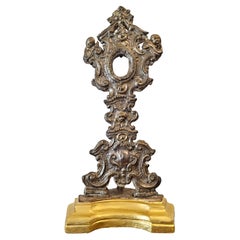
18th/19th Century Italian Baroque Silvered Metal Altar Monstrance Reliquary
Located in Forney, TX
A stunning antique Italian Baroque style silvered metal gilded wood monstrance reliquary. circa 1770-1820
Handmade in Italy in the late 18th / early 19th century, commissioned by the church to display an important religious relic, sculptural painted wood form, mounted with decorative silver repousse metal facing, open oval window where the philatory relic was once housed, rising on a gold gilt painted shaped plinth base.
Dimensions: (approx)
17" High, 8" Wide, 5" Deep, 1.25lbs
History:
Reliquaries (also referred to as a shrine or châsse in French), are containers used to protect and display relics. A portable reliquary may be called a fereter, and a chapel in which it is housed a feretory. A monstrance, also known as an ostensorium (or an ostensory), is a vessel used in Roman Catholic, Old Catholic, High Church Lutheran and Anglican churches for the display on an altar of some object of piety, such as the consecrated Eucharistic host during Eucharistic adoration or Benediction of the Blessed Sacrament. It is also used as reliquary for the public display of relics of some saints.
The use of reliquaries became an important part of Christian practices from at least the 4th century, initially in the Eastern Churches, which adopted the practice of moving and dividing the bodies of saints much earlier than the West, probably in part because the new capital of Constantinople, unlike Rome, lacked buried saints. Relics are venerated in the Oriental Orthodox, Eastern Orthodox, Roman Catholic and some Anglican Churches. Reliquaries provide a means of protecting and displaying relics. While frequently taking the form of caskets, they range in size from simple pendants or rings to very elaborate ossuaries.
The relics were enshrined in containers crafted of or covered with gold, silver, gems, and enamel. These objects constituted a important form of artistic production across Europe and Byzantium throughout the Middle Ages.
Many were designed with portability in mind, often being exhibited in public or carried in procession on the saint's feast day or on other holy days. Pilgrimages often centered on the veneration of relics. The faithful often venerate relics by bowing before the reliquary or kissing it; those churches which observe the veneration of relics distinguish between the honor given to the saints and the worship that is due to God alone.
Sixteenth-century reformers such as Martin Luther opposed the use of relics since many had no proof of historical authenticity and objected to a cult of saints. Many reliquaries, particularly in northern Europe, were destroyed by Calvinists or Calvinist sympathizers during the Reformation...
Category
Antique Early 19th Century Italian Baroque Sculptures and Carvings
Materials
Metal
More Ways To Browse
Antique Spanish Silver
Antique Font
18th Century Velvet
Holy Water
Mary Religious
Antique Holy Water
Holy Items
Water Font
Holy Water Font
Antique Holy Water Font
Water Stoup
Holy Water Stoup
Silver Holy Water Font
Antique Russian Icon
German Religious Collectables
Antique Star Of David
Holy Water
Antique Religious Icons